
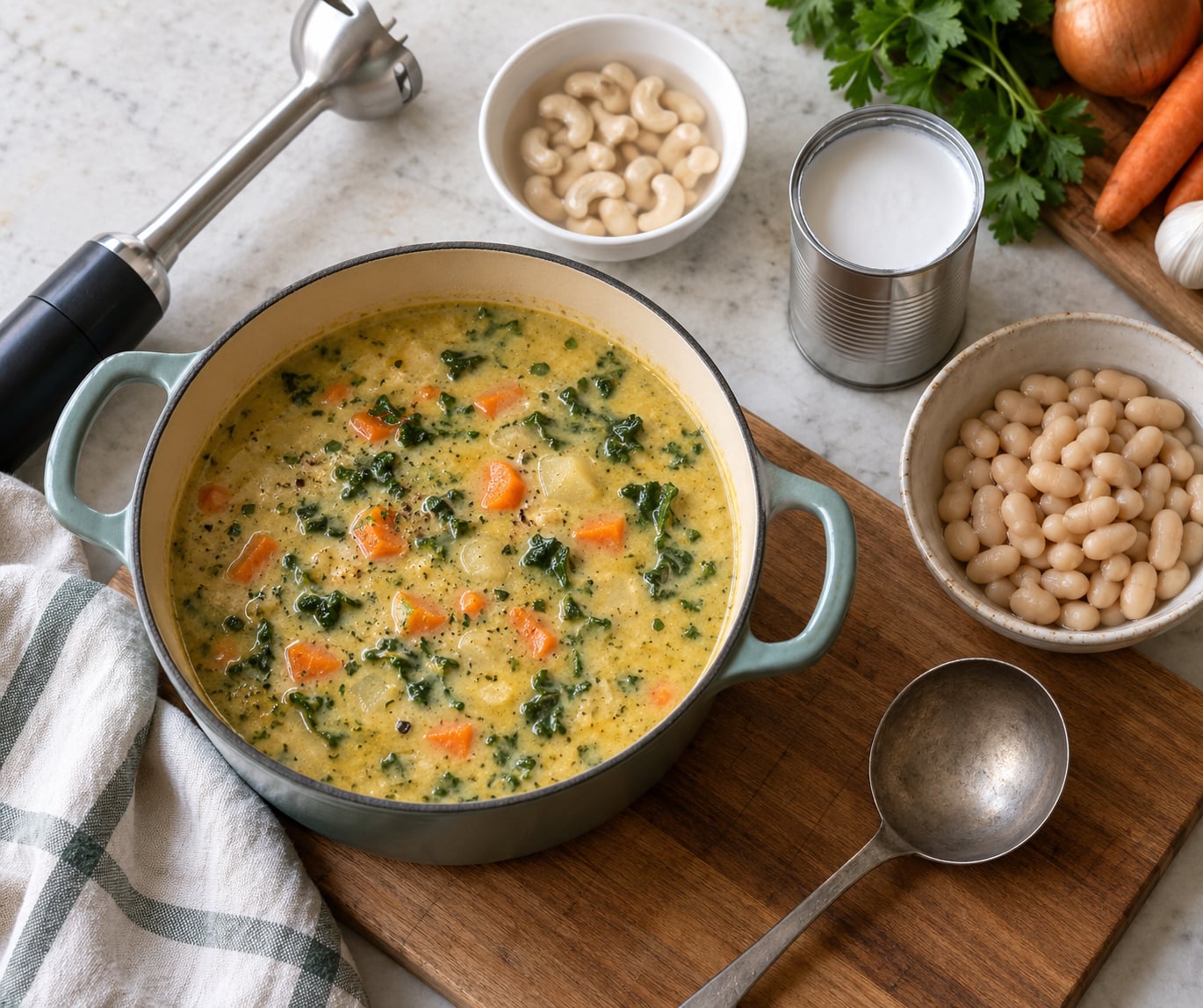
Dairy-free soup gets its creaminess from one of three things: fat emulsified into broth, starch released from cooked vegetables and grains, or pureed white beans. For the fastest route, soak 1/2 cup of raw cashews in hot water for 30 minutes, blend them with a cup of broth until perfectly smooth, then stir that cream back into the simmering pot. The whole thing takes about 40 minutes, and the texture is close enough to cream-based soup that nobody at the table will ask what’s missing.
The cashew method is the most versatile, but it costs you something in time and doesn’t work for nut allergies. Coconut milk takes ten seconds of prep and gives you the richest result. White beans cost almost nothing and are the most forgiving. Here’s how to pick, and how to pull any of them off without a grainy, gluey, or split mess.
Table of Contents
- What You Need to Make a Creamy Soup Without Dairy
- Step-by-Step
- How to make a creamy soup without dairy: choose and prepare the base
- How to make a creamy soup without dairy: soften the soup ingredients
- How to make a creamy soup without dairy: blend for the right texture
- How to make a creamy soup without dairy: adjust thickness and flavor
- How to make a creamy soup without dairy: serve and store safely
- Common Mistakes and Easy Fixes
- Frequently Asked Questions
- What is the best substitute for cream in soup?
- How can I make creamy soup without a blender?
- Can I use coconut milk instead of cream in any soup?
- How do I make a dairy-free soup thicker?
- Can I freeze a creamy soup made with coconut milk or cashews?
- How do I keep cashew soup from tasting grainy or bitter?
- Conclusion: Start with a Simple Creamy Base
What You Need to Make a Creamy Soup Without Dairy

You need roughly one thickening element, about 4 cups of liquid, and something to blend with. Everything else is seasoning. Here’s the short version of the quantities for a soup that serves two to four people.
- Cashew base: 1/2 cup raw cashews (about 60 g), soaked, blended with 1 cup broth or water. Thickens roughly 4 cups of soup and gives the most neutral, restaurant-style result.
- Coconut milk base: 1 can full-fat coconut milk, about 13 to 14 ounces. Stir it straight into the hot soup. This is the richest option and the fastest, no soaking involved.
- White bean base: 1 to 1.5 cups cooked cannellini or navy beans, blended with 1/2 cup broth. Nut-free, cheap, mild, and it disappears into the soup.
For liquid, use 4 cups of stock, bone broth, or water with the aromatic vegetables. If you’re starting from scratch with vegetable scraps, my guide to making vegetable broth from kitchen scraps covers that base nicely.
Build flavor with the usual suspects: one onion, two carrots, two celery stalks, two or three garlic cloves, a splash of olive oil, salt, black pepper, and a bay leaf. Then keep an acid on hand. A squeeze of lemon or a teaspoon of vinegar at the end does more for a flat soup than another quarter cup of cream ever would.
Equipment is short. An immersion blender is the better tool because you blend right in the pot and never transfer hot liquid. A countertop blender gives you the smoothest cashew cream, but you have to wait for it to cool before you lock the lid on. A potato masher and a fine-mesh strainer are useful backups, and if you use a blender often, knowing how to clean a blender without taking it apart saves real time.
Step-by-Step
Six stages, and only the first one is fussy. The rest is simmering and blending.
How to make a creamy soup without dairy: choose and prepare the base
Cashews give you the best neutral flavor and the thickest result. Cover 1/2 cup raw cashews with boiling water and let them sit 30 minutes, or soak them cold overnight. The quick soak works nearly as well as the overnight one, so it is the one most cooks use now. Drain, and you will notice the cashews have roughly doubled in size.
Coconut milk needs no prep at all. Just open the can and stir it in off the heat. Buy full-fat, not the carton beverage. Canned full-fat coconut milk carries enough fat to actually thicken and it holds body through a simmer; the beverage is diluted and mostly contributes flavor, not texture.
White beans need cooking time unless you start with a can. From dried, soak them overnight, simmer in unsalted water for 45 to 60 minutes, then drain and rinse. Canned beans work too, and skipping the rinsing is fine if your soup is heavily seasoned. Beans are the option to reach for when nuts are out of the question.
How to make a creamy soup without dairy: soften the soup ingredients
Simmer your vegetables in 4 cups of liquid until a fork slides in with no resistance, usually 20 to 25 minutes. Add the hard stuff first. Root vegetables, squash and cauliflower need 10 to 15 minutes of head start over onions, celery and garlic. Leafy greens go in during the last two minutes so they don’t turn to string.
This stage is where most disappointing soups get made. Undercooked carrots and cauliflower will stay lumpy no matter how good your blending is, and they’ll taste raw even if the texture lies to you.
How to make a creamy soup without dairy: blend for the right texture
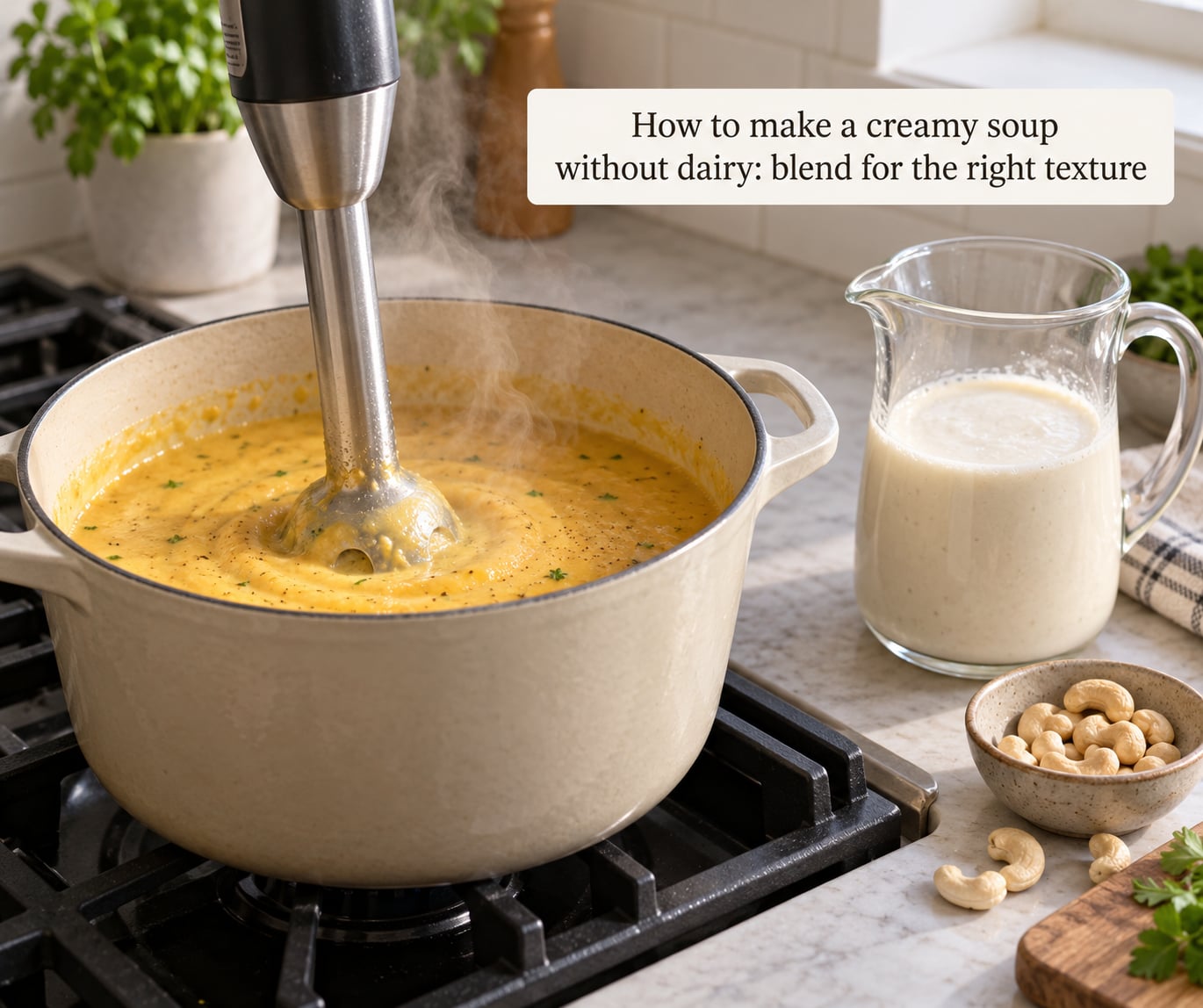
For cashew or bean bases, blend the creamy part separately first if you can. A dedicated 60 to 90 second blend is what gets you a truly silky finish rather than a slightly grainy one. Then stir that cream into the pot for the last few minutes of simmering.
If you blend everything together in the pot, use short pulses instead of one long run. Over-blending aerates soup and can make it taste thin. Whatever you’re using, never fill a blender more than halfway with hot liquid. Steam expands, and a full blender with soup in it is how people lose a lid. When you do fill one, vent the lid with a towel and start on low.
The test: tilt a spoon over the pot. Creamy soup ribbons off in a steady stream that leaves a trail for a second before sinking. If it pours flat like water, you need more base. If it mounds, you need broth.
How to make a creamy soup without dairy: adjust thickness and flavor
Thin with broth, one ladle at a time, stirring between each. Thicken by blending more of your base and stirring it back in, by mashing a few spoonfuls of potato directly in the pot, or by whisking in an arrowroot slurry. For the slurry, mix 1 teaspoon of arrowroot with 2 tablespoons of cold water, then pour it in while the soup is hot and stir for a full minute. Cornstarch works too, but arrowroot finishes glossier and clearer.
Season in layers rather than one big salt at the end. Then taste for acidity. If the soup tastes flat but properly salty, it needs lemon, not cream. Two tablespoons of nutritional yeast adds a savory, slightly cheese-like depth, and a teaspoon of miso paste adds umami that reads as richness.
How to make a creamy soup without dairy: serve and store safely
Serve hot with a swirl of the reserved cream, a drizzle of good olive oil, cracked pepper, and fresh herbs. Chives, dill, cilantro and parsley all work; save the cilantro for coconut-based soups.
Let soup cool quickly and refrigerate it within two hours. Cooked soup keeps three to four days in the fridge, which matches USDA guidance for leftovers. Freeze it in shallow containers rather than one big jar so it cools fast, and it holds two to three months well.
Reheat gently on the stove with a splash of broth, stirring often. Dairy-free soups break more easily than dairy ones because there is no protein to hold the emulsion together, so low and slow matters. Heat leftovers all the way to 165F (74C) before serving.
Common Mistakes and Easy Fixes
Almost every bad dairy-free soup is one of seven problems. Each has a specific fix.
Grainy cashew soup
Not enough blending, or not enough soaking. Extend the soak to overnight, blend the soaked nuts in plain water first for 60 to 90 seconds, then pass the finished cream through a fine-mesh strainer if you have one. The strainer is the step people skip and it is the step that fixes it.
Watery or thin results
Three causes: too little base, vegetables that were not cooked long enough, or a blender that aerated the soup. Fix it by simmering uncovered for 10 to 15 minutes to reduce the liquid, then stirring in another 1/4 cup of blended base. Taste again before adding more.
Thick, gluey soup
Starch that sat and kept cooking after you over-thickened it, or a thick soup that got reheated. Whisk in hot broth one ladle at a time. If it already went gluey, a splash of water and a hard whisk will loosen it more than any amount of stirring will.
Bland flavor
Fat carries flavor, but it cannot create it. Salt, acid and umami do that work: add salt in increments, finish with lemon or vinegar, and use nutritional yeast, miso, tomato paste or a roasted vegetable. Never reach for more cream first.
Coconut flavor in a non-Asian soup
This is the most common complaint about dairy-free soup. Use half a can instead of a full one, roast your vegetables first so the caramelized flavor has something to compete with, and add cumin, smoked paprika or curry powder. A tablespoon of cashew cream stirred in at the end dilutes the coconut further.
Separation and curdling
If plant milk breaks, you boiled it or added acid too early. Keep milk off a rolling boil, add vinegar or lemon at the very end, and choose unsweetened soy or oat milk, which are the most stable for cooking. If reheated soup separates, whisk hard off the heat first, then add a tablespoon or two of water.
Blender overheating
Fill jars halfway, rest 30 seconds between pulse rounds, and blend cashews in two batches if the recipe calls for more than a cup. If your blender smells hot and starts to smell like plastic, stop and let it cool. Heat and friction together are what damage the jar.
A couple of shortcuts worth keeping: white beans are the cheapest creamy base and the least likely to fight your flavor; starchy vegetables like potato, cauliflower and butternut squash thicken on their own and cost nothing extra; and combining two bases, potato plus cashew cream for example, gets you thickness without the nut flavor dominating.
If you like the make-ahead side of this, my guide to batch cooking for the week without getting bored has the freezer and portioning system that soups slot straight into.
Frequently Asked Questions
What is the best substitute for cream in soup?
Cashew cream is the closest swap for dairy cream because it thickens more, tastes neutral, and adds richness rather than a distinct flavor. Use 1/2 cup soaked raw cashews blended with 1 cup of broth for every 4 cups of soup. For a nut-free kitchen, blend 1 to 1.5 cups of cooked white beans instead. Full-fat coconut milk is the fastest option and gives the most richness, but it carries a noticeable coconut flavor.
How can I make creamy soup without a blender?
You need either a starchy vegetable or a legume doing the thickening work. Simmer peeled potato, cauliflower or butternut squash until completely tender, then mash it directly in the pot with a potato masher and stir the mash back into the broth. Cooked white beans stirred in whole will thicken soup too, just with a lumpier, more rustic texture. A roux of oil plus flour whisked in with broth is the other blender-free route.
Can I use coconut milk instead of cream in any soup?
Not in any soup. Full-fat canned coconut milk pairs naturally with tomato, curry, lentil, sweet potato and squash soups, and it works in chilled soups like gazpacho. In delicate soups such as cream of celery, cream of mushroom or a plain chicken broth, the coconut flavor reads as out of place. If you want richness without the taste, stir in cashew cream or a white bean puree instead, or use only half a can of coconut milk.
How do I make a dairy-free soup thicker?
Stir in more of your blended base a quarter cup at a time, and taste between each addition. Mashed potato stirred into the pot thickens quickly with no extra equipment. An arrowroot slurry works too: mix 1 teaspoon of arrowroot with 2 tablespoons of cold water, pour into hot soup and stir for a full minute. A final reduction, simmering uncovered for 10 to 15 minutes, thickens without adding anything at all.
Can I freeze a creamy soup made with coconut milk or cashews?
Yes, both freeze well and hold two to three months in the freezer. Freeze in shallow containers so the soup cools quickly rather than staying warm in the center. Expect cashew soups to separate slightly when thawed; whisk hard off the heat with a splash of broth and they come right back together. Thaw overnight in the fridge instead of on the counter, then reheat slowly and stir often to 165F (74C).
How do I keep cashew soup from tasting grainy or bitter?
Graininess comes from under-soaked or under-blended cashews, and bitterness comes from skins left on the nuts. Soak covered in boiling water for 30 minutes, drain well, and use raw or roasted cashews rather than salted ones. Blend the soaked nuts with fresh water for 60 to 90 seconds before any broth goes in. If graininess survives all that, pass the cream through a fine-mesh strainer before stirring it into the soup.
Conclusion: Start with a Simple Creamy Base
Learning how to make a creamy soup without dairy comes down to four moves: simmer the vegetables until genuinely tender, pick one creamy base, blend it smooth, and adjust the consistency a little at a time. Start with cashews if you can, since they are the most neutral and the most forgiving. Coconut milk works when you want speed and richness, and white beans when nuts are off the table or the budget is.
Simmer your vegetables properly, blend for a full 60 to 90 seconds, and taste before you thicken. That last habit is the difference between soup that is right and soup that needed more.