
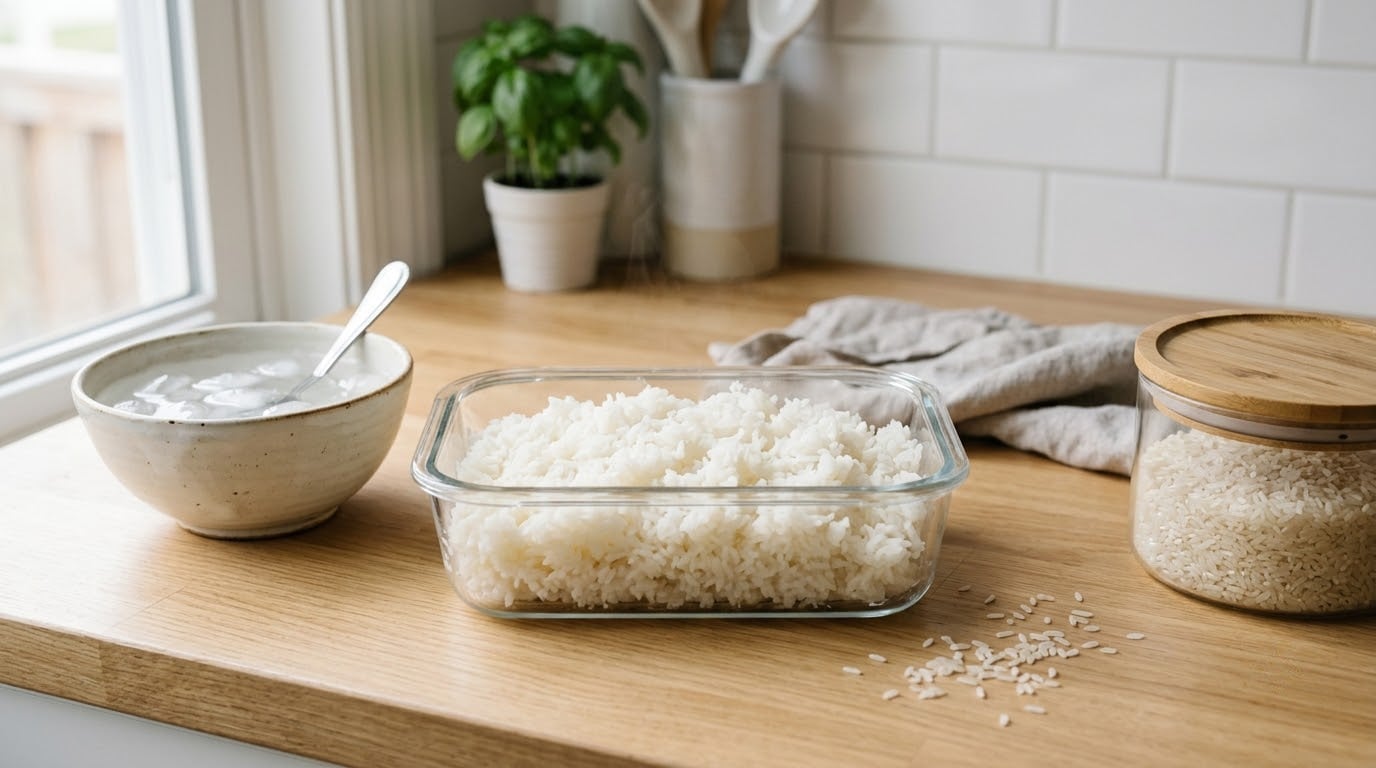
Cooked rice keeps 3 to 4 days in the refrigerator, as long as you cool it within two hours and store it sealed at 40°F (4°C) or below. The countdown starts when the rice hits the fridge, not when it leaves the pot, and day one is the day it goes in. Some guidelines stretch to 4 to 6 days, but the shorter window is the safe one to plan your meals around.
Rice deserves more attention than most leftovers because of what grows in it, so this guide walks through cooling, storing, freezing, reheating, and the signs that mean you should tip the container out.
Table of Contents
How Long Does Cooked Rice Last in the Fridge?
Three to four days is the working answer for cooked white or brown rice in the fridge. The FoodKeeper tool on FoodSafety.gov lists 4 to 6 days for cooked rice that was refrigerated within two hours, which is where the wider range comes from, and plenty of home cooks quietly stretch to a week with no problems. I still plan meals around day four, because rice gives you no visible or smell warning before it turns dangerous.
When does the fridge clock actually start?
It starts the moment cooled rice goes into the refrigerator, not when you finished cooking. A rice pot that sat on the stove for three hours and then got refrigerated is already a risky dish, because the hours in the danger zone happened before the fridge ever slowed anything down.
Does brown rice last as long as white rice?
Both follow the same 3-to-4-day timeline, but brown rice is usually firmer and less clumpy after a day or two, and its slightly higher oil content makes it a touch more fragrant in the fridge. White rice is where texture problems hit first, which is why people reach for day-old rice when making fried rice. If you like brown rice enough to meal prep it, our Quinoa vs brown rice comparison covers how each grain holds up over a week.
How to Store Cooked Rice Safely
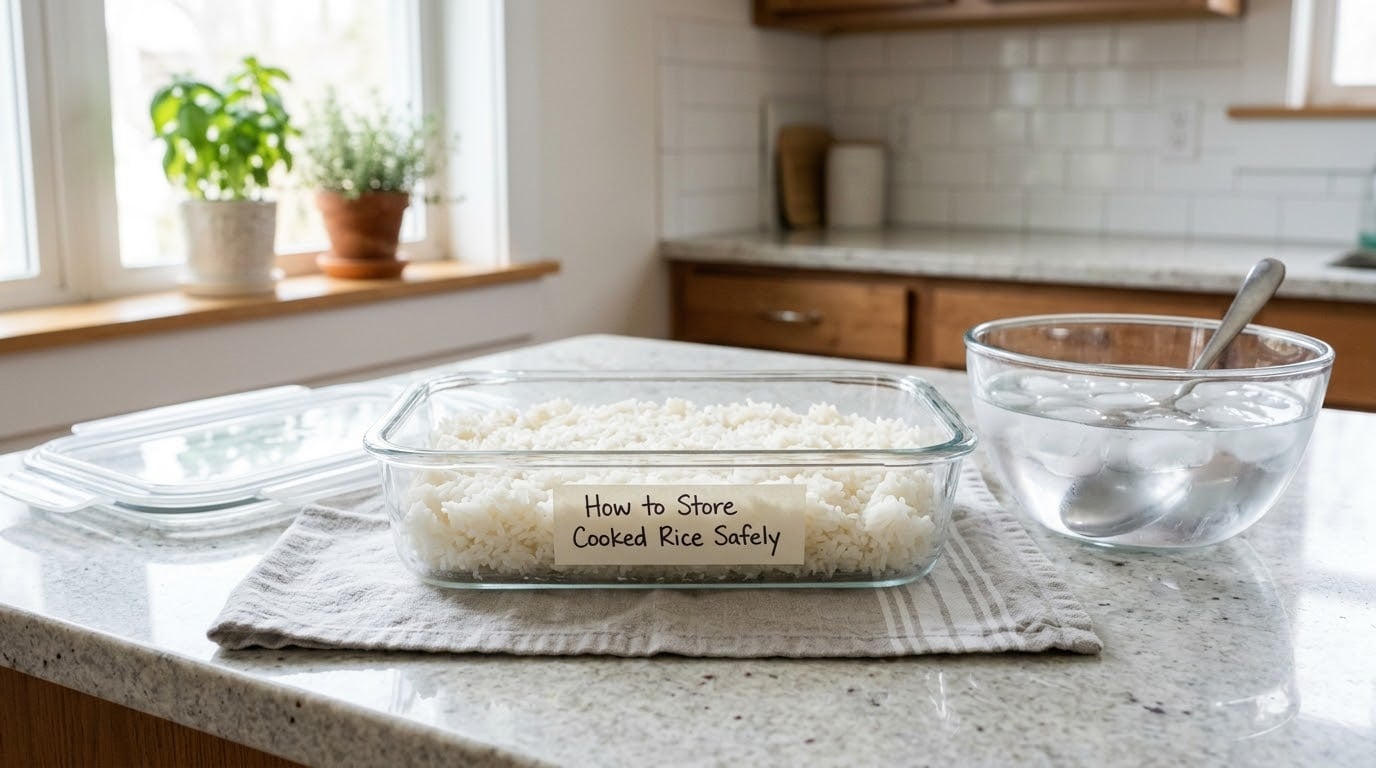
Five steps cover it, and every one of them takes under a minute once you build the habit.
1. Cool it fast, on a wide surface
Spread the rice in a single layer on a sheet pan or a large plate and let it steam off for 10 to 15 minutes. A shallow layer drops its temperature much faster than rice piled into the bottom of a hot pot.
2. Divide it into shallow containers
Move the rice into one or two containers no deeper than about two inches. Deep containers insulate the middle of the pile, so the center stays in the danger zone long after the edges have cooled.
3. Seal it airtight
Lid it down and press out the air. An airtight container keeps the rice from drying out, picking up fridge odors, and absorbing smells from last night’s chili.
4. Refrigerate within two hours
That two-hour rule comes straight from the USDA. If the room is above 90°F (32°C), the window shrinks to one hour, which matters in a hot kitchen or a summer cookout.
5. Label and date it
A piece of tape and a sharpie on the lid turn a guess into a fact. Most forgotten containers of rice are the ones nobody dated. Airtight storage is the same idea behind keeping summer berries fresh longer, just with a very different time limit.
Should Cooked Rice Cool Before It Goes in the Fridge?
Rice should cool quickly, but it does not need to sit on the counter until it feels cold. The popular advice to leave it out all afternoon is exactly what you should not do, since every extra hour between 40°F and 140°F (4°C to 60°C) is an hour the bacteria and their toxins multiply without a fight.
The fix is speed, not patience. Two-stage cooling, the standard used in restaurant kitchens, means dropping the temperature fast enough that the food never spends long in the danger zone. At home you can do that with an ice bath: set your shallow container into a larger bowl of ice water and stir for a few minutes, which takes the rice from steaming to fridge-ready far faster than air alone.
For a big Sunday batch, portioning does double duty. Scoop single servings into freezer bags or containers while the rice is still warm, and cool them separately, so you are not chilling one deep pot and a whole week of meals at once.
How to Tell if Cooked Rice Has Gone Bad
A sour, fermented, or faintly rotten smell is the most reliable signal, and the one people trust most. Open the container before you heat anything, take a breath, and be honest with yourself. Sour or slightly nail-polish-like odors mean bacteria have been working, and cooked rice that smells off should be discarded, not reheated and hoped for.
Texture and appearance come next. Slimy or sticky grains that have gone tacky and gluey, white or grey fuzzy patches, and any visible fuzz on the surface of the rice or the inside of the container all point to mold. Dark discoloration on the grains themselves is another reason to bin it.
Here is the uncomfortable part: rice carrying Bacillus cereus toxins can look and smell completely normal. That is the whole reason this is a time-based rule rather than a sniff test, and it is why a four-day-old container should be emptied whether or not it looks fine. Never taste rice to test it.
Can You Freeze Cooked Rice?
Yes, and for weekly meal prep it beats the fridge. Frozen cooked rice stays safe for two to six months, with three to four months the point where quality starts sliding, and freezing halts the bacterial growth that makes the fridge timeline short.
Freeze it flat in resealable freezer bags with the air squeezed out, or in rigid containers with a little space left for expansion so nothing cracks. Portion it the way you will eat it, because a frozen block of rice is annoying to break apart. A thin layer of oil tossed through the rice before freezing keeps grains from freezing into one solid clump.
Thaw it in the refrigerator, never on the counter, and reheat it straight from frozen or from thawed to 165°F (74°C) until it is steaming throughout. Freezing does not sterilize rice that was already sitting out too long, so freeze it while it is still fresh.
How to Reheat Cooked Rice Safely
Reheat rice until it is steaming hot all the way through, which means 165°F (74°C) internal temperature, and add a splash of water if the grains look dry. A dry reheated pot of rice sticks to the pan and scorches the bottom, which is where people lose patience and eat it half-warm.
There are four methods worth knowing, and they suit different situations.
Microwave
Spread the rice in a shallow dish, dampen it with a teaspoon or two of water, cover loosely, and heat in one-minute bursts, stirring between them. This is the fastest option and the one most likely to leave cold spots if you rush it.
Stovetop or skillet
Add a little oil or butter to a pan, add the rice with a spoonful of water, cover, and let it steam over low heat. This gives the best texture and the closest thing to freshly cooked rice.
Steamer basket
Wet the rice lightly, put it in a steamer basket over boiling water, cover, and steam until hot. The moisture keeps grains separate, and it is the method most people prefer for larger reheats.
Oven
Spread on a baking sheet, sprinkle with water, cover with foil, and heat at 350°F (175°C) until steaming. Good for a whole week’s worth at once.
Reheat rice only once, and reheat only the portion you are eating rather than the whole container. Reheating kills live bacteria, but it does not destroy the heat-stable emetic toxin that made reheated rice syndrome famous in the first place, so old rice does not become safe because you cooked it again.
Cooked Rice Storage Methods Compared
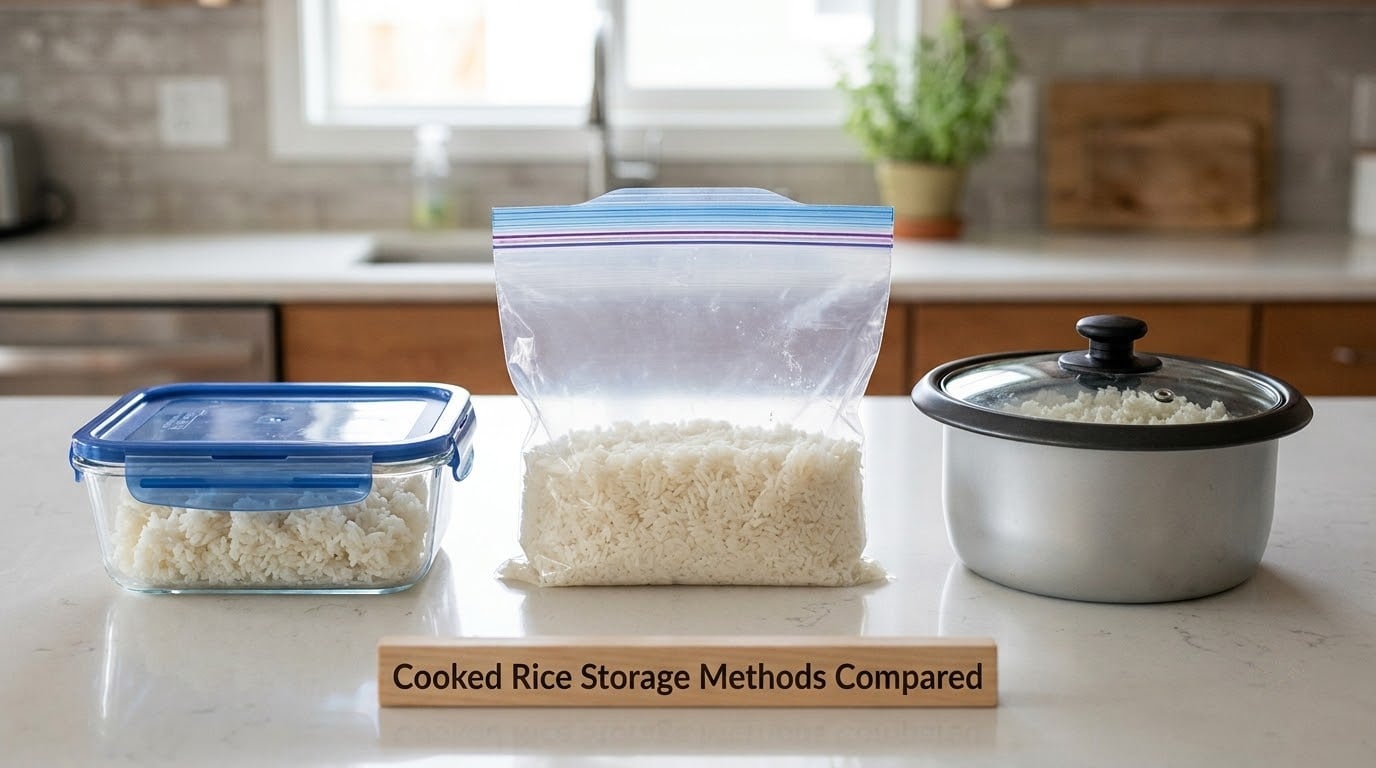
Here is how the main options compare, with the numbers people actually search for.
| Method | Maximum safe duration | Quality after thawing or reheating | Important limitation |
|---|---|---|---|
| Refrigerator (40°F / 4°C or below) | 3 to 4 days | Slightly firmer and drier each day | Clock starts only once the rice is cold and sealed |
| Freezer | 2 to 6 months | Good, though grains crack slightly | Thaw in the fridge, never on the counter |
| Room temperature | 2 hours, or 1 hour above 90°F / 32°C | Not a storage method | Bacillus cereus spores germinate and produce heat-stable toxins |
| Rice cooker keep-warm | About 2 to 4 hours | Gradually dries and hardens | Holds rice above 140°F / 60°C, not below, so overnight is not safe |
| Uncooked, pantry | Months to a year in an airtight container | Unchanged | Check for rice weevils before cooking |
The keep-warm setting deserves the emphasis, since so many households treat it as a fridge. Warm is not cold, and rice held warm overnight is sitting exactly where bacteria like to grow.
Frequently Asked Questions
Is cooked rice safe after 4 days in the fridge?
Day four is the outer edge of the safe window, and only if the rice was cooled within two hours and kept sealed at 40°F (4°C) or below. FoodSafety.gov lists 4 to 6 days, while most food safety experts recommend eating it by day three or four. Smell it first, eat it first, and if anything seems off, throw it out.
Can cooked rice be left out overnight?
No. Cooked rice left at room temperature overnight has spent hours in the 40°F to 140°F (4°C to 60°C) danger zone, which is exactly where Bacillus cereus spores turn into heat-stable toxins. Even if the rice looks and smells fine, the toxin may already be there, and reheating will not destroy it. Refrigerate within two hours, or within one hour if the room is above 90°F (32°C).
Why does cooked rice smell bad after reheating?
Bacteria such as Bacillus cereus produce compounds that give spoiled rice a sour, fermented, or faintly rotten odor, and heating releases more of those volatile compounds into the air. If the smell shows up only after reheating, treat the container as spoiled rather than trying to heat it again. Old rice should be discarded, not rescued.
Can you reheat cooked rice more than once?
Reheat rice only once. The second heating does not add safety, because the main risk, the heat-stable emetic toxin, survives cooking and reheating alike. Reheat only the portion you plan to eat, heat it to 165°F (74°C) until steaming throughout, and refrigerate the rest untouched so you are not repeatedly cycling the whole batch.
How should I store rice with vegetables or sauce?
Treat a mixed dish the same way, but know that the timeline is set by its most perishable ingredient. Rice with meat, seafood, or dairy in it should be eaten within 3 to 4 days and refrigerated within two hours. Cool it in shallow containers, and refrigerate sauce separately when you can, since a sealed container full of liquid cools far more slowly than plain rice.
Does cooked brown rice last longer than white rice?
Not in any meaningful way. Both follow the same 3-to-4-day refrigerated window, because the difference comes down to bran and oil content, not anything that changes how fast bacteria grow. Brown rice does hold its texture better and smell more strongly in the fridge, which makes it easier to spot when something has gone off, but the safety timeline is identical.
Conclusion
How long does cooked rice last in the fridge? Three to four days, counted from the moment it goes into the refrigerator. Cool it fast on a wide surface, seal it in a shallow airtight container, keep your fridge at 40°F (4°C) or below, and date the lid so you are not guessing.
Then trust the clock over your nose. If the rice smells sour, looks slimy, or has any fuzz on it, empty the container, and skip the rice cooker keep-warm setting next time.