
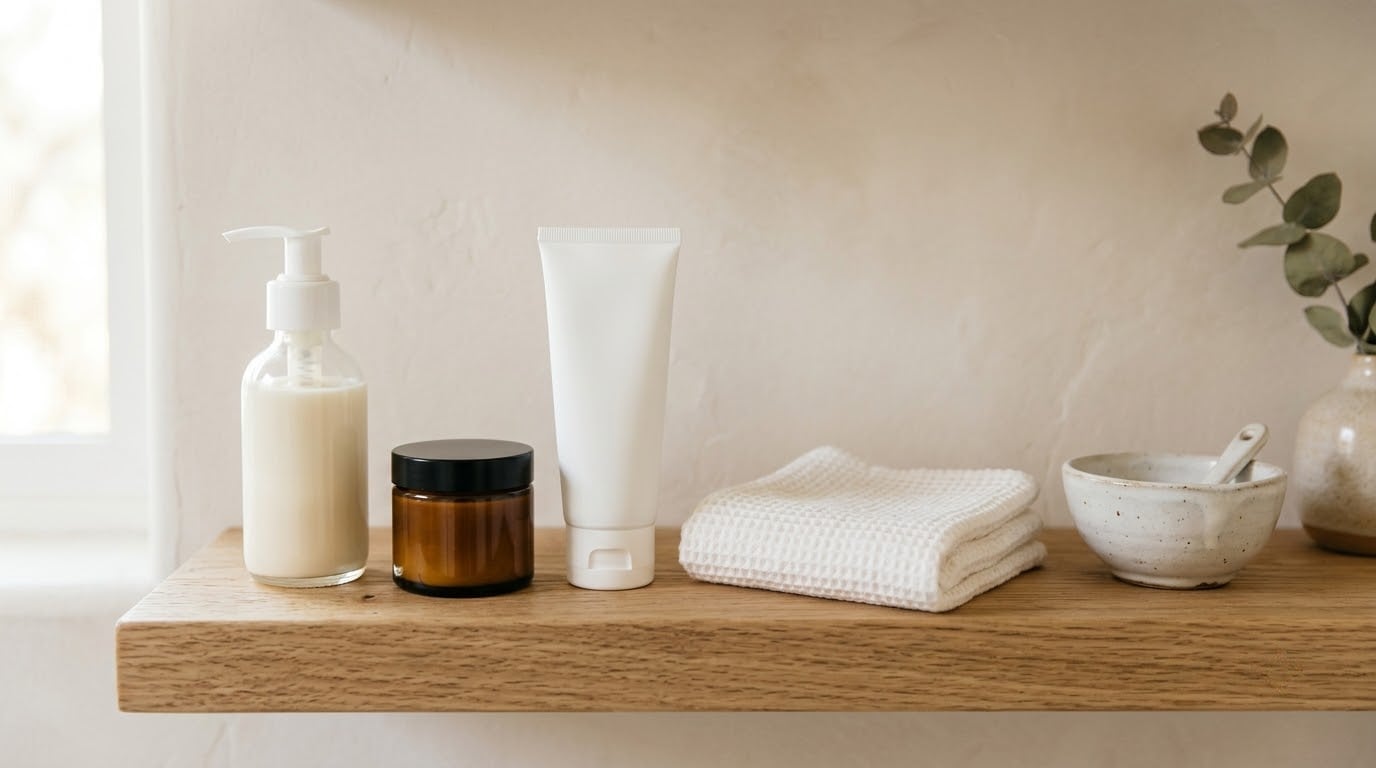
Building a simple skincare routine for beginners takes three products and about four minutes, twice a day. You need a gentle cleanser, a moisturizer, and a broad-spectrum sunscreen with SPF 30 or higher, and that is genuinely the whole thing. Everything else on the shelf can wait until your skin has behaved well for a few months.
Most of the confusion beginners hit comes from treating skincare like a shopping list. A ten-step routine is not a better routine. It is more chances to irritate your face, more money spent, and more products you cannot tell apart when one of them causes a reaction. I like starting people at three and adding the fourth product only when a specific problem shows up.
A quick note on where this advice stops: nothing here treats a skin condition. Acne that keeps coming back, eczema, rosacea, melasma, or a rash that will not settle need a dermatologist, not a blog post.
Table of Contents
- What You Need for a Simple Skincare Routine
- How to Build a Simple Skincare Routine for Beginners
- Common Skincare Routine Mistakes
- Frequently Asked Questions
- How many steps should a beginner skincare routine have?
- Do I need a toner in my skincare routine?
- Should I cleanse in the morning or just use water?
- What order should I apply skincare products in?
- How do I choose skincare products for sensitive skin?
- When should I see a dermatologist instead of building a routine at home?
- Start Small and Stay With It
What You Need for a Simple Skincare Routine
The core is three items, and each one has a single job.
- A gentle cleanser that lifts oil and sunscreen without stripping your skin.
- A moisturizer that holds water in your skin and supports the barrier.
- A broad-spectrum sunscreen, SPF 30 or higher, reapplied according to the label.
What you can skip in the beginning: serums, exfoliating acids, retinol, toners, essences, facial oils, second cleansers, and eye creams. None of them are bad products. They are simply products you cannot evaluate when several new things land on your face at once.
Pick for skin type, ingredient list, and texture you can live with. A product that feels great in the store often disappears under sunscreen and makeup, so buy small sizes while you are testing. If you are already building a household list of anything else, our guide to building a sensible shopping list uses the same one-at-a-time logic.
How to Build a Simple Skincare Routine for Beginners
Order matters more than people expect. You go from thinnest to thickest, so the moisturizer sits under the sunscreen and nothing gets sealed in that should have absorbed first.
Choose a Gentle Cleanser
Use lukewarm water, a small amount of cleanser, and gentle circular motions for about thirty seconds. Rinse, pat dry with a clean towel, and stop. If your face feels tight, squeaky, or hot afterward, that cleanser is too strong for you, no matter what the label says.
Wash at night to remove sunscreen, makeup, sweat, and the oil your skin produced all day. In the morning you can either cleanse again or rinse with water only, and beginners tend to do better with water if their skin feels dry or reactive. If you are active or broke out during the night, cleanse properly in the morning too.
Two washes a day is plenty for almost everyone. More than that, plus scrubs and cleansing brushes, is a common route to redness that takes months to settle.
Apply Moisturizer for the Skin Barrier
Apply moisturizer while your skin is still slightly damp. That is the single easiest habit to get right, and it does more good than any expensive cream.
Match the texture to your skin. Dry skin usually prefers a cream or a thicker lotion. Oily skin usually does fine with a light gel. Combination skin often wants a gel in the morning and something richer at night. Sensitive skin does best with a short ingredient list, ideally fragrance-free, and moisturizers built around ceramides, squalane, or colloidal oatmeal.
A rough guide for a face: a pea-sized blob for the whole face, a little more for the cheeks and around the eyes, and a thin layer on the neck if you care about it looking even. Give it a minute or two before the next step so it can settle.
Use Broad-Spectrum Sunscreen
Broad-spectrum means it protects against both UVA and UVB rays. SPF 30 is the number to look for, on cloudy days as much as bright ones, and it goes on last so it sits on top of everything else rather than under your moisturizer.
Apply enough to matter: two finger-lengths of a lotion for your face, neck, and ears, or a generous half-teaspoon for the face alone. A little goes a long way on the back of your hands, which people forget. Check the label for how often to reapply, since that depends on the formula and on how much you actually put on.
Mineral sunscreens use zinc oxide or titanium dioxide and are often the better first choice for reactive skin, though they can leave a white cast on deeper skin tones. The newer tinted mineral formulas reduce that a lot. If yours leaves a cast you dislike, try a different product rather than skipping the step.
Start Slowly and Track What Works
Add one product, then leave it alone for four to six weeks before you judge it. Skin turns over slowly, and most irritation shows up in the first week, so the waiting period protects you from both giving up too early and piling on more.
A short notebook helps more than memory. Note the date, the product, and any change in dryness, oiliness, or breakouts. When something goes wrong, you will want to know which of the last three products to blame.
Stressed weeks do not have to be the ones where you stop. If your whole morning falls apart, sunscreen alone beats a full routine you never do. This is the same reason eating well under stress comes down to two or three dependable meals instead of a perfect plan.
Common Skincare Routine Mistakes
Using too many products at once. The fix is the one-at-a-time rule. Extra tip: if your bathroom shelf has more than five things, put the rest away for two months.
Washing too often or too hard. Over-cleansing is a leading cause of the tight, flaky look beginners blame on a bad moisturizer. The fix is two short washes with lukewarm water, no scrub. Extra tip: if your cheeks flake after cleansing, that is your cleanser, not your skin type.
Skipping sunscreen. This is the step people drop first and miss most. The fix is to reapply it in the bathroom where you already stand, not in a bag. Extra tip: a stick or cushion format gets used more often than a bottle because it takes five seconds.
Applying products in the wrong order. Thick before thin means your sunscreen ends up under your cream and your serums never reach skin. The fix is thinnest to thickest, cleanser first and sunscreen last. Extra tip: give each layer thirty seconds to soak in.
Introducing several new products together. Then you get a reaction and no clue which one caused it. The fix is one new product every one to two weeks, with a patch test on your inner arm for a day or two first. Extra tip: stop using everything new and go back to the routine you know worked.
Trying home remedies and harsh DIY exfoliation. Household scrubs, undiluted acids, and baking soda are a bad trade for smoother-looking skin for a week. The fix is patience. Extra tip: if you want exfoliation later, introduce a single acid or retinol at night, twice a week at most, once your base routine is boring.
Switching constantly. The community consensus on skincare forums is consistent: give each product four to eight weeks before you decide anything, and change one thing at a time.
Frequently Asked Questions
How many steps should a beginner skincare routine have?
Three. A gentle cleanser, a moisturizer, and a broad-spectrum sunscreen with SPF 30 or higher. That is the routine that covers cleansing, hydration, and daily UV protection, and it is the only setup that most beginners need for months. Add a fourth product when a specific concern appears, not because a routine chart tells you to.
Do I need a toner in my skincare routine?
No, not for most beginners. A toner is optional and does not clean your skin any better than washing does. Skipping it removes a step that may irritate you and can carry alcohol or fragrance. If you like the feel of one, add it after cleansing, before moisturizer, and only after your three core steps have been stable for a few weeks.
Should I cleanse in the morning or just use water?
Either works, and you can decide based on your skin. Water in the morning is gentler and often enough, since most people have not accumulated much overnight beyond oil. Cleanse properly if you were active, wore sunscreen the night before, or wake up with breakouts. Try water for two weeks and switch to a gentle wash if your skin feels less comfortable by midday.
What order should I apply skincare products in?
Go from thinnest to thickest. Cleanser first, then any water-based serum, then a thicker treatment, then moisturizer, and sunscreen last in the morning. In the evening you skip sunscreen. Give each layer about thirty seconds before the next one. This order keeps the moisturizer under the sunscreen and stops treatments from being sealed in before they absorb.
How do I choose skincare products for sensitive skin?
Look for fragrance-free, alcohol-free formulas with short ingredient lists, and start with the gentlest version of each step: a low-foam cleanser, a moisturizer built around ceramides, squalane, or colloidal oatmeal, and a mineral sunscreen with zinc oxide or titanium dioxide. Patch test anything new on your inner arm for a day or two, then on a small area of your face, before daily use.
When should I see a dermatologist instead of building a routine at home?
See a dermatologist for anything that is painful, spreading, or lasting. That includes deep or cystic acne, eczema or psoriasis flares, persistent redness, burns, marks that are getting darker, or a reaction that has not settled after you stop a product. Prescription treatments work differently from anything you can buy, and waiting tends to mean longer treatment later.
Start Small and Stay With It
Tonight, pick three products. Wash your face with lukewarm water and a gentle cleanser, apply moisturizer while your skin is damp, and put sunscreen on tomorrow morning. Then write the date down.
Give it four to six weeks. If something stings, itches, or breaks out, drop that one product and go back to what was working. If your skin is calm and comfortable, that is your routine, and it is more than enough. Add the fourth step when you can name the problem you are trying to fix, one product at a time. And if you find yourself ordering a ninth bottle to fix the eighth, pause and go read our piece on catching the pattern before you act on it — the same reflex applies.