
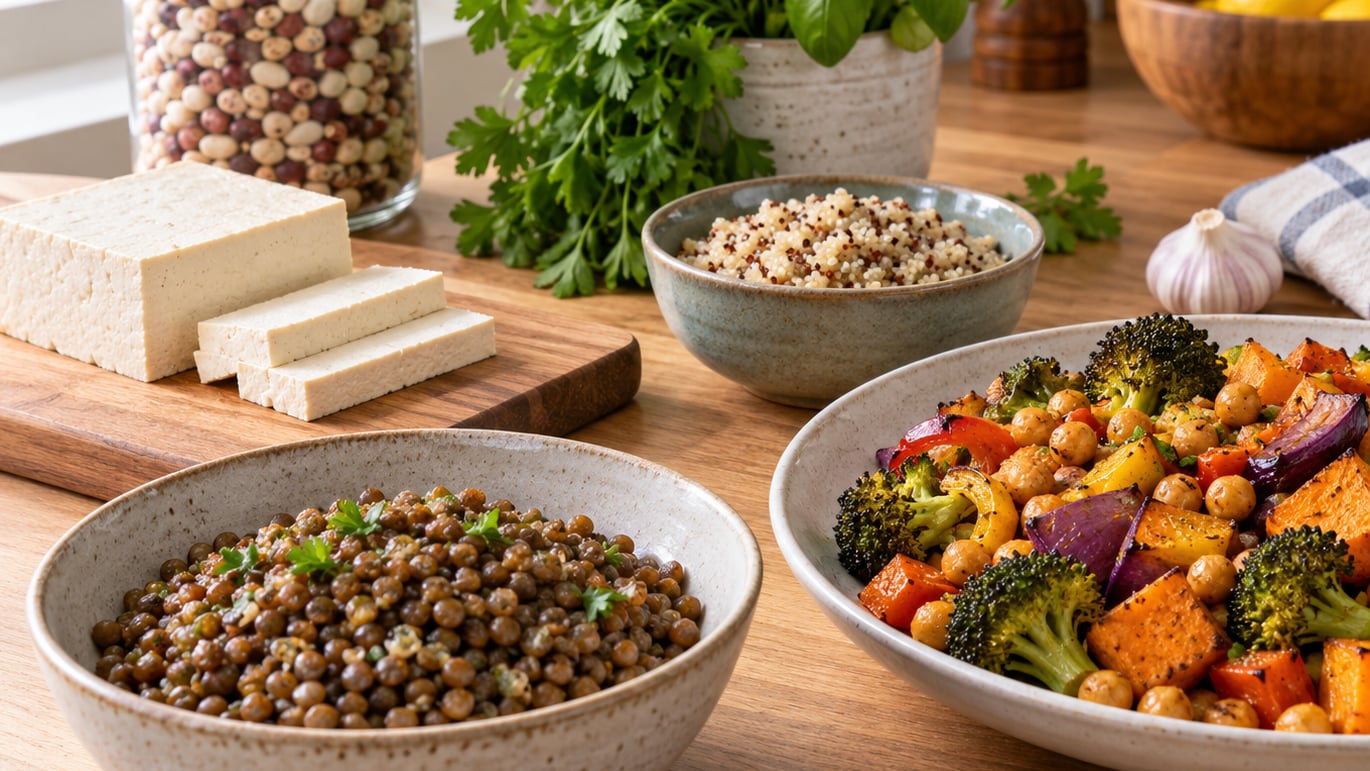
Learning how to transition to a vegetarian diet goes best as a series of small swaps rather than one dramatic cut. Drop meat from one meal a week, keep a protein source in every meal, and give your gut four to eight weeks to adjust. Eggs and dairy can stay or go, depending on which version suits you.
The honest timeline is longer than most people expect. Beginners who skip planning tend to stall in week two; beginners who change one meal at a time usually get there without drama.
Nothing about this requires new equipment, a specific budget, or giving up your social life. It does require deciding which dinner you are changing first and having a can of beans in the cupboard before you get hungry.
Table of Contents
- What You Need
- Step-by-Step
- 1. Set a realistic timeline and define your version of vegetarian
- 2. Keep the meals you already enjoy
- 3. Plan your protein-centered meals
- 4. Learn the nutrients worth monitoring
- 5. Shop and cook with a simple vegetarian rotation
- 6. Handle eating out, social situations, and imperfect days
- 7. Review how you feel and adjust the plan
- Common Mistakes
- Frequently Asked Questions
- Conclusion
What You Need
A transition fails on logistics far more often than it fails on willpower. Before you change a single meal, line these up.
- A timeline that fits your actual week. Four weeks if you cook most of your food. Eight to twelve if you eat out several times a week or cook for a household with mixed diets. Six months if that is the pace that will still feel normal when the novelty wears off. Write the end date down somewhere you will see it.
- Two or three new staples, not twenty. Canned beans and chickpeas, dried lentils, frozen vegetables, rice, pasta, tortillas, and the seasonings you already like. Restocking is cheap because most of it keeps for months in a cool cupboard.
- Basic kitchen gear. A can opener, a colander, a sharp knife, and one pot big enough to cook a full batch of beans or grains. That is genuinely all a new vegetarian needs.
- A way to track what you eat. A notes app, a paper list, or a folder of plate photos. Three weeks of notes tells you things memory will not, especially about energy and digestion.
- Someone qualified to ask. A primary care clinician or registered dietitian, if you are pregnant or under 18, train hard, have anemia or an iron deficiency, live with a gastrointestinal condition, or have a history of disordered eating. This is general information, not a plan for your body.
- A budget reality check. Compare what you spend now against a planned shopping list. Tinned beans, rice and frozen vegetables usually cost less per meal than a comparable meat dinner, and dried legumes cost less still. The expensive part is the processed substitutes, and those are optional.
Frame the change honestly rather than as a moral project. You are adjusting what you buy and cook, not auditioning for a personality.
Step-by-Step
Most of the process below works the same for a beginner replacing beef and for someone whose only meat is chicken. Move at a pace that matches your budget, your schedule, and your household.
1. Set a realistic timeline and define your version of vegetarian
The first thing to settle is what you are actually leaving on the table. Terms get used loosely online, so pick one and write it down.
- Lacto-ovo vegetarian: no meat or fish, but eggs and dairy stay. Most beginners land here.
- Pescatarian: no meat, fish and seafood stay. A useful bridge if fish was never your problem.
- Flexitarian: mostly plants, meat kept for some meals. Where most people land after a year anyway.
- Vegan: no animal products at all, including honey and gelatin.
That definition also drives your label reading. Vegetarian packaged foods can contain gelatin, animal rennet in cheese, lard, fish sauce, and carmine, all of which are common in things people assume are safe, such as frosted baked goods and vegetable broth. Vegan versions usually say so on the front of the pack. Skim the ingredient list on the first few purchases, then stop thinking about it.
You will know the timeline is working when adding one more meat-free meal per week stops feeling like a project and starts feeling like Tuesday.
2. Keep the meals you already enjoy
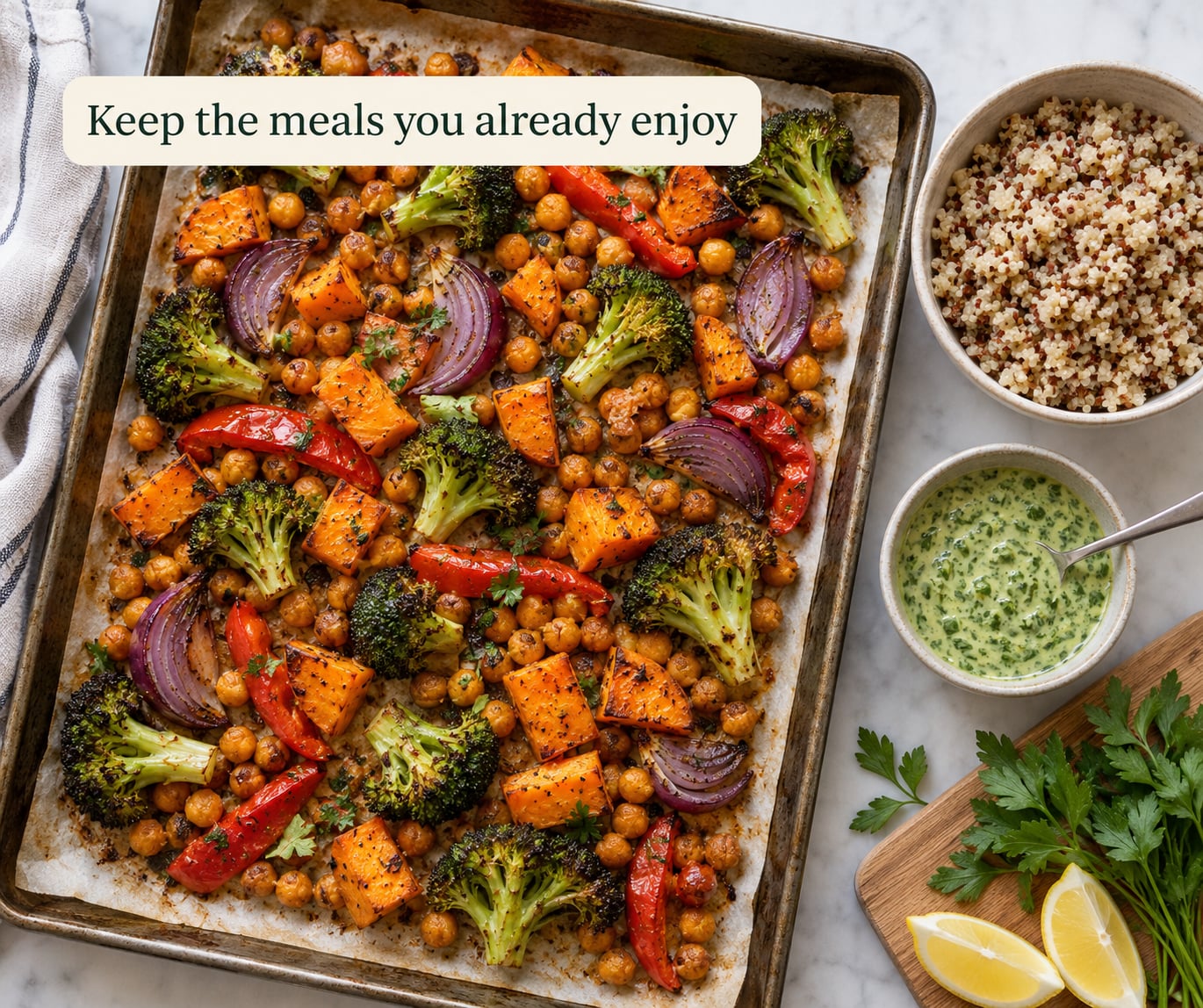
This is the advice beginners repeat most often in vegetarian forums, and it is the reason most transitions succeed: keep the dish, change the protein.
- Taco night gets black beans, corn, peppers, the same salsa and the same toppings.
- Spaghetti bolognese gets red lentils plus finely chopped mushrooms and carrot in the same tomato sauce.
- Stir-fry gets pressed tofu or edamame instead of chicken, cooked the same way.
- Sheet-pan dinner gets chickpeas or cubed sweet potato added to the vegetables and the same seasoning.
- Burger night gets a bean and oat patty, mushrooms, or a portobello cap with the same bun and toppings.
Breakfast gets forgotten, and it is the most common beginner question in every forum thread. Shakshuka, tofu scramble with spinach, oatmeal with seeds and nut butter, Greek yogurt with fruit and walnuts, or beans on toast will carry you.
The test for whether a swap is working is simple: you eat the whole plate and do not immediately go looking for something else.
3. Plan your protein-centered meals
Protein is where most new plant-based meals fall apart, because people replace a 25-gram steak with six cherry tomatoes. Build the plate first and the vegetables end up in the space that is left.
A formula that works: half the plate vegetables or fruit, one quarter protein, one quarter whole grains or starchy vegetables, plus a fat you actually like. Roughly 20 to 30 grams of protein per main meal, three meals a day, gets most adults comfortably over the line without thinking about it.
For reference, one cup of cooked lentils has about 18 grams, a cup of edamame about 18, a cup of cooked chickpeas about 15, three-quarters of a cup of Greek yogurt about 17, two large eggs about 12, a cup of cottage cheese about 28, and half a block of firm tofu roughly 10 to 15. Variety matters more than any single food, because plant proteins each fall short somewhere and cover the gap elsewhere.
If you are not a bean or tofu person, you have options: eggs, dairy, seitan, textured vegetable protein, edamame, peanut butter, pumpkin seeds, and pistachios all count. Getting comfortable with protein quantities without a powder is covered in detail in how to eat enough protein on a vegetarian diet without powder.
A simple daily check: look back at the day and ask whether any meal had a real protein source. If two of three were just salad and grain, the next day needs a deliberate fix.
4. Learn the nutrients worth monitoring
Vegetarian diets are not automatically deficient, and general guidance from bodies such as the Academy of Nutrition and Dietetics emphasizes variety rather than supplementation. A few nutrients deserve attention because plant versions are less available or less well absorbed.
- Vitamin B12. Found reliably only in animal products, so it comes from fortified foods or a supplement, particularly for vegans. Our guide to B12 on a plant-based diet covers the food sources and the questions to ask your doctor before adding a supplement.
- Iron. Plant iron is non-heme and absorbs less easily. Pair beans, lentils, tofu, fortified cereal, pumpkin seeds and greens with vitamin C sources such as peppers, citrus, strawberries and tomatoes, and keep tea and coffee off the meal. If you are tired, breathless or unusually pale, ask a clinician about blood tests rather than guessing.
- Zinc. Found in beans, lentils, cashews, seeds, tofu and fortified cereal. Soaking beans, sprouting and fermenting reduce phytates, which sit in the way of zinc and iron absorption.
- Calcium. Fortified plant milks, calcium-set tofu, tahini, almonds, white beans and cooked greens all contribute. Check the label, because plant milks vary enormously and some have almost none.
- Iodine. Comes mainly from iodized salt and seafood, and most plant milks are not fortified with it. Using iodized salt rather than sea or kosher salt is the simplest fix.
- Omega-3 fats. Flax, chia, hemp and walnuts supply ALA. Algae-based DHA and EPA are the option vegetarians and vegans use instead of fish oil.
- Vitamin D. Hard to get from food alone in many climates, and levels vary by skin tone, latitude and season. Worth discussing with a clinician.
No dosages here on purpose. A doctor or registered dietitian can tell you what your levels actually are and what, if anything, you need to take.
5. Shop and cook with a simple vegetarian rotation
The rotation is what stops week four from feeling like punishment. Pick three grains, three proteins, and a rotating pile of vegetables, then build meals from those instead of planning each one from scratch.
- Grains: rice, pasta, quinoa, couscous, oats, tortillas, potatoes.
- Proteins: canned beans and chickpeas, dried lentils and black beans, tofu, tempeh, eggs, frozen edamame, cottage cheese and Greek yogurt.
- Vegetables: a mix of fresh for flavour and frozen for speed and price. Frozen is picked and frozen at peak, which is why it is not the downgrade many people assume.
- Fats and extras: olive oil, nuts and nut butters, seeds, avocado, tahini, nutritional yeast, miso.
- Flavour carriers: vegetable broth powder, garlic, cumin, smoked paprika, curry paste, dried herbs, vinegar, soy sauce or tamari.
Batch cooking is the single habit that makes the week work. Cook a big tray of roasted vegetables and a pot of grains on Sunday, boil a jar of beans, and put half the beans in the freezer before they spoil. Assembling a bowl, a wrap or a soup at 7pm then takes ten minutes. Cooked beans and rice keep three to four days in the fridge; reheat leftovers to 165°F, and freeze anything you will not finish in that window.
A rotating bowl, using whatever is in the crisper, is the most reliable fallback meal there is.
6. Handle eating out, social situations, and imperfect days
Restaurants are the part most beginners dread and the part most advice ignores. You do not need the staff to become vegetarian experts. You need three questions and a fallback.
- Does the soup or sauce use meat stock or fish sauce? Many vegetable and noodle dishes do.
- Is the cheese made with animal rennet? Traditional hard cheeses often are, though many are now vegetarian.
- Are the dumplings fried in animal lard?
With answers in hand, most menus still offer something workable: pasta with olive oil, tomatoes and vegetables instead of a meat sauce; grilled vegetables with hummus; a salad with beans or feta on the side; chips with guacamole; a curry with rice where you ask them to hold the meat. Order the side vegetables if they will not swap the main. Anyone with an allergy or a strict version should tell the server clearly at ordering time rather than quietly picking around the plate.
At family dinners, the polite framing is about the dish, not the belief. Saying I am doing the vegetarian version tonight is hard to argue with, and it keeps the conversation off your body and your character. If someone comments on your plate, you are allowed to change the subject.
Travel works the same way: airports, motorway stops and one city restaurant per trip are your anchors, not failures. And eating a meal that was not perfectly vegetarian is not a relapse. One dinner is not a diet.
7. Review how you feel and adjust the plan
Two to four weeks in, do a short review with something more useful than opinion. Track five things across each week.
- Energy: crashes after lunch are usually a protein and fat gap, not the diet itself.
- Fullness: if you are hungry within two hours of eating, the meal was missing protein, fat or both.
- Digestion: bloating and gas in the first few weeks are common and usually fade as fiber intake rises gradually. Persistent pain or bleeding is not normal and warrants a doctor.
- Budget: compare your grocery receipt against last month, not against a meal-kit.
- Variety: count how many different vegetables and protein sources you actually cooked, not how many were in the fridge.
Most people notice digestion and energy settle somewhere around weeks three to four, and cravings for meat fade over roughly the same window. Hair thinning, constant fatigue, feeling cold all the time or a missed period are signs to stop self-managing and get bloodwork done.
Building the gut side of things goes faster with fermented foods in the mix. Our piece on how to add fermented foods to your diet has low-effort starting points if bloating is your main complaint.
Common Mistakes
Most abandoned transitions fail on one of six predictable errors.
- Eating salad and calling it a meal. Fix: add a protein and a fat to every salad. Chickpeas, edamame, lentils, tofu, eggs, feta, walnuts or a tahini dressing turn it into dinner.
- Swapping meat for processed vegetarian products only. Fix: use veggie burgers, plant-based mince and plant-based cheese as occasional convenience items, and let beans, tofu, eggs and dairy carry the week.
- Cutting out meat, dairy and gluten together. Fix: one change at a time, so you can tell what your body actually objects to. If gluten genuinely affects you, that is a separate conversation with a clinician.
- Having no snack plan. Fix: keep two or three options within reach, such as nuts, fruit with peanut butter, roasted chickpeas, Greek yogurt, boiled eggs or hummus and carrot sticks. A hungry person makes the next meal a bad decision.
- Jumping straight to a very high fiber diet. Fix: add one portion of beans or a big salad every few days rather than overnight, drink plenty of water, soak dried beans and start with half-cup portions. Gas and bloating in the first two to six weeks are the reason most people quit on day nine.
- Treating a single meal as failure. Fix: the only useful rule is what the next meal looks like. One barbecue, one family dinner or one missed week tells you nothing about whether the pattern works.
Three things help more than any of the above: tell one person so it is not a surprise, keep a visible list of meals that work, and cook the same four dinners on rotation until new ones feel easy.
Frequently Asked Questions
How long does it take to transition to a vegetarian diet?
Most people need four to eight weeks to make it routine, and three months before it stops feeling like a new diet. Hunger and cravings for meat usually ease within the first two to four weeks, while digestion tends to settle around weeks three to six as fiber intake rises. Going slower than that is fine as long as you keep adding meat-free meals.
Do I have to give up meat all at once?
No, and most beginners should not. Removing meat from one meal a week and adding one more each week is the approach repeatedly recommended in vegetarian communities, and it works because nothing feels like a restriction. Some people go cold turkey and enjoy it, but if you already eat a plant-heavy diet, the change is far smaller than you expect.
How do I get enough protein as a vegetarian?
Eat a protein source at every meal rather than trying to front-load it at dinner. Lentils, chickpeas, black beans, edamame, tofu, tempeh, seitan, eggs, dairy, nuts and seeds all count. A cup of cooked lentils has about 18 grams and a cup of cooked chickpeas about 15, so a bean-based bowl with grains usually clears a meal target on its own.
What can I eat instead of meat every day?
Think in categories rather than replacements. Beans and lentils for stews and bowls, tofu and tempeh for stir-fries and curries, eggs for scrambles and frittatas, mushrooms for texture in sauces, cheese for richness, and chickpeas roasted with spices for a weeknight stand-in. Keeping your usual meals and swapping only the protein gives you far more variety than searching for a single meat substitute.
How do I eat out at restaurants as a vegetarian?
Ask whether the dish uses meat stock, fish sauce, animal rennet or lard, then choose from what is left. Pasta with olive oil and vegetables, grilled vegetables with hummus, a salad with beans, or a curry served with rice usually works. Tell the server clearly at ordering rather than quietly picking around the plate, and keep one or two familiar restaurants in your regular rotation.
Conclusion
Pick one dinner you already cook and change only the protein this week. Write your end date, put a can of beans in the cupboard, and add one more meat-free meal next week.
Flexibility is what makes this stick, not perfection, and variety across the week matters more than any single food. For individual nutrient questions, bloodwork, or a diet with medical or training considerations, a registered dietitian or your doctor is the right call.