

The simplest way to add fermented foods to your diet is to eat one small serving of a live-culture food each day, attached to a meal you already eat, then add a second serving after a week or two. Most people reach two to three servings across two or three different foods within a month, and they rarely need to change the rest of their eating.
The reason to go slowly is boring but real. Fermented foods add a lot of live bacteria and fermentable fiber at once, and a gut that is not used to them often answers with gas and bloating for a few days. Small, steady portions cause far less trouble than a big enthusiastic plate on day one.
This guide covers what to buy, how to build the habit week by week, and the food safety bits that matter. If you are dealing with a medical condition, are pregnant, or take prescription medication, talk to your doctor before changing your diet.
Table of Contents
- What You Need Before You Start Adding Fermented Foods
- Step-by-Step: How to Add Fermented Foods Week by Week
- Frequently Asked Questions
- How quickly should I add fermented foods to my diet?
- Are all fermented foods the same as probiotic foods?
- What is the easiest fermented food for beginners to try?
- Can I eat fermented foods every day?
- How do I choose fermented foods with less added sugar?
- What should I do if fermented foods cause digestive discomfort?
What You Need Before You Start Adding Fermented Foods
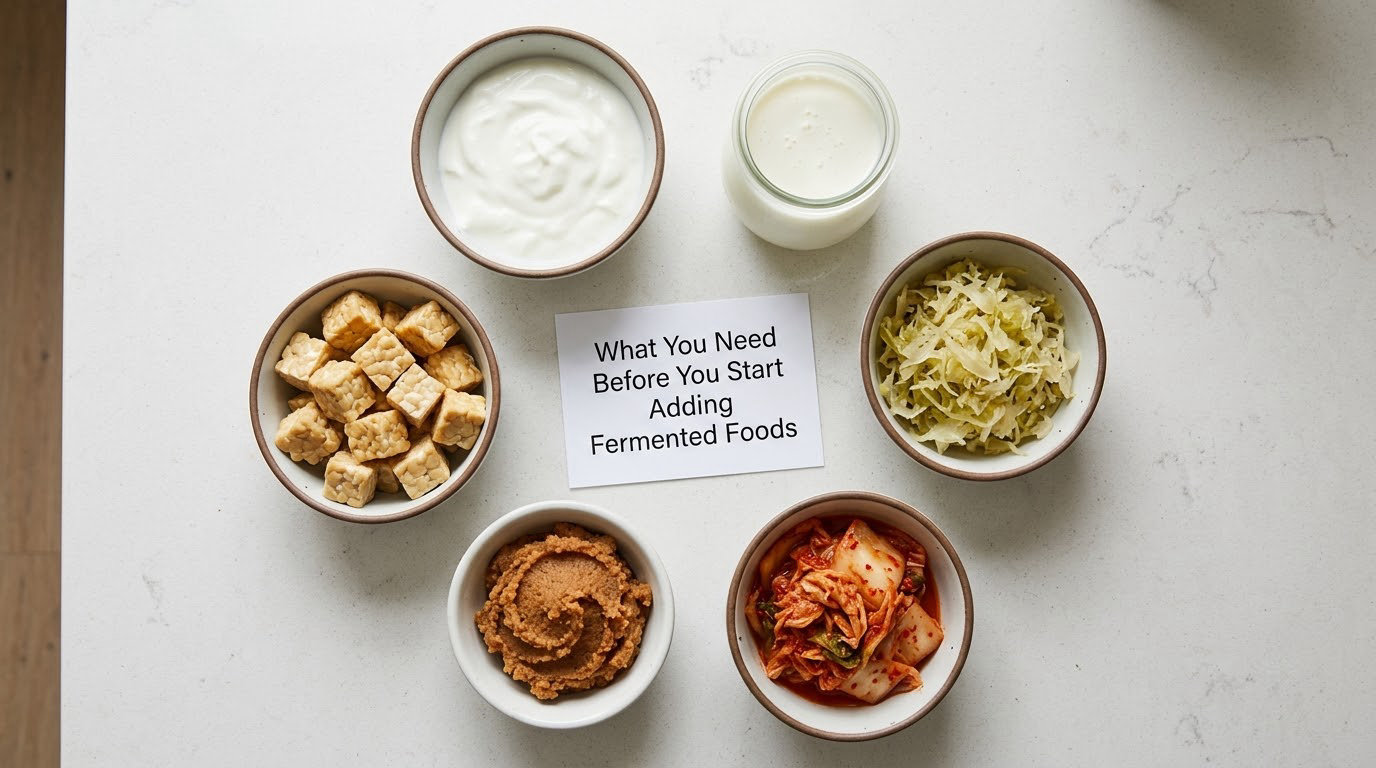
A fermented food is one where live bacteria, yeasts or molds did the preserving. They convert the sugars in the food into acids, gases or alcohol, which is why fermented things taste sour, fizzy or funky and keep without a heat process.
That last part is the one to understand before you shop. Fermentation happens either naturally, from organisms already on the food, or from cultures added on purpose. Either way, live cultures only survive if nothing kills them afterward.
- Naturally fermented: yogurt, kefir, kimchi, sauerkraut, miso, tempeh, natto, sourdough.
- Cultured, then pasteurized: some Greek yogurts and drinking yogurts are cultured first, then heat-treated for shelf life. Check the label for a live-culture statement.
- Fermented and then cooked: most cooked miso soup, tempeh in a stir-fry, idli and dosa. The microbes are gone, but the compounds they made are not, which researchers call postbiotics.
- Pickled in vinegar: most jarred dill pickles and many shelf-stable pickled vegetables. The sourness comes from added vinegar, not from microbes, so there are usually no live cultures at all.
That pickle row is the one that catches people. Sliced gherkins in brine are a pickle, not a fermented food, and that is true even when the label says something about natural pickling agents. If the jar went through a pasteurization step, or lives on a shelf, assume no live cultures.
For your first purchase, pick two or three from this shortlist rather than everything at once:
- Plain yogurt with live and active cultures listed on the label
- Plain kefir, which is milk fermented with kefir grains and carries a wider range of organisms than yogurt
- Refrigerated sauerkraut or kimchi from the refrigerated case, not the shelf
- White miso, kept for cooking and dressings
- Tempeh, usually sold near the tofu
- Water kefir or kombucha if you want a drinkable option with no dairy
What to Check on the Label
Look for the words live and active cultures, naturally fermented, raw or unpasteurized. The refrigerated case is a reliable shortcut, since anything that needs cold storage is usually the version that still has organisms in it.
Then check the sugar line. Flavored yogurt and drinkable kombucha can carry as much sugar as a dessert, which works against the habit you are building. Plain forms are cheaper per serving and let you control the sweetness yourself.
If you are already label-checking everything else in your basket, our guide to how to spot hidden sugar in packaged foods covers the pattern that shows up in sauces, dressings and snack bars.
Step-by-Step: How to Add Fermented Foods Week by Week

Start With One Fermented Food
Choose one food you already like the taste of, and commit to it for the first week. That matters more than picking the healthiest option, because a food you enjoy is one you will still be eating in week four.
Keep the serving small. Half a cup of yogurt, a quarter cup of sauerkraut, or a tablespoon of miso whisked into something warm is plenty to start. Skipping breakfast because you are waiting for the perfect serving size is how most plans end on day two.
Eat it at the same time each day. Attaching it to an existing meal, breakfast for example, removes the decision entirely.
Add Fermented Foods to Meals You Already Eat
The goal is substitution, not addition. You are replacing something you buy, not stacking a new course on top of dinner.
Breakfast
- Stir plain yogurt into oats and top with the fruit you normally use
- Blend kefir with banana and a handful of nuts for a drinkable version
- Spoon yogurt over a bowl that already has granola in it
Lunch
- Put a forkful of sauerkraut under sandwich fillings instead of raw cabbage
- Dollop yogurt onto a grain bowl in place of a sour cream sauce
- Add kimchi to the side of a rice dish you already make
Dinner
- Whisk miso into a pot of soup after it comes off the heat
- Cube tempeh into a stir-fry in place of chicken
- Spoon kimchi fried rice into the last five minutes of cooking
Snacks and drinks
- Swap the afternoon soda for water kefir or diluted kombucha
- Eat fermented carrot sticks or cucumber pickles straight from the jar
- Use kefir in place of milk in a smoothie
On the fermented-and-then-cooked question that comes up constantly on r/fermentation: heat does reduce live organisms, which is why miso goes in after cooking rather than during a long simmer. The good news is that cooked ferments are not a wasted serving, because the compounds the microbes produced survive the heat.
For the snack side of this, a homemade mix gives you more control than the jarred stuff. Making your own trail mix works well here, since you can toss in dried fruit alongside the nuts and keep the mix cheap enough to eat every day.
Increase Variety Gradually
Week two is where most people add a second food, and most people should. Variety matters more than volume here, because different ferments carry different organisms and different plant compounds.
Add the second food to a different meal than the first one. A fermented vegetable at lunch and yogurt at breakfast gives you two sources across the day without doubling the load on your stomach at once.
By weeks three and four, aim for two to four servings daily from at least three different foods. Someone who only tolerates a small amount of dairy could use kefir, sauerkraut and miso instead of doubling up on yogurt.
If you avoid dairy entirely, plant-based yogurt, water kefir, tempeh, sauerkraut and miso cover the same ground. If you also avoid soy, sauerkraut, kimchi, water kefir and a plant yogurt built on coconut or cashew will carry you fine. Readers working through a vegetarian or vegan plan can see how fermented soy and legume foods fit into eating enough protein without protein powder.
Keep Food Safe
Live fermented foods are perishable. Refrigerate anything that arrived cold and keep it cold in the fridge, not on the counter or in the door, where the temperature swings.
Follow the use-by date on the jar, and use the food within a few weeks of opening it. If a jar smells fizzy in a way that seems wrong, the brine has grown mold, or the lid was swollen before you opened it, throw it out rather than tasting it.
For home batches, keep the salt ratio consistent, use clean jars, and refrigerate once fermentation reaches the flavor you want. When you reheat anything that touches the plate, bring it to 165°F, which is the same guidance the USDA gives for reheating cooked food.
Wash utensils before they go back into the jar. A spoon that has been in your mouth and then goes back into sauerkraut for a week is a good way to end your experiment early.
Common Mistakes
- Assuming every pickle is fermented. Fix: read the ingredients. Vinegar in the first few ingredients means a pickled vegetable with no live cultures.
- Eating six servings on day one because a study used six. Fix: a research dose is not a beginner dose. Start at one serving.
- Treating fermented foods like supplements. Fix: food first. A jar of yogurt is a meal component, and supplements are for specific clinician-guided needs.
- Buying shelf-stable kraut. Fix: if it does not need refrigeration, it was heat-treated. Buy the refrigerated version.
- Ignoring added sugar in flavored yogurt or drinking kombucha. Fix: choose plain and sweeten it with fruit you were going to eat anyway.
- Cooking your ferments into a long stew. Fix: add miso and kimchi after cooking, or keep a cold portion to add at the table.
- Panicking at a bit of bloating in week one and quitting. Fix: drop to half the serving for three or four days, then build again. Persistent pain is a different story and belongs with a doctor.
Frequently Asked Questions
How quickly should I add fermented foods to my diet?
Start with one small serving a day for the first week, attached to a meal you already eat. Add a second serving in week two and a third food in week three. Most beginners reach two to four daily servings from three or more foods within about a month. Going slower than that is fine, and going faster usually just means more gas.
Are all fermented foods the same as probiotic foods?
No. Fermented describes the process, and many fermented foods never carry live cultures by the time you eat them, such as cooked miso soup or a pasteurized yogurt. Probiotic means living organisms are present in the food when you consume it. Fermented foods that have been heated or pasteurized still deliver postbiotic compounds, just not the living microbes.
What is the easiest fermented food for beginners to try?
Plain yogurt is usually the easiest because it needs no cooking and no special shopping trip. A quarter to half cup on breakfast with fruit you already eat is a low-friction start. If you avoid dairy, water kefir or a plain plant-based yogurt works the same way. Sauerkraut is a close second if you like sour flavors.
Can I eat fermented foods every day?
Yes. Daily servings of one to four portions are what most general-health guidance points toward, and people who keep fermented foods in the diet tend to stick with them because they are ordinary food, not a supplement cycle. If you have a condition your doctor has told you to watch, follow their advice instead of a general guideline.
How do I choose fermented foods with less added sugar?
Compare the added sugars line across a few brands of the same product, since flavored varieties vary a lot. Plain yogurt, plain kefir, unflavored kombucha and unsweetened plant yogurts usually contain none. Fruit blended in at home adds sweetness without the added sugar line, and it also adds fiber that a sweetened cup does not.
What should I do if fermented foods cause digestive discomfort?
Cut the serving to half for three or four days, then build back up slowly. Gas and mild bloating in the first one or two weeks is common as the gut adjusts. Stop and talk to a doctor if you get persistent pain, vomiting, blood in the stool, or symptoms that keep getting worse rather than settling.
Start tomorrow with half a cup of plain yogurt at breakfast, or a quarter cup of refrigerated sauerkraut at lunch. Add the second food a week later, keep portions small, and let your own digestion set the pace. If you have a medical condition, take prescription medication, or are pregnant, check with your doctor or a registered dietitian before making fermented foods a daily habit.
Last updated: October 2026