
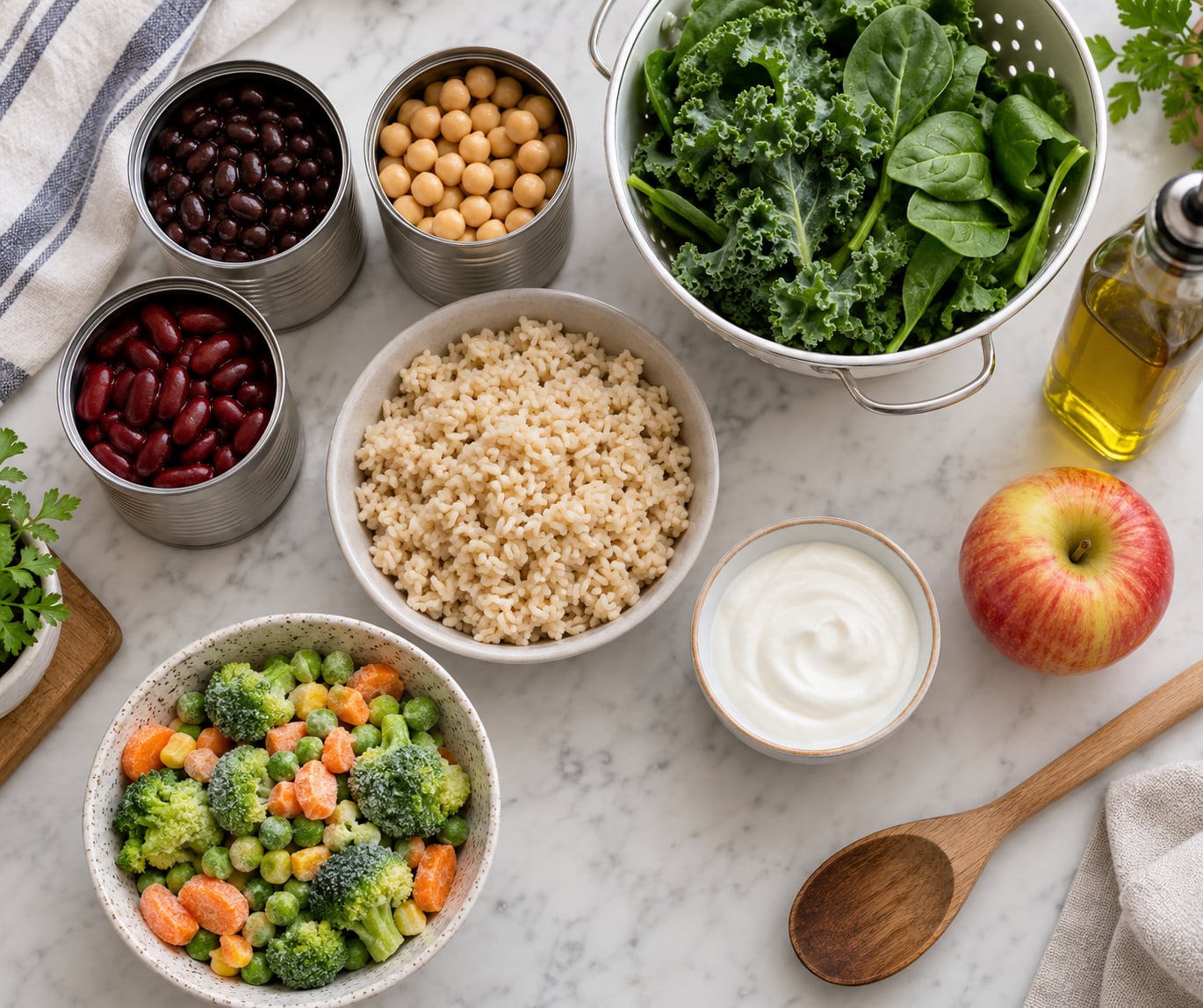
Eating healthy with no time to cook works by keeping a small set of ready-to-eat foods in the kitchen and combining them into meals in about five minutes. Most of the work happens once a week, when you wash produce, cook a pot of rice or quinoa, and set out the proteins and sauces you will reach for all week. The rest is assembly, and assembly is not cooking.
This guide covers both halves of the problem: what to keep in the kitchen, and what to actually do on a night when you have fifteen minutes and no interest in a recipe. It works in a full kitchen, a dorm microwave, or a hotel room with a kettle and a mini fridge.
Last reviewed October 2026. This is general nutrition information, not medical advice. If you have a medical condition, are pregnant, or need help with a specific diagnosis or eating plan, talk to a doctor or a registered dietitian.
Table of Contents
- What You Need to Eat Healthy with No Time to Cook
- Step-by-Step: A 15-Minute System for Busy Days
- Common Mistakes That Wipe Out the Week
- Frequently Asked Questions
- What can I eat when I have no time to cook?
- Are frozen vegetables healthy when I do not have time to cook?
- What are the easiest healthy meals for busy people?
- How can I meal prep when I only have a few minutes each day?
- What should I keep stocked for quick healthy meals?
- How do I reheat leftovers safely when I am short on time?
- Start With One Pantry-Based Meal
What You Need to Eat Healthy with No Time to Cook
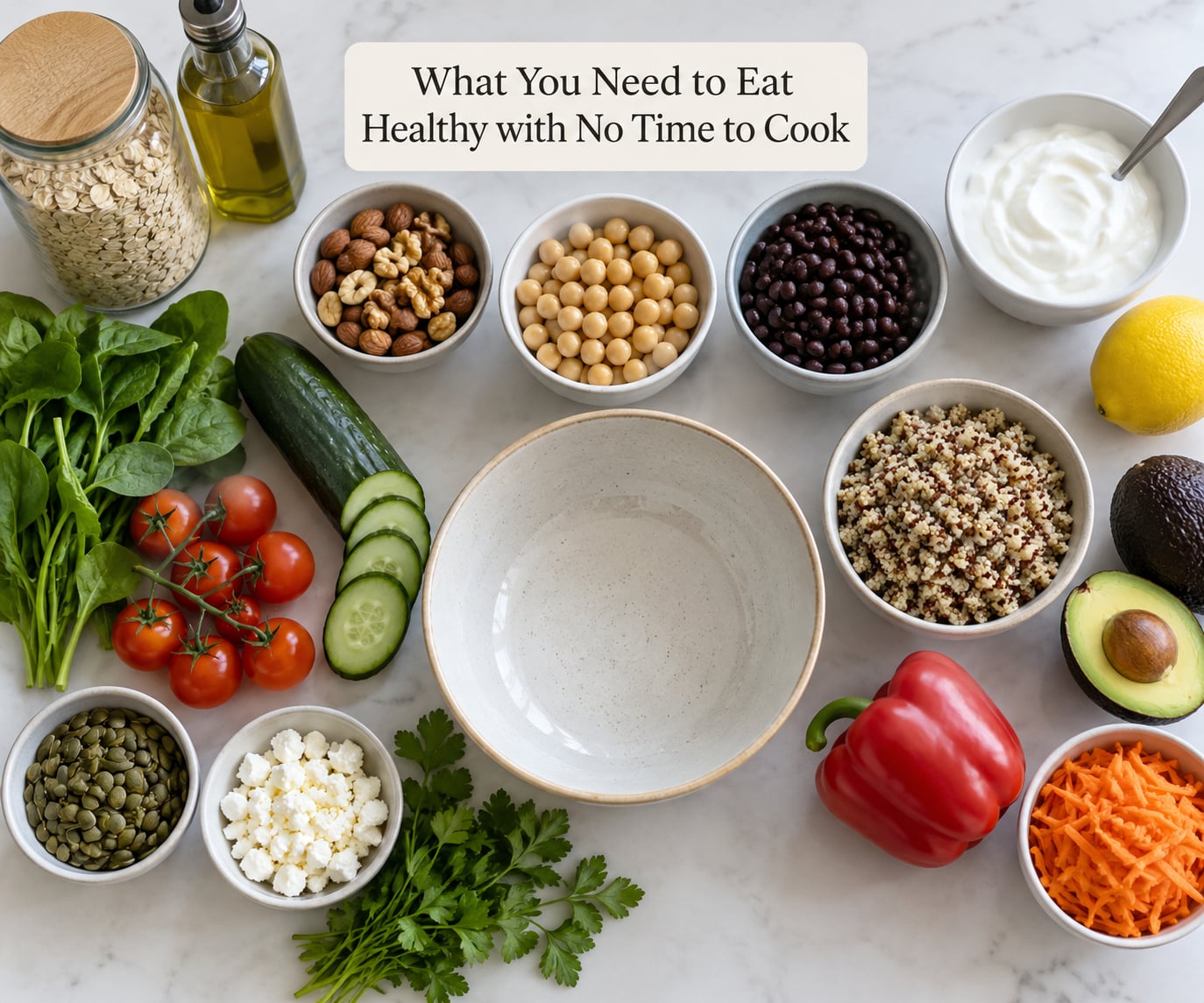
The fastest kitchens are not the ones with the most equipment. They are the ones where the shelf already holds something that can become dinner without a stove. Group your staples into four buckets, and you can mix and match them all week.
- Proteins: rotisserie chicken, canned tuna, canned salmon, canned beans and chickpeas, hard-boiled eggs, plain Greek yogurt, cottage cheese, frozen edamame, shelf-stable tofu, and nut butter.
- Grains: microwaveable brown rice and quinoa pouches, rolled oats, whole-grain crackers, whole-grain bread, frozen whole-wheat tortillas, and popcorn.
- Produce: pre-washed salad kits, baby carrots, cucumber, peppers, apples, bananas, frozen vegetables, and no-salt-added canned tomatoes or corn.
- Pantry boosts: hummus, guacamole, salsa, olive oil, vinegar, mustard, soy sauce, nuts and seeds, dried fruit, and one good hot sauce.
Pick two or three items from each bucket, not all of them. Buying the same five proteins every week keeps the decision at zero and stops the boredom that ends most plans by Thursday.
The tools list is short: a cutting board, a decent knife, one microwave-safe bowl, two glass containers with lids, and a can opener. If you only have a microwave, everything in this article still works. If you have a stove, some steps get easier but none of them require it.
Yogurt is worth ten seconds of label reading, because flavored versions often carry more added sugar than a scoop of plain. Our guide to how to pick a healthy yogurt at the store covers what to look for on the front and the nutrition panel.
Step-by-Step: A 15-Minute System for Busy Days
The system has six parts, and you can start in the middle of any one of them. Skip ahead to whichever part is failing today.
1. Keep a No-Cook Meal Base Ready
A no-cook meal base is a rotating set of foods that are already edible and already in the house. Whole grains, a can of beans, washed vegetables, fruit, one protein, and something fat like olive oil or nut butter. Keep those six categories filled at all times and dinner is never more than a decision.
People in the r/mealprep community describe the version that actually sticks: a rotisserie chicken, a bag of salad mix, and a bottle of dressing, which covers several lunches with no cooking and almost no prep. On r/lowspooncooking the consensus was plainer still, plain oatmeal, Greek yogurt with fruit and nuts, apple and celery with peanut butter.
How to tell it worked: at 6pm you can name three meals you could make right now without walking to a store. If you cannot, the base is empty.
2. Build a Plate in Three Parts
Stop thinking in recipes. A balanced meal is three parts, and you can hit all three with anything from the buckets above: a produce component, a protein component, and either a whole grain or a healthy fat to carry them.
- Produce: two handfuls, raw or microwave-steamed for two minutes.
- Protein: one palm-sized portion, roughly the size and thickness of your hand.
- Grain or fat: one fist of rice, quinoa, oats, or whole grains, or a spoonful of olive oil, avocado, or nut butter.
Examples that take under five minutes: tuna plus rinsed canned beans plus salad kit plus olive oil and vinegar; plain Greek yogurt plus banana plus peanut butter plus granola; hummus plus cucumber plus peppers plus microwaveable brown rice; cottage cheese plus canned peaches plus walnuts.
The test for a finished plate: something from all three groups, on one dish, eaten while warm or cold. Recipes are optional.
3. Choose a Fast Cooking Method When You Have 15 Minutes
Sometimes you do have a window. Fifteen minutes is enough for real cooking if you pick the right method, so match the method to the time you actually have rather than the time you wish you had.
- No assembly, 0-2 minutes, no equipment. Best when you have a full base and no energy for a pan.
- Microwave, 2-4 minutes, needs a microwave. Best in dorms, offices and hotel rooms, or for reheating.
- Sheet pan, 20-25 minutes, needs an oven and one pan. Best when roasted vegetables and protein cook together and your hands stay clean.
- Skillet, 8-12 minutes, needs one pan and a spatula. Best for eggs, beans, chopped vegetables, or a grain heated in the same pan.
- One pot or rice cooker, 25-35 minutes, needs a pot with a lid or a rice cooker. Best for mostly hands-off cooking you can walk away from.
Note that cook time and prep time are different. Chopping and rinsing count as prep, the stove and oven count as cook, and a ten-minute cook with twenty minutes of chopping is a thirty-minute task even though the food only simmers for ten.
4. Add Flavor Instead of Extra Time
Plain food gets abandoned, and abandoned food is worse than takeout. The fix costs almost no time: acid, fat, salt, and heat.
- Olive oil, lemon or vinegar, and a pinch of salt on any vegetables, raw or roasted.
- Mustard plus yogurt plus lemon as a two-minute salad dressing.
- Peanut or tahini thinned with warm water and lime for noodles, cucumber, or rice bowls.
- Cumin, smoked paprika, or curry powder stirred into canned beans or a microwave grain.
- Salsa or pico de gallo over beans and rice, which turns two shelf-stable items into dinner.
One jar of salsa, one bottle of dressing, and one hot sauce on the shelf turns five different combinations into five different meals. That is the whole trick behind meals people report sticking with for months.
5. Plan a Two-Minute Shortcut for Days You Have No Time to Cook
Some days the kitchen is not going to happen. Have a formula ready so the bad night costs two minutes instead of forty.
- Shelf-stable protein (tuna pouch, single-serve beans, nut butter) plus a fruit or pre-cut vegetables plus a grain or fat.
- Overnight oats made the night before, or Greek yogurt with fruit and nuts.
- Microwaveable grain plus frozen vegetables plus a sauce, four minutes from fridge to plate.
When there is genuinely nothing in the house, order rather than skip the meal, then adjust. General swaps: ask for sauce on the side and use half of it, swap fried sides for vegetables or a salad, choose grilled over fried, split an entree and add a side salad instead, skip sweetened drinks, and take the smallest size that still fills you. Cuisine by cuisine, that means dressing on the side for a sandwich bowl, steamed instead of battered for Chinese, salsa and beans added to a Mexican order, and edamame in place of the tempura roll for sushi.
For safety: keep your fridge at or below 40°F (4°C), eat cooked leftovers within three to four days, freeze anything you will not eat in that window, and reheat leftovers until they steam hot, which the USDA puts at 165°F (74°C).
6. Shop and Prep for the Week
Fifteen minutes on a Sunday covers five dinners. The grocery run itself is where the time goes, so plan it before you shop.
- Buy two proteins, two grains, four vegetables, four fruits, and the sauces and fats you are missing. Choose things that cross over into more than one meal.
- Wash salad greens, peppers, and carrots, store them dry in a container lined with a paper towel, and cut only what you will eat this week. Dry greens last longer than wet ones.
- Cook one pot of rice or quinoa, or one tray of roasted vegetables, and refrigerate it within two hours.
- Boil a half dozen eggs if you eat them often; they hold in the fridge for about a week and take out the boiled-egg decision.
- Portion for one or two. Small containers get eaten, big tubs get pushed to the back of the shelf and thrown out.
While shopping, read two numbers and ignore the rest: sodium and added sugar. Pick no-salt-added canned goods when the label allows, rinse canned beans and tuna under cold water before using them, and treat a package that says fruit on the front as a dessert if sugar appears first on the nutrition panel.
If you want more than one pot cooking for you, read up on how to batch cook for the week without getting bored. Cooking once and eating five times is a different skill from meal prep, and it works better for people who dislike prepping.
Common Mistakes That Wipe Out the Week
Relying only on packaged diet food. Low-calorie meals built on processed ingredients fill you for ninety minutes and then you eat the cupboard. Fix it by making one real component, such as a pot of beans or a tray of roasted vegetables, and letting convenience items handle the rest.
Skipping vegetables because they spoil. This is the most common reason a plan dies by day three. Fix it with two vegetables you will actually eat, pre-washed greens, and frozen vegetables for the ones you forget about. Frozen is picked and frozen at peak, so nutrient loss is small and the waste is zero.
Prepping every ingredient from scratch. Washing and chopping for forty minutes on a Sunday is why people quit prep. Fix it by buying one pre-cut item, such as pre-washed salad or a microwaveable grain pouch, and treating that as the compromise, not a failure.
Serving one enormous portion. A family-size container at a desk lunch is not portion control. Fix it by packing lunch in a container you find filling rather than a bowl you find generous. Half a rotisserie chicken with a large salad and a whole grain looks like a lot of food on one plate.
Chasing rules instead of habits. The 3-3-3 rule, which asks for three servings each of vegetables, protein, and grains or other carbs per day, is a popular social media idea rather than official guidance. It works as a rough checklist if you use it. It fails if you treat a bad day as a reason to quit.
Ordering out and calling it a failure. One adjusted takeout meal is fine. What repeats is the pattern of a fried side, a sweetened drink, and a full entree at nine o’clock. Fix it with the swaps above rather than with guilt.
Skipping the weekly reset. An empty base is the reason for the takeout loop, not a lack of willpower. Fifteen minutes of shopping and one pot on the stove is what keeps the fast meals available.
Frequently Asked Questions
What can I eat when I have no time to cook?
Tuna, beans or eggs plus a grain or fat plus vegetables you can eat raw or warm in the microwave. Think tuna with rinsed canned beans, salad kit and olive oil, or Greek yogurt with banana and peanut butter. Five minutes of assembly beats forty minutes of a recipe you skip entirely.
Are frozen vegetables healthy when I do not have time to cook?
Yes. Frozen vegetables are picked and frozen near peak ripeness, so they often match or beat fresh produce that has sat in a fridge for a week. Choose plain frozen vegetables over sauced or buttered blends, and microwave them in a bowl with a splash of water for two to four minutes.
What are the easiest healthy meals for busy people?
The easiest meals are assemblies, not recipes: microwaveable brown rice with canned beans and salsa, tuna with pre-washed salad and a dressing you already own, or rotisserie chicken with bagged greens. Each takes under five minutes, uses one or two dishes, and covers produce, protein, and a grain or fat on one plate.
How can I meal prep when I only have a few minutes each day?
Prep in small daily amounts instead of one long session. Boil eggs while the kettle boils, cook a single portion of rice in a microwave pouch, or wash greens while you wait for coffee. Then keep one ready protein and one ready grain on hand so a busy evening never depends on starting from raw.
What should I keep stocked for quick healthy meals?
Keep four buckets filled: proteins such as canned tuna, canned beans, eggs and plain Greek yogurt; grains such as microwaveable brown rice, oats and whole-grain bread; produce such as pre-washed salad, frozen vegetables, carrots and fruit; and pantry boosts such as olive oil, vinegar, mustard, hummus and salsa.
How do I reheat leftovers safely when I am short on time?
Reheat only what you plan to eat, and heat it until the center is steaming hot, which the USDA puts at 165°F (74°C). Keep your fridge at or below 40°F (4°C), refrigerate food within two hours, and use cooked leftovers within three to four days or freeze them on the day you cooked.
Start With One Pantry-Based Meal
Start smaller than feels useful. This week, buy one can of beans, one bag of frozen vegetables, a pouch of microwaveable brown rice, and one salsa, then build one plate from them. If you do nothing else, make that plate twice, because the habit that sticks is the one you have already repeated.
If you have been eating out most nights and want a reset rather than another plan, our guide to how to rebuild healthy habits after falling off covers restarting without starting over.