
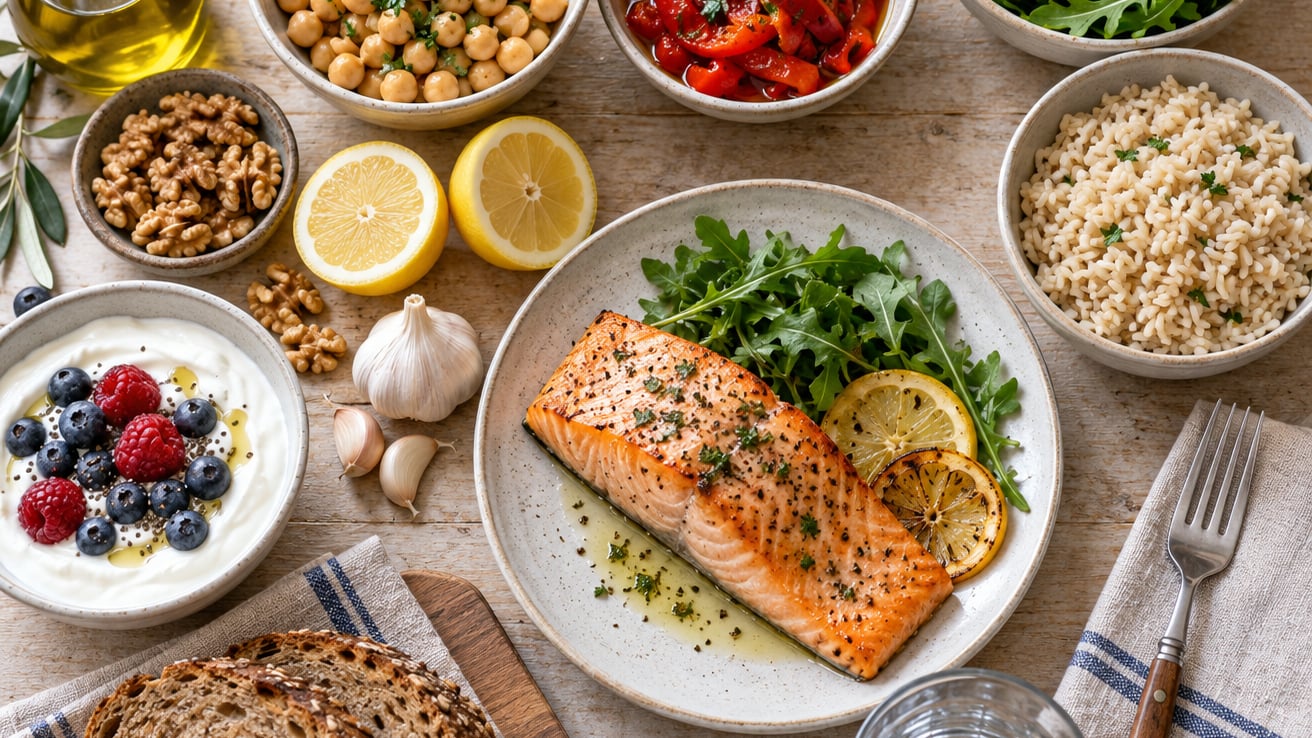
Learning how to follow a Mediterranean diet for beginners comes down to a handful of swaps rather than a strict set of rules. You build meals around vegetables, fruits, whole grains, beans, nuts and extra virgin olive oil, add fish about twice a week, and pull back on red meat, processed snacks and sugary drinks. The pattern is deliberately flexible, and most people start by changing one breakfast and one dinner.
None of it requires new equipment or imported ingredients. It takes roughly three to four weeks for the new eating habits to start feeling normal rather than like effort.
This guide was reviewed by a registered dietitian for accuracy. It is general information, not personal medical advice. If you have diabetes, kidney disease, a history of disordered eating, or take regular medication, talk to your doctor or a registered dietitian before changing how you eat.
Table of Contents
- What You Need
- Step-by-Step: How to Follow a Mediterranean Diet for Beginners
- Why This Pattern Is Worth the Effort
- Common Mistakes
- Frequently Asked Questions
- How can I start a Mediterranean diet as a beginner?
- Do I need to give up meat and dairy to follow a Mediterranean diet?
- Is olive oil unlimited on a Mediterranean diet?
- Can I follow a Mediterranean diet on a budget?
- What foods should I eat most often on a Mediterranean diet?
- How do I stay consistent when eating out or traveling?
- Conclusion
What You Need
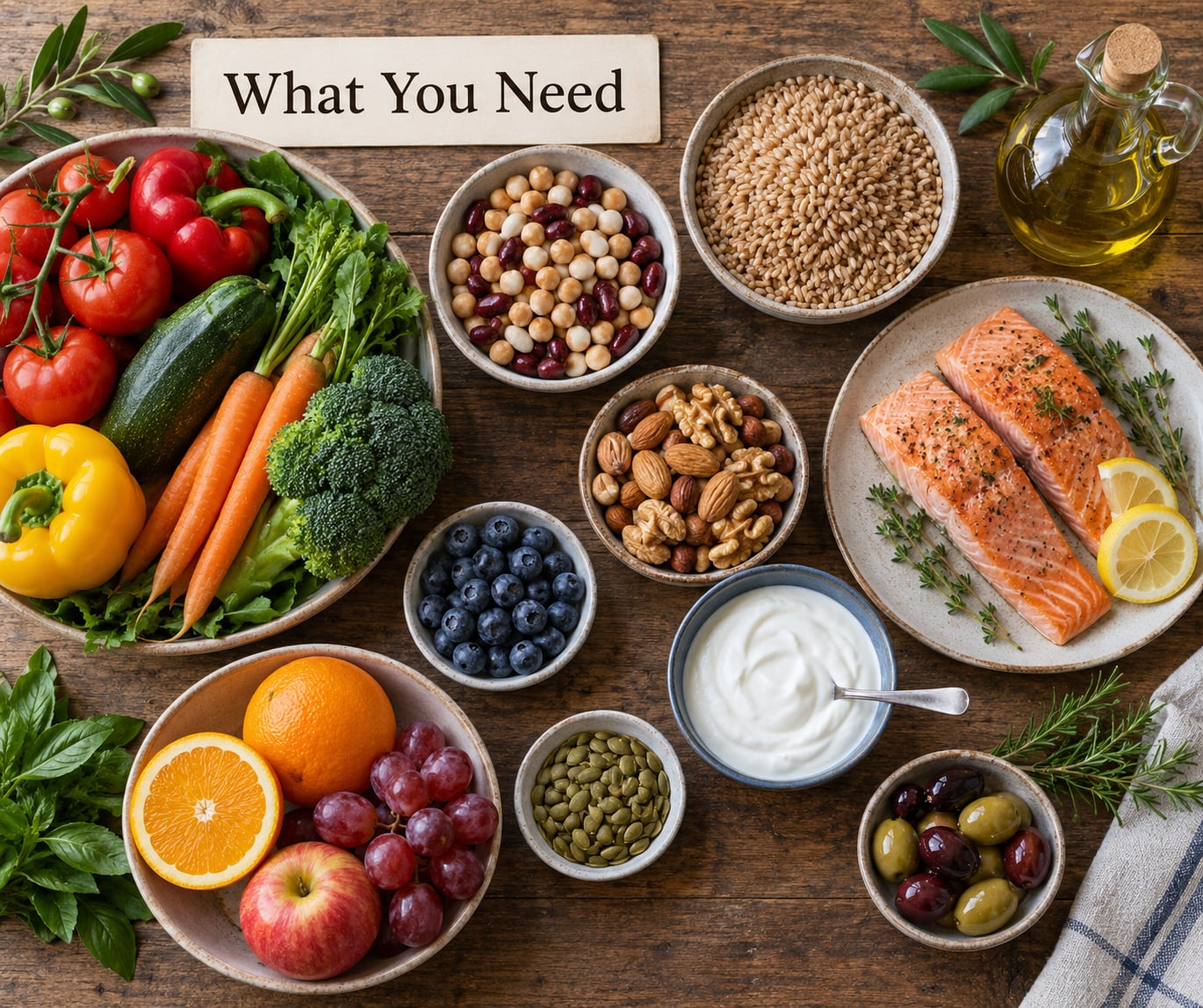
The core list is short, and most of it already exists in a normal grocery store. Grab these eight groups and you can build most meals for the week:
- Vegetables and fruit — tomatoes, peppers, zucchini, eggplants, leafy greens, onions, cucumbers, berries, oranges, apples, pears, grapes.
- Legumes — chickpeas, lentils, cannellini and black beans, either dried and canned.
- Whole grains — brown rice, quinoa, bulgur, farro, oats and whole-grain bread and pasta.
- Fish and seafood — salmon, sardines, tuna, mackerel, shrimp, mussels.
- Unsaturated fats — extra virgin olive oil, walnuts, almonds, pistachios, sunflower and pumpkin seeds, avocado.
- Dairy in moderation — plain Greek yogurt, feta and other soft cheeses.
- Herbs and spices — oregano, basil, thyme, cumin, sumac, paprika, bay leaf, garlic, lemon.
- Poultry and eggs — chicken, turkey and eggs, a few times a week rather than most days.
The kitchen side is lighter than most beginner guides suggest. A 12-inch skillet, a medium pot, a sheet pan, a sharp knife, a cutting board and a wide spoon for tossing salads covers nearly every recipe you will make in the first month. A food scale is optional.
Your hand works just as well as a scale. A fist is roughly one cup, a palm is a serving of protein, a handful is about a quarter cup of nuts, and a thumb is roughly an ounce of cheese or fat.
Preparation habits matter more than gear. Cook a batch of grains and a pot of lentils on Sunday, wash vegetables as soon as you get home, and keep olive oil, canned beans, lemon and a jar of mixed herbs visible in front of you. People in beginner communities consistently say the hardest part is not choosing the right food. It is portion control, and remembering to eat what they bought before it turns.
Step-by-Step: How to Follow a Mediterranean Diet for Beginners
Each step below builds on the last, and every one of them works on its own. Pick the first three this week and add the rest as the week settles. Trying to overhaul everything at once is the single biggest reason beginners quit.
How to Build a Balanced Mediterranean Plate
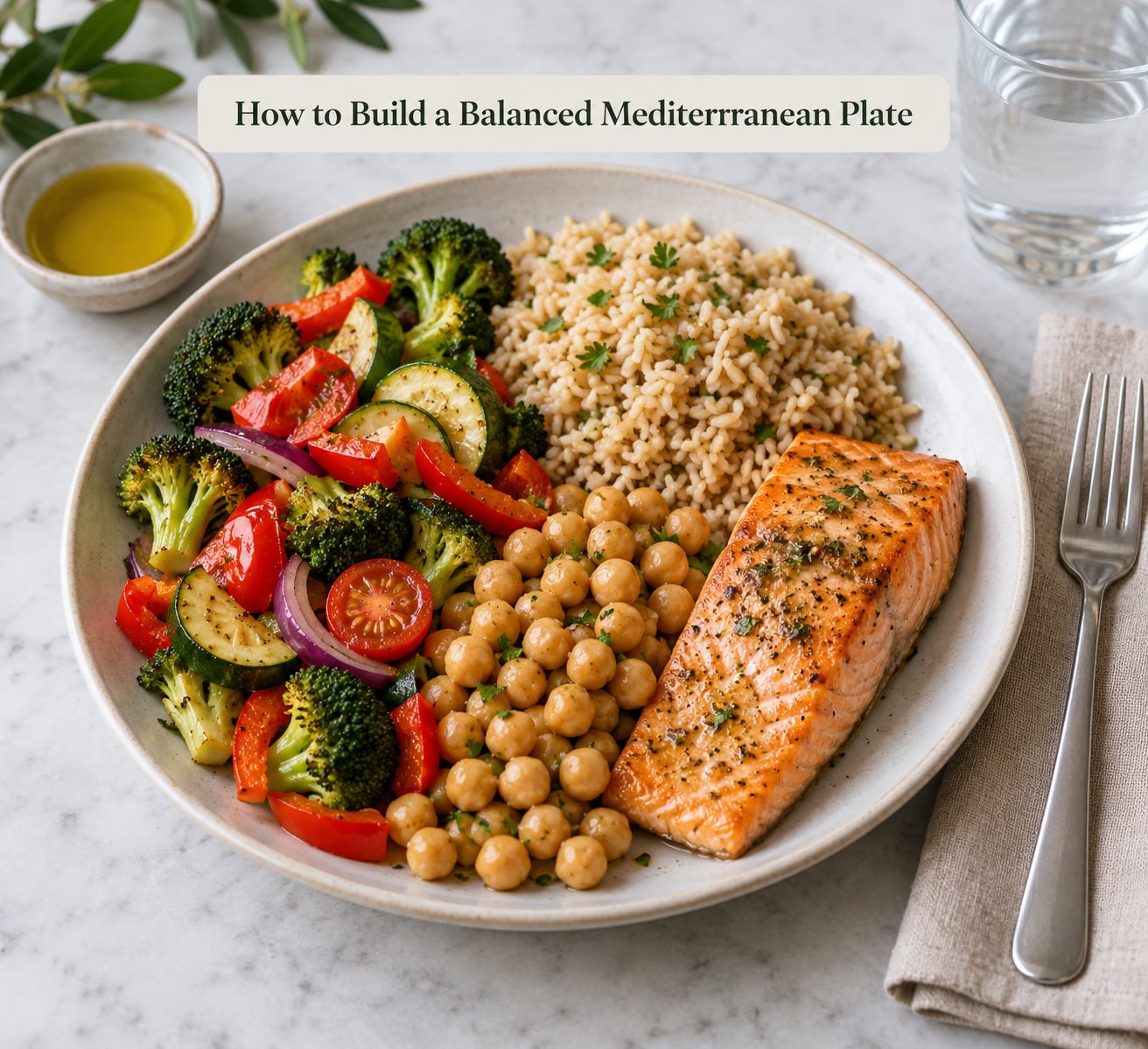
Fill half the plate with vegetables, a quarter with a whole grain, and a quarter with protein, then finish with a spoonful of olive oil or a handful of nuts. Eat the vegetables and protein first if you want an easy way to slow the meal down.
- Breakfast: plain Greek yogurt with walnuts, berries and a drizzle of honey, or overnight oats with oats, chia, apple and cinnamon.
- Lunch: a big salad with chickpeas, cucumber, tomato and feta in an olive oil and lemon dressing, or leftover grain bowl with roasted vegetables and tahini.
- Dinner: salmon baked on a sheet pan with broccoli and lemon, served over brown rice, or a pot of lentils with tomatoes, spinach and cumin.
- Snack: a handful of walnuts, almonds or pistachios, or fruit with a spoonful of nut butter.
Start with the version of this plate you already eat most often and change one quadrant. Someone who likes stir-fries can use broccoli, brown rice, chickpeas and a peanut or sesame sauce instead of sesame oil and soy-heavy marinades. Building the pattern around familiar meals makes it far easier to keep.
How to Choose Mediterranean Diet Foods at the Grocery Store
Shop the edges of the store before the middle. Produce, the seafood counter, the bulk bins, the dairy case and the olive oil shelf hold most of what you need. The middle aisles are where the packaged snacks live, and they are where you will spend the least time.
Use this as a working list on your first full shop:
- Produce: two or three bags of salad greens, a bag of peppers, a bag of onions, tomatoes, zucchini or eggplant, a head of broccoli, lemons, and whatever fruit is in season and cheap that week.
- Protein: a can of tuna in water, a jar of chickpeas, a bag of dried lentils, eggs, chicken breast, and frozen shrimp if fresh fish looks expensive.
- Grains: brown rice, quinoa or bulgur, rolled oats, and a loaf of whole-grain bread where the word whole is the first item on the ingredient list.
- Fats: a bottle of extra virgin olive oil, a bag of walnuts or almonds, and sunflower or pumpkin seeds.
- Dairy: plain Greek yogurt and one block of feta or similar soft cheese.
- Flavor: garlic, lemons, canned tomatoes, olives, capers, and a small collection of dried herbs and spices.
Budget swaps do most of the work here. Dried lentils cost a fraction of canned beans and take twenty minutes on the stove. Frozen broccoli and peas keep their nutrition and skip the waste.
Store-brand tuna in water, peanut butter in place of tahini, and dried herbs in place of fresh bunches all deliver the same result at a lower total. Buying olive oil in a tin or a larger bottle and keeping it away from the window also stretches the bottle further.
If you eat mostly plants, our guide on how to eat enough protein on a vegetarian diet without powder covers the protein question in detail, and we explain vitamin B12 on a plant-based diet separately since it needs monitoring over time.
Then swap out what you do not need: sugary drinks and sweetened coffees, processed meats like bacon and deli slices, butter and cream sauces, refined crackers and pastries, and anything deep-fried most days. Whole wheat pasta, brown rice and potatoes are not forbidden. They just sit alongside vegetables rather than replacing them.
One safety note for beginners cooking more fish, chicken and legumes at home: USDA guidance puts the minimum internal temperature at 145°F for fish and other whole cuts, 165°F for poultry, and 160°F for ground meat. Cooked food that is not eaten right away belongs in the fridge within two hours and stays good for three to four days.
Adding a few fermented foods, like yogurt with live cultures, kefir or sauerkraut, fits naturally into this way of eating and supports digestion. Our guide on how to add fermented foods to your diet covers where to start and how much to take.
How to Plan a Week of Mediterranean Meals
Planning the week is where beginners save the most effort and waste the least food. Choose four things once, then let them recombine.
- Pick two proteins. A batch of baked salmon or sardines, and a pot of lentils or chickpeas. Chicken thighs in the oven at the same time make a third with no extra effort.
- Pick two grains. Cook one pot of brown rice or quinoa and one of whole-grain pasta. Both keep for several days in the fridge and freeze well.
- Pick a vegetable lineup. Buy what is in season, roast a sheet pan at high heat, and steam or saute a green on the side.
- Pick one sauce. A simple olive oil, lemon and oregano dressing covers salads, grain bowls and roasted vegetables all week.
With that base, breakfast becomes yogurt with fruit, or oats with nuts. Lunch becomes yesterday’s grain bowl with a boiled egg on top, or a tuna and white bean salad. Dinner alternates between the salmon, the lentil pot and whatever the sheet pan produced, with the grain on the side.
Cook the grains, legumes and one tray of vegetables on Sunday. That single session turns Monday through Thursday into assembly rather than cooking, and it means you cook one extra portion of dinner for the next day’s lunch instead of opening a second can of tuna.
How to Eat Out and Stay on Track
Most restaurant meals can be adjusted into the pattern with one sentence. Say that you would like your dressing, sauce or oil on the side, and that is usually the whole negotiation.
- Order first: a salad, grilled fish, shrimp, lentil soup, or vegetables and hummus to share.
- Swap the sides: ask for brown rice or salad instead of fries, and whole-grain bread when a sandwich comes with it.
- Choose your fat: olive oil, or dressings made with it, instead of butter, cream or sesame-heavy sauces.
- Share a plate: order a family-style vegetable dish and two entrees, which handles both portion size and socializing at once.
- Travel simply: airport and train food rarely fits the pattern, so lean on whatever you can find — a salad, a boiled egg, nuts, a piece of fruit, a tin of fish, whole-grain crackers.
At family dinners, put one familiar dish on the table alongside the new one. Nobody has to abandon the meal they like, and the vegetable side usually gets picked at eventually. If you are the cook, adding a salad, a lentil soup or a vegetable side is often easier than changing the main course.
One or two meals off pattern in a week do not undo anything. Treating a restaurant dinner as a failure is what breaks consistency, not the dinner itself. Go back to your usual plate at the next meal.
Why This Pattern Is Worth the Effort
The strongest evidence points at heart health. The PREDIMED trial, published in the New England Journal of Medicine and republished after a correction, linked a Mediterranean diet supplemented with olive oil or nuts to a lower rate of major cardiovascular events in adults at high risk.
The Harvard T.H. Chan School of Public Health and the American Heart Association both describe it as one of the better-evidenced eating patterns for heart health, and Oldways publishes the food pyramid most American versions are built on. Evidence is strongest for cardiovascular outcomes and reasonable for weight and blood sugar.
Common Mistakes
These are the errors that come up again and again in beginner threads, along with the fix for each.
- Treating olive oil as unlimited. It is the primary fat in the pattern, not a free pour. Measure a tablespoon for cooking and dressing rather than pouring straight from the bottle.
- Skipping protein. A plate of vegetables and grain leaves people hungry within two hours. Keep beans, lentils, fish, eggs or yogurt on every main meal.
- Copying the packaged versions. Many “Mediterranean” pasta salads, crackers and snack packs are refined grains with salt and oil. Check the label and pick the version with whole grains and legumes first on the list.
- Eating only raw vegetables. A salad at every meal gets old fast, and steaming or roasting works just as well. Rotating raw, roasted and sauteed vegetables keeps the pattern sustainable.
- Changing everything at once. Novices who overhaul their whole kitchen in week one tend to rebound by week three. Swap one eating habit per week instead.
- Believing you must give up bread, pasta or potatoes. You do not. These belong on the plate next to vegetables and protein, in normal portions.
- Ignoring the social part. The pattern was built around shared meals. Eating standing up over the sink is convenient once in a while, but sitting down with people is what makes it last.
Frequently Asked Questions
How can I start a Mediterranean diet as a beginner?
Change one habit per week rather than all at once. Start with a vegetable at lunch and dinner, swap your cooking fat to extra virgin olive oil, and replace one snack with nuts or fruit. Most people also start by adding beans or fish twice a week instead of red meat those nights. Track what you change, not calories.
Do I need to give up meat and dairy to follow a Mediterranean diet?
No. Meat and dairy both stay in the pattern at smaller portions and lower frequency, not as banned foods. Red meat is traditionally a few meals a month, while fish, eggs and poultry come a few times a week. Plain yogurt and soft cheese appear regularly, usually alongside fruit, vegetables or grains rather than on their own.
Is olive oil unlimited on a Mediterranean diet?
It is the main fat in the pattern, but it is still calorie-dense, so measure it. A tablespoon for dressing and one or two for cooking a meal for two or three people is plenty. Bottled olive oil left near a stove or window goes rancid and loses its flavor, so keep it closed and store it away from heat and light.
Can I follow a Mediterranean diet on a budget?
Yes, and the cheapest version is often closer to the original. Dried lentils and split peas, canned tuna in water, frozen vegetables, store-brand olives, peanut butter in place of tahini, and dried herbs in place of fresh bunches all work well. Buy produce in season and buy olive oil in a larger tin, which drops the cost per meal noticeably.
What foods should I eat most often on a Mediterranean diet?
Vegetables and fruit at most meals, beans and lentils several times a week, whole grains daily, nuts or seeds most days as a snack, extra virgin olive oil as the main fat, and plain yogurt regularly. Fish or seafood belongs on the menu twice a week, with eggs, poultry and cheese in moderation on top of that base.
How do I stay consistent when eating out or traveling?
Keep three anchors rather than a perfect plan. Order a vegetable dish or salad first, ask for sauces and dressings on the side, and choose fish, chicken or beans over fried options. On the road, keep nuts, fruit, roasted chickpeas and whole-grain crackers within reach so you are not choosing between fast food and nothing at all.
Conclusion
Pick the meals you already eat most and rebuild them. Add a vegetable to lunch and dinner, add beans or fish twice a week, and measure olive oil instead of pouring it. Choose one protein, one grain, one vegetable and one sauce for the week, then shop once around them.
Start with one habit this week and add the next one when the first feels normal. That is how to follow a Mediterranean diet for beginners, and it is the version you will still be eating in a year.