
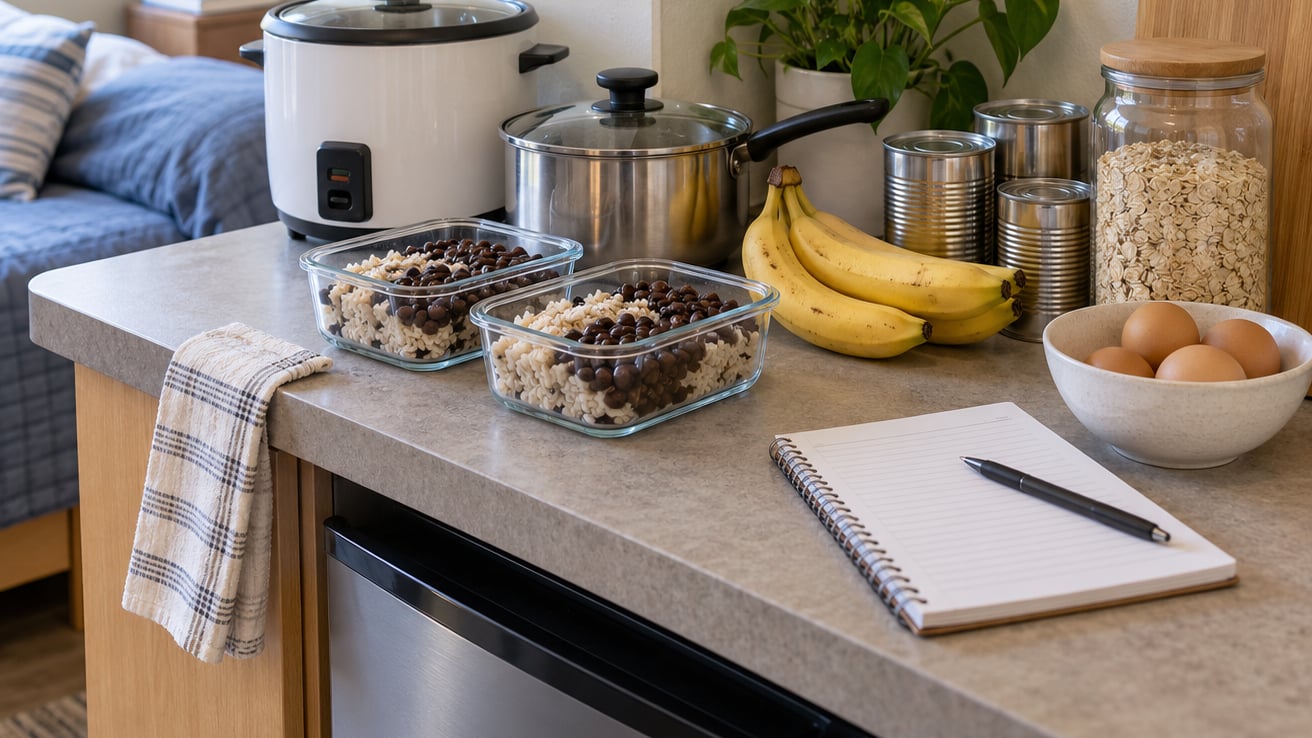
Eating healthy in college on a budget means cooking mostly at home from a short list of cheap staples, planning the week before you shop, and matching your meals to the kitchen you actually have. You need eggs, beans, oats, rice, frozen vegetables, and store-brand basics, plus a saucepan, a microwave or hot plate, and about an hour of preparation each week.
Updated October 2026
Grocery prices shift with your region, the stores near campus, and the season, so treat any figure here as a planning range rather than a promise. What follows is a system that works whether you have a full kitchen, a hot plate and a mini fridge, or nothing but a microwave.
Budgets are tight in college because three things compete for the same limited money: tuition and fees, rent and utilities, and social spending. Food sits inside that squeeze, which is why the most common question on student forums is not about superfoods or macros. It is about how to get enough protein and produce without eating through a takeout app.
The answer is unglamorous. You plan meals before you shop, you buy a narrower set of ingredients and use each one in two or three meals, and you accept that most nights come from the same handful of combinations. What follows walks through that system step by step, then covers the mistakes that quietly drain the budget.
Table of Contents
- What You Need
- Step-by-Step: How to Eat Healthy in College on a Budget
- Set a Flexible Food and Meal Budget
- Build a Budget Grocery List
- How to Eat Healthy in College on a Budget: Flexible Meal Templates
- Prepare Low-Cost Meals in Small Batches
- Shop Sales, Store Brands, and Campus Resources
- Eat Well When Your Schedule Is Unpredictable
- Adjust the Plan for Dietary Preferences and Health Needs
- Common Mistakes
- Frequently Asked Questions
- What is a good food budget for a college student?
- How do I eat healthy if I do not have a kitchen?
- How do I eat healthy in a college dining hall?
- Is it cheaper to eat at the dining hall or cook for myself?
- How do I keep food from spoiling in a small mini fridge?
- What is the 3-3-3 rule for healthy eating?
What You Need
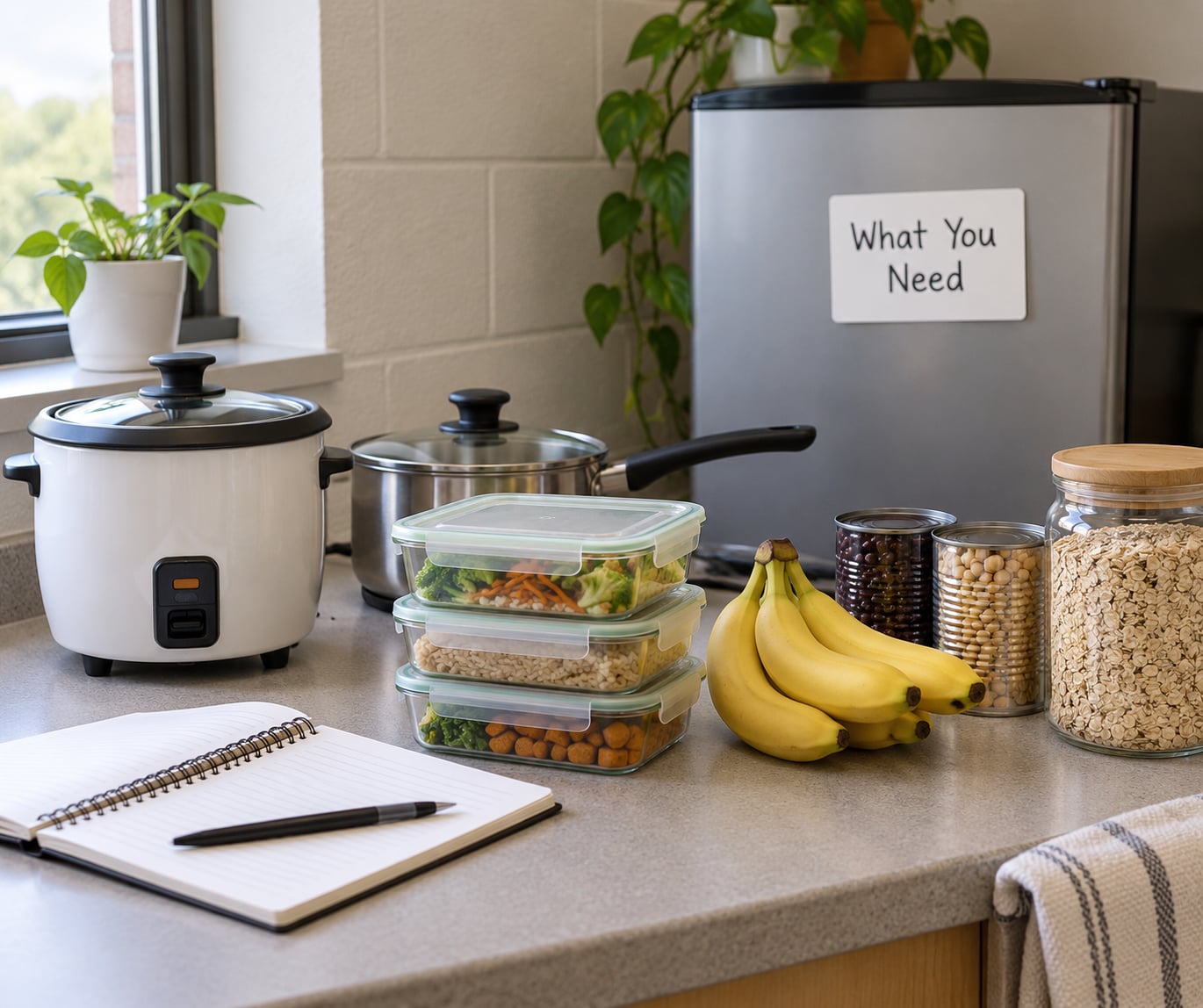
Healthy college eating depends on four things: somewhere to store food, a few basic tools, a list you actually use, and a routine short enough to survive a heavy class schedule. None of that requires money you do not have.
Storage that works in a small space
A mini fridge is usually cold enough for drinks and not much else. A small appliance thermometer tells you whether yours is holding a safe temperature, and if it is not, you shift your shopping toward foods that need less chilling. Keep a clear shelf for items that need refrigeration and a separate basket on top of your desk for shelf-stable food such as oats, rice, canned beans, peanut butter, and dry pasta.
Airtight containers do more than save space. They keep oats and rice from going stale, stop leftovers from drying out, and make it easier to freeze single portions.
Four tools, not a kitchen
A saucepan with a lid handles rice, oatmeal, pasta, and eggs. A skillet or a one-pan pot handles beans, eggs, and vegetables. A microwave covers reheating and a few one-container meals. Add a cutting board, a can opener, and a wooden spoon, and you can cover most of a week of eating for one person.
Check your residence hall policy before you buy anything with a heating element. Hot plates, rice cookers, and multi-cookers are approved in some halls and prohibited in others, and buying one first can leave you with an expensive appliance you cannot use.
A flexible grocery list
A working list has four groups: staples you always need, produce you will eat this week, one or two extras, and an emergency amount for the week something goes wrong. Because it changes with the season and with what you already have, it is a list you rewrite, not a list you print once.
A routine short enough to keep
About an hour a week covers it: twenty minutes planning, twenty minutes shopping, and the rest cooking in one session. If your routine needs three hours and a clean kitchen first, you will quit by week three.
What you do not need
You do not need protein powders, imported ingredients, a full kitchen, or an appliance with a dozen settings. Store-brand versions of the basics you buy constantly will do more for your budget than any specialty purchase. If you want to read a label before you buy yogurt, how to pick a healthy yogurt at the store is a useful starting point.
Step-by-Step: How to Eat Healthy in College on a Budget
Seven parts, in order. Each one assumes the previous part is already done, which is what keeps the whole thing manageable.
Set a Flexible Food and Meal Budget
Start with what you genuinely have. Add up your money for the semester, subtract tuition, rent, textbooks, transit, phone, and fees, then divide what remains by the number of weeks. That number is your food ceiling, and planning inside it beats guessing.
Now split the ceiling into four parts: about half for staples and protein, about a quarter for produce, about a sixth for flexible extras like a restaurant visit or a specialty item, and the rest as a buffer for the week a bag of rice gets eaten in three days. Most students who run over budget have no buffer, so the first overage turns into takeout, and takeout compounds.
| Weekly tier | What it buys | What it assumes |
|---|---|---|
| Tight | Dry beans, lentils, oats, rice, eggs, frozen produce, canned fish | Most dinners cooked in one batch, almost no eating out, pantry already stocked |
| Moderate | All of the above plus more fresh produce, chicken, yogurt, fruit | Two or three cooking sessions a week, one or two meals out |
| Comfortable | Fresh produce most days, a wider protein range, occasional specialty items | Light cooking, frequent eating out or delivery |
Grocery prices vary by campus, by store, and by region, and a campus meal plan changes the math entirely. If your plan includes enough swipes that grocery money is small, treat the dining hall as your cooking facility rather than shopping for a full week of food you cannot store. Check whether your school allows changing meal plans mid-semester and whether unused blocks expire, because those deadlines decide how much food money you need. If you are eligible, benefits such as SNAP or a state food assistance program can change the number entirely.
Build a Budget Grocery List
Before the store, open your fridge, your pantry, and your freezer and write down what is already there. Most overspending is not a bad plan, it is a second bag of rice bought because the first one was hiding behind the yogurt.
Then build around low-cost anchors: rolled oats, rice, potatoes or pasta, eggs, dried or canned beans, frozen vegetables and fruit, plain yogurt, and whatever fruit is in season and on sale. These foods keep, overlap between meals, and cover most of what a balanced plate needs.
Sort the list into two groups. Perishables like milk, fresh fruit, and cut vegetables get bought for the days you will eat them, and the rest fills the pantry for weeks. That single habit eliminates most food waste in student kitchens.
Substitute freely based on what is cheaper that week, what you will actually eat, and what the campus store carries. Black beans instead of chickpeas, frozen broccoli instead of fresh, oats instead of granola bars. If you buy granola bars often, it is worth learning how to tell if a granola bar is actually healthy so you are not paying for a snack that is mostly sugar.
Before you shop, compare cost per serving rather than package price. A larger bag is only cheaper if you will finish it before it goes off or into the freezer.
How to Eat Healthy in College on a Budget: Flexible Meal Templates
A balanced student meal is four parts: a carbohydrate for energy, a protein to keep you full, produce, and a small amount of healthy fat. Once you know the four parts, you can build meals from whatever is in the cupboard instead of searching for a recipe.
- Rice and beans: carbohydrate, protein, and produce when you add salsa or a handful of frozen corn. Add an egg or a spoon of peanut butter if you need more protein.
- Oatmeal with fruit and nuts: oats for the carbohydrate, fruit for produce, nuts or nut butter for fat. Peanut butter makes it more filling for very little money.
- Tortillas with beans and vegetables: under ten minutes, no oven needed, and it travels to class in a container.
- Yogurt with oats and fruit: a cold breakfast for hot mornings or a snack between study sessions. Check the label on the tub before you buy it.
- Eggs with toast and a vegetable: the fastest real breakfast, and the one most useful before an early class.
Swap one component and you still have a balanced meal: black beans for chickpeas, brown rice for white, frozen spinach for fresh, tofu for chicken. The rule that saves the most money is ingredient overlap. Pick meals that share the same base, and one batch of rice, one pot of beans, and one tray of vegetables become four or five different meals across the week instead of four or five separate grocery runs.
Prepare Low-Cost Meals in Small Batches
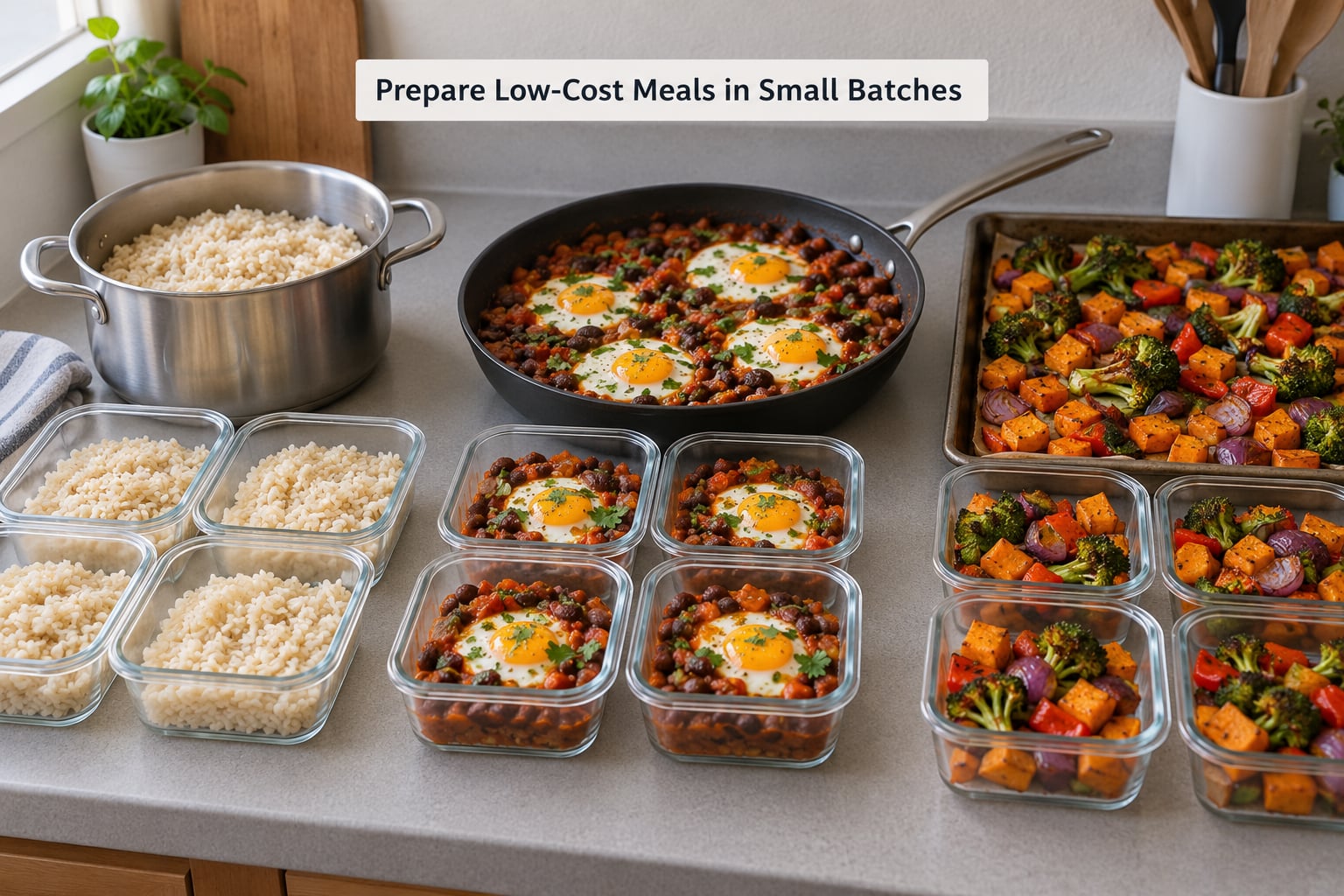
Batch cooking for one person means cooking once and eating four or five portions, not cooking a family recipe and freezing most of it.
- Pot-cooked rice: about 20 minutes of unattended time. Make a double portion and refrigerate half for later in the week.
- One-pan beans and eggs: beans from the pantry, onion, and spices, with eggs cooked in the same pan. About 15 minutes from the stove.
- Sheet-pan vegetables: frozen vegetables plus a little oil, roasted while you do something else. About 30 minutes in the oven, or 10 in a microwave-safe dish with water.
- Overnight oats: rolled oats, milk or water, and fruit combined cold. No cooking at all.
- No-cook meals: canned beans with salsa, tuna with a spoon of mayo and corn, peanut butter on bread, yogurt with fruit.
Cook chicken, other poultry, and leftovers to 165°F, ground meat to 160°F, and whole cuts of meat and fish to 145°F, measured in the thickest part with a food thermometer rather than by appearance.
Refrigerate cooked food within two hours and use it within three to four days. Freeze what you will not eat in that window, in single portions with the date written on the lid. If your fridge cannot hold a safe temperature, keep more of your plan in the freezer and choose shelf-stable meals.
Student forum advice converges on the same point from different directions: dry beans bought in bulk, frozen vegetables, and a rice cooker come up over and over as the highest-impact purchases. What matters is that you buy for one person and freeze the rest, not that you cook all weekend.
Shop Sales, Store Brands, and Campus Resources
Compare unit prices on the shelf tag, not the sticker on the front. It is the fastest way to see whether the large package is actually cheaper or just bigger.
Switch to store brands for the items you buy every week: oats, rice, canned beans, tortillas, canned tomatoes, and pasta. Then buy produce in season, since that is when it is cheapest and best. Shop the sales for items you would eat anyway, and keep a list of the four or five shelf-stable staples you never need to buy on a deal.
Your campus almost certainly offers free help. A dining services team can tell you how to use your meal plan well. The health center usually has a registered dietitian who will work with you at no charge. Many schools run a food pantry or a community fridge, and some will connect you with benefit applications even if you were not planning to ask. Eligibility rules differ, so check rather than assume, and use these services even if money is only occasionally tight. They exist for students.
Eat Well When Your Schedule Is Unpredictable
Classes, work, and lab hours do not follow your meal plan. The fix is to separate what travels from what needs cooking.
Portable options include tortillas with beans, whole fruit, bananas, peanut butter on bread, granola, and plain yogurt kept cold in an insulated bag with ice packs. Shelf-stable options need no fridge at all: nuts, dried fruit, crackers, canned beans, and nut butter. Keeping a shelf-stable stash at your desk means a missed meal never turns into a vending machine.
Assemble snacks in pairs rather than one: fruit with nut butter, crackers with cheese, yogurt with oats. A single snack rarely holds until dinner; a pair usually does.
Insulated containers keep food safe for a few hours, but only if you use an ice pack and do not leave perishable food sitting warm for the whole afternoon. When in doubt, pick something shelf-stable.
You will order delivery. The useful move is to decide in advance: one planned meal a week rather than a spontaneous order whenever a deadline hits. Delivery fees, service fees, and tips mean one order often costs several times what the same meal costs from your own pantry, and the late-night ordering pattern is what turns a workable budget into an impossible one.
Adjust the Plan for Dietary Preferences and Health Needs
Vegetarian and vegan students can build the same template around beans, lentils, tofu, eggs, and peanut butter, with frozen vegetables as the produce anchor. Gluten-free students can rely on rice, potatoes, oats, corn tortillas, and more beans to fill the carbohydrate role. For dairy-free students, plant milk and fortified alternatives cover calcium, and protein shifts toward eggs, tofu, and beans.
If a preference is medical rather than a choice, treat it as a different task. Students with allergies, diabetes, a condition affected by diet, an eating disorder history, or any other special nutrition need should get individualized guidance from a qualified healthcare professional or a registered dietitian rather than adapting a general plan. Your campus health center can arrange that referral, and it is a normal thing to ask for.
Common Mistakes
Buying specialty powders and trend foods first. Protein powder, cauliflower products, and imported snacks are easy to spend money on and rarely replace a pantry. Fix: buy oats, beans, eggs, rice, and frozen vegetables before anything else, and treat the specialty item as a treat.
Dropping vegetables or protein to save money. Skipping produce and relying on cheap carbohydrates keeps the budget low and leaves you hungry by mid-afternoon, which is when the takeout decision happens. Fix: frozen vegetables and canned beans are cheap, and both are real parts of a balanced meal.
Shopping hungry and without a list. This is the single most reliable way to overshoot a budget. Fix: eat something with protein and fiber before you go, shop the perimeter first, and never leave the list behind.
Buying pre-cut produce and shredded cheese. You are paying for labor and for waste. Fix: spend five minutes cutting your own, which usually costs less and lasts longer.
Buying for the week instead of the next three days. Mini fridges are small and often not cold enough, so a big weekly shop turns into spoiled food. Fix: shop twice a week for perishables and keep a longer pantry list for staples.
Storing cooked food at room temperature or too long. A mini fridge that is not cold enough is a real food-safety problem, not a minor inconvenience. Fix: use a thermometer, refrigerate within two hours, and freeze what you will not eat in three to four days.
Treating one restrictive plan as the only healthy way to eat. Strict plans fail because they assume a schedule and a kitchen you do not have. Fix: keep the four-part template and change the components. If you drop the plan entirely for a few weeks, how to rebuild healthy habits after falling off is a reasonable place to restart small.
Ignoring campus resources out of embarrassment. Food insecurity is common on campuses and the services are free. Fix: find your dining office, health center, and pantry in the first week of term, before you need them.
Frequently Asked Questions
What is a good food budget for a college student?
Most students who cook at home land in three tiers. A tight week covers dry beans, oats, rice, eggs, and frozen produce with one batch-cooking session and almost no eating out. A moderate week adds more fresh produce, chicken, yogurt, and fruit with a couple of cooking sessions. Grocery prices vary by region and store, so treat these as planning ranges and adjust to what your campus actually charges.
How do I eat healthy if I do not have a kitchen?
Microwave-only eating still covers balanced meals. Try overnight oats made cold, eggs cooked in a mug with a splash of water, canned beans straight from the can with salsa, microwaved rice, yogurt with fruit and nut butter, and no-cook chickpea salad. Keep perishable food in an insulated bag with ice packs, and check your residence hall policy before buying any heating appliance.
How do I eat healthy in a college dining hall?
Build your plate in order: vegetables first, protein second, carbohydrate last. Pick whole grains when the line offers them, drink water instead of sweetened drinks, and take fruit instead of a dessert every time. Knowing when the hall is quiet also helps, because the freshest items are often picked over during peak hours. If your plan has swipes going unused, check the deadline before they expire.
Is it cheaper to eat at the dining hall or cook for myself?
It depends on how much your meal plan costs and how much you would spend on delivery. If your plan covers most meals, the dining hall is usually cheaper than cooking for one person who will throw food away. If you have few or no swipes, a pantry built around beans, oats, eggs, rice, and frozen produce usually costs less per meal. Compare the two on your own week rather than guessing.
How do I keep food from spoiling in a small mini fridge?
Buy a small appliance thermometer first. If your fridge holds a safe temperature, keep perishables on the top shelf and use them within three to four days of cooking. If it runs warm, shift toward shelf-stable meals such as beans, rice, oats, nut butter, and canned fish, and buy fresh produce twice a week instead of once. Freezing single portions prevents most waste.
What is the 3-3-3 rule for healthy eating?
The 3-3-3 rule is a simple guideline that appears in many versions, generally aimed at roughly three servings each of vegetables, protein foods, and whole-grain or starchy foods per day. Interpretations differ, so treat it as a rough pattern rather than a requirement. Working out how to eat healthy in college on a budget works better as a four-part template: carbohydrate, protein, produce, and a little healthy fat.
Start this week by doing one thing: open your fridge and pantry, write down what you already have, and build three meals around it. Add eggs, beans, oats, rice, and frozen vegetables to the next shop, and find your campus pantry and dietitian before you need them. Learning how to eat healthy in college on a budget is a set of small habits, not a diet, and the students who stick with it are the ones who make it boring and repeatable.