
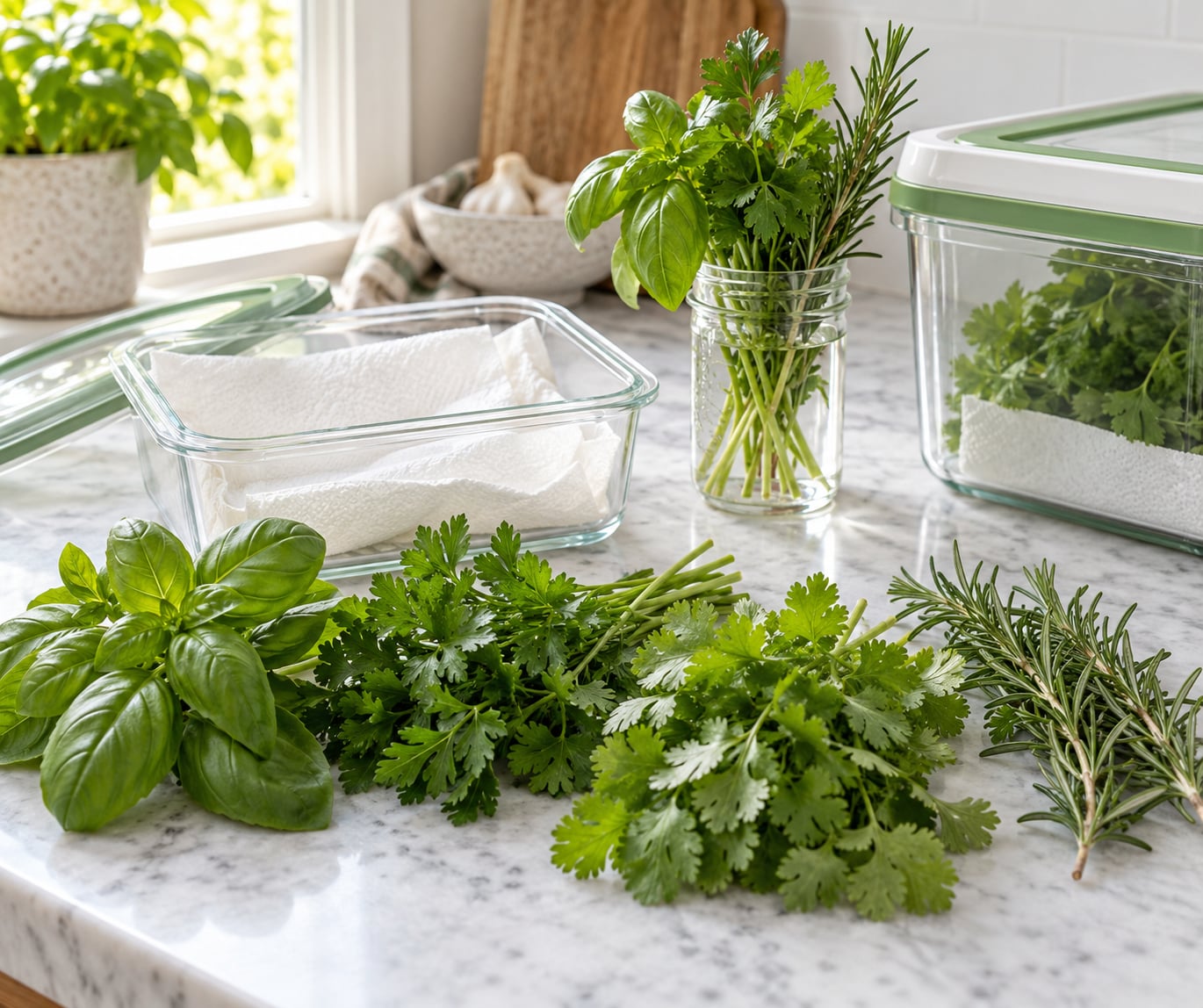
Knowing how to store fresh herbs in the fridge comes down to two methods: stand tender herbs like cilantro and dill in a little water the way you would a bouquet of flowers, and wrap hardy herbs like rosemary and thyme in a damp paper towel inside a sealed container. Give either group the wrong setup and you get slimy stems within days. Both techniques take about two minutes once you have done them a few times, and they stretch a single bunch of parsley from a week to three or four.
The frustrating part is that herbs are usually the first thing to rot in the crisper drawer. They are picked at their tenderest, they keep transpiring water after you bring them home, and they have almost no stored energy to survive bruising or wilting. Cold slows that down. The right container and just the right amount of moisture do the rest.
Above all, dry them properly before they go in. Moisture trapped in a sealed jar or bag turns into mold within a couple of days, and no amount of good technique recovers from that. Here is how I store herbs, worked out over years of buying far more than one recipe needs.
Table of Contents
What You Need
Nothing here is specialized. If you have a glass jar and a sheet of paper towel, you have everything the job requires.
- Airtight container or glass jar with a lid for the hardy herb method
- A clean jar or tall glass that can hold an inch or two of water for the tender herb method
- Paper towel, slightly dampened
- A loose lid, second container, or produce bag to tent the water glass so leaves stay dry
- A small cup or bottle of water for the standing method
- A refrigerator crisper drawer where the humidity runs a little higher
- A salad spinner or clean tea towel for drying washed herbs
- Scissors or a sharp knife to trim stems
A marker label helps more than people expect, because half of a bunch in a jar looks identical to the other half a week later.
Step-by-Step: How to Store Fresh Herbs in the Fridge
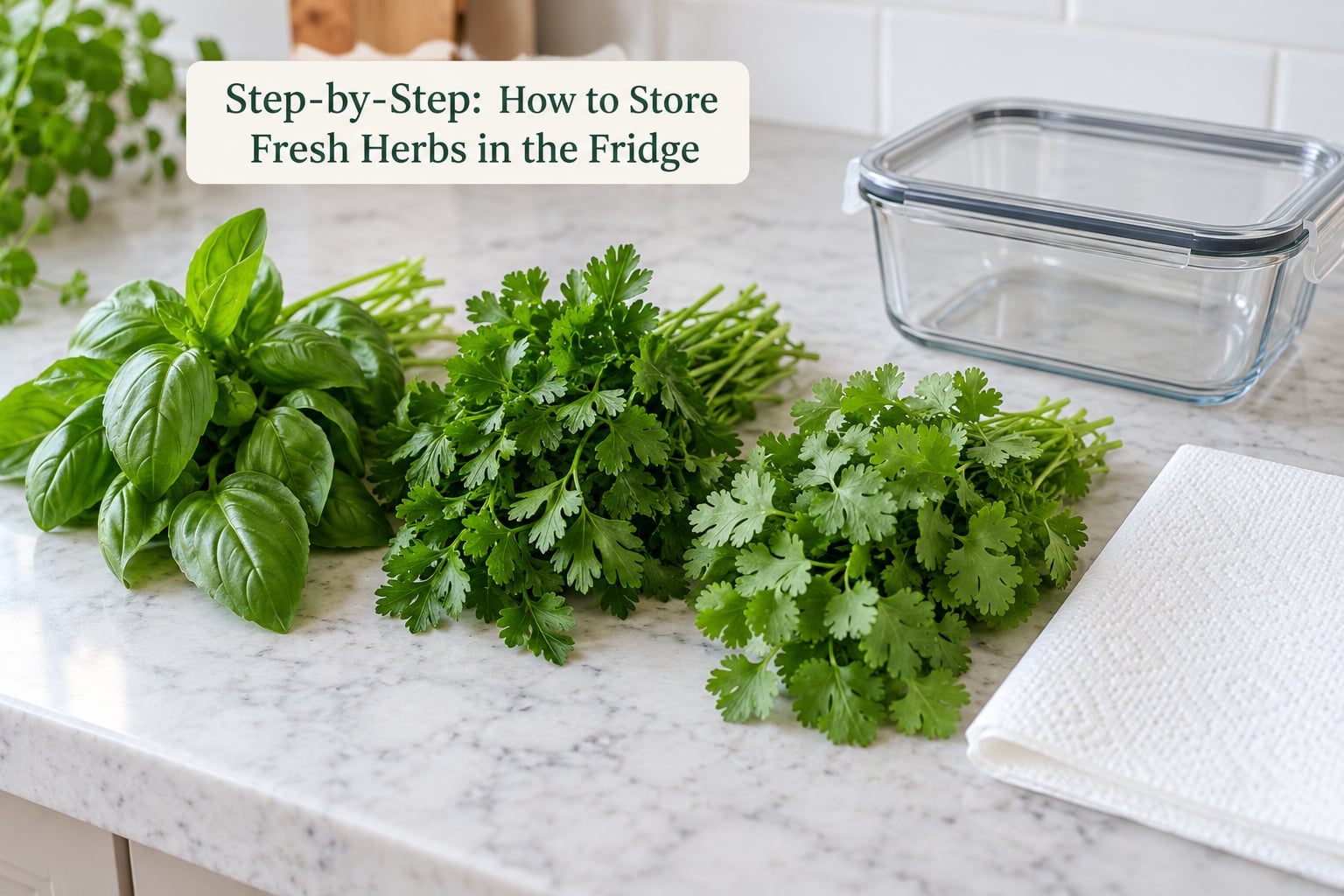
Do the drying step before anything else, then pick the method that matches the stem in your hand. Soft green stems drink through a jar. Woody stems rot in standing water.
Part one: trim and dry.
- Check the bunch first. Pull off anything already soft, brown or slimy. One bad leaf in a jar will contaminate the rest within a day or two.
- Wash if you plan to cook the whole sprig. Rinse in cool water, then dry hard in a salad spinner or between two tea towels until the leaves no longer feel slick. If you prefer to wash at the moment you use the herb, skip this and store them dry.
- Cut an inch off the bottom of every stem at an angle with clean scissors. Cut stems last, after the leaves are dry, so water does not splash back into the foliage.
Method A: tender herbs standing in water. Cilantro, dill, mint, flat leaf parsley, chives, tarragon, lemon balm.
- Wash and dry the herbs as above.
- Trim the stem ends and strip off any leaves that would sit below the waterline.
- Put a couple of inches of cool water in a clean jar or tall glass.
- Stand the bunch in the water like a flower.
- Tent the top with a loose lid, an inverted second container, or a produce bag. This keeps leaves dry while letting air move. A sealed airtight lid traps water in the greens and they go limp fast.
- Store in the crisper drawer or on an interior shelf, away from the door.
- Change the water every two or three days, and top it up when the level drops.
Method B: hardy herbs in a damp paper towel. Rosemary, thyme, sage, oregano, chives with thick bases, marjoram.
- Wash and dry the sprigs, or skip washing if you will strip leaves only.
- Lightly dampen a paper towel. It should feel cool, not wet. Squeeze out any drips.
- Spread the herb sprigs on the towel in a single loose layer.
- Roll the towel up loosely, then stand it upright in a jar so air can circulate. Crushing the sprigs flat inside a tight roll bruises the leaves.
- Slide the whole roll into a sealed container or zip bag, or put the jar in a bag and seal around the neck. Store in the crisper drawer.
Check the herbs every few days rather than only when you need them. Tender herbs should still have firm, bright leaves and stems that snap rather than bend. Hardy herbs should smell aromatic when you crush a leaf between your fingers. Once the leaves droop and the stems feel slippery, pull what is usable and move on.
How to Store Fresh Herbs in the Fridge by Type
Delicate herbs: basil. Basil is the exception to the whole method, and it is the one rule worth memorizing. Chilled basil blackens, the leaves go limp, and the stems turn dark grey within a day or two. Keep a bunch in a glass of water at room temperature on the counter, out of direct sun, and change the water every day. It will hold for close to a week that way. If you only need a few leaves overnight, a damp paper towel inside a sealed bag keeps basil usable for a day, but skip the fridge. Cilantro and dill sit on the delicate side too, though unlike basil they do belong in the fridge. Mint is delicate and grows fast, so give it its own water and trim the top regularly if you want it to keep producing.
Tender and leafy herbs: cilantro, dill, mint, flat leaf parsley, chives. Use the jar-and-water method. A zip bag sealed loosely around the jar neck works nearly as well, and several people find it works better than a hard lid because the greens never sit in condensation. Expect 10 days to two weeks. Watch for blackened leaf edges and a sour smell at the base of the stems. Parsley is the toughest of this group and regularly hits three weeks, while cilantro tends to be the first to go.
Woody and long-lived herbs: rosemary, thyme, sage, oregano, tarragon, marjoram. Either the damp paper towel roll or a loosely covered glass of water works, and both will keep for two to three weeks or longer. Rosemary and sage especially will outlast the week of cooking that planned for them. Drop a sprig into the water if a bunch sits unused for a few days. Spoilage shows up as a dry, papery stem or a thin grey film rather than slime, which is a helpful contrast with the tender herbs.
Root-on herbs are worth a separate note. If your parsley, cilantro or mint arrives with roots attached, treat it as a living plant. Keep the roots submerged in water in a glass, set it in the fridge, and replace the water weekly. Those plants can keep growing through the whole life of the fridge.
How Long Do Fresh Herbs Last in the Fridge?
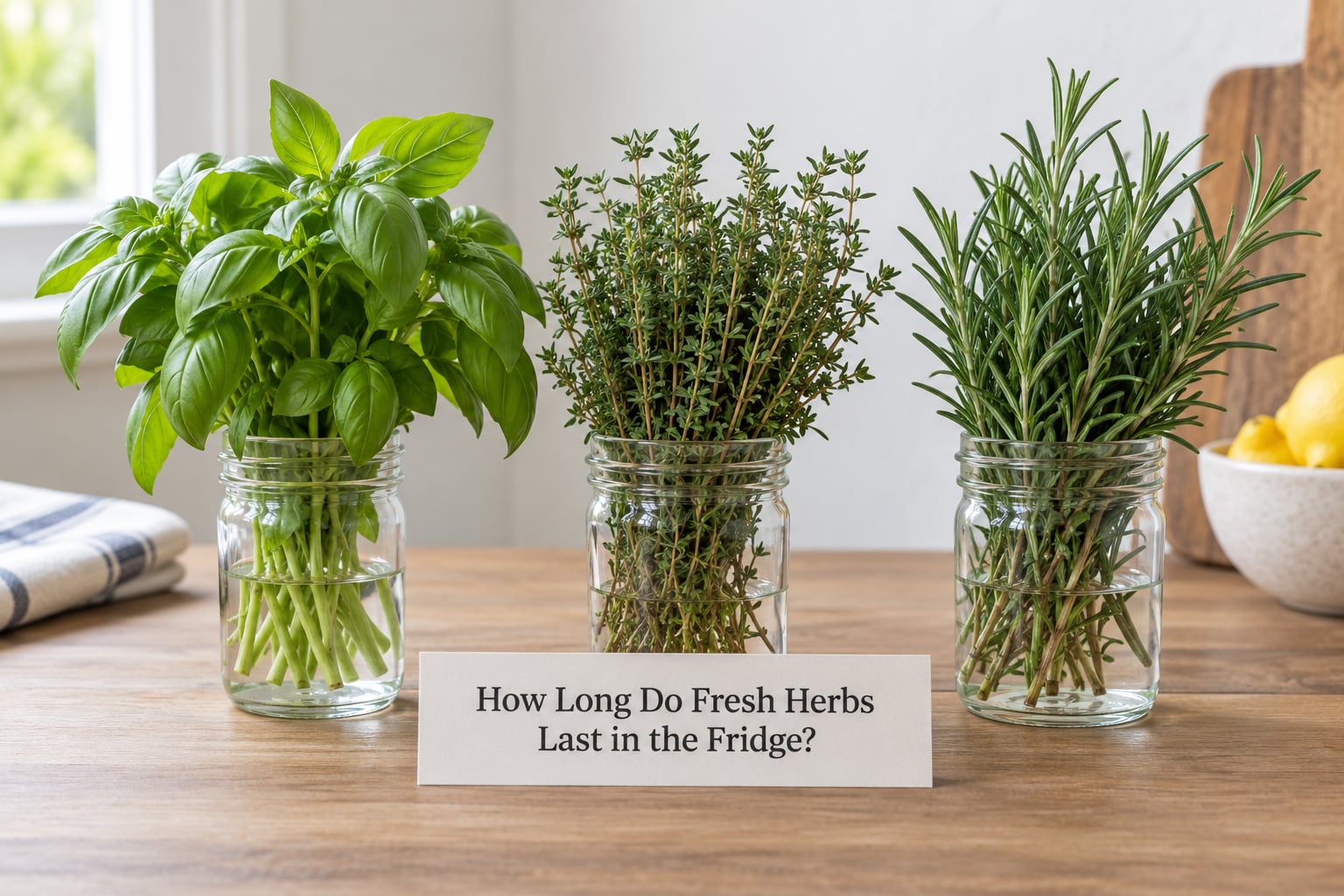
Stored correctly, tender herbs run 7 to 14 days, hardy herbs run 2 to 3 weeks, and woody bundles can last a month. The biggest factors are how dry the leaves were when they went in, whether the stems drink water, and how much air sits against the foliage.
Use this table as a freshness check before you cook.
| Herb | Type | Fridge life when stored well |
|---|---|---|
| Basil | Delicate, room temperature only | 5 to 7 days on the counter |
| Cilantro | Tender | 7 to 10 days |
| Dill | Tender | 7 to 10 days |
| Mint | Tender | 10 to 14 days |
| Flat leaf parsley | Tender | 2 to 3 weeks |
| Curly parsley | Hardy | 3 to 4 weeks |
| Chives | Tender to hardy | 10 to 14 days |
| Coriander seed | Dry pantry | Several months |
| Thyme | Woody | 2 to 3 weeks fresh, months dried |
| Rosemary | Woody | 2 to 3 weeks |
| Oregano | Woody | 2 to 3 weeks |
| Sage | Woody | 2 to 3 weeks |
| Tarragon | Tender to woody | 10 to 14 days |
| Marjoram | Woody | 2 to 3 weeks |
| Lemon balm | Tender | 7 to 10 days |
Garden herbs and farmers market bunches routinely outlast grocery store herbs by a week or more. Store-bought bunches are often sprayed with water through the day, which keeps leaves looking glossy while speeding up rot the moment they get sealed in a container at home.
Common Mistakes
- Washing too early. Water left on the leaves multiplies in the cold. Wash just before use, or dry the herbs completely after a wash.
- Sealing wet herbs. This is the single most common cause of mold in a herb container. Damp, not wet, is the target for paper towels too.
- Crushing delicate stems. A tight bag or a heavy roll bruises leaves that bruise never recover from. Leave headroom and roll loosely.
- One bag for every herb. Delicate and woody herbs need opposite conditions. Mixing them means one half of the bag is always stored wrong.
- Parking them next to raw meat. Store herbs on an interior shelf or in the crisper drawer rather than beside meat or near the door, where the temperature swings.
- Judging freshness by smell alone. Soft, darkened or slimy leaves have already gone. Sniffing only catches the last stage, so look at the leaves and stems each time you open the container.
- Freezing herbs on a back shelf. A compartment that touches the freezer wall is cold enough to freeze soft herbs solid, which turns them to mush on thawing.
Extra Tips for Keeping Herbs Fresh
Use only what you need. The most reliable way to cut waste is to store the amount you will cook in the next few days, then handle the rest by another route rather than cramming a week of cooking into one jar.
Refresh rather than discard. Herbs that have started to droop often recover: trim the stems again, stand them in fresh cool water for an hour, then return them to the jar. For a quick rescue on limp cilantro or parsley, an ice bath of cold water for a few minutes firms the leaves back up before you drain them.
Keep the crisper drawer working for you. That drawer holds humidity steady, which is what slows water loss from the leaves. Storing herbs inside a container still helps, because the container keeps the humidity next to the herbs instead of the whole drawer.
Label containers with the herb name and the date you stored them. Sounds fussy, but it is the difference between using herbs you forgot about and throwing them out on a smell test.
Freeze the surplus. Chopped tender herbs dropped into ice cube trays with olive oil and frozen keep six months or more, and they are built for cooked dishes rather than garnish. There is a full walkthrough on how to freeze fresh herbs in oil. Woody herbs dry well on the stem in a warm, dark, airy spot, and dry thyme or rosemary keeps for months in a sealed jar.
Store leafy greens the same way when you are buying those too. Our guide to how to store leafy greens so they stay crisp covers the crisper and container details that overlap here. And if you keep running out, a windowsill pot solves the supply problem at the end of it. See how to grow herbs indoors year round.
Frequently Asked Questions
Should fresh herbs be washed before storing them in the fridge?
Skip the wash if you will use the herb whole, since any water left on the leaves encourages mold in a sealed container. Wash first only when you plan to strip and chop the leaves, and dry them thoroughly in a salad spinner or between towels. Store them completely dry either way. If you wash right before cooking, you get the cleanest result and the longest fridge life.
Can I store fresh herbs in a plastic bag?
Yes, and for many people it is the easiest method. Put a slightly damp paper towel in the bag, lay the herbs in loosely, and seal it. For tender herbs standing in water, seal a produce bag around the neck of the jar so the leaves stay dry while air still moves. Heavy zip bags work too, though a thin produce bag breathes slightly better and keeps more condensation off the greens.
Should I store herbs in water or wrap them in a paper towel?
Match the method to the stem. Soft green stems, such as cilantro, dill and mint, drink through a jar of water and stay fresh far longer that way. Woody stems, such as rosemary, thyme and sage, last for weeks wrapped in a damp paper towel inside a sealed container, where standing water just rots them. Basil is the rule breaker: it blackens in the fridge and belongs in water at room temperature.
How can I tell when fresh herbs have gone bad?
Look before you smell. Leaves that are slimy, blackened at the edges, yellowing or completely limp are finished. Soft stems that bend instead of snapping, a sour or musty smell at the base of the bunch, and visible grey or white fuzz all mean the herbs are past saving. Smell alone catches the problem late, so check the leaves and stems each time you open the container.
Can I freeze fresh herbs instead of storing them in the fridge?
Yes, and freezing suits herbs you will cook rather than garnish. Chop soft herbs, drop them into ice cube trays with olive oil or water, and freeze. Woody herbs such as rosemary, thyme, sage and oregano dry well in a warm, airy, dark spot and keep for months. Basil needs blanching before freezing, and no frozen method brings back the look or aroma of a fresh sprig.
Conclusion
Dry your herbs completely, then match the container to the stem: water in a jar with a loose cover for tender herbs, a damp paper towel roll in a sealed container for woody herbs, and basil on the counter rather than in the fridge. Check the leaves and stems each time you open the container, and use soft or discolored herbs quickly instead of trusting your nose alone.