
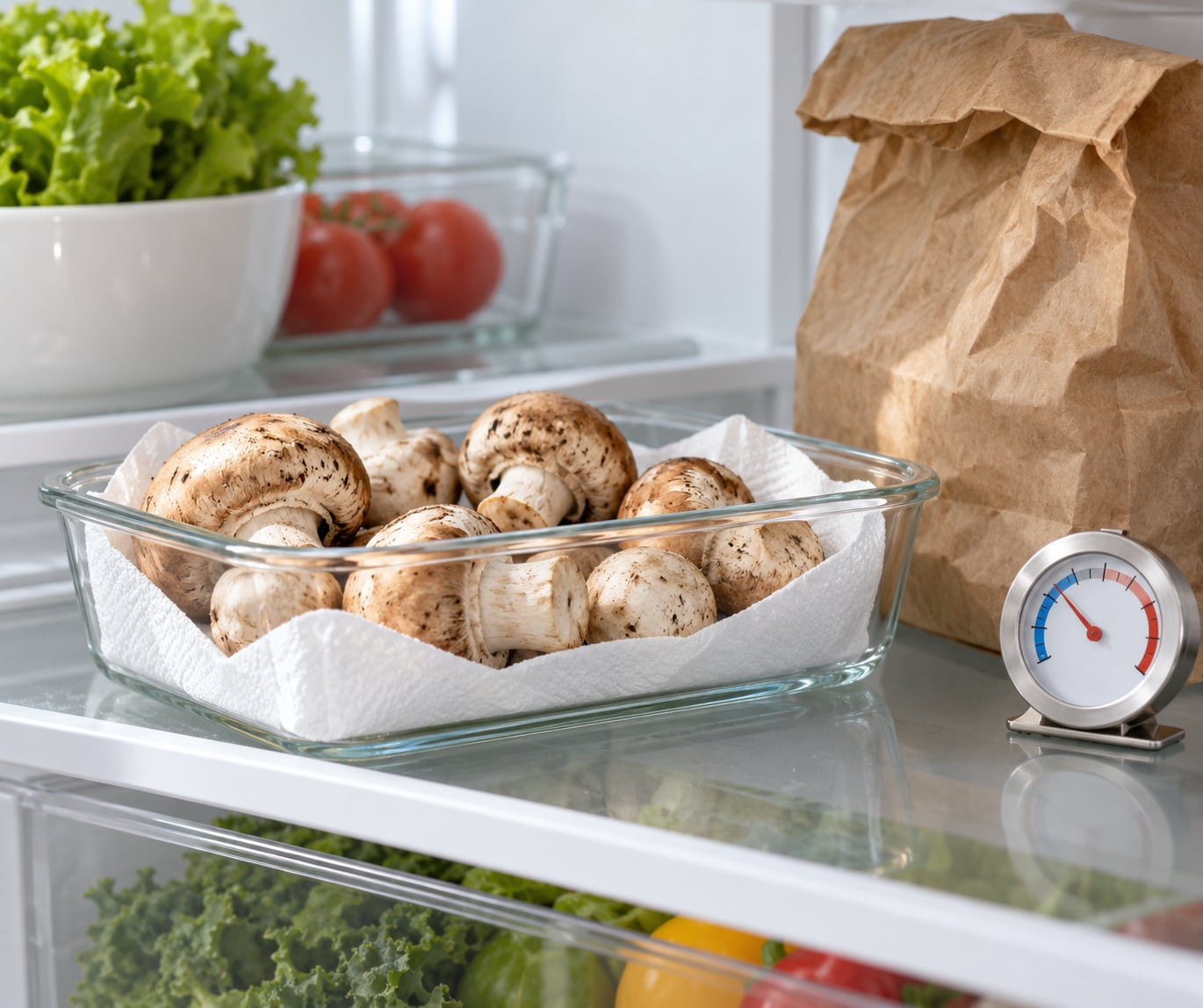
How to store mushrooms in the fridge is simpler than most guides make it sound: keep them unwashed and dry, set them in a breathable container lined with a paper towel, and put that container on a main refrigerator shelf where the air moves. Whole white or cremini mushrooms hold up about five to seven days that way. Sliced ones get three to four days.
The whole game is moisture. Mushrooms are roughly 90% water and they keep respiring after harvest, so they give off moisture in a cold fridge. Seal that water in and the caps turn slick within two days. Let it dry out completely and they shrivel instead. A paper towel handles both problems at once.
I have thrown away more slimy mushroom boxes than I care to admit, and every one of them started as a clamshell I did not want to deal with. Ten seconds of setup buys you most of a week.
Table of Contents
What You Need
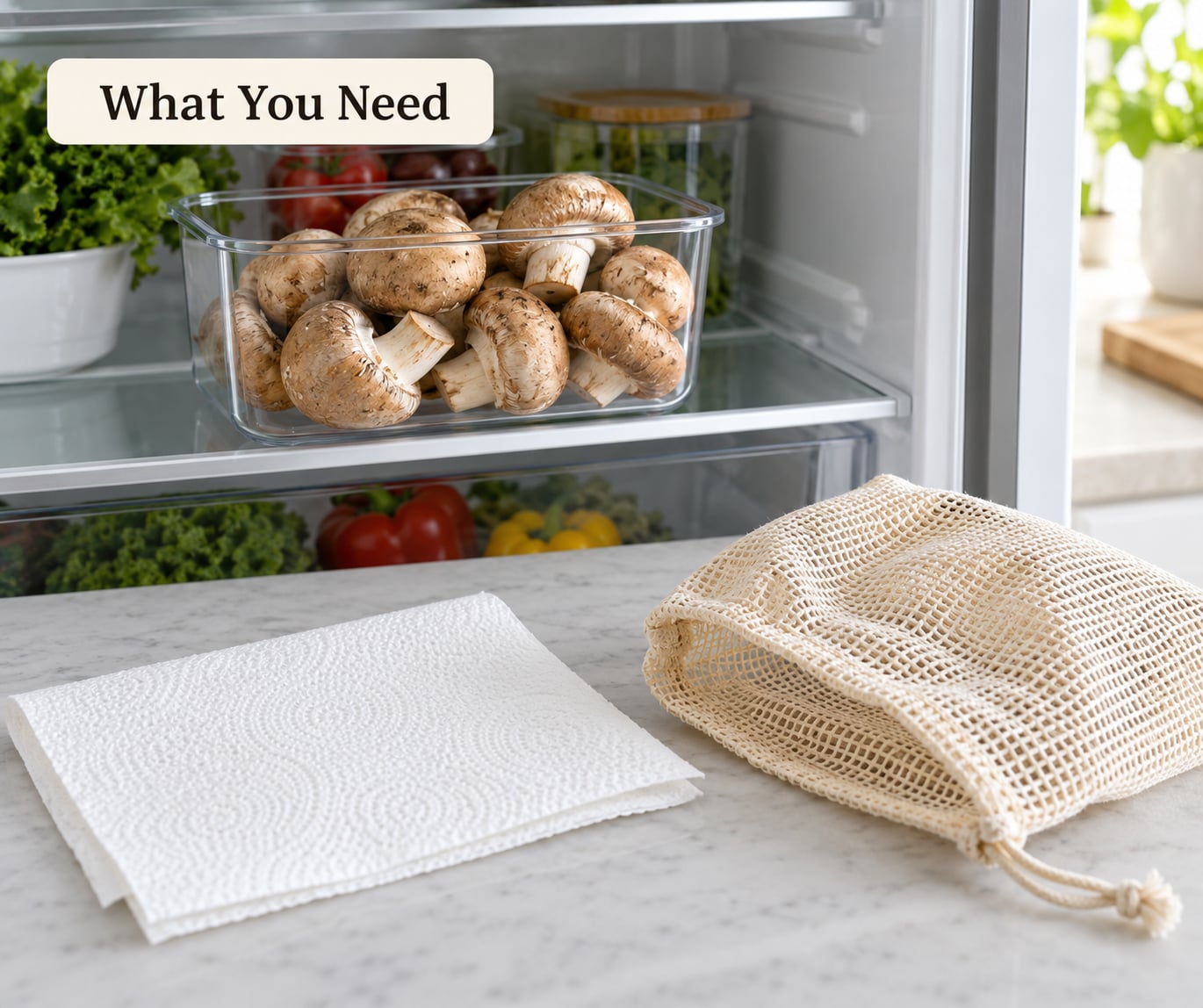
- Fresh mushrooms that are dry and firm, with no slime or dark wet spots.
- A breathable container: a shallow glass or plastic tub with a loose lid, a paper bag folded over, or the vented tray the mushrooms came in.
- A clean paper towel to line the bottom of the container.
- Your refrigerator, ideally with a thermometer so you can confirm it sits at 40°F (4°C) or below.
A dry soft brush or the back of a teaspoon handles loose dirt. That is the whole kit. If you are stocking up on other fridge staples, how to store fresh ginger so it lasts follows the same unwashed-and-dry logic, while storing chia seeds comes down to keeping them sealed and away from moisture.
Step-by-Step: How to Store Mushrooms in the Fridge
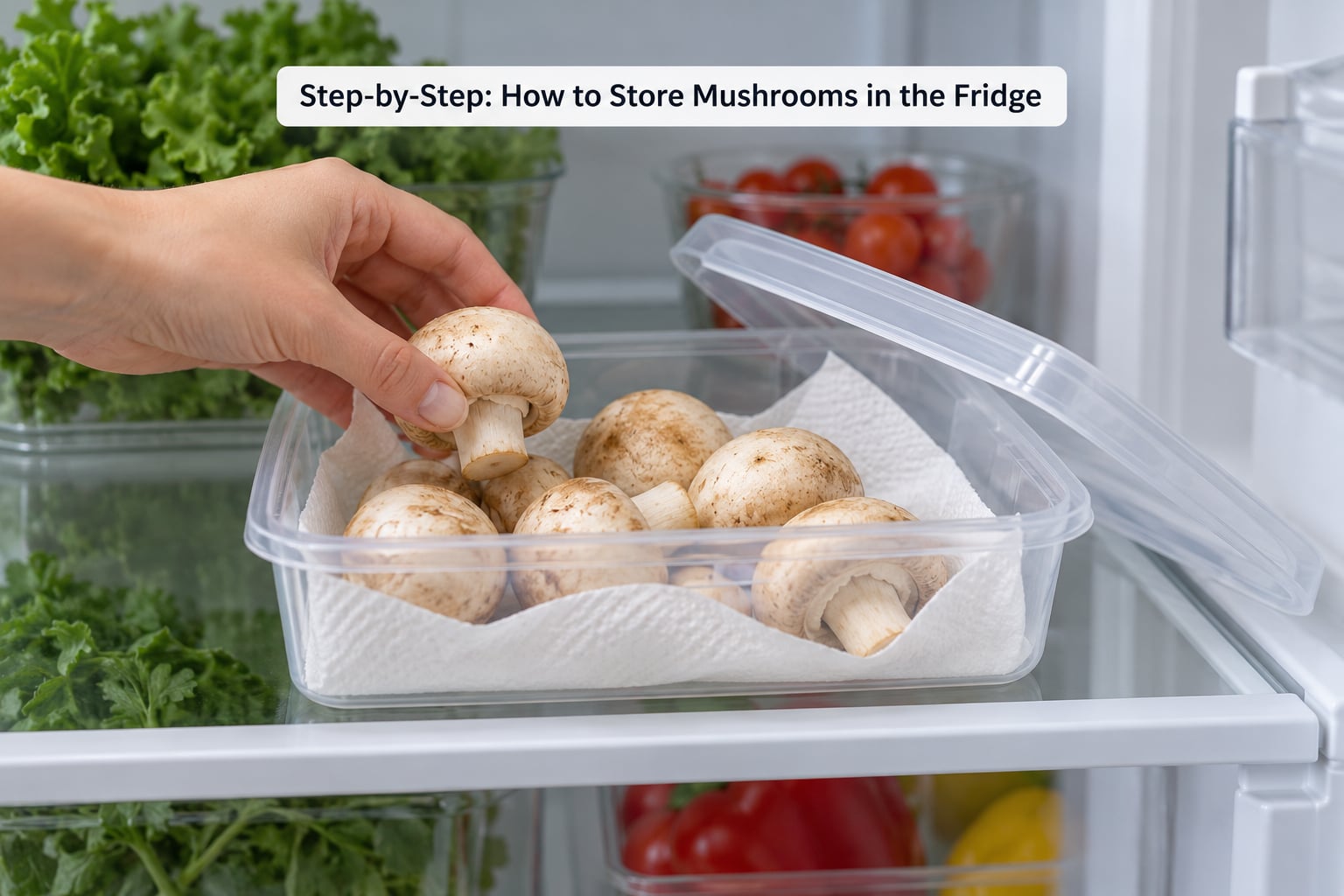
Step 1: Choose Fresh Mushrooms
Pick caps that feel firm and dry with a clean gill surface. If a mushroom feels slick, smells sour, or has wet-looking black patches, skip it and pick another. You cannot store your way out of spoilage that already started in the growing tray.
Step 2: Remove Packaging and Dry the Surface
Take them out of the plastic clamshell and discard the wrap, which traps condensation against the caps. Brush off any packing dirt, then pat the mushrooms dry with a clean towel.
Do not rinse them. Washing wets the surface, and wet caps brown and turn slimy much faster in the fridge. If you want them washed, wash them right before you cook and dry them thoroughly first.
Step 3: Use the Right Storage Container
The best container is one that lets air in and holds a dry surface. A shallow container lined with a paper towel and closed loosely is the most forgiving option, because the towel collects condensation you can swap out. A brown or kraft paper bag folded over at the top works nearly as well and is what most home cooks land on after trying the plastic. The same airflow logic behind storing leafy greens so they stay crisp works here.
Skip sealed zip-top bags with nothing absorbent inside. You are building a humid chamber, and mushrooms do not want to live in one.
Step 4: Refrigerate in the Main Compartment
Put the container on a main refrigerator shelf, not in the crisper drawer and not in the door. Shelves hold a steadier temperature than drawers, and the door warms up every time it opens.
Give the container room around it. Air that cannot move past a tightly packed shelf turns the whole cluster into one warm, wet pocket.
Step 5: Check and Replace the Paper Towel
Every few days, look at the towel and the underside of the caps. If the towel is damp or the caps feel tacky, swap in a fresh dry one. That single habit buys you a couple of days, and it takes five seconds.
Use mushrooms oldest first. A quick glance at the container while you grab the milk is enough to spot the ones turning.
Common Mistakes
Washing before storing. This is the big one. Water sitting on the surface is the main driver of sliminess and fast browning. Store them dry and wash at the moment of cooking.
Leaving them in the original plastic wrap. Retail packaging is sealed tight on purpose for shipping and display. At home it does the opposite of what you want.
Using an airtight container. Airtight means no airflow and rising humidity. If you only have plastic, leave the lid cracked or the bag open at the top.
Overcrowding and stacking. Heavy containers bruise the caps underneath, and bruised spots darken within hours. Give them their own space.
Storing them beside ethylene-producing produce. Apples, pears, avocados and ripe tomatoes give off ethylene gas, which speeds browning and softening in nearby mushrooms. Keep them on a separate shelf.
One more worth naming: keeping a bulk haul of mushrooms in the fridge for two weeks will not work. Raw fridge storage tops out at about a week, so cook or freeze the extra the day you get it.
Frequently Asked Questions
Should mushrooms be washed before storing in the fridge?
No. Washing wets the caps, and that moisture is what turns mushrooms slick and brown in a cold fridge. Brush off packing dirt with a dry brush or towel, refrigerate them unwashed, and wash only right before cooking. Once rinsed, dry them thoroughly and keep them in a paper-towel-lined container away from other produce.
How long do fresh mushrooms last in the refrigerator?
Whole white button and cremini mushrooms keep about five to seven days in the fridge when stored unwashed and dry. Sliced mushrooms last three to four days, and cooked mushrooms or leftovers keep three to four days in a sealed container. Delicate wild varieties such as chanterelles often only hold one to two days, so cook those quickly.
What is the best container for storing mushrooms in the fridge?
A shallow container lined with a clean paper towel and covered loosely is the most reliable choice, because the towel absorbs condensation you can replace. A brown paper bag folded over the top is a close second and needs no supplies. Both work because they let air circulate. Avoid airtight plastic, which traps humidity and turns mushrooms slimy.
Can I store pre-sliced or pre-washed mushrooms?
Yes, but expect a shorter window. Cut surfaces oxidize and pick up extra moisture, so sliced mushrooms last three to four days instead of five to seven. Store-sliced mushrooms often arrive already several days into that window, so treat them as a short-term buy. Keep them in the vented tray or a paper-towel-lined container and use them first.
How can I tell when mushrooms have gone bad?
Sliminess is the clearest signal. If the caps feel slick or the stems are soft and wet, discard the mushrooms rather than cooking them, because some bacterial toxins survive heat. A sour or ammonia-like odor, fuzzy mold, or dark wet patches mean the same. Browning alone is just oxidation on cut surfaces and is still perfectly safe to eat.
Conclusion
If you do one thing differently this week: skip the plastic clamshell. Keep your mushrooms unwashed and dry, set them in a breathable container on a paper towel, park it on a main shelf, and swap the towel when it turns damp. Five to seven days for whole mushrooms is the payoff, and you stop losing half a box to slime.