
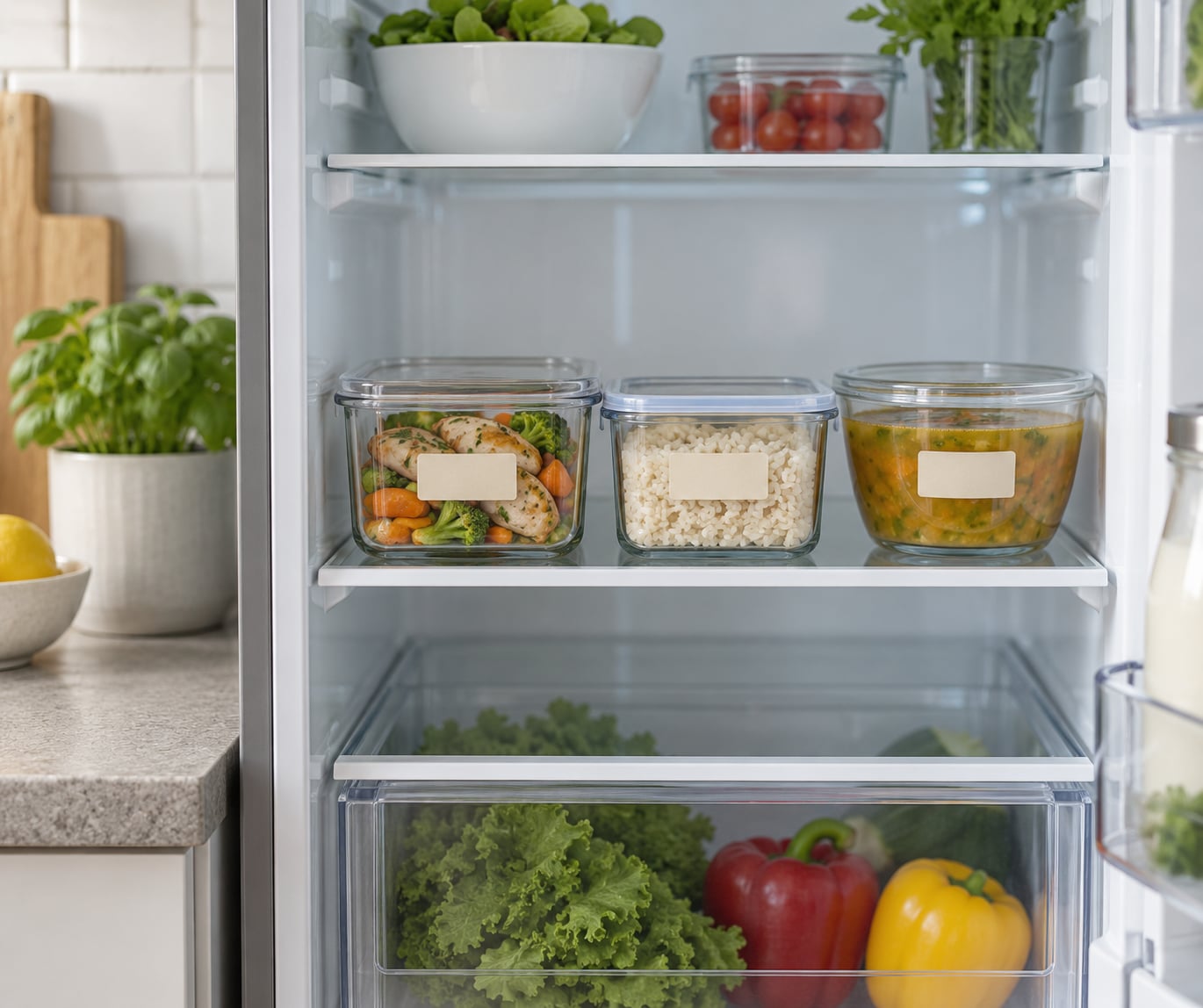
Most cooked leftovers stay safe in the fridge for 3 to 4 days at 40°F (4°C) or below, as long as you refrigerate them within two hours of cooking. Day one counts as the day you cooked the food, so Sunday’s roast chicken is out of window by Thursday. Some foods move faster than others, and rice is the one most people get wrong.
Two clocks matter here: a safety window and a quality window. They rarely match, which is why so much advice online contradicts itself. This guide sorts out both, gives you a food-by-food table you can actually use, and explains why your nose is a poor safety test.
Table of Contents
How Long Do Leftovers Last in the Fridge?
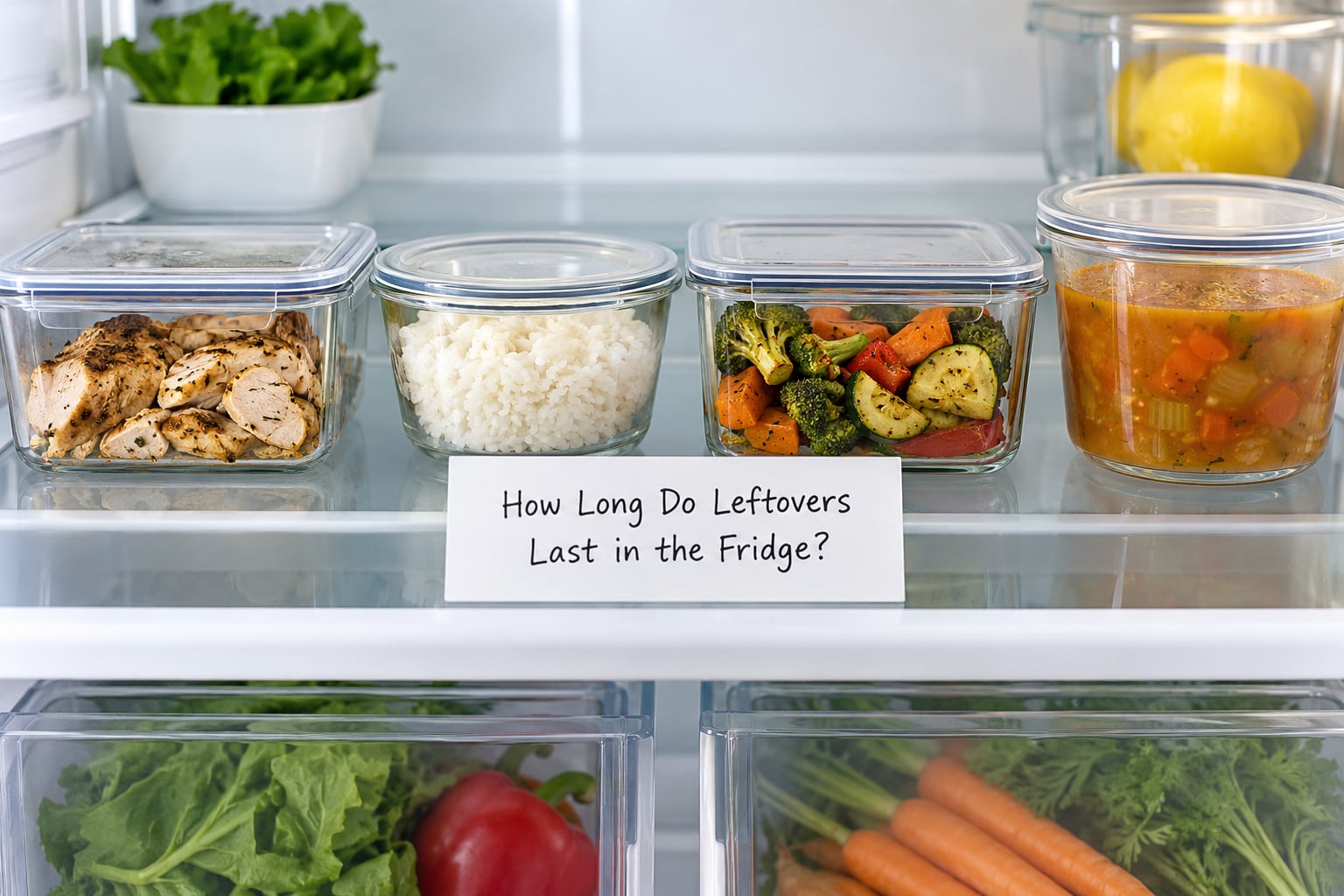
The short answer: 3 to 4 days for most cooked leftovers, stored at 40°F (4°C) or below and refrigerated within two hours. Food kept in a warmer fridge, left out longer than two hours, or handled with a dirty spoon has a shorter and less predictable window.
USDA guidance puts refrigerated leftovers at three to four days, with freezing as the way to go longer. You will also see a seven-day figure quoted, and that one is about quality as much as safety — I’ll untangle it further down. Nothing in the fridge stops bacteria; refrigeration slows them down.
In the danger zone between 40°F and 140°F (4°C and 60°C), bacteria can double roughly every 20 minutes. A roast that cools on the counter from 6 p.m. to midnight spends six hours in that range, and the two-hour rule exists because of exactly that arithmetic.
What is the 2-2-4 rule for leftovers?
The version that shows up most often in UK and Australian food-safety campaigns is the 2-2-4 rule: refrigerate within 2 hours, eat within 2 days or freeze, and freeze for up to 2 months. US guidance is more generous on the eating window — 3 to 4 days — which is why two numbers circulate for the same question.
Is it safe to eat leftovers that are five days old?
For most cooked food, five days sits outside the USDA window, so I would not serve it. If the food is at the far edge of its category — a well-cooked casserole from day one, kept cold the whole time, handled with clean utensils — the risk is lower than for rice or seafood. Freezing on day three converts a five-day-old leftover into a safe one.
Leftover Storage Times by Food
These windows assume a fridge held at 40°F (4°C) or below, food refrigerated within two hours, and clean utensils. Days are counted from the day the food was cooked.
| Food | Fridge (at 40°F / 4°C or below) | Freezer (at 0°F / -18°C) |
|---|---|---|
| Cooked poultry and chicken | 3 to 4 days | 3 to 4 months |
| Cooked ground meat (beef, turkey, pork) | 3 to 4 days | 3 to 4 months |
| Cooked beef, pork, lamb steaks or roasts | 3 to 4 days | 3 to 4 months |
| Cooked fish and shellfish | 3 to 4 days | 2 to 3 months |
| Cooked rice | 3 to 4 days, eat within 1 day if possible | 3 to 4 months |
| Cooked pasta | 3 to 5 days | 2 to 3 months |
| Other cooked grains (quinoa, barley, couscous) | 3 to 5 days | 2 to 3 months |
| Cooked vegetables | 3 to 4 days | 10 to 12 months for blanched vegetables |
| Soups and stews | 3 to 4 days | 2 to 3 months |
| Casseroles and baked dishes | 3 to 4 days | 2 to 3 months |
| Cooked pizza | 3 to 4 days | 2 to 3 months |
| Eggs and cooked egg dishes | 3 to 5 days | 3 to 4 months |
| Deli meat opened from the package | 3 to 5 days | 1 to 2 months |
| Salad dressings and opened sauces | 1 to 2 months | 3 to 4 months |
| Prepared plant-based meals (tofu, tempeh, plant proteins) | 3 to 4 days | 2 to 3 months |
| Cured or fermented items (kimchi, pickles, cured fish) | Weeks, following the label | Not recommended |
Rice deserves its own warning. Cooked rice can carry Bacillus cereus, a spore-forming bacterium whose toxins survive reheating and are not destroyed by a hot pan. Cooked rice sitting at room temperature overnight is the classic case, and reheating will not make it safe. Fridge it within an hour, eat it the next day, or freeze it the day you cook it.
Fermented and cured foods are the outlier on this list. Vinegar, salt and controlled cultures do what refrigeration alone cannot, which is why a jar of kimchi or a block of hard cheese behaves nothing like a container of chicken. Follow the label rather than the general rule.
How to Store Leftovers Safely in the Fridge
Most spoilage in leftovers traces back to cooling, not to the fridge. A deep casserole dish can sit lukewarm in the middle for hours while the edges cool, and bacteria grows in that middle.
Cool the food fast in shallow containers
Divide leftovers into shallow containers no more than 2 inches deep so heat leaves quickly. A big stockpot of soup goes into the fridge as several small boxes, not as the pot itself. If you must cool a large piece like a whole breast, cut it or split it before refrigerating.
Refrigerate within two hours, one hour in the heat
Two hours is the ceiling when the air is below 90°F (32°C). Above that — a hot patio, a summer picnic, a warm garage — cut it to one hour. A shallow dish may make the deadline comfortably; a deep pot will not.
Label and date, then rotate first in, first out
A strip of masking tape and a marker take ten seconds and settle every argument in the household. Write the dish and the date, then push new containers behind older ones so the oldest gets eaten first. This one habit removes more spoiled food than any storage trick.
Keep raw food separate and use clean utensils
Store raw meat, poultry and seafood on the lowest shelf in a tray or box so drips never reach cooked food. Use a separate spoon for serving, and avoid tasting food mid-cook and then putting the spoon back. Cross-contamination outlasts cooking temperatures for some pathogens.
Give the fridge a thermometer and check it
An appliance dial is a rough idea, not a temperature. A cheap fridge thermometer in a glass of water tells you whether your fridge actually holds 40°F (4°C) or below, and a fridge that sits at 45°F quietly shortens every window on this page.
Leave room around containers for air to move
Crowding blocks cold air, and a container tucked behind a milk jug can sit several degrees warmer than the shelf beside it. Leave a hand’s width between containers and avoid pushing leftovers into the back corners where the cooling happens slowest.
How to Tell Whether Leftovers Are Still Safe
The sniff test catches some spoilage and misses a lot that matters. Listeria monocytogenes can grow on food that smells and looks entirely normal, and people have reported getting sick from leftovers that passed the nose test. Appearance and odor tell you about quality; they do not certify safety.
So use them as triggers for the bin, not as proof you can eat. Toss leftovers when you find any of these:
- Mold on any surface, including hard cheese, soft cheese, bread, meat and cooked vegetables. Soft, moist food is where mold hyphae reach deep enough that trimming does not rescue it.
- Slimy or sticky surfaces, especially on cooked meat, poultry and dairy.
- A swollen or bulging can, or a lid that pops when opened, which points to gas from bacterial activity.
- Sour, ammonia-like or otherwise off odors that were not there before.
- Discolored food, grey or green tints, or a fizzy, alcohol-like smell in a container that should be flat.
- No reliable date. If you cannot say when it was cooked or opened, treat it as past the window.
Two habits help here. First, cover food before it goes into the fridge, because odors mix freely in an uncovered fridge and you lose your ability to spot the offender. Second, sniff leftovers when you store them, so you know what they are supposed to smell like.
If someone in your household is pregnant, over 65, immunocompromised or caring for a young child, be more conservative than the table says. A shorter window costs a meal; food poisoning costs more.
How to Reheat Leftovers Without Ruining Them
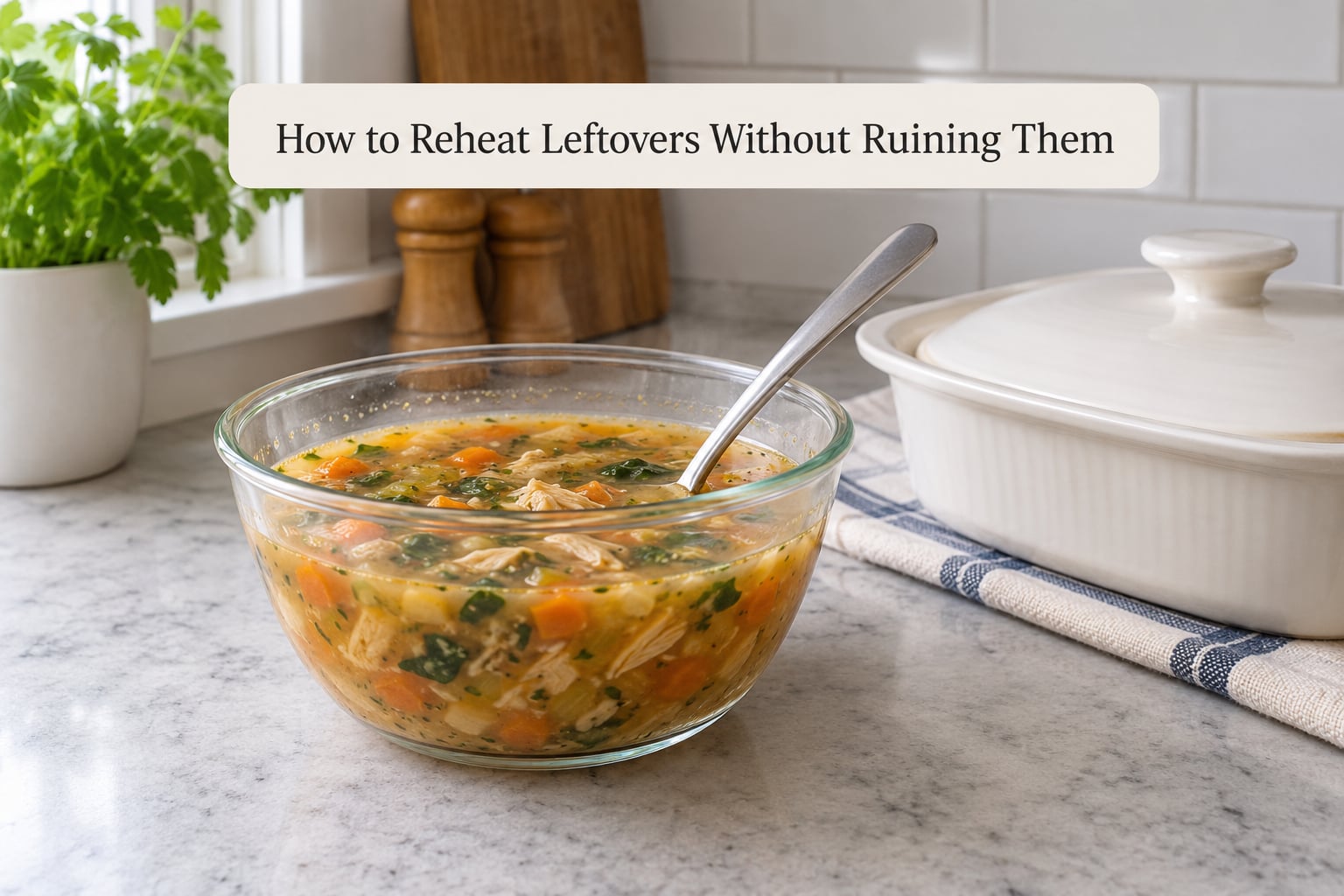
Reheat leftovers only to 165°F (74°C) and stir in the middle. Microwaves heat unevenly, and the edge of a bowl can feel hot while the center is still lukewarm, which is the same problem as uneven cooling in reverse.
Cover, stir and give it time
A lid or plate over the food traps steam and gets heat into the middle faster. Stir halfway through for anything with chunks in it. Standing the container uncovered in the microwave also dries the edges out, which is why reheated rice turns rubbery.
Which reheating method works best
The microwave is fastest and least even, best for single portions of soup or rice with a stir and a temperature check. The oven at 350°F (175°C) with a splash of moisture restores casseroles and roasts, and gives you the most even result. The stovetop wins for sauces and one-pan dishes where you can heat slowly and keep stirring.
Safe minimum internal temperatures to check
Reheated leftovers should hit 165°F (74°C). If you are reheating raw fish, poultry or ground meat to cook it from chilled rather than from leftovers, the safe minimums are 145°F (63°C) for fish and whole cuts of beef, pork and lamb, 160°F (71°C) for ground meat, and 165°F (74°C) for poultry. A food thermometer is the only reliable check, and reheating in the microwave itself is not a temperature test.
Reheat once, and reheat only what you will eat
Each warm-and-cool cycle gives bacteria another chance to multiply. Reheat the portion going onto the plate and leave the rest cold. Soups and stews that come to a boil again can go back into the fridge for another safe stretch, but reheating twice and serving that is a habit worth dropping.
When to Freeze Leftovers Instead
Freeze when you have more than a week of food, when you cook a double batch, or when a food’s fridge window is shorter than your meal plan. Soups, stews, cooked grains, casseroles, cooked meat and pizza all freeze well, and quality loss there is mostly freezer burn rather than safety risk.
How to freeze leftovers properly
Cool the food first, then freeze it flat in a container with little air around it. A sheet of parchment between sauce and lid stops a tomato sauce from fusing to the plastic. Once solid, you can stack the containers upright and save real shelf space.
Portion and label before it goes in
Freeze in the portions you will cook, not in the family-size batch. A written label with the dish and the date lets you eat oldest-first once thawing starts. Leave a little headspace for expansion, which is how frozen soup containers crack.
Thaw safely in the fridge, not on the counter
Move the container to the fridge a day ahead and let it thaw there. For a same-day meal, use the microwave on defrost and cook it immediately rather than letting it sit. Cooked food that has thawed in the fridge can be refrozen, though texture may suffer; food thawed on the counter should not be refrozen or eaten.
Freezing does not reset the clock
This is the point people get wrong. Freezing halts growth, it does not reverse it. A container that sat on the counter for a day before going into the freezer is still a day-old container, and thawing it does not make that hour back. Freeze promptly, and treat the thawing date as the start of a new, short window — three to four days in the fridge after thawing before you eat it.
Where freezing genuinely buys you time
Most cooked dishes keep two to four months frozen at 0°F (-18°C) and stay well past that in quality terms. Good news for holiday cooking in particular: a turkey or a tray of roasted vegetables that will not be eaten within four days belongs in the freezer on day one, not on day five.
For produce that is fresh rather than cooked, the math is different and more delicate. If berries are on your list this season, how to store summer berries so they last longer covers the washing and drying steps that decide how long they hold.
Frequently Asked Questions
How long do cooked chicken leftovers last in the fridge?
Cooked chicken keeps three to four days in a refrigerator at 40°F (4°C) or below, counting the day you cooked it as day one. Refrigerate it within two hours, and freeze it if you will not eat it in that window. Reheat to 165°F (74°C) and use a separate container for the raw bird to avoid cross-contamination.
How long does cooked rice last in the fridge?
Cooked rice keeps three to four days refrigerated, but eating it within a day is the safer habit because Bacillus cereus spores survive cooking and its toxins survive reheating. Cool rice quickly in a shallow container, refrigerate within an hour, and freeze it the day you cook if a week of meals is planned.
Can I eat leftovers that are five days old?
Five days is past the USDA three-to-four-day window for most cooked food, so I would not serve it. Cold, well-handled leftovers at the sturdy end of a category are lower risk, while rice, seafood and poultry are not worth the gamble. If the food is worth keeping, freeze it now rather than eating it and hoping.
How should leftovers be stored to stay fresh?
Cool food fast in shallow containers no more than 2 inches deep, cover each one, label it with the date and refrigerate within two hours. Store raw meat on the lowest shelf in a box, keep cooked food above it, and rotate containers oldest to the front. Leave space around the containers so cold air can circulate.
Can I freeze leftovers after they have been in the fridge?
Yes, as long as the food has stayed at 40°F (4°C) or below and was refrigerated within two hours of cooking. Freeze it in the portion you will eat and label it with the date. Freezing halts bacterial growth but does not reverse time, so frozen leftovers still need to be thawed in the fridge and used within a few days.
How do I know when leftovers have gone bad?
Discard food with mold, a slimy surface, a swollen or popping lid, an off odor, or discoloration you did not expect. Smell and appearance catch quality problems well but cannot confirm safety, because Listeria can grow on food that looks and smells fine. If you do not know how old the food is, treat it as past the safe window.
What to Do First
Open the fridge and check the oldest container, not the newest. If it is past three or four days, or shows mold, slime or a swollen lid, toss it and stop thinking about it. Then take whatever you cooked today, split it into shallow covered containers, write the date on each one and put them in the fridge within two hours.
That is the whole routine, and it works better than any gadget. A fridge thermometer tells you whether your appliance is holding 40°F (4°C) or below, and a roll of masking tape keeps every date honest.
For leftovers that have already been sitting a few days, freezing in single portions buys you weeks rather than hours, so long as the food went into the fridge promptly to begin with. And if you blend fruit drinks ahead of time, why smoothies separate in the fridge covers what is expected and what is not.