
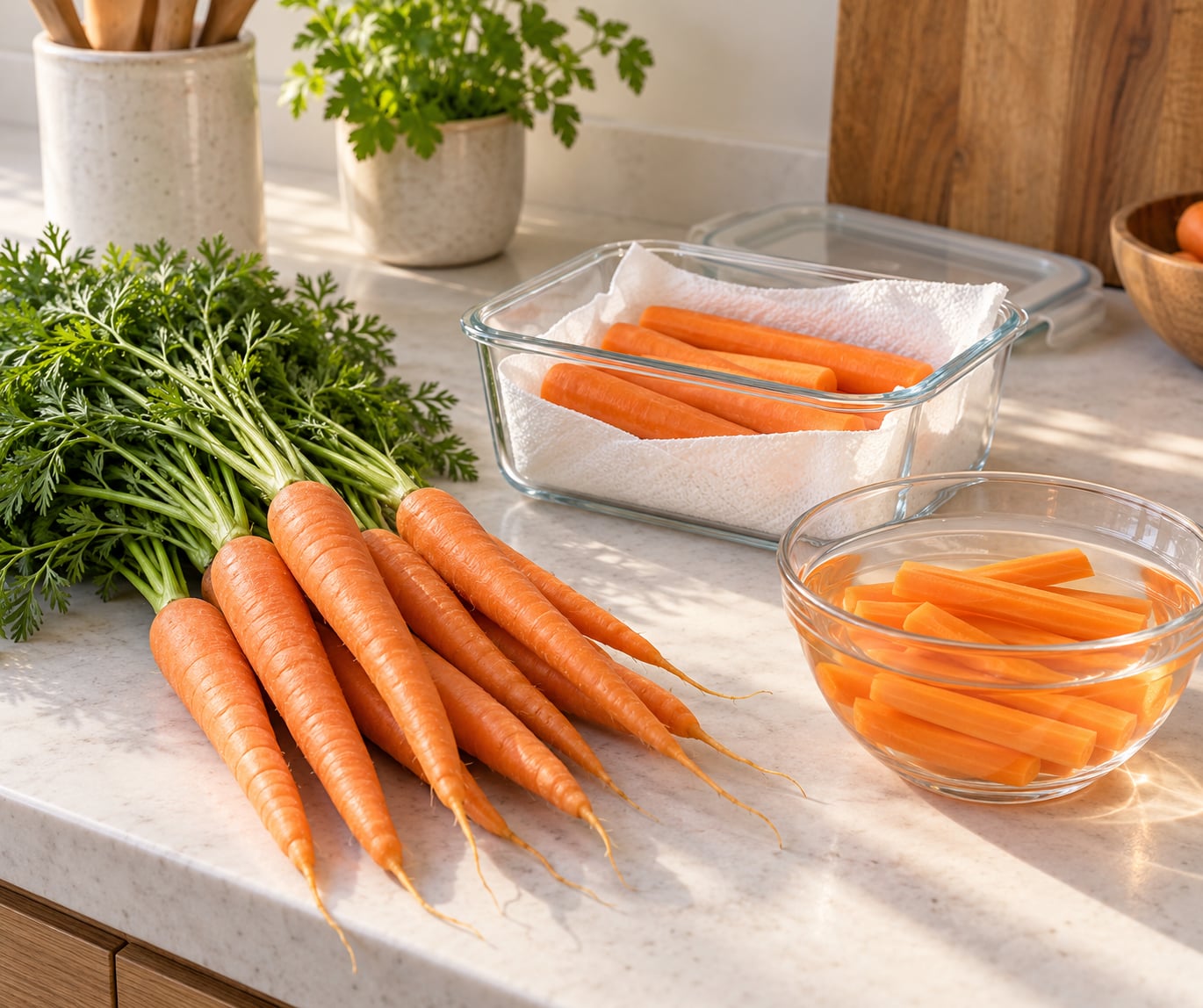
To store carrots so they stay crunchy, cut off the green tops, skip the wash, and keep them unwashed and unpeeled in a plastic bag or airtight container in the fridge crisper drawer, away from apples and bananas. That method holds their crunch for three to four weeks with no effort beyond two minutes of prep.
The reason carrots go limp is mostly a moisture problem, and it runs in both directions. Too dry and the root shrivels and goes rubbery. Too wet and the surface stays wet long enough to grow mold and slime. Get the balance right and a bunch of carrots behaves like it was just pulled from the soil.
I keep a bag of carrots in the fridge at all times, and the difference between a good bag and a sad one is almost always the tops and whether somebody rinsed them first. Store-bought bagged carrots are washed at the packing plant and wrapped, so they are a separate case. Everything below covers homegrown, farmers market, and bagged carrots, with a note on each.
Table of Contents
- What You Need
- Step-by-Step: How to Store Carrots in the Fridge, Water and Freezer
- Choose the Freshest Carrots
- Prepare the Carrots for Storage
- How to Store Carrots in the Fridge (Whole and Cut)
- Use the Water-Storage Method for Extra Crunch
- Store Carrots Long Term in Sand, Shavings or a Cold Cellar
- Freeze Carrots for Longer Storage
- Baby Carrots and Bagged Carrots
- Why Homegrown Carrots Soften Faster Than Store-Bought Ones
- Common Mistakes
- Frequently Asked Questions
- Conclusion
What You Need
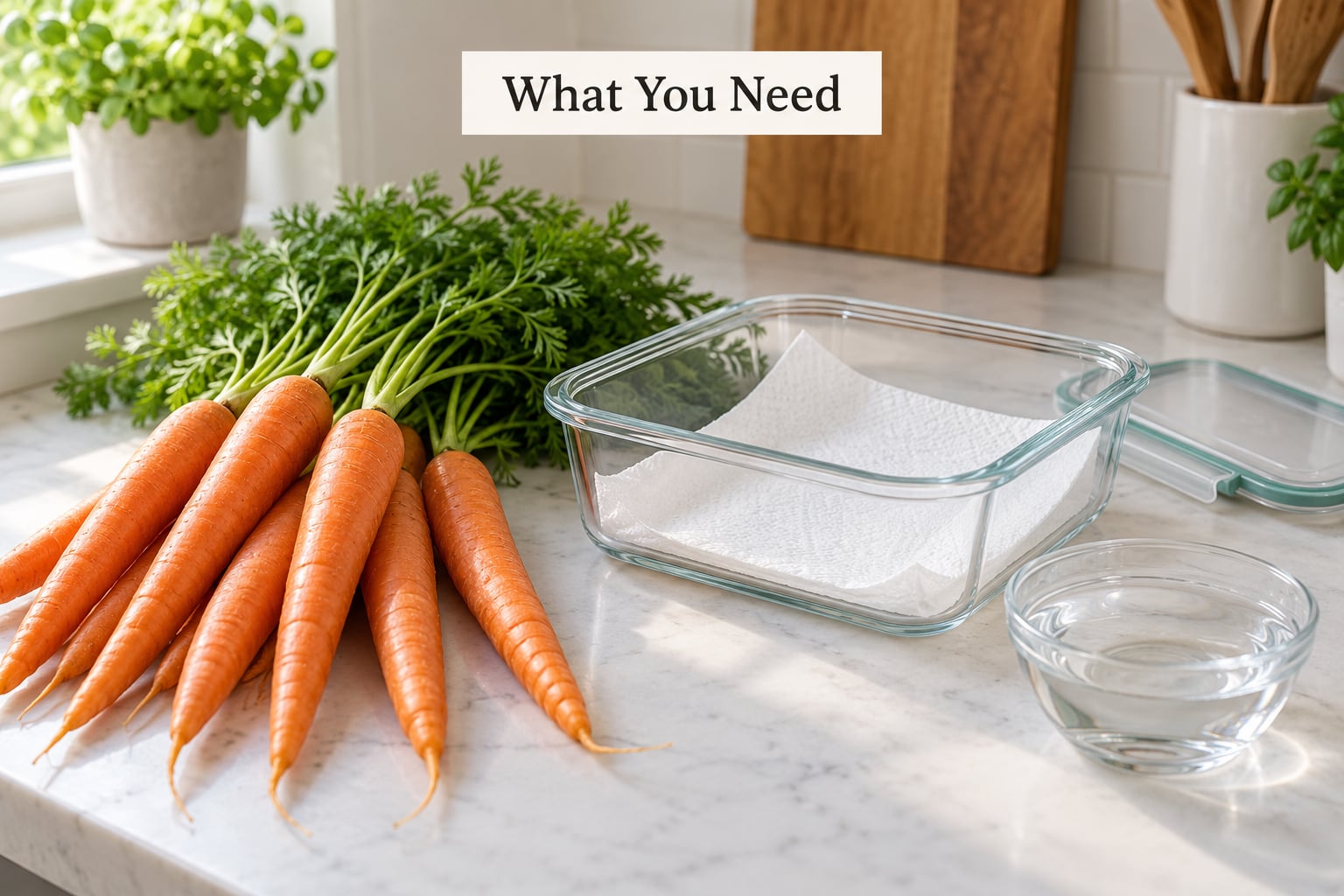
You need very little. Here is the honest list, and most of it is optional depending on which method you use.
- Airtight container or resealable bag for the fridge method. Glass works well because you can see what is going on inside.
- A clean, dry paper towel or cotton cloth to line the container and absorb condensation.
- A perforated plastic bag, or a normal bag with 10 to 20 small holes punched in it, if you prefer bags to containers.
- A vegetable peeler and cutting board for peeled or cut carrots.
- A shallow bowl or container plus cool water for the water-storage method.
- A pot, a colander and a freezer bag if you plan to blanch and freeze.
- Slightly moist sand or dry wood shavings and a cool, dark space only if you have a large garden surplus to keep through winter.
None of this is specialized equipment. The one item worth spending money on is a container with a genuinely tight lid, because a loose lid is the difference between crisp carrots and a fog of condensation on the inside of the lid.
Step-by-Step: How to Store Carrots in the Fridge, Water and Freezer
Before the methods, a quick look at how long each one buys you. The numbers below are what you get with carrots that were fresh to begin with, kept cold, and kept away from ethylene-producing fruit.
| Storage method | Typical shelf life | Best for |
|---|---|---|
| Vented bag or airtight container in the crisper drawer | 3 to 4 weeks | Whole carrots with tops trimmed, everyday use |
| Submerged in cool water, water changed every 2 to 3 days | 2 to 3 weeks | Peeled, cut or baby carrots |
| Dry paper towel in a lidded container | 2 to 3 weeks | Carrots already washed, or cut sticks |
| Moist sand or dry shavings in a cellar at 0 to 4C | 4 to 6 months | Large garden or farmers market surplus |
| Blanched and frozen | 6 to 12 months | Soups, stews, roast vegetables, cooked meals |
Choose the Freshest Carrots
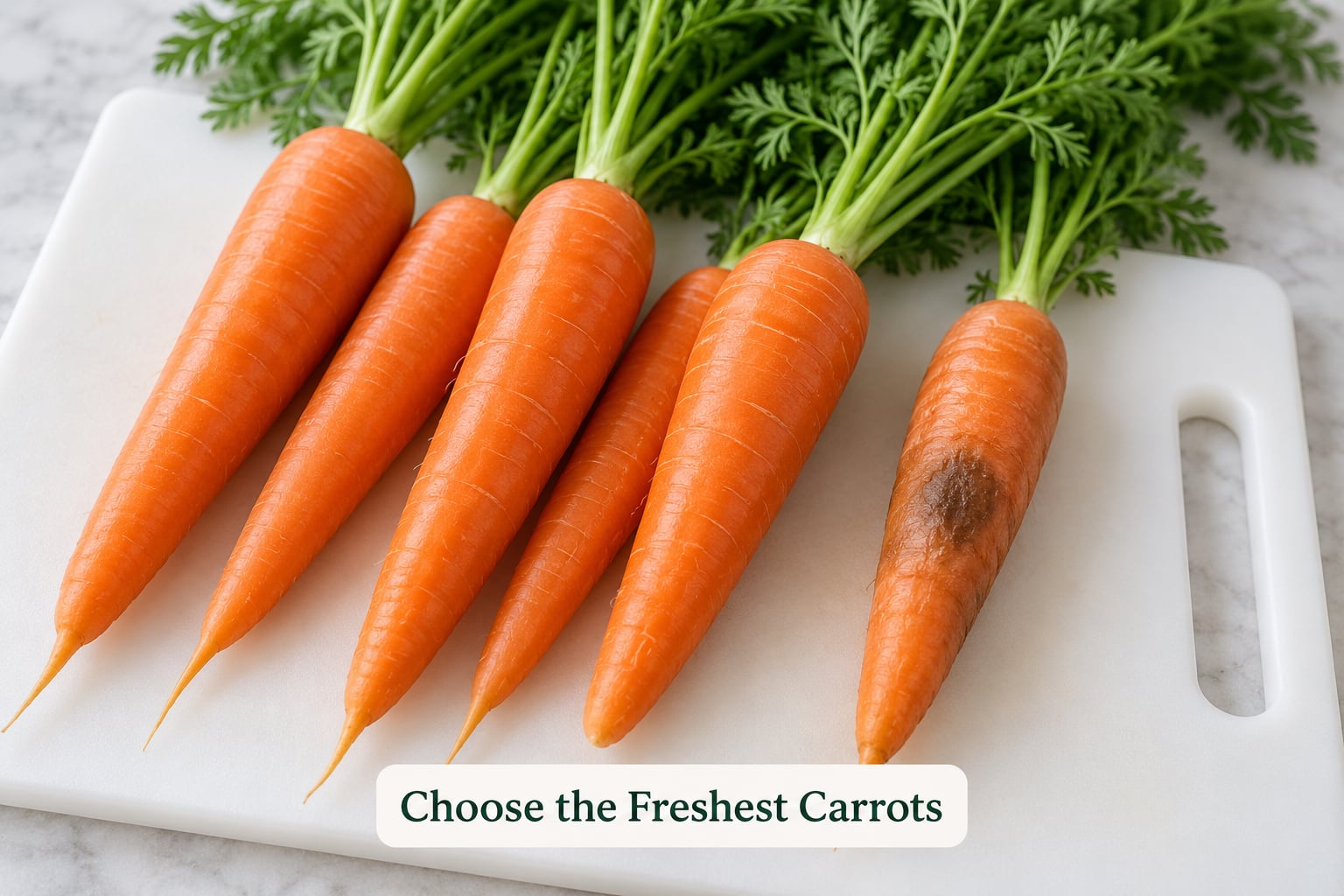
Choose carrots that are firm, evenly colored and heavy for their size, with no soft spots, splits, blackened ends, slime or rubbery texture when you press them. Fresh carrots snap cleanly. If the tip bends instead of breaking, put it back.
For homegrown carrots, brush off loose soil but do not scrub. Gardeners often note that unwashed, unpeeled roots stored straight from the garden hold their crunch far longer than washed ones, because the soil and the root’s own waxy cuticle form a protective layer that limits water loss.
Skip any carrot with a moldy collar or a green-tinged shoulder, and separate bruised pieces from the rest so one bad carrot does not take the whole container with it.
Prepare the Carrots for Storage
First, remove the green tops. Cut the stems off about half an inch above the shoulder of the root, using a sharp knife or kitchen shears. The leaves keep pulling water out of the root after harvest, which is the single fastest route to a limp carrot. This is the step people skip and then wonder why their carrots bend instead of snap.
Do not wash homegrown carrots before storing them. Washing wets the surface, and any moisture that stays trapped in the bag turns into condensation, condensation turns into mold, and mold means slimy roots within days. Wash them right before you cook.
Leave the peel on wherever you can. That waxy layer is the carrot’s own moisture barrier, and once you peel it the root loses water noticeably faster. Peeled carrots belong in water storage, which is the next section’s job.
For cut carrots and sticks, keep the pieces a fairly even size so they cook evenly later, and do not rinse them either unless you intend to store them under water.
How to Store Carrots in the Fridge (Whole and Cut)
Whole carrots with tops trimmed go into the crisper drawer in a perforated plastic bag or a container with a dry paper towel at the bottom. If you use a plain bag with no holes, punch 10 to 20 small ventilation holes in it. Then keep the bag in the crisper drawer rather than on a shelf.
Why a bag with holes: carrots respire, and they need a little moving air to stay sweet and firm. Why a paper towel inside a lidded container: it catches condensation before it turns the whole container damp.
Close the container or tie the bag loosely and walk away. This is the method to use if you only want to do one thing right, and it is the one most home cooks land on. You should still be able to feel firm resistance when you pick a carrot up after two weeks.
Cut carrots can live in the fridge too, sealed in an airtight container or bag with a dry paper towel, and they will be usable for about a week. They are softer than whole roots within a day or two, so if you are prepping a full week of lunchboxes, store them under water instead.
Use the Water-Storage Method for Extra Crunch
To store carrots in water to keep them crisp, put peeled or cut carrots in a container, cover them completely with cool water, seal the container, and refrigerate. Change the water every two to three days, and use the carrots within about two weeks.
This is the method home cooks mention most often, and it works because a carrot submerged in water cannot lose moisture, which is the thing that makes it limp. Peeling and cutting increase the exposed surface area, so water storage makes more sense for those than for whole unpeeled roots.
Two practical warnings. Change the water on schedule, because sitting water is where bacteria pick up, and never keep carrots at room temperature in water. Cold water in the fridge is the safe version. If the water turns cloudy or the carrots smell sour, discard them.
People who already have soft carrots use this as a rescue. Cover limp carrots with water in a jar or bowl, leave them an hour or two, and they firm up noticeably. They will never be quite as crisp as fresh ones, but they will be usable.
Leafy greens go limp for the same reason, so the moisture rules are identical. Our guide to storing leafy greens so they stay crisp covers the dry-cloth version if you would rather not submerge anything.
Store Carrots Long Term in Sand, Shavings or a Cold Cellar
For weeks and months of storage rather than weeks, bed the unwashed, unpeeled carrots in slightly moist sand or dry wood shavings inside a container, then keep it somewhere dark and cold at 0 to 4C. A root cellar, unheated crawlspace, garage that stays cold, or outdoor cistern all work if the temperature holds steady.
The sand should be damp enough to hold together when you squeeze a handful, not wet. Gardeners who store turnips and carrots in buckets of moist sand report that over-wet sand causes the roots to rot from the bottom of the pile.
This method is where the Amish and other plain-living growers come in, and plenty of small farms store unwashed, unpeeled, unblanched carrots in dry wood shavings in a cold cellar with no kitchen prep at all. The shavings keep the roots dry and dark, and the steady cold does the rest.
Be honest about your space. A heated, climate-controlled basement will not hold 0 to 4C, and carrots stored there lose their texture within weeks, which defeats the point. Test the temperature with a fridge thermometer through a cold night before you commit a whole harvest to it. If your space stays warm, freeze the excess instead.
Freeze Carrots for Longer Storage
Carrots freeze well, with one condition: blanch them first. Boil water, blanch sliced or diced carrots for two to three minutes, then move them straight into ice water to stop the cooking. Drain, pat dry, and spread on a baking sheet to freeze solid before bagging.
Drying the pieces first matters because freezer burn comes from air and ice crystals forming on damp surfaces. Once solid, transfer to a freezer bag or airtight container and label it with the date.
Frozen carrots lose their raw crunch, so use them in cooked dishes: soup, stew, curry, roasted vegetables, stir fries. They are honestly better in a stew than most fresh carrots, since freezing concentrates the sugars.
Baby Carrots and Bagged Carrots
Baby carrots are already peeled, washed and often treated with a chlorine wash to keep the pale color. Store them dry in the crisper drawer in a container lined with a dry paper towel, and eat them within a week or two. Water storage also works well for them, and it slows down the fuzzy white surface that develops on older bagged carrots.
Bagged carrots from the grocery store are the one case where a quick rinse before storing is fine. They arrive damp already, so pat them dry, give them a fresh dry towel, and keep them in the crisper.
Fruit spoils fast enough to worry about on its own, and if you want to keep berries around longer the storage math is similar. Read how to store summer berries so they last longer before the next market haul.
Why Homegrown Carrots Soften Faster Than Store-Bought Ones
This comes up constantly in gardening forums and it has a straightforward explanation. Store-bought carrots are washed, graded, coated lightly to reduce moisture loss, and shipped in cold conditions within days of harvest. Homegrown carrots are often mature and slightly older at harvest, never washed, and they have not had that protective coating.
Add one more factor: soil. Dirt clings to a homegrown carrot and holds moisture against the surface, while a washed store carrot sits clean and dry. Gardeners who rinse their carrots before storage, ironically, often get the worst of both, since they strip the waxy layer and then trap the rinse water against the root.
Sorting the harvest also matters. Store the thickest, firmest roots first and use the small forked ones early. A carrot with a fork or a nick will not hold as long as a straight one, no matter how well it is stored.
Common Mistakes
Most soft, moldy or rubbery carrots trace back to one of these.
Storing Carrots Wet
Storing wet is the number one mistake, whether that means rinsing them first, washing them in the fridge, or dropping them into a puddle from a leaky drawer. Water sitting on the skin is what turns carrots slimy. Fix it by drying every piece before it goes in the container, and add a fresh paper towel every few days.
Sealing a Bag With Trapped Condensation
A closed bag with a wet towel inside is even worse than no bag at all, because the moisture has nowhere to go. Use perforated plastic for whole roots, or an airtight container with a dry towel for cut carrots, and change the towel when it feels damp.
Leaving the Tops On
Leaving tops on pulls water out of the root for as long as they are attached, which can start the shriveling within days. Cut the stems off about half an inch above the root as soon as you get them home, even if you plan to eat them tomorrow.
Do not toss the greens, either. Carrot tops work in pesto, chimichurri, salsa verde and stock, with a flavor close to parsley.
Storing Carrots Beside Fruit
Apples, pears, bananas, avocados and tomatoes all release ethylene gas, a natural ripening hormone. Carrots exposed to it get soft faster, lose color and can develop an off flavor, especially if they are stored cut or peeled where the tissue is most exposed. Keep a gap between the carrot drawer and the fruit bowl, or store carrots in a separate drawer entirely.
Using Damp Tops or a Damp Cloth in the Bag
A wet cloth is meant to absorb moisture, not add it. If the towel you packed is damp, you have added the exact problem you were trying to solve. Same with a pile of unwashed, muddy roots stored wet in a sealed bin, which is how farmers lose an entire crate in a week.
Freezing Without Blanching, or Freezing Wet
Freezing raw cut carrots without blanching leaves them limp and flavorless once thawed, because the enzymes that soften them stay active. Blanching stops those enzymes for months. Skipping the ice bath and the drying step means you get freezer-burned carrots that taste of the freezer for their whole frozen life.
Using a Warm Cellar or Basement
Storage time depends almost entirely on temperature staying steady near 0 to 4C. A basement that drifts above 10C is worse than a fridge in some ways, because it is warm, dark and often humid, which encourages rot. Measure before you fill a bin.
Ginger and other roots follow the same logic, cold and dry with the skin left on. How to store fresh ginger so it lasts covers the wrapped-in-paper version if you keep it around the kitchen.
Frequently Asked Questions
How long do carrots stay crunchy in the refrigerator?
Whole carrots stored unwashed with the tops trimmed in a perforated bag or airtight container in the crisper drawer stay crunchy for three to four weeks. Peeled or cut carrots in water hold about two to three weeks if you change the water every two to three days. Paper towel wrapped cut sticks keep roughly a week. Frozen blanched pieces last six to twelve months but are best cooked, not eaten raw.
Should I wash carrots before storing them?
Skip the wash for homegrown and farmers market carrots. Their unwashed surface keeps soil and the natural waxy cuticle in place, which limits moisture loss and keeps them crisp far longer. Any water left on a carrot turns into condensation inside a closed container and drives mold and slime. Grocery-store bagged carrots are an exception since they are already washed. Rinse and dry them, then store them in the crisper drawer.
Can I store carrots in water to keep them crunchy?
Yes. Cover peeled, cut or baby carrots completely with cool water in a sealed container, refrigerate, and change the water every two to three days. Use them within about two weeks. Water works because a submerged carrot cannot lose moisture, which is what makes it limp. Keep the container cold at all times, and discard the carrots if the water turns cloudy or smells sour.
Can carrots be frozen without blanching?
You can freeze them raw, but they will be limp and bland when thawed because the enzymes that soften texture stay active. Blanch sliced or diced carrots in boiling water for two to three minutes, cool them in ice water, dry them thoroughly, then freeze on a tray before bagging. Properly blanched carrots keep their color and flavor for six to twelve months and are best used in soups, stews and roasted dishes.
What is the best way to store cut carrots?
For cut sticks and coins, either seal them in an airtight container with a dry paper towel in the fridge for about a week, or cover them completely with cool water in a sealed container, refrigerate, and change the water every two to three days for up to two weeks. The water method keeps them noticeably crisper, which makes it the better choice for a full week of meal prep.
How can I tell when carrots have gone bad?
Throw carrots away when they are slimy, mushy, leaking liquid, badly shriveled, moldy at the collar, or give off a sour or fermented smell. A wrinkled or bendy carrot is usually dehydrated rather than spoiled and can be revived in water. Blackened or sunken spots mean rot has set in. When in doubt, cut one open, and if the flesh is soft or discolored rather than firm and bright orange, discard it.
Conclusion
The method that works for almost everyone: cut the tops off, do not wash, leave the peel on, and put the carrots in a bag with ventilation holes or an airtight container with a dry paper towel, in the crisper drawer away from your fruit. That covers three to four weeks with about two minutes of work.
When you have peeled or cut carrots, or when someone has already started going soft, cover them with cold water in a sealed container and change it every two to three days. For a garden surplus, blanch and freeze, or bed them in slightly moist sand in a space that actually stays between 0 and 4C. The first thing to do, every time, is get the tops off the roots.