
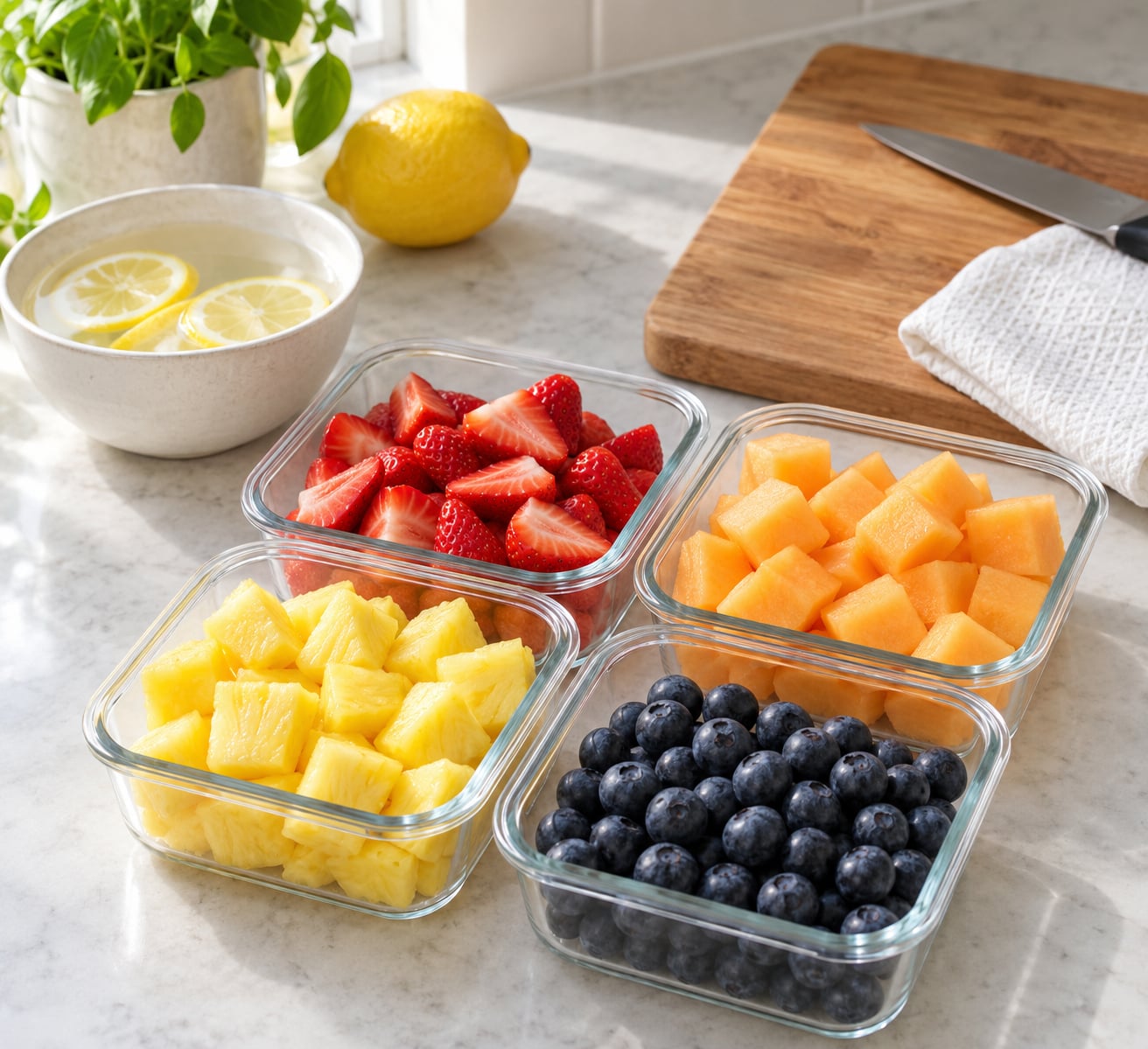
Storing cut fruit for meal prep comes down to three things: cold, dry, and sealed. Wash and dry the pieces, treat browning-prone fruit with a little lemon or lime juice, pack it into airtight containers lined with paper towel, and refrigerate within two hours. Done that way, most cut fruit holds three to five days.
I prep fruit every Sunday for five lunches, and the difference between fruit that survives to Friday and fruit I end up binning is almost never the container. It is whether the fruit was dry when it went in.
There is a lot of conflicting advice out there about water versus no water, vinegar versus lemon, glass versus plastic. The short version is simpler than that: dry the fruit, seal it, keep it cold, and keep ripe apples away from the berries.
Table of Contents
What You Need to Store Cut Fruit for Meal Prep
The equipment list is short. Most of what you need is already in your kitchen, and none of it has to be special or expensive.
- Airtight containers with snap lids that actually seal, in glass or BPA-free plastic
- Parchment paper or plain paper towel to line the bottom
- Lemon or lime juice, plus a cup of water for dipping
- Coarse salt for the salt-water dip on apples and pears
- A colander or salad spinner for washing and drying
- A sharp knife and cutting board, ideally a second small knife for lunch-size pieces
- Masking tape or a marker for dating containers
- A flat baking tray and freezer bags if you plan to freeze
A bowl of ice water is worth keeping in the rotation too. Chilling the fruit itself before it goes in the fridge slows the whole process down, including the growth of whatever is on the surface.
On ratios: one tablespoon of lemon juice per cup of water is the standard dip. For salt water, about a quarter teaspoon of coarse salt in two cups of water, three to five minutes, then a quick rinse.
Step-by-Step
How to Prepare Cut Fruit for Storage
Rinse the fruit under cool running water instead of soaking it, then dry it thoroughly. A salad spinner gets most of the water off, and a clean towel finishes the job. Fruit that goes into a container with surface moisture will be sitting in a puddle by day two.
Trim out anything bruised, soft, or brown before you cut. Those spots spread faster once the fruit is cut, and one bad strawberry can take a whole container with it.
Use a sharp knife. A dull blade crushes cells instead of separating them, and crushed cells release water and brown faster. Cut pieces larger than you think you need, too: small dice has more exposed surface, so it dries out and discolors quicker. Toss the pieces gently rather than stirring them hard.
Use an Acid or Salt Solution for Browning
Apples, pears, bananas, peaches, and avocados brown fastest. A quick dip in acidulated water slows that down noticeably. Thirty to sixty seconds is enough for most pieces, and you should see the cut surfaces stay bright for days instead of hours.
Some people find lemon sour on apples after a while. Salt water works well instead: a quarter teaspoon of coarse salt per two cups of water, three to five minutes, then rinse. It is less sharp in flavor and does the same job on apples and pears.
Leave fruit alone when the flavor matters more than the color: berries, kiwi, papaya, pineapple, and melon all taste duller or softer after an acid dip. And more acid is not better. Two full minutes in lemon water gives you noticeably sour apple slices, which is worse than browning.
For the whole-fruit version of the same idea, our guide to how to store summer berries so they last longer covers vinegar rinses and dry-storage tricks that pair well with cut fruit.
Choose the Right Container for Cut Fruit Meal Prep
Glass wins on odor and staining. Berries in a plastic tub that once held cut tomatoes will pick up that smell, and fruit is unusually good at holding onto odors. BPA-free plastic is lighter and more forgiving if containers get dropped in a lunch bag.
Mason jars are underrated for cut fruit storage. They seal well, they stack, and you can see the contents, which matters when you are grabbing five lunches at 7am without turning the lights on.
Use compartment containers for mixed fruit. That way a leaking banana slice ruins one section instead of the whole box.
Line the bottom of every container with a paper towel and swap it out every couple of days. It is the cheapest humidity control there is, and it stops fruit from sitting in the juice it releases.
Leave headspace in jars and do not pack containers to the brim. Fruit that is compressed on all sides bruises under its own weight.
Soft bags and freezer bags work fine for smoothies and travel, but for fridge storage hard-sided containers stack better and leak less. The same moisture-control thinking applies to keeping leafy greens crisp, if you are prepping both in the same session.
Refrigerate Cut Fruit Promptly
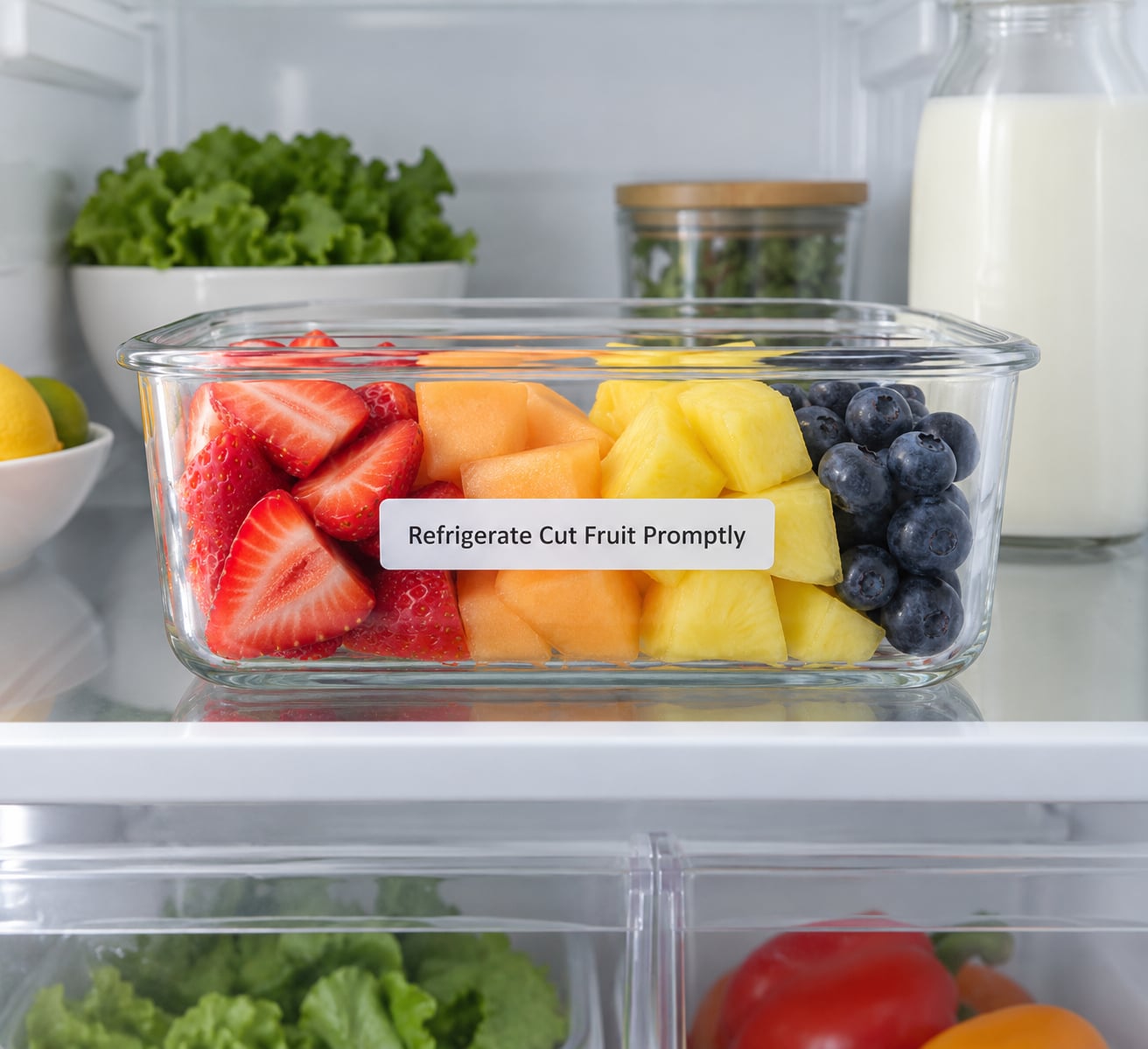
Keep the refrigerator at or below 40F (4C), and put cut fruit away within two hours of cutting it. That two-hour window also applies to packed lunches sitting at room temperature, which is why an ice pack in a lunchbox buys you real time on a warm afternoon.
Skip the door and the warmest corners. The middle shelf holds a steadier temperature than the back wall or the produce drawers, which swing in and out of warmer air all day.
Ethylene is the other half of the problem. It is a natural plant hormone that speeds up ripening, and some fruit gives off a lot of it. Keep ripe apples, bananas, pears, ripe peaches, and cantaloupe in a separate container or a separate shelf from berries, grapes, and anything you want to keep firm.
How long cut fruit lasts in the fridge
- Raspberries and blackberries: 1 to 2 days. The softest berries, with no real recovery once they turn.
- Strawberries and blueberries: 3 to 5 days. Stay drier after a vinegar or citrus rinse.
- Grapes: 3 to 5 days. Halves dry out faster than whole clusters.
- Apples and pears: 3 to 5 days. An acid dip keeps the cut faces bright.
- Melon and pineapple: 3 to 4 days. Discard at any sour or fizzy smell.
- Citrus segments: 3 to 4 days. Do not store them submerged in water.
- Peaches, plums, and mango: 2 to 3 days. They ripen further in the fridge.
- Kiwi: 2 to 3 days. Firm is fine, softness is not.
- Banana: 1 to 2 days. Prep it the night before, not five days ahead.
When a week is more than you need, freeze instead. Spread the pieces in a single layer on a tray, freeze them for two hours, then move them into a bag. Berries, bananas, mango, pineapple, melon, and peaches all freeze well for smoothies and baking. Citrus and apple turn mushy and watery once thawed, so those are not worth freezing.
Check Freshness Before Serving
Smell first. A slightly dull aroma on cut melon is different from the sour, boozy, almost fizzy smell that means fermentation is underway. When you notice that, throw out the whole container rather than picking out the pieces that look okay, because the batch has been sitting in the same juice.
Then look. Fuzzy white or grey patches, a slimy coating, cloudy liquid pooling at the bottom, or a color that has gone flat and grey rather than just brown. Texture is the last check: firm and crisp for apple and melon, soft and collapsing for berries.
Light browning on an apple slice with no odor and firm flesh is cosmetic. Trim it and move on. Before serving, toss each portion in a bowl rather than eating straight from the container, so you spot problems before they get eaten.
Rough, knobby ginger and other firm roots stored alongside prepped fruit follow different rules, as our fresh ginger storage guide explains.
Common Mistakes
- Storing fruit wet. Surface water turns into a puddle inside the container. Spin, pat, and only then seal.
- Using already-damaged fruit. Bruised and soft pieces break down within hours of cutting. Cut them out before you start, not after.
- Overfilling containers. Compression bruises the pieces at the bottom, and those bruises turn brown and soft. Fill no more than about three quarters.
- Sealing before the fruit is dry. The seal traps the moisture you just tried to remove. A minute of drying matters more than any container.
- Sitting out too long. Cut fruit is perishable. Two hours at room temperature is the ceiling, and one hour if it is above 90F outside.
- Mixing ripe apples or bananas with berries. Ethylene from the high producers speeds up the softening of everything nearby. Separate containers, same shelf, no problem.
- Not dating the containers. Masking tape and a marker take five seconds and answer the only question that matters on Thursday morning.
One more habit pays off more than any of these: prep fruit in smaller batches twice a week instead of one large batch. Half the quantity sits less time, and nothing goes in the bin.
Frequently Asked Questions
How long does cut fruit last in the fridge for meal prep?
Most cut fruit lasts three to five days in the refrigerator when it is dry, sealed airtight, and kept at or below 40F (4C). Berries and bananas are the exceptions, lasting one or two days, while sealed containers of melon, pineapple, and citrus usually hold three to four days. Prep smaller batches twice a week rather than one large batch so nothing sits longer than it needs to.
Should I wash fruit before storing it cut?
Wash before cutting, then dry it completely. Rinse under cool running water rather than soaking, since soaking can dilute flavor and push water into the flesh. A salad spinner plus a clean towel removes nearly all surface moisture. Any moisture left on the pieces collects at the bottom of the container and turns the fruit slimy well before it spoils.
What is the best container for storing cut fruit?
An airtight container with a seal that closes properly, in glass or BPA-free plastic, is the best choice. Line the bottom with a paper towel and leave a little headspace rather than packing it full. Glass resists odors and stains, while plastic is lighter for a lunch bag. Compartment containers work best for mixed fruit so nothing leaks into everything else.
How do I keep cut apples, pears, or bananas from turning brown?
Dip the pieces in acidulated water for 30 to 60 seconds, using one tablespoon of lemon or lime juice per cup of water, then drain and dry. A salt-water dip works too: a quarter teaspoon of coarse salt per two cups of water for three to five minutes, then rinse. Avoid long soaks, which make fruit sour and soft as well as slow to brown.
Can I freeze cut fruit for meal prep?
Yes. Berries, bananas, mango, pineapple, melon, and peaches freeze well for smoothies, baking, and oatmeal. Spread the pieces on a tray, freeze them for two hours so they freeze separately, then move them into a bag. Citrus and apple thaw watery and mushy, so freeze those only if you plan to blend them. Thaw in the fridge overnight rather than on the counter.
Conclusion
Start with drying the fruit. That single step, done properly, fixes more spoiled meal prep than any container or gadget. After that, add acid for the fruits that brown, seal the fruit in an airtight container lined with paper towel, and put it in the refrigerator within two hours of cutting.
Everything past that is detail: separate ripe apples from the berries, label the containers, and prep twice a week instead of once. That is how to store cut fruit for meal prep well enough that Friday’s lunch still looks like fruit.