
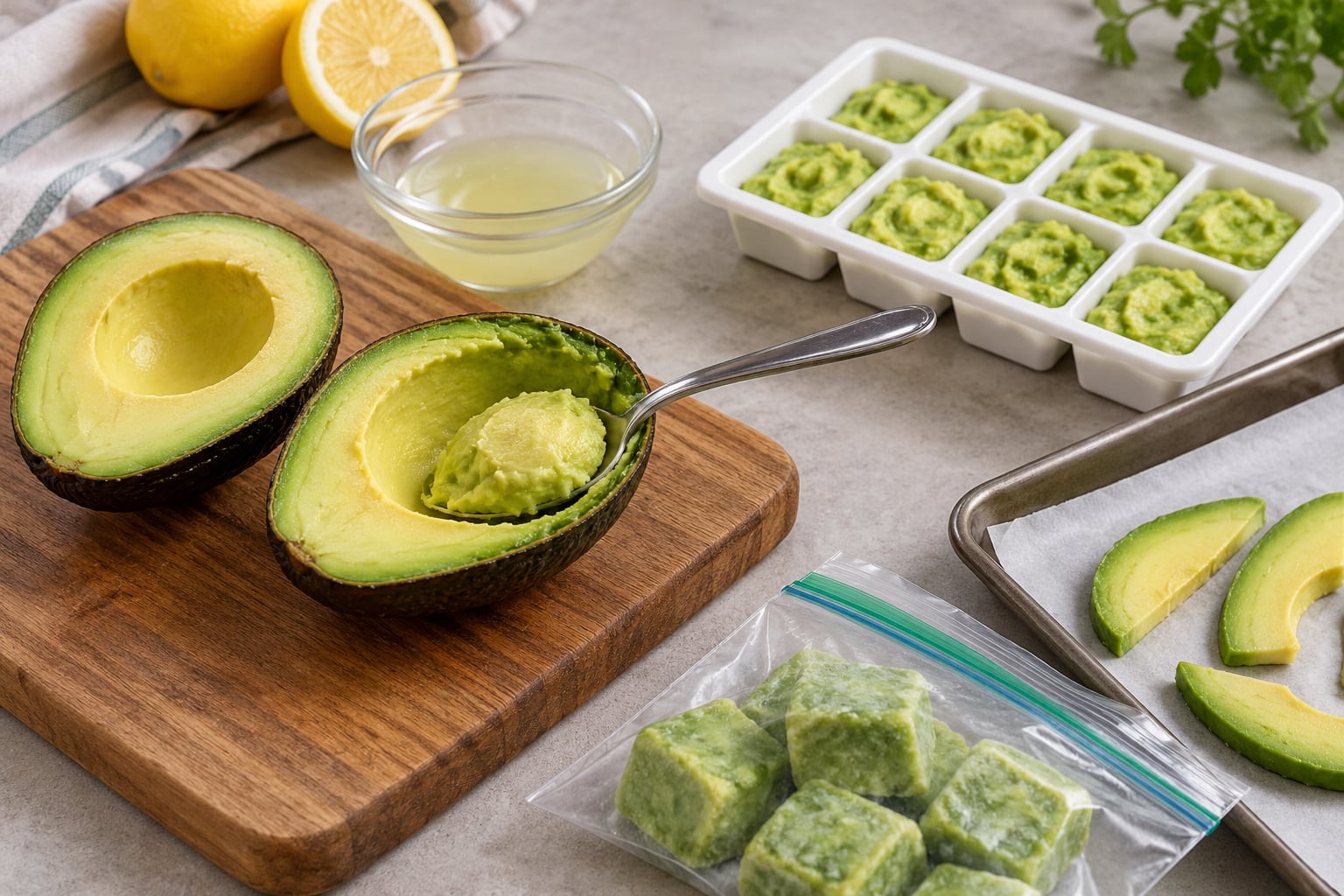
To freeze avocado for later use, peel and pit it, toss the flesh with about 1 tablespoon of lemon or lime juice per avocado, then freeze it in small airtight portions: mashed in ice cube trays, slices flash-frozen on a lined baking sheet, or cubes bagged flat. Never freeze it whole with the skin on. Frozen avocado keeps about 3 to 6 months and works best once blended or mashed.
I do most of my avocado shopping in a hurry, so I usually come home with four or five and no plan for three of them. Freezing is the fix that costs me about two minutes of work per fruit. It also means the guacamole is already portioned on the day I need it instead of the day I suddenly want it.
If your fruit is still a couple of days from ripe, deal with that first: how to ripen an avocado fast covers the paper bag and banana trick, and it changes which of the methods below suits you best. Ripe-but-firm fruit freezes far better than fruit that is already soft enough to bruise.
Table of Contents
What You Need for Freezing Avocado
Nothing exotic. Everything on this list is either already in a normal kitchen drawer or costs less than a single avocado.
- Ripe but firm avocados — they yield slightly to a gentle squeeze and have dark green skin with no soft spots or leaks.
- Lemon or lime juice — roughly 1 tablespoon per whole avocado. Optional but recommended for anything you plan to eat on its own.
- A sharp knife, cutting board and spoon — for halving, pitting and scooping the flesh away from the skin.
- Ice cube tray or silicone portion tray — for mashed avocado. Standard trays work; silicone ones release far more cleanly.
- Parchment paper and a rimmed baking sheet — for flash-freezing slices so they do not stick together in a block.
- Freezer-safe bags or airtight containers — glass or rigid plastic with a lid that seals, or heavy-duty freezer bags you can squeeze flat.
- A permanent marker and masking tape — for the date and the portion size on every single bag or container.
- A cookie scoop or tablespoon measure — so every cube is the same size and you stop guessing at recipe time.
A fine-mist spritzer is useful but optional. If you own one, it lets you coat slices without soaking them, which matters if the citrus flavor is not something you want in the finished dish.
Step-by-Step: How to Freeze Avocado
Step 1: Choose and Prepare the Avocado
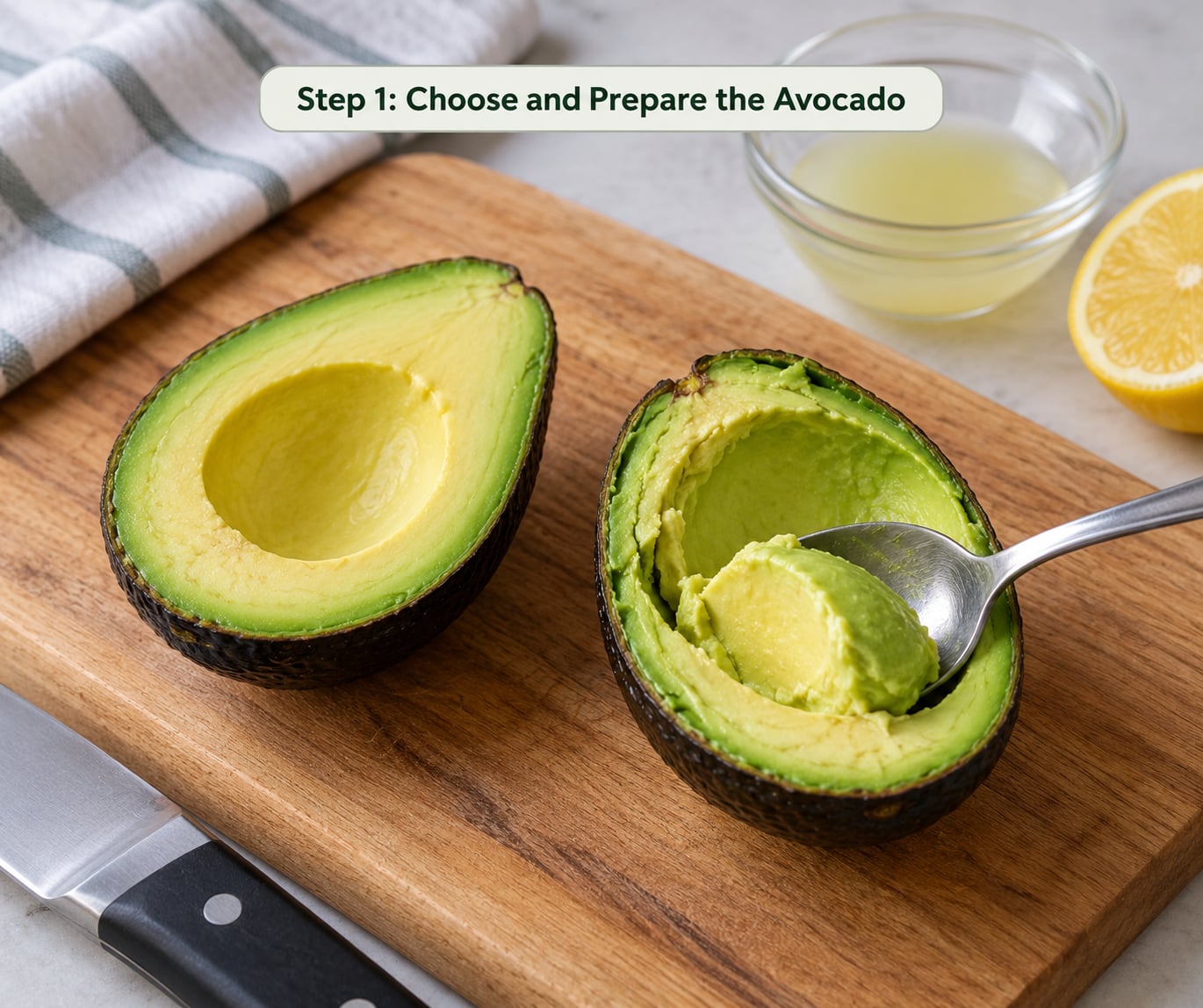
Squeeze the fruit gently in the palm. You want a small give, not a dent, and no dark patches leaking into the skin.
Under cool running water, rub the skin clean. Skipping this step is the most common reason frozen pieces come out with grey-white ice crystals on them, because moisture on the surface freezes into a rough, freezer-burned patch.
Cut the avocado lengthways and twist the halves apart, then pull the pit out with the knife tip. Scoop the flesh into a bowl with a large spoon, cutting the big scoops in half so you do not waste usable fruit on the skin.
Repeat with everything you plan to freeze. Do it in one sitting — cut avocado starts browning within minutes, so a pile of waiting halves will darken before you get to them.
Step 2: Choose the Right Freezing Format
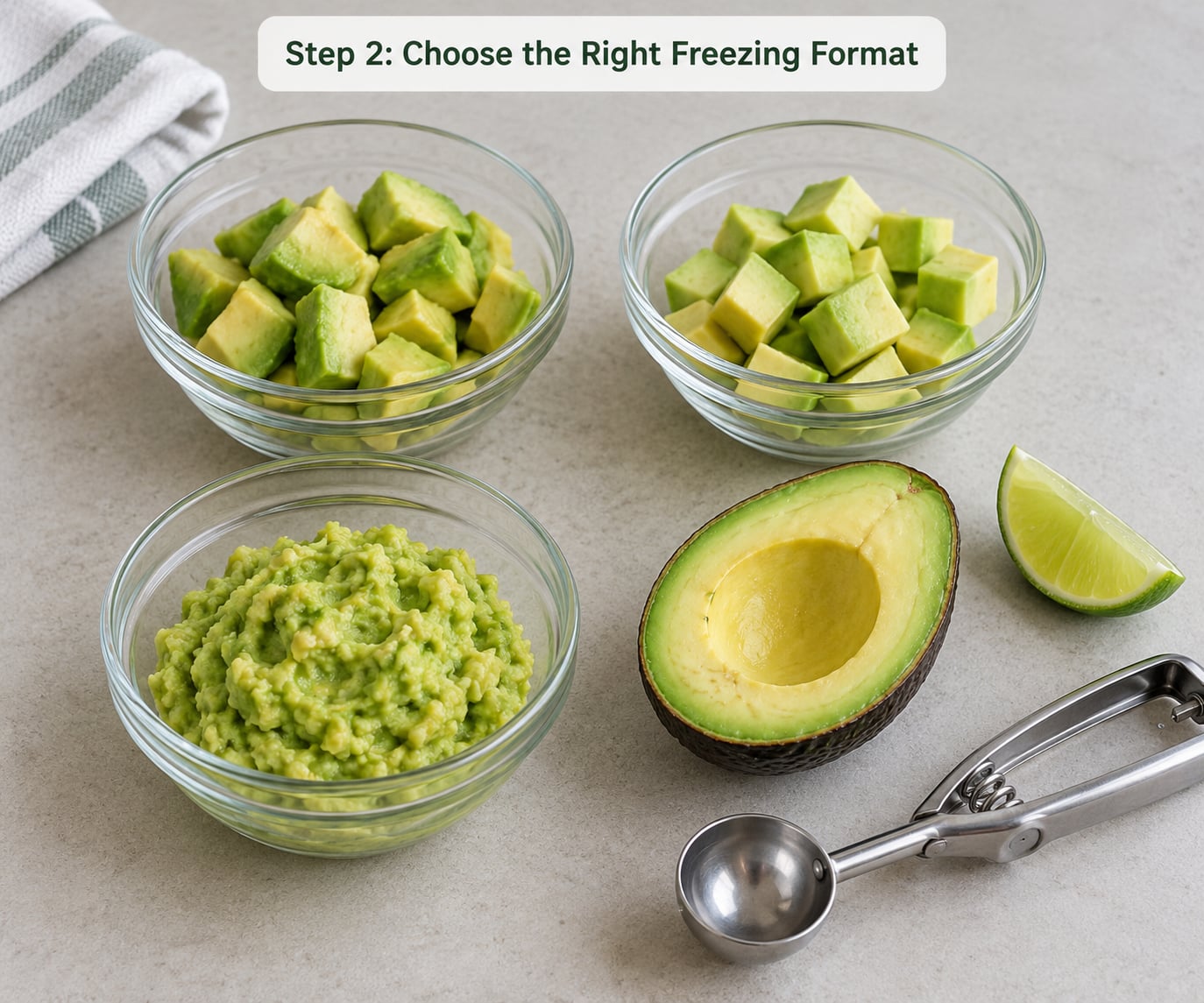
The format you pick matters more than any other decision in this process. Mash it for smoothies and guacamole, keep cubes for tacos and grain bowls, and freeze slices only if you know you want them for toast.
| Method | Best for | Active prep | Storage life | Texture after thawing |
|---|---|---|---|---|
| Mashed portions | Smoothies, guacamole, spreads, baby food | 10 minutes | 3 to 6 months | Soft and creamy, blends straight into anything |
| Cubes in freezer bags | Tacos, salads, grain bowls, meal prep | 12 minutes | Up to 3 months | Slightly soft edges but holds its shape |
| Flash-frozen slices | Toast, sandwiches, wraps | 15 minutes | Up to 3 months | Mushier, best used spread rather than sliced |
| Halves with skin on | Occasional baking projects | 5 minutes | 2 to 3 months | Flesh often sticks to the skin and tears |
My default is mashed in two-tablespoon portions. It is the most forgiving, and one medium avocado fills roughly four to six cubes.
Step 3: Add Lemon or Lime Juice to Slow Browning
Avocado browns because enzymes in the flesh react with oxygen. Citrus juice lowers the surface pH, which slows that reaction right down, and airtight packaging limits the oxygen it needs.
Measure about 1 tablespoon of juice for each whole avocado you mashed. For slices or cubes, toss gently in a bowl with 1 tablespoon per avocado, or brush both sides if you want a thinner coating and less citrus flavor.
Some readers skip the citrus entirely, and that is a reasonable call. If every portion is destined for a smoothie or a heavily seasoned dip, the flavor gets masked anyway. Freezing slows browning rather than stopping it, so an uncooked, unseasoned slice thawed for a salad is the one case where I always add acid.
Onion is the other common trick: leave a half onion in the container and leave it out when serving. It is milder than citrus and works well for guacamole. Acid does not make spoiled avocado safe, though — a piece that smells sour or fermented before freezing does not belong in your freezer.
Step 4: Freeze in Airtight Containers or Bags
For mashed avocado: scoop mash into ice cube or silicone trays using a cookie scoop or tablespoon. Level each one and tap the tray on the counter so air bubbles rise out. Freeze uncovered for 60 minutes to about two hours until solid, then pop the cubes into a freezer bag, label it with the date and stack it flat.
For slices and cubes: arrange the pieces on a parchment-lined baking sheet with a little space between them and freeze uncovered for one hour. This flash-freezing step is what stops everything fusing into one solid block, which is why a bagged-then-frozen pile never separates cleanly later. Once firm, transfer the pieces to a bag or container and squeeze out as much air as you can before sealing.
Leave a finger of headspace in rigid containers because the mash expands slightly as it freezes. Push the air out of a freezer bag by pressing the seal line down slowly along the counter, then run it over the top a second time to flatten it.
Label with the date and the portion size — mashed or cubes, and roughly how many pieces or spoons per bag. Freezer organization collapses under the one rule everyone ignores: oldest gets eaten first.
Step 5: Thaw and Use Frozen Avocado
Move what you need to the refrigerator the night before. Thawed in the cold, frozen avocado keeps a workable texture for a day or two; on the counter the same portion turns watery within about 30 minutes.
For mashed portions, drop the needed cubes straight into the blender with the other smoothie ingredients and skip the thawing step entirely. For guacamole, thaw one or two cubes in a bowl in the fridge for 4 to 6 hours, then mash with a fork and season to taste.
Cubes that need a little help can be dipped in lemon water for a minute before serving. That is standard in Mexican kitchens and it works on thawed frozen fruit too, because the citric acid resets the surface for another few minutes.
Cooked dishes are the safest destination for anything thawed that feels soft. Fold frozen cubes into quesadillas, baked pasta or egg bakes, where they melt into the sauce instead of needing to hold their shape.
A note on batch math for planning: one medium avocado is roughly 3/4 cup mashed, which is about 8 tablespoons, so four 2-tablespoon cubes per fruit gets you the right amount for a small smoothie and a respectable scoop of guacamole.
Common Mistakes When Freezing Avocado
- Freezing whole avocados with the pit still in. The pit does nothing to slow browning once the fruit is frozen, and the flesh tends to stick to the skin and tear on the way out. Peel and pit before freezing.
- Skipping the rinse. Skin wax and surface moisture freeze into pale, grainy patches that taste like freezer burn. Wash every avocado under running water first.
- Leaving air in the bag. Trapped air is what drives oxidation and freezer burn. Squeeze bags flat before sealing and press lids down firmly.
- Bagging everything at once without flash-freezing. Pieces fuse, then break apart as an icy rubble. Thirty to sixty minutes on a lined tray first prevents this entirely.
- Expecting a fresh slice out of the freezer. Ice crystals rupture the cell walls, which is why thawed avocado feels mealier. Mash it, blend it or cook it instead of serving it as a clean slice.
- Freezing the wrong ripeness. Firm and unripe fruit turns hard and starchy after thawing. Mushy, bruised fruit freezes into something watery. Aim for ripe but still firm.
- Forgetting to label. Unlabelled frozen produce gets used once, forgotten and eventually binned. Date plus portion size takes two seconds.
- Repeatedly thawing and refreezing. Each cycle costs texture and adds safety risk. Move only what you plan to eat into the fridge, and keep the rest solid in the freezer.
- Freezing seasoned guacamole with dairy. Sour cream and heavy sauces tend to separate and turn grainy. Freeze plain avocado and fold the dairy in after thawing.
- Believing the water-storage hack. Submerging cut avocado in water slows browning but is not recommended, because the water can harbor bacteria. If you are freezing to preserve fruit you suspect is already turning, do not freeze it at all.
Thawed avocado that looks grey-brown has usually just oxidized, and a squeeze of lime brings most of it back. Discard anything with a sour, fermented or ammoniated smell, visible mold, or a slimy surface, regardless of how it looks.
Two habits make the whole system easier. First, pair your fruit freezer with a small dedicated basket so the oldest bag is always in front. Second, freeze greens the same week you do fruit — freezing spinach and kale for smoothies and freezing fresh herbs in oil take minutes and cover the other half of a typical smoothie batch.
Frequently Asked Questions
How long can avocado last in the freezer?
Frozen avocado keeps 3 to 6 months when the flesh is packed airtight, dated and kept at a steady 0°F. Mashed portions hold up best at the longer end of that range because the texture is already broken down. Slices, cubes and skin-on halves are most reliable within 3 months. If a portion smells sour, looks slimy or has visible ice crystal fuzz, discard it rather than tasting it.
Is it better to freeze avocados whole or sliced?
Sliced, cubed or mashed beats whole every time. Whole skin-on avocados freeze poorly because the flesh sticks to the skin and tears when you scoop it out. If you only have whole fruit, peel and pit it first, then freeze the flesh as mash, cubes or slices depending on how you plan to cook with it.
Can you freeze sliced avocado slices?
Yes. Toss 1-inch slices with about 1 tablespoon of lemon or lime juice per avocado, lay them on a parchment-lined baking sheet with space between them, and freeze uncovered for one hour. Move the firm slices into a bag, squeeze out the air, seal and label. Expect them to thaw softer than fresh, so spread them on toast rather than trying to serve them neat.
How do I stop avocado from turning brown when freezing?
Coat the flesh with acid and keep air out. Use roughly 1 tablespoon of lemon or lime juice per whole avocado, toss gently so every surface is covered, then freeze in a bag or airtight container with the air squeezed out. Freezing slows the enzymatic browning reaction rather than stopping it, so thawed pieces look best used in smoothies, dips and cooked dishes.
Does freezing avocado change the texture?
It does. Ice crystals that form during freezing rupture the cell walls and release water, which is why thawed avocado feels softer and slightly mealier than fresh. You cannot reverse it. The workaround is format: freeze mash for creamy results, use cubes in cooked dishes and tacos, and save slices for spreads where soft edges do not matter.
Can you freeze guacamole or an avocado spread?
You can, but freeze the avocado and add the seasonings after thawing. Sour cream, mayonnaise and other dairy-based additions tend to separate and turn grainy in the freezer. Plain mashed avocado with a little lime freezes well; stir in salt, onion, garlic and any dairy once it has thawed overnight in the refrigerator.
Conclusion: Freeze Only What You Will Use
Start with the fruit that is ripe but still firm, not the ones already going soft in the fruit bowl. Peel and pit it, add about 1 tablespoon of lemon or lime juice per avocado, and freeze it in two-tablespoon portions or flash-frozen pieces with the air squeezed out and the date written on it.
Then thaw only what the next meal or smoothie needs, in the refrigerator rather than on the counter. That single habit is the difference between having useful avocado in March and finding a forgotten bag in 2026.