
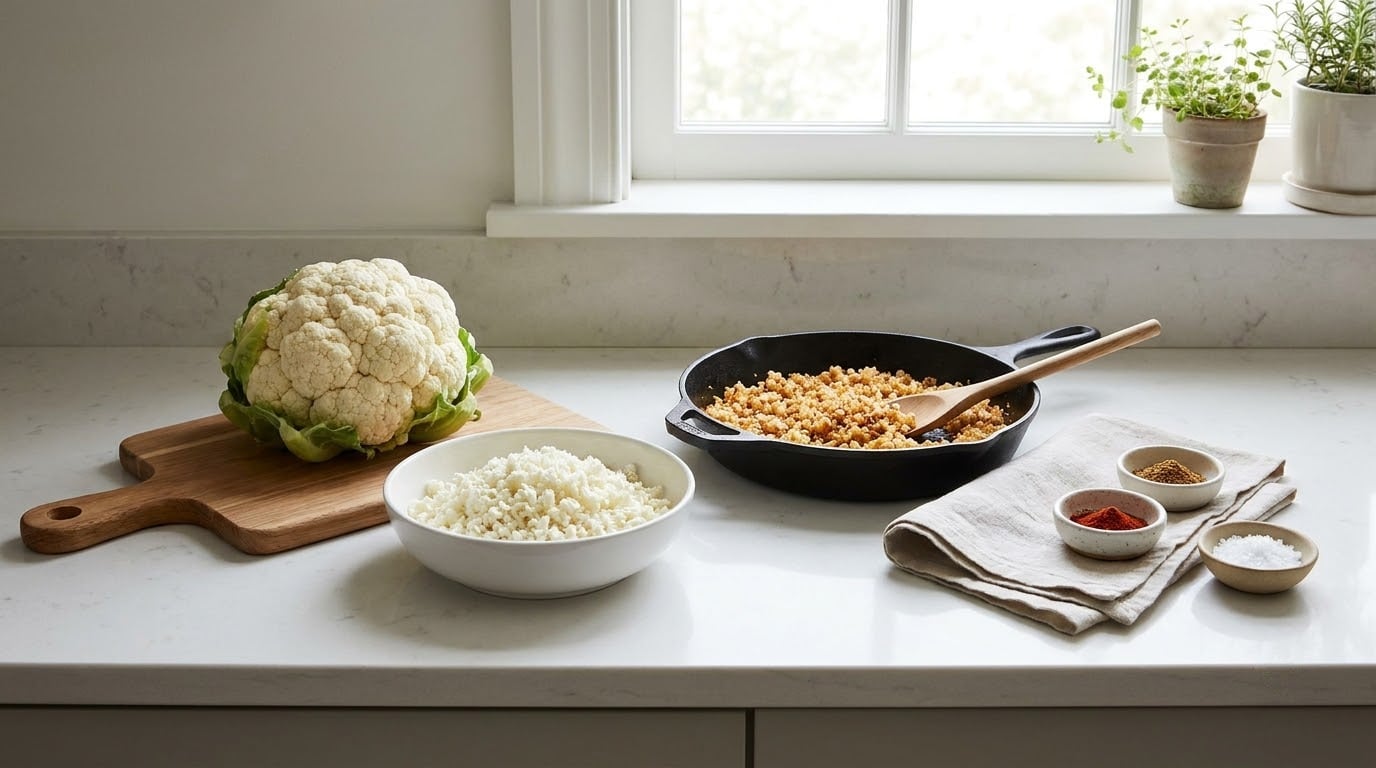
How to make cauliflower rice at home is a five-minute job once you know which tool to reach for: cut a head into florets, pulse or grate them until the pieces are about the size of rice grains, squeeze out the moisture, then saute for 5 to 8 minutes. No special skills, and one head gives you roughly 5 to 6 cups.
Here is the short version before the detail:
- Prep the cauliflower. Trim the leaves and stalk, break into florets, rinse, then pat completely dry.
- Rice the cauliflower. Pulse in a food processor, grate on the medium holes of a box grater, or chop with a knife until the pieces are rice-sized and still a little coarse.
- Cook it. Press out moisture with a paper towel, hit it with oil and salt in a hot skillet, and stir for 5 to 8 minutes until tender with a few browned edges.
One thing nobody promises and everybody notices: cauliflower rice will never have the exact bite of grain rice. It softens faster, browns differently, and carries a faint sulfur smell when it is raw. Once it is cooked and seasoned, though, it stands in for rice very well in bowls, stir-fries and side dishes.
Table of Contents
What You Need
One large head of cauliflower is the whole list. Everything else is seasoning you probably already own.
- One large head of cauliflower (about 2 pounds), leaves and stalk on, because the leaves are edible too.
- A pinch of salt for drawing water out of the florets.
- One to two tablespoons of oil for the pan.
- Seasoning: black pepper, garlic powder, smoked paprika, soy sauce, lime juice, fresh herbs, grated Parmesan or a spoonful of butter.
- A paper towel or clean tea towel, which does more for texture than any special equipment.
Then pick a tool. A processor is fastest, a box grater is neatest, a knife always works.
- Food processor: about 30 seconds for a whole head. Blades throw pieces around, so keep the lid on and work in batches so nothing spills up the sides.
- Box grater: 3 to 4 minutes, and it produces the most uniform, genuinely rice-like crumbs. Use the medium holes, not the coarse side. It is also the messiest option, so grate over a bowl set in a sink.
- Chef’s knife: 6 to 8 minutes and zero cleanup. Chop down to florets, then rock the knife repeatedly over the pile until you stop seeing pieces bigger than a grain of rice.
- Blender: works in a pinch. Add a tablespoon of water so the blades catch, pulse in short bursts, and drain off the liquid in a colander. Texture is less predictable, and you lose more of the florets to the sides of the jar.
If you trim the stalk and leaves, use them for vegetable broth from kitchen scraps rather than the bin.
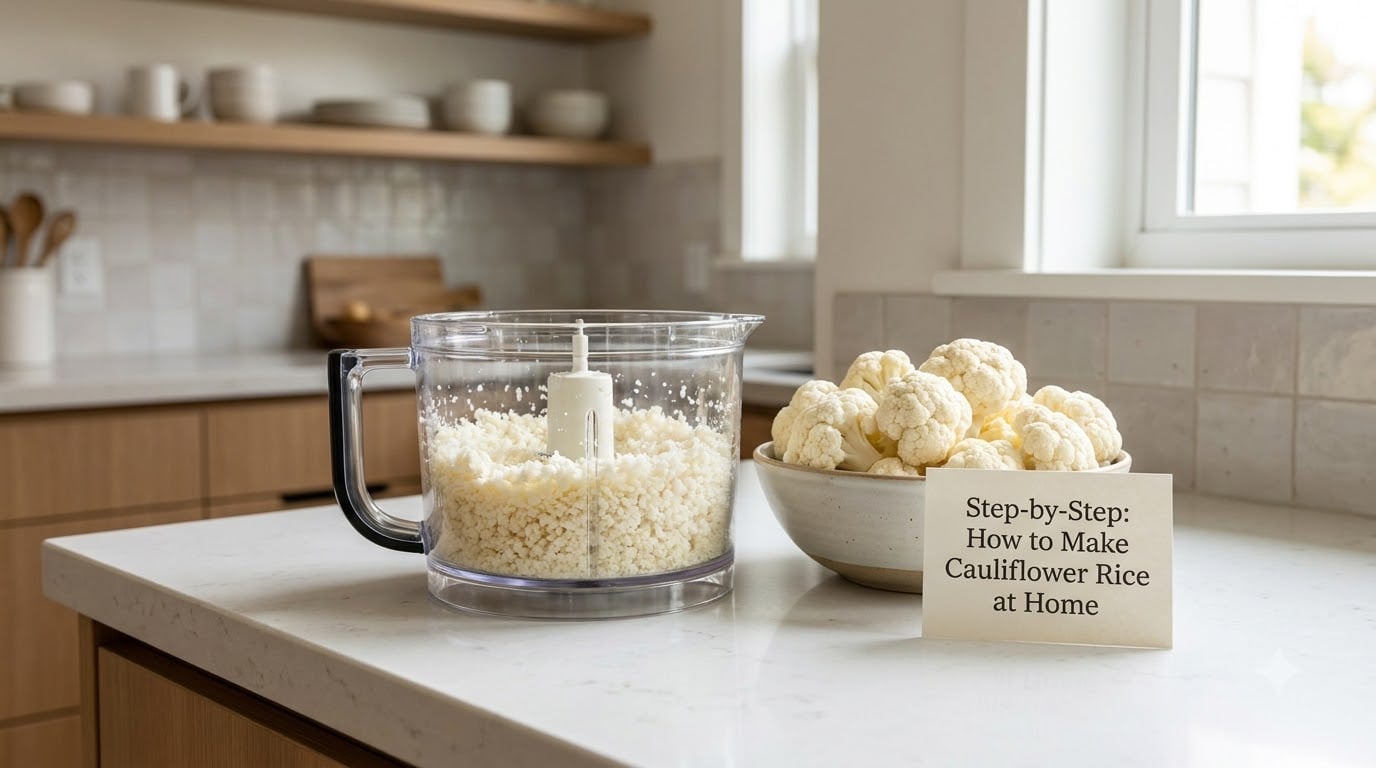
Step-by-Step: How to Make Cauliflower Rice at Home
1. Prepare the cauliflower
Set the head on a cutting board and cut straight down through the core, then break it apart into florets with your fingers. Pull off the leaves and slice the stalk into thin coins; both are perfectly good, just slightly tougher than the florets.
Rinse everything under cold water and dry it thoroughly. This is the step people skip, and it is the step that decides whether your finished rice is fluffy or a grey paste.
Cauliflower is roughly 90 percent water, and water left on the surface has nowhere to go once the florets hit a hot pan. It steams instead of searing, the pieces collapse, and you get mush. If you have time, salt the florets, leave them 10 minutes on a towel-lined board, then blot them dry. If you do not have time, at least run the rinsed florets through a salad spinner or press them firmly between two paper towels.
Cut florets to roughly 2-inch pieces, small enough that they hit the blade or grater face evenly. Large florets process into a mix of powder and chunks, which is where uneven cooking starts.
2. Pulse or grate the florets to make cauliflower rice at home
For a food processor, fill the bowl about one-third full and put the lid on before you start. Pulse in 1-second bursts rather than running the machine continuously.
Stop when the pieces look like coarse sand with a few rice-sized bits still visible. Keep the blade down and give it three more pulses, then dump it out and check. A pinch you can feel between your fingers is the right size. Run it longer and you get puree, which cooks into a gluey paste that will not hold a shape on a plate.
With a box grater, hold the florets against the medium holes and press with the heel of your hand, rotating the piece as you go. Use a bowl under the grater and catch what falls through, then pick out any hard core bits you find at the end.
Without any equipment, chop the florets into 1/2-inch pieces first, then keep rocking the knife back and forth over the pile, scooping it into itself as you go. Aim for the same coarse sand finish. It takes a few minutes longer and gives you the least uniform result, so run a quick pick-through before cooking.
3. Check and adjust the texture
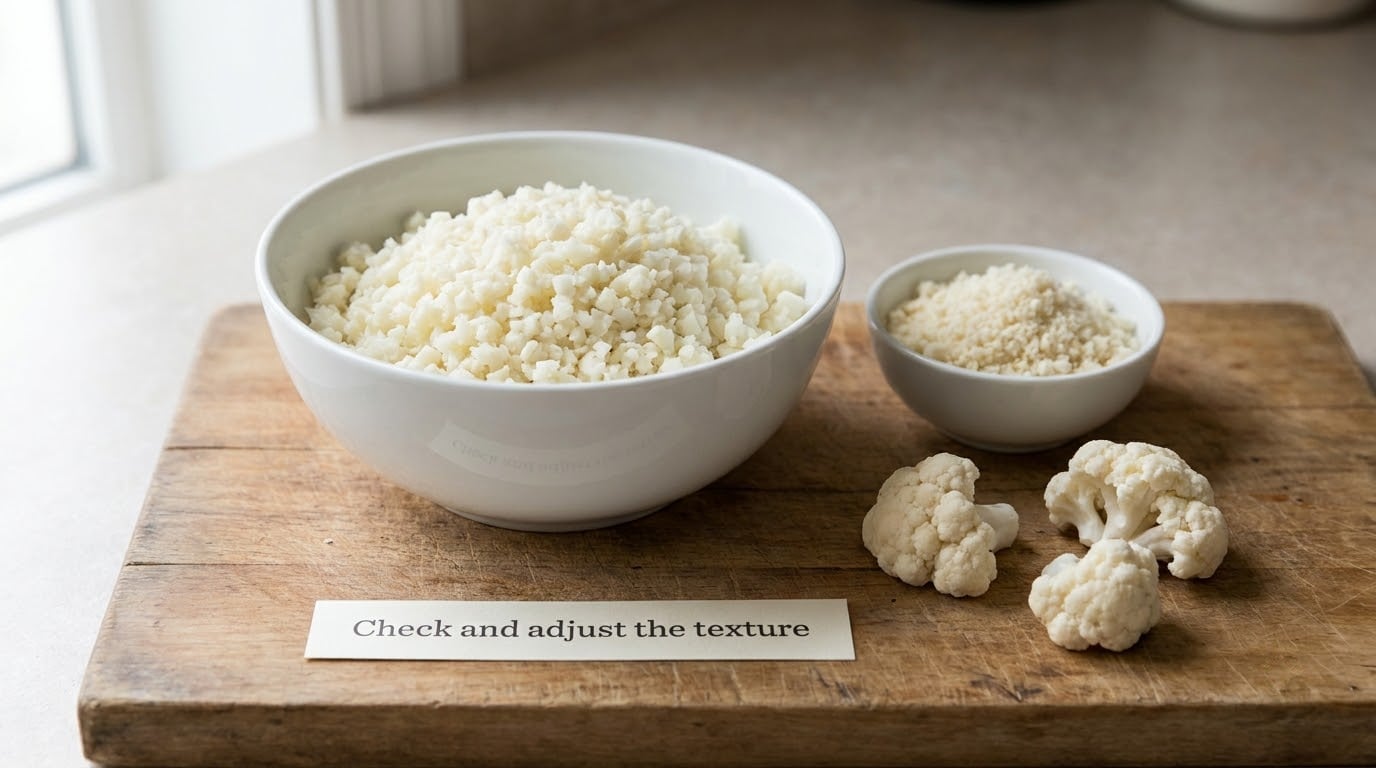
Tip the riced cauliflower onto a board and look at it. You want three things removed: any powder-fine dust from over-processing, any chunks bigger than a pea, and any tough core pieces hiding in the mix.
Spread it out and roll the big clumps between your palms to break them down. Toss the fine dust away; it turns to mush first and drags the rest of the batch down with it.
Now press it. Pile the rice in the middle of a clean towel, fold the towel over the top, and press down hard with the palms of your hands for about 30 seconds. You will be surprised how much liquid comes out. Skipping this is the single biggest difference between good cauliflower rice and disappointing cauliflower rice.
4. Season it before cooking
Seasoning in the pan matters more than seasoning after, because the seasoning sticks to hot oil and to the browned surfaces instead of sliding off. Start with salt and black pepper, then add one or two of these depending on the dish:
- Asian-style fried rice: 1 to 2 tablespoons soy sauce, a teaspoon of sesame oil, garlic powder, and a squeeze of lime at the end.
- Mexican bowls: cumin, smoked paprika, chili powder, and fresh lime juice plus cilantro after cooking.
- Plain side dish: butter or olive oil, salt, pepper, and a squeeze of lemon. Simple, and it lets the cauliflower taste like cauliflower.
- Indian curries: toast cumin seeds and grated garlic in the oil first, then add the rice and your usual spices.
A small amount of fat is not optional if you want flavor. Water cannot carry much, and cauliflower without fat tastes flat no matter how much salt you add.
5. Cook the cauliflower rice
Skillet (the default): Heat 1 to 2 tablespoons of oil in a wide skillet over medium-high until it shimmers. Add the pressed rice in a single layer and leave it alone for about 90 seconds to pick up some color. Stir, then continue cooking 5 to 8 minutes total, scraping the bottom and keeping the heat medium-high. Done when the pieces are tender but a few have browned and there is no liquid pooling in the pan.
Microwave: Put the dry rice in a microwave-safe bowl, cover loosely, and cook on high for 2 minutes. Stir, add another 1 to 2 minutes if needed, and stop while the pieces still have some bite. Microwaving is fast but produces softer texture with no browning, so cookers often microwave first and then dry-fry in a nonstick pan for a couple of minutes to take the moisture off and add color.
Oven: Heat the oven to 425°F. Spread the seasoned rice on a lined baking sheet in a thin layer, not a mound, and roast 20 to 25 minutes, turning once halfway. Crowding traps steam and you get steam-cauliflower instead of roasted cauliflower.
Air fryer: Cook at 400°F for 10 to 12 minutes, shaking the basket every 3 minutes. This is a good drying step rather than a finishing step, so taste one piece before you pull it; many people run it for a few minutes and then finish in the pan.
No-cook: Raw riced cauliflower works in slaws, salads and chilled grain-free bowls where a little crunch is the point. Raw is also when the sulfur smell is strongest, so eat it the same day and add acid, which softens it.
Handle a hot pan with oven mitts, and keep the extractor or a window open. Cooking cauliflower releases sulfur compounds into the air, and that smell sticks around the house long after the pan is cool.
6. Taste, season, and serve
Taste before you serve. If it tastes watery, spread it back in the pan over medium heat for another 2 minutes with the lid off until the moisture cooks away. If it is bland, salt is almost always the answer, then a squeeze of lemon or lime rather than more oil.
Cauliflower rice releases water as it cooks, so avoid large batches in a small pan. If you doubled the recipe, use two skillets or cook it in two rounds. Crowding drops the temperature and you get a simmer, and a simmered cauliflower rice is always wet.
Serve it straight away, in place of rice in curries, stir-fries, fried rice, burrito bowls, stuffed peppers or alongside roast meat. If you are building a meal prep, cook it, cool it uncovered on the counter first, then refrigerate sealed for up to 4 days. Do not skip the cooling step; putting warm rice straight into a sealed container traps steam and reverses everything you just did.
For freezing, press the moisture out first, portion it into a bag or container, and get it into the freezer straight from raw. Frozen riced cauliflower cooks from frozen with no thawing, so add it straight to a hot pan and give it an extra minute. Once the florets have cooked or blanched, the texture turns soft and is better used within a few weeks.
Riced cauliflower is also a good base for a grain bowl when you want more staying power than plain greens. If you are weighing it against other staples, quinoa vs brown rice for everyday meals covers where a grain still earns its place.
Common Mistakes
Cooking cauliflower that was still wet. This is the number one cause of soggy results, and the fix happens before the pan, not in it. Rinse, then dry properly with a salad spinner, a towel press, or 10 minutes of salting and blotting.
Running the food processor too long. The second the crumbs get smaller than a grain of rice, keep going and you will have puree. Pulse, dump it out, look, and trust what you see over what the noise sounds like.
Leaving the blade down and walking away. Most processors have a pulse or on/off that stays engaged when held down. Holding it means the florets get thrown up the walls, you get a few pulverized pieces and a handful of large chunks, and you find one on the counter an hour later. Use short pulses with the lid locked.
Filling the bowl all the way up. An overfilled bowl processes unevenly. A third full is the right amount, and doing two smaller loads beats one big one every time.
Leaving core and stem pieces in the mix. The center of the cauliflower and the stalk are fibrous and will stay chewy while the florets go soft. Slice the stalk thin or skip it, and pick out any hard bits after ricing.
Cooking on high heat for too long. Medium-high gives browning without burning; high heat scorches the outside before the middle softens. And keep stirring, because the moisture released early on settles on the pan floor and starts to steam.
Underseasoning and expecting it to fix itself. Cauliflower rice is mild and it will not absorb strong flavors on its own. Salt before cooking, add fat before cooking, and finish with acid or herbs after.
Storing raw riced cauliflower for days. Raw, cut cauliflower starts turning sulfurous and limp within a day or two in the fridge. Rice it the day you plan to cook it, or press and freeze it instead.
Frequently Asked Questions
Do I need to cook cauliflower rice?
No, you can eat it raw, and it works well in slaws, salads and chilled bowls where you want a bit of crunch. Raw riced cauliflower has a stronger smell and a firmer bite than cooked, so eat it the same day and add some acid, like lemon or lime juice, to soften the flavor. Most other uses, including stir-fries and bowls, call for cooking it for 5 to 8 minutes.
What is the best appliance for making cauliflower rice?
A food processor with the slicing or grating blade is the fastest and easiest for most people, taking about 30 seconds per batch. A box grater gives the most uniform, rice-like texture but takes 3 to 4 minutes and makes a mess. A knife works with no equipment at all, just slower. Whichever you choose, stop at a coarse, rice-sized crumb and never run it to a paste.
How do I keep cauliflower rice from becoming soggy?
Dry it before you cook it and do not crowd the pan. Rinse the florets, then spin or press them dry, salt them for 10 minutes if you have time, and press the riced cauliflower between a towel for 30 seconds. Cook in a wide skillet over medium-high in a single layer, stir often, and stop as soon as the pieces are tender. A microwave pass followed by a short dry-fry also works well.
Can I make cauliflower rice without a food processor?
Yes, and a box grater is the better substitute of the two. Use the medium holes rather than the coarse side, grate over a bowl set in a sink, and expect to spend 3 to 4 minutes on a whole head. A knife also works: chop the florets down, then rock the blade repeatedly over the pile until the pieces are rice-sized. Pick out any tough core pieces afterward.
How long does homemade cauliflower rice last?
Cooked cauliflower rice keeps about 4 days in the fridge, sealed, after cooling it uncovered on the counter first. Raw riced cauliflower keeps only a day or two before the smell and texture turn, so rice it the day you cook it. For longer storage, press out the moisture and freeze it raw in portions, then cook it straight from frozen with an extra minute in the pan.
How should I season cauliflower rice?
Salt and add fat before cooking so the seasoning sticks to the surface. Then build on a base: soy sauce, sesame oil and garlic powder for fried rice, cumin and smoked paprika with lime for bowls, or butter and pepper for a plain side dish. Finish after cooking with fresh acid or herbs, because a squeeze of lemon or lime at the end does more than an extra pinch of salt.
What to Do First
Start with dry cauliflower. Rinse the florets and get them genuinely dry, because moisture is the one thing that turns a good batch into porridge.
Then pulse in small batches and stop at a coarse, rice-sized crumb. Look at the cauliflower rather than listening to the machine, and remember that you can always go a second round but you cannot un-puree anything.
Press out the moisture before it hits the pan, season before you cook, and taste again at the end. Get those four right and you have a side dish that stands in for rice in anything from a weeknight stir-fry to a meal-prep container on Sunday.