
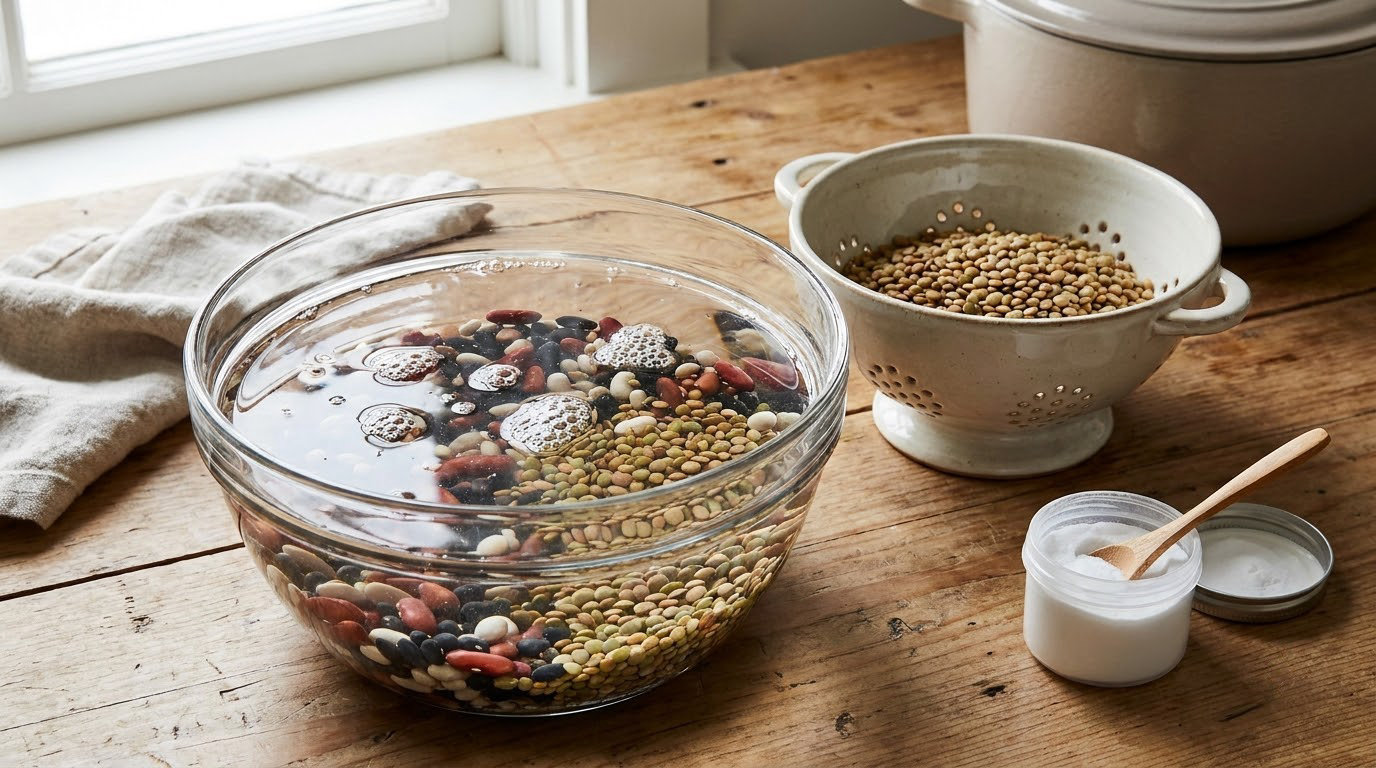
To reduce gas from beans and lentils, soak dried pulses in cold water for 8 to 12 hours, throw that water away, rinse the pulses well, and cook them in fresh water until completely soft. Canned beans just need a 30- to 60-second rinse under cold running water. Gas comes from fermentable oligosaccharides, mainly raffinose and stachyose, that your small intestine cannot break down, so they travel to the colon where bacteria ferment them.
That is the whole method. The rest of this guide is about the parts people get wrong: portion size, how fast you ramp up, and what to do if soaking and rinsing already is not doing enough for you.
- Soak dried beans and lentils for 8 to 12 hours in cold water, then discard the soaking water.
- Cook the pulses in fresh water, not the soak water, and cook them until fully tender.
- Rinse canned beans under cold water for at least 30 to 60 seconds, and drain them well.
- Start at 2 to 3 tablespoons of cooked pulses and build up slowly over weeks, not days.
- Take an alpha-galactosidase enzyme product with the first bites of a bean meal if you still react.
Table of Contents
What You Need
None of this needs special equipment. A pot with a lid, a colander, and a wooden spoon will carry you through every step below. The rest is optional and depends on what you are cooking.
- A large pot and a colander for soaking, draining, and rinsing. A fine mesh strainer is better than a slotted spoon for red lentils, which fall through the holes.
- A slow cooker or pressure cooker if you have one. A pressure cooker is the single biggest reduction for the time it takes, since soaking and high heat happen at once.
- Canned beans, dried beans, or dried lentils. Red and yellow lentils need no soaking at all, so they suit a weeknight.
- Fresh ginger and whatever seasoning you already cook dal and bean dishes with.
- A digestive enzyme product containing alpha-galactosidase, if you want the option in a pocket on days when prep is not possible.
Step-by-Step: How to Reduce Gas From Beans and Lentils
1. Choose a Smaller Serving Size
Tolerance varies more between people than it does between bean varieties. Someone who has been eating pulses for years may sit comfortably at a full cup while a neighbour needs two tablespoons, and that is normal rather than a fault in either one.
Start with 2 to 3 tablespoons of cooked pulses if the food is unfamiliar to your gut, hold that amount for several meals, and only increase when you have had a comfortable run of them. How to reduce gas from beans and lentils starts here, because portion size moves the dose of oligosaccharides more than any single cooking trick.
Gas is uncomfortable but ordinary. Abdominal pain that is sharp or one-sided, vomiting, unintended weight loss, blood in the stool, or symptoms that appear even after very small servings are not ordinary gas, and those warrant a conversation with a doctor rather than another adjustment to your soaking time.
2. Soak Dried Beans Overnight
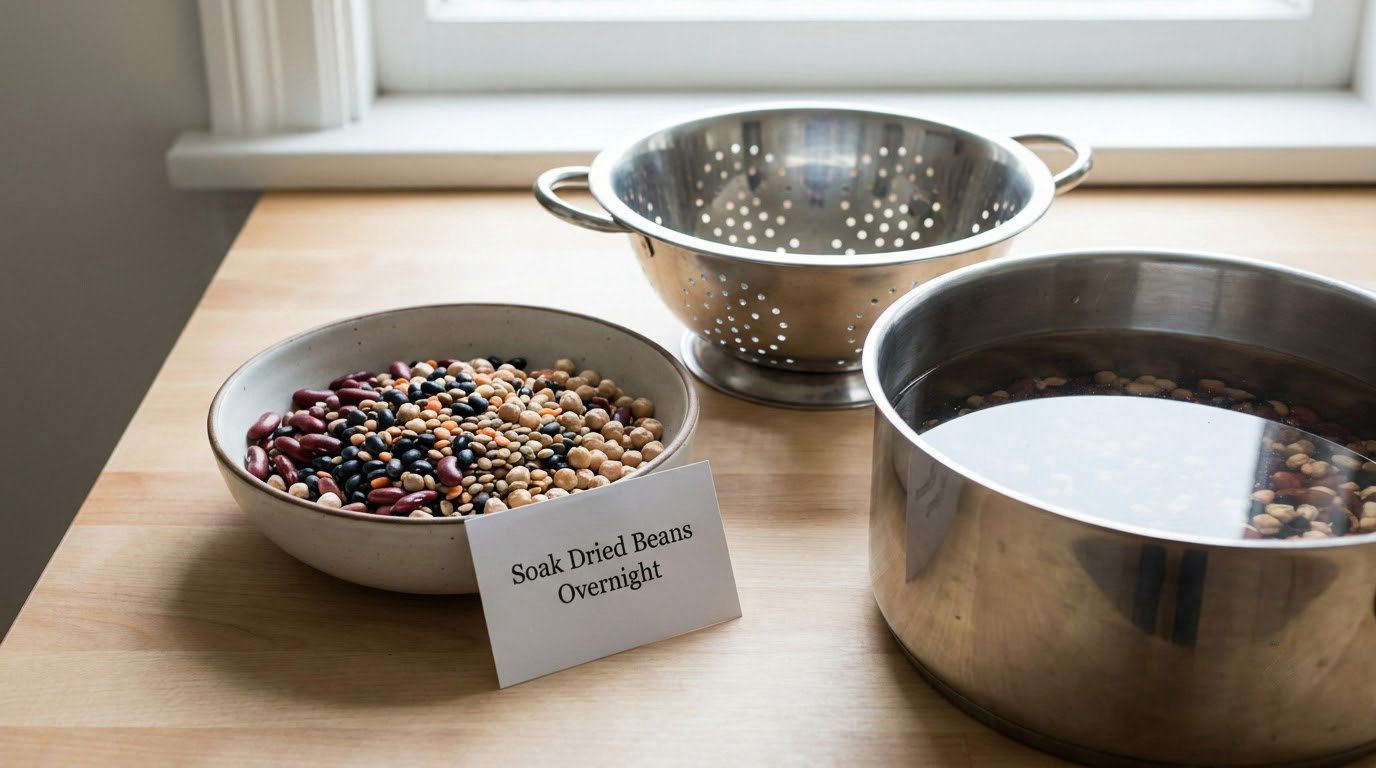
Sort the dried pulses, pick out any stones, then cover them with about three times their volume of cold water. Leave them on the counter for 8 to 12 hours, drain the water into the sink, give the pulses a rinse, and start the cook in fresh water. The soaking water matters: it is where a meaningful share of the water-soluble sugars has gone, so keeping it and cooking in it throws the work away.
A warm kitchen shortens the soak. If yours runs hot, six to eight hours is plenty and twelve hours risks the beans going sour or sprouting.
Soaking reduces gas for a lot of people and does nothing for others, so judge it rather than assuming it worked. Keep a simple note of what you ate and how you felt, and give each method about three meals before deciding it did or did not help.
No overnight window? A quick soak gets most of the way. Boil the pulses for 2 to 3 minutes, take them off the heat, cover, and leave them for an hour. Drain, discard the water, rinse, and cook as normal. You will not match a full overnight soak, but you will beat skipping it entirely.
You can also freeze soaked beans in single-meal portions and cook them from frozen later, which turns the overnight soak into a Sunday batch job instead of a nightly one.
3. Cook Beans and Lentils Thoroughly
Simmer the pulses in fresh water until they are completely tender. Longer cooking breaks down more of the fermentable carbohydrate, and the texture test is simple: a well-done bean crushes under pressure and its skin cracks when you press it with a fingertip. Undercooked pulses keep more of the compounds you are trying to get rid of.
Give yourself time rather than heat. Red lentils cook in 15 to 30 minutes, chickpeas in 45 to 60, and black beans usually need one to two hours. A pressure cooker does the same job at a much higher temperature, which is why soaking plus pressure cooking is the strongest practical combination available in a normal kitchen.
Red and yellow lentils skip the soaking stage entirely. They break down fast, which is exactly what makes them the easiest place to start.
Two notes on safety. Beans must reach a full boil and stay there long enough to inactivate lectins, which is why kidney beans and green beans should never be slow-cooked straight from dry in a cool water. And once the beans are cooked, cool them within two hours, keep them refrigerated, and use them within three to four days, reheating until steaming before eating.
4. Drain Canned Beans and Rinse Them Well
Open the can, pour the liquid away, and rinse the beans under cold running water for 30 to 60 seconds while you move them around with your hands. The canning liquid holds dissolved oligosaccharides and a good deal of added salt, so rinsing removes both. People who react badly often need two rinses, and the “no salt added” label is no reason to skip it.
For red lentils, agitate them in a bowl of water, drain, and repeat until the water stops foaming. That foaming is a visible sign that starch and sugars are coming out.
Cooking from dry usually beats canned on comfort once you have a routine for soaking, because you control the water and the cook time. Canned beans win on a weeknight when you have neither. Rinsing is what makes the canned option usable rather than a gamble.
5. Add an Enzyme Supplement With Gas-Producing Meals
A supplement containing alpha-galactosidase supplies the enzyme your small intestine is missing for those particular sugars. Take it with the first bites of the meal, following the label on the product, and it does its work in the stomach and upper gut before the oligosaccharides ever reach the colon.
What it cannot do is help once gas is already there, and it is not a treatment for an underlying digestive condition. Most people who try it find that the enzyme takes the edge off painful trapped gas rather than cutting the volume dramatically, and it is worth checking whether a product is vegan before taking it daily.
Keep enzyme supplements away from children under 12 unless a clinician advises otherwise, and treat any supplement as something to check with a pharmacist if you take regular medication.
6. Introduce Beans and Lentils Gradually
Here is the protocol that repeats well. Eat 2 to 3 tablespoons of cooked pulses every few days rather than skipping and then eating a bowl. Stay at that dose for a week if you are comfortable, then step up to a quarter cup, and keep going toward half a cup.
There is a reason this works, and it is not just your imagination. A published trial had people eating half a cup of pinto, black-eyed pea or navy beans daily, and by around week eight most participants reported that their symptoms had settled to normal. The gas tends to fade as the gut adapts to a steady, repeated dose.
The ramp is slow and it is not always complete. Some plant-based eaters report still having trouble with gas after years, and that is a real outcome rather than a failure of the method. Track your food and symptoms on a simple 1 to 5 scale across at least five meals, and change one variable per trial week so you know which thing did it.
Common Mistakes
- Skipping preparation. Straight-from-dry beans cooked without a soak and a rinse keep more of the fermentable sugars. This is the most common reason a method feels like it does nothing.
- Starting with a full bowl. A large serving of anything pulses is a large dose. Reduce it first, then work back up.
- Stacking gas-producing foods in one meal. Beans alongside onions, garlic, apples and wheat-heavy dishes loads up fermentable carbohydrates at the same moment. Separate them by a day and see whether the pattern changes.
- Adding salt or acid too early. It is not a gas fix, and it works against texture by toughening skins and slowing softening, which keeps more starch intact.
- Expecting a supplement to work after the meal. Alpha-galactosidase needs to be in the gut before the food finishes. Taken later, it does nothing for the gas forming right now.
- Increasing portions too quickly. Jumping from a tablespoon to a cup in three days resets the whole ramp. Hold the dose steady for a week at a time.
Practical Tips
There are smaller adjustments worth making, and it is fair to be honest that none of them is a cure.
- Eat beans with a grain or a vegetable you already digest well, which keeps the pulse portion modest while the plate still feels like a meal.
- Spread one serving across two meals instead of eating it all at dinner.
- Choose red or yellow lentils when you can, and chickpeas when you cannot. Pulse choice moves the dose more than most people expect.
- Keep your own trigger-and-response list. Your pattern is more useful to you than any general ranking of vegetables.
- Cook with ginger, cumin, fennel seed, bay leaf, epazote or a pinch of asafetida if you like them. These are traditional for a reason and many people find them comforting, but none of them reliably cancels out the gas.
Two folklore remedies get asked about constantly, so here is where they stand. A potato in the pot is starch that thickens the broth, and there is no good evidence it reduces gas. Kombu and other seaweed are often cited for the same reason and sit in the same category: no solid support either way. A small amount of baking soda in the soaking water does soften beans faster, but it leaches thiamine into the water you throw away, pulls extra sodium into the pulses, and can leave them too soft to hold their shape.
Frequently Asked Questions
Does putting a potato in beans reduce gas?
There is no good evidence for it. A potato in the pot adds starch that thickens the broth, and starch is not what produces the gas. The fermentable oligosaccharides in beans are the cause, and they leave the beans through soaking and rinsing rather than being absorbed by a piece of potato. If you like the thicker broth, keep the potato and drop the expectation that it will help.
Does Beano actually work for beans and lentils?
It works for some people and not others, and the honest version is narrower than the advertising. An alpha-galactosidase product taken with the first bites of a meal can reduce painful trapped gas, but it is unlikely to cut the total volume of gas in half. It does nothing for gas that has already started, it is not a treatment for IBS or SIBO, and you should ask a pharmacist before giving it to a child under 12.
How do I cook lentils so they do not cause gas?
Red and yellow lentils need no soaking at all, so start there. Simmer them in fresh water for 15 to 30 minutes until they collapse, drain any foam, and serve them with a well-tolerated grain or vegetable instead of alongside other fermentable-heavy foods. Begin with 2 to 3 tablespoons and build up over weeks, since the fermentable carbohydrate dose matters more than any cooking step.
What neutralizes gas in beans?
Nothing you add to the pot fully neutralizes it. Ginger, cumin, fennel, epazote and asafetida are traditional additions that many people find comforting, but the reliable options are preparation and dose: soak dried pulses for 8 to 12 hours, discard that water, cook in fresh water until fully tender, and keep portions modest. An alpha-galactosidase enzyme taken with the first bites is the one addition that addresses the chemistry directly.
Can I reduce gas from beans without soaking overnight?
Yes, though less completely. A quick soak means boiling the pulses for 2 to 3 minutes, covering them, leaving them for an hour, then draining, discarding that water, rinsing and cooking in fresh water. Pressure cooking raises the temperature well above a simmer, which breaks down more of the fermentable carbohydrate in the same step. Choosing red lentils, which need no soak at all, is the fastest route to a comfortable bowl.
When is gas after eating beans a sign of something else?
Ordinary gas is uncomfortable and comes and goes. See a doctor or registered dietitian if it happens after very small servings, if it comes with pain that is sharp or one-sided, vomiting, unintended weight loss, blood in the stool, or if it never settles after several weeks of small, well-prepared servings. Small intestinal bacterial overgrowth, fructose malabsorption and IBS can all overlap with these symptoms, and a clinician is the right person to sort them out.
What to Do First
Start with one change: this week, soak your dried beans for 8 to 12 hours, cook them in fresh water until fully tender, and eat three tablespoons at one meal rather than a bowlful. Keep a one-line note of how you felt.
Give that two weeks before adding anything else. If you are still reacting, the next step is usually a pressure cooker or a small alpha-galactosidase trial rather than more soaking time, and a registered dietitian can help you work out whether your symptoms are ordinary gas or something that needs a proper look.