
Most people who quit a diet in week two quit because they changed every meal at once. Learning how to start eating plant based slowly works the opposite way: you add plants to the meals you already like, one change at a time, and give your digestion a few weeks to catch up. Four weeks is enough to build a routine you can keep going without feeling like you gave something up.
A “plant-based” diet is not a strict label with a starting line. It means building meals around vegetables, fruit, whole grains, beans and lentils, nuts and seeds, and letting animal products take up less of the plate rather than disappearing overnight. You could eat meat most days and still be shifting your eating in that direction.
That flexibility is exactly why the slow route works. Swapping one thing at a time, milk before cheese before meat, gives your taste buds time to reset and your gut time to adjust. People who ease in this way tend to keep the habit for years rather than weeks.
Below is the four-week version: what to do each week, what to expect from your digestion, and how to know the routine is holding. If any of this sits close to a medical condition you have, or you’re pregnant, nursing, or managing diabetes or kidney disease, talk it through with a doctor or registered dietitian first.
Table of Contents
- What You Need
- Step-by-Step: How to Start Eating Plant Based Slowly
- Week 1: How to Start Eating Plant Based Slowly by Adding, Not Removing
- Week 2: Build Familiar Plant-Based Meals
- Week 3: Make Plants the Main Part of More Meals
- Week 4: Create a Repeatable Weekly Routine The last week is where a month of experimenting turns into something you can keep. Aim for two or three dependable plant-based meals you actually like, and build your week around them instead of around leftovers. Pick a Sunday prep slot of 45 to 60 minutes. Cook a pot of grains and a pot of beans or lentils. That’s two components done. Roast a tray of vegetables while those are on the stove. Make one sauce or dressing you keep in a jar in the fridge. Keep a backup meal for the nights you can’t face cooking. A prep session like that removes most of the friction that makes people quit. Batch cooking grains and beans on a Sunday is reported again and again in plant-based communities as the single biggest time saver, often worth five or more hours across a working week. After the first month, aim for something sustainable rather than perfect. Most transitions that stick took between three and 18 months, and going fully plant-based was never the goal for many of them. Two or three meat-free days a week that you genuinely enjoy will do more for you than a month of meals you resent. Simple Foods to Keep in Your Rotation Instead of a long shopping list, keep a short rotation going. Repetition buys you time on a weeknight, and variety comes from the combinations rather than from adding more ingredients. Protein: lentils, chickpeas, black beans, tofu, tempeh, edamame, peanut butter, cashews, rolled oats, eggs if you still eat them. Vegetables: frozen broccoli, cauliflower and green beans, canned tomatoes, onions, peppers, cabbage, carrots, sweet potatoes, mushrooms, zucchini. Whole grains: brown rice, oats, whole wheat pasta, quinoa, barley, couscous, corn tortillas. Fruit: bananas, apples, oranges, berries, canned fruit in juice. Fats: olive oil, avocado, nuts, seeds, tahini, peanut butter. Flavour bases: garlic, onion, ginger, cumin, smoked paprika, curry powder, lemon, vinegar, nutritional yeast. Combining three or four of these gets you most meals. Lentil soup is lentils, onion, carrots and cumin. Fried rice is rice, frozen vegetables, soy sauce and a fried egg or tofu. A snack plate is apple slices, peanut butter and a handful of walnuts. Nutritional yeast deserves its own mention because it does two jobs at once. It adds a savoury, nutty depth that most people are missing when they drop cheese, and the B12-fortified kind contributes to the nutrient most plant-only diets fall short on. Our guide to vitamin B12 on a plant-based diet covers where to get it and why fortified foods count. Iron gets its own category too, because plant iron absorbs differently than iron from meat. Pairing lentils, beans, tofu or fortified cereal with something high in vitamin C, like peppers, broccoli or citrus, makes a measurable difference to how much you actually absorb. Iron-rich plant foods and how to absorb more goes into the pairing details. How to Make the Transition Easier Start with the flavours you already love. Garlic, spice, curry, roasted things, strong coffee. Keep those. If a plant-based version of a meal tastes flat to you, the problem is usually seasoning, not the ingredients. Plan protein at breakfast, not just dinner. Most breakfast swaps are carb with no protein, and you’re hungry by 10 a.m. Adding beans, tofu scramble, yogurt, nuts or a fortified milk changes the whole morning. Order before you leave. Eating out feels harder than it is because you imagine the worst. Check the menu ahead of time, look for a dish with beans, tofu or vegetables as its centre, and go early when a place is quieter. Cook for the household you actually live in. Mixed-diet houses do better when the plant-based dish is a separate dish on the table rather than a modified version of everyone’s dinner. Rice, a tray of roasted vegetables and a bean dish feed everyone at the same table. Read labels for a short list of things only. Checking every ingredient on every package is a fast route to burnout. It’s worth checking for gelatin, whey, casein, honey, and lard in products where you wouldn’t expect them. Most whole foods need nothing. Let convenience food sit in the plan. Frozen vegetables, canned beans, canned chickpeas, pre-cooked grains and a jar of sauce are legitimate. Eating plant-based and eating processed are separate questions, and conflating them is what makes people quit. Track how you feel, not a number. A weekly note on energy, digestion and sleep gives you something honest to look at. If energy is dropping and digestion is rough, the answer is usually eat a little more and back off the fiber ramp, not quit. Common Mistakes and How to Fix Them Changing everything in one week. This is the reason most attempts end. The fix is unglamorous: one swap per fortnight, written down, and only moving on when the last one feels normal. If your first week feels boring rather than difficult, you’re on pace. Living on three meals. Bean chili, lentil soup and roasted vegetable pasta is not a diet, it’s a menu. The fix is a wider rotation plus something at breakfast, and snacks that carry protein or fat rather than crackers. Skipping meals because a recipe didn’t work. The fix is a backup meal you can make without thinking. Keep one in your notes app. A sandwich with hummus and vegetables, or rice with canned beans and hot sauce, takes four minutes. Treating every recipe like it needs to be perfect. A slightly lumpy bean chili is dinner. The fix is one rule: assemble bowls, tacos and sheet-pan meals from components you already cook, instead of following recipes that call for twenty items you don’t have. Ramping fiber fast and blaming bloating on the diet. Bloating in weeks two and three is the most common complaint from people starting out, and it usually resolves as the gut adjusts. The fix is smaller servings of beans at first, cooking rather than eating cruciferous vegetables raw, soaking dried beans overnight, and drinking enough fluid. If discomfort is severe or persistent rather than easing, that’s a reason to see a doctor. Dropping variety, or ignoring a nutrient entirely. Eating beans and rice every day is monotonous and can leave iron, calcium and B12 short. The fix is rotating your protein sources, eating something calcium-fortified daily, and treating B12 as the one supplement most plant-based diets genuinely need. Ask a doctor or registered dietitian about your own numbers. Frequently Asked Questions How long should I take to start eating plant based?
- Do I need to give up meat and dairy immediately?
- How can I get enough protein while eating plant based?
- What should I eat when eating plant based at restaurants?
- Do I need supplements when starting a plant-based diet?
- Can I start eating plant based without buying many specialty products?
- Start Tomorrow, Not Someday
What You Need
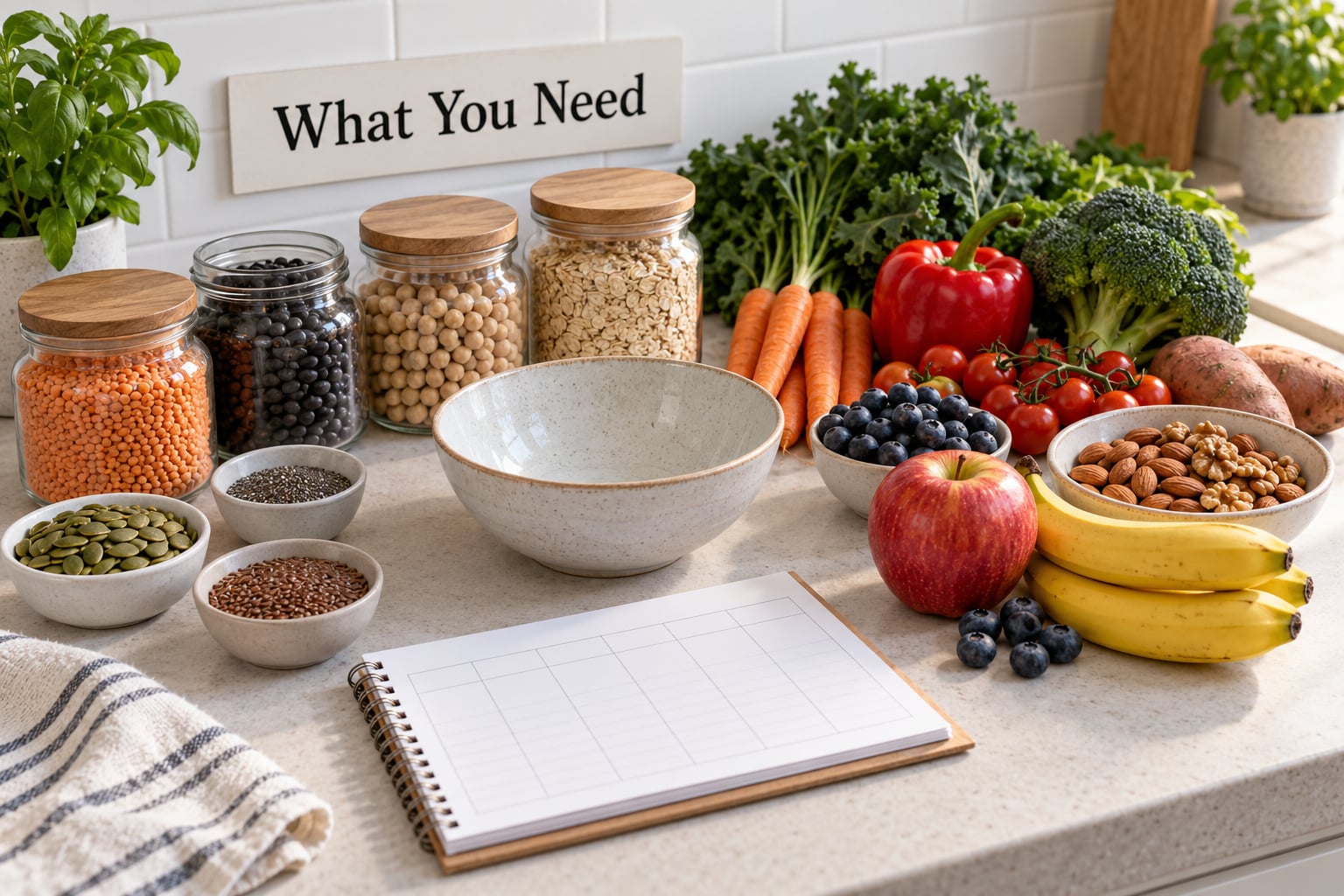
You don’t need a plan, a spreadsheet, or a specialist aisle full of products. You need a way to build a plate, a short list of foods you’ll actually cook, and about ten minutes a week to notice how you’re doing.
A plate framework, not a calorie target. A simple division works: about half the plate vegetables and fruit, a quarter whole grains or starchy foods, and a quarter protein such as beans, lentils, tofu, tempeh, or eggs if you still eat them. Oil, nuts, seeds and avocado cover the fat side. This is a shape for a meal, not a set of numbers to hit.
Foods that are cheap and available. Frozen vegetables, canned beans, dried lentils, oats, brown rice, potatoes and bananas will carry you through a month without any specialty shopping. Canned beans rinsed under the tap are worth the small effort; the liquid they come in carries a lot of the compounds that cause gas.
A few kitchen basics. A cutting board, a knife, a decent pan, a pot for cooking grains, a jar for soaking beans, and a container set for prepping. That’s the whole list. You can build most weeknight plant-based meals from those five things.
Water. When fiber goes up, water goes with it. Most dietary guidance suggests somewhere in the range of 1.5 to 2 liters of fluid a day, more if you’re active or the weather is hot. Fiber without fluid is the fast route to feeling blocked and uncomfortable.
A simple tracker. A notebook or your phone’s notes app. Each week, write three lines: what you ate that felt good, what felt heavy, and what you’d change. Digestion, energy and sleep tell you more than the scale does, and they’re the signals that tell you whether the pace is right.
Step-by-Step: How to Start Eating Plant Based Slowly
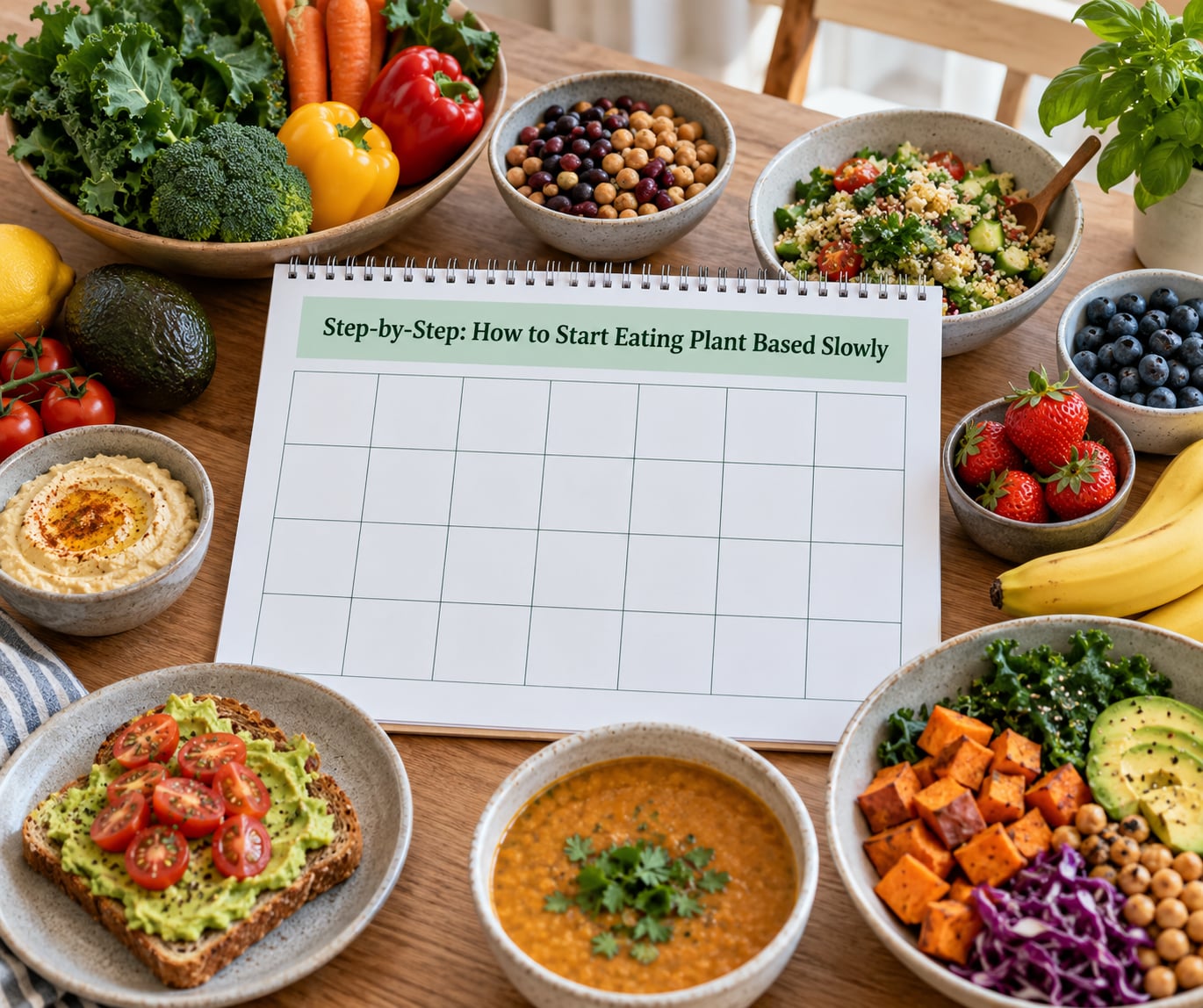
Each week has one job. Resist the urge to jump ahead, because the whole approach depends on the changes stacking on top of habits you’ve already made comfortable.
Week 1: How to Start Eating Plant Based Slowly by Adding, Not Removing
Your only task in week one is addition. Meat stays on the plate, dairy stays in the coffee, and you focus on getting more plants into a single meal a day. That’s it.
- Breakfast: add fruit, or switch half your usual milk to a fortified oat or soy milk and see if you notice a difference.
- Lunch: keep the sandwich, add a handful of greens, or put roasted vegetables on it.
- Dinner: stir sliced zucchini, peppers or mushrooms into whatever you already make.
- Snacks: keep an apple, a handful of almonds or a piece of fruit within reach so you graze instead of reaching for the biscuit tin.
For a real example, a pot of tomato pasta sauce with a cup of red lentils simmered into it changes the texture and the protein without changing the dish. Tacos get a black bean layer and a cabbage slaw. Chicken stir-fry becomes tofu or extra mushrooms and broccoli in the same sauce.
What to expect: probably nothing dramatic. Some people notice slightly more gas in the first few days as fiber increases. If you go from very little fiber to a lot in one sitting, ease off for a day and take the next serving smaller.
How to tell it worked: you finished the week without a single “I gave up” moment. That is the whole benchmark.
Week 2: Build Familiar Plant-Based Meals
Now you start substituting rather than only adding. The goal is to reproduce meals you genuinely enjoy, with the same flavours, using plants as the main ingredient.
This is the week most people hit the cheese question. Cheese is usually described as the hardest thing to give up, and the honest answer is that you don’t have to in week two. If dairy is the sticking point, swap milk first, then butter, then leave cheese for a month. People who stack it all onto the same fortnight tend to quit.
- Stir-fries: tofu, tempeh, edamame or extra vegetables, same sauce, add peanuts or cashews for texture.
- Soups: red lentils thicken a tomato or vegetable broth in about 20 minutes.
- Sandwiches and wraps: hummus, mashed chickpea or bean spread, roasted vegetables, arugula.
- Bowls: brown rice or quinoa, roasted vegetables, chickpeas, a tahini or peanut drizzle.
- Pasta: any sauce works, and white beans blended into tomato sauce add protein you would not taste.
Breakfast is where a lot of people stall, because most standard breakfasts are built around eggs or dairy. That is worth solving early. If you want ideas that actually hold past 9 a.m., our guide to get more protein in a plant-based breakfast covers the options that aren’t just fruit and hope.
What to expect: this is usually where bloating shows up if it hasn’t already. Bloating from a fiber ramp tends to peak around week two or three for most people, then settle as the gut microbiome adapts. Drinking enough fluid, cooking rather than eating cruciferous vegetables raw, and starting beans in smaller portions all take the edge off.
Week 3: Make Plants the Main Part of More Meals
In week three the plate flips. Vegetables move from side dish to the bulk of the meal, and the protein slot gets filled with beans, tofu, tempeh, or whole grains plus something else.
Flavour is what makes this stick. A plate of vegetables with nothing on them is a plate you will not cook twice. Roasted vegetables with olive oil and salt, a curry with coconut milk, a pasta with a garlicky white bean sauce, a stir-fry with a peanut sauce, tacos with charred corn and black beans. These are not diet food, they’re just dinner.
Protein needs a little more attention here because you’re removing the biggest source. Most adults do fine when they eat a protein source at each meal and snack on something substantial, rather than trying to load it all into dinner. Cooked lentils, chickpeas and edamame each carry a respectable amount, and soy foods are among the most complete plant proteins available.
What to expect: energy levels that are steadier through the afternoon, particularly if you had been eating a heavy lunch. Some people feel under-fueled in the first few days. That’s usually portion size rather than principle: add a grain, a piece of fruit, or a second serving of beans before you decide the approach is wrong.
Week 4: Create a Repeatable Weekly Routine
The last week is where a month of experimenting turns into something you can keep. Aim for two or three dependable plant-based meals you actually like, and build your week around them instead of around leftovers.
- Pick a Sunday prep slot of 45 to 60 minutes.
- Cook a pot of grains and a pot of beans or lentils. That’s two components done.
- Roast a tray of vegetables while those are on the stove.
- Make one sauce or dressing you keep in a jar in the fridge.
- Keep a backup meal for the nights you can’t face cooking.
A prep session like that removes most of the friction that makes people quit. Batch cooking grains and beans on a Sunday is reported again and again in plant-based communities as the single biggest time saver, often worth five or more hours across a working week.
After the first month, aim for something sustainable rather than perfect. Most transitions that stick took between three and 18 months, and going fully plant-based was never the goal for many of them. Two or three meat-free days a week that you genuinely enjoy will do more for you than a month of meals you resent.
Simple Foods to Keep in Your Rotation
Instead of a long shopping list, keep a short rotation going. Repetition buys you time on a weeknight, and variety comes from the combinations rather than from adding more ingredients.
- Protein: lentils, chickpeas, black beans, tofu, tempeh, edamame, peanut butter, cashews, rolled oats, eggs if you still eat them.
- Vegetables: frozen broccoli, cauliflower and green beans, canned tomatoes, onions, peppers, cabbage, carrots, sweet potatoes, mushrooms, zucchini.
- Whole grains: brown rice, oats, whole wheat pasta, quinoa, barley, couscous, corn tortillas.
- Fruit: bananas, apples, oranges, berries, canned fruit in juice.
- Fats: olive oil, avocado, nuts, seeds, tahini, peanut butter.
- Flavour bases: garlic, onion, ginger, cumin, smoked paprika, curry powder, lemon, vinegar, nutritional yeast.
Combining three or four of these gets you most meals. Lentil soup is lentils, onion, carrots and cumin. Fried rice is rice, frozen vegetables, soy sauce and a fried egg or tofu. A snack plate is apple slices, peanut butter and a handful of walnuts.
Nutritional yeast deserves its own mention because it does two jobs at once. It adds a savoury, nutty depth that most people are missing when they drop cheese, and the B12-fortified kind contributes to the nutrient most plant-only diets fall short on. Our guide to vitamin B12 on a plant-based diet covers where to get it and why fortified foods count.
Iron gets its own category too, because plant iron absorbs differently than iron from meat. Pairing lentils, beans, tofu or fortified cereal with something high in vitamin C, like peppers, broccoli or citrus, makes a measurable difference to how much you actually absorb. Iron-rich plant foods and how to absorb more goes into the pairing details.
How to Make the Transition Easier
Start with the flavours you already love. Garlic, spice, curry, roasted things, strong coffee. Keep those. If a plant-based version of a meal tastes flat to you, the problem is usually seasoning, not the ingredients.
Plan protein at breakfast, not just dinner. Most breakfast swaps are carb with no protein, and you’re hungry by 10 a.m. Adding beans, tofu scramble, yogurt, nuts or a fortified milk changes the whole morning.
Order before you leave. Eating out feels harder than it is because you imagine the worst. Check the menu ahead of time, look for a dish with beans, tofu or vegetables as its centre, and go early when a place is quieter.
Cook for the household you actually live in. Mixed-diet houses do better when the plant-based dish is a separate dish on the table rather than a modified version of everyone’s dinner. Rice, a tray of roasted vegetables and a bean dish feed everyone at the same table.
Read labels for a short list of things only. Checking every ingredient on every package is a fast route to burnout. It’s worth checking for gelatin, whey, casein, honey, and lard in products where you wouldn’t expect them. Most whole foods need nothing.
Let convenience food sit in the plan. Frozen vegetables, canned beans, canned chickpeas, pre-cooked grains and a jar of sauce are legitimate. Eating plant-based and eating processed are separate questions, and conflating them is what makes people quit.
Track how you feel, not a number. A weekly note on energy, digestion and sleep gives you something honest to look at. If energy is dropping and digestion is rough, the answer is usually eat a little more and back off the fiber ramp, not quit.
Common Mistakes and How to Fix Them
Changing everything in one week. This is the reason most attempts end. The fix is unglamorous: one swap per fortnight, written down, and only moving on when the last one feels normal. If your first week feels boring rather than difficult, you’re on pace.
Living on three meals. Bean chili, lentil soup and roasted vegetable pasta is not a diet, it’s a menu. The fix is a wider rotation plus something at breakfast, and snacks that carry protein or fat rather than crackers.
Skipping meals because a recipe didn’t work. The fix is a backup meal you can make without thinking. Keep one in your notes app. A sandwich with hummus and vegetables, or rice with canned beans and hot sauce, takes four minutes.
Treating every recipe like it needs to be perfect. A slightly lumpy bean chili is dinner. The fix is one rule: assemble bowls, tacos and sheet-pan meals from components you already cook, instead of following recipes that call for twenty items you don’t have.
Ramping fiber fast and blaming bloating on the diet. Bloating in weeks two and three is the most common complaint from people starting out, and it usually resolves as the gut adjusts. The fix is smaller servings of beans at first, cooking rather than eating cruciferous vegetables raw, soaking dried beans overnight, and drinking enough fluid. If discomfort is severe or persistent rather than easing, that’s a reason to see a doctor.
Dropping variety, or ignoring a nutrient entirely. Eating beans and rice every day is monotonous and can leave iron, calcium and B12 short. The fix is rotating your protein sources, eating something calcium-fortified daily, and treating B12 as the one supplement most plant-based diets genuinely need. Ask a doctor or registered dietitian about your own numbers.
Frequently Asked Questions
How long should I take to start eating plant based?
Give it a full month before you judge it. Most people who ease in with one change every two weeks report feeling settled somewhere between three and 18 months, and rushing that is what makes people quit. If four weeks in, most of your regular meals are plant-based and digestion feels manageable, that is a good place to keep going.
Do I need to give up meat and dairy immediately?
No, and trying to is the most common reason a transition stalls. Swap one item every week or two, milk before butter before cheese, and let each step become comfortable before the next one. Plenty of people stay flexitarian indefinitely, eating mostly plants with animal foods a few times a week, and get most of the benefit.
How can I get enough protein while eating plant based?
Eat a protein source at each meal rather than trying to load it all into dinner. Lentils, chickpeas, tofu, tempeh, edamame and peanut butter are the workhorses, and soy foods are among the most complete plant proteins. Eating grains and legumes across the day, soaking and cooking pulses, and including nuts and seeds makes up the rest.
What should I eat when eating plant based at restaurants?
Look for a dish built around beans, tofu or vegetables rather than one built around a protein with a vegetable side. Grain bowls, curries, tacos with beans, stir-fries and vegetable-heavy pasta are reliable. Check the menu ahead of time, go early to beat the rush, and don’t stress if you end up ordering fries once.
Do I need supplements when starting a plant-based diet?
Vitamin B12 is the one most plant-based diets need, and fortified foods count toward it. Vitamin D and an omega-3 algae source are worth discussing with your doctor, particularly if you get little sun or eat little algae. Calcium is usually covered by fortified plant milk and calcium-set tofu. Ask a doctor or registered dietitian about your individual needs.
Can I start eating plant based without buying many specialty products?
Yes, and it is easier than it was ten years ago. Frozen vegetables, canned beans, dried lentils, oats, brown rice and fortified plant milk build most meals, and homemade versions of things like cheese sauce are usually cashews, nutritional yeast and water. Buy specialty items only for something you already cook often and genuinely miss.
Start Tomorrow, Not Someday
Pick the one meal you eat most often and make it plant-based once this week. That’s the whole assignment. Add a vegetable to what you already cook, or cook one pot of lentils and use them in three meals before you run out.
Check in with yourself on energy, digestion and sleep rather than weight, and give it four weeks before you decide anything. If something isn’t working, the answer is to slow down another notch, not to go back to where you started.