
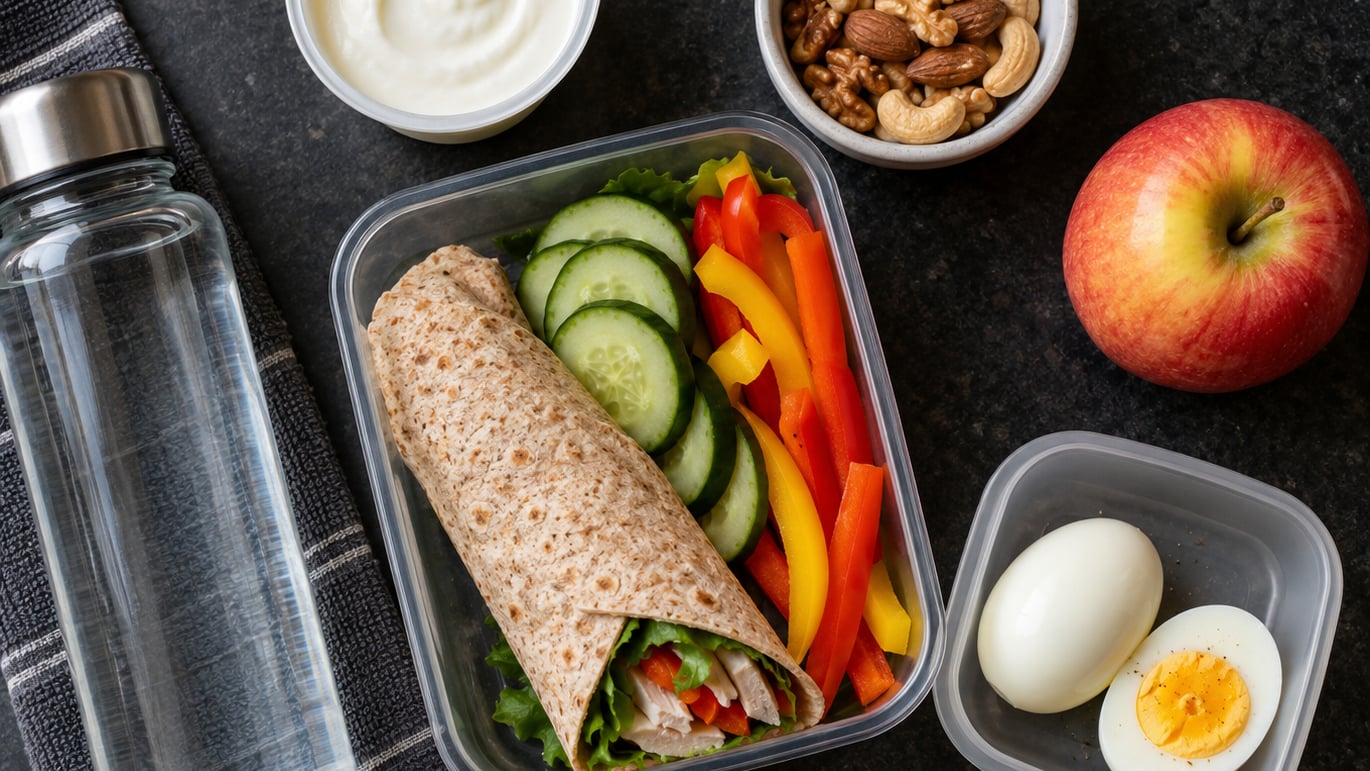
Eating healthy on a night shift comes down to four habits: a real, protein-forward meal before you clock in, small low-sugar snacks every two to three hours rather than one huge dinner at 3am, steady water through the shift, and a light meal before you sleep once it is over. Anyone who has worked the graveyard knows vending-machine snacks do not keep a body running for twelve hours.
Below is the practical version of how to eat healthy when you work night shifts — a shopping list, a meal template, a clock-time schedule, and the mistakes that trip up almost everyone the first month. No powders, no imported ingredients, nothing that needs a kitchen you do not have at 4pm.
Table of Contents
- What You Need
- Step-by-Step: How to Eat Healthy When You Work Night Shifts
- Common Mistakes
- Frequently Asked Questions
- What should I eat before a night shift?
- What are the best foods to eat during an overnight shift?
- How can I avoid getting hungry while working at night?
- How much caffeine should I have before bed after a night shift?
- Can I eat healthy if I work rotating or early-morning shifts?
- What should I eat after a night shift without disrupting sleep?
What You Need
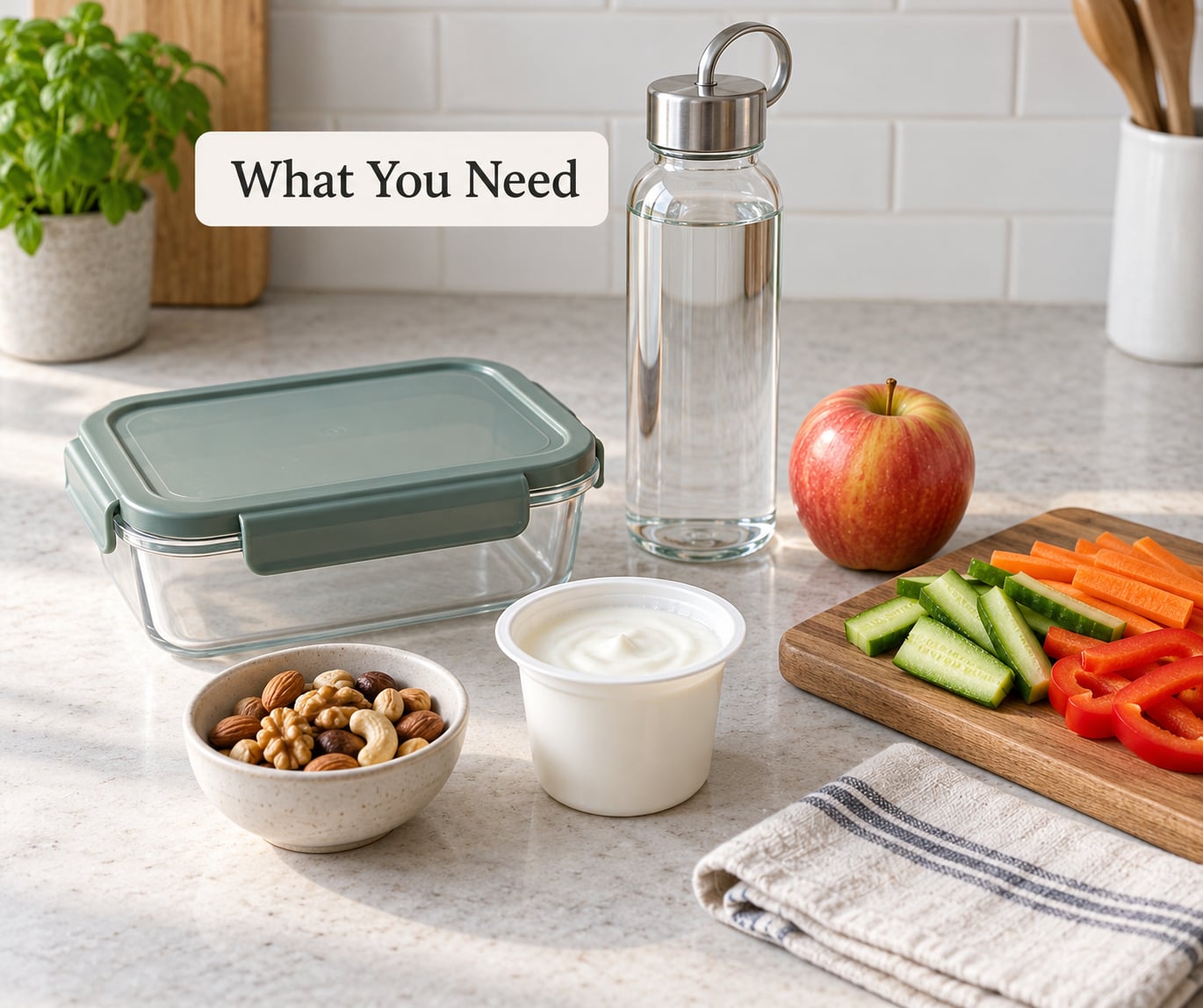
The gear matters less than people think. One container, one water bottle and a small cooler bag get you through a twelve-hour shift without touching a vending machine.
- Two or three containers. One for the shift meal, one for snacks, one spare. Glass holds temperature better and keeps reheated food from tasting like a warm plastic tray; plastic is lighter if you are hauling it through a hospital corridor all night.
- A wide-mouth bottle you do not have to unscrew. Aim for roughly half a litre an hour you are awake on shift, more if the break room is warm.
- A cooler bag with an ice pack. Perishable food should not sit above 40°F for more than about two hours, or one hour in a room hotter than 90°F. A cold pack buys you hours.
- Foods that survive unrefrigerated. Nuts, seeds, protein bars, whole fruit, dried beans, nut butter packets, shelf-stable cartons of milk or soy milk, rice cakes.
- Foods that need the cooler. Greek yogurt, hard-boiled eggs, cut vegetables, hummus, cheese, cooked chicken, overnight oats.
- Two or three drinks, decided in advance. Water, coffee in a real cup or a travel thermos, and one unsweetened option. Deciding beats the vending machine deciding for you.
Worth adding on the list: a small tin of unsalted nuts and a couple of extra bananas, because the shift you forgot to plan for is the shift that happens.
Step-by-Step: How to Eat Healthy When You Work Night Shifts
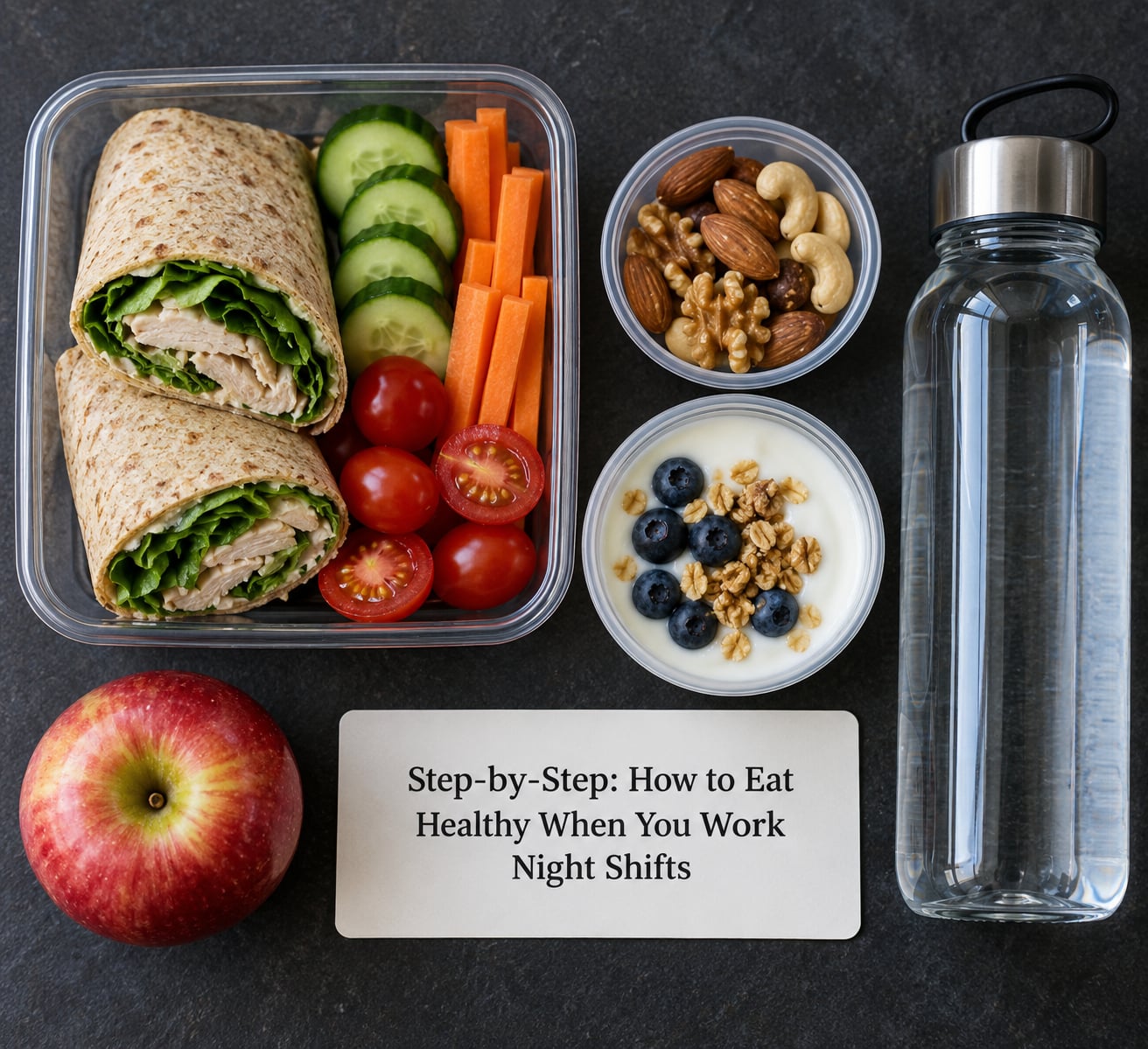
Five steps, in order. Most people who struggle on nights skip the first one and try to fix it at 3am with willpower.
| Clock time | What to do on a 12-hour overnight shift |
|---|---|
| Two to three hours before the shift | A real meal with protein, a starchy carbohydrate and vegetables. Not a drive-through at 8pm. |
| Start of shift | A glass of water and a small snack only if you are hungry. Keep the big appetite for the middle of the shift. |
| Midpoint (about 2am) | Your main shift meal. Protein plus vegetables plus a slow carbohydrate, eaten sitting down if you can manage five minutes. |
| Three to four hours in | A protein-forward snack with a couple of carbohydrates. This is the slot that prevents the 3am crash. |
| One to two hours before the end | Something light — yogurt, fruit, crackers and cheese. Skip the heavy plate. |
| End of shift, before driving home | Water, and a snack if you have not eaten in hours. You are about to be awake and alert on an empty stomach. |
| Within an hour of sleeping | A small, easy meal. Then two to three hours of no eating. |
Step 1: Plan Your Meals Around Your Shift
Write down when your shift starts and ends, then pick three eating occasions inside it rather than improvising at whatever moment hunger gets loud. Three occasions across eight or twelve hours is the pattern most shift workers land on, and it matches how work breaks usually fall.
The other half of planning is choosing food that stays comfortable in you for four hours. Rich, fried, spicy and heavily spiced food sits badly at 4am, and so does a large portion of anything. If a meal leaves you drowsy an hour later, the problem is usually the size or the sugar, not the food group.
Step 2: Build a Balanced Meal Template
A night-shift plate follows a simple ratio: half non-starchy vegetables, one quarter protein, one quarter complex carbohydrate, plus a little fat to slow digestion. Think of it as a formula you can repeat without thinking.
- Protein you can eat cold. Eggs, Greek yogurt, cheese, cooked chicken, tuna, beans, tofu, edamame.
- Slow carbohydrates. Brown rice, oats, whole-grain bread, quinoa, sweet potato, barley, wholegrain wraps.
- Vegetables that hold up. Cucumber, peppers, carrots, broccoli, salad greens, tomatoes. Spinach and other leafy greens wilt, so put them in a separate container.
- A little fat. Olive oil, avocado, nuts, nut butter, seeds, cheese.
Protein is the anchor. It holds hunger off longest and stops the mid-shift crash, and it matters more on nights because most people under-eat protein while overeating on carbohydrates from the vending machine.
Step 3: Prepare Food Before the Shift
Cook when your body clock says it is a mealtime, which for most night workers means the early evening. One cooking session on a day off or between shifts fills four or five containers at once.
- Sandwiches and wraps — chicken and avocado, tuna and cucumber, hummus and sliced vegetables, egg salad on wholegrain. Assembled the night before.
- Grain bowls — a base of brown rice, quinoa or roasted sweet potato, topped with chickpeas, cucumber, feta and olive oil. Served cold.
- Overnight oats — oats, yogurt, chia and fruit, mixed before bed so it is ready in the fridge when you wake.
- Eggs — boiled a batch, or a frittata cut into squares. Keep it refrigerated until the shift.
- Snack boxes — a small handful of nuts, a yogurt cup, fruit, cheese, crackers. Five components means you always have something that sounds edible.
If cooking is genuinely not happening, assemble instead: rotisserie chicken, canned tuna, jarred hummus, pre-cut vegetables, a tub of yogurt and a bag of salad. Nobody on a night shift needs a chef, they need a fridge and fifteen minutes on a Sunday. For more ways to get vegetables in without standing at the stove every evening, see how to eat more vegetables without cooking every night.
Step 4: Choose Drinks and Snacks Wisely
Snacks are not cheating; they are the mechanism. Every two to three hours, small enough that you could eat it during a busy stretch without thinking about it. Pair a protein with a carbohydrate and you hold your blood sugar steady instead of spiking and crashing.
- Greek yogurt with berries or a spoon of nuts — protein and slow-release energy.
- Hard-boiled eggs — cheap, portable, keep you full for hours.
- Hummus with carrot and cucumber sticks — cheap and easy to eat one-handed.
- Nuts, a small portion — a couple of dozen almonds is a snack, not the whole bag.
- Whole fruit — berries, apple or banana are the easiest to eat at 3am without making a mess.
- Crackers and cheese — salty enough to be satisfying, simple to pack.
- Dark chocolate, a few squares — real, and enough.
On caffeine, set a hard cutoff around eight to nine hours before you plan to sleep, which for a 7am finisher means nothing after roughly 10am or 11am. Caffeine has a half-life of about five to six hours in most adults, so a 4pm coffee can still be working on you at midnight. Energy drinks layer that on top of sugar and leave many people jittery and hungry an hour later.
Water first, always. If plain water gets boring, sparkling water, unsweetened tea or a diluted juice work fine; sugary drinks deliver a spike that ends in the exact crash you were trying to avoid.
Step 5: Protect Your Sleep and Recovery
What you eat in the three hours after a shift matters as much as what you eat during it. Keep that final meal light and easy to digest — yogurt with fruit, eggs on toast, soup, a small bowl of cereal — because lying down straight after a heavy meal is a reliable way to spend an hour awake with heartburn.
Do the same for the drink that comes with it. Skip alcohol entirely; it fragments sleep and leaves you thirsty at 3pm, which is the worst possible time to wake up.
One safety point worth stating plainly: do not drive home after a long night shift on caffeine, adrenaline and no food. Eat something, drink water, and if you feel foggy, arrange a ride.
Common Mistakes
Skipping meals and eating one enormous meal at 3am
The fix is three eating occasions instead of one. Most shift workers do not overeat because they are greedy; they overeat because they worked eight hours on nothing and their only break landed at 3am, when the drive-through was the only thing open.
Defaulting to the vending machine
Chip packets, chocolate bars and juice give a fast spike and a faster drop. Pack one backup snack you can actually get to quickly, and accept that on some weeks the vending machine wins. Losing one shift to a bad snack is not a failed diet.
Drinking coffee through the shift and into the morning
Coffee before a night shift is useful; coffee at 7am while your body tries to sleep is not. Set the cutoff time once, write it on the container, and keep a second option ready — decaf, herbal tea, sparkling water.
Treating 3am hunger as a willpower problem
Hunger at 3am is usually a gap in planning, not a character flaw. If you are starving, eat protein and a carbohydrate together rather than standing at a vending machine making a decision while exhausted. For nights when appetite simply disappears, what to eat when you have no appetite has some gentle ideas.
Going heavy right before sleep
End-of-shift plates are usually the biggest of the week, and they land right as you are trying to fall asleep. Eat lighter at the end than at the middle of the shift.
Ignoring the fact that shift work is stressful
Poor eating on nights is rarely only about knowledge. When a shift has gone badly and sleep has been patchy for a week, food is the easiest thing to let slide. Eating well when you are stressed covers the routines that hold up on a bad week, because the plan has to survive contact with a hard shift, not just a good one.
Two smaller things trip people up as well. Food that sits warm for hours is how a good container of leftovers goes bad, so use the cooler bag. And people routinely undo a good shift with a drive-through meal at 7am; the post-shift meal at home takes ten minutes and keeps the day intact.
Frequently Asked Questions
What should I eat before a night shift?
Eat a real meal two to three hours before you clock in: a quarter plate of protein, a quarter plate of a slow carbohydrate like brown rice or whole-grain bread, and half a plate of vegetables. A little fat helps it release slowly. This meal does more work than anything else in the plan, because it carries you through the first few hours and stops you arriving at the break room already starving.
What are the best foods to eat during an overnight shift?
Foods that are easy to eat one-handed, keep for hours without refrigeration, and pair protein with a carbohydrate. Hard-boiled eggs, Greek yogurt with nuts, hummus with vegetable sticks, cheese and crackers, whole fruit, a small portion of nuts, and overnight oats or a grain bowl from the fridge all work. The main meal belongs around the midpoint of the shift, with lighter snacks either side.
How can I avoid getting hungry while working at night?
Plan three eating occasions and write them on your container before the shift starts, including one you do not feel like at the time. Choose mostly protein, because it holds hunger off longest, and pair it with a slow carbohydrate so blood sugar does not dip. Drink water regularly, since thirst is often mistaken for hunger, and avoid the vending machine as your only option.
How much caffeine should I have before bed after a night shift?
Stop caffeine roughly eight to nine hours before you plan to sleep, so by late morning for a shift finishing at 7am. Caffeine has a half-life of about five to six hours, which means an afternoon coffee is often still active when you are trying to sleep. A small amount near the start of the shift is useful; energy drinks on top of coffee tend to produce jitteriness and a crash.
Can I eat healthy if I work rotating or early-morning shifts?
Yes, with a looser version of the same plan. Anchor one solid meal around whichever part of the day you are most reliably awake, keep two to three smaller eating occasions around your work window, and prep food the day before every shift rather than the night of. Rotating schedules make appetite and hunger unreliable, so keep more shelf-stable backups than you think you need.
What should I eat after a night shift without disrupting sleep?
Eat something small and easy to digest within an hour of finishing, then stop. Yogurt with fruit, eggs on toast, a bowl of soup or cereal with milk all work better than a heavy plate. Skip alcohol, skip large portions, and give your body two to three hours before eating again. This is general nutrition guidance, so if you have a medical condition or take regular medication, ask your doctor or a registered dietitian for advice that fits you.
If you only change one thing this week, make it the meal before the shift. Everything else gets easier once you stop arriving at midnight starving, and night shift eating stops being a test of willpower at 3am and becomes a routine you already prepared for.
This is general nutrition information for healthy adults working unusual hours. If you are managing diabetes, heart or gut conditions, are pregnant, or take regular medication, a registered dietitian or your doctor can adapt the timing and portions to your situation.