
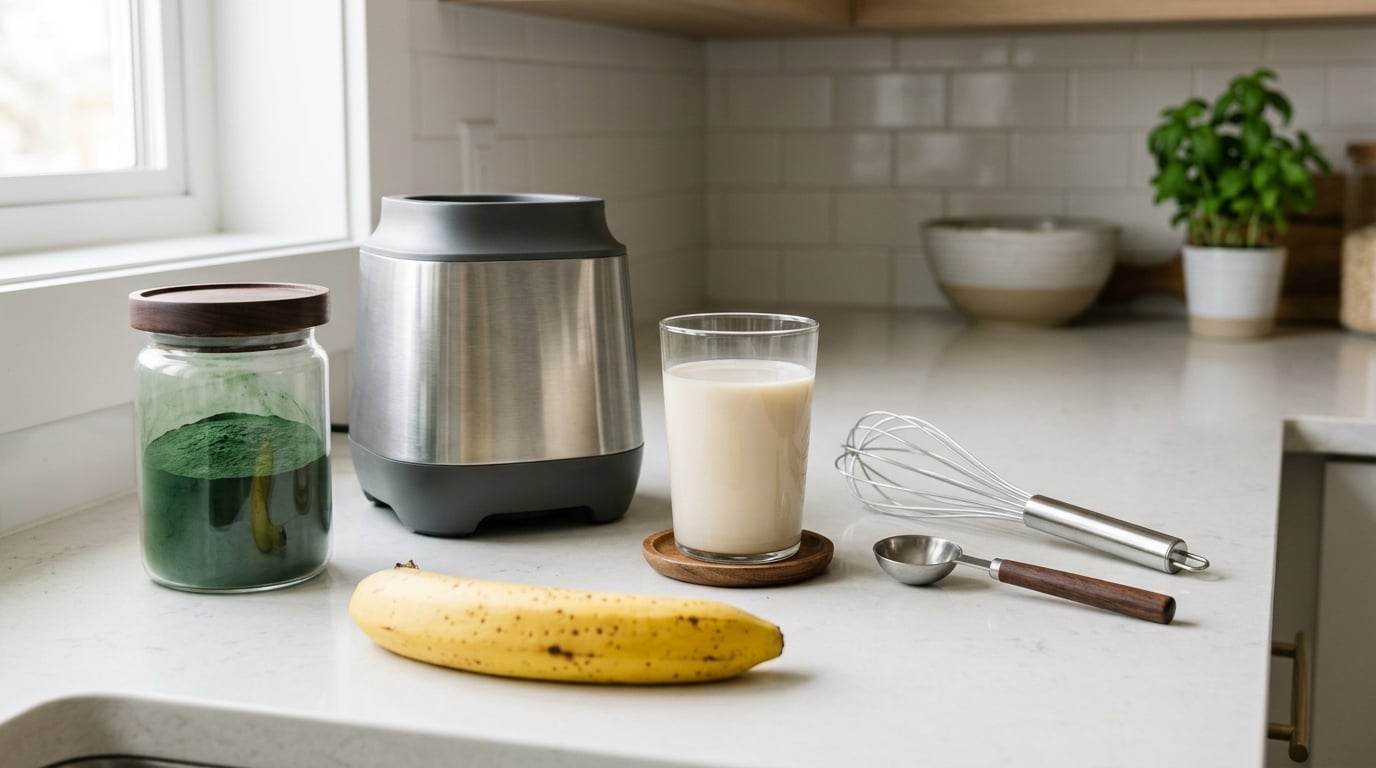
To use spirulina powder without the taste, mix it into something cold, sweet and slightly fatty, then blend rather than stir. A frozen banana and a creamy base will hide almost any dose, and 1 to 2 grams per drink is usually enough that you will not notice it at all.
Spirulina tastes the way it does because of what it is. This blue-green microalgae carries chlorophyll, phycocyanin and a set of volatile sulfur compounds, and those are exactly the notes your tongue picks up as pond water and ocean floor. It is not a sign of a spoiled tub, and no amount of masking powder will make it taste like vanilla.
So the goal shifts. You are not trying to make spirulina pleasant. You are trying to get it into you without a fight, every morning, for as long as it takes to become a habit. That takes two things: a small starting dose and a carrier food that is loud enough to cover it.
Table of Contents
What You Need
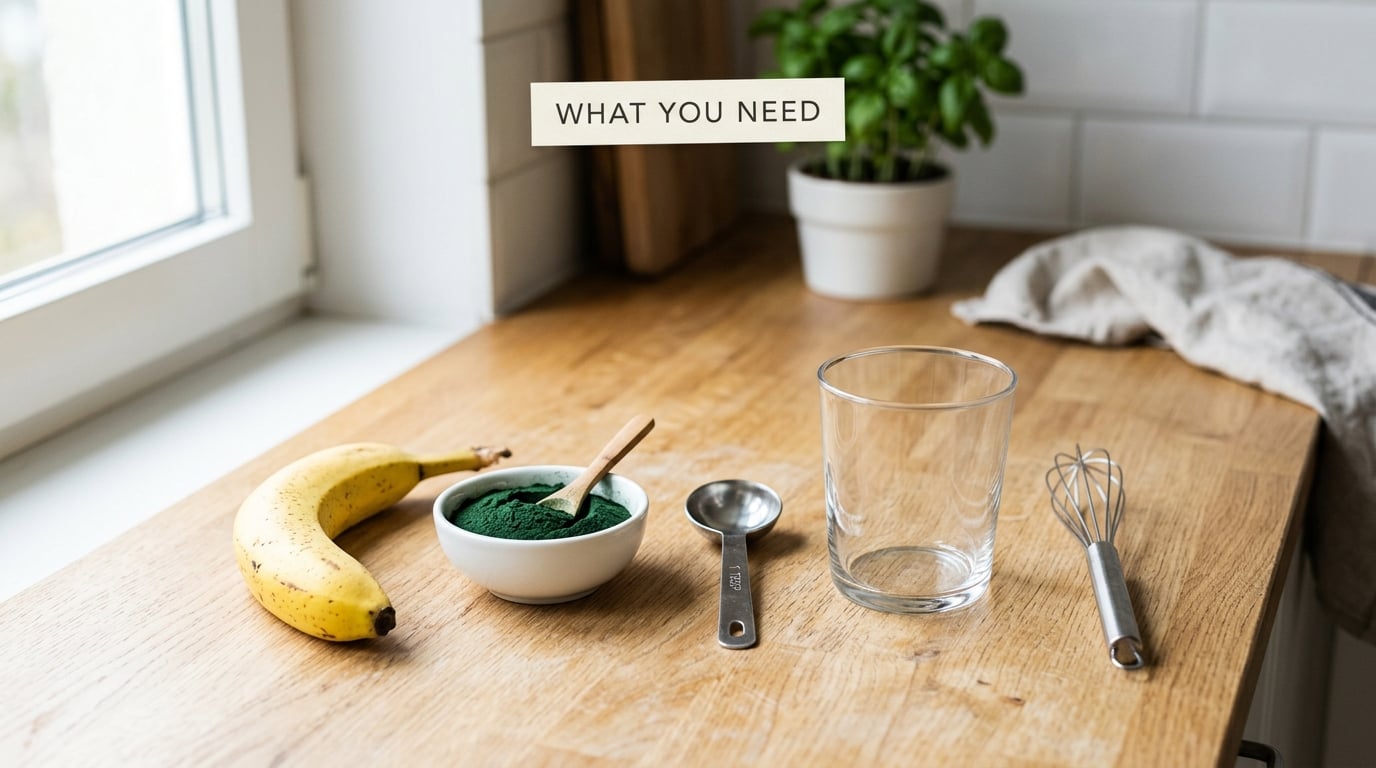
None of this is specialist equipment. You need a small bowl or glass for mixing, a whisk or a fork, and either a blender or an immersion blender if you want the smoothest result. A shaker bottle works too, and it is the fastest option on busy mornings.
For the liquid, keep it cold. Water works, but oat milk, coconut water, yogurt, or any creamy base gives you a lot more room to hide flavour. Have one soft fruit on hand, usually a banana, plus a fat source such as nut butter, tahini, or coconut oil. Citrus is the single most useful extra: a squeeze of lemon or lime does more for an earthy note than a spoonful of sweetener.
Keep a fine sieve nearby if the grit bothers you. That is the one complaint almost nobody can design away, and a strainer solves it faster than any other trick.
Step-by-Step: How to Use Spirulina Powder Without the Taste
Start With a Small Amount
Most people lose on the first attempt because they treat spirulina like matcha and pile on a heaped scoop. Read the label for the serving size it suggests, and start at the low end of it or below. A small pinch, roughly 0.3 to 0.5 grams, is enough to learn the texture without triggering the gag reflex.
Put that amount in a glass with a couple of tablespoons of cold liquid first. Stir or whisk until there are no dry pockets left in the bottom, then top up and taste. You are checking one thing: whether the flavour sits at the back of your tongue or comes back as an aftertaste. If it lingers, halve the dose next time rather than reaching for more sweetener.
An even mix looks like a uniform colour, not a layer of grit sitting underneath. When you tilt the glass and the texture stays consistent, it is dispersed. Once you can do that with a whisk, a full serving stops feeling like a gamble.
Mix It Into a Smoothie
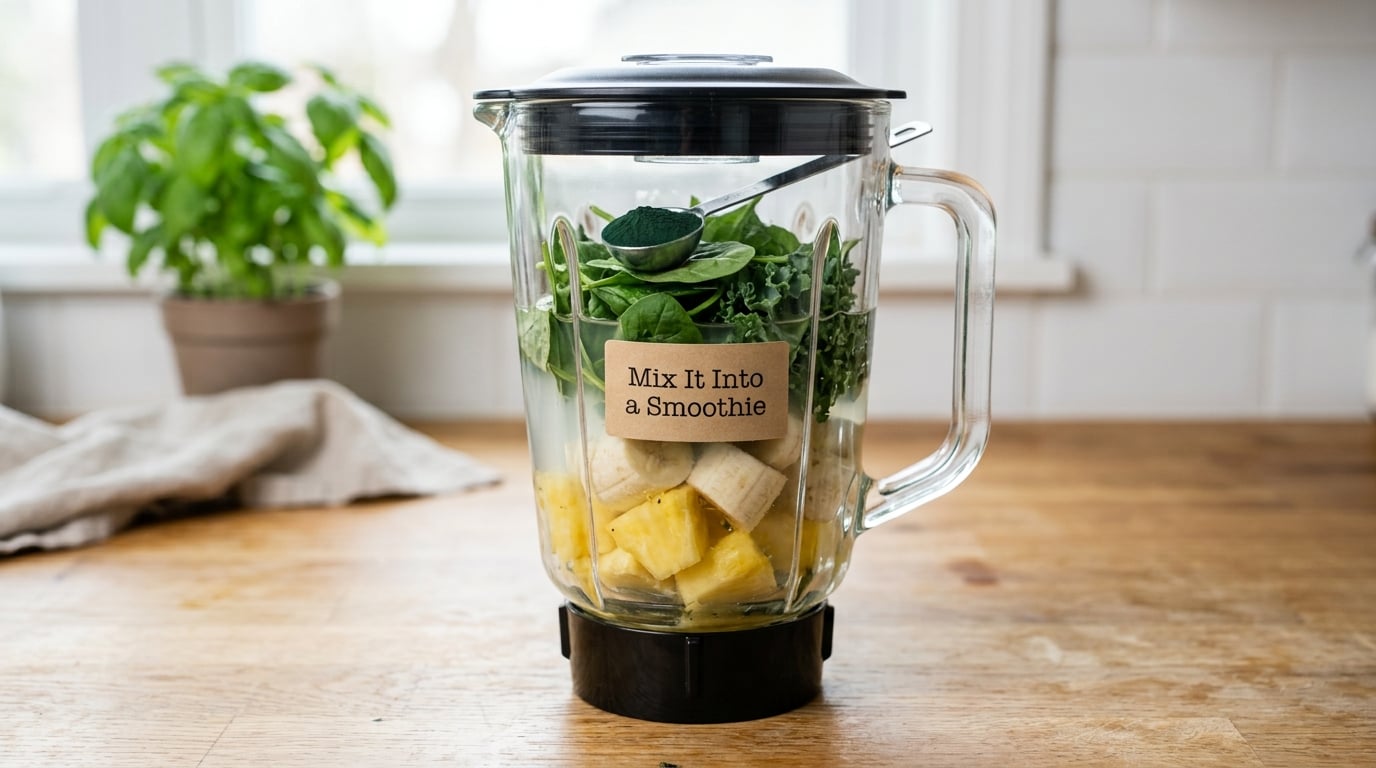
This is the reliable route, and the order matters more than the ingredients. Add your cold liquid first, then the soft fruit, then any greens, then the spirulina last. Powder sitting on top of frozen fruit will clump and stick, while powder dropped into a moving liquid disperses before the blades notice it.
One frozen banana and a cup of coconut water will carry 1 to 2 grams without complaint. Add pineapple or mango for brightness, a spoon of nut butter if you want the bitterness coated rather than diluted, and blend for a full 30 to 60 seconds. Stop when the texture is uniform and there is no audible grit at the bottom of the jar.
Use naturally sweet ingredients, not an aggressive sweetener. Heavy sugar masks the earthy note for a second and then lets it come straight back once your blood sugar settles. A ripe banana, a few dates soaked in warm water, or a splash of vanilla does the same job and holds.
Whisk or Shake It Into a Drink: Spirulina Powder Without the Taste in Water
You do not need a blender. Put the powder in the bottom of the glass, add a splash of cold water, and whisk it into a smooth paste before you add anything else. That paste step is what prevents the dry clumps that form at the bottom of a shaker bottle, and it takes about fifteen seconds.
Then top up with cold liquid and add your masking ingredients: citrus first, fruit second, fat third. Cap the shaker and shake hard for twenty seconds, or whisk briskly until the surface stops looking streaky. Add ice at the end rather than the beginning, so the drink stays cold long enough to drink slowly.
Drink it within about ten minutes. Warm liquid and a slow sip are how the oceanic aftertaste gets a chance to sit on your palate, and cold is the cheapest fix you have.
Pair It With Milder Flavors
Not every pairing works the same way, so pick by what the flavour needs. Banana and mango are the strongest all-round masks because their sweetness and acidity leave nothing for the earthy note to attach to. Pineapple and lemon work the same way with more sharpness, which suits people who find thick smoothies unappealing.
Cacao is the strongest pairing of all because chocolate covers bitterness better than it covers sweetness. Blend 1 to 2 grams of spirulina with a tablespoon of cacao powder, two soft dates, and a splash of milk or oat milk, and you get something that reads as a chocolate shake rather than a green drink. Vanilla, coffee-flavoured cacao, and a pinch of cinnamon push it further without adding sugar.
Fat is the quiet helper. A teaspoon of almond or peanut butter, a tablespoon of tahini, or a small spoon of coconut oil will coat the compounds responsible for the aftertaste. This is also the route that turns the drink into something with staying power, so it works well in a post-workout shake where you want more than water.
Vanilla oat milk is a solid everyday base on its own. It is creamy enough to soften the texture, mild enough not to fight the powder, and it pairs with every fruit on this list without needing extra sweetener.
Use It in Food Instead of Plain Water
Some people simply do not want another drink, and that is fine. Spirulina behaves like a dried herb in food, and the strongest carriers are the ones with fat, sweetness or salt already in them.
- Overnight oats: stir 0.5 to 1 gram into the oats and liquid while they are still wet, then refrigerate overnight. The liquid does the dispersing for you.
- Chia pudding: mix into the chia and milk base before it sets. Same logic, same result, no grit.
- Smoothie bowls: blend 1 gram with a little banana and yogurt, then pour over fruit and toppings. The topping covers the colour too.
- Pancakes and muffins: add to the dry mix. Cooking takes care of the raw taste, and the colour disappears into the crumb.
- Energy balls: blend 1 to 2 grams with dates, nut butter and oats, roll and chill. This is the version people make when they are trying to eat something on the way out the door.
- Savoury carriers: hummus, pesto, tahini dressings and pasta sauce all handle 1 to 2 grams well. The salt and fat carry it, and nobody expects a green tint in a dip.
The savoury route matters for a reason worth naming. A lot of people who bail on spirulina do not object to the powder, they object to another sweet green drink, and that is a solvable problem rather than a character flaw.
Common Mistakes
Adding the full dose on the first try. This is the most common failure by a wide margin, and the fix is simple: start at 0.3 to 0.5 grams, get used to the texture, and double it after a few days.
Stirring powder straight into a full glass of liquid. It clumps, sticks to the sides, and leaves a gritty layer at the bottom that reads as a taste problem. Always make a paste with a small amount of cold liquid first.
Mixing into something acidic and thin. Lemon juice on its own, or a splash of vinegar in water, will not mask anything. Acid helps inside a full drink with fat and sweetness around it, and it fails on its own.
Pouring the powder into hot liquid. Heat releases more of the aromatic compounds, which is the opposite of what you are after. Cold liquid and ice are your two best tools.
Reaching for a strong sweetener. Sweetness on its own does not touch an earthy, mineral note, and you usually end up with a drink that is both too sweet and still green. Fruit plus fat works better and lasts longer.
Skipping the label. Serving sizes and suggested intakes differ between products, and the gram amounts above are starting points rather than medical guidance. Read what your tub says before you adjust anything.
One more check worth doing before you blame your own taste buds. If a fresh serving tastes noticeably harsher than it did a month ago, or the powder has a damp, musty smell and a colour that has gone flat and dark, the batch is the problem. A fresh spirulina powder is a fairly vivid blue-green and smells like dried greens, not like a forgotten container. Contact the manufacturer if it has been stored warm, damp, or past its date.
Frequently Asked Questions
Can I mix spirulina powder in plain water?
Yes, but water is the hardest base to work with because it has nothing to soften the earthy note. Cold water works best, and only if you make a paste first, whisk it smooth, then add citrus, a soft fruit, and a fat such as nut butter. Plain water with the powder stirred straight in is the version most people describe as pond water. Use a creamy base like oat milk or coconut water when you can.
Why does spirulina taste the way it does?
Spirulina is a blue-green microalgae, and the flavour comes from compounds it naturally contains: chlorophyll, the pigment phycocyanin, and volatile sulfur compounds. Those volatile notes are what register as ocean, pond, or earthy flavour, and phycocyanin adds a bitter back-note. The taste is a property of a fresh product rather than a sign that something has gone off.
How do I fix the gritty texture in spirulina?
Grit comes from particles that never got dispersed, so the fix is mechanical rather than a flavour trick. Make a paste with a small amount of cold liquid, whisk until there are no dry pockets, then dilute. A high-speed blender for 30 to 60 seconds removes almost all of it. If some grit remains, pour the drink through a fine sieve, or freeze the mixed drink in ice cube trays and blend it again later.
How much spirulina should I take per day?
Follow the serving size printed on your product and use a registered dietitian for advice specific to you. For context, most people start at 0.3 to 0.5 grams to get used to the taste, and 1 to 2 grams per smoothie is where most say they cannot detect it. More is not better here, and higher intakes are not something to work toward on your own without professional guidance.
How should I store spirulina powder at home?
Keep it sealed, cool, and dry, away from light and moisture, and use it within the timeframe the manufacturer prints. Heat, humidity, and air exposure are what degrade the pigments and the aroma compounds, which is also why a tub that has been left on a warm counter can taste worse than a fresh one. Do not scoop with a wet spoon, and keep the original container so you can still check the batch and the date.
Who should talk to a healthcare professional before using spirulina?
Speak with your doctor, pharmacist, or registered dietitian before starting if you are pregnant or breastfeeding, managing a condition that affects your immune system, taking blood thinners or thyroid medication, or on a restricted diet. Spirulina is a supplement rather than a regulated food, and products vary in purity. This article is general information about preparing it, not personal medical advice, and it is not a substitute for a consultation.
Conclusion
Start here tomorrow morning: put 0.3 to 0.5 grams in a glass, whisk it into a small splash of cold liquid until there are no lumps, then blend it with one frozen banana and a cup of coconut or oat milk. Squeeze of lemon, a spoonful of nut butter, and 30 seconds in the blender is the whole method.
Hold that dose for a few days before you go higher, follow the serving guidance on your own product, and keep the powder cold and dry between uses. If you have a health condition, take regular medication, or are pregnant, ask your doctor or a registered dietitian before making spirulina part of your routine. Updated for 2026.