
How to take chlorella for the first time comes down to four things: read the label, use the serving the manufacturer printed, take it with food, and give your digestion a week or two before you decide whether to build up. Start low rather than with a double scoop, keep a one-line note on how you feel each day, and stop if anything sharp happens.
Chlorella is a freshwater green microalga sold as powder, tablets and capsules. It supplies chlorophyll, protein, some B vitamins, iron and trace minerals, and the products on the shelf differ more than most people expect. That is why the label beats any general advice you read online, including this guide.
The most common beginner mistake is starting with a serving meant for someone who has been taking it for months. Your gut is being handed something it has never processed. A lower first serving, taken with a meal, is what lets you adapt instead of quitting on day four.
This is general information, not medical advice. If you take prescription medicine, are pregnant or breastfeeding, or have a diagnosed condition, talk to your doctor, pharmacist or registered dietitian before starting. Nothing here replaces their guidance for your situation.
Table of Contents
What You Need
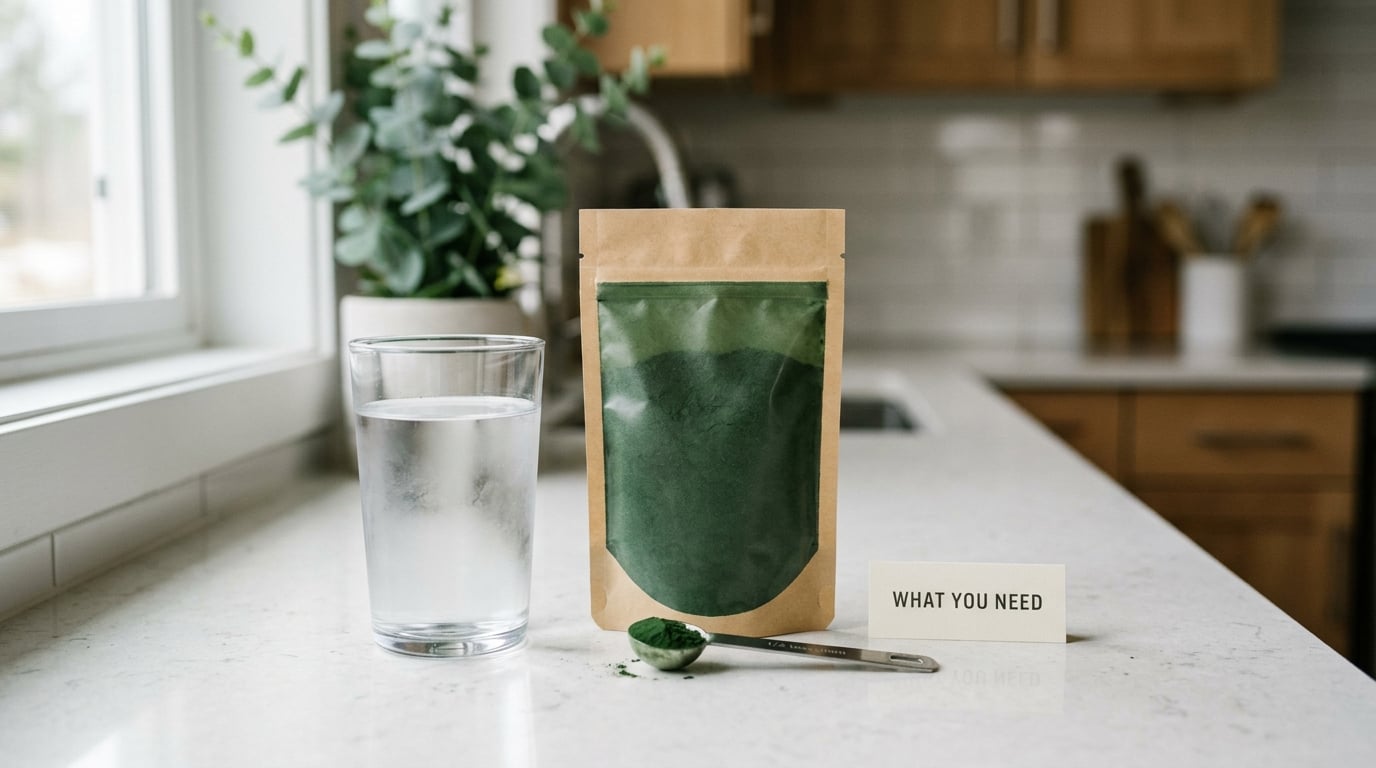
Not much, honestly. The list is short because the hard part is judgement, not equipment.
- A product with a readable Supplement Facts panel. Find the serving size, the number of servings per container, the strain name and the warning line before you open anything.
- A glass, a shaker or a blender cup if you bought powder, and a full glass of water if you bought tablets or capsules.
- A meal in your day. First servings go with food, not into an empty stomach.
- A note in your phone or a scrap of paper. One line a day: time, what you ate with it, and any digestive change.
- Ten unhurried days. Long enough to get past the first-week noise before you decide whether chlorella suits you.
One general safety check comes before all of that. Chlorella is a supplement, not a staple food, and three facts drive most of the caution: it is a meaningful source of vitamin K, some products carry iodine, and algae grown in water can pick up trace metals if the manufacturer does not test for them. If you take warfarin or another vitamin K-sensitive blood thinner, manage a thyroid condition, have an autoimmune condition, have a known mould allergy, are pregnant or breastfeeding, or have a diagnosed health condition, ask a clinician first.
Step-by-Step: How to Take Chlorella for the First Time
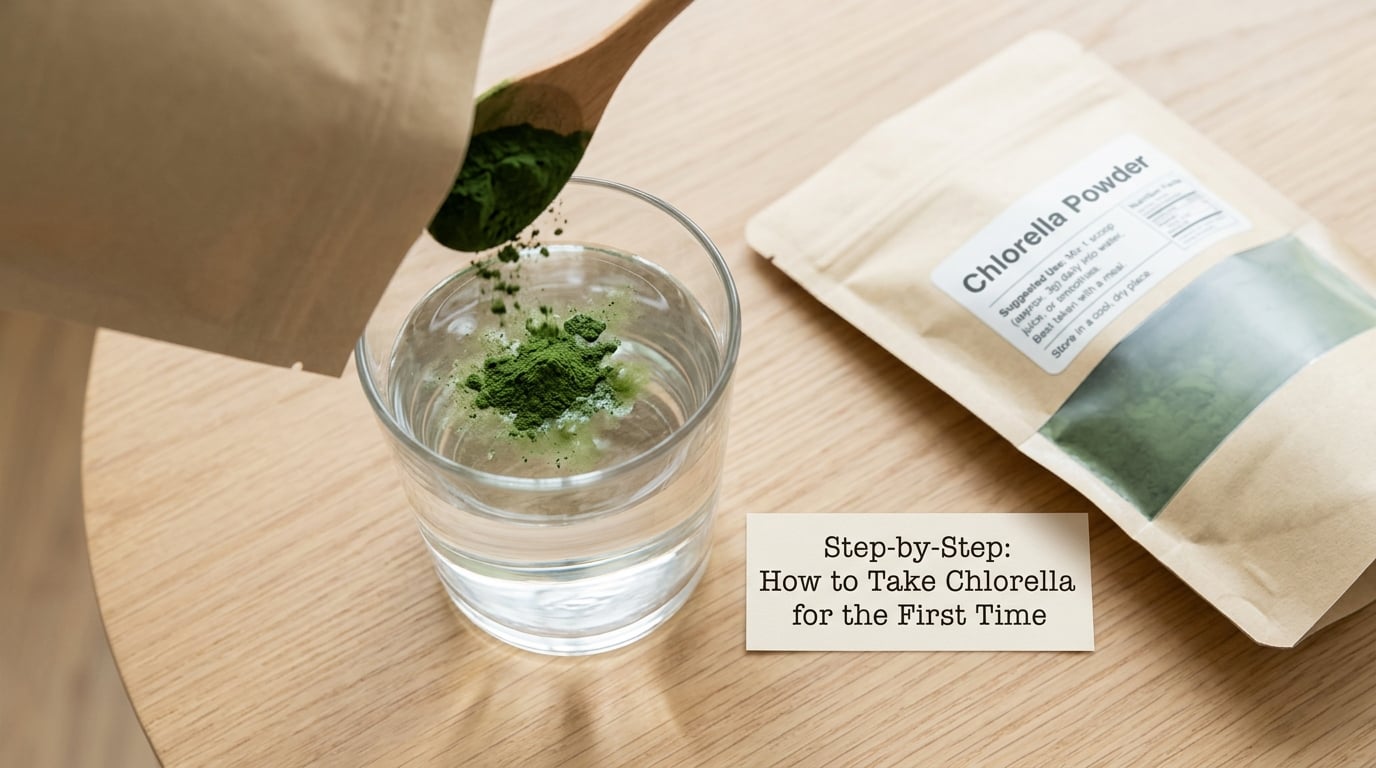
Five steps, in this order. The order matters more than speed, because each one saves you from a mistake in the next.
Step 1: Read the Label Before You Try It
Turn the container over and identify the format first: powder, tablets, capsules, or a blend. Serving sizes are not interchangeable between formats, and a teaspoon of powder is not a tablet.
Then look for four specifics. The strain is usually Chlorella vulgaris or Chlorella pyrenoidosa. The cell wall should say broken, cracked or crushed, because humans cannot digest the cellulose wall of intact cells, so a product that has not been broken releases less of what is inside it. Next, check the ingredient list for fillers, added herbs or other algae. Finally, look for a statement about third-party testing, which is where the heavy metal question is answered or ignored.
Check the allergen line, the warnings, the best-by date, and whether the product lists iodine. Photographed, that label becomes your record: if you feel odd in three weeks, you can see exactly what you took instead of trying to remember.
Step 2: Choose a Simple Way to Prepare It
For powder, mix one labeled serving into water, juice or a smoothie. Use cold or room temperature liquid rather than boiling water, and blend with fruit or a little juice if the taste is a problem. Taste and texture are real reasons people quit in week one, not silly ones.
For tablets, swallow them whole with a full glass of water alongside food. Do not crush or split them unless the label says you can.
For capsules, take them with a full glass of water. Opening one into a drink works, since it is just powder, but it settles and stains, so it is rarely worth the washing up.
Choose the format you will actually repeat. A powder you dislike on day one is a powder you abandon by day five, and then the product was never the problem.
Step 3: Start with the Product’s Suggested Serving
Use the serving printed on your own label, once a day, with a meal. That is the whole instruction for week one. It is deliberately not a dose recommendation for you: chlorella labels differ, potency differs, and your own use depends on your health and the product in your hand.
When the panel lists a serving in grams, note it. That single number is the one to hold steady for the first week, and it is the number you would compare against anything else you read later.
| When | What to do | What you might notice |
|---|---|---|
| Days 1 to 2 | One labeled serving, once, with a meal | Not much, or a slightly greener stool the next morning |
| Days 3 to 4 | Same serving, same time of day | Gas, mild bloating or looser bowels |
| Days 5 to 7 | Same serving, keep the daily note going | Digestion usually settling back toward your normal |
| Week 2 onward | Continue as directed on the label; only consider a change with a pharmacist or dietitian | Slow, gradual changes if they come at all |
Timing is a preference rather than a rule. Many people take it with breakfast and get on with the day. Others prefer it with dinner. Some long-time users take it on an empty stomach, but that tolerance usually arrives after weeks rather than days, so food is the sensible first-week default.
Splitting your labeled serving into two smaller servings is a reasonable later move once a single serving feels easy. Adding a second serving in week one because day one felt fine is not. The goal right now is uneventful, not impressive.
Step 4: Take It Consistently and Keep a Simple Record
Anchor it to something you already do, such as breakfast or a post-workout drink. Same time, same meal, same glass. Most people who quit chlorella quit because the routine never formed, not because of an effect.
Write down the brand, the format and the start date. Then one line a day: time, the meal you took it with, and anything you noticed. Green stool, flatulence, mild cramping and looser bowels are the notes you are most likely to see early on. Forum users describe exactly this, and the most common piece of advice passed around is to start on a lower dose and build up, because bodies adapt to it over time.
Keep that record honest rather than detailed. If you can answer one question four weeks from now, was anything different, you will know whether to keep going. If you skip the notes, you will not remember, and you will probably decide the supplement failed when what actually happened was that you never gave it a fair run.
On timing of results: digestive changes, if they come, show up in days. Anything more gradual, such as energy or bowel regularity, takes weeks of consistent use, and many of the specific health claims people attach to chlorella have no published studies behind them at all. Judge it over four to eight weeks, not over four days.
Step 5: Know When to Pause and Ask a Professional
Stop taking it and seek medical advice if you have trouble breathing, swelling of the face, lips, tongue or throat, a rash that spreads or does not settle, repeated vomiting, severe or persistent abdominal pain, or symptoms that get worse instead of easing over a few days.
Pause and ask a clinician before continuing if you are pregnant or breastfeeding, take warfarin or another blood thinner, manage a thyroid condition or thyroid medication, have an autoimmune condition, have a known mould or yeast allergy, or have surgery coming up in the next few weeks.
Two honest framing notes. Chlorella is a food supplement, not a treatment for any disease, and anyone promising otherwise is selling something. And a reaction on day one does not mean you are overreacting, which is why the list above is written plainly rather than softened.
Common Mistakes
Almost every rough first-week story I hear traces back to one of these.
Taking more than the label says. Bigger is not better on day one, and it is the fastest route to abandoning the supplement. Fix: use the printed serving for a full week before changing anything.
Emptying a sachet into an oversized drink. A concentrated serving in half a litre of smoothie is a much bigger introduction than the same serving in a small glass of juice, and any reaction is harder to read. Fix: small volume, cold liquid, taken with food.
Confusing chlorella with spirulina. Both are sold as green powders and capsules, so the packets look identical in a drawer. Chlorella is a freshwater green alga with a cellulose cell wall that needs to be broken for release; spirulina, Arthrospira platensis, is a blue-green bacterium without that wall. A capsule of one is not a serving of the other, and the suggested amounts on the two labels are not meant to match.
Ignoring the allergy and iodine lines. The warning paragraph is short and easy to skip. It matters most if you have a mould or yeast allergy, because of cross-reactivity, or if you manage a thyroid condition, because iodine content varies between products. Fix: read it before the first scoop, not after a reaction.
Not checking the ingredient list. Blended products can include other algae, herbs or fillers that you did not intend to take, and a capsule count then stops being a dose. Fix: read the full list, not just the front of the tub.
Pushing through, or quitting early. These are opposite errors with the same result. Mild gas and a greener stool are worth riding out; breathing trouble or a spreading rash is not, and no benefit is worth it.
| First-week reaction | What it usually is | What to do |
|---|---|---|
| Greener, softer stool | Chlorophyll passing through, common | Keep the serving the same, keep the note |
| Gas or mild bloating | Fermentation of an unfamiliar whole-cell food | Take it with a meal, stay on the low serving |
| Loose bowels or cramping | Common early, usually settles | Hold the dose steady for several days; a pharmacist can advise |
| Persistent nausea, vomiting, rash, swelling, breathing trouble | Not a normal settling-in reaction | Stop and get medical advice |
One more worth naming: doubling up because a serving got missed. Missing one is unremarkable. Doubling the next one is the fastest way to a bad week.
Frequently Asked Questions
What is the most effective way to take chlorella?
For a first-time user, the most effective method is the one you will actually repeat: the serving printed on your label, taken once a day with a meal, at roughly the same time each day. Consistency beats a larger amount. Hold that for one to two weeks before considering any change, and ask a pharmacist or doctor first if you take any medication.
Should I take chlorella with food or on an empty stomach?
With food, especially while you are starting. Chlorella is a concentrated whole-cell food, and eating something alongside it is the gentler introduction for a digestion that has never met it. Some long-time users take it on an empty stomach, but that tolerance usually arrives after weeks rather than days. If your own label states a time, follow the label.
Why does chlorella make my stool green?
Green stool is the most reported first-week reaction. It comes from chlorophyll passing through your gut faster than it is broken down, so a brighter, greener and sometimes looser stool in the first few days is usually the algae itself rather than anything harmful. Stop and seek advice if it comes with severe pain, vomiting or a fever.
How long does it take for chlorella to start working?
Digestive changes, if they happen at all, usually show up within the first week. Anything beyond digestion tends to take several weeks of consistent use, and many specific health claims associated with chlorella have no published studies behind them. Give it four to eight weeks on the label serving before deciding whether it has done anything for you, and keep your daily note so the decision is based on something.
What not to mix with chlorella?
Two practical rules. Do not mix it into very hot liquids, and do not take it in the same moment as a vitamin K supplement or a warfarin dose without asking your prescriber. Leave a gap between chlorella and your other supplements so you can tell which one caused a reaction. A cold drink and a reasonable meal are the simplest setup for a first-timer.
Can I take chlorella and magnesium together?
Most people take both without trouble, including in the same day, but not necessarily in the same minute. Separating them by a couple of hours makes it far easier to work out which supplement is responsible if you react. If you take magnesium in the evening to help you sleep, take chlorella with an earlier meal and keep the two apart.
Start Slowly and Follow the Label
If you do one thing, read the panel before you open the container and use the serving it prints, once a day, with a meal. Keep a one-line daily note so your first impressions are written down rather than remembered. If a warning sign from step 5 appears, or you have a health condition or take medication, pause and talk to a doctor, pharmacist or registered dietitian before continuing. Updated for 2026.