
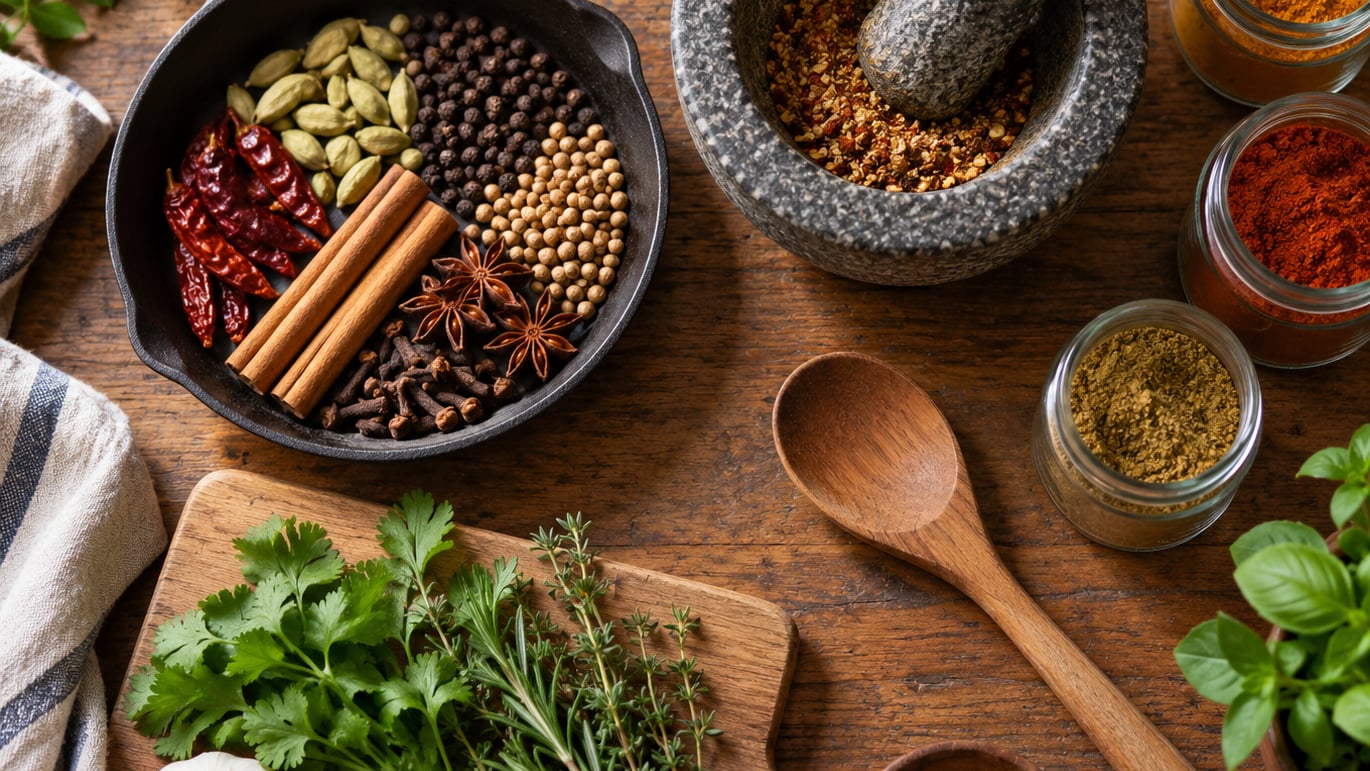
Cooking with herbs and spices for beginners comes down to three moves: toast whole spices in a dry pan to release their oils, bloom ground spices in hot fat for 30 to 60 seconds, and add fresh herbs at the very end so they stay bright. That is genuinely most of the technique. The rest is dosage and nerve.
I burned my first batch of cumin about fifteen years ago by leaving the pan on high while I answered an email. The kitchen smelled like a tire shop for a week. That single mistake is why this guide leans hard on heat control and small quantities, because beginners almost never fail from lack of seasoning. They fail from too much of the wrong thing at once.
Most people who say their food tastes flat are actually cooking with dead spices. A jar of ground cinnamon that has sat open in a warm cupboard for two years has nothing left to give. Freshness checks, timing and balance fix more home cooking problems than any gadget ever did.
Table of Contents
What You Need
Herbs are the leaves of plants. Spices are the dried seeds, berries, roots, bark and flower buds of plants. Parsley, basil, thyme, rosemary, oregano, mint and cilantro are herbs. Cumin, coriander, cinnamon, cloves, nutmeg, black pepper, paprika and turmeric are spices. Both season food; the difference is which part of the plant they come from and how they were preserved.
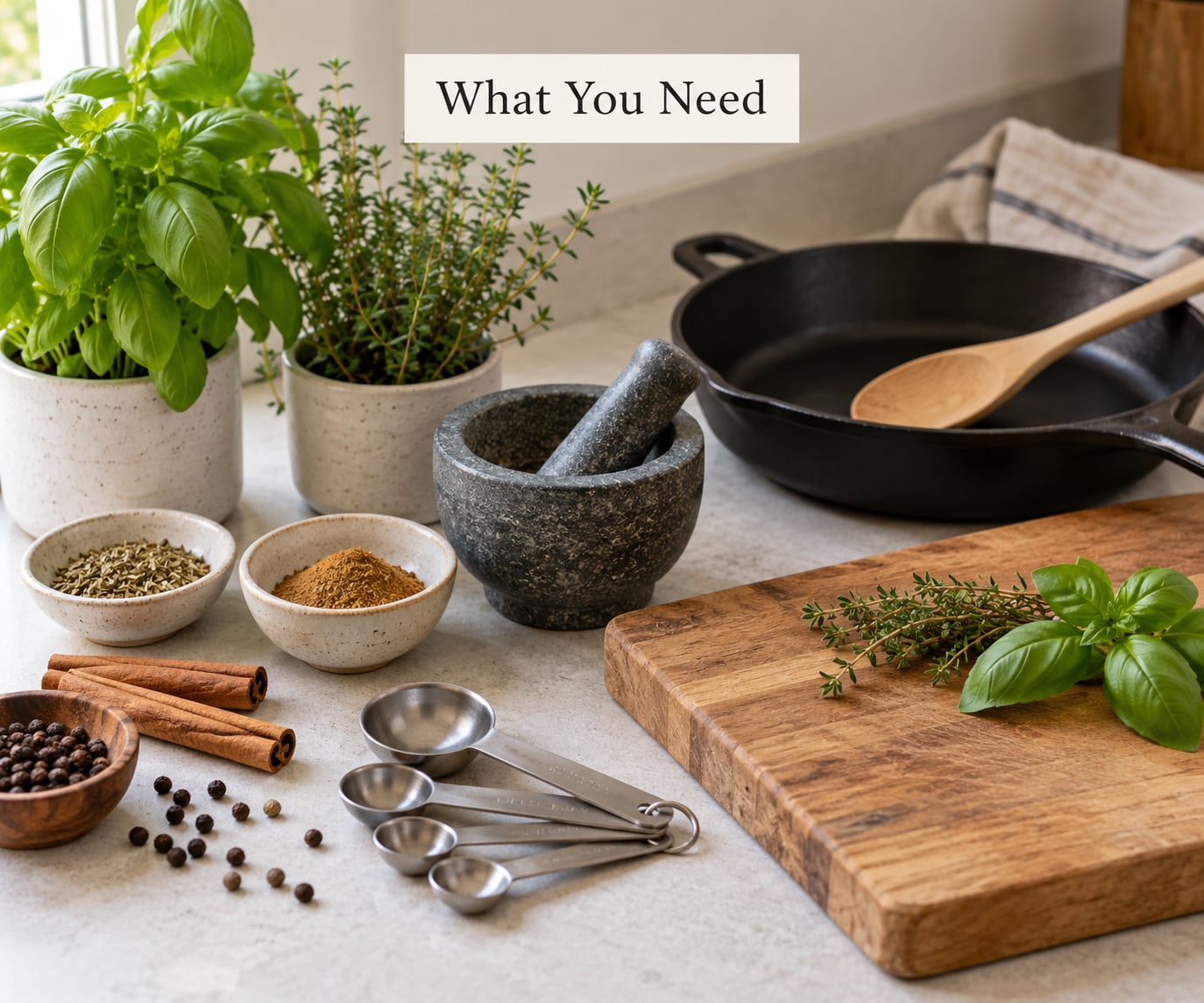
The short version of gear: you need a skillet, a wooden spoon, a jar of neutral oil, and about a dozen spices. Everything else is optional.
- Five spices to start: black pepper, paprika, cumin, garlic powder and cinnamon. Garlic powder, not garlic salt, so you control the salt separately.
- Five dried herbs: oregano, thyme, basil, rosemary and sage. These cover most Mediterranean and American cooking without a crowded rack.
- Three fresh herbs: parsley, green onions and one seasonal bunch. Buy what you will actually finish. A bag of cilantro you never cook with is just wilted money.
- Tools: measuring spoons for consistent doses, a small mortar and pestle or a spice grinder for whole spices, and a dry skillet for toasting.
- Something acidic: lemon juice, vinegar or a squeeze of lime. Acid does more for a flat dish than another spoonful of salt.
A note on buying: buy small. Jars lose aroma the moment you open them, and a big box of twenty random spices mostly produces a cabinet of grey dust. I keep about fifteen things in reach and refill what I actually use. If the only reliably sunny spot in your kitchen is a windowsill, our guide to growing herbs indoors year round keeps a steady supply coming without a weekly store run.
Step-by-Step
How to Toast Whole Spices Before Grinding
Toasting wakes up the aromatic oils trapped inside whole cumin seeds, coriander, cardamom or peppercorns. You will smell it before you see any change, so trust your nose rather than the clock.
- Put the spices in a dry skillet over medium-low heat. No oil at this stage.
- Stir or shake the pan every 20 to 30 seconds so nothing scorches on one side.
- Look for a deeper color and a new aroma within 1 to 3 minutes. Cumin and coriander turn a shade darker. Peppercorns start to smell like a bakery.
- If you smell anything acrid or see smoke, pull the pan off the heat immediately. Bitter is burned spice and it cannot be fixed.
- Tip the spices onto a cool plate and let them sit for 5 to 10 minutes. Hot spices grind into a paste that clogs a grinder.
- Grind only what you need for this meal. The aroma fades within days of grinding, which is the entire reason to keep the whole jar.
Small batches, every time. A single teaspoon of toasted cumin head cumin in a hot sauce will not be fixed by the tomato sauce, the sugar and the half cup of stock you add afterward.
How to Add Herbs and Spices Without Overpowering Food
The rule that fixes most overspiced food is simple: start with about half of what you think you need, taste, then add more. A useful baseline is roughly 1 teaspoon of ground spice per quart of liquid or per pound of food. A pinch is about 1/16 teaspoon, so if you are unsure, use a pinch and taste again.
Which form you use matters as much as how much. For leafy herbs, a common conversion is 1/4 teaspoon dried to 1 tablespoon fresh, and use dried first if a recipe calls for fresh, since dried concentrates the flavor.
- Robust herbs and spices: thyme, rosemary, bay leaf, oregano, sage, cinnamon, cloves, cumin, black pepper. These go in early and cook for a long time.
- Delicate herbs: basil, parsley, cilantro, mint, dill, tarragon. Add them off heat or in the last minute of cooking.
- Ground spices and blends: chili powder, curry powder, five-spice. Most home blends already contain several ingredients, so treat them as a complete seasoning rather than adding them alongside every spice in the blend.
In practice: cumin and smoked paprika on roasted vegetables at the start of the pan. Garlic powder and black pepper at the beginning of a soup. Fresh parsley and a squeeze of lemon over beans at the end. Ground ginger and turmeric bloomed in oil for the first 30 seconds of a stir-fry, then everything else goes in over high heat. Poultry and ground meat are cooked to 165F / 74C, and whole cuts and fish to 145F / 63C, so keep the herb and spice work at the front of the process where there is time.
How to Balance Bitter, Sweet, Sour, Salty, and Spicy Flavors
An unbalanced dish is fixable as long as you identify which flavor is shouting and add the opposite one in small amounts.
- Too hot: add dairy, butter, a spoonful of honey or maple syrup, or a squeeze of lemon. Fat and sugar both soften capsaicin.
- Too sour: add a little sugar or honey, and check the salt next, since sour and unsalted read as the same problem.
- Bitter or burnt: salt and acid, not more sugar. Burnt spices need the pan wiped and the dish rebuilt from the aromatics.
- Flat: salt first, then acid, then toast or bloom what is already in the pan. Most flat food needs one of those three, not more ingredients.
- Muddy: too many flavors competing at equal volume. Fix by pushing one ingredient forward and cutting the others back.
Taste at three points: before seasoning, after the aromatics bloom, and just before you serve. A spoon dipped in the pan during a long braise tells you more than tasting the finished sauce an hour later.
How to Store Herbs and Spices for Maximum Flavor
Light, heat, air and moisture are what kill a spice jar. Keep every jar in a closed cupboard away from the stove, not in a decorative open rack over the cooktop.
- Fresh herbs: about a week in the fridge. Stand the stems in a glass of water, loosely covered with a bag, or wrap the leaves in a damp paper towel in a bag in the crisper.
- Dried herbs and ground spices: roughly 6 to 12 months of good aroma in an airtight jar. Label the jar with the month and year you opened it.
- Whole spices: commonly 2 to 3 years, and much longer in a cool dark cupboard. Grind small amounts as you cook.
- Spice racks by the stove: the single most common storage mistake, because heat and steam from cooking accelerate the loss of aroma.
The freshness test is simple and it works: open the jar and smell it. No aroma means no flavor, and no amount of cooking will bring it back. If a bottle of paprika smells like dusty cardboard, toss it and replace it.
How to Cook with Herbs and Spices for Beginners
Here is the repeatable formula I use on weeknight meals, whether the main is chicken, chickpeas or a head of cauliflower.
- Pick one main. A protein or a plant food that already has a flavor: chicken thighs, canned beans, mushrooms, sweet potato.
- Build the aromatic base. Onion, garlic, celery or carrot, cooked 5 to 8 minutes in oil until soft and sweet.
- Choose two or three seasonings. One earthy (cumin, coriander, turmeric), one warm (paprika, cinnamon, mustard seed), one sharp (black pepper, chile, citrus zest). Three is plenty for a home plate.
- Toast or bloom them. Whole spices dry-toasted first; ground spices stirred into the hot oil for 30 to 60 seconds until fragrant.
- Add the main and cook. Season with salt in layers, tasting after each one.
- Finish with fresh herbs and acid. Chopped parsley or cilantro and a squeeze of lemon or a spoon of vinegar, off the heat.
Once that sequence is automatic, cooking stops being guesswork. The same six moves work for a sheet-pan dinner, a pot of soup and a plate of rice. Beans are the easiest place to practice, and our walkthrough on cooking dried beans without soaking leaves the seasoning window wide open for step three.
Common Mistakes
These are the errors I see most often, and each one has a straight fix.
- Using too much spice at the first addition. Start at half the amount you think, taste, then add more. Ground spice added early cannot be removed later.
- Adding delicate herbs too soon. Basil, parsley and cilantro go off heat. Cook them for minutes and they turn black and bitter.
- Skipping the toast or bloom step. Thirty seconds in hot oil costs nothing and makes a night-and-day difference. This is the highest-value habit on the whole page.
- Storing spices in the open or near the stove. Move every jar into a closed cupboard and replace anything that has no aroma.
- Treating a blend as one spice. Chili powder already contains cumin and other flavors. Adding those again on top is how a dish turns muddy.
- Buying a 20-jar set at once. Pick twelve or fifteen jars, and only the ones you can name a use for. Buy small and refill what runs out.
- Salting at the end only. Season in layers during cooking. Salt applied at the end sits on the surface instead of seasoning the food.
One habit worth building: keep a small notebook or a note on your phone listing the spices you own and the date you opened them. Two minutes of bookkeeping kills the dead-jar problem permanently.
Frequently Asked Questions
How much spice should I use in a dish?
Start with roughly 1 teaspoon of ground spice per quart of liquid or per pound of food, then taste before adding more. Whole spices like cinnamon sticks or peppercorns need less because their flavor releases slowly. A pinch is about 1/16 teaspoon, so start there when you are unsure, and remember that dried spices concentrate over a long cook.
Are fresh herbs always better than dried ones?
No. Fresh herbs are brighter and softer, so they suit salads, finishing and fast cooking. Dried herbs are more concentrated and hold up to long cooking, which makes them better for soups, stews and roasts. If a recipe calls for fresh and you only have dried, use about one third the volume. If it calls for dried and you have fresh, use three times as much.
How long should I bloom spices in oil?
Give ground spices 30 to 60 seconds in medium-heat oil, stirring constantly, until the kitchen smells fragrant and the spices darken slightly. Any longer and delicate spices such as paprika or cumin can scorch and turn bitter. Blooming works best as the first step of a dish, before any onion or liquid goes into the pan.
Which spices need blooming before you add other ingredients?
Ground and powdered spices benefit most from blooming because their aroma needs fat and heat to release: cumin, coriander, turmeric, paprika, chili powder, garlic powder, ginger and curry powder. Whole spices should be dry-toasted first, then bloomed after crushing. Salty or delicate additions like saffron and vanilla are better stirred in near the end of cooking.
What can I use if I am out of a spice?
Common swaps: cumin stands in for coriander and a little chili; paprika covers a smoky note that plain pepper does not; dried oregano and dried basil both hold up in slow-cooked dishes, while fresh basil cannot. Allspice replaces a pinch of cinnamon plus cloves plus nutmeg. If nothing similar exists, leave it out and lean on salt and acid rather than substituting something unrelated.
How do I know when herbs and spices have gone bad?
Use your nose. Open the jar and smell it directly. A fresh spice is aromatic and slightly sharp; a stale one smells dusty, musty or faintly like an empty cardboard box. Ground spices hold good aroma for roughly 6 to 12 months once opened, whole spices 2 to 3 years, and fresh herbs about a week in the fridge. Label jars with the month you opened them.
If you only change one thing this week, bloom your ground spices in hot oil for 30 seconds before anything else hits the pan, and taste your food before you reach for the salt. Those two habits fix more flat dinners than any list of ingredients will.