
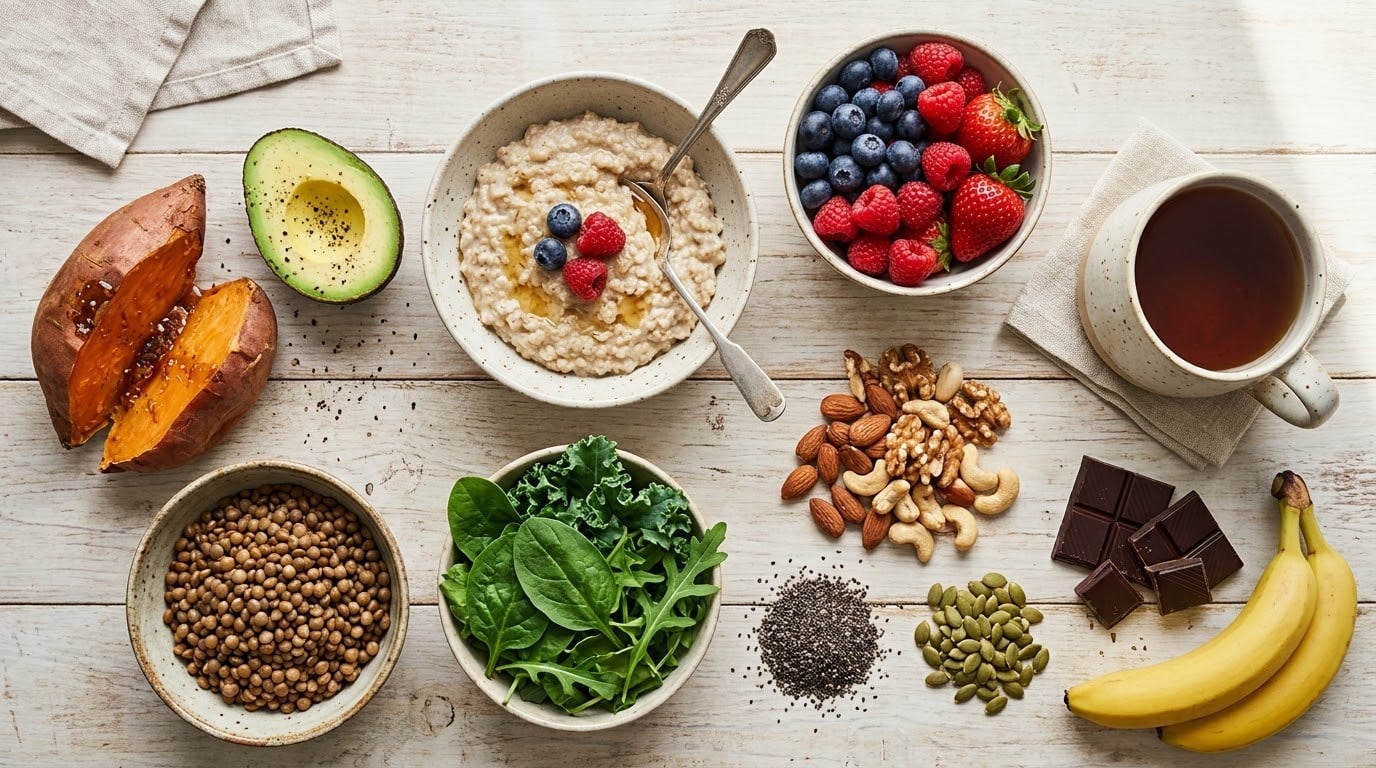
No single food cures stress, and anyone who promises one is overselling. What food can do is supply the raw materials your body runs short on during a demanding week: magnesium, omega-3 fats, B vitamins, fiber, and live microbes. If you are wondering which foods that help lower stress naturally belong in your kitchen, the short answer is fatty fish, leafy greens, whole grains, beans, nuts, seeds, plain yogurt, bananas, sweet potatoes, avocado, herbal tea, and a small piece of dark chocolate.
Stress itself is the reason this list matters. When your body reads a deadline as a threat, cortisol rises, digestion slows, and appetite shifts toward whatever is fastest and sweetest. A diet built from nutrient-dense whole foods gives you a steadier baseline to handle that response. Think of these 12 as options to rotate, not a prescription. If stress is persistent, severe, or affecting your sleep and work, talk to a doctor or a registered dietitian rather than leaning on food alone.
I keep a mental note of which ones actually survive a busy week. Oats, bananas, yogurt, and dark chocolate make the cut every time because they need no planning. Sardines and kefir are worth the extra step. Let me show you how each one fits.
Table of Contents
- Foods That Help Lower Stress Naturally at a Glance
- 1. Oats and Other Whole Grains
- 2. Fatty Fish
- 3. Leafy Green Vegetables
- 4. Nuts and Seed Butters
- 5. Beans and Lentils
- 6. Bananas
- 7. Plain Yogurt and Fermented Foods
- 8. Sweet Potatoes
- 9. Avocado
- 10. Chia, Flax, and Pumpkin Seeds
- 11. Herbal Teas
- 12. Dark Chocolate
- How to Build a Stress-Supportive Eating Pattern
- Frequently Asked Questions
- A Simple First Step
Foods That Help Lower Stress Naturally at a Glance
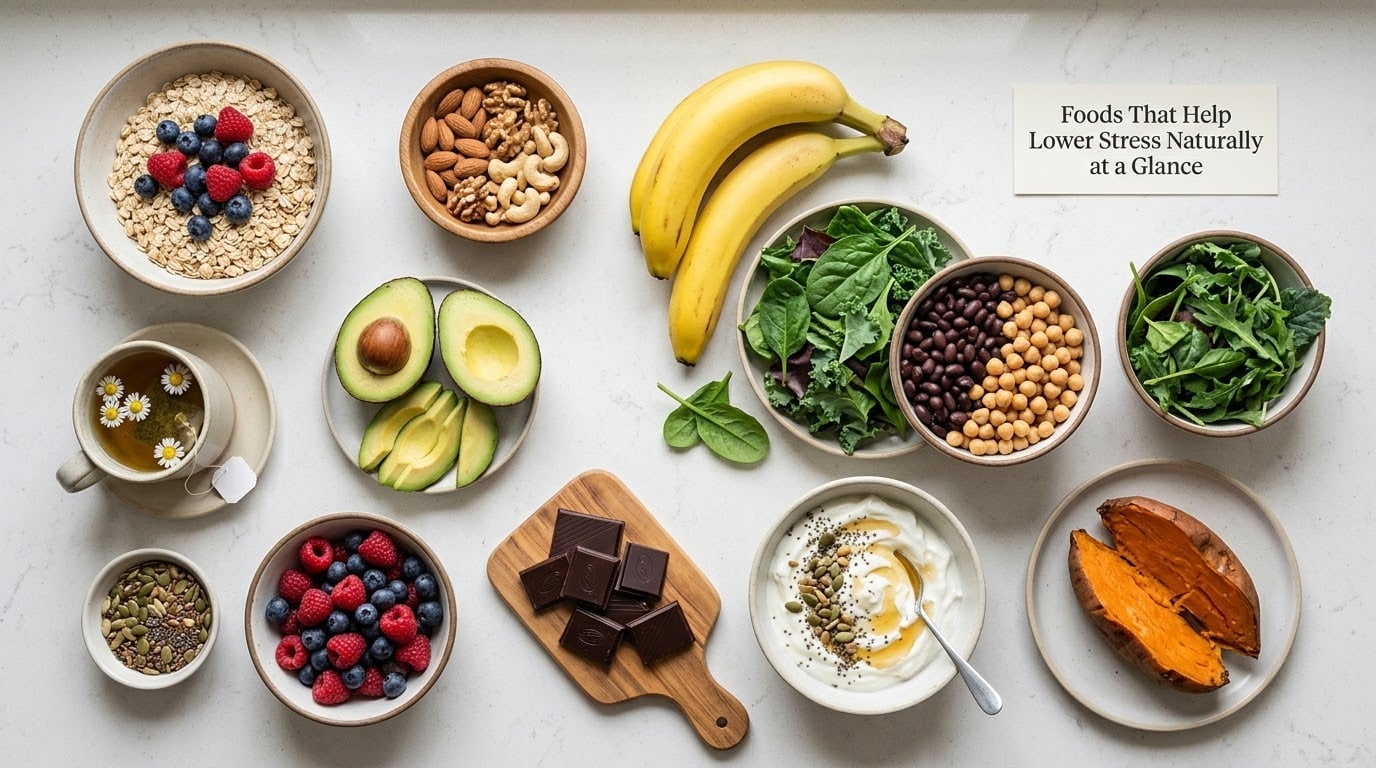
Before the detail, a quick reference so you can see the whole list at once. Each row gives the nutrient angle, the serving that fits a normal week, and a practical way to use it, so the shortlist of foods that help lower stress naturally is usable at the shop and in the kitchen.
| Food | Key nutrients or components | Most practical serving | How to use it |
|---|---|---|---|
| Oats and whole grains | Fiber, B vitamins, magnesium, steady carbs | Half a cup dry oats | Breakfast bowl with fruit and nuts |
| Fatty fish | Omega-3 fats, protein, vitamin D | One small fillet or a tin | Baked, no heavy seasoning |
| Leafy greens | Folate, magnesium, vitamin K, fiber | Two packed cups cooked or raw | Sautéed with garlic, in salads |
| Nuts and seed butters | Unsaturated fat, magnesium, protein | A small handful, about 30 g | Snack, stirred into oats |
| Beans and lentils | Plant protein, fiber, iron, magnesium | Half to one cup cooked | Soup, bowl, or bean spread |
| Bananas | Potassium, vitamin B6, fiber, carbs | One medium banana | Paired with nut butter |
| Plain yogurt | Protein, calcium, live cultures | One cup plain | With berries and seeds |
| Sweet potatoes | Beta-carotene, potassium, fiber | One medium, roasted | Breakfast hash or soup |
| Avocado | Fiber, potassium, folate, mono-unsaturated fat | Half a fruit | Toast, salad, dip, smoothie |
| Chia, flax, pumpkin seeds | Omega-3 plant fats, fiber, magnesium | One to two tablespoons | Stirred into yogurt or oats |
| Herbal teas | Plant compounds, no caffeine | One cup, steeped | Evening wind-down ritual |
| Dark chocolate | Cocoa flavanols, small caffeine amount | Two or three squares | Mindful, seated, unhurried |
1. Oats and Other Whole Grains
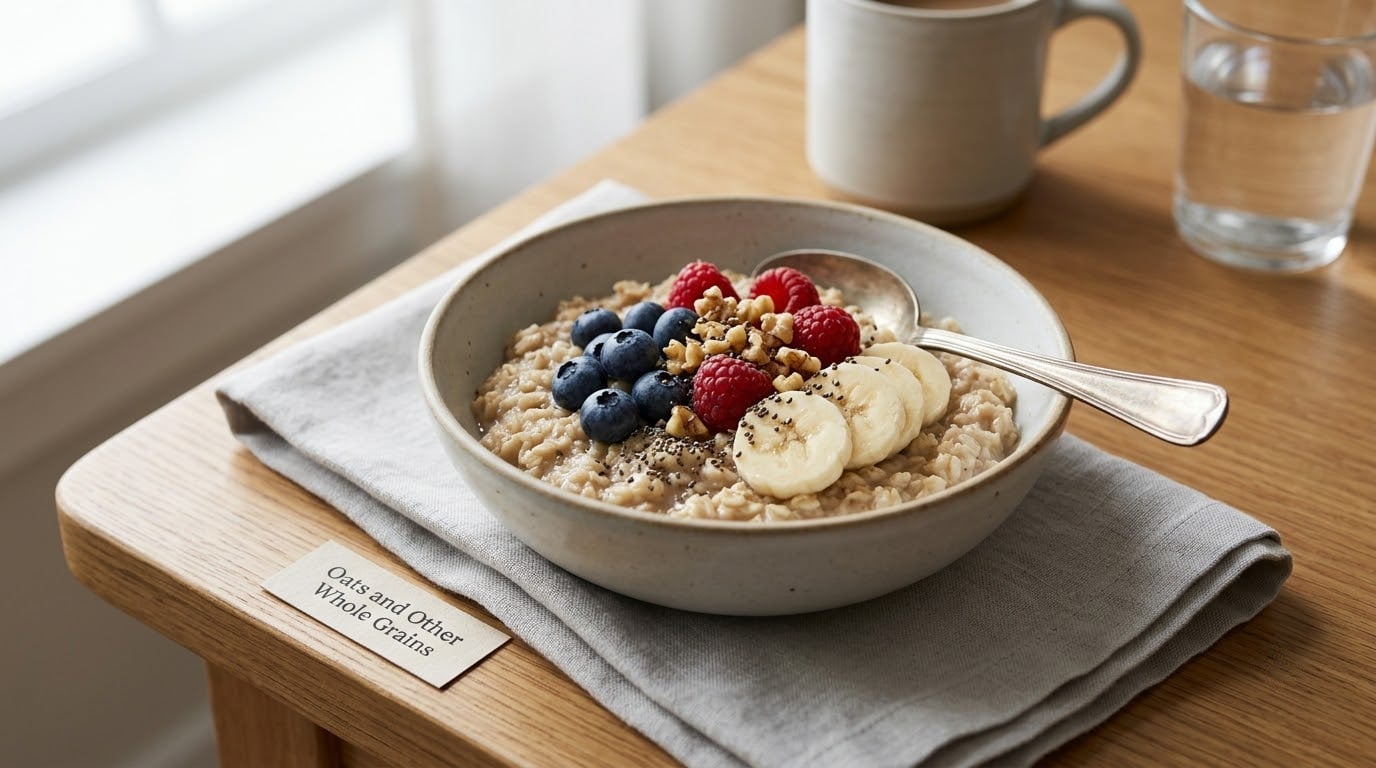
Oats are the least glamorous item on any stress food list and probably the most useful one. A half cup of dry oats cooked in the morning gives you soluble fiber plus a slow release of carbohydrate, which is why the bowl holds you steady until lunch instead of sending you hunting at eleven.
Quinoa, brown rice, farro, and whole-grain bread work the same way. Toasted, they carry more fiber than their white versions and keep the texture from feeling heavy. A practical breakfast: oats simmered with milk or water, topped with a spoon of almond butter, a sliced banana, and a handful of walnuts.
How Whole Grains Support Everyday Stress Resilience
Let me be straight about what this does and does not do. Whole grains do not lower cortisol on their own, and no grain will cancel out a bad night of sleep. Their role is steadier: fiber feeds gut bacteria, complex carbohydrate keeps blood sugar from spiking and crashing, and the B vitamins and magnesium in the grain cover part of what stress depletes.
People on the stress forums I read tend to describe the same effect in plain terms, that oatmeal through the morning prevents the mid-morning crash that had been driving their snacking. That is a blood-sugar story more than a hormone story, and it is still worth having. If you have celiac disease or a diagnosed intolerance, swap in gluten-free grains or rice rather than pushing through symptoms.
2. Fatty Fish
Salmon, sardines, trout, mackerel, and anchovies are the richest everyday sources of the long-chain omega-3 fats that show up in most of the stress and mood research. Those fats are structural parts of cell membranes in the brain, and eating them regularly is a reasonable way to keep intake steady without turning it into a project.
Budget matters here. Canned sardines in olive oil, frozen salmon fillets, and canned light tuna cost less than fresh fish and keep most of the same benefit. Two to three servings a week is a reasonable pattern for most adults.
Keep the cooking simple. Bake at 200 °F (about 95 °C) until the thickest part reads 145 °F (63 °C) on a thermometer, or warm gently in a pan with lemon. Fish cooks fast and turns dry when you push it. Check with your doctor first if you take blood-thinning medication, since high-dose omega-3 supplements and heavy fish intake are worth discussing at your next appointment.
3. Leafy Green Vegetables
Spinach, kale, Swiss chard, and arugula are some of the densest everyday sources of folate and magnesium, and they arrive with fiber and vitamin K alongside. Folate is easy to under-consume if most of your vegetables are starchy, and magnesium is the mineral people most often come up short on.
If you want the short version on why magnesium keeps coming up in stress conversations, our guide to magnesium rich foods and why they matter covers the details.
For preparation, a quick saute in olive oil with garlic softens greens in under five minutes and makes the taste easier for people who find raw kale bitter. A big raw handful works too, especially in pasta, soups, and omelets. One practical note: very large amounts of spinach and similar greens can reduce how much iron you absorb, so keep them varied rather than making one green the whole base of your diet.
4. Nuts and Seed Butters
Walnuts, almonds, cashews, and pistachios are portable, shelf-stable, and full of unsaturated fat, magnesium, and a decent amount of protein. They are also easy to overeat, which defeats the point. A small handful, roughly 30 g, is a reasonable portion, and using them as an ingredient rather than a free-for-all snack is what makes them work.
Almond butter on an apple slice, walnut butter stirred into oatmeal, or crushed nuts on a roasted sweet potato all turn a snack into something with staying power. Nut butters soften in the fridge, so stir them before spreading.
5. Beans and Lentils
Beans, lentils, chickpeas, and split peas bring plant protein, fiber, iron, magnesium, and complex carbohydrate to the same bowl, which makes them the most efficient pantry item on this list for filling meals without a big shop. A half cup of cooked lentils is a few milligrams of iron, plus a solid amount of magnesium and fiber, for very little money.
Beyond the obvious soup and salad, try a bean spread mashed with olive oil, lemon, garlic, and cumin, thinned with water until it spreads. It is the fastest protein-forward lunch I know. Green and brown lentils hold their shape in salads, while red lentils collapse into soups and thicken them without cream.
Cook dried beans in bulk and freeze portions, or use no-salt-added canned beans and rinse them. Both take minutes.
6. Bananas
Bananas are the least complicated calm snack available: potassium, vitamin B6, some fiber, and quick carbohydrate, all for a few cents each. Several people in the anxiety forums I read described a banana with peanut butter as their standard pre-meeting snack, which fits what the nutrition looks like on paper.
A banana on its own is fine, but pairing a carbohydrate with protein or fat makes it more satisfying. That is why banana with nut butter, or banana added to a bowl of yogurt, tends to hold better than the fruit by itself.
7. Plain Yogurt and Fermented Foods
Plain yogurt, kefir, kimchi, sauerkraut, and miso all contain live microbes when they have been properly fermented and have not been pasteurized after culturing. Yogurt adds protein and calcium on top of that, which is why it often beats a fermented vegetable as a standalone snack.
Fermented foods get attention largely because of the gut-brain axis, the two-way link between digestion and the nervous system. Smaller trials have linked regular fermented food intake with changes in inflammation markers and mood, though the research is early and the effect sizes are modest. The forum conversations match that: people tend to describe noticing a difference over two to four weeks of daily kimchi or kefir, not after one serving.
Our step-by-step on how to add fermented foods to your diet covers how to start small, since going from nothing to a lot of fermented food at once is a common way to regret it. Store fermented products chilled, and check with your clinician if you are on immune-suppressing medication or have a condition that affects your immune system.
8. Sweet Potatoes
Sweet potatoes deliver complex carbohydrate, beta-carotene, potassium, and fiber in a package that keeps well and travels. Roasted, they are one of the easiest calming carbohydrate swaps for white bread or white rice.
Roast cubes at 400 °F (about 205 °C) for 25 to 30 minutes with a little olive oil and salt. Diced small with onion and pepper, they turn into a breakfast hash that keeps you full until midday. Blended and thinned with stock and ginger, they make a fast soup.
9. Avocado
Avocado is unusual among fruits because it carries fat, roughly 10 g of fiber in a medium fruit, potassium, folate, and mono-unsaturated fat. That combination is what makes it more satiating than most fruit, which is the practical reason it shows up in stress-friendly eating plans.
Use it the way you would use any other satisfying fat: half on toast with salt and lemon, cubed into a salad with beans and greens, mashed into a dip with yogurt and lime, or blended into a smoothie with milk, banana, and a handful of spinach. Add it at the end of cooking, since heat and long storage darken the flesh.
10. Chia, Flax, and Pumpkin Seeds
Seeds concentrate what nuts offer in a smaller package. Ground flax and chia supply plant omega-3 fat and soluble fiber, and pumpkin seeds are one of the more generous plant sources of magnesium.
Preparation is where people go wrong. Chia and whole flax seeds pass through undigested, so grind flax in a small coffee grinder or use pre-ground flax, and stir chia into liquid at least ten minutes before eating so it hydrates. Start with one tablespoon and work up to two, drinking extra water, because jumping straight to large amounts causes bloating.
Once they are in the habit, they are easy to hide. A spoonful in oatmeal, stirred into yogurt, or mixed into smoothies does the job without tasting like an addition.
11. Herbal Teas
Chamomile, peppermint, lavender, rooibos, and lemon balm are common caffeine-free infusions, and their value is partly chemical and partly ritual. The ritual is not a small part: a warm cup taken sitting down, away from a screen, is a reliable marker that the working day is over.
Many people mention chamomile in the evening specifically. If tea is part of your wind-down, it pairs naturally with the approach in our piece on foods that help you fall asleep faster.
Can Herbal Teas Help Lower Stress Naturally?
Possibly, and the honest framing is that the evidence is mixed and limited. Some chamomile research points toward modest effects on anxiety measures, while peppermint and lavender are better documented for digestion and for the subjective feeling of calm than for stress hormone levels. Caffeine-free herbal teas will not treat anxiety, and anyone managing a diagnosed anxiety condition should keep following their clinician’s plan.
Watch two details. Herbal tea is not the same as green or black tea, which do contain caffeine and can make a jittery person feel worse, not better. And some people find peppermint or acidic blends uncomfortable on an empty stomach.
12. Dark Chocolate
Cocoa flavanols have been linked in small trials with changes in blood flow and insulin sensitivity, which is part of why dark chocolate keeps appearing on stress food lists. It is also, plainly, a pleasurable thing to eat slowly, and that counts for something.
Portion and percentage are what separate this from a candy bar. Two or three squares of a bar with 70 to 85 percent cacao give you the flavanols with a small amount of added sugar and a modest caffeine hit. Milk chocolate is mostly sugar and cocoa butter, so it does not carry the same argument. Very high cacao percentages are bitter enough that people who say they do not like dark chocolate usually mean they tried 95 percent once.
Sensitivity varies too. Cacao contains caffeine and theobromine, so if caffeine gives you anxiety symptoms, notice how you feel after a square and adjust from there.
How to Build a Stress-Supportive Eating Pattern
The useful theme across all 12 is the pattern, not the items. Eating at roughly regular times matters, because long gaps followed by large meals produce the blood-sugar swings that feel a lot like anxiety. Most people do better with some protein, fiber, and fat in each meal or snack than with carbohydrate alone.
Hydration gets overlooked, and mild dehydration shows up as irritability and poor concentration. Food variety is also the real insurance policy. No single food carries the full list of nutrients your body needs, and anyone promising a superfood cure is selling something.
It is worth naming the foods that work against you during a hard week, since every competitor article covers this and readers search for it. Excess caffeine, especially stacked through an afternoon, can raise anxiety and disrupt sleep. Highly processed foods high in refined sugar and trans fats tend to feed inflammation. Very large evening meals close to bedtime make sleep worse for many people. Alcohol as a wind-down aid fragments sleep, even when it helps you fall asleep faster.
None of this requires cutting everything out. It means keeping the defaults sensible and saving the indulgence for a deliberate choice rather than an automatic one.
Frequently Asked Questions
How long does it take to notice changes from stress-supportive foods?
Most changes people describe are gradual rather than immediate. Improved energy and steadier digestion often show up within a week or two of eating more fiber and omega-3 rich foods regularly. Mood and sleep changes tend to take longer, often four to eight weeks, because they depend on consistent intake rather than single meals. Anyone noticing anxiety that does not shift after a few weeks of eating well should speak with a doctor or registered dietitian.
Can diet reduce anxiety and stress on its own?
No diet replaces professional care. Food can support steady energy, digestion, and nutrient intake, which may make stress easier to manage day to day. But anxiety disorders, panic, and persistent stress are health conditions that respond best to a clinician’s guidance, and often to therapy as well. Treat food as one supporting habit, not a treatment, and seek help sooner rather than later if symptoms are worsening.
Which of these foods suit a vegetarian or vegan diet?
Most of the list does. Whole grains, leafy greens, beans and lentils, bananas, sweet potatoes, avocado, nuts, seeds, herbal tea, and dark chocolate are plant based, and plain vegan yogurt stands in for dairy yogurt. For the omega-3s that come from fatty fish, ground flax, chia seeds, walnuts, and algae-based supplements are the usual plant alternatives. For the nutrients in fish, a registered dietitian can help you plan without guessing.
What are good snacks for stress at work without a crash?
Pair a carbohydrate with protein or fat and you get a steadier result than eating the carbohydrate alone. A banana with nut butter, a small handful of walnuts, plain yogurt with berries, or whole-grain toast with avocado are the usual answers. Most people do better keeping caffeine moderate through the afternoon too, since the late cup is a common reason for a rough night and a jumpier morning.
Do I need magnesium or other supplements to manage stress?
Supplements are optional rather than necessary, and food usually comes first. Magnesium-rich foods like spinach, beans, oats, nuts, and pumpkin seeds cover a lot for most people eating a varied diet. If you suspect a deficiency, a doctor can check rather than you guessing, since blood magnesium testing is imperfect. Stating that supplements interact with some medications is a good reason to check before starting one.
A Simple First Step
Start small. Pick one food from this list and add it to a meal you already eat, because nothing on this list needs a special shop or a new recipe. The foods that help lower stress naturally work best as small repeatable additions rather than a full diet overhaul. Oats at breakfast, a handful of walnuts in the afternoon, or half an avocado on your usual toast takes almost no extra effort, and small repeatable changes are what people actually keep.
Pair it with the basics that matter as much as the menu: regular sleep, some movement most days, and water within reach. If stress is persistent, severe, or showing up as anxiety, panic, or changes in mood and sleep, talk to a doctor or a registered dietitian. Food can be one useful part of that plan, and it works best alongside real support rather than in place of it.