
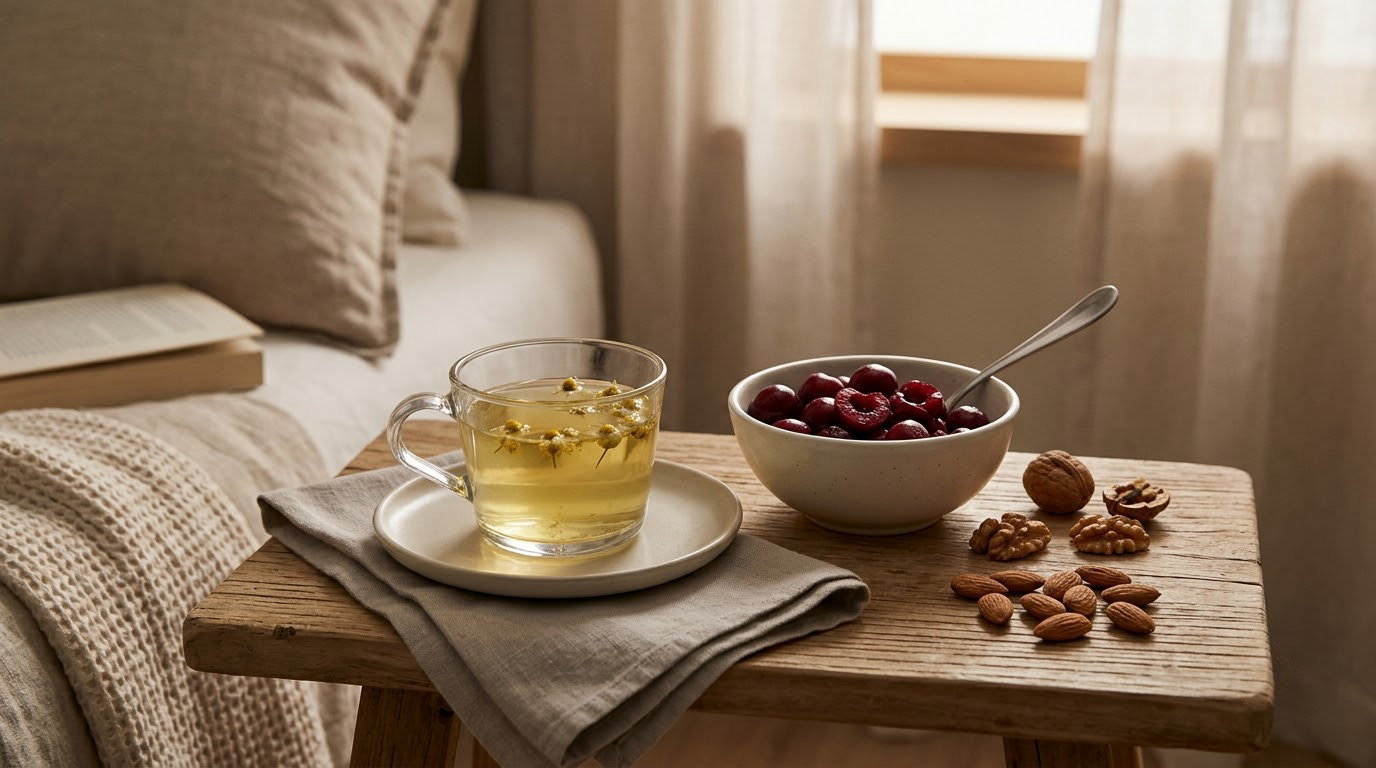
If you search for foods that help you fall asleep faster, the useful answer is short: foods rich in tryptophan, magnesium, natural melatonin, or potassium, eaten as a light snack one to two hours before bed. Tart cherry juice, kiwi, warm milk, almonds, and chamomile tea come up most often, and the research behind them is genuinely mixed rather than magic.
So here is the honest version. A handful of these have been tested in small human trials. Most have not, and are recommended because of what they contain. I’ve graded each one so you can tell the difference before you rearrange your evening around it.
One thing first. Plenty of people tell me — and the same complaint fills the r/sleep forum — that the standard advice to stop eating two hours before bed leaves them awake at 3am with nothing in their stomach. If that’s you, the sections on timing and portion size matter more than the list itself.
Table of Contents
Foods That Help You Fall Asleep Faster at a Glance
The table below gives you the short version. Evidence strength matters here: a few foods have been studied in people, and the rest are recommended on nutrient content alone.
| Food or drink | Main sleep-active compound | Evidence so far | Best time to eat |
|---|---|---|---|
| Tart cherries or cherry juice | Natural melatonin | Small human trials | 1-2 hours before bed |
| Kiwi | Vitamin C, fiber | One small sleep trial | 1 hour before bed |
| Bananas | Potassium, magnesium | Nutrient reasoning only | 60-90 minutes before bed |
| Oats | Complex carbohydrate, fiber | Nutrient reasoning only | 2 hours before bed |
| Chamomile tea | Apigenin | Small trials, mixed | 30-60 minutes before bed |
| Lavender tea | Aromatic volatile oils | Limited human data | 30-60 minutes before bed |
| Walnuts | ALA omega-3, magnesium | Nutrient reasoning only | 1-2 hours before bed |
| Almonds | Magnesium, tryptophan | Nutrient reasoning only | 1-2 hours before bed |
| Milk or fortified soy milk | Tryptophan, calcium | Nutrient reasoning only | 60 minutes before bed |
| Whole grains | Fiber, slow-release carbohydrate | Observational data | As part of dinner, 2+ hours before bed |
| Salmon, sardines, trout | Omega-3, vitamin D | Observational data | Dinner, 3 hours before bed |
| Other herbal infusions | Plant compounds, no caffeine | Varies widely | 30-60 minutes before bed |
How each food helps you fall asleep faster
Most of the mechanism is the same chain, and it is worth understanding once. Tryptophan is an amino acid, and the brain uses it to build serotonin, which in turn feeds melatonin, the hormone that signals sleep onset. Foods do not deliver melatonin directly into your bloodstream, but they supply the building blocks.
Carbohydrates speed that chain up in a slightly clever way. Eating carbs triggers insulin, and insulin helps other amino acids clear out of the blood, leaving more tryptophan free to cross the blood-brain barrier. That is the entire argument for a bowl of oats at 9pm, and it’s a real mechanism rather than folklore.
Fiber plays a longer game. Gut bacteria ferment fiber into short-chain fatty acids, which influence serotonin production in the gut and the gut-brain signaling that runs alongside it. This is why higher protein and fiber intake has been linked to longer sleep in observational work.
When to eat, and what to skip in the evening
Here is the timing rule I’d keep simple: finish dinner at least two hours before bed, then eat your bedtime snack one to two hours before lights out. Not ten minutes before, not in bed with the box.
Caffeine is the one hard cutoff. It is a small molecule that blocks adenosine receptors, and caffeine consumed in the afternoon is still working on you at midnight — a rough guide is to stop by 1pm, earlier if you are sensitive. Alcohol is the other one: it shortens the time to sleep onset but wrecks the second half of the night, and the rebound causes the 3am wake-up most people recognise.
Also skip gas-producing foods such as beans, cabbage, broccoli, and peppers in the evening, plus anything heavy, spicy, or high in sugar. Lying down with a full stomach is its own problem.
1. Tart Cherries
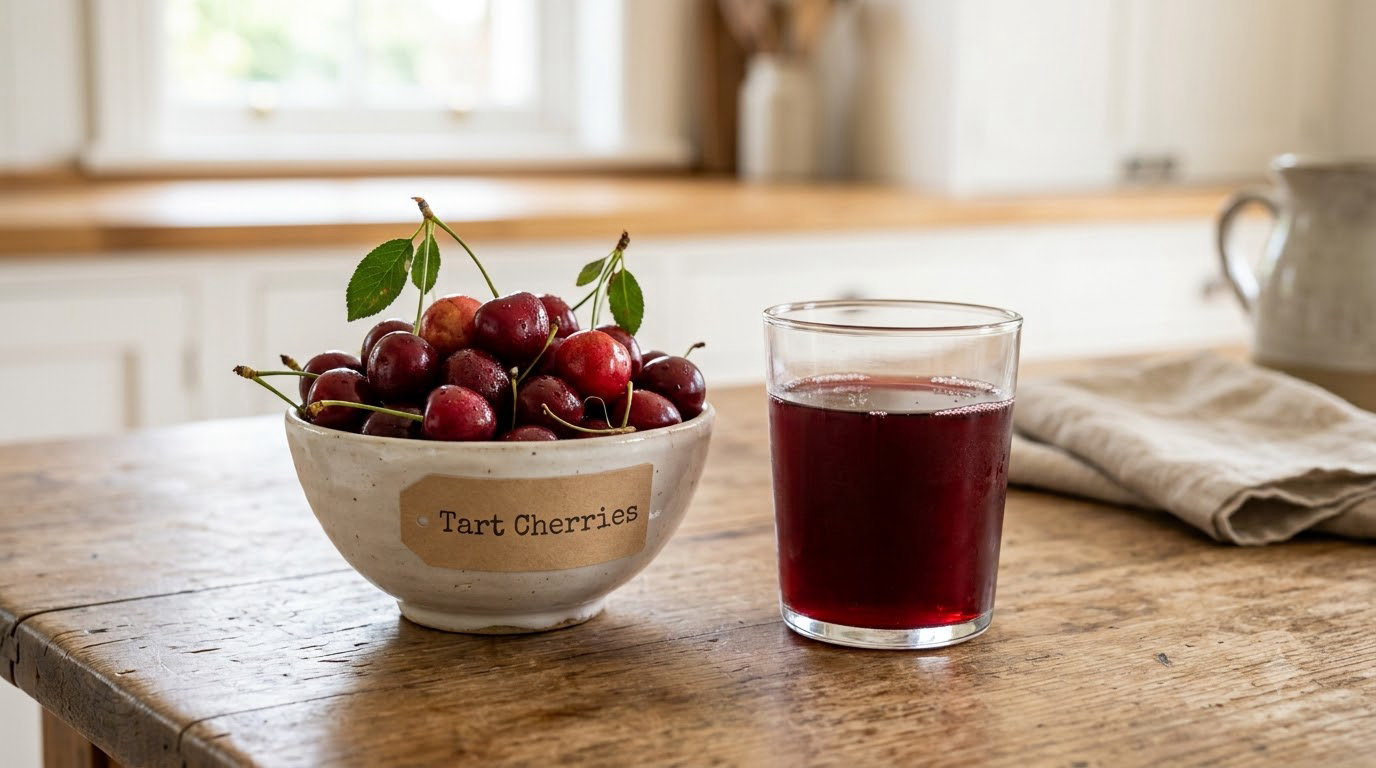
Tart cherries are unusual in the fruit world because they actually contain melatonin from the plant itself, alongside anthocyanin antioxidants. Sour cherries also contain a little natural dose of serotonin in the flesh.
Evidence: small human trials, and they’re worth reading rather than skimming. Montmorency varieties have been used in studies measuring sleep time and sleep efficiency, and one widely cited trial tracked increased melatonin and longer sleep in older adults who drank cherry juice for several weeks. The samples were small and the juice was concentrated, so treat it as promising rather than settled.
How to use it: about 7 ounces of unsweetened tart cherry juice, roughly 30-60 minutes before bed, or a small bowl of fresh or frozen cherries. Watch the sugar on the bottle — some juices are basically soda. Tart cherries are tart, so freezing them or mixing juice into yogurt takes the edge off.
2. Kiwi
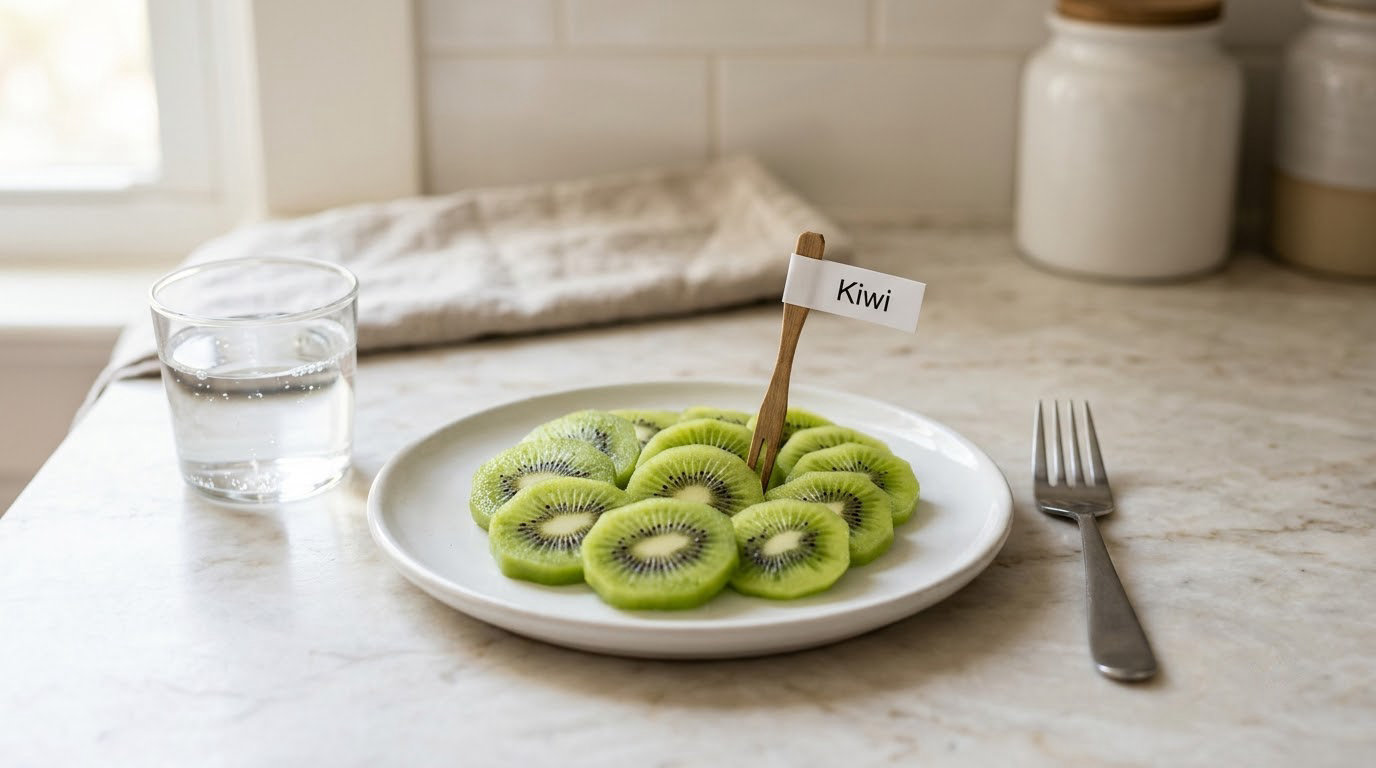
Kiwi is the odd one out on this list, because the proposed mechanism is vitamin C and antioxidant status rather than tryptophan or melatonin. Kiwi is dense in both, and the theory is that correcting a low vitamin C level supports the systems that regulate the sleep-wake cycle.
Evidence: one small sleep trial, and it’s frequently cited. Volunteers ate two kiwis about an hour before bed for several weeks, and researchers reported improvements in sleep onset and total sleep time. The sample was modest, there was no placebo drink, and blind design is hard with a distinctive fruit — so most sleep researchers treat it as a reason to keep eating kiwi, not as proof.
How to use it: two kiwis, about an hour before bed, cut and eaten with a spoon. Two is plenty; the study did not test three, and more fruit at midnight means more waking trips for some people.
3. Bananas
Bananas are popular here for potassium, plus a small amount of magnesium, and they’re one of the most accessible foods on the whole list. The muscle-relaxation story around magnesium is the reason bananas keep showing up in sleep advice.
Evidence: nutrient reasoning only. There’s a single small study linking higher potassium intake to better sleep quality, which is real but nowhere near enough to put a banana on a par with a prescription. Nothing about a banana will knock you out on its own.
How to use it: one medium banana with a spoonful of almond butter, eaten 60-90 minutes before bed. That combination pairs the potassium with magnesium and a little protein, which is more useful than the banana alone. The bigger point is avoiding the trap: a banana is not a reason to eat an entire bag of chips at 11pm.
4. Oats
Oats are the best example of a food that supports the carbohydrate-insulin-tryptophan pathway. They’re slow-release starch with a decent amount of soluble fiber, so blood sugar rises gently rather than spiking and crashing.
Evidence: nutrient reasoning, with some support from broader fiber research. One study of 4,825 users of sleep and diet tracking apps found that higher protein and fiber intake correlated with longer total sleep and shorter sleep onset latency. It was observational, so it shows association rather than cause, but it’s the largest dataset anyone has on this question.
How to use it: a small bowl of oats with milk an hour or two before bed, or overnight oats made in the fridge during the day. Keep the portion modest — half a cup of dry oats — and skip the brown sugar, which buys you a blood sugar spike two hours before you wanted one.
5. Chamomile Tea
Chamomile is the most-drunk sleep drink in the world, and the reason is a specific flavonoid called apigenin. It binds to the same receptor sites that some anti-anxiety medicines target, which is probably why drinking the tea feels calming even when it does very little.
Evidence: small trials with mixed results. Some have found modest improvements in sleep quality, others found nothing over placebo. Chamomile is also an allergen for anyone sensitive to ragweed, daisies, or marigolds, and it can interact with blood thinners.
How to use it: one cup, brewed for three to five minutes, 30-60 minutes before bed. It’s naturally caffeine-free, which is half the point. If you’re using it as a ritual, the warm cup and the thirty quiet minutes probably carry most of the weight.
6. Lavender Tea
Lavender tea is chamomile’s less-studied cousin, usually sold as a blend with lemon balm or rooibos. The active part is linalool and linalyl acetate, volatile aromatic compounds that have mild sedative effects in lab work on animals.
Evidence: limited human data. Most lavender sleep research is aromatherapy — inhaled scent, not ingested tea — and even that literature is weak by normal standards. What you can say confidently is that lavender tea is caffeine-free and non-caloric, which makes it a good replacement for an evening coffee rather than a treatment for insomnia.
How to use it: one cup, 30-60 minutes before bed, brewed 3-4 minutes. Check the ingredient list for blends, since many include black or green tea, which quietly undoes the caffeine-free part. Skip it if you’re pregnant or breastfeeding without checking with a clinician first.
7. Walnuts
Walnuts are the best plant source of ALA omega-3, and they carry meaningful magnesium along with tryptophan. The omega-3 angle is about long-term brain and cell health rather than an immediate drowsy effect.
Evidence: nutrient reasoning only. Dietary fat and fish intake have been linked to better sleep in observational cohorts, and walnuts are the plant equivalent, but no walnut trial has shown people falling asleep faster. The honest framing is that they’re a good food to eat regularly, and the sleep connection is inherited from the broader research rather than tested directly.
How to use it: a small handful, about 1 ounce or six to eight halves, an hour or two before bed. Walnuts are calorie-dense and easy to overeat, which is exactly the “ate too much and woke up at 4am” problem people describe in forums.
8. Almonds
Almonds are the magnesium entry in this list, and among the highest for its size. About 28 grams — a small handful — supplies a meaningful chunk of the daily target. They also contain tryptophan and a little melatonin of their own.
Evidence: nutrient reasoning, plus magnesium trials. Magnesium supplementation has been studied for sleep, but those results belong to supplements, not food, and are modest at best. Eating almonds is a way to meet a magnesium need, not a way to dose yourself.
How to use it: about 15 to 20 almonds, an hour or two before bed. If you’re eating them as a snack, pair them with a piece of fruit so the small amount of protein and fat actually does something. Almonds are a common allergen, and a small serving keeps the calorie count sensible.
9. Milk or Fortified Soy Milk
Warm milk is the oldest advice on this page, and there is a kernel of truth in it. Milk contains tryptophan, and it also contains calcium, which has a loose association with sleep in observational work. Whether drinking a warm glass makes you drowsy or simply feels like a comfort ritual is genuinely unclear.
Soy milk is the plant-based equivalent and the one to pick if you avoid dairy. Fortified soy is a legitimate swap nutritionally; it provides comparable protein and tryptophan content, and roughly a quarter of its calories can come from added sugar, so check the label.
Evidence: nutrient reasoning only. If you take dairy, lactose intolerance is a common reason people wake uncomfortably, and switching to fortified soy solves it. How to use it: about one cup, warmed with a teaspoon of honey if you like, 60 minutes before bed. Skip the sweetened varieties — the sugar spike wakes some people right back up.
10. Whole Grains
Whole grains belong on a sleep list for the overnight hours rather than the first ten minutes after you get into bed. Their soluble fiber slows digestion, which is the main reason some people wake at 3am after a carb-heavy evening meal.
Evidence: observational data, and the app-user study mentioned under oats is the best current example. A large fiber intake helps, but a heavy grain portion right before lying down is a different matter, and the fiber that helps at 10pm can be uncomfortable at 1am.
How to use it: a small portion at dinner — half a cup of brown rice, one slice of whole-grain toast, or a modest serving of quinoa — at least three hours before bed. This is the one entry where the advice is mostly about not eating too much rather than eating something specific.
11. Fatty Fish
Salmon, sardines, and trout are the only items here that bring meaningful omega-3 and vitamin D to the table, and both are tied to sleep quality in cohort research. Sardines also have a strong tryptophan profile.
Evidence: observational data, no sleep trials. Seafood diets consistently associate with better self-reported sleep, but that’s not the same as a food that moves sleep onset. Treat it as a good dinner rather than a bedtime intervention.
How to use it: a light portion at dinner, roughly three hours before bed. For food safety, cook fish to an internal temperature of 145°F (63°C), and refrigerate cooked leftovers within two hours. If you’re pregnant or planning to be, follow current FDA advice on fish and mercury, which limits albacore tuna and recommends lower-mercury options like sardines and salmon. Persistent insomnia is a medical question too — bring it to a doctor rather than trying to solve it with dinner.
12. Herbal Infusions
Beyond chamomile and lavender there are a handful of other naturally caffeine-free botanicals, and the point of this entry is how to evaluate them. Lemon balm, rooibos, and peppermint teas are common evening choices, mostly because they contain no caffeine and none of the things that keep you wired.
Evidence: varies from ingredient to ingredient, and the honest answer is that most are recommended on the fact that they’re warm, sugar-free, and ritualistic. Rooibos in particular has almost no human sleep research behind it. Lemon balm has a small amount of trial data, and valerian has more, but it’s a supplement in tea form, with well-known grogginess the next day and real interaction concerns with alcohol, sedatives, and some medications.
How to use it: one cup, 30-60 minutes before bed, brewed 4-5 minutes. Check the full ingredient list, including blends and flavorings, and check for interactions with any medication you take before making it a nightly habit. A pharmacist can do that in a couple of minutes.
Frequently Asked Questions
What food makes you fall asleep the fastest?
No single food works fastest for everyone, but tart cherry juice has the clearest case because it contains melatonin the plant makes itself and has been used in small human trials. Kiwi and warm milk are the runners-up. Most people see a small shift over a few weeks of consistent use, not a single serving, and none of these treats chronic insomnia.
What to drink for deep sleep?
The best evening drinks are caffeine-free and warm: tart cherry juice, a cup of chamomile or lavender tea, or warm milk with a teaspoon of honey. Tart cherry juice carries natural melatonin, while chamomile contributes apigenin. The most important drink rule is what you stop, not what you add — cut off caffeine by early afternoon and avoid alcohol, which fragments the second half of the night.
Which foods are rich in melatonin and magnesium?
Tart cherries, walnuts, and almonds contain natural melatonin in small amounts. For magnesium, almonds and walnuts are the strongest plant foods here, with pumpkin seeds, spinach, and cashews just outside the list. Note that melatonin content in food is tiny next to supplement doses, so the effect is about the nutrients supporting your own production rather than a dose of the hormone itself.
What foods make you extremely sleepy?
A carbohydrate plus protein combination is the pattern most likely to make you feel drowsy: oats with milk, banana with almond butter, or whole-grain toast with peanut butter. The carbohydrate triggers insulin, which clears competing amino acids from the blood so more tryptophan reaches the brain. Turkey is the most famous tryptophan source, but a serving is heavier than most people need at night.
How long before bed should I eat, and does caffeine matter?
Finish dinner about two hours before bed, then have your bedtime snack one to two hours before you want to be asleep. If you genuinely go to bed hungry, a small snack is better than nothing, since waking at 3am with low blood sugar is common. Caffeine matters more than anything else on this list — stop it by 1pm, since afternoon caffeine is still measurably active at midnight.
When do sleep problems need a doctor instead of a bedtime snack?
If difficulty falling asleep or staying asleep persists for more than a few weeks, affects your daytime energy, or comes with loud snoring, gasping, or nodding off while sitting, book an appointment. Those can point to sleep apnea or another treatable condition. A doctor can also check for medication effects, thyroid problems, and other contributors that no evening snack will touch.
A Gentle Evening Routine Starts Small
If you do one thing from this list, make it the caffeine cutoff at 1pm. It’s free, it does more than most foods, and every trial of evening eating has run into the same wall: you can’t engineer sleep with a snack if the chemistry is still holding you awake.
After that, pick one food you already like and attach it to a consistent wind-down. A glass of warm milk, two kiwis, a small bowl of oats. Keep the portion light, because digestion is the reason so many people feel worse after eating late rather than better. Give it a couple of weeks before you judge it.
And if three weeks of decent habits haven’t moved things, that’s a doctor conversation rather than a food experiment. Nothing here is a treatment for insomnia.