
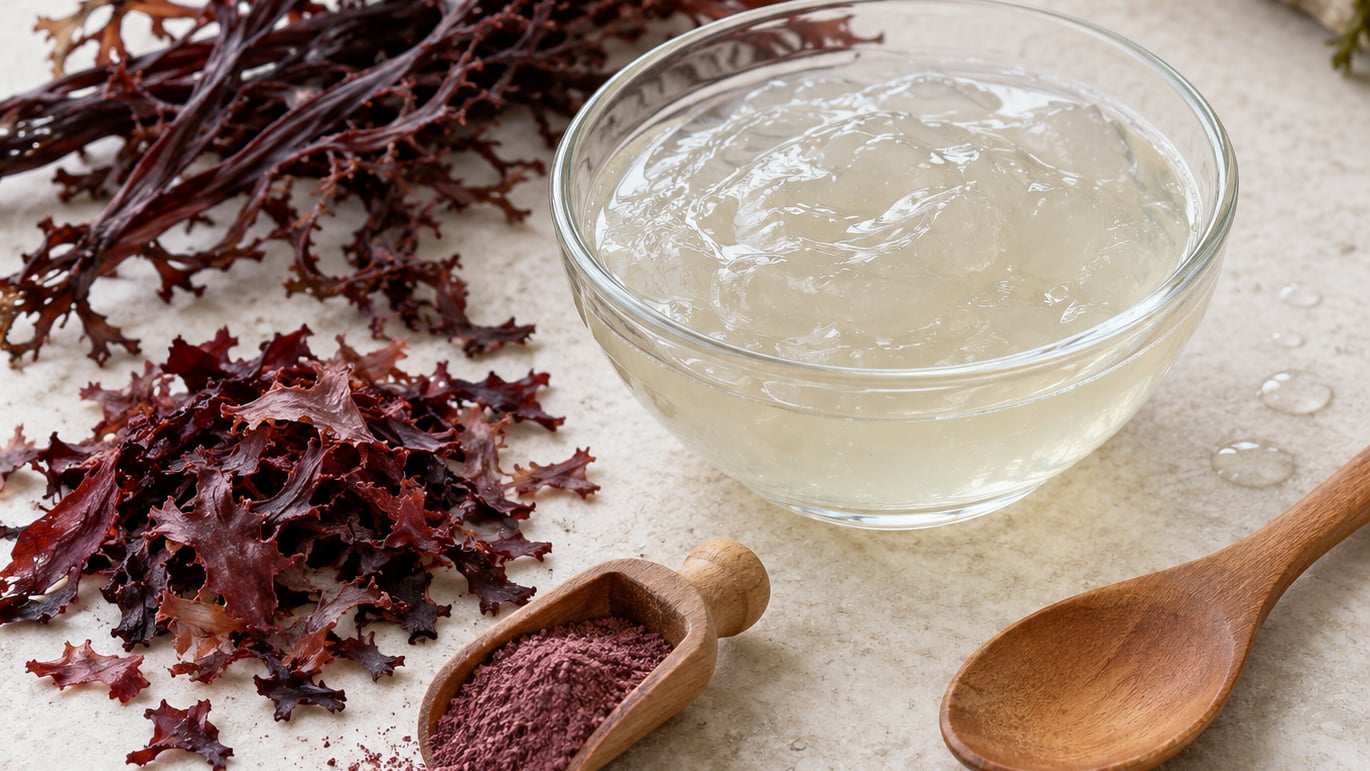
Sea moss is a red seaweed, and the honest answer about the benefits of sea moss and what to know before trying it is short: it is a mineral-rich food that can add soluble fiber and trace minerals to a diet, but the dramatic claims attached to it mostly outrun the human research. The part people underestimate is iodine, which can swing from negligible to medically significant from one harvest to the next.
That is why this guide starts with the nutrients, then moves to the checks: how much iodine you might actually consume, what seaweed can pick up from seawater, who should talk to a clinician first, and how to read a label in under a minute.
I read through the current guidance on seaweed and iodine, compared what the well-reviewed health sources say against what the wellness brands say, and pulled out the parts that hold up. Last reviewed for 2026. This is general information, not medical advice.
Table of Contents
- What Is Sea Moss?
- What Are the Potential Benefits of Sea Moss?
- How Much Iodine and Other Nutrients Does Sea Moss Provide?
- What Should You Know About Iodine and Thyroid Health?
- Can Sea Moss Contain Heavy Metals?
- Who Should Ask a Health Professional Before Trying It?
- How Do You Choose and Use Sea Moss Safely?
- What Does Sea Moss Taste Like and How Is It Used?
- Frequently Asked Questions
- The Bottom Line
What Is Sea Moss?
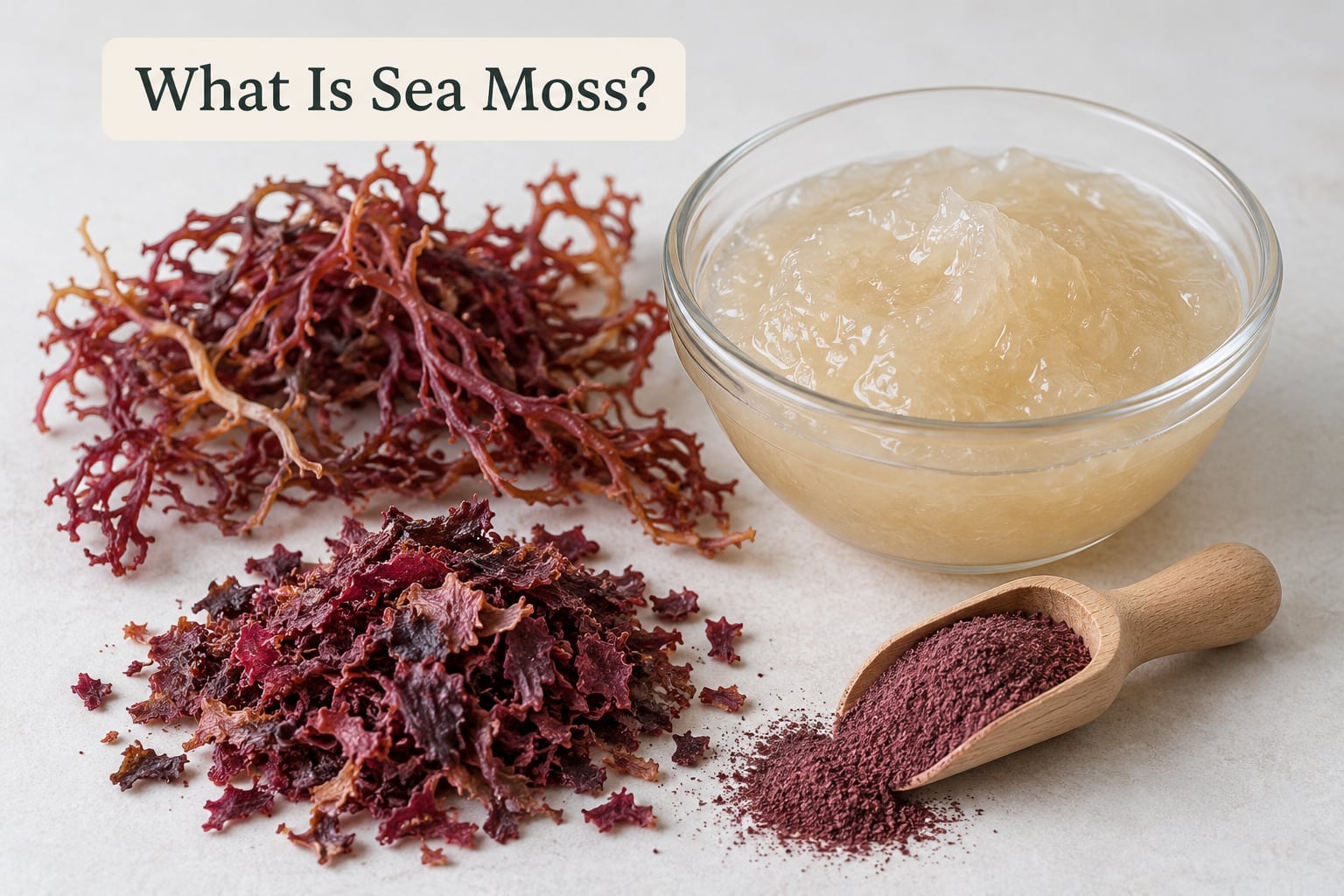
Sea moss is Chondrus crispus, a red alga that grows on rocky coasts of the North Atlantic and is also sold under the older name Irish moss. It has been gathered along the coasts of Ireland, Scotland and the Caribbean for centuries, and it thickens into a loose gel when soaked in water, which is why so much of it ends up in drinks and puddings.
You will meet it in four forms. Dried strands or flakes are whole-food pieces you soak and blend. Prepared gel is the soaked, blended result sold in tubs. Powder is dried fronds milled down. Capsules and powders sold as supplements are concentrated versions that may be far more iodine-dense than a serving of whole seaweed.
Here is the distinction worth holding onto. What is firmly established is that sea moss contains fiber, minerals and iodine in measurable amounts, and that those amounts vary widely by species, harvest location, season and processing. What is not established is that eating it prevents or treats disease, burns fat, or cleanses the body. The famous claim that it supplies 92 of the 102 essential nutrients traces back to marketing copy from decades ago, not to a modern nutrient analysis of the seaweed you are buying.
Benefits of Sea Moss and What to Know Before Trying It
Sea moss is used mainly as a source of minerals, soluble fiber and iodine, and the fiber and prebiotic effect are the most defensible of its benefits. Before you start, check the iodine content per serving, whether the product is third-party tested for heavy metals, and whether you take thyroid medication or have a shellfish allergy. The nutrient content is real; the cure-all reputation is not.
What Are the Potential Benefits of Sea Moss?
Rather than a flat list, it helps to sort claims by how well they are actually studied. Human trials on sea moss itself are few and mostly small, so most of the interesting mechanism work has been done in animals or on isolated compounds.
- Soluble fiber and prebiotic support (human data, indirect). The carbohydrate matrix of sea moss behaves like a soluble fiber. Fiber that feeds gut bacteria is a prebiotic, and the general benefits of prebiotic fiber for regularity and microbial diversity are reasonably well established in fiber research, even if sea moss specifically has not been put through large trials. If fiber is your goal, our guide to what to eat for gut health every day covers the cheaper staples that do the same job.
- Iodine, and therefore thyroid hormone production (established nutrition, no health claim). Iodine is the nutrient the thyroid cannot make for itself. Too little impairs it, and too much can also disturb it, so sea moss is best thought of as a variable iodine source rather than a thyroid supplement.
- Minerals: calcium, magnesium, iron, potassium, zinc (established content, small servings). Real amounts, but concentrated into gram-sized quantities of dried seaweed. A teaspoon delivers nutrients, not meaningful doses of most of them.
- Antioxidant and polyphenol compounds (lab and animal work). Red seaweed contains polyphenols and carotenoids with antioxidant activity in laboratory studies. Whether eating it changes anything measurable in a human body is an open question.
- Anti-inflammatory signaling in models (animal and lab). Extracts have reduced inflammatory markers in animal studies. Human evidence is too thin to treat this as a benefit.
- Blood sugar and cholesterol effects (early research). Soluble fibers from seaweed have attracted interest for post-meal glucose and LDL, but the studies use concentrated extracts and doses larger than a normal serving of whole sea moss.
- Skin and hair (mostly topical and anecdotal). Sea moss is used in face masks and serums, where the moisturizing gel is doing the work rather than the mineral content. Edible sea moss has not been shown to change hair growth or skin condition from the inside.
- Traditional use (cultural history, not clinical evidence). It was a famine food and a source of minerals in coastal diets long before it was a wellness product. That history explains the reputation without supporting any modern claim.
Two claims that show up constantly deserve a direct answer. There is no good evidence that sea moss causes weight loss, and it has no demonstrated detox or binding effect. If weight is the goal, the approaches with actual data behind them are less dramatic than they are boring; you can see where very low calorie diets backfire and why consistency beats restriction.
How Much Iodine and Other Nutrients Does Sea Moss Provide?
The table below compares typical sea moss contributions with adult daily values. Treat it as a scale, not a measurement, because a harvest that grew in iodine-poor water can differ by an order of magnitude from one that grew in richer water.
| Nutrient | What sea moss provides | Adult context | How reliable is the number? |
|---|---|---|---|
| Iodine | By far the most variable nutrient, ranging from trace amounts to tens of milligrams per gram in high-iodine harvests | 150 micrograms recommended daily for adults; 1,100 micrograms is the tolerable upper intake level for adults | Low. This is the number most worth checking on your specific product. |
| Calcium | Present in useful amounts relative to its weight | About 1,300 mg daily for most adults | Moderate. Harvest dependent. |
| Iron | Present, and more available from seaweed than from some plant sources | 18 mg daily; higher needs in pregnancy | Moderate. |
| Magnesium | Present in meaningful amounts per gram | About 420 mg daily for men, 320 mg for women | Moderate. |
| Potassium | Present in relatively high amounts per serving | About 4,700 mg daily | Moderate. |
| Protein | Small amounts, with some essential amino acids | About 50 g daily | High. Seaweed is not a protein source. |
| Dietary fiber | Soluble and insoluble carbohydrate, the part most likely to do something | About 28 g daily | Moderate to high. |
Two rows in that table deserve a second look. Protein is low enough that sea moss should never be counted as a protein source in a vegan or plant-based diet, and iodine is the row that can change by a factor of a hundred between two products with identical labels.
What Should You Know About Iodine and Thyroid Health?
The thyroid needs a steady iodine supply, and it tolerates a wide but not unlimited range. Adult needs sit near 150 micrograms a day, and the tolerable upper intake level for adults is 1,100 micrograms a day. Most sea moss servings land somewhere in between, and a small number of heavily concentrated servings can exceed the upper limit without anyone intending it to.
For most healthy adults with a varied diet, that range is not a problem. It becomes one for people with thyroid disease, people who have had thyroid surgery or radioiodine treatment, and anyone taking levothyroxine or similar thyroid hormone medication. Extra iodine can push thyroid hormone levels in either direction, which matters most when a medication dose is being calibrated to a target.
Practical advice for anyone on thyroid medication: tell your prescriber before you start, ask about spacing sea moss away from your dose, and keep the intake consistent rather than erratic. Stable levels are easier to interpret than a diet that swings week to week. If you have any thyroid condition, this is a conversation for your doctor rather than something to work out from a nutrition label.
Can Sea Moss Contain Heavy Metals?
Yes, and this is the least glamorous part of eating seaweed. Seaweed filters water, so it accumulates whatever is dissolved in it. Testing programs for seaweed, including the ones that look at edible sea moss, have found varying levels of arsenic, cadmium, lead and sometimes mercury, with results differing by species, growing area and harvest season.
That variability means two servings from the same brand can differ, and it means a reputable product is not one that simply prints a long nutrient panel. Look for third-party heavy metal testing with results you can find, a named harvest location, and a stated species. A label that says only moss, algae or seaweed with no percentage tells you nothing about dose or concentration. For a general primer on decoding what is on a food label, what natural flavors really means on a label is worth a read.
Who Should Ask a Health Professional Before Trying It?
Sea moss is a food, not a medicine, but a few groups have a real reason to get advice first rather than a general reason to be careful.
- Pregnancy and breastfeeding. Iodine needs are higher in pregnancy, and so is the cost of getting the amount wrong in either direction. NHS and NIH guidance both treat iodine intake as something to manage deliberately in pregnancy, and sea moss is not a predictable way to do it.
- Thyroid disease or thyroid medication. Covered above, and the group where the answer is most consistently a clear no without medical input.
- Other medication. Sea moss can affect how some drugs are absorbed, including blood thinners and thyroid medication, and its fiber content can change the timing of oral medicines. A pharmacist can check your specific list faster than you can research it.
- Shellfish, fish or sulfur sensitivity. Seaweed belongs to the same marine family as shellfish, and reactions ranging from intolerance to genuine allergy are reported. If you have reacted to shellfish before, this is not a food to trial casually.
- Iodine sensitivity or prior reactions to iodine contrast. People who have had a reaction to iodinated contrast dye should ask a clinician first.
- Digestive conditions. A sudden increase in fiber can cause bloating, cramping and gas, and in someone with a sensitive gut or a condition such as irritable bowel syndrome that can be genuinely unpleasant.
- Surgery scheduled in the coming weeks. Seaweed and iodine have specific preoperative guidance, and your surgical team should know what you are taking before you start and well before the date.
None of this means sea moss is dangerous for everyone who is not on that list. It means the cost of asking a clinician is an appointment, and the cost of guessing wrong is a disrupted thyroid or a drug interaction you did not expect.
How Do You Choose and Use Sea Moss Safely?
Form matters more than most labels suggest, because it decides both how much iodine you get and what else you get with it.
- Dried flakes or strands. The closest thing to whole food. Iodine is present but you control the amount by controlling the weight you soak. This is the easiest form to dose reasonably.
- Prepared gel. Convenient and mild, and the most widely used form. The problem is that the iodine per tablespoon varies by the batch, so daily habits built on a specific number of spoonfuls may not be repeatable.
- Powder. Light and easy to blend into drinks, but easy to over-measure, and again dependent on the iodine figure printed for the product.
- Supplements and capsules. The most concentrated and the least predictable. Capsules are the form most likely to deliver a dose well above what a serving of food would.
- Carrageenan, the E407 extract. This is a processed derivative used as a thickener in processed foods, not whole sea moss. If you are avoiding sea moss, carrageenan is a separate ingredient to look for on a label.
Whichever you pick, read the serving size first and then the iodine per serving, and follow the directions on the package rather than a dosage from a social post. Look for third-party testing and a stated harvest location, avoid products that blend in kelp or other algae without saying how much, and start with a small serving rather than a heaping scoop. Treat it as food, not as a cure, and let your own results guide whether you keep going.
What Does Sea Moss Taste Like and How Is It Used?
Prepared sea moss is mild and faintly salty with a mineral edge, closer to a thin savory broth than to anything dessert-like. Dried pieces swell up to many times their original size and blend smooth, which is why so many recipes begin with soaking the fronds overnight.
In practice it turns up blended into smoothies and drinks, whisked into sauces and dressings, stirred into soups and teas, and folded into puddings or desserts. Those uses are genuinely pleasant, and sea moss works well in savory applications where its mild flavor disappears.
One thing recipes do not change: cooking, soaking and blending do not remove the natural iodine or any metals the seaweed picked up from seawater. A chocolate mousse is still a delivery method for the same seaweed.
Frequently Asked Questions
Can you eat sea moss every day?
Daily use is fine for most healthy adults who eat a varied diet, and many people do it as a morning drink. The variable worth managing is iodine: because content differs so much between harvests, check the label figure for your product and keep your intake steady rather than generous. Anyone with thyroid disease, who is pregnant or breastfeeding, or who takes thyroid medication should ask a clinician first. Stop and seek advice if you notice new symptoms.
Does sea moss help you lose weight?
There is no good evidence that it does. Sea moss is very low in calories and does contain soluble fiber, which can support fullness as part of an ordinary diet. But no human trials show sea moss produces meaningful weight loss, and the appetite effect of a few grams of fiber is modest. Weight change comes from overall food pattern, movement and sleep. If a plan depends on very low calories, read about why those approaches backfire before starting one.
Does sea moss detox your body?
No, and this is the clearest myth attached to it. The body detoxifies itself through the liver and kidneys, and there is no evidence that sea moss binds, chelates or removes anything. The belief often comes from the texture and from marketing language, not from research. Seaweed does contain fiber, which supports normal digestion, but that is ordinary nutrition rather than a cleanse. Treat any product sold on detox claims with caution.
Is sea moss a good source of vitamin B12?
Not at all, and this is a common trap for people following a vegan or plant-based diet. Vitamin B12 is produced by bacteria and is essentially absent from seaweed, so sea moss cannot be counted toward your B12 needs. Anyone who avoids animal products needs a reliable B12 source from fortified foods or a supplement. Sea moss covers iodine, some minerals and fiber; it does not cover B12, and it is also low in protein.
Should I choose sea moss flakes, powder, or supplements?
Flakes or whole dried strands give you the most control, because you measure by weight and can keep portions small. Powder and gel are convenient but depend on whatever iodine figure the label prints. Capsules and powders sold as supplements are the most concentrated and the most likely to deliver a high dose, so they are the least attractive choice if you are new to it. Look for third-party heavy metal testing, a stated harvest location and a species name on any option you pick.
The Bottom Line
Sea moss is a mineral-containing food, not a proven treatment for anything, and the benefits that hold up are modest and mostly about fiber and trace minerals. The real work before your first spoonful is unglamorous: check the iodine content per serving, confirm third-party heavy metal testing and a named harvest location, read the ingredient list, consider allergies and shellfish sensitivity, and run any medication or thyroid concern past a doctor or pharmacist.
Do those checks, start small if you get a green light, and treat it as an addition to food you already eat rather than a replacement for a varied diet. For anything more specific to your own health, a registered dietitian or your doctor is a far better source than a product page.