
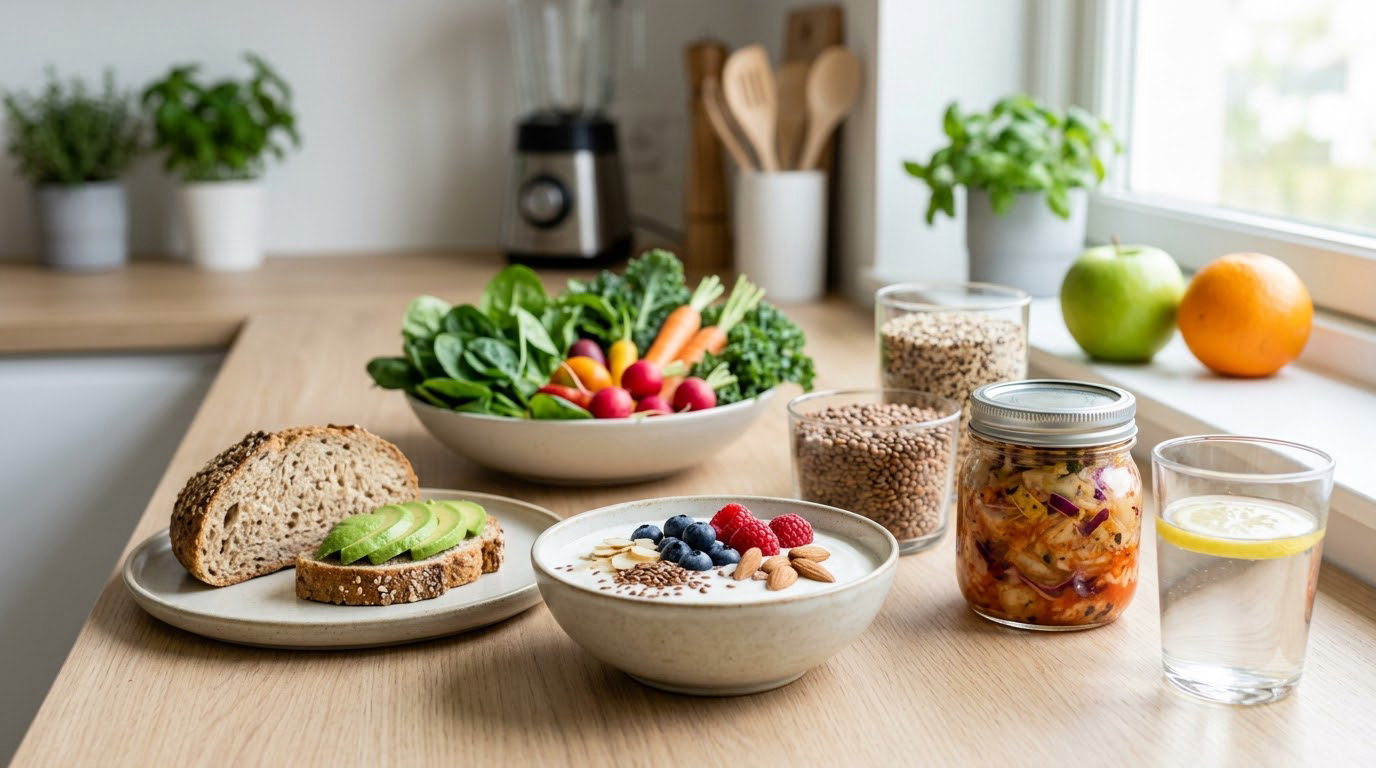
If you want the short version: what to eat for gut health every day comes down to fiber from a wide range of plants, a couple of fermented foods, and enough water to move it along. Most days should look like beans, oats, fruit, vegetables, nuts and seeds, with yogurt or kefir showing up regularly rather than occasionally. You do not need powders, expensive supplements, or a rulebook.
I cook for a household and I have gone through more than a few gut-themed trends with it. What stuck was the boring version: add one or two foods a week, keep them, and rotate. That is the whole approach here.
One note before we start. This is general nutrition information, not medical advice. Individual needs differ, especially with conditions like IBS, IBD, celiac disease or a history of disordered eating, and anything persistent deserves a doctor or registered dietitian rather than a listicle.
Table of Contents
- What to Eat for Gut Health Every Day at a Glance
- 1. Oats and Other Whole Grains
- 2. Beans, Lentils, and Chickpeas
- 3. Apples, Pears, and Berries
- 4. Leafy Greens and Colorful Vegetables
- 5. Plain Yogurt With Live Cultures
- 6. Fermented Foods With Familiar Ingredients
- 7. Nuts and Seeds
- 8. Avocado and Olive Oil
- 9. Fresh or Frozen Fruit
- 10. Whole-Food Fermented and Probiotic Sources
- 11. Foods Rich in Resistant Starch
- 12. A Variety of Plant Foods Every Day
- Frequently Asked Questions
- A Simple Daily Starting Point
What to Eat for Gut Health Every Day at a Glance
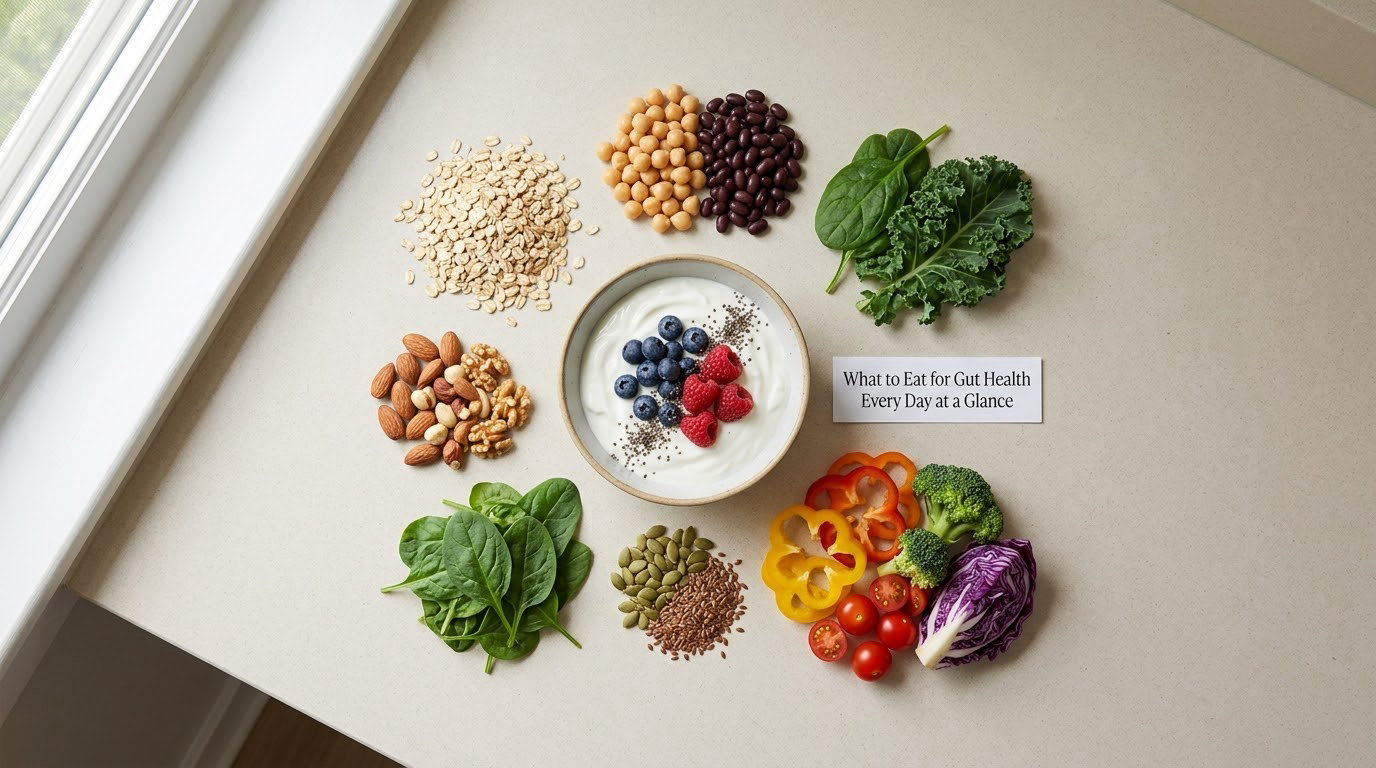
| Food | Main digestive benefit | Form to choose | One daily serving idea |
|---|---|---|---|
| Oats and whole grains | Fiber for regularity and a steadier microbiome | Rolled or steel-cut oats, quinoa, brown rice | Half a cup of oats with berries at breakfast |
| Beans, lentils, chickpeas | Prebiotic fiber plus resistant starch | Canned with no salt added, dried, cooked from frozen | Half a cup of chickpeas tossed into a salad |
| Apples, pears, berries | Fiber and plant polyphenols | Whole fruit, skin on | A pear with a spoonful of nut butter |
| Leafy greens and vegetables | Fiber, folate, sulfur compounds | Fresh, frozen, or canned with low sodium | A side of roasted broccoli with dinner |
| Plain yogurt | Protein plus live cultures | Plain, with live cultures listed on the label | A cup with fruit and seeds |
| Fermented foods | Live microbes from food | Kefir, sauerkraut, kimchi, miso | A spoonful of sauerkraut with lunch |
| Nuts and seeds | Fiber and unsaturated fats | Raw or dry roasted, no added sugar | A tablespoon of chia in oatmeal |
| Avocado and olive oil | Fiber and unsaturated fats | Fresh avocado, extra virgin oil | Avocado on whole-grain toast |
| Resistant starch foods | Starch that reaches the colon | Cooled rice, cooled potatoes, green bananas | Reheated leftover rice with dinner |
| Herbs and alliums | Prebiotic compounds in small amounts | Garlic, onion, leeks, asparagus | Garlic and onion in evening cooking |
| Water | Moves fiber through the gut | Plain water, sparkling, herbal tea | A glass with each meal |
| Variety | Microbiome diversity | 30 different plants across a week | Swap one plant a day, no repeats for three days |
1. Oats and Other Whole Grains
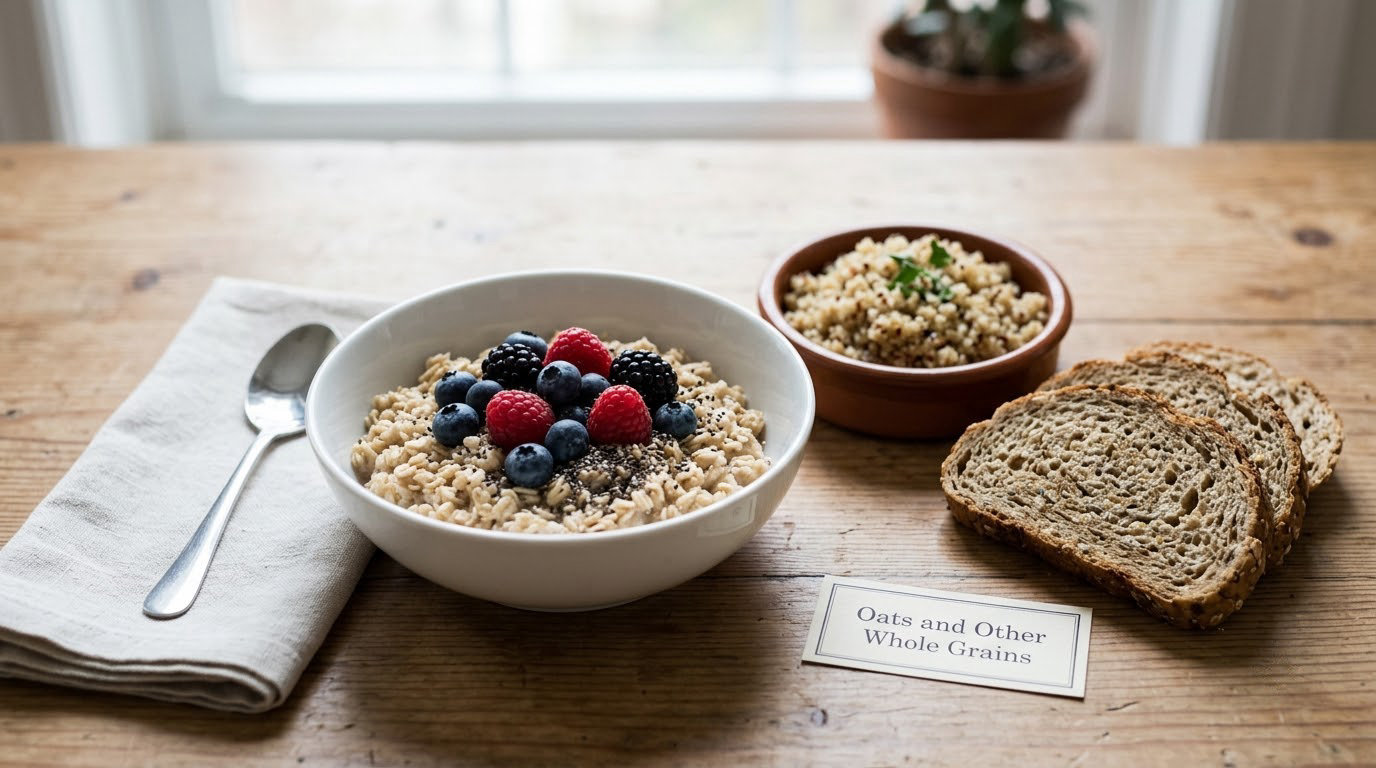
Whole grains are the easiest daily source of the kind of fiber that feeds bacteria rather than just passing through. Rolled oats have more soluble fiber than instant, and both beat heavily processed cereals.
Which whole grains work best for gut health every day?
Rolled oats, quinoa, brown rice, whole wheat, barley and buckwheat all work. What matters is the word whole. White rice, white bread and most instant varieties have had the fiber stripped out, and they behave differently in the gut.
One breakfast that does a lot: half a cup of rolled oats cooked with a splash of milk, a handful of berries, and a tablespoon of chia. It is about eight grams of fiber before you count the fruit.
Quinoa and brown rice are easier to add to lunch and dinner. If you are moving from a low-fiber diet, add roughly five grams a week and drink plenty of fluid, because jumping straight to a huge increase is the fastest way to feel bloated and give up.
2. Beans, Lentils, and Chickpeas
Legumes are among the best foods for gut health if you ignore the gas myth. They carry fiber that reaches the colon and ferment into short-chain fatty acids, including butyrate, which is used by cells lining the gut. They also contain resistant starch, particularly in cooled cooked beans.
Start small. A quarter cup, or half a cup if you eat beans regularly, works better than a full bowl when your gut is not used to them. Most people settle within a few weeks.
Ways to make them easy: blend red lentils into soup, mash chickpeas into hummus, fold black beans into a grain bowl, or warm a can of no-salt-added chickpeas with cumin and spinach. Canned works fine as long as you rinse it and check the sodium.
3. Apples, Pears, and Berries
Fruit is one of the easier answers to what foods are good for gut bacteria, mostly because most people already eat some. Apples with the skin on, pears, raspberries, blueberries, strawberries and blackberries all contribute fiber and polyphenol-type plant compounds.
A pear with the skin gives you about five or six grams of fiber, which is a bigger single hit than most people expect from a snack.
Berries are the other half of the pairing and they add color variety, which matters for diversity. I often do sliced pear with berries on top of plain yogurt so a snack covers fruit, dairy protein, and seeds in one go.
4. Leafy Greens and Colorful Vegetables
Vegetables deliver fiber along with folate, vitamin C and sulfur-containing compounds found in cruciferous vegetables like broccoli, kale, cabbage and Brussels sprouts. There is no single best vegetable. The useful goal is a range of colors across the week, not one superfood.
Practical preparation matters more than enthusiasm. Frozen vegetables are picked and frozen at peak and are genuinely a good choice. Roasted vegetables take ten minutes at high heat and cover a side dish without standing at the stove. If that is not happening on your week, our guide to eating more vegetables without cooking every night is worth a look.
A salad base of greens, topped with leftover chicken or beans, olive oil and vinegar, will feed you better than a plain side salad and use up what you already have.
5. Plain Yogurt With Live Cultures
Plain yogurt supplies protein and, in many products, live cultures. Not every yogurt on the shelf has active cultures, and flavored versions often carry a good amount of added sugar. Check the ingredient list for live or active cultures and pick plain.
Greek-style yogurt tends to have more protein and less lactose than regular yogurt, which some people tolerate better. That is individual, so switch back and forth as needed.
Yogurt works as a base rather than a fix. Half a cup with berries, seeds and a drizzle of olive oil turns it into something that covers fiber, protein and fat. Anyone with a diagnosed dairy allergy or intolerance should follow their clinician’s advice instead of experimenting.
6. Fermented Foods With Familiar Ingredients
Fermented foods deliver live microbes through food rather than in a capsule. Everyday options include plain yogurt, kefir, sauerkraut, kimchi, miso and tempeh. Kefir is worth a special mention because it is typically fermented with a wider mix of cultures than most yogurt.
Two cautions. First, store-bought sauerkraut and kimchi can be very salty, so use a small spoonful rather than a bowl. Second, go easy at first, because a sudden large serving of fermented food can cause gas in a gut that is not used to it.
Gut-friendly drinks to keep in the fridge
Water is the primary one and there is no better option. Plain coffee and unsweetened tea are fine for most people. Kombucha and kefir drinks contain live cultures but are often sweetened, so read the label. If you enjoy it, apple cider vinegar in water is a common kitchen staple, though evidence for digestive benefits is limited and it is acidic, so sip it with food.
On a Mumsnet discussion about rebuilding digestion, the pattern people described was small and repeated, not a total overhaul: a bit more fruit, a daily yogurt, gradually more fiber. That is a realistic pace.
7. Nuts and Seeds
Nuts and seeds bring fiber, unsaturated fats, magnesium and plant compounds. Walnuts, almonds, cashews, pistachios and hazelnuts work, and so do chia, flax, hemp, pumpkin and sunflower seeds. Flax and chia also carry a gel-forming soluble fiber that holds water in the gut.
Portions are the whole game here because the calories add up fast. A tablespoon of seeds in oatmeal, or two walnuts with breakfast, is a realistic daily amount. Nut butter is an easy way in, though choose one with just nuts and salt listed. Our post on how to eat hemp hearts every day covers the seed with the mildest flavor and a surprisingly good protein and fiber profile.
If you add seeds to everything and start feeling bloated, drop back to a teaspoon and build back up.
8. Avocado and Olive Oil
Avocado contributes fiber, potassium and unsaturated fat. Olive oil, ideally extra virgin, contributes unsaturated fat and polyphenols. Neither repairs or treats a gut on its own. They fit into a balanced pattern and help make vegetables and whole grains more filling.
Avocado is a fruit. Olive oil is an added fat, so it is worth a little counting rather than pouring freely. Half an avocado on toast, cubes in a salad, or blended into a smoothie all work well.
For cooking, olive oil is a reasonable default for sautéed vegetables and eggs. If you use avocado for toast most mornings, that is a genuinely repeatable habit, which matters more than any single nutrient.
9. Fresh or Frozen Fruit
Fresh, frozen, canned and dried fruit all have a place. The differences come down to fiber, added sugar and portion size. Frozen fruit is picked and frozen at peak and keeps its fiber, with no sugar added. Canned fruit in juice or syrup loses some fiber through processing and adds sugar, so pick the no-sugar-added option or use the liquid.
Dried fruit is concentrated, so a small handful counts as a full portion and delivers more sugar than fresh. Still fine to eat, just a different snack from an apple.
When you are working toward more fiber, whole or lightly processed fruit is the practical choice. Smoothies count too, just remember that blending does not remove the fiber. If you need something that travels well, our post on what to eat after a workout without a shake has portable fruit and yogurt combinations that double as a gut-friendly snack.
10. Whole-Food Fermented and Probiotic Sources
Alongside yogurt and kefir, whole-food sources include sauerkraut, kimchi, miso, tempeh and some naturally fermented breads and pickles. The idea is straightforward: regularly eating a modest serving adds live microbes alongside a varied diet, rather than relying on a single source.
Supplements are not automatically necessary. They can be useful for a specific reason, but a food-first approach is cheaper, easier and usually sufficient as a starting point. If you are considering concentrated products for a specific concern, talk to a doctor or registered dietitian first, particularly if you are pregnant, immunocompromised, or have a condition affecting your immune system.
The practical target most people do well with is a fermented food several times a week rather than every single day.
11. Foods Rich in Resistant Starch
Resistant starch is starch that escapes digestion in the small intestine and reaches the colon, where bacteria ferment it. Think of it as fiber that forms during cooking rather than coming from the plant itself.
Cooking and then cooling changes the amount. Cooked rice or potatoes that have been cooled and reheated contain more resistant starch than the same food eaten straight from the pot. Green bananas, cooled legumes, whole grains and cooked-then-cooled potatoes are the usual examples.
Reheated leftover rice with dinner is the easiest version of this to add to an existing routine. Introduce these foods gradually too, and keep in mind that a sudden increase in starch can produce gas even when the food itself is a good choice.
12. A Variety of Plant Foods Every Day
This is the takeaway. Fiber types differ across plants, and each type tends to favor different bacteria, which is why diversity matters more than hitting one number with a single superfood. Beans, grains, fruits, vegetables, nuts and seeds all contribute something different.
A widely used target is about 30 different plants across a week, with roughly five to seven grams of fiber added each week rather than all at once. Both are guidelines rather than pass or fail rules, and both are easier to hit by rotating rather than by being strict.
A normal week, not a perfect one
Monday beans in a soup, Tuesday yogurt with fruit, Wednesday leftovers containing cooled rice, Thursday a green salad with nuts, Friday sauerkraut with dinner, Saturday frozen berries in oatmeal, Sunday a whole-grain toast with avocado. Nobody planned that. It just happened, and it is enough to matter.
Most forum readers I have looked at want food-first fixes over supplements, and they want counts they can act on: grams of fiber, servings of fermented food, steps walked. Community consensus tends toward 25 to 35 grams of fiber a day from varied sources, with fermented foods a few times a week.
Frequently Asked Questions
How quickly should I add more fiber?
Most people do best adding about 5 grams every few days rather than making a big jump in week one. Increase gradually and drink enough fluid, because fiber without water can make constipation worse. If bloating or cramping shows up, hold at the current level for a week and add the next increase slowly.
Does juice give me the same gut health benefits as whole fruit?
Usually not. Juicing removes much of the pulp and insoluble fiber, leaving mostly sugar, and a glass fills you less than the same fruit eaten whole. Whole fruit or frozen fruit keeps the fiber that feeds gut bacteria. A smoothie blended with the pulp retains far more fiber than strained juice.
How much water should I drink for digestion?
Drink according to thirst and drink more when you increase fiber. There is no universal number, and pale yellow urine is a practical signal for most adults. Water is the simplest choice, though coffee, tea and sparkling water count toward your total. Fluid matters most when your fiber intake goes up.
When should I see a doctor about digestive symptoms?
See a doctor for ongoing pain, blood in stool, unexplained weight loss, persistent vomiting, difficulty swallowing, or a change in bowel habits that lasts more than a few weeks. Symptoms that wake you at night or keep you from daily activities deserve prompt attention. Food changes are for everyday comfort, not for diagnosing a condition.
Do I need to cut out gluten or dairy to improve gut health?
Not for most people. Broad restriction removes fiber-rich whole grains and calcium sources without good evidence of benefit unless you have a diagnosed condition such as celiac disease or dairy allergy. If you suspect a sensitivity, keep a food and symptom diary and discuss the results with a doctor before cutting out whole groups.
A Simple Daily Starting Point
Pick two foods from this list and add them to meals you already eat. Oats at breakfast and beans in one meal a week is a better starting point than a full overhaul that lasts four days.
Then raise your fiber in small steps, drink according to thirst, and keep a fermented food in the rotation several days a week. Track what you actually eat for a week, because most people find they are eating five plants, not fifteen, and that number is more useful than any opinion.
If symptoms are persistent or worrying, see a doctor or registered dietitian. Food habits work best as steady background support, not as a treatment.