
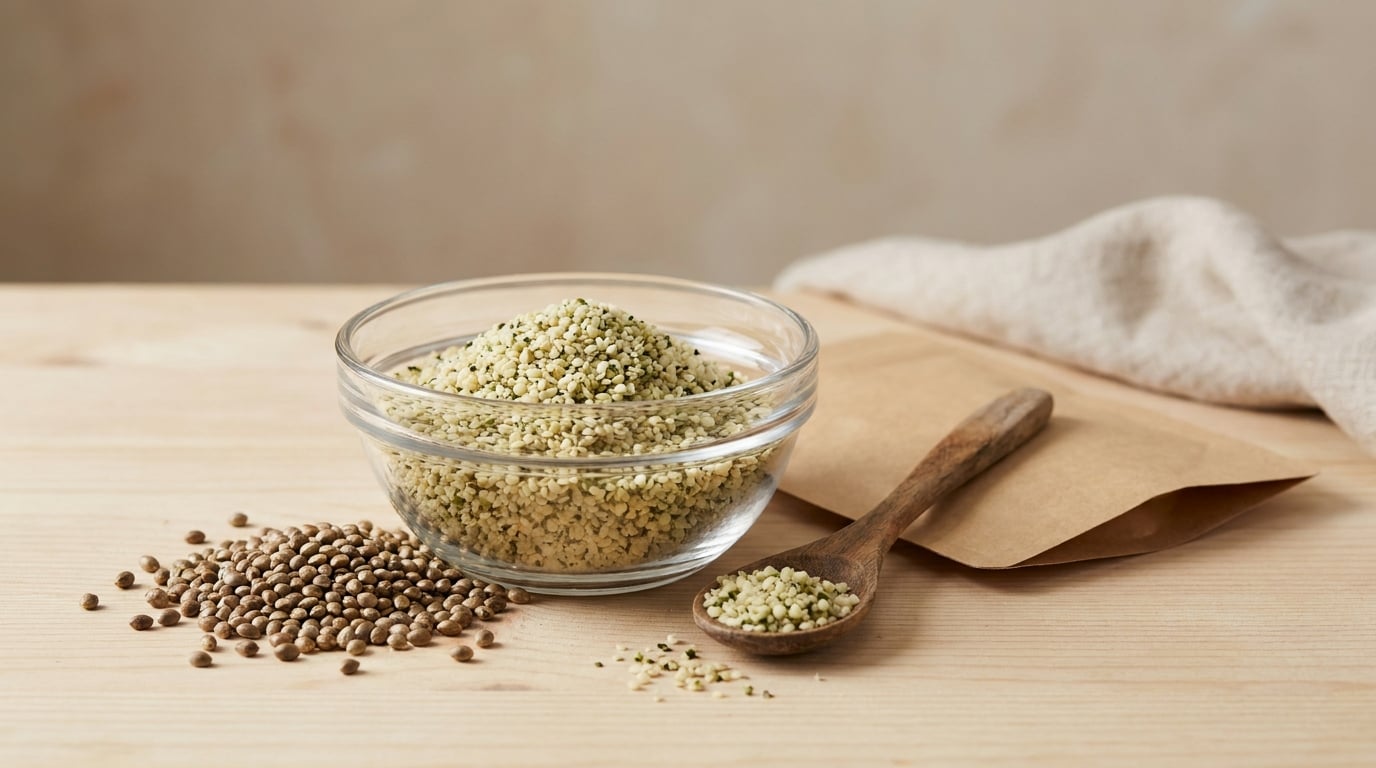
Yes, you can eat hemp hearts every day. The simplest routine is 1 to 3 tablespoons (roughly 10 to 30 grams) stirred into something you already eat, most often breakfast, then repeated across a few different formats so it never gets boring. They need no cooking, no cracking and no special equipment, and they will not make you feel intoxicated.
That is the whole trick, honestly. Hemp hearts are hulled seeds from Cannabis sativa, and their main drawback is not safety or taste. It is that the soft green hull is chewy, and people give up on them before they ever build the habit. Fix the texture and the daily question answers itself.
Below is what they are, how to fold them into a normal week of meals, how much is typical in a serving, and what to watch for if you have allergies or take medication. This is general nutrition information, not personal medical advice.
Table of Contents
- What Hemp Hearts Are and What They Taste Like
- How to Eat Hemp Hearts Every Day
- Hemp Hearts for Breakfast
- Hemp Hearts for Lunch and Dinner
- Simple Recipes and Combinations
- How Much Is Typical in a Serving?
- Tips for Flavor, Texture, and Preparation
- How to Choose and Store Hemp Hearts
- Possible Allergies, Interactions, and Safety Notes
- Frequently Asked Questions
- Conclusion
What Hemp Hearts Are and What They Taste Like
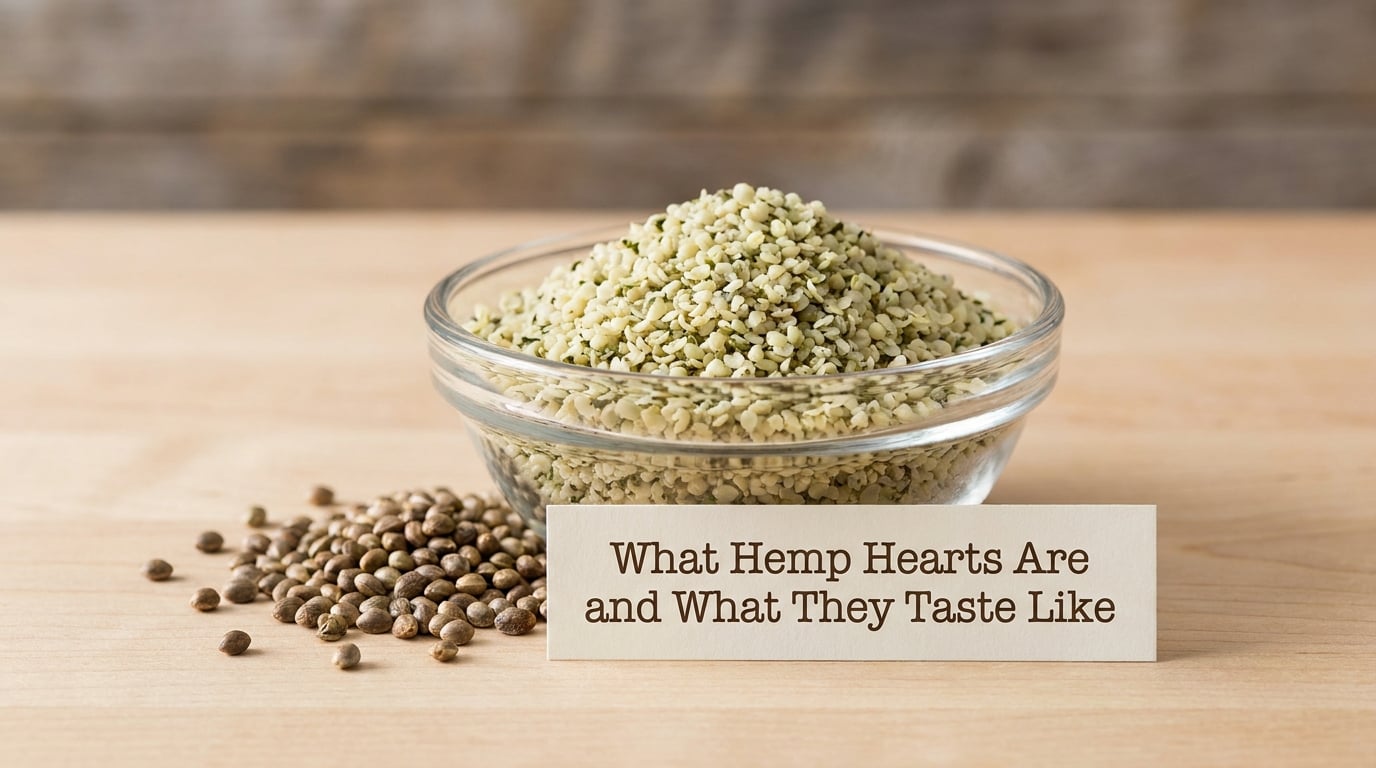
Hemp hearts are the inner kernels of hemp seeds with the hard outer shell removed. You eat them straight from the bag, raw, with no rinsing, soaking or toasting required.
The flavor is mild and nutty, closer to sunflower seeds or a raw almond than to anything strongly hemp-flavored. Because there is no hull, there is also no bitterness and very little grit when they are eaten whole.
They are not the same thing as cannabis seeds you might find in a dispensary section, and they contain only trace amounts of THC and CBD, well under the 0.3% threshold that defines hemp in the United States. Hemp hearts will not get you high.
Two other products are often confused with them. Hemp protein powder is defatted seed meal, mostly protein with the fats and much of the flavor removed, and it behaves like any other powder in a shaker. Hemp seed oil is pressed from the whole seed and is a thick green oil you drizzle rather than chew. Hemp hearts are the whole kernel, so they carry the fat, the fiber and the crunch all at once.
How to Eat Hemp Hearts Every Day
Start with one tablespoon in one familiar food for the first few days, then work up to two or three once your palate adjusts. Most adults land somewhere between 1 and 3 tablespoons a day, and 3 tablespoons gives you roughly 10 grams of protein along with a few hundred milligrams of magnesium.
There is no established medical dose for hemp hearts, and nobody has set a daily limit the way there is for salt or added sugar. What caps your intake is calories and tolerance, not a safety ceiling. Hemp hearts are energy dense, so a tablespoon is small in the spoon and not that small on your day’s total.
Rotate the format rather than the amount. Eating the same tablespoon of oatmeal topping every morning for a year is how people quietly quit. A useful week looks more like this:
- Breakfast: 1 to 2 tablespoons stirred into oatmeal, yogurt or overnight oats.
- Lunch: 1 tablespoon scattered over a salad, grain bowl or avocado toast.
- Snack: 1 tablespoon folded into trail mix, or sprinkled over popcorn.
- Dinner: 1 to 2 tablespoons worked into a sauce, pesto, soup or patty mix.
That lands you at roughly 4 to 6 tablespoons across the day for someone eating them generously, or about 2 tablespoons for someone keeping it light. Both are ordinary patterns. If you also eat chia, flax and walnuts daily, count those toward your overall seed and nut intake for the day.
Easy Serving Ideas: How to Use Hemp Hearts in Everyday Foods
Oatmeal, yogurt and granola are the easiest three, and they need no technique at all. Stir them into warm oatmeal and they soften slightly; keep them out of the pot and add them after cooking and you keep the crunch intact.
Smoothies are the second easiest and the trickiest, because the hull grinds into fine grit that clings to the sides of the blender. Blitz the hearts dry for fifteen seconds first, add the liquid, and the grit disperses instead of pooling.
Salads and grain bowls are the best low-effort win. Hemp hearts on a warm grain bowl pick up a little oil and seasoning and lose some of their raw-paper quality, which many people prefer.
Avocado toast, soups, cooked vegetables and pasta all work the same way: the seeds go on at the end and the heat softens them. Baking is the exception, where a small amount goes into muffins, cookies or quick breads for texture rather than nutrition.
Trail mix, energy bites and granola are the snack lane. In a mixed blend the hemp is one texture among several, so nobody is isolating the chew the way they are in plain yogurt.
Hemp Hearts for Breakfast
The breakfast bowl is the habit worth building first, because it is a food you already make. Cook oats as normal, then stir in 1 to 2 tablespoons off the heat, along with cinnamon, a spoon of nut butter and a splash of milk. Warm food softens the hull and rounds out the raw, papery note.
Greek yogurt works just as well and takes five seconds. Two tablespoons, half a handful of berries, a drizzle of honey. Add them last so the top layer stays visibly crunchy rather than dissolving into a wet paste.
Overnight oats are the best option if mornings are rushed. Mix 1 tablespoon of hemp hearts into the jar with the oats and liquid, refrigerate overnight, and eat it cold. The seeds rehydrate and soften enough that the texture objection mostly disappears.
Smoothies need the two-step method described above, or use a pre-ground hemp powder instead. Pancakes and waffles work as a finishing sprinkle on top with a little maple syrup, where the syrup softens them. Homemade granola gets 2 tablespoons stirred into the tray before baking, which toasts them lightly and makes them hold up better in a jar.
Hemp Hearts for Lunch and Dinner
Hemp hearts add texture and a small amount of plant protein, but they are not a stand-in for a protein-rich food or for vegetables. A tablespoon on a salad does not replace the beans, lentils, tofu or chicken that would actually carry the meal.
In grain bowls, add 1 tablespoon after the grains have cooled slightly so the seeds stay crisp. In a chopped salad with cucumber, tomato and soft herbs, they hold their own and take on the vinaigrette.
Avocado toast is a good carrier because the fat in the avocado softens the hull. Soups and stews work well too, though add them in the last two minutes of cooking. Simmering them for twenty minutes makes them swell and go soft, which is fine in a soup and not what you want in a salad.
Pasta is a case where 1 tablespoon stirred into the finished bowl works well, because the starch water and olive oil coat the seeds. Patties, meatballs and veggie burgers are the other good use: 2 tablespoons per 500 grams of mixture act as a binder and add protein, on top of whatever you are already using.
A nut-free hemp pesto is the most useful thing to learn here. Blend 3 tablespoons of hemp hearts with basil, garlic, lemon juice, nutritional yeast and olive oil, and you get a sauce with the same job as a nut pesto for anyone avoiding tree nuts.
Simple Recipes and Combinations
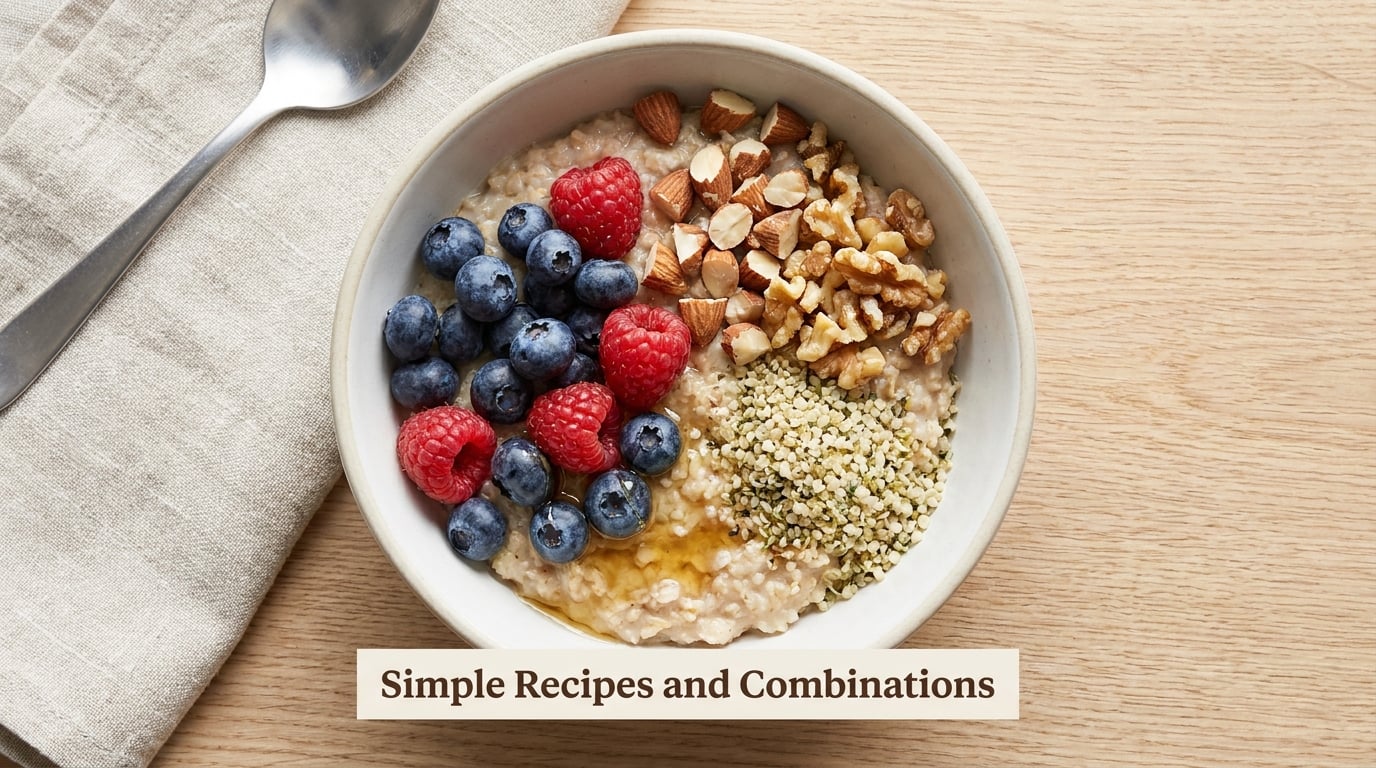
All five of these keep to a handful of steps. Quantities are written for one person.
Warm Hemp Heart Breakfast Bowl
Cook half a cup of rolled oats in a cup of water or milk for five minutes. Off the heat, stir in 1 tablespoon of hemp hearts, a teaspoon of cinnamon, a tablespoon of almond butter and a splash of milk. Let it sit two minutes so the seeds soften. Add a handful of berries and a drizzle of honey.
Savory Hemp Grain Bowl
Start with a cup of cooked quinoa, farro or brown rice. Top with roasted squash, chickpeas, a handful of spinach and a spoonful of tahini dressing. Finish with 1 tablespoon of hemp hearts, a squeeze of lemon and cracked pepper. Eat it while the grains are still slightly warm.
Grounded Hemp Smoothie
Put 1 tablespoon of hemp hearts in the blender dry and pulse for 15 seconds until it looks like coarse sand. Add a frozen banana, 1 cup of oat or soy milk, a tablespoon of cocoa or cacao and a handful of spinach. Blend 45 seconds. The dry-first step is what keeps the grit out of the finish.
No-Bake Hemp Energy Bites
Stir together a cup of rolled oats, half a cup of almond butter, a third cup of hemp hearts, a quarter cup of honey or maple syrup, a tablespoon of cocoa and a pinch of salt. Rest the mixture for 10 minutes so the oats hydrate. Roll into 12 balls and chill for 30 minutes. They keep in the fridge for about a week and freeze fine for a month.
Hemp Heart Trail Mix
Combine a cup of hemp hearts, half a cup of pumpkin seeds, a quarter cup of dried cranberries, a quarter cup of dark chocolate chips and a quarter cup of unsweetened coconut flakes. Keep it in a jar on the counter and eat a handful-sized portion. If a nut-free version is needed, swap the chocolate for dried banana chips and double the pumpkin seeds.
How Much Is Typical in a Serving?
Most home use falls between 1 and 3 tablespoons, and a tablespoon is about 10 grams. The figures below are typical per-serving values based on USDA FoodData Central entries for hemp seed kernels, and brands vary a little.
| Amount | Approx. weight | Calories | Protein | Fiber | Magnesium |
|---|---|---|---|---|---|
| 1 tablespoon | 10 g | 55 to 60 | 3 g | under 1 g | about 100 mg |
| 2 tablespoons | 20 g | 110 to 120 | 6 g | 1 g | about 200 mg |
| 3 tablespoons | 30 g | 165 to 170 | 10 g | 1.5 g | about 300 mg |
| 1 ounce (2 tablespoons) | 28 g | 152 to 157 | 9 g | 1.5 g | about 300 mg |
One ounce also covers a meaningful share of several other daily values: roughly 34% DV of zinc, 22% DV of iron, 41% DV of phosphorus, 77% DV of vitamin E and 140% DV of manganese. That manganese figure is the one number worth knowing about, and it comes up in the safety section below.
How much is typical depends on the goal. Someone adding them for texture and magnesium can sit comfortably at 1 to 2 tablespoons. A plant-based athlete chasing protein may push to 3 tablespoons at breakfast and 3 more across lunch and dinner, which is 60 grams and about 20 grams of protein.
For weight management, measure rather than pour. A tablespoon is easy to double by accident, and a double tablespoon quietly adds more than 150 calories.
For the record, hemp seeds do not beat eggs for protein. Three tablespoons give about 10 grams, while a large egg gives about 6. Eggs are more protein-dense per calorie and add vitamin B12 and choline that hemp does not. Hemp’s advantage is that it brings magnesium, zinc, vitamin E and an omega-3 fatty acid alongside the protein.
Tips for Flavor, Texture, and Preparation
The chewy hull is the reason most people abandon hemp hearts, and it is also the easiest problem to fix. Grinding is the single best fix: pulse 2 to 3 tablespoons in a spice grinder for 20 to 30 seconds and you have a coarse meal that blends into smoothies, oatmeal and sauces with no visible grit. A dedicated coffee grinder works best because a blender blade hits them unevenly.
Soaking is the second fix. Hemp hearts left in any liquid for 20 minutes or overnight absorb water and soften noticeably. Overnight oats, chia-and-hemp puddings and blended drinks all do this for you without extra work.
To cut bitterness, buy the right product and store it right. Most bitterness traces back to oils that have oxidised in a bag that sat warm and open. A fresh batch tastes almost nothing like a stale one.
For toasting, a dry skillet over medium heat for 2 to 3 minutes, shaking often, deepens the flavor. Watch it, because the seeds go from nutty to burnt fast. Toasting also reduces the raw, green note that some people never get used to.
Add before or after cooking depends on the dish. Stir them in during the last two minutes of a soup or stew, or after a grain bowl has cooled a little, if you want crunch. Let them go in at the start of a bake and they soften into the crumb instead, which is usually what you want in muffins.
Pairing helps. Salt, garlic, smoked paprika, lemon and nutritional yeast all sit well with the flavor. Sweet pairings are berries, banana, cinnamon and maple. Plain water and plain oatmeal on the same spoonful is the harshest version, and not a fair test.
How to Choose and Store Hemp Hearts
Check the label for the word hulled or shelled. Hemp hearts with hulls left on are a different food, with more fiber and a texture most people describe as gravelly, and they are not an interchangeable swap at the same tablespoon.
Plain hulled hearts are the versatile choice. Flavored or salted versions are convenient but the seasoning changes with every batch, which makes them harder to use in baking and in a daily routine. Organic certification matters if you buy regularly, and third-party testing is worth looking for because it screens for heavy metals and tells you whether the product is genuinely low in THC.
Storage is the part most people get wrong. Because hemp hearts are high in unsaturated fat, oxygen and warmth are their enemies. Reseal the bag or move the contents into an airtight, opaque container, keep it in a cool dark cupboard, and refrigerate once opened if you are not using it within a few months.
Whole seeds keep longer than hulled ones, since the shell protects the oil inside. Expect roughly 6 to 12 months for hulled hearts in a sealed container, and use the smell as your real test. A clean, nutty scent is fine. A stale, waxy, faintly paint-like smell means the oils have gone and you should toss the bag.
Possible Allergies, Interactions, and Safety Notes
Hemp is botanically a seed, and people allergic to seeds, tree nuts or similar plant foods occasionally react to it. If you have a known seed or tree nut allergy, treat hemp hearts as an unknown food until a clinician tells you otherwise. A first reaction can range from itching and hives to swelling and breathing difficulty. Anyone who struggles to breathe or swallow after eating a new food needs emergency care, not a web article.
Keep the two kinds of reaction separate. A true hemp allergy is an immune response to the seed protein. A cannabinoid-related reaction is a different mechanism entirely, and hemp hearts contain only trace amounts. Feeling anxious or unwell after eating hemp hearts is far more likely to be a digestion issue, a large serving, or an unrelated issue entirely.
Introduce any new food in a small amount first, ideally not on a day you cannot afford to be uncomfortable.
Two nutrition notes deserve attention. One ounce supplies about 140% DV of manganese, and repeated daily portions on top of other manganese sources are worth discussing with a doctor if you have a liver condition. Hemp hearts are also high in vitamin E, and high vitamin E intakes interact with blood thinners and statins, which is a normal dietary amount rather than a supplement-sized one.
If you take prescription medication, manage a condition, are pregnant or breastfeeding, talk to your doctor or a registered dietitian before making hemp hearts a daily habit. This section is general information, not a diagnosis or a treatment plan.
Frequently Asked Questions
Can I eat hemp hearts every day?
For most people, yes. Hemp hearts are a whole, minimally processed food and no official daily limit has been set. The practical constraints are calories, since they are energy dense, and your total seed and nut intake if you already eat chia, flax or walnuts. If you take blood thinners or statins, or have a liver condition, check with your doctor first because hemp hearts are high in vitamin E and manganese.
What is the best way to eat hemp hearts?
Start with a small serving mixed into food you already eat, such as oatmeal or yogurt, then add them to a second meal later in the day. Grinding them in a spice grinder first solves the chewy texture that stops most people. Keep one format permanent and rotate the rest, since the same topping every morning is how habits fade.
Do hemp hearts get you high?
No. Hemp hearts contain only trace amounts of THC and CBD, far under the 0.3% threshold that defines hemp in the United States. Nothing about the texture, smell or taste of hulled hemp seeds indicates a psychoactive effect. A separate immune reaction to the seed protein is possible if you are allergic, and that is very different from intoxication.
Are hemp hearts a good source of protein?
They are one of the better plant sources, at about 10 grams per 3 tablespoons. Hemp provides all nine essential amino acids, and its edestin and albumin proteins are easy to digest. It is not denser than eggs, and a large egg gives about 6 grams in fewer calories, but hemp also brings magnesium, zinc, vitamin E and an omega-3 fatty acid that eggs do not.
How do I make hemp hearts taste less bitter or gritty?
Grind them. Pulse 2 to 3 tablespoons in a spice grinder for 20 to 30 seconds and the chewy hull becomes a coarse meal that disappears into smoothies, oatmeal and sauces. Soaking helps too: overnight oats or any blended drink softens the texture noticeably. Most bitterness comes from oils that have oxidised, so buy a fresh batch and store it airtight away from heat.
Can people with seed or nut allergies eat hemp hearts?
Ask your doctor or allergist before trying them, because hemp is a seed and cross-reactivity with other seeds and tree nuts does occur in some people. Introduce a small amount first rather than a full serving. Signs such as hives, swelling, wheezing or vomiting after eating a new food need prompt medical attention, and breathing difficulty is an emergency.
Conclusion
Start with the smallest version that works: one tablespoon stirred into one breakfast you already make, and stay there for a week. Once the texture stops bothering you, add a second use at lunch or stir them into a sauce at dinner, and treat hemp hearts as an ingredient in your meals rather than a supplement to chase.
Measure the tablespoons, keep the container sealed and cool, and if you have a seed allergy or take medication, run it by a doctor or registered dietitian first. Updated for 2026.