
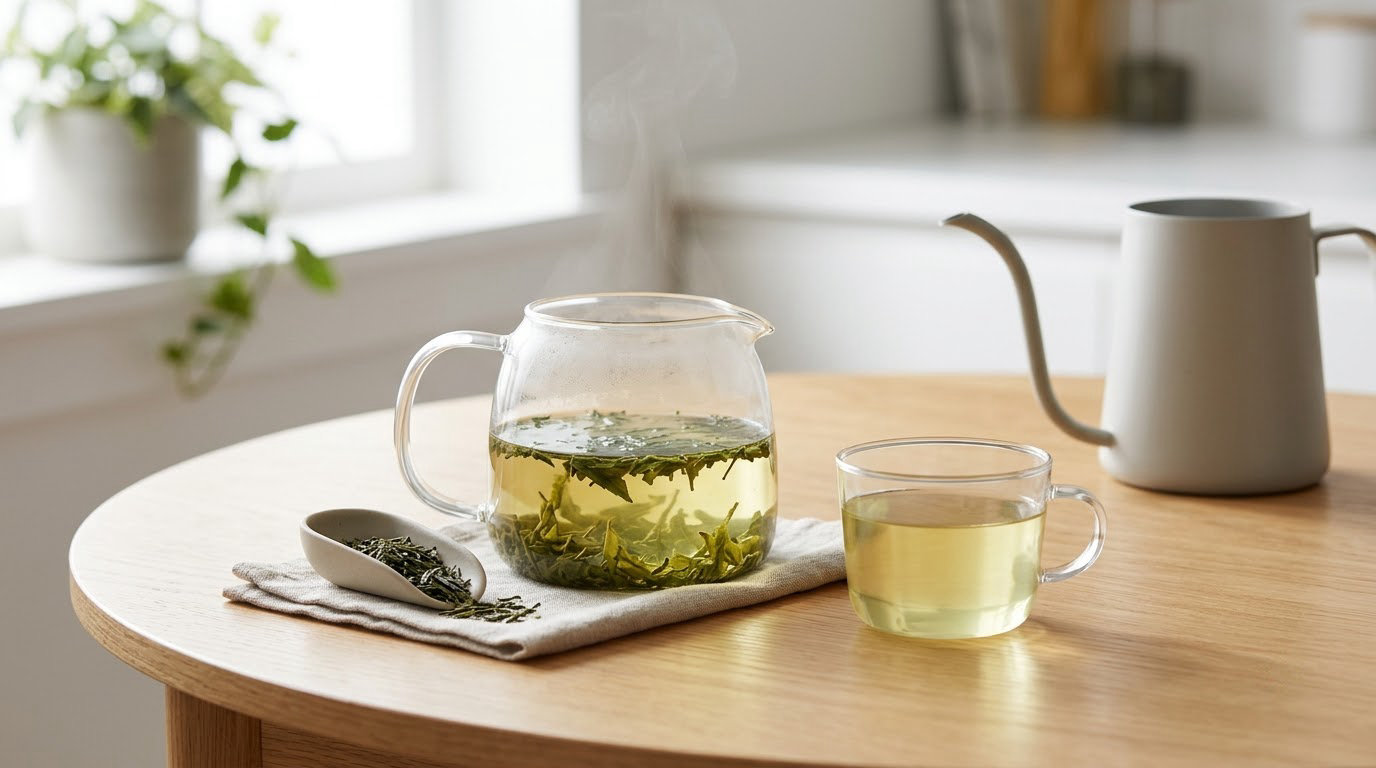
Bitter green tea is almost always a brewing problem, not a bad tea. Use water at 160 to 175°F (70 to 80°C), steep only 60 to 90 seconds, use about one teaspoon of leaf or one tea bag per 8 ounces of water, and take the leaves out the moment the steep ends. Those four habits fix most cups in a single try.
What actually happens when green tea goes wrong is a chemistry problem. The same leaf that gives you sweet, grassy, slightly marine notes at the right temperature will turn sharp and ashy if you scald it. Hotter water and longer contact time pull out more catechins and tannins, and those compounds are the ones your tongue reads as bitterness and dryness.
There are three levers, and only three: water temperature, steep time, and how much leaf sits in the water. If you can turn those, you can make a smooth cup from tea you currently think you hate.
- Water: 160 to 175°F (70 to 80°C). Boiling water scorches most green teas.
- Time: 60 to 90 seconds for a delicate cup, 90 to 120 seconds for a stronger one.
- Ratio: Roughly 1 teaspoon of leaf or 1 tea bag per 8 ounces (240 ml) of water.
- Cleanup: Remove the leaves, bag or infuser right on time. Tea sitting in the cup keeps extracting and gets more bitter while you drink it.
Last reviewed for October 2026. The numbers below come from how tea is actually brewed, and every temperature is given in both Fahrenheit and Celsius so you can use a thermometer or just a kettle and a clock.
Table of Contents
- What You Need
- Step-by-Step: How to Brew Green Tea Without Bitterness
- Frequently Asked Questions
- How long should I let green tea cool before drinking it?
- How much green tea should I use for 8 ounces of water?
- Can I use a reusable tea bag to brew green tea?
- How do I make iced green tea without it tasting bitter?
- Does brewing matcha the same way as loose-leaf green tea reduce bitterness?
- Is there a downside to drinking green tea every day?
- Conclusion
What You Need
None of this is expensive, and most of it is already in your kitchen. A temperature-controlled kettle is the one genuinely useful upgrade, but the whole method works without one.
- Green tea: Loose leaf, or a good bag if that is what you have. Both work, and bags are usually more forgiving because the leaf is already a consistent size.
- Fresh filtered water: Tap water works in most towns. If your tea tastes flat or slightly metallic no matter what you do, this is the first thing to change.
- A kettle: Ideally one with a temperature dial or a thermometer you can dip in. A stovetop kettle is fine as long as you have a way to judge and cool the water.
- A measuring spoon: A regular teaspoon is the unit that nearly all tea instructions use. A flat teaspoon of leaf is roughly 2 to 3 grams.
- A timer: Phone alarms are perfect. Free, and it removes the guesswork that causes most bitterness.
- A heat-safe mug or cup: Any cup. Pre-warming it is a nice touch, not a requirement.
- An infuser, strainer or small mesh basket: Only for loose leaf. A fine-mesh sieve or a reusable tea bag both work in a pinch.
You do not need a gaiwan, a kyusu, or a gooseneck kettle. A gaiwan is genuinely excellent for Chinese greens and a kyusu is lovely for Japanese sencha, but the temperature and timing rules below do the real work. Brew with a mug and a strainer first, and upgrade later only if you want to.
Step-by-Step: How to Brew Green Tea Without Bitterness
Read the whole sequence once, then follow it in order. The order matters, because each step sets up the next one.
Use Filtered Water at the Right Temperature
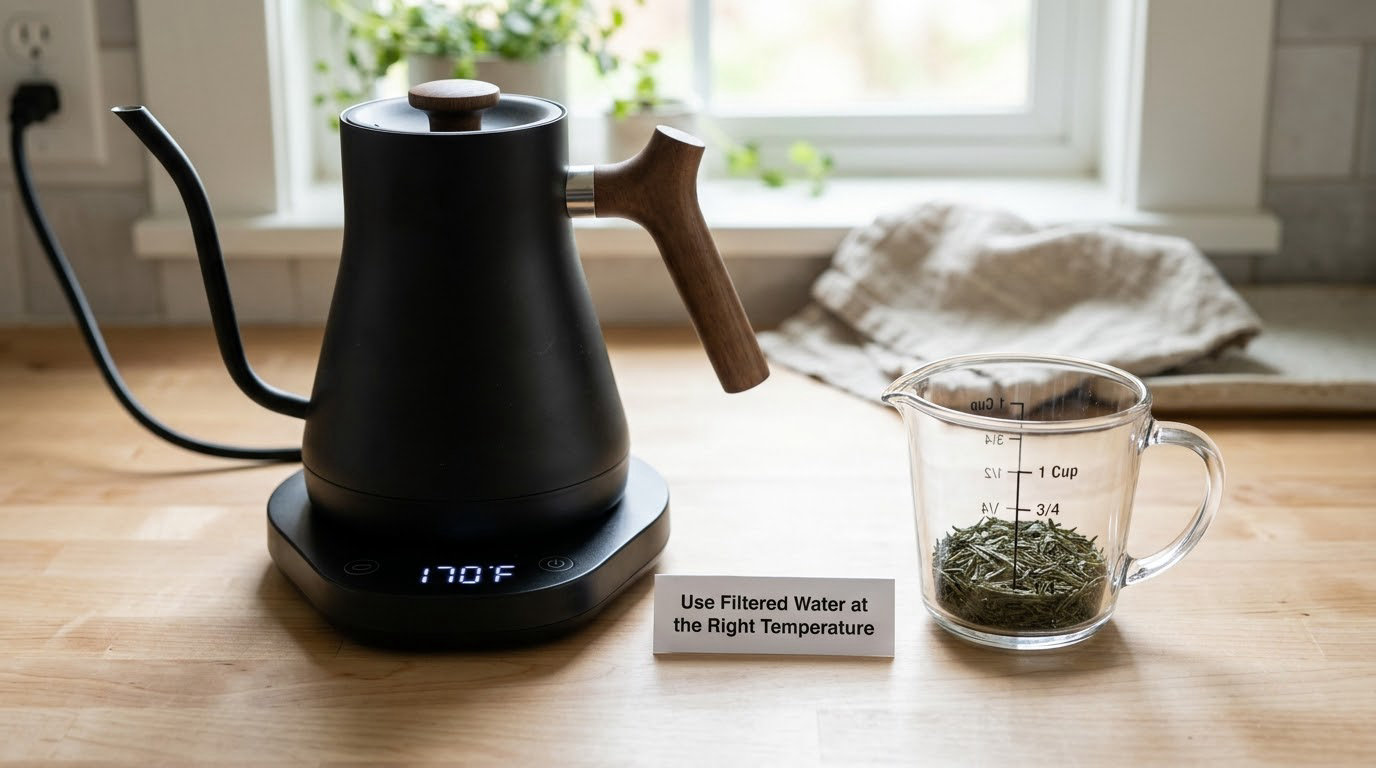
Green tea is a tender leaf. Start at 160 to 175°F (70 to 80°C) and you are in the right zone. Delicate Japanese styles such as sencha and gyokuro usually taste best at the cool end of that range, while robust Chinese-style teas such as Longjing handle the hotter end without complaint.
This is the single biggest lever for learning how to brew green tea without bitterness. Boiling water at 212°F (100°C) is too hot for almost every green tea, and it is the number one reason home cups taste harsh.
No thermometer? Three methods work well.
- Boil and wait. Bring water to a rolling boil, then let it sit for 1 to 2 minutes. That lands you in the neighborhood of 180 to 190°F, which is fine for a first attempt and better than pouring straight off the boil.
- The second-cup trick. Brew a weak throwaway cup, then use that slightly cooler water for the cup you actually want to drink. It is a well-regarded workaround among regular tea drinkers who refuse to own a thermometer.
- Mix hot and room-temperature water. Roughly 80% boiling and 20% room temperature gets you close to 80°C. Try 70% boiling and 30% room temperature for a cooler cup.
Water quality matters more than most people expect. Very hard water flattens aroma and can make green tea taste chalky, and water that has been boiled twice tastes flat and slightly bitter because dissolved gases have been driven off. Use fresh, filtered water for every pot, and never reheat a kettle you already used for tea.
Use the Right Amount of Tea
Start with one teaspoon of loose leaf or one tea bag per 8 ounces (240 ml) of water. That is the number most tea shops work from, and it gives you a cup with real flavor and enough strength to brew a second infusion from.
Adjust from there. More leaf gets you a stronger cup, and the bitterness will come from time and heat rather than from the quantity, as long as you stay near the starting ratio. Less leaf gets you a lighter cup that is easy to drink in the afternoon.
Watch the bag and ball situation, because this is where a lot of bitterness comes from. An oversized tea ball or a tightly packed sachet does not stop extracting when you pour the cup. It sits there releasing tannins into liquid you are still drinking, and by the last third of the mug the flavor has turned sharp. If you use a ball, size it so the leaf can expand and move, and lift the whole thing out at the end of the steep.
Never squeeze or press a tea bag to “get the last drop” out of it. Squeezing pushes concentrated liquor and fine leaf fragments into the cup, and it is the fastest way to make a mild green tea taste bitter. Same rule for loose leaf in an infuser: tap the basket lightly over the mug, then stop.
Vessel choice is a smaller lever than people argue about online, but a wide-mesh infuser beats a cramped one. Leaves need room to open up, and a basket that is packed tight will brew a dull, flat, occasionally bitter cup. A clay or ceramic strainer is a fine choice; a metal mesh basket is fine too.
Steep for a Shorter Time
Start at 60 to 90 seconds for a delicate cup, and go to 90 to 120 seconds when you want something stronger. Whatever the package on your tea says wins, because every producer has tested their own leaf.
Green tea is steeped, not boiled. The difference matters: an infusion is a short soak in hot water that you pour off, while a decoction is a simmer. If the leaves are in the pot for three minutes or more at full heat, you are heading toward the astringent end whether you meant to or not.
Different varieties genuinely want different treatment, which is why one universal rule keeps failing people:
| Tea | Water temperature | Steep time | Leaf per 8 oz (240 ml) |
|---|---|---|---|
| Sencha | 160 to 180°F (70 to 82°C) | 60 to 90 seconds | 1 to 1.5 teaspoons |
| Gyokuro | 140 to 160°F (60 to 70°C) | 90 to 120 seconds | 1.5 teaspoons |
| Genmaicha | 175 to 185°F (80 to 85°C) | 60 to 90 seconds | 1 teaspoon |
| Longjing (Dragon Well) | 160 to 175°F (70 to 80°C) | 60 to 90 seconds | 1 to 1.5 teaspoons |
| Matcha | 160 to 175°F (70 to 80°C) | Whisk, do not steep | 1 to 2 level teaspoons |
| Hojicha | 180 to 195°F (82 to 90°C) | 60 to 90 seconds | 1 teaspoon |
| Gunpowder | 170 to 180°F (77 to 82°C) | 60 to 75 seconds | 1 teaspoon, use under 1 gram |
| Cold brew | Cold filtered water | 6 to 8 hours, refrigerated | 1 to 1.5 teaspoons |
Gunpowder deserves a note on its own. It is a tightly rolled, roasted leaf and it is bitter-leaning by nature, so treat it as the most demanding tea on the shelf: cooler than you think, short steep, and generous with filtered water.
When the steep ends, lift the leaves, the bag or the infuser out immediately. Do not leave them in while you drink. A leftover bag sitting in a mug will keep pulling bitterness into the cup for as long as the cup lasts, and that is the single most common complaint in tea forums about “my tea always turns bitter.”
Most decent green teas survive a second infusion. Add 10 to 20°F more than the first pour and shorten the time slightly, or simply reuse the same temperature for about 30 seconds less. Loose leaf often makes a good third cup if the first two were short.
Taste and Adjust Your Cup
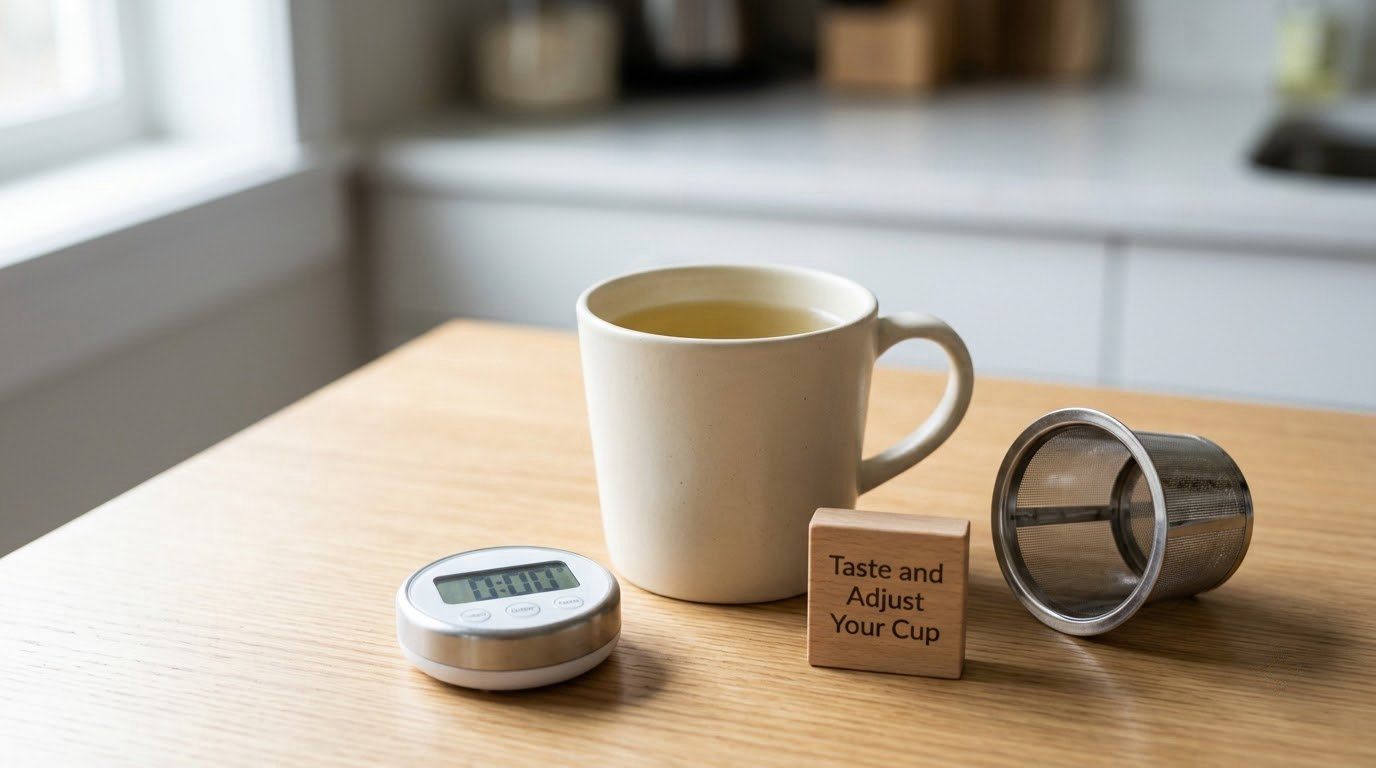
Change one variable at a time. That is the whole calibration method, and it is how you find the right settings for the specific tea in your cupboard rather than the average of every tea ever brewed.
Read the cup and fix the one thing that is off.
- Harsh and drying all over: cut the steep by 20 to 30 seconds first, then drop the temperature by 10°F if it is still sharp.
- Weak but not unpleasant: add a little more leaf or 15 more seconds. If the cup is weak and slightly bitter at the same time, add heat rather than tea.
- Thin and watery: a common result of 10 to 15 second flash steeps. A 60 to 90 second steep extracts more flavor and, at a controlled temperature, less bitterness.
- Smooth but flat: leaf quality and water are the usual suspects, not the timing. Try a different bag or a better cup of leaf before you touch the clock.
A correctly brewed cup is pale golden-green and nearly clear, never opaque or brown. The smell hits you before the taste: sweet, grassy, sometimes a little like fresh-cut grass or seaweed. The finish is soft and slightly sweet rather than drying. If your tongue feels tight at the back of your mouth, the steep went too far even if the first sip tasted fine.
Already have a bitter cup in front of you? Pour in more hot water at the same temperature to dilute it and soften the edge. A quick second steep of the same leaves in fresh hot water for 15 to 20 seconds will often be better than the first cup, because the bitterest compounds were already pulled out. Avoid adding milk or sugar to hide it, because you will not learn where the problem was.
If you genuinely dislike the flavor profile rather than the brew, there are softer versions. Cold brew green tea in the refrigerator for 6 to 8 hours with 1 to 1.5 teaspoons per liter is almost impossible to make bitter. For iced tea, brew the cup strong as usual, then pour it over ice right away and drink it within the hour. Mint, a slice of lemon added after brewing, or a small spoon of honey stirred in once the tea has cooled a little all soften the finish. A splash of milk works too, which is exactly how most people in matcha latte shops drink it.
Common Mistakes
Every bitter cup traces back to one of these. Pair the mistake with the fix and you are done.
- Pouring boiling water over the leaves. Scalding pushes far more catechins and tannins into the liquid and flattens the aroma. Fix: cool to 160 to 175°F (70 to 80°C) first.
- Too much leaf. An overloaded pot brews a concentrate and pushes you into the astringent range. Fix: 1 teaspoon or 1 bag per 8 ounces (240 ml), and go up in temperature rather than quantity when you want more strength.
- Steeping too long. Past roughly 2 minutes at full strength, the cup dries out. Fix: 60 to 90 seconds, timed, and remove the leaves on the second the timer ends.
- Pouring water into a mug that already holds the leaves. The leaf sits at the bottom, fully submerged, and keeps extracting while you drink. Fix: steep in a pot or an infuser, then pour the liquid out.
- Reheating brewed tea. Warming a finished cup drives off aroma and concentrates what is left. Fix: brew a fresh cup, and boil fresh water every time.
- Treating all green tea alike. Gyokuro at boiling temperature and Hojicha at 140°F will both disappoint you. Fix: use the variety table above and start from there.
Frequently Asked Questions
How long should I let green tea cool before drinking it?
Most people drink green tea while it is still too hot to comfortably sip, which is a waste of a good cup. Let it sit for three to five minutes after brewing so it drops to around 130 to 150°F (55 to 65°C). Green tea tastes best below about 160°F (70°C), and the aroma is much clearer there. If you are in a hurry, pour it into a room-temperature mug to cool it faster.
How much green tea should I use for 8 ounces of water?
About one teaspoon of loose leaf or one tea bag per 8 ounces (240 ml) of water is the standard starting point. A flat teaspoon is roughly 2 to 3 grams. Go down for a lighter afternoon cup, and up to 1.5 teaspoons if you want a stronger brew or plan a second infusion. Resist the urge to add a second bag, because strength is better built with temperature and time than with volume.
Can I use a reusable tea bag to brew green tea?
Yes, and they are often easier to get right than loose leaf. The mesh gives the leaf room to move and expand, and you can lift the whole thing out at the end of the steep. Use a bag with a fine mesh so fine particles do not escape into the cup. Never squeeze it to get the last drop out, because pressing releases concentrated liquor and sediment that will make a mild cup taste bitter.
How do I make iced green tea without it tasting bitter?
Two reliable methods. Brew a normal cup with hotter water and a shorter steep, then pour it straight over ice and drink within the hour. Or cold brew: 1 to 1.5 teaspoons of leaf per liter of cold filtered water, refrigerated for 6 to 8 hours, then strain. Cold water is the single best bitterness fix available, and the result keeps for two days in the fridge.
Does brewing matcha the same way as loose-leaf green tea reduce bitterness?
Not quite. Matcha is whisked rather than steeped, and you drink the whole suspension including the fine leaf powder, so there is nothing to strain out. That is why matcha can read as stronger and more bitter when brewed hot. Use water around 160 to 175°F (70 to 80°C), whisk briefly, and expect a fuller, creamier cup than sencha. If you want the mildest possible matcha, make it as a chilled latte.
Is there a downside to drinking green tea every day?
Green tea contains caffeine, commonly 20 to 45 mg per 8 ounce cup depending on the tea and the steep, so daily cups add up. Most adults do drink it daily without trouble, but sensitivity to caffeine can show up as jitteriness or disrupted sleep, especially with large or strong infusions. If you are pregnant, taking medication, or managing a health condition, ask a doctor or pharmacist about what is right for you.
Conclusion
Start here today: water at 170°F (77°C), one teaspoon of leaf or one tea bag per 8 ounces (240 ml), and a 60 to 90 second steep. Take the leaves out the moment the timer ends and pour.
That single attempt will tell you more than any article, because you can feel the difference in the finish. Then adjust one thing at a time until the cup tastes smooth enough that you never think about it. Once you do that, the tea you thought you disliked is probably the one you end up drinking every afternoon.