
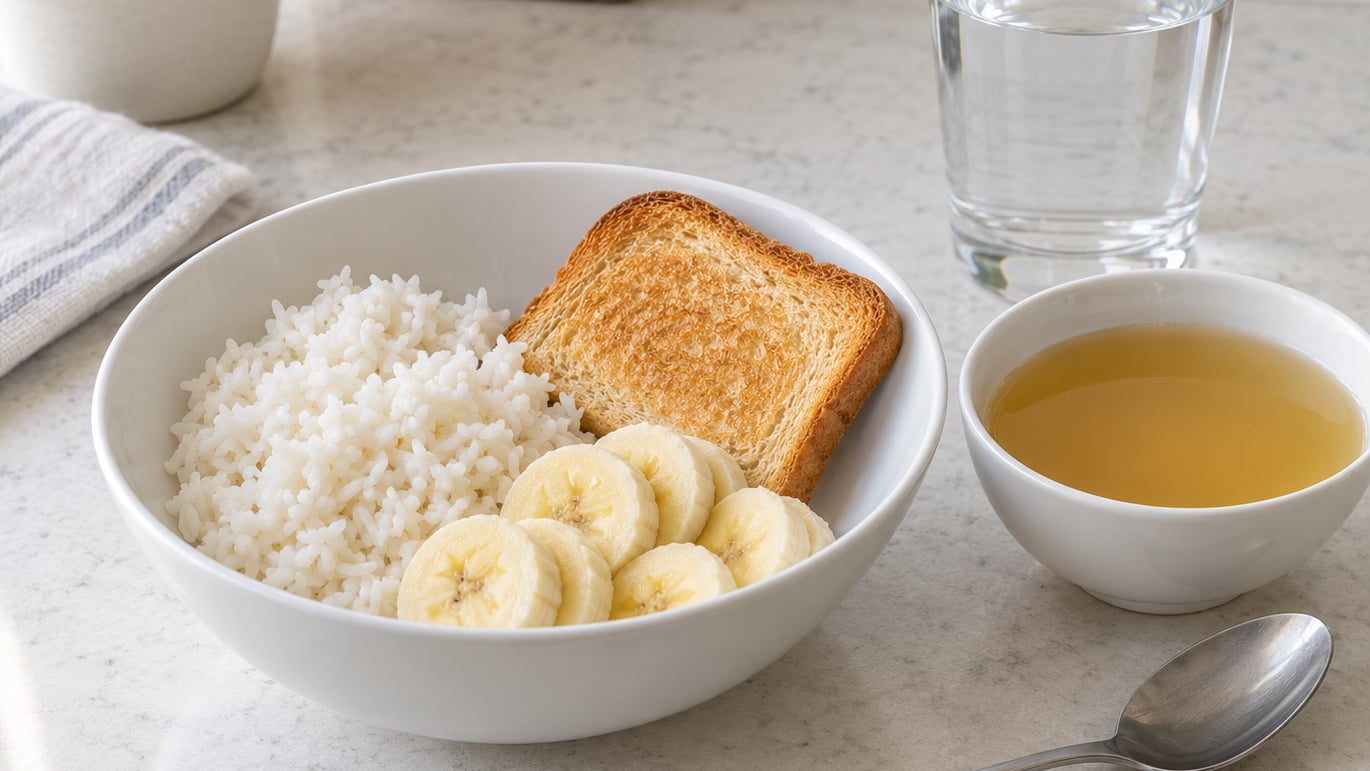
Foods to eat when you have a stomach bug should be bland, low in fat, and easy to digest — think plain rice, toast, bananas, oatmeal, and clear broth. Fluids come first in the first 12 to 24 hours, then you add a few bites of simple food at a time and watch how your body responds.
Food cannot cure the infection. What it does is keep you hydrated and give your gut something gentle to work with while the lining of your stomach and intestines settles down.
One warning before we start: tolerance varies more than any list can capture. Someone who can keep down plain yogurt may find it sits badly, and someone who normally avoids dairy may handle it fine. Use the list below as a menu to try from, not a prescription.
Table of Contents
- Foods to Eat When You Have a Stomach Bug at a Glance
- 1. Bananas
- 2. Plain White Rice
- 3. Plain Toast
- 4. Oatmeal
- 5. Applesauce
- 6. Baked or Boiled Potatoes
- 7. Clear or Light Chicken Soup
- 8. Plain Scrambled Eggs
- 9. Plain Yogurt
- 10. Steamed Carrots
- What to Drink and What to Avoid
- How to Choose Foods Based on Your Symptoms
- When Food Choices Need Medical Advice
- Frequently Asked Questions
- What foods are usually easiest to eat when you have a stomach bug?
- How long should I wait before eating after vomiting with a stomach bug?
- Are bananas and rice enough when someone is sick with diarrhea?
- Do probiotics help with a stomach bug, and when should someone ask a doctor?
- What are the warning signs of dehydration or a condition needing medical care?
- Should I avoid dairy, sugar, or greasy foods while recovering?
- Conclusion
Foods to Eat When You Have a Stomach Bug at a Glance
| Option | Why it may sit well | Simplest preparation |
|---|---|---|
| Bananas | Soft, starchy, low in acid | Sliced ripe banana with plain oatmeal |
| Plain white rice | Familiar, bland carbohydrate | Small portion with steamed chicken |
| Plain toast | Low fat, nothing to digest but starch | Dry toast, butter and jam left off |
| Oatmeal | Warm and filling, easy to keep mild | Cooked with water and a little salt |
| Applesauce | Smooth texture, no chewing | Unsweetened, chilled or at room temperature |
| Baked or boiled potatoes | Filling starch, easy to soften | Baked without butter or strong seasoning |
| Clear chicken soup | Fluid, salt and food in one bowl | Broth, shredded chicken, rice, carrot |
| Plain scrambled eggs | Protein with no lactose | Softly scrambled, a small serving |
| Plain yogurt | Protein and calcium, no added sugar | Plain and unsweetened, a few spoonfuls |
| Steamed carrots | Mild cooked vegetable, no strong seasoning | Steamed in water with a pinch of salt |
1. Bananas
A ripe banana is one of the easiest things to eat when your appetite is thin. It is soft, slightly sweet without being sugary, and low in acid, so it does not trigger the burning some people feel with an upset stomach.
It also brings carbohydrate for energy and potassium, which is one of the electrolytes you lose through vomiting and diarrhea. Go for the ripest banana you have, since soft fruit needs less chewing.
Try sliced banana stirred into plain oatmeal, or a half banana eaten slowly at room temperature. If the texture bothers you, mash it with a fork and eat it like a thick puree.
2. Plain White Rice
Cooked white rice is the carbohydrate most people’s grandmothers reached for, and it is still a sensible pick. It is bland, low in fiber, and low in fat, which means it does not demand much from a gut that is already irritated.
The trick is pairing and portion. A small serving — a third to half a cup — alongside something you already tolerate, such as steamed chicken breast or plain cooked carrots, is more manageable than a big bowl on its own.
Cook it in plain water with a pinch of salt and skip the butter. If you want something warmer and softer, cook the rice in broth instead.
3. Plain Toast
Toast works well for the reader whose appetite has vanished entirely. It requires almost nothing of your digestive system, and you can eat a slice without committing to a meal.
Keep it dry and plain. The versions most often tolerated are the boring ones: toast on its own, or a plain cracker. Skip the versions layered with butter, cream cheese, spicy spreads, or anything greasy, since fat slows stomach emptying and can bring nausea back.
Saltines are the same idea in a softer form and dissolve easily if you are not up for chewing.
4. Oatmeal
Oatmeal is warm, filling, and easy to make mild. It gives you more staying power than plain toast, which matters when you are trying to eat every couple of hours rather than three times a day.
Oats do contain fiber, so start with a smaller portion if your stomach feels sensitive to fiber. Half a cup cooked in water with a little salt is plenty to begin with.
Cook it with water or with a milk you already digest comfortably, and finish with sliced banana. Skip brown sugar, honey in large amounts, and nut butter until you are further along.
5. Applesauce
Smooth applesauce is soft, requires no chewing, and is easy to eat when you are tired of toast. It also counts toward your fruit without asking much of your gut.
Choose unsweetened. Sugary sauces and juice add a concentrated sugar load that can pull more water into the bowel, which works against you when diarrhea is already a problem.
Serve it chilled or at room temperature, whichever your stomach prefers. Many people find cold fruit more soothing while nausea is at its worst.
6. Baked or Boiled Potatoes
A plainly prepared potato is a filling source of carbohydrate that is gentle on the stomach. Baked, boiled, or mashed without rich additions, it fills a hungry stomach without adding fat or strong flavor.
Leave off the skin, since skin is fibrous and hard on an irritated gut. Skip the sour cream, the pile of butter, and heavy seasoning — those are exactly the additions that tend to sit badly.
Mashed potato made with a splash of milk or broth and a little salt is a good middle ground if baked feels too dry.
7. Clear or Light Chicken Soup
Broth-based chicken soup is one of the few foods that delivers fluid, salt, and actual food in a single warm bowl. That combination is why it shows up so often in guidance for viral gastroenteritis.
Go for a low-fat, lightly seasoned version. Fat and salt-heavy soup tends to be worse tolerated right when nausea is present.
A simple combination I would make: chicken broth, a little shredded chicken, cooked white rice, and diced carrot, simmered until soft. It is a full meal that still counts as something your stomach can handle, and adding rice to broth is an easy way to get calories in when nothing else is appealing.
8. Plain Scrambled Eggs
Eggs are useful here because they bring protein and calories without any lactose, which matters when dairy is the last thing you want to look at. Protein also gets short attention in most bland-diet advice, and people notice that gap within a day or two.
Scramble them softly, with a little butter or oil rather than lots of it, and keep the portion small to start — two eggs is plenty for a first try.
If eggs make your nausea worse or bring on cramping, stop. That is a clear signal, not a setback, and you have plenty of other protein options.
9. Plain Yogurt
Unsweetened yogurt is often suggested as a source of protein and calcium during recovery, and for some people it is exactly that.
For others it is a poor choice. The gut frequently handles dairy poorly while it is inflamed, and temporary lactose intolerance after a stomach bug is common enough that you should not push yogurt to prove a point.
So the rule is simple: tolerance beats general advice. Try a few spoonfuls of plain, unsweetened yogurt with no mix-ins, and keep it only if it stays down.
10. Steamed Carrots
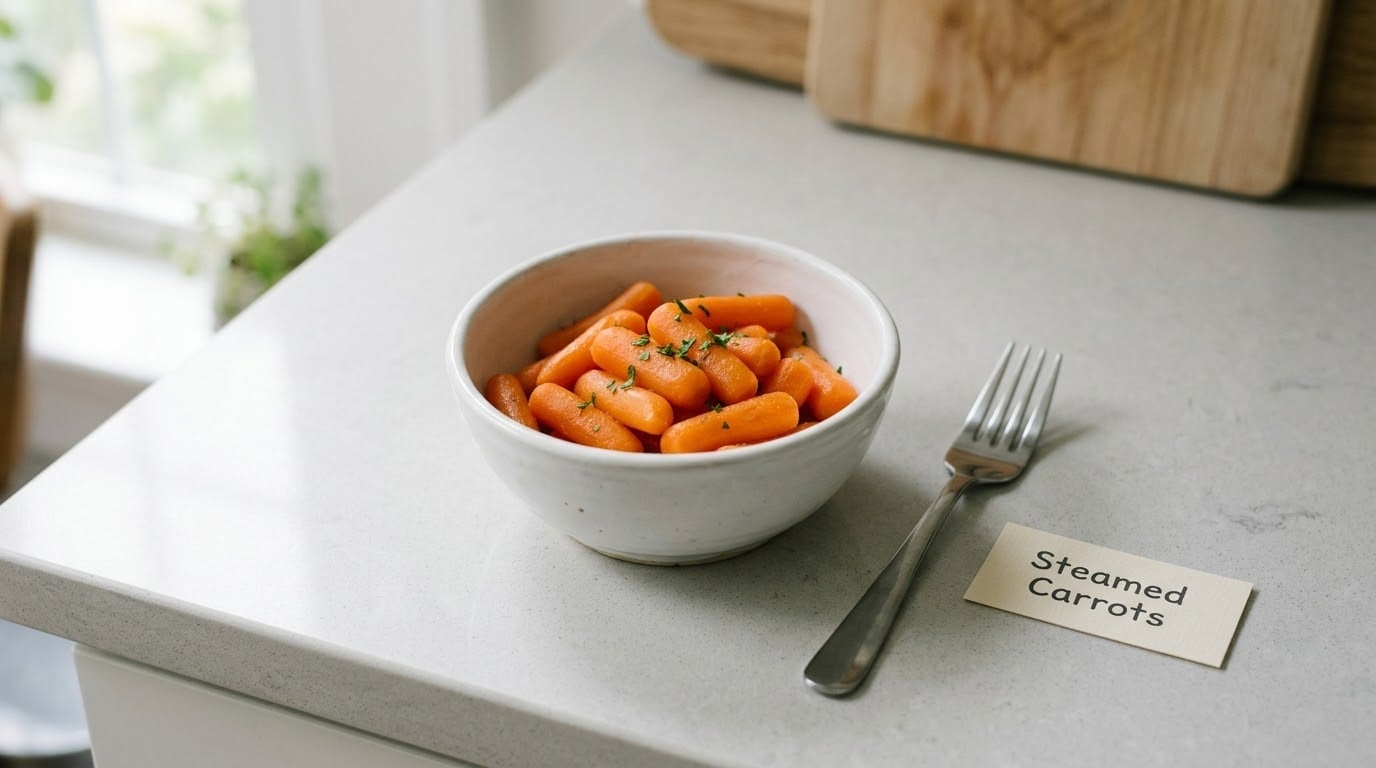
Softly cooked carrots are a mild vegetable that adds color and some vitamin A without relying on strong seasoning. Cook them until a fork goes through with no resistance.
Steam or boil them in water, then add a small amount of something you tolerate — a pinch of salt, or a spoonful of broth for flavor. Skip heavy butter, oil, and spices until you are rebuilding your diet.
Cooked carrots also work blended into a soup, which is a nice way to get a vegetable in when solid food still feels like too much.
What to Drink and What to Avoid
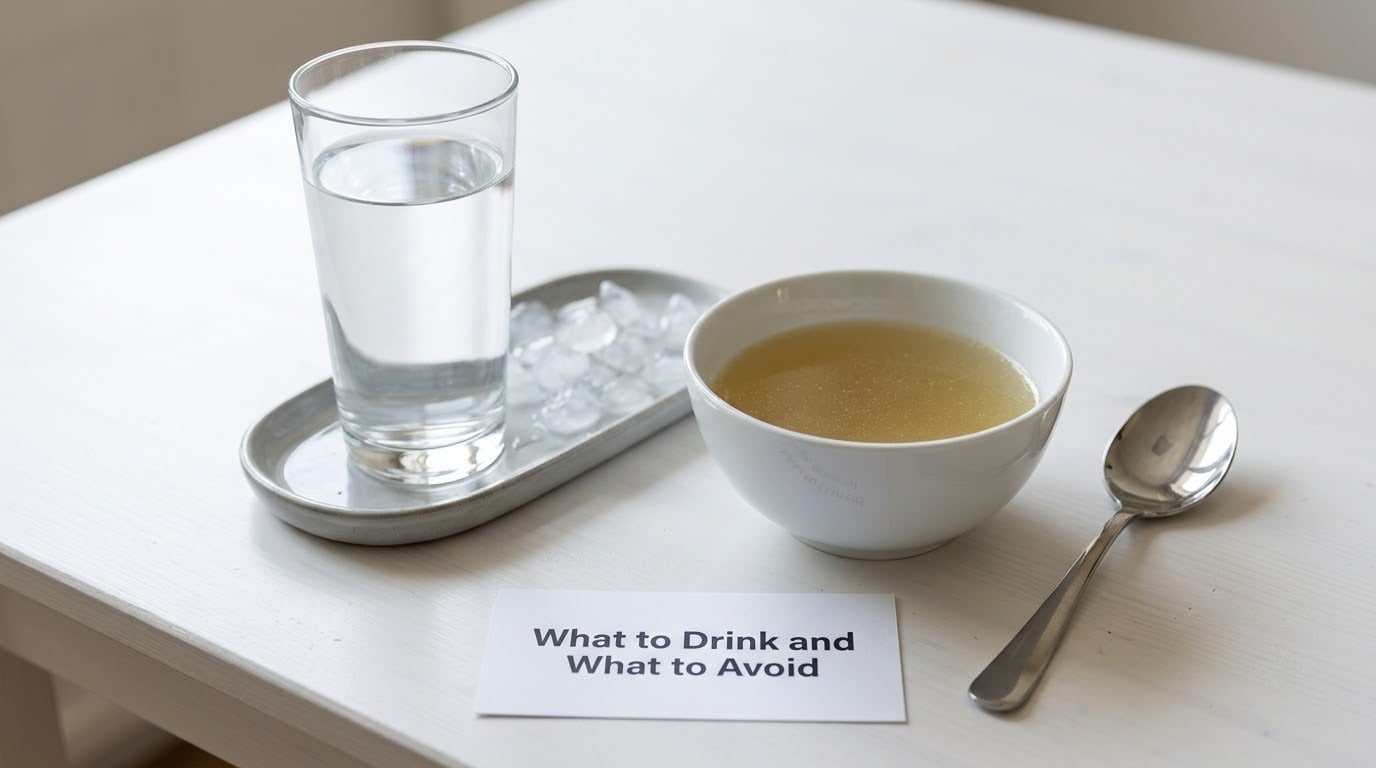
Hydration matters more than food in the first day of a stomach bug, because vomiting and diarrhea drain water and electrolytes. Sip small amounts often rather than drinking large glasses, since a big gulp often comes straight back up.
Your best options:
- Oral rehydration solution. A pharmacy mix, a pediatric drink, or an unflavored electrolyte solution is the most reliable way to replace both fluid and electrolytes. Follow the label on the packet exactly.
- Water. Fine on its own, but it does not replace electrolytes on its own.
- Clear broth or clear soup. Adds salt and a little carbohydrate.
- Ice chips or ice pops. Useful when you cannot keep anything else down.
- Ginger or peppermint tea. Warm and often well tolerated. Ginger has a reasonable track record for settling nausea. Check with a pharmacist first if you take a blood thinner, since ginger can interact with some of them.
Here is what makes things worse, and why:
| Food or drink | Why it tends to make symptoms worse |
|---|---|
| Alcohol | Dehydrates you further and irritates the gut lining |
| Coffee and energy drinks | Caffeine increases urine output, so you lose more fluid |
| Greasy or fried food | Fat slows digestion and often brings nausea back |
| Spicy food | Irritates an already sensitive gut lining |
| Large sugary drinks | Concentrated sugar can pull water into the bowel and worsen diarrhea |
| Very large meals | Volume is often the trigger, even when the food itself is bland |
| High-fiber foods and raw salads | Fiber moves things through the bowel faster than you want right now |
| Dairy, if it upsets you | Lactose is harder to digest while the gut is inflamed |
Very large meals are worth calling out on their own. A few bites every hour or two is a better target than three sit-down meals a day, and it is the single change that tends to make the biggest difference for people who keep vomiting.
How to Choose Foods Based on Your Symptoms
When nausea dominates: start with liquids and nothing else. Ice chips, clear broth, diluted oral rehydration solution, or a few sips of ginger tea. Add solid food only once the nausea eases, and start with something soft like applesauce or a rice pudding.
When diarrhea is the main problem: aim for low-residue, low-fat choices — white rice, bananas, plain toast, well-cooked carrots — and keep oral rehydration solution going. Skip anything with concentrated sugar, since it tends to pull more water into the bowel.
When your appetite is gone: do not force full meals. Small portions of foods you already know you like will do more for you than a plate you dread. If nothing sounds good but you are managing a few bites every few hours, you are doing better than you think.
When texture is the problem: smooth and soft options — applesauce, mashed potato, porridge, soup — are easier than anything that needs real chewing.
When you are recovering and want your old food back: reintroduce one category at a time and wait a day between changes. Coffee usually comes back near the end, since caffeine is the item most likely to rattle things. Dairy is worth testing before you assume it is off limits, because the temporary intolerance many people notice often settles down within a couple of weeks. Fiber goes last and in small amounts, working up gradually rather than jumping straight to a high-fiber diet.
If eating feels frightening rather than merely unappealing, that is common after a bad bout of vomiting. Small amounts, eaten slowly, are the way back in — and if the anxiety is stopping you eating or drinking at all, that is a good reason to talk to a clinician.
When Food Choices Need Medical Advice
Most stomach bugs clear on their own within 24 to 72 hours, and food choices support you through that window. They do not treat the infection itself, and no diet makes it go away faster.
Talk to a healthcare professional if you have:
- Symptoms lasting more than about three days, or getting steadily worse instead of better
- Signs of dehydration: very dark urine, passing very little urine, a dry mouth, dizziness when standing, or no tears when crying
- Blood in your stool or vomit
- A high fever
- Severe abdominal pain that does not ease
- Repeated vomiting that stops you keeping any fluid down
Be quicker about seeking care if the person affected is an infant, an older adult, pregnant, or has a weakened immune system. Infants and young children can dehydrate fast, and medical advice matters more in those groups, not less.
Frequently Asked Questions
What foods are usually easiest to eat when you have a stomach bug?
Plain white rice, dry toast, bananas, oatmeal, applesauce, and clear broth are the usual first choices. They are low in fat and fiber, soft, and not strongly flavored, so they put little demand on an irritated gut. Start with small portions of whatever you tolerate most, and add richer foods only after nausea eases. Tolerance varies between people, so your own experience matters more than any list.
How long should I wait before eating after vomiting with a stomach bug?
Most guidance is to focus on fluids for the first 12 to 24 hours, taking small frequent sips, and then reintroduce bland solids as nausea eases. There is no fixed waiting period, so read your own body. When you can keep fluids down, try a few bites of something simple like a rice pudding or a few spoonfuls of applesauce, and stop if it comes back up.
Are bananas and rice enough when someone is sick with diarrhea?
They are a solid start, but they cover very little nutritionally, and that is the main limitation people run into with the classic bland diet. As you improve, add protein and vegetables: softly scrambled eggs, well-cooked carrots, plain yogurt if dairy sits well with you, or clear broth with shredded chicken. Keep oral rehydration solution going while diarrhea continues, since it replaces electrolytes that food alone will not.
Do probiotics help with a stomach bug, and when should someone ask a doctor?
Probiotics are sometimes used during recovery, and evidence for shortening the illness is mixed. They are not a treatment for the infection, and some supplement ingredients interact with medications. Ask a doctor or pharmacist before starting any supplement, especially if you are pregnant, taking a blood thinner, or giving anything to a young child. Seek care regardless of probiotics if symptoms persist or signs of dehydration appear.
What are the warning signs of dehydration or a condition needing medical care?
Watch for very dark urine, passing very little urine, a dry mouth, dizziness when standing, unusual fatigue, and no tears when a child cries. See a healthcare professional for blood in stool or vomit, a high fever, severe abdominal pain, symptoms beyond about three days, or vomiting that prevents keeping fluids down. Infants, older adults, pregnant people, and anyone immunocompromised should be assessed sooner.
Should I avoid dairy, sugar, or greasy foods while recovering?
Greasy and fried foods are the clearest avoid: fat slows digestion and commonly brings nausea back. Concentrated sugar, including sugary drinks and sweet sauces, can pull water into the bowel and worsen diarrhea. Dairy is individual, since many people tolerate yogurt or milk during recovery while others cannot. Test small amounts, keep at least one food that clearly works for you, and reintroduce categories one at a time.
Conclusion
Start with small, frequent sips of fluid — oral rehydration solution if you have it, otherwise water or clear broth — and once that stays down, add a few bites of something bland like rice, toast, or a banana. Adjust to your own symptoms rather than a fixed schedule, add protein and vegetables as you improve, and talk to a healthcare professional if symptoms persist or warning signs like dehydration, blood in stool, or high fever show up.