
Pumpkin seeds — the pepitas you scoop out of a carving pumpkin — pack unsaturated fats, plant protein, fiber, magnesium, zinc and a handful of antioxidants into a small, cheap, shelf-stable snack. That combination is where the benefits of pumpkin seeds for health come from: they fit well into eating patterns linked with heart health, digestion, steadier blood sugar and better mineral intake, mostly because they are genuinely nutrient-dense rather than because they do anything magical.
They are also one of the easiest swaps in a pantry snack drawer. A handful replaces a cookie, costs very little, keeps for months, and works in oatmeal, salad, pesto, bread and trail mix without rearranging your whole day.
This guide covers what those seeds actually deliver, how roasting and salting change the numbers, how to portion them, and where the real downsides show up. Anything personal — allergies, medications, blood pressure or blood sugar management — is worth a quick word with your doctor or a registered dietitian.
Table of Contents
- What Are the Benefits of Pumpkin Seeds for Health?
- What Nutrients Are in Pumpkin Seeds?
- How Do Pumpkin Seeds Support Heart Health?
- How Do Pumpkin Seeds Support Digestion?
- Can Pumpkin Seeds Help with Protein and Fullness?
- Are Pumpkin Seeds Good for You If You Eat Them Every Day?
- How Do You Eat Pumpkin Seeds for the Best Benefits?
- How Do You Choose and Store Pumpkin Seeds?
- Frequently Asked Questions
- Where Should You Start with Pumpkin Seeds?
What Are the Benefits of Pumpkin Seeds for Health?
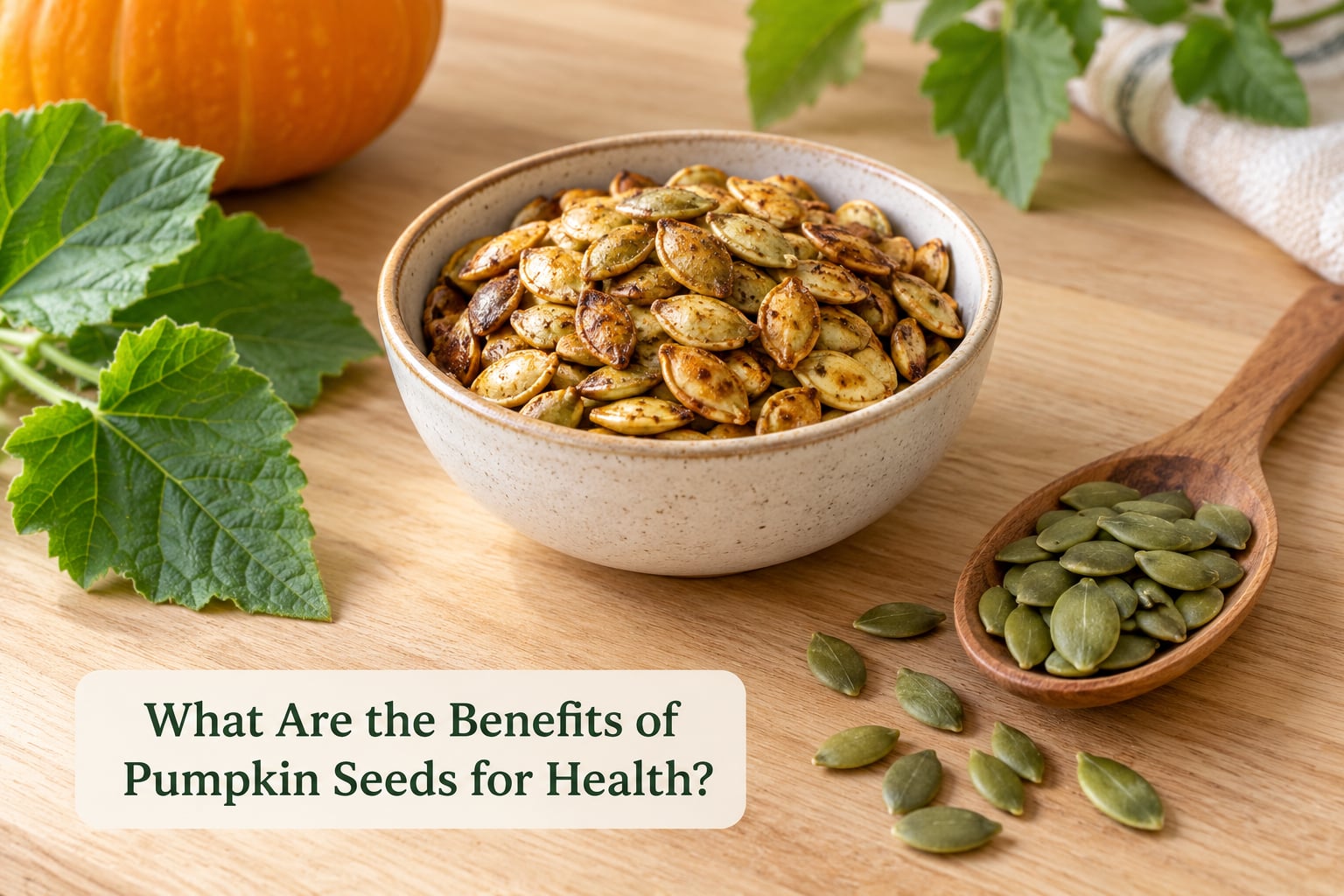
The honest answer is that pumpkin seeds are a nutrient-dense food, not a treatment. Their measurable contribution comes from what they are made of: mostly unsaturated fat and protein, with real amounts of magnesium, zinc, iron and copper, plus enough fiber and antioxidants to matter.
- Bone and muscle support from magnesium, which sits at the center of hundreds of enzyme reactions, including those that convert food into usable energy.
- Immune function from zinc, which most plant-rich diets deliver in short supply compared with animal foods.
- Heart-healthy eating patterns when seeds replace foods high in saturated fat, refined carbs or sodium rather than simply stacking on top of them.
- Digestive regularity from fiber, including a mix of insoluble and soluble types.
- Steadier energy and blood sugar, because the fat and protein slow how fast a handful of carbohydrates hits your bloodstream.
What pumpkin seeds cannot do is treat a disease, replace medication, or supply vitamin D, vitamin C, calcium or omega-3 fats in meaningful amounts. They are one good food inside a varied diet, and they work best when you treat them that way.
The nutrients doing the work, and where else you get them
| Nutrient | What it contributes | Other everyday sources |
|---|---|---|
| Magnesium | Enzyme function, muscle relaxation, energy metabolism | Cashews, black beans, spinach, oats |
| Zinc | Immune function, skin repair, wound healing | Chickpeas, cashews, fortified cereal |
| Unsaturated fats | Satiety, absorption of fat-soluble vitamins | Olive oil, avocado, almonds |
| Fiber | Regularity, fullness after meals | Lentils, apples, berries, whole grains |
| Plant protein | Muscle repair, staying full between meals | Tofu, lentils, tempeh, Greek yogurt |
What Nutrients Are in Pumpkin Seeds?
A one-ounce serving, roughly a quarter cup or about 23 pepitas, is the standard measuring stick. Per that serving, roasted pumpkin seeds run close to 160 calories, 9 g of protein, 14 g of fat and about 2 g of fiber. The mineral numbers are the reason people buy them in the first place.
- Magnesium lands near 150 mg, a substantial slice of a typical adult’s daily needs.
- Zinc comes in around 2 mg, notable because plant-only diets often fall short.
- Iron contributes roughly 4 mg, and pumpkin seeds also carry a bit of copper and manganese.
- Potassium appears at a few hundred milligrams per serving, which is fine but not dramatic.
- Vitamin E shows up in small amounts, enough to count without making seeds a vitamin E source.
- Vitamin K is present at a modest level that most people never think about.
Preparation changes the totals more than people expect. Raw seeds carry the full package with no added sodium. Dry-roasted seeds lose a little of heat-sensitive material but keep their minerals and fiber, so the difference is smaller than most “raw versus roasted” debates imply. Oil-roasted seeds add calories and reduce crunch over time, and seasoned snack mixes add sodium, sometimes a lot of it — a heavily salted serving can carry more sodium than a small bag of plain chips.
Two more details worth knowing. Pepitas, the hulled white seeds, and in-shell seeds carry nearly identical nutrients; the shell is mostly insoluble fiber, so eating it whole adds bulk and fullness rather than vitamins. And seeds contain phytates, compounds that bind minerals in the gut — soaking, sprouting or fermenting reduces them, which is why our guide on how to soak nuts and seeds before eating is worth a read if you eat a lot of seeds and minerals.
How Do Pumpkin Seeds Support Heart Health?
Pumpkin seeds support heart health by being a good swap. Their fat is overwhelmingly unsaturated, with very little saturated fat, and their fiber, magnesium and potassium all appear in eating patterns that researchers repeatedly link with better blood pressure and cholesterol numbers.
The distinction between swapping and adding matters more than anything else here. A handful of seeds replacing a pastry, or unsalted seeds replacing a salty pretzel mix, changes the overall pattern. A handful added on top of an unchanged diet changes very little, because the calories still land somewhere.
Easy ways to use them in place of something else
- Sprinkle unsalted seeds over oatmeal instead of brown sugar or granola clusters.
- Top a salad with seeds instead of croutons or a creamy drizzle.
- Add them to yogurt in place of a sweetened granola.
- Blend them into a pesto-style sauce with basil, lemon and olive oil.
- Use them as a crust for roasted vegetables or fish instead of a heavy breading.
If you already have a doctor managing your blood pressure or cholesterol, keep them in the loop rather than treating a seed snack as a substitute for anything prescribed.
How Do Pumpkin Seeds Support Digestion?
The fiber in pumpkin seeds is what people notice. Both a small amount of soluble fiber, which soaks up water in the gut, and insoluble fiber, which adds bulk, end up in a normal one-ounce serving.
That bulk does modest work. It supports regularity, and it adds fullness you actually notice, which is a bigger deal for some people than the digestive effect itself.
The catch is that fiber works best when it arrives gradually and with enough fluid. Jumping from almost nothing to a large serving of seeds at once is a common way to earn bloating and cramps, and it usually gets blamed on the seeds rather than on the jump. If you want a few more ideas for foods that feed gut bacteria without the drama, 14 foods high in prebiotic fiber is a decent companion list.
Realistic portions: a tablespoon in a smoothie, two tablespoons over overnight oats, a tablespoon over a salad, or about 60 grams in a batch of baked goods. All of them are easy to scale down while your gut adjusts.
Can Pumpkin Seeds Help with Protein and Fullness?
They help, with an asterisk. One ounce delivers roughly 9 g of protein, which is meaningful as a topping and small as a primary source.
For context, a cup of lentils is around 18 g, a cup of Greek yogurt about 20 g, and a modest serving of tofu in the mid-teens. Pumpkin seeds sit meaningfully below all three. What makes them useful is the ratio: protein plus fat plus fiber in one handful, which stays satisfying far longer than crackers with the same calories.
So treat them as an addition to a protein anchor, not a replacement for one. Yogurt, beans, eggs, tofu and poultry do the structural work, and the seeds make the bowl or plate better without you thinking about it.
If you are vegan, plant-based or working around a nut allergy, that makes them a useful addition precisely because they bring protein and minerals into a diet that leans on fewer animal products. Check with a dietitian if a condition or blood test has you watching specific nutrients, rather than estimating from a nutrition label alone.
Are Pumpkin Seeds Good for You If You Eat Them Every Day?
Daily is fine for most people. The variables are portion, preparation and your own health history, not the calendar.
How much is enough when you want the benefits of pumpkin seeds for health?
A one-ounce serving daily sits comfortably inside a sensible range for most adults, and many home cooks land near it without measuring. What matters more is that it does not quietly become a large handful, because seeds are dense — roughly 160 calories per ounce, with fat making up most of that.
- Calorie density is the most common reason a healthy snack turns into unplanned weight gain. Weigh them once out of curiosity, then eyeball from there.
- Sodium matters more in seasoned mixes and roasted snack packs than in plain or raw seeds. Read the label per serving, not per bag.
- Allergies are uncommon but real, and concentrated pumpkin seed allergy does happen. Anyone with a history of seed or tree nut reactions should talk to an allergist before making it a habit.
- Preparation shifts the nutrition profile, so plain and unsalted beats heavily seasoned when you are eating them daily.
Anyone pregnant, on blood-thinning medication, managing a chronic condition or giving seeds to a small child should get individual guidance rather than a generic daily number. That is a short conversation, and it takes minutes.
How Do You Eat Pumpkin Seeds for the Best Benefits?
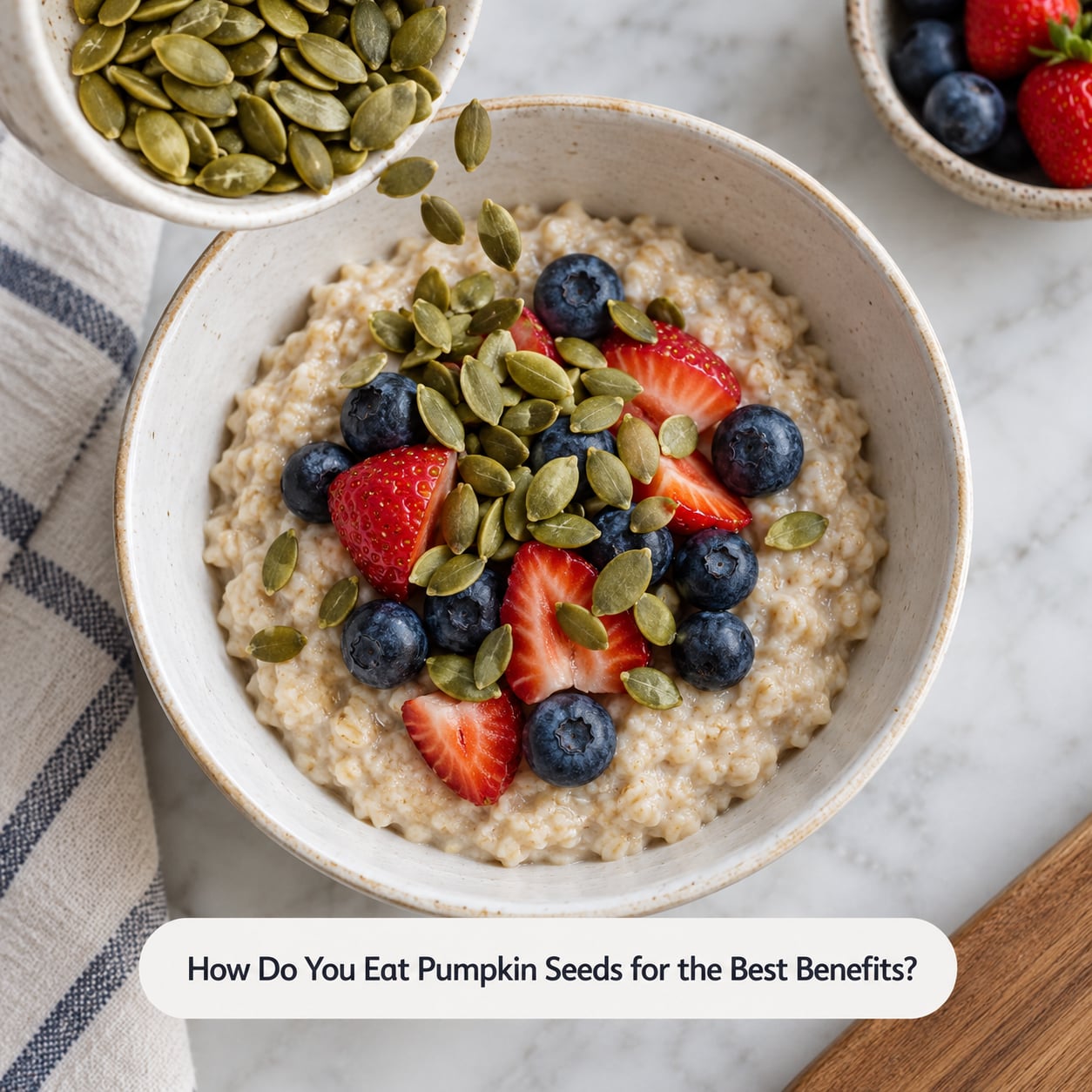
Freshness and simplicity do more for the nutrition than any special preparation. Buy unsalted, dry ingredients and eat them plain, and you are already ahead of most packaged snack seeds.
Raw pepitas
Softer, milder and slightly grassy. They blend easily into smoothies, overnight oats, energy balls and sauces, and you do not need to roast them for nutrition. Their texture works better ground or mixed than eaten straight as a snack.
Dry-roasted seeds
The crunch everyone actually wants, with the texture of the seeds intact rather than rubbery. Roasting develops flavor, and mineral losses are minor enough that the raw-versus-roasted nutritional case is weaker than the flavor case — our roasting guide for crunchy pumpkin seeds covers the method.
Sprouted seeds
Sprouting lowers phytates, which is the main reason people sprout seeds at all. It takes a few days of rinsing and draining, and the payoff matters mainly for people eating large quantities daily.
Ways to actually eat them
- Oatmeal and overnight oats, with cinnamon and a little honey if you want sweetness.
- Smoothie booster, blended with frozen banana and spinach.
- Pesto base blended with basil, garlic, lemon and olive oil for a nut-free sauce.
- Salad and grain bowl topper, added after dressing so they stay crunchy.
- Granola, trail mix and energy bars, where a modest amount goes a long way.
- Baked goods, especially rustic breads and seeded crackers.
- Straight from the jar as a between-meals snack.
One label habit pays off: read the ingredient list. A jar that says pumpkin seeds, sunflower seeds and nothing else is a different food from a “snack mix” with vegetable oil, maltodextrin, artificial flavors and a sodium figure worth noticing.
How Do You Choose and Store Pumpkin Seeds?
Buying is easy once you know the four things that actually matter. Storage is where most packages quietly fail.
What to check on the package
- Ingredients: one ingredient is ideal, and a short list is fine. Anything with added sugars or thick coatings changes the food.
- Sodium per serving: compare it against your own snack, not against other seeds, where everything looks low.
- Added sugar: candied and honey-roasted varieties are snacks first and nutrition second.
- Color and smell: seeds should look pale green or cream with a mild scent. Dark spots or a sharp, oily odor point to older stock.
How to store them properly
Fats go rancid, and rancid fats are exactly what you do not want from a health food. Airtight, cool and dark handles most of it: a sealed jar in a cabinet is fine for a few months, refrigeration stretches that considerably, and the freezer is genuinely practical if you buy seeds in bulk or bake regularly.
Always use a clean, dry spoon. Moisture is what turns a jar of seeds into a disappointment in a few weeks, and a jar that has been left open next to the stove invites it.
For storage times and handling, follow the package and general food-safety guidance, including the usual advice about rinsing your hands and surfaces after handling raw seeds, which may carry bacteria from the field. If you are buying seeds frequently, soaking or sprouting them as described earlier is worth the setup time.
Frequently Asked Questions
Are pumpkin seeds healthy or fattening?
Both, depending on the portion. Pumpkin seeds are calorie-dense, around 160 calories per one-ounce serving, so large handfuls add up fast. In sensible portions they bring magnesium, zinc, unsaturated fat, fiber and plant protein. Swapping them for a salty snack works well; adding them on top of an unchanged diet tends not to.
What is the healthiest way to eat pumpkin seeds?
Plain and unsalted, served as a topping or snack rather than a coated candy version. Raw pepitas blended into smoothies and sauces, or dry-roasted seeds eaten straight, both work well. Skip honey-roasted, salted and heavily oiled varieties, since added sugar, sodium and extra calories work against the nutrition you are after.
How many pumpkin seeds should I eat per day?
There is no single correct amount for everyone, but one ounce, roughly a quarter cup or about 23 pepitas, is a widely used daily reference and fits comfortably in most eating patterns. Weigh a serving once to calibrate your eye, especially if you are managing calories. Ask your doctor or dietitian for guidance if you have a specific condition or medication.
Do pumpkin seeds have more nutrients than sunflower seeds?
It depends on the nutrient. Pumpkin seeds run higher in magnesium, zinc and copper, and sunflower seeds carry more vitamin E and selenium. Both are strong sources of unsaturated fat, protein and fiber. Rather than picking a winner, alternating them across the week gives you a broader range of minerals.
Can pumpkin seeds help with weight loss?
They can support weight management as part of a balanced diet, mostly because protein, fat and fiber together stay satisfying, which may reduce snacking later. They do not cause weight loss on their own. Portion control is the deciding factor, since a generous handful can run past 200 calories without feeling like much at all.
Are raw pumpkin seeds safe and better than roasted ones?
Raw seeds are safe for most people and nutritionally comparable to roasted ones, with slightly higher heat-sensitive nutrients retained. Roast them mainly for flavor and texture, not for a health upgrade. Choose unsalted varieties, store both in an airtight container, and ask a healthcare professional before eating them regularly if you have a seed allergy.
Where Should You Start with Pumpkin Seeds?
Start small and make it boring: buy a jar of plain, unsalted pepitas or dry-roasted seeds, put a tablespoon on tomorrow’s breakfast bowl, and see whether you actually like it. If you do, that is a habit you will keep without thinking, and the benefits of pumpkin seeds for health come from showing up consistently rather than from any single serving.
Add them where they replace something rather than sit on top of it, keep portions honest, store the jar airtight so nothing goes rancid, and treat them as one component of a varied whole-food diet. If you have an allergy, take a medication, or are managing a health condition, ask your doctor or a registered dietitian how they fit into your plan.