
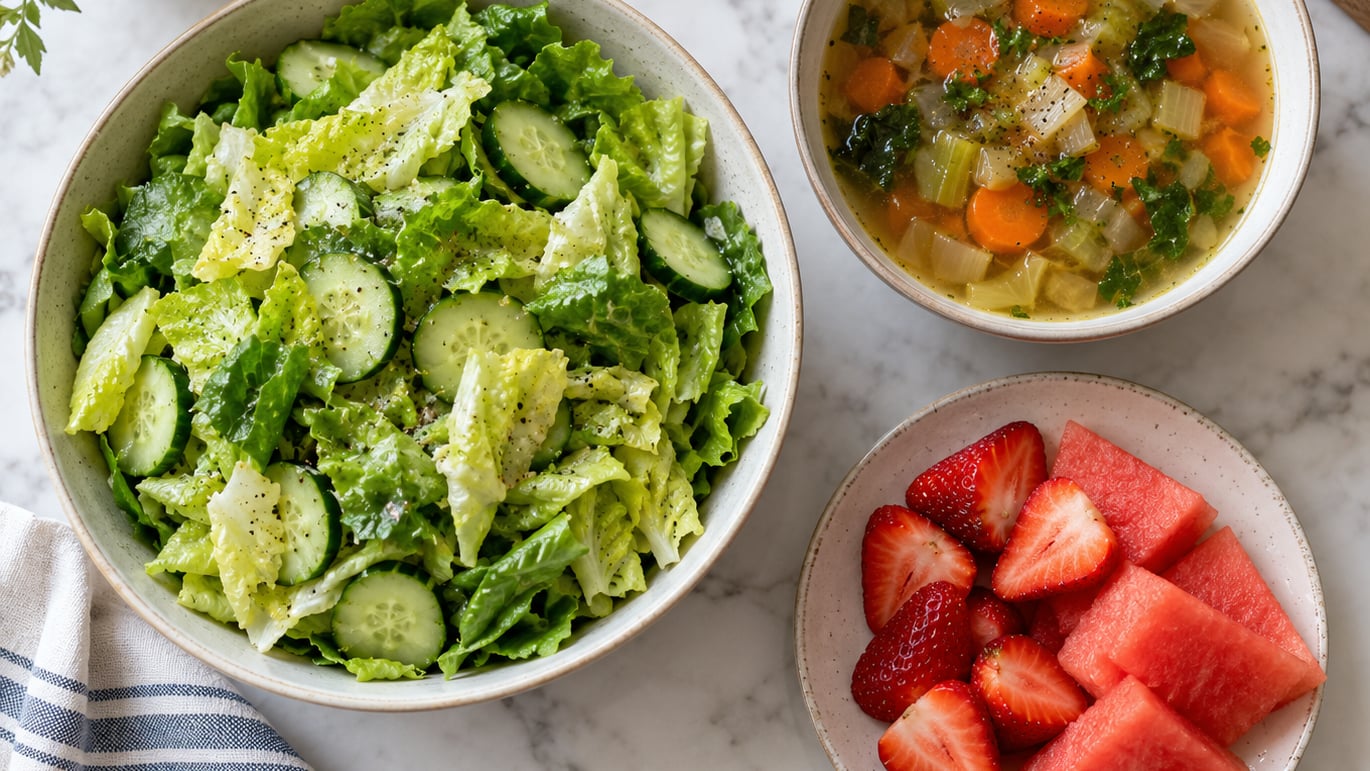
High volume low calorie foods are water-rich, fiber-rich or lean-protein foods that give you a large, satisfying portion for very few calories. Vegetables, fruit and broth-based soups top the list because they stretch the stomach and slow digestion, so you eat more food across the day while your total calorie intake stays moderate.
That is the whole idea behind volume eating, an approach Barbara Rolls popularised in her 2000 book Volumetrics. Instead of weighing everything, you build meals around foods that are low in calorie density, meaning few calories per gram. If you want to see how that works on a label, our guide to how to read an ingredient list on a food package breaks down what to look for.
One honest warning before we start. A high volume low calorie foods list only works alongside an overall eating pattern you can sustain. Cutting calories too hard is its own problem, and we explain the trade-offs in why very low calorie diets backfire. Treat what follows as general information, not a weight-loss plan, and talk to a doctor or registered dietitian if you have diabetes, kidney disease, a history of disordered eating, or any other medical concern.
Table of Contents
- High Volume Low Calorie Foods List at a Glance
- 1. Cucumbers
- 2. Celery
- 3. Romaine Lettuce
- 4. Spinach
- 5. Bell Peppers
- 6. Cabbage
- 7. Cauliflower
- 8. Zucchini
- 9. Strawberries
- 10. Watermelon
- 11. Low-Calorie Vegetable Soup
- 12. Air-Popped Popcorn
- How to Use High Volume Low Calorie Foods in Meals
- Frequently Asked Questions
- Conclusion
High Volume Low Calorie Foods List at a Glance
Every figure below is a typical estimate for a standard serving of the food on its own. Add-ins change the total fast, so a tablespoon of dressing or oil is worth counting separately.
| Food | Typical serving | Approx. calories | Main benefit | Best used for |
|---|---|---|---|---|
| Cucumber | 1 cup sliced | about 16 | Water content, crunch | Snacks, salads, chilled soup |
| Celery | 1 cup chopped | about 16 | Crunch, water | Snacks, soups, party platters |
| Romaine lettuce | 1 cup shredded | about 8 | Salad base, leafy nutrients | Lunch and dinner salad bowls |
| Spinach | 1 cup raw | about 7 | Leafy greens, iron and folate | Salads, omelets, smoothies, sautés |
| Bell pepper | 1 medium | about 30 | Sweetness, crunch, vitamin C | Snacks, roasted dishes, stuffed peppers |
| Cabbage | 1 cup shredded raw | about 20 | Versatile bulk, crisp texture | Slaws, stir-fries, soups, braises |
| Cauliflower | 1 cup chopped | about 25 | Substitute for rice and potatoes | Rice swaps, roasted florets, mash |
| Zucchini | 1 cup sliced | about 20 | Soft bulk when cooked | Noodles, soups, omelets, gratins |
| Strawberries | 1 cup whole | about 50 | Sweetness with volume | Breakfast bowls, yogurt, salads |
| Watermelon | 1 cup diced | about 45 | Water content, cooling | Snacks, fruit salads, cottage cheese pairings |
| Broth-based vegetable soup | 1 cup | about 60 to 100 | Warmth and bulk in one bowl | Lunch, dinner, light snacks |
| Air-popped popcorn | 3 cups | about 90 | Large crunchy volume | Snacking, movie night, topping |
1. Cucumbers
Cucumbers are close to 95 percent water, so a full cup of slices lands around 16 calories. That combination of water and crunch is what makes them one of the most useful high volume low calorie foods: you can eat a large plate of them and the calorie count barely moves.
They work everywhere. Slice them thin for sandwiches, chop them into yogurt or grain salads, or blend them with herbs and a splash of broth for a cold summer soup. My go-to snack is cucumber rounds with lemon, a little pepper, two tablespoons of hummus and a few dill leaves, which lands well under 100 calories for the whole plate. The hummus is what turns a side dish into something that holds you until the next meal.
Watch the toppings, though. A drizzle of oil or a creamy dressing adds up faster than the cucumber does.
2. Celery
Celery earns its place through crunch rather than nutrition density. One chopped cup is roughly 16 calories, and the snap keeps you eating a portion that feels substantial. It takes well to fat, which is exactly why it works so well as a vehicle for hummus, bean dip or a thin layer of nut butter.
For a snack that actually carries you to dinner, cut four or five stalks, add two tablespoons of hummus and two tablespoons of white bean dip. That combination of fiber and a little fat slows digestion, so the plate is far more filling than the celery alone. Celery also works chopped into broth-based soups, where it softens but keeps the same low calorie density.
3. Romaine Lettuce
Romaine is the cheapest way to build a salad base you will actually finish. A shredded cup is about 8 calories and roughly 94 percent water, so a big bowl costs you almost nothing before anything else goes in. It also brings fiber and the leafy nutrient pattern that a bowl of chips does not.
The trick is to treat romaine as the bulk and everything else as the flavor. Add grilled chicken, a cup of beans, tuna, tofu or leftover roasted vegetables, then dress it with two tablespoons of olive oil and vinegar. A mostly-vegetable salad with a modest amount of dressing stays filling and reads as a real meal, not a side.
4. Spinach
A cup of raw spinach is about 7 calories, which puts it at the very top of any low calorie density list. It works raw and cooked, and it is one of the few greens that holds up to a hot pan without turning to nothing.
One easy breakfast: two eggs scrambled with a large handful of spinach, a handful of cherry tomatoes and a slice of whole-grain toast. Another is a blended smoothie with spinach, half a banana, milk and a spoon of peanut butter, where the fruit covers the bitterness that puts some people off raw spinach. One note on portions: a cup of raw spinach and a cup of cooked spinach are different amounts of leaves, so calorie estimates should refer to what you actually eat, not to the volume in the bag.
5. Bell Peppers
Bell peppers bring volume, sweetness and crunch in one package. A medium pepper is roughly 30 calories, and the flesh is firm enough to eat raw, roast or stuff. That combination is rare in low-calorie vegetables, because most are either sweet or bulky, not both.
Slice them for lunch alongside hummus and a boiled egg, or halve and roast them for a weeknight dinner. For a more complete meal, halve two peppers, fill them with cooked rice, black beans, diced tomato and cumin, then bake until the edges soften. Two stuffed peppers is a full plate of food for a few hundred calories, and the beans bring fiber that holds the plate together.
6. Cabbage
Cabbage is the most underrated member of this list, and people who track calories tend to name it repeatedly. A cup of shredded raw cabbage is around 20 calories, and it holds up to nearly every method: raw, shredded, braised, fermented or stir-fried.
A vinegar-based slaw of shredded cabbage, carrot, a teaspoon of sesame oil and a splash of rice vinegar gives you a crunchy side for a small plate of calories. For a bigger meal, simmer cabbage with onion, tomatoes, a cup of beans and broth until soft, which turns it into a full bowl of soup for very little. Raw and cooked portions behave differently, so if you are counting, weigh the raw amount you start with and estimate the cooked yield from it.
7. Cauliflower
Cauliflower is the most useful stand-in in the kitchen, because it replaces rice, potatoes and the base of a heavy gratin with roughly 25 calories per chopped cup. The texture holds up to roasting, steaming, blending and frying.
The easiest version is cauliflower rice in a stir-fry with broccoli, garlic, ginger, soy sauce and a tablespoon of oil, which makes a full plate of food. It also mashes well: steam the florets, blend them with a splash of milk and a little olive oil, and you have a potato-style mash. Count preparation ingredients separately. Cheese, butter and creamy sauces turn a 25-calorie vegetable into a 300-calorie side dish, and that is where most people misjudge it.
8. Zucchini
Zucchini softens into a mild, silky bulk when cooked, which makes it useful in meals where you want volume without texture. A sliced cup is about 20 calories, and spiralizing turns it into noodles that eat like pasta.
A practical dinner: spiralized zucchini tossed with a tomato and basil sauce, a cup of white beans, garlic and a tablespoon of olive oil. Spiralized or grated zucchini is not automatically a low-calorie swap, though. Drain salted or watery zucchini well, and remember that oil and sauce land on the plate in full measure regardless of which noodle you use.
9. Strawberries
Strawberries are the rare fruit that is both sweet and bulky. A cup of whole berries is around 50 calories, and the water and fiber in them give them more eating satisfaction than the same calories of candy.
Chop them into oatmeal with a spoonful of yogurt, spoon them over cottage cheese, or toss them into a spinach or romaine salad where the sweetness works surprisingly well with a sharp dressing. Portion size is the whole story with fruit. A handful disappears, a full bowl does not, so measure a cup into a bowl rather than eating from the punnet.
10. Watermelon
Watermelon is around 92 percent water, so a diced cup comes in near 45 calories while feeling like a real serving of food. It is the easiest thing on this list to eat a large amount of without thinking about it.
Serve it chilled in cubes as an afternoon snack, add it to a fruit salad with berries and melon, or pair a cup with cottage cheese for a dessert that has actual staying power. The one caution is portion size. A very large wedge eaten in one sitting is a much bigger number than a cup of cubes, and the rind-free watermelon in a big slice makes it easy to overshoot.
11. Low-Calorie Vegetable Soup
A broth-based vegetable soup is really a combination food, and that makes it the strongest high volume low calorie entry here. A cup of broth-based vegetable soup usually falls between 60 and 100 calories depending on the vegetables and how much oil went into the pot, and you can eat two or three cups without much trouble.
A simple formula: a large pot of non-starchy vegetables such as cabbage, carrots, celery, zucchini, tomatoes and green beans, plus broth, then a cup of beans or lentils for staying power, and herbs like thyme, bay leaf and black pepper for flavor. Skip the cream and use a spoon of olive oil rather than a drizzle. Check the sodium on the broth and canned beans, since low-calorie soup with a lot of salt leaves you hungry and thirsty two hours later.
12. Air-Popped Popcorn
Air-popped popcorn is the snack answer that holds up against almost anything else. Three heaped cups come to roughly 90 calories and fill a bowl the size of a mixing bowl, which is why it replaced chips for so many people. The volume comes from the popped starch, and it is hard to eat three cups of it quickly, which slows the whole meal down.
Season it with garlic powder, smoked paprika or nutritional yeast for a savory bowl that needs no butter at all. For a snack that holds longer, add a small handful of nuts or serve it with plain yogurt on the side. Butter, caramel and oversized servings are what turn popcorn into a high-calorie snack, so measure a bowl and stop there.
How to Use High Volume Low Calorie Foods in Meals
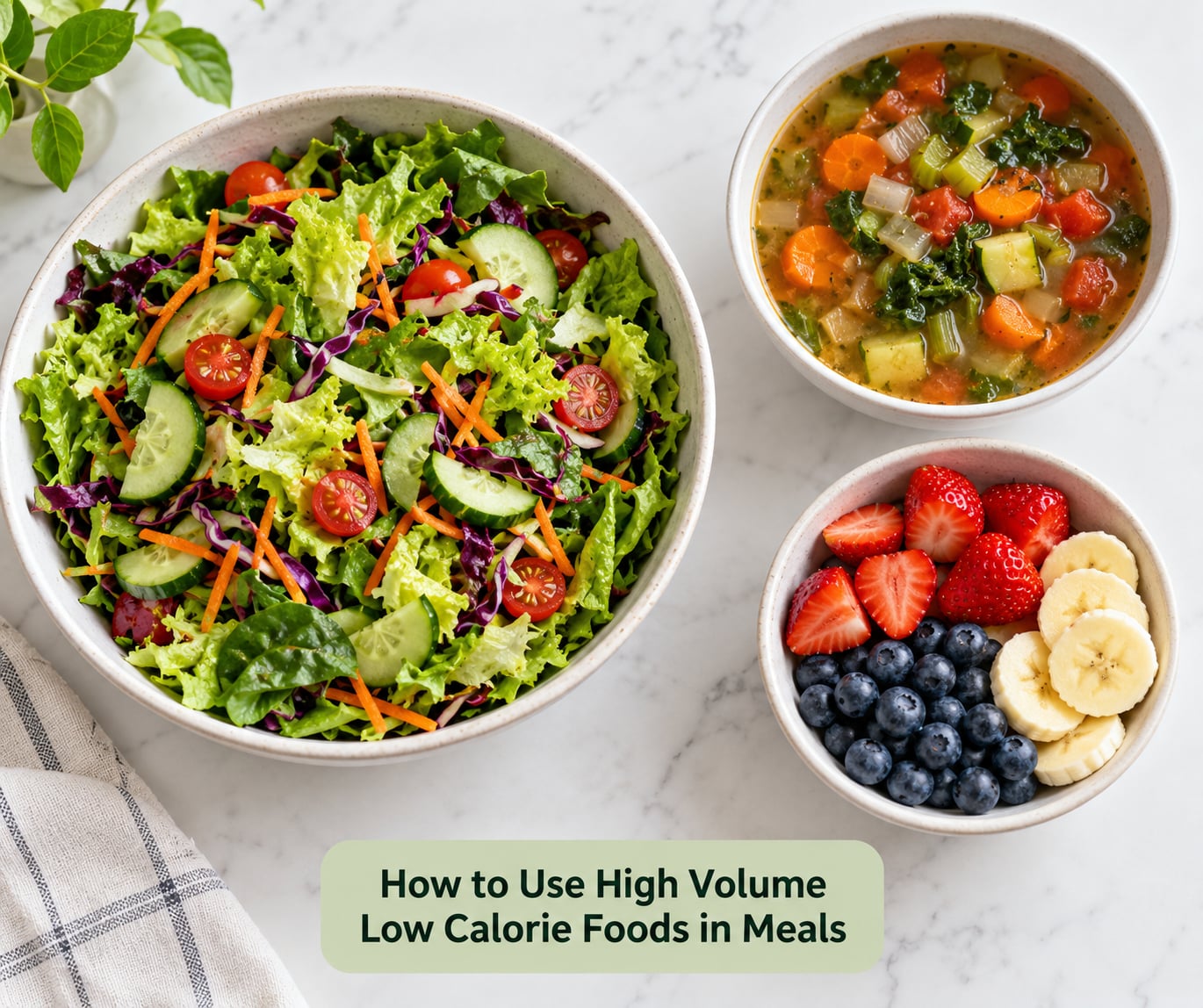
Build a balanced plate with high-volume foods
Think of the high-volume food as half the plate rather than the whole meal. A useful split is half vegetables or fruit, a quarter lean protein such as chicken, fish, eggs, tofu or beans, and a quarter fiber-rich carbohydrate such as oats, brown rice or a baked potato. Fat deserves a place too, just a small one, since a tablespoon of oil or a handful of nuts is worth more calories than the vegetables underneath it.
Water does a lot of the same work as solid food here, and it costs nothing. If you want the fiber side of this to go further, our list of 14 foods high in prebiotic fiber for gut health pairs well with these vegetables.
What counts as a high volume low calorie foods list?
Volume is about the weight and chew of the food on your plate, and low calorie is about the energy it carries. A food earns a place on the list when it delivers a large portion, adds water or fiber or lean protein, and stays under roughly 100 calories for a normal serving. Preparation counts too: steamed, roasted without excess oil and eaten raw score better than the same vegetable fried or covered in a creamy sauce.
Your own needs matter as much as the number. A 1500-calorie plan and a 2500-calorie plan will not use the same portions, and someone managing kidney disease or blood sugar needs different guidance entirely. That is a conversation to have with a registered dietitian rather than a list.
Frequently Asked Questions
How many calories should a high volume low calorie food have?
Most guidance treats around 100 calories as the ceiling for a food that is genuinely high volume and low calorie, with 40 to 60 calories typical for the water-rich vegetables and fruit on this list. Context matters too: 150 calories works as a snack on a 1500-calorie plan and does not on a 1200-calorie one. Treat these numbers as estimates, not rules.
Do high volume foods really keep you full?
They help, mostly because of water, fiber and lean protein. Water and fiber add bulk and slow stomach emptying, while protein triggers the hormones linked with fullness and steadies blood sugar. The effect is real but not automatic. Very high-fiber increases often bring gas and bloating for the first couple of weeks, so ramp up gradually and drink water.
Can you overeat low calorie foods?
Yes, and it is more common than people expect. Oils, dressings, cheese, nuts and nut butter are dense in calories, so three tablespoons of dressing can add 150 calories to a salad that looked generous. Track the add-ins, weigh portions for the first week or two, and remember that your stomach still responds to volume regardless of what the food contains.
How do I build meals from these foods without getting bored?
Change the method and the seasoning rather than the vegetable. Roast broccoli with cumin one night, stir-fry it with garlic and soy sauce the next, then blend it into a soup with beans. Acid, spice, herbs and toasted nuts make the same low-calorie base taste like a different dish each time, and a broth-based soup changes fastest of all.
Are these foods suitable for diabetes or other medical conditions?
Generally the vegetables and whole fruits on this list are compatible with most eating plans, but portion size and preparation matter, especially for blood sugar management. Kidney disease, celiac disease, gastrointestinal conditions and a history of disordered eating all call for individual advice rather than a listicle. Ask your doctor or a registered dietitian before making big changes to how you eat.
Conclusion
Start small. Add one vegetable, one fruit and one soup or snack from this high volume low calorie foods list to the meals you already eat, then pair them with a palm-sized portion of protein and a fiber-rich carbohydrate. Keep water and seasoning doing the work instead of oil, measure the add-ins for the first couple of weeks, and let your whole eating pattern matter more than any single food on the list.