
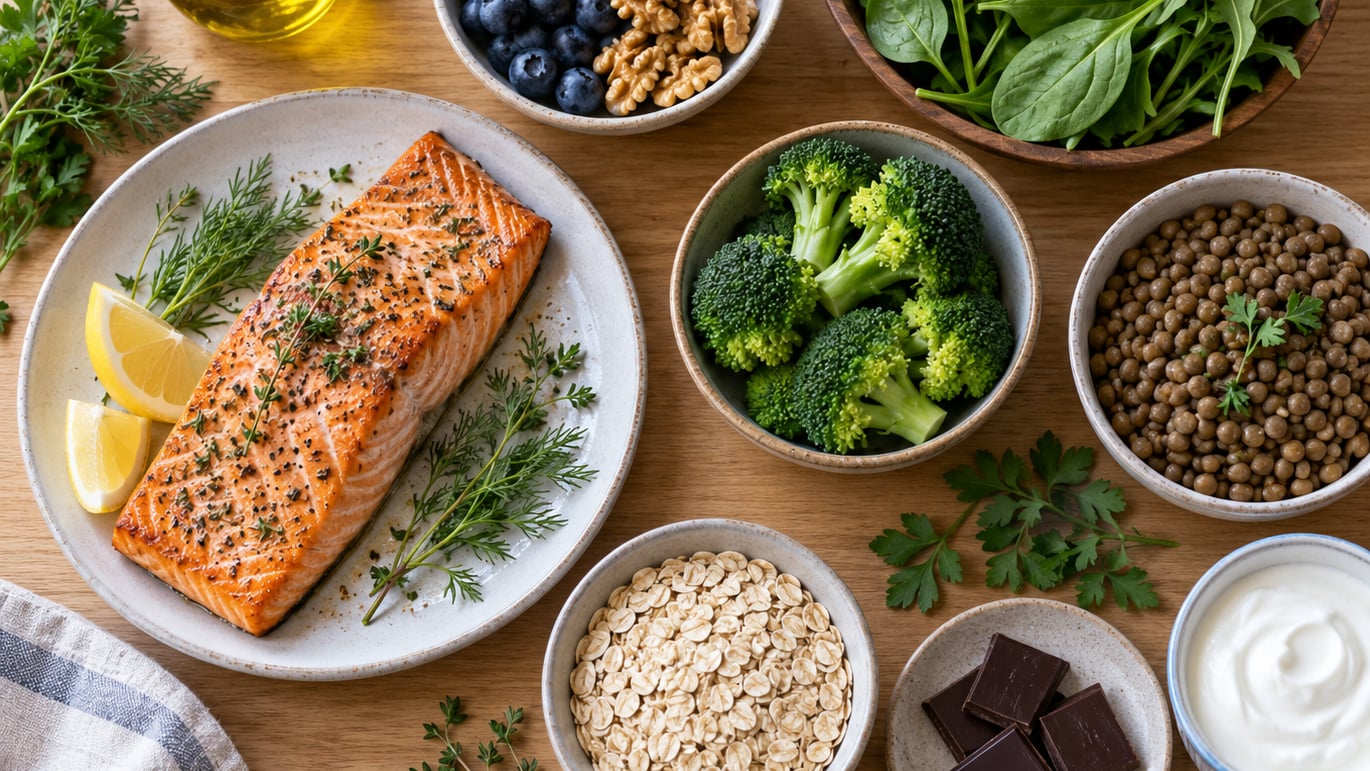
The anti inflammatory foods to eat every week are ordinary supermarket staples, not exotic powders: fatty fish, berries, leafy greens, cruciferous vegetables, nuts, seeds, olive oil, beans, whole grains, herbs, fermented foods and dark chocolate. If you eat most of these across a normal week, you are covering the nutrients that support lower chronic inflammation without tracking a single macro.
There is no number one anti-inflammatory food, and nothing on this list cures or prevents disease on its own. What works is the pattern: mostly plants, plenty of fiber, unsaturated fats in place of saturated ones, and protein you actually like eating. Here is how twelve of them fit into a real week.
Table of Contents
- Anti Inflammatory Foods to Eat Every Week at a Glance
- 1. Fatty Fish Such as Salmon or Sardines
- 2. Colorful Berries
- 3. Leafy Greens
- 4. Cruciferous Vegetables
- 5. Nuts and Nut Butters
- 6. Seeds Such as Chia, Flax, and Hemp
- 7. Olive Oil and Other Unsaturated Fats
- 8. Beans and Lentils
- 9. Whole Grains
- 10. Ginger, Garlic, and Everyday Herbs
- 11. Fermented Foods
- 12. Dark Chocolate and Cocoa
- How to Build a Weekly Anti-Inflammatory Eating Pattern
- Simple Ways to Add These Foods to Meals
- Safety, Allergies, and Individual Considerations
- Frequently Asked Questions
- Start With One Food You Already Enjoy
Anti Inflammatory Foods to Eat Every Week at a Glance
| Food | Key nutrients | Weekly serving idea | Best way to use it |
|---|---|---|---|
| Salmon, sardines, mackerel | Omega-3 fatty acids (EPA, DHA), protein, vitamin D | 2 to 3 servings | Baked, canned in water, or added to a grain bowl |
| Berries | Fiber, vitamin C, anthocyanins, polyphenols | 3 to 5 servings | Oatmeal, yogurt, salads, smoothies |
| Leafy greens | Folate, vitamin K, vitamin C, carotenoids | 4 or more servings | Salads, soups, sautés, wraps |
| Cruciferous vegetables | Sulforaphane precursors, fiber, vitamin C | 3 to 4 servings | Roasted, steamed, shredded raw, stir-fried |
| Nuts and nut butters | Unsaturated fat, magnesium, protein, fiber | A small handful, 4 or 5 days | Toast, oatmeal, sauces, trail mix |
| Chia, flax, hemp seeds | Omega-3 (ALA), fiber, protein | 1 to 2 tablespoons daily | Pudding, smoothies, yogurt, baking |
| Olive oil, avocado | Monounsaturated fat, oleocanthal, vitamin E | Every day it fits | Dressings, roasted vegetables, toast |
| Beans and lentils | Fiber, plant protein, folate, iron | 3 to 4 servings | Soup, chili, tacos, dips, bowls |
| Whole grains | Fiber, B vitamins, magnesium, steady energy | Daily portions | Oatmeal, brown rice, quinoa, whole wheat bread |
| Ginger, garlic, herbs, spices | Gingerols, sulforaphane in garlic, curcumin in turmeric | Most days, in rotation | Soups, stir-fries, dressings, tea, rice |
| Fermented foods | Live cultures, depending on the product | 2 to 4 servings | Yogurt, kefir, sauerkraut, kimchi |
| Dark chocolate and cocoa | Cocoa flavanols, magnesium, small amounts of iron | 2 to 4 small portions | Plain squares, cocoa yogurt, oatmeal |
This table supports an overall dietary pattern. It is not a treatment plan, and the serving numbers are a starting point rather than a prescription.
What anti inflammatory foods to eat every week really means
In practice, anti-inflammatory eating means regular servings of varied plant foods, enough fiber to keep the gut microbiome working well, mostly unsaturated fats, and ingredients that have not been heavily processed. It also means meals you can actually cook on a Wednesday.
Chronic low-grade inflammation is an immune system that stays partly on alert. The omega-3 fats, polyphenols and fiber in these foods feed the pathways that keep it quieter. Individual results vary widely, and no single food prevents or cures a disease.
1. Fatty Fish Such as Salmon or Sardines
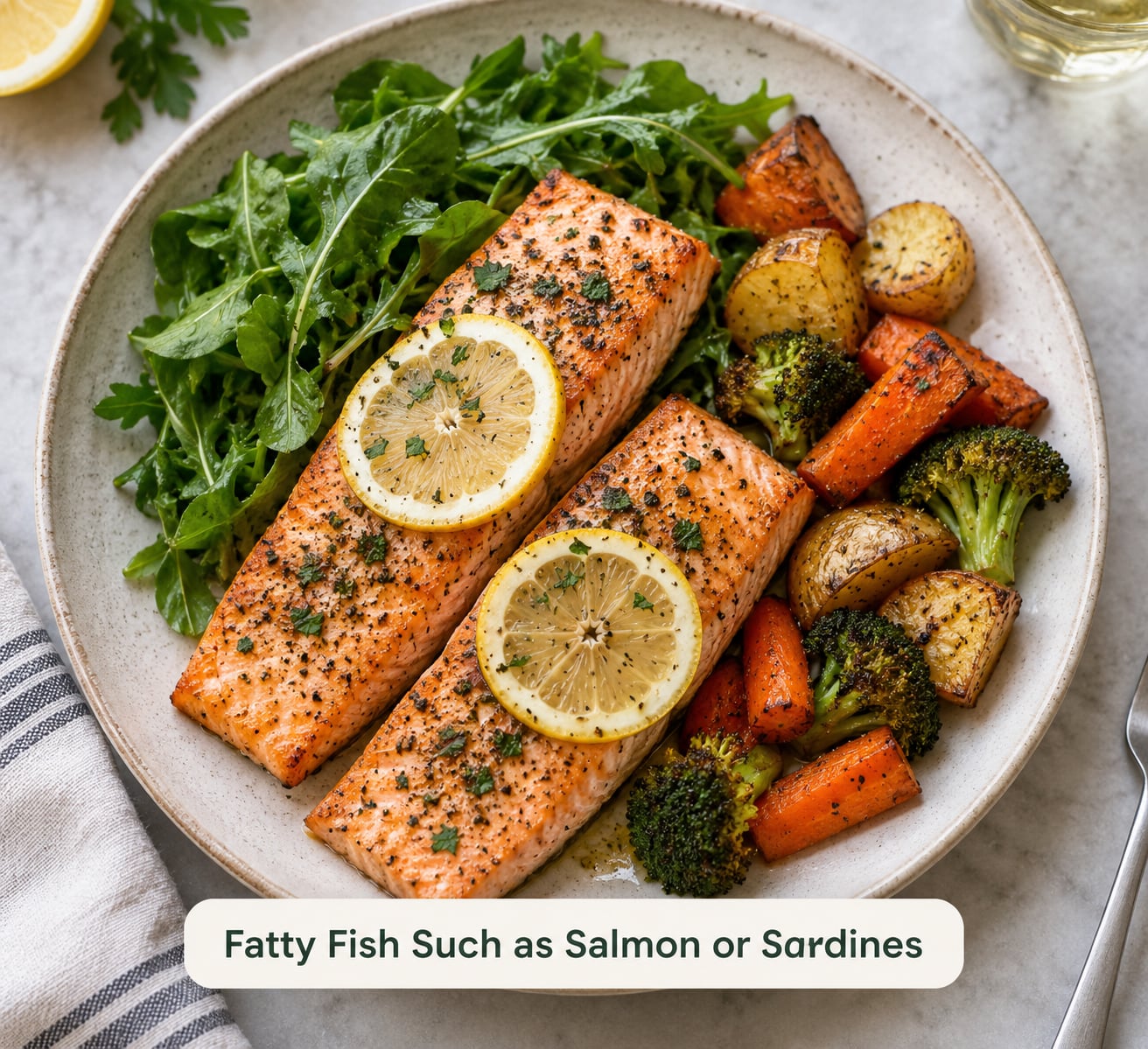
Fatty fish is the most direct way to get EPA and DHA, the long-chain omega-3 fatty acids your body uses to build cell membranes and to signal the immune system. Two to three servings a week is the number most nutrition guidance lands on.
Salmon is the easy entry point. Bake it at 200 F (93 C) until the center reaches 145 F (63 C), which usually takes 10 to 14 minutes for fillets, and put it on top of something with vegetables. Sardines are the budget version: canned in water, they break down soft and salty on whole-grain toast with a squeeze of lemon.
Buying and safety notes worth knowing. Choose fish that smells fresh and mild rather than fishy, keep it cold on the shopping trip home, and refrigerate it immediately. Canned fish is fine and often more consistent than fresh, so frozen fillets or canned sardines are a solid swap when fresh salmon is not practical.
2. Colorful Berries
Berries are one of the easiest fiber sources to get a real serving of, and their color comes from anthocyanins, the plant pigments researchers study for their effects on oxidative stress. Blueberries, strawberries, raspberries and blackberries all qualify.
For a week, that looks like a handful over oatmeal on two mornings, a few spooned into plain yogurt, some in a salad with sliced cucumber and a vinaigrette, or a handful blended into a smoothie. If you dislike fruit raw, cook it lightly into a sauce for yogurt or pancakes.
Fresh, frozen and unsweetened dried forms all work. Frozen berries are usually picked and frozen at peak, which means they hold their nutrients well and cost less. Watch the dried versions, though: they concentrate sugar and are easy to overeat by the handful.
3. Leafy Greens
Spinach, kale, collards and romaine bring folate, vitamin K, vitamin C and carotenoids, and they add volume and fiber to meals that would otherwise be missing both. Variety beats a single green, so rotate two or three.
A realistic week: a big salad on two lunches, a pot of soup with kale on one evening, a quick spinach sauté alongside eggs or beans, and greens folded into a wrap. Frozen chopped spinach and kale work well for cooked dishes and thaw in the pan.
One caution. Vitamin K interacts with warfarin, and leafy greens are very high in it, so if you take that medication, keep your intake consistent and tell your prescriber rather than cutting greens out or suddenly doubling them.
4. Cruciferous Vegetables
Broccoli, cabbage, cauliflower, Brussels sprouts and kale all produce glucosinolates, plant compounds that break down into sulforaphane and similar molecules. Regular intake, rather than one enormous serving, is what these vegetables are built for.
Rotation is the trick. Roast broccoli and cauliflower at high heat for 20 to 25 minutes for a crisp texture, shred raw cabbage into a slaw with a little apple cider vinegar, steam Brussels sprouts until a knife slides through them, and stir-fry everything with garlic and ginger.
Frozen cruciferous vegetables are picked and blanched quickly, so they keep most of what makes them worth eating and they cook in less time than fresh.
5. Nuts and Nut Butters
Walnuts, almonds, cashews and peanuts bring unsaturated fat, protein, fiber and magnesium. Walnuts stand out because they carry a meaningful amount of plant omega-3, called alpha-linolenic acid.
Portion size is where this one goes wrong. A small handful is roughly 28 grams, which is easy to overshoot by a factor of three when you eat from the bag. Try a tablespoon of peanut butter on toast, a handful of almonds added to oatmeal, walnuts chopped over a grain bowl, or cashews blended into a sauce with lime and a splash of water.
Read nut butter labels. Natural versions carry nothing but nuts and maybe salt, while many flavored butters add several grams of sugar and more sodium than you would guess.
6. Seeds Such as Chia, Flax, and Hemp
Seeds deliver fiber, plant protein and fats in a form that stays affordable and shelf-stable. Chia and hemp hearts are eaten whole; flax is usually ground.
Serving ideas: a chia pudding made the night before, two tablespoons of ground flax stirred into oatmeal or a smoothie, hemp hearts scattered over fruit and yogurt, or a mixed seed blend in a small jar by the door so the habit survives a rushed morning.
Two practical details. Grind flax rather than eating it whole, since the shell passes through undigested. And chia swells in liquid, so drink plenty of water with it, especially at the start.
7. Olive Oil and Other Unsaturated Fats
Extra-virgin olive oil, avocado and seeds are how you add fat rather than removing it. Olive oil supplies monounsaturated fat plus polyphenols, including oleocanthal, which is studied for its COX-inhibiting activity.
Use it where it does real work: a tablespoon in a dressing, drizzled over roasted vegetables or beans, on toast with tomato, or whisked into a sauce. Avocado does the same job in salads, wraps and toast.
The framing that matters is replacement. Swapping olive oil for butter, or avocado for cheese, does more than adding a second source of fat on top of everything you already eat.
8. Beans and Lentils
Beans, chickpeas, black beans and lentils are some of the highest-fiber, lowest-cost protein on the shelf. They also feed gut bacteria that produce short-chain fatty acids, which is part of how fiber connects to inflammation.
Quick weekly preparations include a pot of lentil soup, a batch of chili, chickpeas crisped in the oven with spices, hummus for sandwiches, black beans in tacos, and canned beans warmed into a grain bowl. Canned beans are nutritious, and rinsing them lowers the sodium. If fiber is the part you are still short on, these 14 foods high in prebiotic fiber for gut health break down the specific sources.
If you are not used to high-fiber foods, add them gradually and drink enough water. Jumping from a low-fiber diet to a big bean dinner is how people learn the hard way that fiber works both ways.
9. Whole Grains
Oats, barley, brown rice, quinoa, buckwheat and whole wheat supply fiber, B vitamins and magnesium, and they release energy more slowly than refined versions. Oats are also among the few foods with decent evidence behind them for lowering LDL cholesterol.
Breakfast and lunch are the easiest slots: oats with berries and nuts, barley in soup, quinoa or brown rice as a bowl base, whole wheat bread for sandwiches. Portions still matter, so a sensible serving is roughly a fist of cooked grain.
Check the label rather than the color of the bread. If the first ingredient is not the whole grain, it is not a whole grain, no matter how brown the package looks.
10. Ginger, Garlic, and Everyday Herbs
Ginger, garlic, turmeric, mint, parsley, cilantro and basil are flavor builders that cost little and change how a meal tastes, which is why you end up eating them often enough to matter. Ginger supplies gingerols, garlic supplies allicin-related compounds, and turmeric supplies curcumin.
Use them in soups and stir-fries, in a dressing with olive oil and vinegar, in rice dishes, grated ginger in tea, and garlic crushed into a sauce before cooking. Turmeric is easier to absorb with a pinch of black pepper and some fat, though the effect is smaller than supplement marketing suggests.
One honest caveat. Adding turmeric to a meal is not the same as taking a curcumin supplement, and neither is a treatment for joint pain or any inflammatory condition. Spices belong in a well-tasting diet, not in a promise.
11. Fermented Foods
Yogurt with live cultures, kefir, sauerkraut, kimchi and tempeh are ways of adding live microbes to the diet. Interest in the gut microbiome has grown quickly, and fermented foods are part of that conversation.
Keep it practical: plain yogurt with berries for breakfast, a spoonful of sauerkraut with dinner, kimchi alongside rice and eggs, kefir in place of milk for someone who tolerates lactose. If your goal is a steadier routine overall, what to eat for gut health every day covers the daily habits that support this one.
Fermentation does not automatically make something healthy. Many flavored yogurts and fruit drinks carry added sugar, and some fermented products are salty, so labels matter. Start with small portions, particularly if your digestion is sensitive, and if you are pregnant, immunocompromised or on medication that suppresses immune function, ask your doctor before making fermented foods a feature of your diet.
12. Dark Chocolate and Cocoa
Cocoa products and chocolate are not the same thing. Cocoa powder and dark chocolate contain flavanols, while milk chocolate and most candy bars are mostly sugar and fat with very little cocoa left in them.
Look for a dark chocolate with a high cocoa percentage and a short ingredient list, then keep the portion small. A square or two with coffee, a spoonful of cocoa mixed into plain yogurt or oatmeal, cacao nibs in trail mix, or unsweetened cocoa stirred into a smoothie all work.
Dark chocolate carries caffeine and adds calories quickly, which is why a small square often satisfies more than a large square does not. If it triggers headaches or reflux for you, drop it rather than pushing through.
How to Build a Weekly Anti-Inflammatory Eating Pattern
Individual foods matter less than the pattern they add up to. A simple formula: two to three servings of vegetables at most meals, one piece of fruit or a handful of berries, one serving of whole grains, one serving of beans or other protein, and a source of unsaturated fat on the plate.
A short shopping list makes this realistic. Buy a bag of frozen berries, a bunch of kale, a head of broccoli, a jar of lentils, canned sardines, a bag of brown rice, a jar of olive oil, a small packet of chia or ground flax, plain yogurt, and one dark chocolate bar. That covers more than half the week on its own.
Then vary. Eating the same five foods every day is fine in the short term and gets boring fast, and boredom is the number one reason people stop. Rotate the vegetables, swap salmon for sardines on a heavy week, and keep two or three staples you genuinely enjoy as the anchors.
Timing is worth being honest about. People report changes in energy, skin and joint comfort over four to eight weeks of consistent eating, while blood-based markers usually take closer to eight to twelve weeks to move. Anyone promising faster results is overselling.
Simple Ways to Add These Foods to Meals
Berries on breakfast: whatever you eat, add a spoonful. Overnight oats, yogurt, pancakes and even peanut butter sandwiches all take fruit without complaint.
Lentils for soup night: red lentils cook in about 15 minutes and thicken a broth on their own, which makes them a cheaper and faster swap for ground beef.
Whole grains for refined ones: swap white rice for brown rice or quinoa, white pasta for whole wheat or chickpea pasta, and white bread for a whole grain loaf. Do one swap at a time so it sticks.
Nuts for croutons and crackers: chopped walnuts or almonds in a salad, or a small trail mix portion instead of chips. Nuts on vegetables also add fat, which helps you absorb carotenoids from spinach, carrots and tomatoes.
Beans for a plant-forward lunch: mash canned chickpeas with olive oil, lemon and salt for a fast spread, or put black beans over rice with salsa, cabbage and avocado for a bowl that assembles in five minutes.
If your week is genuinely full, batch cooking on a Sunday is the strategy most people report sticking with. Roast a tray of vegetables, cook a pot of grain and a pot of lentils, and mix a jar of dressing. That is an hour of work that removes the hardest decision every evening, and this guide on how to batch cook for the week without getting bored keeps the rotation from going stale.
Safety, Allergies, and Individual Considerations
This article is general information, not individual medical advice, and it does not replace a conversation with your doctor or a registered dietitian.
Allergies come first. Tree nuts, peanuts, fish and sesame are among the most common serious allergens, and someone with a confirmed allergy should not treat a seed or nut swap as safe by default. Whole nuts are also a choking risk for young children, so use nut butters or finely ground nuts instead.
Medication interactions deserve a mention. Vitamin K in leafy greens matters if you take warfarin, and anyone on immunosuppressants, blood thinners or thyroid medication should ask a pharmacist before changing what they eat regularly, rather than after.
Food safety basics apply: keep fish and cut produce cold, refrigerate leftovers within two hours, and cook poultry to 165 F (74 C), ground meat to 160 F (71 C), and whole cuts of meat and fish to 145 F (63 C).
If you have a medical condition, are pregnant, are managing an autoimmune disease, or have symptoms such as persistent joint pain, swelling, fatigue or unexplained weight change, talk to a healthcare professional before changing your diet. Supplements are not a shortcut around that conversation, and they interact with medications often enough to be worth asking about.
Frequently Asked Questions
Do I need to eat anti inflammatory foods every day?
No. Consistency across weeks matters more than daily perfection. Most research on inflammatory markers looks at patterns over months, not single days. Two or three fatty fish servings a week, berries most days, and vegetables at most meals already covers the basics. If you eat four or five core foods from this list most days, that is a solid pattern.
Can I eat eggs on an anti-inflammatory diet?
Yes, for most people. Eggs supply protein, choline and nutrients, and current evidence does not show that moderate egg consumption raises inflammatory markers in healthy adults. The bigger issue is the cooking method and what surrounds them. Eggs fried in butter alongside processed meat are a different meal from eggs with vegetables and olive oil.
What reduces inflammation immediately?
Nothing you eat changes chronic inflammation within hours. That question comes up constantly, and the honest answer is that food works on a timescale of weeks, not minutes. Short-term things like rest, movement, sleep and reducing alcohol help far more than any single meal. If you need fast relief for inflammation, a doctor can tell you what is actually causing it.
What are the foods that most increase inflammation?
The biggest drivers are heavily processed meats like hot dogs, bacon and deli slices, refined grains and white bread, sugary drinks and candy, fried foods, and trans fats found in many packaged baked goods and some margarines. Alcohol and high intake of refined carbohydrates add to the load. Occasional versions of these foods rarely matter; daily amounts do.
Is coffee inflammatory or anti-inflammatory?
For most adults, moderate coffee consumption fits an anti-inflammatory pattern rather than fighting it. Coffee contains polyphenols and has been associated with lower markers in many observational studies. Very high intake, or coffee on an empty stomach for people with reflux or anxiety, can be a problem for the person rather than the compound.
Are anti-inflammatory supplements necessary?
Usually not. Whole foods deliver fiber, phytonutrients and fats in combinations that supplements cannot reproduce, and food carries none of the absorption questions a capsule raises. Supplements can interact with blood thinners and other prescriptions, so discuss any with your doctor or pharmacist before starting one.
Start With One Food You Already Enjoy
Pick one item from this list you already like, add it to one meal this week, and repeat it next week before adding anything new. A pattern you actually keep beats a checklist you abandon in a month.
When you are ready, batch cooking on a Sunday and a rotating grocery list will carry you further than any single superfood ever will.