
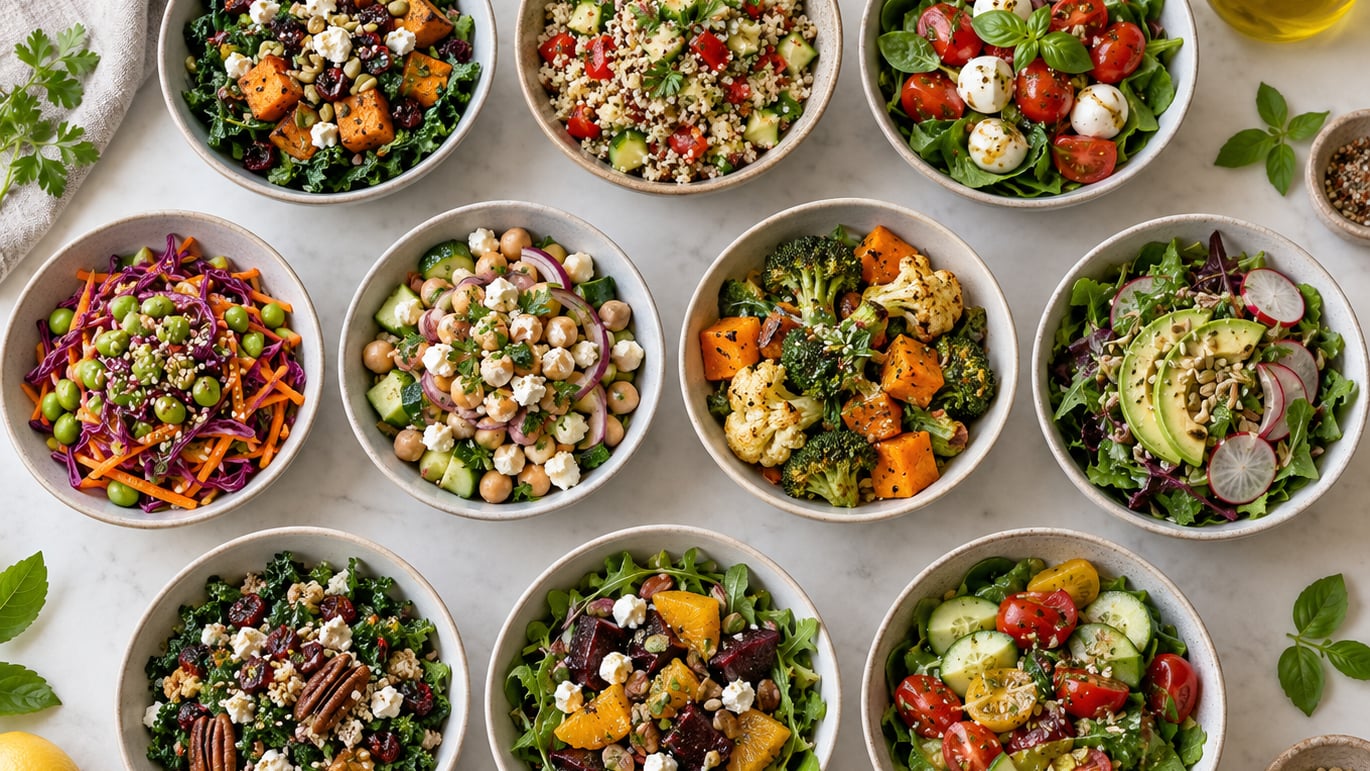
Healthy salad recipes that keep you full are built on three things most salads skip: enough protein, a slow carbohydrate like beans or whole grains, and some fat. A bowl of lettuce with a few cherry tomatoes is a side dish, not a meal, and about an hour later you will be reaching for something else.
The ten recipes below are the ones I actually make on busy weeks. Each one has a named protein, a filling carbohydrate, real texture, and a dressing worth looking forward to. Most take under twenty minutes, and every one of them holds up for a couple of days in the fridge if you pack the dressing separately.
A note before we start: this is general nutrition information, not personal advice. If you are managing diabetes, kidney disease, a food allergy, or anything else medical, talk to a doctor or registered dietitian before you change how you eat.
If you want the science first, eating slower fills you up sooner and takes about fifteen seconds of attention. It works better with a salad that is actually substantial, which is what we are building here.
Table of Contents
- Healthy Salad Recipes That Keep You Full at a Glance
- 1. Mediterranean Chickpea and Quinoa Salad
- 2. Chicken Avocado Power Salad
- 3. Lentil and Roasted Vegetable Salad
- 4. Salmon and Farro Salad with Greens
- 5. Black Bean and Sweet Potato Salad
- 6. Greek Salad with Turkey and Hummus
- 7. Tofu and Edamame Crunchy Salad
- 8. Cottage Cheese and Berry Salad
- 9. Warm Quinoa and Roasted Cauliflower Salad
- 10. Kidney Bean and Hummus Salad
- Frequently Asked Questions
- Conclusion
Healthy Salad Recipes That Keep You Full at a Glance
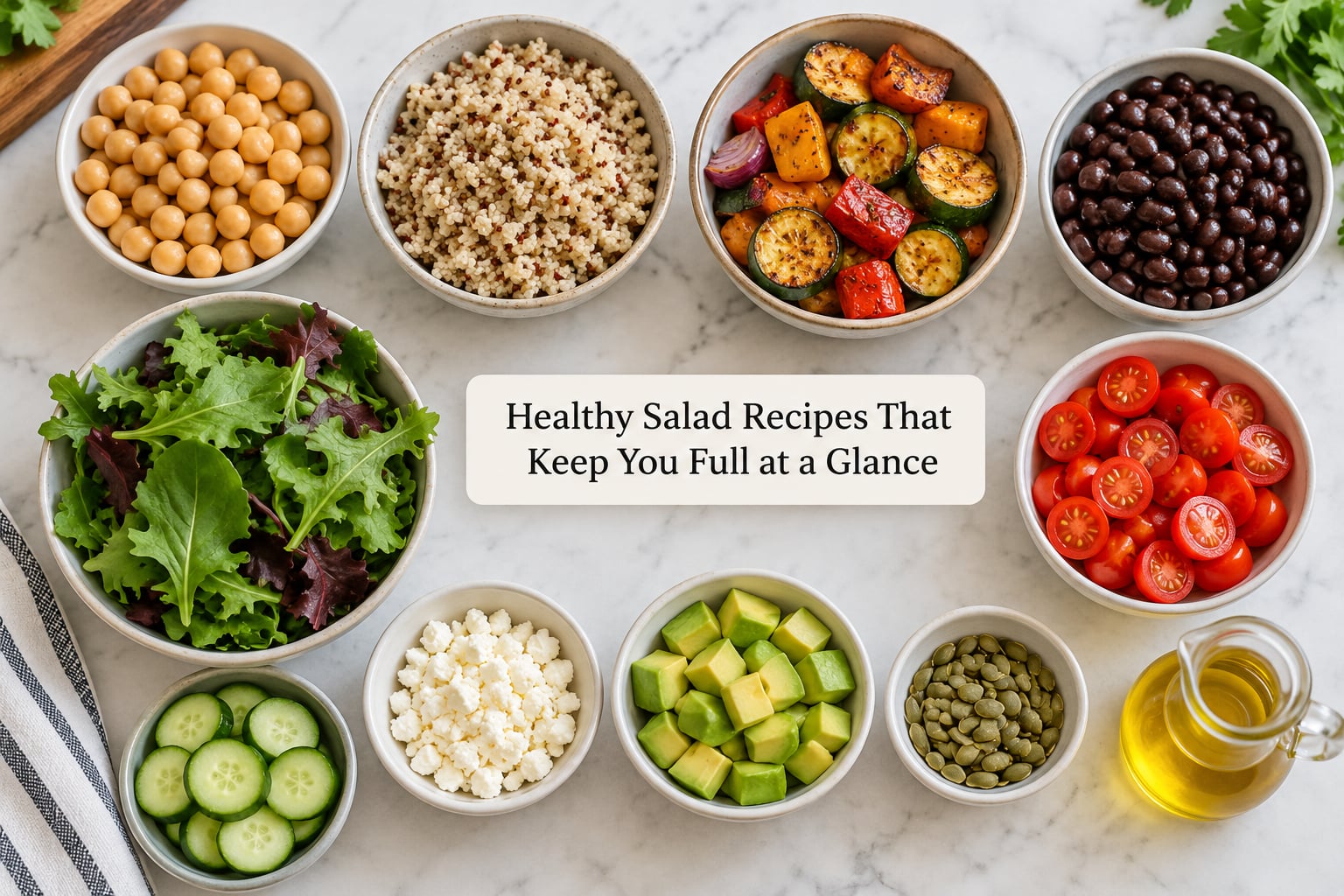
Every recipe below carries a protein, a carbohydrate, and a fat source, which is the reason it lasts. Prep times are active time, not including the oven resting.
| Recipe | Main fullness builder | Prep time | Dietary style | Best use |
|---|---|---|---|---|
| 1. Mediterranean Chickpea and Quinoa | Chickpeas plus quinoa | 20 min | Vegan, gluten-free | Office lunch |
| 2. Chicken Avocado Power Salad | Chicken plus avocado | 15 min | Gluten-free | Post-workout |
| 3. Lentil and Roasted Vegetable | Lentils plus sweet potato | 40 min | Vegan, gluten-free | Meal prep batch |
| 4. Salmon and Farro with Greens | Salmon plus farro | 25 min | Omnivore | Dinner salad |
| 5. Black Bean and Sweet Potato | Black beans plus sweet potato | 30 min | Vegan, gluten-free | Lunch or side |
| 6. Greek Salad with Turkey and Hummus | Turkey plus hummus | 15 min | High protein | Quick lunch |
| 7. Tofu and Edamame Crunchy Salad | Crisped tofu plus edamame | 20 min | Vegan | Lunchbox salad |
| 8. Cottage Cheese and Berry Salad | Cottage cheese plus seeds | 8 min | Vegetarian | Fastest option |
| 9. Warm Quinoa and Cauliflower | Quinoa plus beans | 35 min | Vegan, gluten-free | Cold weather dinner |
| 10. Kidney Bean and Hummus | Two kinds of beans | 12 min | Vegan, gluten-free | Pantry dinner |
1. Mediterranean Chickpea and Quinoa Salad
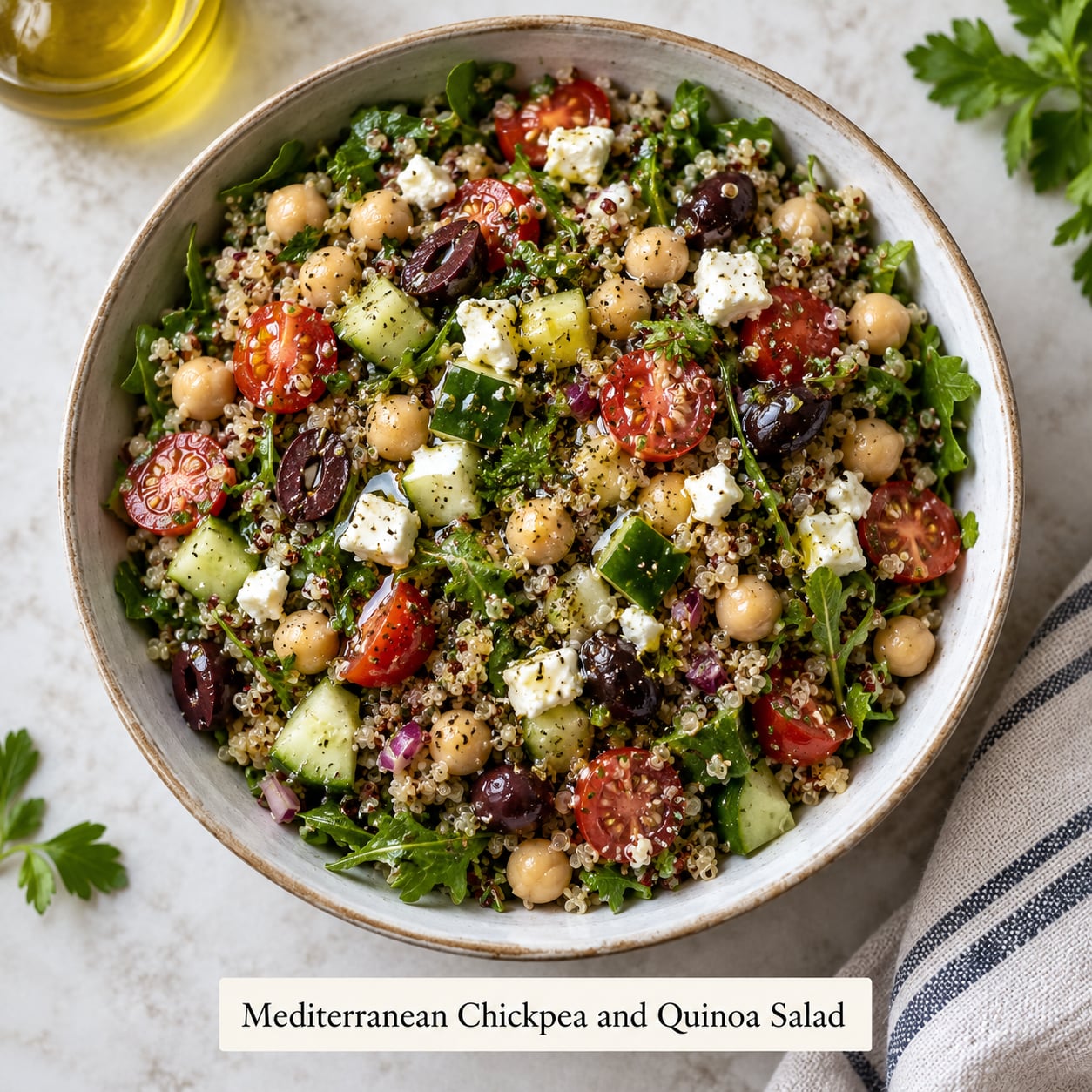
This is the salad I make when I want something that survives a desk without a microwave. Chickpeas and quinoa together bring roughly fifteen grams of protein and eight grams of fiber per serving, which is the pairing most plant-based salads get wrong.
What you need for two servings:
- 1 cup cooked quinoa, cooled
- 1 can chickpeas, rinsed and dried
- 1 small cucumber, diced
- 1 cup cherry tomatoes, halved
- 1/3 cup kalamata olives, roughly chopped
- 2 cups chopped romaine or baby spinach
- 2 tablespoons olive oil, 1 tablespoon lemon juice, 1 teaspoon oregano, a pinch of salt and pepper
How to make it:
- Whisk the olive oil, lemon juice, oregano, salt, and pepper in a small jar.
- Toss the cooled quinoa, chickpeas, cucumber, tomatoes, and olives with two thirds of the dressing.
- Fold in the greens last so they do not go limp.
- Spoon over the remaining dressing right before eating.
Why it keeps you full: quinoa is a complete protein with all nine essential amino acids, chickpeas add fiber and a slow starch, and olive oil gives the fat that slows how fast the bowl empties. For dressing help, I keep a homemade vinaigrette in the fridge all week.
Keeps three days airtight. Store the dressing on the side and the greens will still be crisp on day three. If greens have gone soft in the fridge, a cold rinse and a spin in a salad spinner brings most of them back, and there are other ways to revive wilted greens.
Swaps: use brown rice or farro instead of quinoa, add a handful of feta or crumbled tofu for extra protein, or trade cucumber for celery when you are out.
2. Chicken Avocado Power Salad
Avocado is the reason this one works as a meal. A whole medium avocado is about 15 grams of fat, and fat is the macronutrient that most slows gastric emptying, which is part of why you stop thinking about food two hours later.
What you need for two servings:
- 2 boneless, skinless chicken breasts, about 5 ounces each
- 2 cups chopped romaine
- 1 avocado, sliced
- 1/2 cup black beans, rinsed
- 1 cup cherry tomatoes, halved
- 1/2 cup shredded red cabbage
- 1 tablespoon olive oil, 1 tablespoon lime juice, salt and pepper
How to make it:
- Season the chicken with salt and pepper and cook in a skillet over medium heat until the thickest part reaches 165F, about 6 to 7 minutes per side. Rest it 5 minutes before slicing.
- Whisk olive oil, lime juice, salt, and pepper.
- Build the bowl: romaine first, then cabbage, tomatoes, beans, sliced chicken, and avocado on top.
- Dress lightly and eat within the hour so the avocado stays firm.
Why it stays full: chicken and black beans cover the protein and fiber bases, avocado covers the fat, and shredded cabbage adds crunch so the bowl reads as a meal rather than a pile of leaves. Want more from the same idea? Here is the formula underneath all ten of these recipes.
How to Build a Salad That Stays Full
Start with the base. Greens, cabbage, or roasted vegetables, about two cups. Volume matters more than anything else for filling up the plate.
Add a protein. Aim for a palm-sized portion of chicken, fish, tofu, lentils, or beans, roughly twenty to thirty grams of protein. This is the step most salads skip, and it is the step that determines whether you are hungry at 2pm.
Add a filling carbohydrate. Quinoa, farro, sweet potato, corn, or a second legume. Bare vegetables alone digest fast, and fast digestion is a short stretch of energy followed by a dip.
Add a healthy fat. Olive oil, avocado, nuts, seeds, or a nut butter dressing. Fat slows digestion and makes the vegetables taste like something you want again.
Finish with texture and acid. Something crisp, something salty or sour, and a dressing with acid in it. A bowl with all four is a meal; a bowl with only the first one is a side dish.
3. Lentil and Roasted Vegetable Salad
Lentils are the quiet hero of this list. A half cup of cooked green lentils has about 9 grams of protein and nearly 8 grams of fiber, and they hold their texture for five days, which almost nothing else in the vegetable world does.
What you need for four servings:
- 1 cup dry green or brown lentils, cooked
- 2 medium sweet potatoes, cut into 1-inch cubes
- 1 red onion, cut into thick wedges
- 2 tablespoons olive oil, 1 teaspoon cumin, 1 teaspoon smoked paprika, salt
- 3 cups baby kale or chopped romaine
- 2 tablespoons pumpkin seeds
- For the dressing: 3 tablespoons olive oil, 2 tablespoons apple cider vinegar, 1 teaspoon Dijon, 1 teaspoon maple syrup
How to make it:
- Heat the oven to 425F. Toss the sweet potato and onion with half the olive oil, the cumin, paprika, and salt.
- Roast on a lined sheet pan for 25 to 30 minutes, turning once, until the edges are browned. Cut the cubes under 1 inch so they cook evenly.
- Whisk the dressing ingredients in a jar.
- Massage the kale with two tablespoons of the dressing to soften it, then layer kale, lentils, roasted vegetables, and pumpkin seeds.
- Serve the rest of the dressing on the side.
Why it keeps you full: lentils and sweet potato together give roughly twenty grams of protein and well over ten grams of fiber, and the fat from the olive oil and pumpkin seeds keeps the blood sugar curve flat rather than spiky.
Meal prep: roast a double batch of vegetables on Sunday and keep the lentils separate in their own container. Combine the night before, dressing on the side. Cooked vegetables and cooked lentils both hold three to four days in the fridge.
4. Salmon and Farro Salad with Greens
Fish plus whole grain is the fastest route to a salad that tastes like dinner. Farro is chewy and nutty, which keeps the bowl interesting, and it holds up better than quinoa when it is dressed.
What you need for two servings:
- 2 salmon fillets, 5 to 6 ounces each
- 1 cup cooked farro, cooled
- 2 cups arugula or mixed greens
- 1/2 cucumber, sliced thin
- 1/3 cup cherries or grapes, halved
- 2 tablespoons toasted walnuts or pecans
- For the dressing: 2 tablespoons olive oil, 1 tablespoon rice vinegar, 1 teaspoon Dijon, 1 teaspoon honey
How to make it:
- Pat the salmon dry and season. Bake at 400F until the thickest part reaches 145F, about 10 to 12 minutes.
- Let it rest 3 minutes and flake it into large pieces rather than chopping it.
- Whisk the dressing and toss it with the farro and cucumber.
- Put greens in a wide bowl, pile the farro mixture on top, add the salmon, fruit, and nuts, and finish with a little extra dressing.
Why it keeps you full: salmon and farro supply about thirty grams of protein plus a slow starch, and walnuts add fat and omega-3s. If you do not eat fish, use grilled chicken, a hard-boiled egg, or 200 grams of baked tofu and keep everything else the same.
Storage: eat this one within a day. Salmon loses its texture faster than the grains do, and flaked fish in a sealed container is best on day one.
5. Black Bean and Sweet Potato Salad
Sweet potato and black beans are a genuinely complete pairing. Together they cover the amino acids most plant bowls are missing, and the combination of fiber and resistant starch is why this one holds steady through an afternoon.
What you need for four servings:
- 2 medium sweet potatoes, cubed 1 inch
- 1 can black beans, rinsed
- 2 cups shredded red cabbage
- 1 red bell pepper, diced
- 1/4 cup chopped cilantro
- 1 avocado, sliced
- For the dressing: the juice of 2 limes, 3 tablespoons olive oil, 1 teaspoon honey or maple syrup, 1/2 teaspoon chili powder, salt
How to make it:
- Roast the sweet potato at 425F with a little oil and salt for 25 to 30 minutes until the edges caramelize.
- Whisk the lime dressing ingredients together.
- Massage the cabbage with half the dressing to soften it slightly.
- Layer cabbage, black beans, roasted sweet potato, bell pepper, and cilantro. Add avocado just before serving.
Why it keeps you full: black beans bring protein and fiber, the roasted sweet potato is a low-glycemic carbohydrate, and the lime and avocado keep it bright rather than heavy. As a side, halve the portion and add a grain; as a lunch, this is enough on its own.
Storage: the dressed salad holds four days without the avocado, which browns. Keep the lime dressing in a jar and shake it before using, since the oil separates.
6. Greek Salad with Turkey and Hummus
This one takes fifteen minutes and no cooking at all. Turkey brings roughly thirty grams of protein per serving, and the hummus adds enough fat and fiber to stop it from feeling like diet food.
What you need for two servings:
- 200 grams cooked turkey breast, sliced or cubed
- 3 tablespoons hummus
- 1 large cucumber, chopped
- 1 cup cherry tomatoes, halved
- 1/2 red onion, thinly sliced
- 1/3 cup kalamata olives
- 1/2 cup chopped romaine
- 1 tablespoon olive oil, 1 teaspoon red wine vinegar, dried oregano
How to make it:
- Soak the sliced red onion in cold water for 5 minutes to take the edge off, then drain.
- Whisk the olive oil, vinegar, and oregano.
- Toss the cucumber, tomatoes, onion, olives, and turkey with the dressing.
- Fold the hummus through at the end so it stays creamy instead of grainy, and serve over the romaine.
Why it keeps you full: turkey for protein, hummus for fat and fiber, and cucumber and tomato for volume. If the bowl tastes too salty, use half the olives and add a squeeze of lemon rather than reaching for more dressing.
The usual mistake here is over-dressing. A Greek salad already has salt coming from the olives and the feta-style ingredients, so a light hand with the vinaigrette keeps the vegetables crisp. If you like building dressings from scratch, this guide to homemade salad dressing has three that hold up for a week.
7. Tofu and Edamame Crunchy Salad
Crisped tofu is the whole trick here. Naked tofu in a salad is soft and bland, so it tastes like an afterthought. Pan-crisping it first changes the texture completely and takes about ten extra minutes.
What you need for two servings:
- 14 ounces extra-firm tofu, pressed and cubed
- 1 cup shelled edamame, frozen works well
- 2 cups shredded cabbage and carrot mix
- 1 red bell pepper, sliced
- 1/4 cup roasted peanuts or cashews
- For the dressing: 2 tablespoons sesame oil, 1 tablespoon rice vinegar, 1 tablespoon soy sauce or tamari, 1 teaspoon maple syrup, 1 teaspoon grated ginger
How to make it:
- Press the tofu 20 minutes under a weight, cube it, and pat it dry.
- Heat a nonstick skillet with a tablespoon of sesame oil over medium-high. Cook the tofu 8 to 10 minutes, turning, until golden on most sides.
- Thaw the edamame in a colander and rinse under cold water.
- Whisk the dressing and toss it with the cabbage mix, bell pepper, and edamame.
- Top with the crispy tofu and nuts, then spoon the dressing over so the cabbage stays crisp.
Why it keeps you full: tofu and edamame together give more protein than most salads, the raw cabbage and carrots add fiber and crunch, and the sesame dressing supplies fat. For a raw instead of cooked version, skip the skillet and mash the tofu with a little soy sauce and mustard.
Storage: the crisped tofu keeps three days in an airtight container, though it softens. Store the dressing separately and use it within five days.
8. Cottage Cheese and Berry Salad
This is the eight-minute option and the one I make when I have nothing left in the fridge. Cottage cheese carries about 25 grams of protein per cup, which is more than most salads contain in total.
What you need for one large serving:
- 1 cup low-fat cottage cheese
- 2 cups chopped romaine
- 1/2 cup blueberries or any berries in season
- 1 tablespoon chia seeds or hemp hearts
- 1 tablespoon pumpkin seeds
- 1 teaspoon honey, plus lemon juice, salt, and black pepper
How to make it:
- Put the romaine in a bowl and spoon the cottage cheese over one side rather than mixing it through.
- Top with the berries, chia, and pumpkin seeds.
- Drizzle with honey and a squeeze of lemon, then season with salt and pepper.
- Fold everything together right before eating.
Why it keeps you full: cottage cheese for protein, chia and pumpkin seeds for fat and fiber, greens for volume. The salt matters, because cottage cheese is bland on its own and a pinch of it makes everything else taste better.
Balance the sweetness: honey is for tart berries, and none at all is right if the berries are very ripe. If you like a savory version, swap the honey for a teaspoon of Dijon and add a handful of chopped cucumber and a few sunflower seeds, which is the combination regulars describe on cooking forums as a reliable work lunch.
9. Warm Quinoa and Roasted Cauliflower Salad
A warm salad feels more like dinner than lunch, which makes it useful in winter. Cauliflower roasted hot brings a caramelized flavor that cold raw vegetables simply do not have.
What you need for four servings:
- 1 small head cauliflower, cut into florets
- 1 cup cooked quinoa
- 1 can chickpeas or cannellini beans, rinsed
- 2 cups baby spinach
- 1/2 cup dried cranberries or raisins
- 1/3 cup toasted walnuts
- For the dressing: 2 tablespoons tahini, 1 tablespoon lemon juice, 1 teaspoon maple syrup, 1 small garlic clove grated, 3 tablespoons warm water
How to make it:
- Heat the oven to 425F. Toss the cauliflower with olive oil, salt, pepper, and a teaspoon of turmeric or curry powder.
- Roast 20 to 25 minutes until browned at the edges, shaking the pan once.
- Whisk the tahini dressing. It will seize up at first, so add the warm water a tablespoon at a time until it pours.
- Spread the quinoa on a platter, pile the cauliflower and beans on top, add the spinach so it wilts slightly from the heat, and finish with cranberries, walnuts, and the dressing.
Why it keeps you full: quinoa and chickpeas give protein and fiber, walnuts give fat, and the tahini dressing adds enough richness that the bowl works as a main course. Add extra beans or a scoop of hummus if you are serving it to someone with a bigger appetite.
Serve it warm or at room temperature. It holds three days in the fridge, though the spinach wilts further by day two, so hold the greens back if you are packing it.
10. Kidney Bean and Hummus Salad
Everything in this one comes from the pantry, which is exactly why it belongs on the list. Two kinds of beans give a complete amino acid profile, and the hummus ties the whole bowl together.
What you need for two servings:
- 1 can kidney beans, rinsed
- 1 can chickpeas, rinsed
- 4 tablespoons hummus
- 1 small cucumber, chopped
- 1 cup cherry tomatoes, halved
- 1/2 red onion, finely chopped
- 1/2 cup parsley or dill, chopped
- 2 tablespoons olive oil, 1 tablespoon lemon juice
How to make it:
- Chop the herbs last and toss them with the olive oil and lemon juice to keep them from going dark.
- Mix the hummus with a tablespoon of water so it spreads instead of sitting in clumps.
- Combine the beans, cucumber, tomatoes, onion, and dressing in a bowl.
- Fold in the hummus and herbs at the very end.
Why it keeps you full: kidney beans and chickpeas give roughly 20 grams of protein and 15 grams of fiber per serving, and the hummus and olive oil supply the fat. It is the cheapest bowl on this list and the one that needs the fewest decisions.
Batch prep: make a double batch on Sunday and it covers four lunches. Keep the tomatoes out of the mix until the day you eat it, or they release water and thin everything out. To follow the same structure with different ingredients, swap the beans for white beans or navy beans, or trade the cucumber for celery and radishes, which hold their crunch even on day four.
Frequently Asked Questions
Do salads make you full or leave you hungry?
A plain salad of greens and a few vegetables usually does not, because it is low in protein and fat. A salad that keeps you full needs a palm-sized protein, a slow carbohydrate such as beans, quinoa, or sweet potato, and a fat source such as olive oil, avocado, or nuts. Without those three, most people are hungry again within an hour or two.
What salad ingredients are the most filling?
The most filling ingredients are ones that combine protein, fiber, and fat. Beans, lentils, tofu, eggs, chicken, and salmon lead on protein. Quinoa, farro, oats, corn, and roasted sweet potato add slow carbohydrates. Avocado, nuts, seeds, olive oil, and nut butters add the fat that slows digestion. Aim for at least one from each category in every bowl.
How much protein do I need in a salad to stay full?
For most adults, a serving that includes roughly 20 to 30 grams of protein is a reasonable target for a main-meal salad. That is about a palm-sized portion of chicken or fish, a whole avocado plus beans, half a cup of cottage cheese, or a cup and a half of tofu and edamame. If you are pregnant, training hard, or managing a medical condition, ask a registered dietitian for a number that fits you.
Can you meal prep salads for the whole week?
Yes, most of these salads hold three to four days in the fridge, and some hold five. Prep sturdy ingredients like grains, roasted vegetables, beans, and proteins on Sunday, then add leafy greens and dressing at night or in the morning. Keep the dressing in a separate jar, and add anything that browns, like avocado, right before eating.
How do I keep a meal prep salad from getting soggy?
Layer and separate. Put the dressing at the bottom of the container if you are going to eat it within a day, or in a separate jar if you are packing a week. Store protein, grains, and roasted vegetables away from the greens until you eat. If a salad does get limp, drain it and re-season with a squeeze of lemon rather than adding more oil.
Can a salad be a complete meal on its own?
It can, once it has protein, a filling carbohydrate, fat, and enough volume. A bowl of greens with tomatoes is a side. The same greens with chicken, farro, avocado, and a proper vinaigrette is a lunch that holds you until dinner. Most people need two to three cups of vegetables plus those three components to feel satisfied by salad alone.
Conclusion
Every recipe on this list works the same way. It gives you protein, a whole-food carbohydrate, some fat, and enough volume that the bowl counts as a meal instead of a side dish. That is the entire formula, and it is why all ten of them keep you full for hours.
Start with the one that needs the least from you. The kidney bean and hummus salad takes twelve minutes and uses pantry staples, so it is the easiest way to prove to yourself that a salad can hold you through an afternoon.
Once that feels normal, pick one protein, one whole-food carbohydrate, and plenty of vegetables, and build your own version. That is the approach that survives a normal week, because it is not a recipe you follow, it is a habit you pick up.