
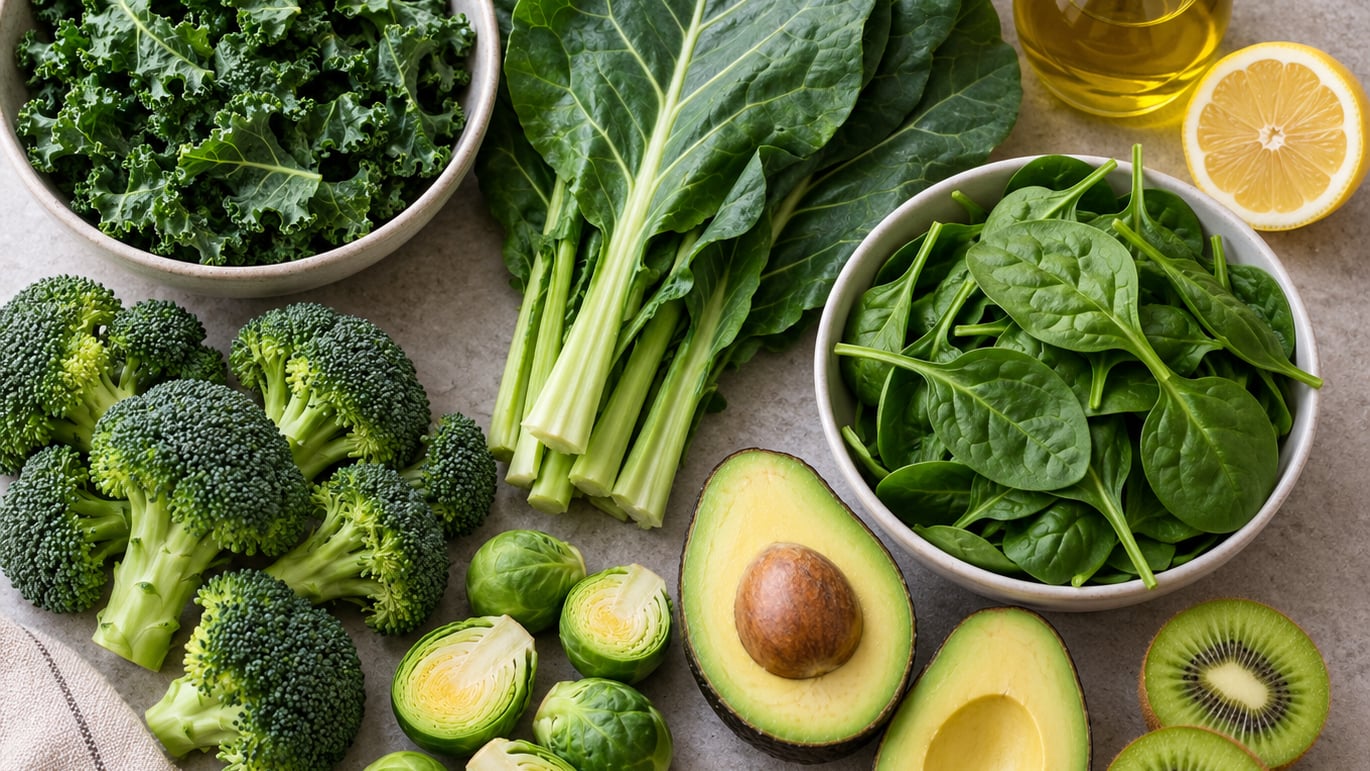
The highest vitamin K foods are almost all plants, and most of them are greens: a single cup of chopped kale or collard greens delivers more than a full day’s recommended intake for most adults. The short version on how to eat them is to cook lightly, add a little fat to the plate, and keep your portions roughly the same from week to week.
That last point matters more than people expect. Vitamin K is one of the few nutrients where a sudden dietary change can affect medication, so if you take warfarin or another anticoagulant, consistency beats restriction. I’ll come back to that near the end.
Everything below is general nutrition information, not medical advice. Vitamin K numbers come from USDA-style per-100g figures converted to a typical serving, so treat them as close approximations that shift with variety, freshness, and preparation.
Table of Contents
- Foods High in Vitamin K and How to Eat Them at a Glance
- 1. Kale: A Versatile Leafy Green for Vitamin K
- 2. Spinach: Vitamin K-Rich Greens for Salads and Cooking
- 3. Collard Greens: A Fiber-Rich Leafy Green
- 4. Swiss Chard: Colorful Greens with Flexible Cooking Methods
- 5. Bok Choy: A Crisp Chinese Green for Everyday Meals
- 6. Broccoli: Vitamin K, Fiber, and Easy Cooking Ideas
- 7. Brussels Sprouts: A Nutrient-Dense Cruciferous Vegetable
- 8. Cabbage: An Affordable Source of Vitamin K
- 9. Asparagus: A Spring Green for Vitamin K-Rich Meals
- 10. Green Peas: Vitamin K-Containing Legumes for Snacks and Sides
- 11. Avocado: A Creamy Fruit with Vitamin K and Healthy Fats
- 12. Kiwi: A Fruit with Vitamin K and Other Helpful Nutrients
- How to Eat Foods High in Vitamin K
- Vitamin K, Medication, and Safety
- Frequently Asked Questions
- Conclusion: Start with a Varied Plate
Foods High in Vitamin K and How to Eat Them at a Glance
| Food | Vitamin K per typical serving | Flavor | Best preparation | Raw, cooked, or both |
|---|---|---|---|---|
| Kale | About 150 mcg per 1 cup raw chopped | Earthy, slightly bitter | Massage into salads, blend into sauces, air-fry until crisp | Both |
| Spinach | About 130 mcg per 1 cup raw | Mild, tender | Salads, omelets, sauces, smoothies | Both |
| Collard greens | About 220 mcg per 1 cup raw chopped | Mild, faintly peppery | Steam, sauté, wrap, blend into sauces | Cooked |
| Swiss chard | About 160 mcg per 1 cup raw chopped | Silky leaves, earthy stems | Sauté with garlic, soup, grain bowls, frittatas | Both |
| Bok choy | About 120 mcg per 1 cup raw chopped | Fresh, sweet, lightly peppery | Stir-fry, steam, roast, add to soup | Both |
| Broccoli | About 90 mcg per 1 cup raw chopped | Clean, grassy | Steam, roast, stir-fry, chop into salads | Both |
| Brussels sprouts | About 145 mcg per 1 cup raw chopped | Nutty, savory | Roast, sauté, shred into slaw or grain bowls | Cooked |
| Cabbage | About 40 mcg per 1 cup raw shredded | Crunchy, mildly sweet or sour | Slaw, stir-fry, soup, sauté, ferment | Both |
| Asparagus | About 60 mcg per 1 cup raw chopped | Grassy, sweet when roasted | Roast, grill, steam, add to pasta | Cooked |
| Green peas | About 40 mcg per 1 cup raw | Sweet, grassy | Soups, rice dishes, pasta, lightly steamed | Cooked |
| Avocado | About 15 mcg per half avocado | Rich, buttery, mild | Toast, salads, guacamole, bowls, smoothies | Raw |
| Kiwi | About 5 mcg per medium fruit | Tart, sweet, floral | Sliced over yogurt, into salads or smoothies | Raw |
Sort the table in your head and a pattern shows up: the darker and leafier the vegetable, the more vitamin K it tends to carry. Avocado and kiwi sit at the other end of the list as smaller sources that add variety rather than volume.
1. Kale: A Versatile Leafy Green for Vitamin K
Kale is the food I keep coming back to, because it does the most work per minute of prep. One cup of raw chopped kale holds roughly 150 mcg of vitamin K, more than the 90 mcg daily target for most men.
The flavor is earthy and a little bitter when raw, which is why most people either massage it or cook it. Strip the leaves from the stem, chop, and add a pinch of salt and a drizzle of oil; the leaves soften and the bitterness drops away within a couple of minutes.
For snacks, kale chips are hard to beat: toss pieces with olive oil, spread them on a sheet pan, and bake at 325°F for about 12 minutes until the edges curl. That same olive oil is doing useful work, since vitamin K is fat-soluble and travels better with a little dietary fat in the meal. Our guide to adding greens without tasting them has more low-fuss ways to sneak kale into sauces and grain bowls.
2. Spinach: Vitamin K-Rich Greens for Salads and Cooking
Spinach is the most familiar entry on any vitamin K list. A cup of raw baby spinach gives you roughly 130 mcg, which makes it an easy way to move the number for the day without cooking anything.
Baby spinach works straight into salads. Baby spinach also wilts into soups, omelets, curries, and pasta within the last few minutes of cooking, so you can add it at the end and skip the prep entirely. Wilted spinach into a warm bowl with olive oil, garlic, and a squeeze of lemon is about as fast as a side dish gets.
Cooking changes texture more than nutrition here. Raw spinach keeps its color and stays soft; cooked spinach collapses to a fraction of its volume and tastes sweeter and earthier. Smoothies are the third option and worth naming, because a handful blended with banana and oat milk disappears completely.
3. Collard Greens: A Fiber-Rich Leafy Green
Collard greens regularly come out near the top of these lists, at roughly 220 mcg of vitamin K per cup of raw chopped leaves. The flavor is milder than kale, with a faint peppery note that most cooks describe as pleasant once the leaves hit heat.
Strip the leaves, roll them tight, and slice into ribbons. From there you can steam them for four or five minutes, sauté them with garlic and a little olive oil, or skip the stove entirely and use them as wraps for beans, rice, or chopped chicken.
Collards also blend well. Cooked leaves with white beans, a splash of broth, and garlic make a soup that tastes creamy without any cream, and the leaves carry enough fiber to matter. If you have never cooked them, start with the wrap method; it takes almost no time.
4. Swiss Chard: Colorful Greens with Flexible Cooking Methods
Swiss chard is the one people buy and then forget in the crisper drawer. A cup of raw chopped leaves carries about 160 mcg of vitamin K, and the stems are edible, which makes it one of the few greens you can use whole.
The method that gets the most agreement among cooks is simple: pull the leaves off the stems, chop the stems, and start them in a hot pan with garlic for two minutes before adding the leaves. They collapse fast and go glossy.
Raw chard works too, though it is more assertive than spinach. Chop it into soups and grain bowls, add handfuls to a frittata before the eggs go on the heat, or blanch the leaves briefly and dress them with lemon and oil. The rainbow varieties taste the same as the green ones, so buy whichever looks best that week.
5. Bok Choy: A Crisp Chinese Green for Everyday Meals
Bok choy gives you about 120 mcg of vitamin K per cup raw and chopped, and it holds up to heat better than most leafy greens. That makes it a good choice when you want a vegetable that keeps some bite.
Split it into the two parts and treat them differently. Slice the white and pale green stalks on the bias and start them first in a stir-fry, since they need a few minutes. Add the dark leaves at the end and let them wilt. A high-heat wok with a teaspoon of sesame oil gives you a complete side in about four minutes.
Steaming whole halves for three to four minutes works just as well, and bok choy can go into soup late in the simmer without turning to mush. Roast the halves cut-side down at 425°F for about 18 minutes when you want caramelized edges. Choose stalks that are firm and bouncy with leaves that look perky, not yellowed.
6. Broccoli: Vitamin K, Fiber, and Easy Cooking Ideas
Broccoli lands around 90 mcg of vitamin K per cup raw and chopped, which is still enough to count on a day when you are not making a salad. It has the advantage that most people already know how to cook it and, more importantly, actually eat it.
Steaming over water for four minutes keeps the color and a slight snap. Roasting at 425°F with olive oil and salt takes 20 to 25 minutes and concentrates the flavor, which is what I usually do on a weeknight. Chopping raw florets into a salad with chickpeas and lemon is faster than any of it.
Broccoli also travels well into grain bowls and stir-fries. Add it to pasta in the last two minutes of cooking, or blend cooked florets into soup for texture. Pairing it with a fat like olive oil or a little cheese does more for absorption than switching to a fancier vegetable would.
7. Brussels Sprouts: A Nutrient-Dense Cruciferous Vegetable
Brussels sprouts come in around 145 mcg of vitamin K per cup raw and chopped. They are a cruciferous vegetable like broccoli and cabbage, with a nuttier flavor, and they are the vegetable most often ruined by overcooking.
Trim the loose outer leaf, halve each sprout, and cut the flat side flat so it sits on the pan. Roast cut-side down at 425°F for 20 to 25 minutes. That single detail, a flat side and enough heat, is the difference between nutty and burnt.
Sautéing works too: start the sprouts cut-side down in a hot pan with oil, leave them alone for several minutes, then toss with salt and pepper. Shredding raw sprouts into a salad with apple and a sharp dressing is the third option, and it converts people who think they hate them.
8. Cabbage: An Affordable Source of Vitamin K
Cabbage is the cheapest item on this list, at roughly 40 mcg of vitamin K per cup raw shredded. It does not compete with kale for density, but it is one of the easiest vitamin K foods to keep in the house and to eat in volume.
Shredded cabbage goes into slaw with a vinegar dressing, into stir-fries alongside bok choy, and into soup that cooks down to sweetness. Sautéing it with butter and a little sugar is an old treatment for a reason. Fermented preparations, meaning sauerkraut and kimchi, add their own set of characteristics from bacterial fermentation and are a different food entirely.
Raw cabbage in salads is the simplest route. The texture is the only thing that gives some people pause, so cut it thinly and let it sit in the dressing for ten minutes before serving.
9. Asparagus: A Spring Green for Vitamin K-Rich Meals
Asparagus provides about 60 mcg of vitamin K per cup raw and chopped. The window when it is fresh and cheap runs about two months, and during that window it is one of the easiest vegetables to cook well with almost no effort.
Snap the woody ends off by bending each spear until it breaks. Then roast at 425°F for 12 to 15 minutes, grill the same amount of time and flip once, or steam for four minutes standing upright in a little water. Any of those work; roasting is the one that brings out sweetness.
Asparagus also fits into larger meals without fuss. Toss it into pasta in the last three minutes, add it to soups during the final simmer, or serve it alongside roasted potatoes and a protein. If you buy a bunch and only cook half, keep the rest in the fridge and use them within a few days.
10. Green Peas: Vitamin K-Containing Legumes for Snacks and Sides
Green peas sit at about 40 mcg of vitamin K per cup, and they bring fiber and plant protein along with it, which makes them more of a meal component than a side dish. Fresh, frozen, and shelled varieties all count.
Peas cook fast and soften fast. Fold them into rice dishes in the last five minutes, add them to pasta water in the final two, or stir them into a pot of soup. Fresh peas can be eaten raw straight from the pod, which is the fastest option of all.
They also freeze well. If you buy a large bag of fresh peas, blanch them for 90 seconds and freeze in portions; they hold their texture better than most vegetables do. For more fiber-dense additions that pair well with them in meals, read our list of 14 foods high in prebiotic fiber for gut health.
11. Avocado: A Creamy Fruit with Vitamin K and Healthy Fats
Avocado is the fruit people most often name in a vitamin K conversation, and it is worth including with the right expectations: half a fruit delivers roughly 15 mcg, far below a cup of kale. What makes it useful is the fat that comes with it, which helps absorb vitamin K from the rest of the plate.
That is the practical argument for avocado: eat it with greens, not instead of them. Sliced over a salad with kale and lemon, cubed into a grain bowl with chickpeas, mashed on toast, or turned into guacamole with lime and onion are all straightforward ways in. Add a scoop to a smoothie and you get the fat and fiber without tasting much.
One ripe avocado and one firm one solve most of the week. Ripening on the counter takes a few days; once it yields slightly to gentle pressure, move it to the fridge and it will hold for several more.
12. Kiwi: A Fruit with Vitamin K and Other Helpful Nutrients
Kiwi is a smaller source than the vegetables above, at about 5 mcg of vitamin K per medium fruit. It earns its place as variety rather than volume, and it is one of the easiest fruits to add without thinking about it.
Slice it over plain yogurt, fold it into a fruit salad with berries and melon, or blend it into a smoothie with greens and banana, where it covers the tartness of the greens. Sliced thin with a little salt on the side works as a snack. If it is firm, let it sit with the other fruit for a day.
It also travels: a couple of whole kiwis in a bag is a portable snack that needs nothing else. And if you are curious about the mineral side of a fruit-based diet, our piece on magnesium rich foods and why they matter covers the ground kiwi belongs on.
How to Eat Foods High in Vitamin K
Once you have the foods, the way you eat them matters less than people expect and matters more in one specific way. Absorption is the part worth knowing.
Pair vitamin K foods with a little fat
Vitamin K is fat-soluble, which means it travels with dietary fat through the digestive system rather than dissolving in water. A plain salad of raw greens delivers less than the same greens with olive oil dressing, and steamed vegetables benefit from the same idea. It does not take much. A tablespoon of oil, a handful of seeds, or an egg is enough.
Keep portions steady week to week
Consistency matters far more than any single high-intake day, especially for anyone on medication that interacts with vitamin K. Aim for a similar amount each week rather than a feast on Saturday and nothing until next Saturday. A rough target of one to two cups of greens a day plus a couple of the other foods on this list covers most adults.
Shorten cooking times and use less water
Vitamin K is reasonably heat-stable, but prolonged boiling in a lot of water leaches nutrients into the pot you pour down the drain. Steaming, quick sautéing, microwaving, and roasting all do better than long simmering. Use the cooking liquid in soups and sauces if you boil greens.
Rotate instead of eating one thing every day
No single food has to carry the nutrient. Rotating between raw salads, cooked vegetables, smoothies, and fruit spreads the load and keeps meals from getting boring. If you are just starting out, pick two greens you genuinely like and build from there rather than trying to work through all twelve on this list at once.
Vitamin K, Medication, and Safety
Most people can eat foods high in vitamin K freely. The exception is warfarin, and this is general information rather than a plan for your situation.
Warfarin works by reducing the liver’s production of clotting factors, and vitamin K works against that effect. The standard advice is not to eliminate greens. It is to keep intake steady, tell your prescriber what you are eating, and let them adjust the dose if your intake changes. Changing a vegetable habit abruptly is what causes problems, not the vegetables themselves.
The same general principle applies to other blood thinners and anticoagulants, though the mechanisms differ. Do not start or stop any food-based approach, and do not change a dose, without talking to a doctor or pharmacist first. A registered dietitian can also help you build a realistic eating pattern if you want one designed around your medication.
Two smaller notes. Vitamin K works with vitamin D and calcium in ways that matter for bone health, so foods that provide several of them at once are worth building meals around. And anyone with a condition that affects absorption, including celiac disease, Crohn’s disease, or a history of bariatric surgery, should ask their care team about whether their needs are higher than the general adult recommendation.
Frequently Asked Questions
Does cooking destroy the vitamin K in leafy greens?
No. Vitamin K is one of the more heat-stable vitamins, and steaming, sautéing, or roasting greens keeps most of it. The bigger loss comes from boiling for a long time in a lot of water, which leaches nutrients into the pot. Short cooking times and using the cooking liquid in a soup or sauce limits that loss.
Do I need a vitamin K supplement if I already eat greens?
Most people who eat a few servings of vegetables and fruit each day get enough vitamin K from food. Deficiency is rare in healthy adults and more often shows up in people who have trouble absorbing fat, which is why a supplement decision usually belongs with a doctor rather than a shopping cart. Supplements also carry real interactions with blood thinners.
What foods should I avoid while taking warfarin?
The usual guidance is not to avoid vitamin K foods but to keep the amount you eat consistent, because the drug works against it. Sudden changes in intake are what shift your INR. Tell your prescriber about any major diet change, including new greens, and ask about a registered dietitian if you want help planning meals around your medication.
How much vitamin K do adults need each day?
The recommended daily intake for adult men is 90 micrograms and for adult women is 120 micrograms. That is a low bar for a balanced diet. A single cup of raw chopped kale or collard greens delivers more than the full amount, while a cup of cabbage or green peas covers a good share of it.
Which fruits are low in vitamin K?
Most fruits contain only small amounts. Avocado and kiwi are the two commonly listed with meaningful vitamin K, and even those are modest compared with leafy greens. Grapes, oranges, apples, berries, bananas, melon, and pineapple all rank low, which is useful context if you are building an eating pattern around a specific vitamin K target.
Conclusion: Start with a Varied Plate
If you do one thing, pick two greens you actually enjoy and eat one of them daily for a month. Rotate the rest in as it feels natural, add a little fat to the plate, and keep your intake steady rather than spiky.
And if you take warfarin or another anticoagulant, talk to your doctor or pharmacist before changing any of it. Consistency plus professional guidance is a workable plan, and you do not have to give up the vegetables to follow it. Updated for 2026.