
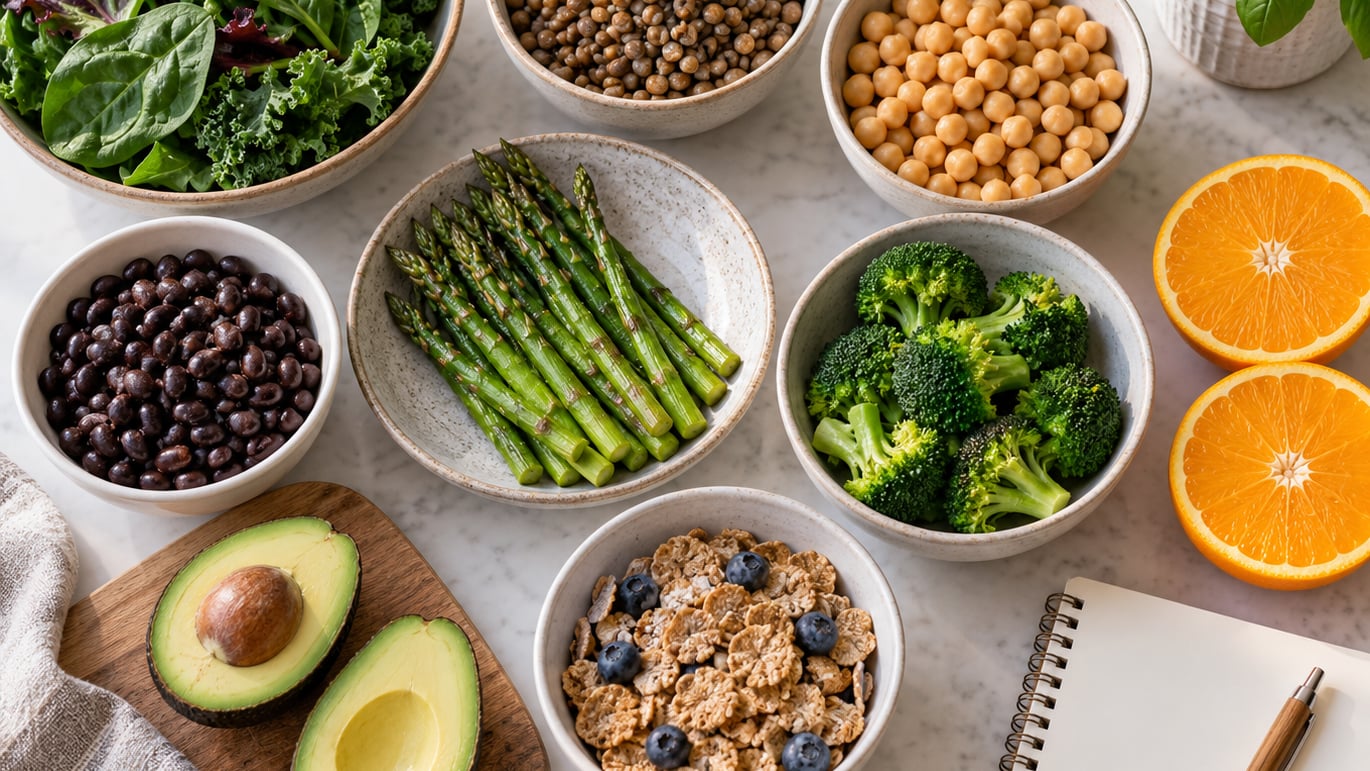
Folate is vitamin B9, a water-soluble B vitamin your body uses to build DNA, divide cells, and form healthy red blood cells. The foods high in folate are everyday ones: leafy greens, lentils, chickpeas, black beans, asparagus, broccoli, avocado, oranges, fortified cereal, and Brussels sprouts. Adults need about 400 micrograms of dietary folate equivalents (DFE) a day, and pregnancy needs 600.
Most of us get a decent amount without trying hard, then lose it in one of two places: a salad that never makes it into the fridge, or a week of meals built on toast and pasta. This guide gives you the numbers, the serving sizes, and a few ways to actually get the food into the week.
Everything here is general nutrition information, not medical advice. Folate needs shift with pregnancy, medications, digestive conditions, and lab results, so talk to a doctor or registered dietitian about your own numbers.
Table of Contents
Foods High in Folate and Why You Need It: Quick Guide
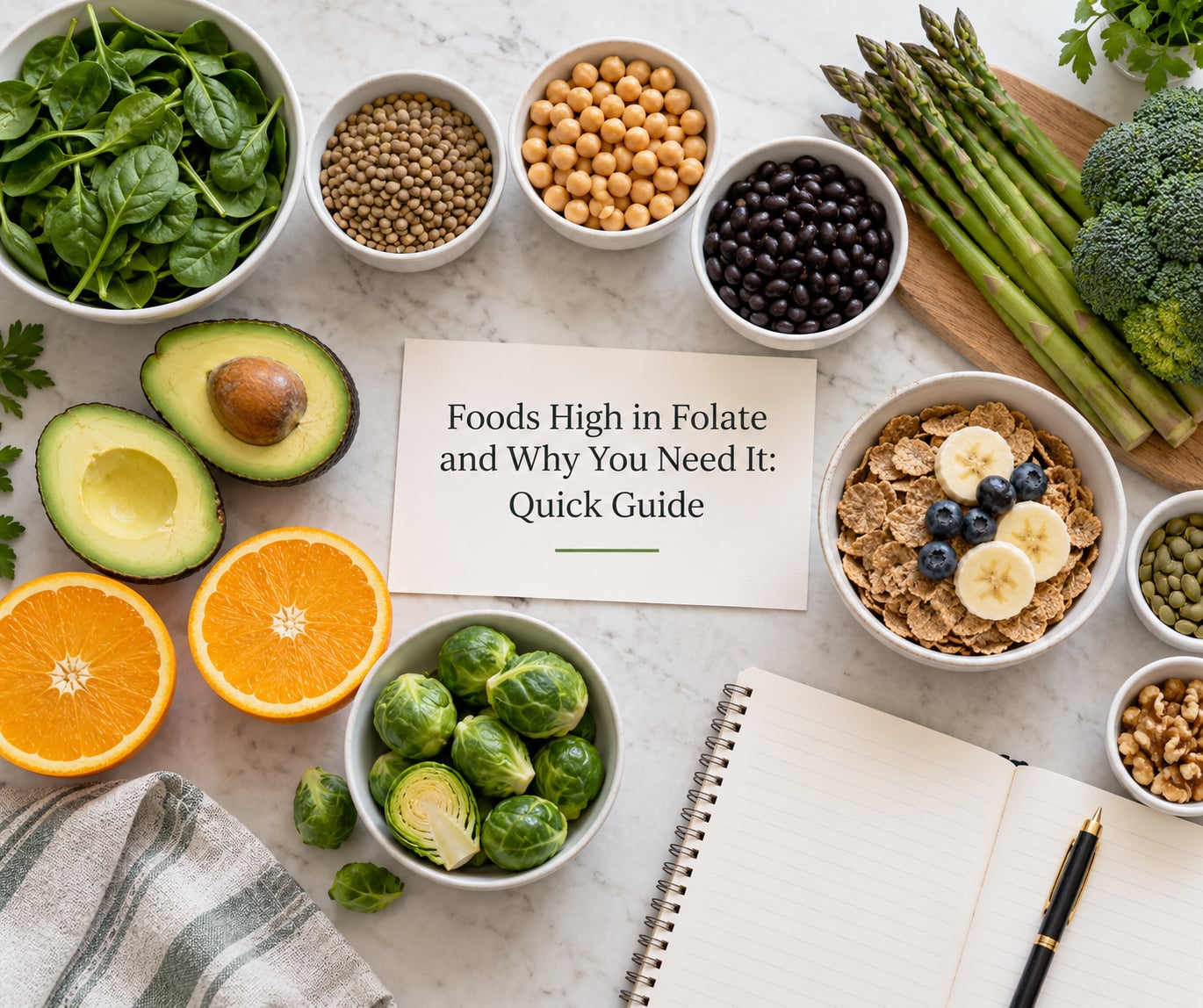
These are typical values for commonly eaten portions, drawn from standard USDA food composition data and adjusted for the fact that folate is listed as DFE. A quick way to read the table: 100% of the daily value is 400 mcg DFE, which is the adult recommended intake.
| Food | Typical serving | Folate (mcg DFE) | % daily value | Best everyday use |
|---|---|---|---|---|
| Spinach, cooked | 1/2 cup | 131 | 33% | Sautéed side, soup, eggs |
| Lentils, cooked | 1/2 cup | 90 | 23% | Soup, warm salad, dal |
| Chickpeas, cooked | 1/2 cup | 71 | 18% | Hummus, curries, grain bowls |
| Black beans, cooked | 1/2 cup | 70 | 18% | Tacos, chili, soup |
| Asparagus, cooked | 1/2 cup | 69 | 17% | Roasted, grilled, in pasta |
| Orange | 1 medium | 47 | 12% | Breakfast fruit, salad dressing |
| Avocado | 1/2 medium fruit | 45 | 11% | Toast, salads, wraps |
| Brussels sprouts, cooked | 1/2 cup | 47 | 12% | Roasted, slaw, sautéed |
| Broccoli, cooked | 1/2 cup | 39 | 10% | Steamed, stir-fry, frittata |
| Fortified breakfast cereal | 1 cup | about 100 (added folic acid) | about 25% | With fruit, as a quick breakfast |
Values move around more than most charts admit. Serving weight varies, cooking method changes the result, and fortified products differ by brand and even by batch. Use the label when one exists, and treat these numbers as a map rather than a promise. Values and recommendations here were reviewed for 2026.
One food never covers the whole requirement, which is why the list below spends time on preparation rather than on ranking.
1. Spinach and Other Dark Leafy Greens
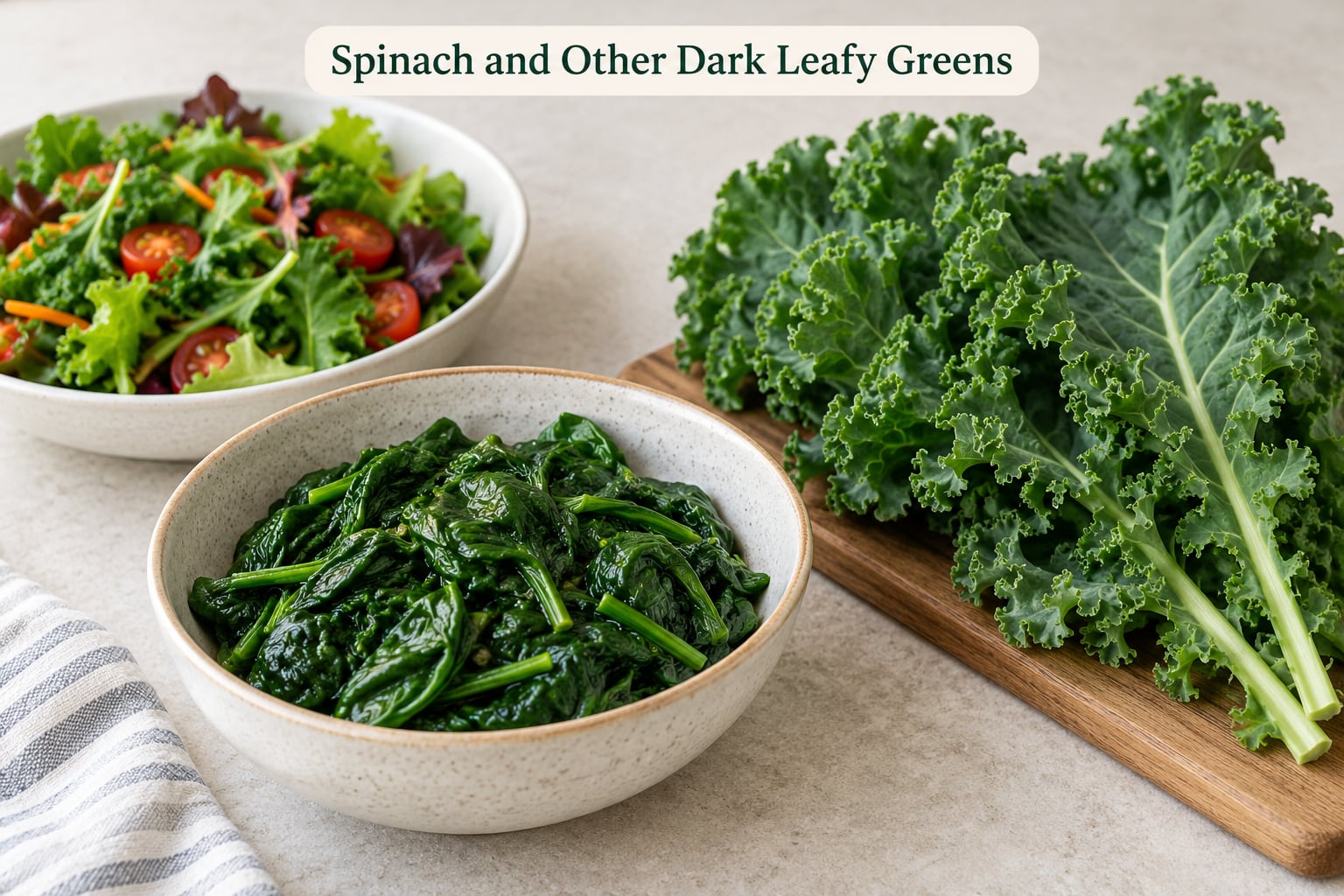
Spinach, kale, collard greens, Swiss chard, and romaine all carry meaningful folate, and they cook down in a way that concentrates a serving without much effort. A half cup of cooked spinach lands around 131 mcg DFE, roughly a third of what an adult needs in a day.
A spinach and kale salad is the easiest place to start: two handfuls of baby spinach, a cup of chopped kale massaged with a little olive oil and lemon, and a spoonful of chickpeas or walnuts. The dressing does more work than people expect, because raw kale holds up and cooked spinach wilts down into something that behaves like a side dish.
Cooked greens concentrate folate per bite; raw greens give you volume along with vitamin K, vitamin C, and lutein. No single portion guarantees a day’s intake, so pair a green with something else on the plate. A useful companion piece on this site is our list of 14 foods high in prebiotic fiber for gut health, since beans, onions, and greens overlap heavily.
2. Lentils
Lentils are one of the few foods that deliver folate, plant protein, and fiber in the same bowl, which is why they show up so often in plant-based eating plans. Half a cup of cooked lentils gives roughly 90 mcg DFE, and a cup of lentil soup is an easy way to move that number up.
Cook a batch of red or green lentils on a Sunday and you have three or four meals already handled: soup with diced carrot and cumin, a warm salad with diced cucumber and a lemon vinaigrette, dal with a little coconut milk, or a topping for roasted sweet potato.
This is naturally occurring folate, not added folic acid. That distinction matters if you are comparing labels: folic acid is a synthetic form used in fortification, while the folate in lentils arrives as part of the food itself. If you are also trying to improve iron absorption from plants, our guide to iron rich plant foods and how to absorb more iron fits the same plate.
3. Chickpeas
Chickpeas bring about 71 mcg DFE per half cup, plus fiber and plant protein, and they are the easiest legume to work into a snack or a rushed dinner. Hummus, roasted chickpeas, chickpea curry, and grain bowls all count.
A quarter cup of hummus on toast with a handful of arugula makes a five-minute lunch, and a half cup of chickpeas folded into cooked quinoa with cucumber, tomato, and a lemon dressing makes a proper grain bowl. If you are also tracking protein across the week, we break down how much protein you actually need per day.
4. Black Beans
Black beans are close to chickpeas nutritionally, with roughly 70 mcg DFE per half cup, and they are the bean most likely to end up in a meal you actually cook on a weeknight. Tacos, chili, black bean soup, and a bowl of beans with rice and salsa all land in the same range.
Beans are the quiet workhorse of a folate-rich pattern because they are cheap, shelf-stable, and freeze well. Cooked from scratch or canned and rinsed, the folate per serving stays similar; what changes is the sodium, so rinsing matters if you eat canned beans often.
Spread the folate across the week rather than one meal. A serving of beans alongside greens, another piece of fruit, and a fortified grain at breakfast gets you closer to the target without a single meal doing all the work.
5. Asparagus
Asparagus is one of the better vegetable sources, with about 69 mcg DFE in a half cup of cooked spears. It also arrives early in the season, which makes it one of the easiest folate foods to put in front of people who don’t think of vegetables as a category.
Roasting at high heat is the best method: a trimmed bunch on a hot sheet pan with olive oil and a little salt for 12 to 15 minutes. Grilling whole spears works, and they fold into pasta, risotto, and grain bowls without much fuss.
One normal portion contributes to an overall pattern rather than solving it. Asparagus is seasonal and pricey out of season, so rotate with frozen green beans or peas, which keep folate in the same general range.
6. Broccoli
Broccoli provides roughly 39 mcg DFE per half cup cooked, and it is the vegetable most likely to already be in someone’s kitchen. Steamed with a little butter, thrown into a stir-fry at the last minute, or baked into a frittata all work.
Use both florets and stalks. The stalks are sweeter than people expect once sliced thin, and using them means less waste. Cook broccoli briefly and hot: overcooked broccoli turns soft and dull, and that is usually what people remember when they say they dislike it.
Broccoli is also a fiber source, so it earns its place in a plate alongside beans and grains rather than standing alone. Pair it with a protein and a whole grain and the meal starts to look like something most dietary guidelines would describe as balanced.
7. Avocado
Avocado is convenient in a way other folate foods are not, since it does not need cooking and can sit in the fridge for a couple of days. Half a medium fruit delivers around 45 mcg DFE, along with fiber and unsaturated fat.
Avocado toast, a sliced avocado on a salad, or chunks folded into a wrap all take under five minutes. It also holds up as a simple snack with a hard-boiled egg or a handful of nuts.
Portion size is the part people get wrong. Avocado is calorie-dense, so half a fruit is a sensible default for most people and a quarter is plenty on a plate that already has beans or grains. Choose the amount that fits your day rather than the amount that fills the plate.
8. Citrus Fruits
Oranges, grapefruits, and lemons contribute folate along with vitamin C and fiber, and one medium orange gives roughly 47 mcg DFE. They are the folate food most people are already buying, which is a large part of the point.
A grapefruit and spinach salad at lunch, or orange slices alongside a bowl of fortified cereal, puts a folate source into a meal that otherwise had none. Citrus also keeps coming back as a finishing note: a squeeze of lemon over broccoli or lentils lifts the whole dish.
Juice counts, but whole fruit usually wins for fullness and fiber. If you take grapefruit, check with your pharmacist first, because it interacts with a long list of common prescriptions.
9. Fortified Cereals and Whole-Grain Products
Some breakfast cereals, breads, and grain products are fortified with folic acid, and a single cup of fortified cereal can supply around 100 mcg, or roughly a quarter of the daily value. Unlike the other foods here, this number comes from a label rather than from the food itself, so it varies widely by product.
Reading the label takes ten seconds: look for folic acid, folate, or vitamin B9 on the nutrition panel, and check the amount per serving along with the number of servings in the box. A cereal bowl with berries and a handful of oats is a genuinely fast way to start the day above 400 mcg DFE.
Not every product is fortified. Whole-grain bread is enriched only if the label says so, and products change formulations, so check each time rather than trusting memory from last year.
10. Brussels Sprouts
Brussels sprouts deliver about 47 mcg DFE per half cup cooked, and roasting is the method that converts skeptical people fastest. Halve them, toss with oil and salt, and roast at high heat until the cut sides brown.
Shredding raw or lightly cooked sprouts into a slaw with apple cider vinegar, mustard, and a little honey gives you a side dish that keeps well in the fridge. Sautéing them with garlic works too, and takes about the same time as soft-boiling eggs.
Variety is the point here. If Brussels sprouts are not landing, the vegetables in the same general range, such as broccoli, asparagus, or green peas, will do the same job. A varied plate is a more reliable strategy than any single vegetable.
Frequently Asked Questions
What is folate, and why does the body need it?
Folate is vitamin B9, a water-soluble B vitamin found naturally in leafy greens, legumes, fruit, and liver. The body needs it to make DNA and RNA, to divide cells, and to form healthy red blood cells. It also supports neural tube development in early pregnancy and helps keep homocysteine levels in range. Folate and B12 deficiencies can cause similar symptoms, so a clinician, not a symptom list, should tell you which one you have.
Are foods high in folate better than taking folic acid?
For most people, foods are the better first step because they bring fiber, protein, vitamins, and minerals along with the folate, and the body regulates food folate differently from synthetic folic acid. Supplements matter in specific cases, mainly when pregnancy is planned or ongoing, or when food intake is restricted. Higher intakes are also suggested for some people with MTHFR variants, type 1 or type 2 diabetes, or a higher BMI. Decisions above 400 mcg a day belong with your doctor.
Does cooking destroy folate in vegetables?
Folate is heat sensitive, so long boiling does reduce it, but steaming, microwaving, and quick sauteing lose far less. Boiled greens sit in water that is then poured away, which takes folate with it. Eat your vegetables al dente, cook them in a small amount of liquid, and use the liquid in soups and sauces. Storage matters too: folate declines over a few days in the fridge and faster in the freezer, so buy greens you will actually cook that week.
How much folate do adults need each day?
Adults need 400 mcg of dietary folate equivalents a day. Pregnancy raises that to 600 mcg, breastfeeding to 500 mcg, and the 1,000 mcg upper limit applies to synthetic folic acid from supplements and fortified foods rather than to folate in food. Because values on labels and in charts are listed as DFE, which accounts for how well a form is absorbed, compare like with like. Individual needs can be higher with certain medications, digestive conditions, or alcohol use, so ask a clinician about your own target.
Can people who eat plant-based diets get enough folate from food?
Yes. The highest-folate foods are mostly plants: lentils, chickpeas, black beans, spinach, asparagus, broccoli, avocado, oranges, and Brussels sprouts. A vegan day built around a lentil or chickpea bowl, a green salad, a fortified cereal, and citrus fruit clears 400 mcg without much effort. Plant-only eaters who also eat little fortified food, or who follow a restrictive diet, should check intake, and anyone planning a pregnancy should speak with a doctor about supplementation.
If you change one thing this week, make it breakfast. A bowl of fortified cereal with fruit and a handful of oats clears a quarter of your daily folate before noon, and it is the easiest habit to keep.
After that, put one legume into the rotation. Lentils, chickpeas, and black beans cover roughly a fifth of the daily value per half cup, they keep well, and they make a complete meal out of whatever vegetables are in the crisper. If you are planning a pregnancy or have a diagnosed deficiency, take the next step with a doctor rather than with a food chart, including this one.