
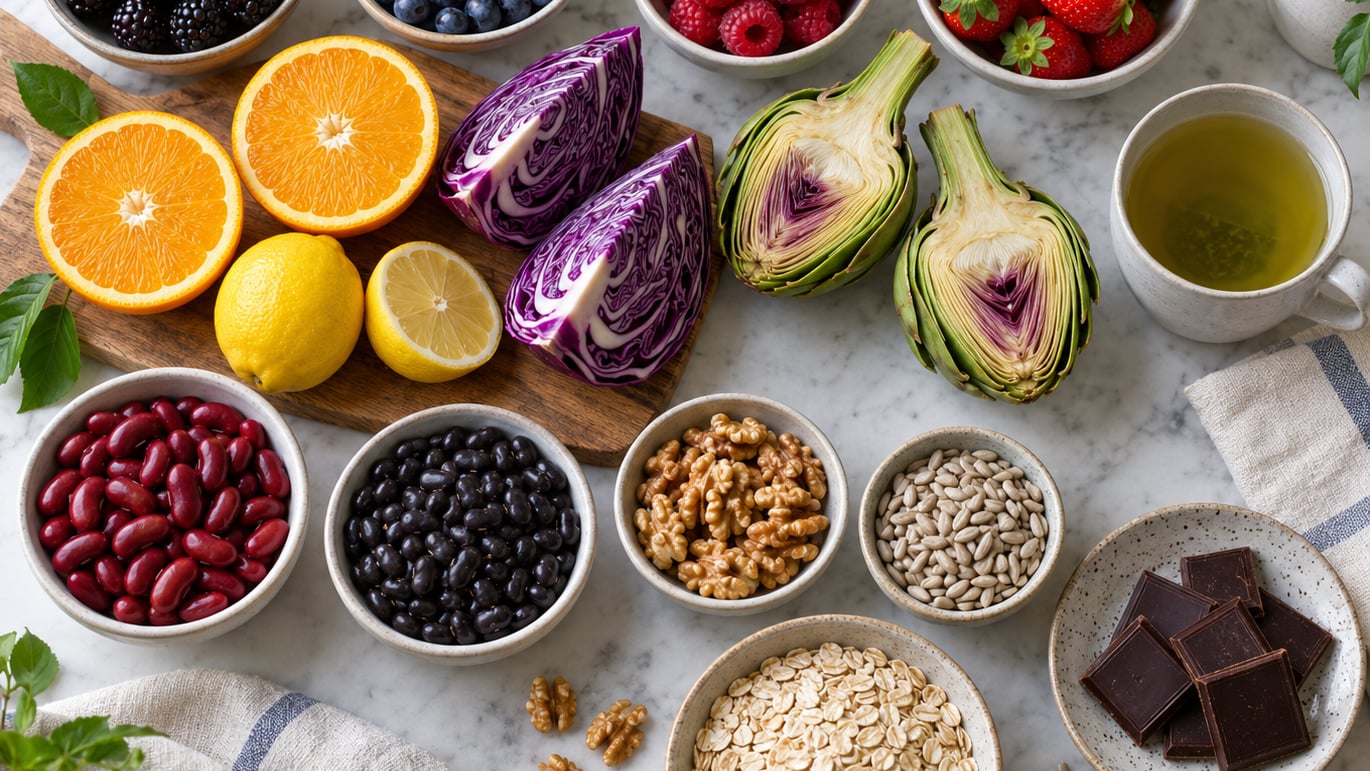
If you want foods high in antioxidants you can find anywhere, berries are the shortest answer: blackberries, raspberries, blueberries, and strawberries lead the lab measurements for total antioxidant content per cup, and all four sit in the produce aisle of any supermarket. Below them sit a long list of ordinary staples — beans, walnuts, sunflower seeds, green tea, citrus, oats, and dark chocolate — that deliver antioxidant compounds without a special diet or a big grocery bill.
Antioxidants are plant and animal compounds, including vitamins C and E, carotenoids, anthocyanins, and other polyphenols, that neutralise free radicals. Free radicals are unstable molecules that steal electrons from cells, proteins, and DNA; when they build up faster than your body can handle, that is called oxidative stress. Antioxidants donate an electron to settle them down, which slows the cellular damage associated with ageing and chronic disease.
Here is general nutrition information, not medical advice. If you have a condition, take medication, or are pregnant, talk to a doctor or registered dietitian before changing how you eat.
Table of Contents
- Foods High in Antioxidants You Can Find Anywhere at a Glance</ Every food below is available in a standard supermarket, and most are cheap enough to eat several times a week. The table is ordered roughly by antioxidant power, from the highest lab-measured values at the top to everyday staples at the bottom. FoodFlavor or roleMain antioxidant compoundsEasiest everyday use BlackberriesSweet-tart, deep purpleAnthocyanins, vitamin CFrozen in smoothies RaspberriesTart, soft, seedyAnthocyanins, ellagitanninsOn oatmeal and yogurt BlueberriesMildly tart, firmAnthocyanins, vitamin C, vitamin KOatmeal, salads, sauces StrawberriesSweet-tart, juicyAnthocyanins, vitamin CSliced on breakfast, in salads ArtichokesNutty, slightly bitterPolyphenols including chlorogenic acidSteamed with olive oil Kidney beansMild, creamyAnthocyanins, polyphenolsSoups and chili Dark chocolateRich, bitter-sweetCocoa flavanols, polyphenolsA few squares after dinner PomegranateTart-sweet arilsPolyphenols including anthocyaninsSalads and grain bowls Red cabbageCrunchy, pepperyAnthocyaninsSlaw and stir-fries Green teaGrassy, lightly bitterCatechinsHot or iced, daily Black beansEarthy, creamyAnthocyanins, polyphenolsBurritos and soups Citrus fruitBright, juicyFlavonoids, vitamin CWhole fruit, zest, dressings WalnutsButtery, mildPolyphenols, vitamin E compoundsPortioned snack, pesto Sunflower seedsMild, nuttyPolyphenols, plant compoundsOn oatmeal, salads, toast Oats and whole grainsNeutral, fillingPlant compounds, fiber, mineralsBreakfast staple, side dishes One caution on numbers: the total antioxidant content values published in the research literature are measured in a lab dish, not in a human body. They are useful for comparing foods, not for predicting a health outcome in you. Think of them as a ranking of how much pigment and polyphenol chemistry a food carries, nothing more. 1. Blueberries
- 2. Strawberries
- 3. Raspberries
- 4. Blackberries
- 5. Dark Chocolate
- 6. Green Tea
- 7. Citrus Fruit
- 8. Pomegranate
- 9. Kidney Beans
- 10. Black Beans
- 11. Artichokes
- 12. Red Cabbage
- 13. Walnuts
- 14. Sunflower Seeds
- 15. Whole Grains and Oats
- Frequently Asked Questions
- Conclusion
Foods High in Antioxidants You Can Find Anywhere at a Glance</
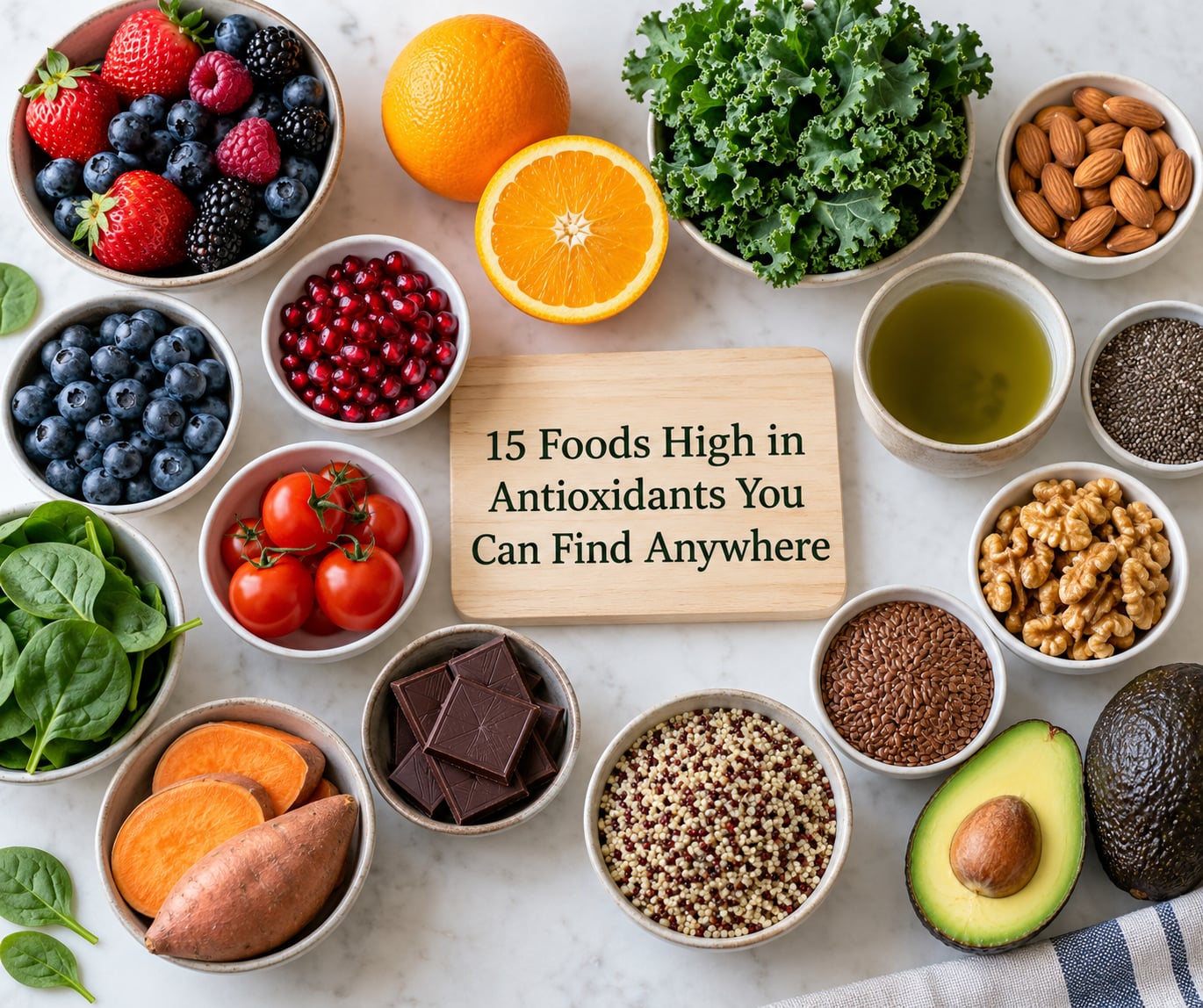
Every food below is available in a standard supermarket, and most are cheap enough to eat several times a week. The table is ordered roughly by antioxidant power, from the highest lab-measured values at the top to everyday staples at the bottom.
| Food | Flavor or role | Main antioxidant compounds | Easiest everyday use |
|---|---|---|---|
| Blackberries | Sweet-tart, deep purple | Anthocyanins, vitamin C | Frozen in smoothies |
| Raspberries | Tart, soft, seedy | Anthocyanins, ellagitannins | On oatmeal and yogurt |
| Blueberries | Mildly tart, firm | Anthocyanins, vitamin C, vitamin K | Oatmeal, salads, sauces |
| Strawberries | Sweet-tart, juicy | Anthocyanins, vitamin C | Sliced on breakfast, in salads |
| Artichokes | Nutty, slightly bitter | Polyphenols including chlorogenic acid | Steamed with olive oil |
| Kidney beans | Mild, creamy | Anthocyanins, polyphenols | Soups and chili |
| Dark chocolate | Rich, bitter-sweet | Cocoa flavanols, polyphenols | A few squares after dinner |
| Pomegranate | Tart-sweet arils | Polyphenols including anthocyanins | Salads and grain bowls |
| Red cabbage | Crunchy, peppery | Anthocyanins | Slaw and stir-fries |
| Green tea | Grassy, lightly bitter | Catechins | Hot or iced, daily |
| Black beans | Earthy, creamy | Anthocyanins, polyphenols | Burritos and soups |
| Citrus fruit | Bright, juicy | Flavonoids, vitamin C | Whole fruit, zest, dressings |
| Walnuts | Buttery, mild | Polyphenols, vitamin E compounds | Portioned snack, pesto |
| Sunflower seeds | Mild, nutty | Polyphenols, plant compounds | On oatmeal, salads, toast |
| Oats and whole grains | Neutral, filling | Plant compounds, fiber, minerals | Breakfast staple, side dishes |
One caution on numbers: the total antioxidant content values published in the research literature are measured in a lab dish, not in a human body. They are useful for comparing foods, not for predicting a health outcome in you. Think of them as a ranking of how much pigment and polyphenol chemistry a food carries, nothing more.
1. Blueberries
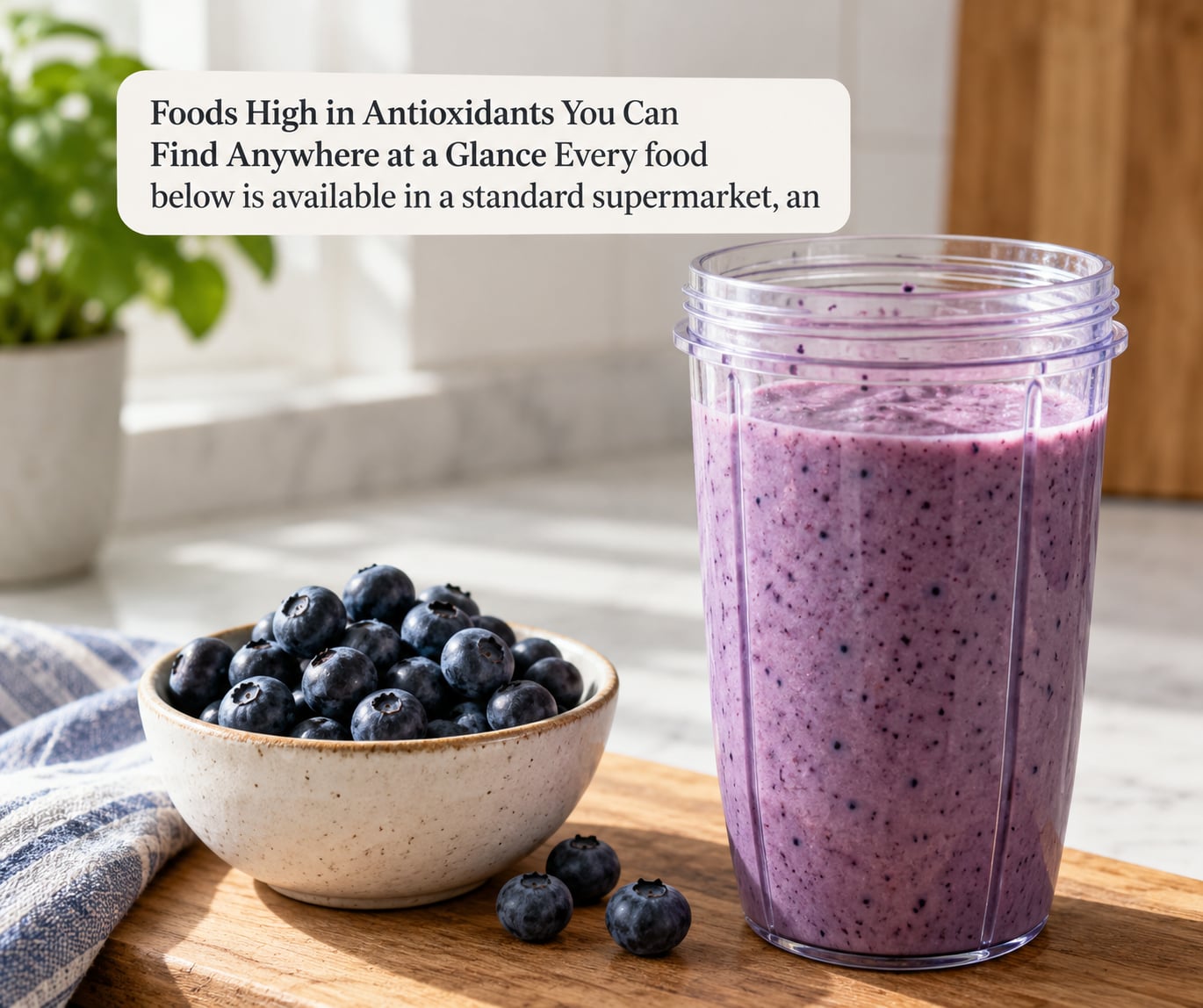
Blueberries carry anthocyanins, the pigments that give them their dusty blue skin, plus a solid amount of vitamin C. The flavor is gently tart rather than sweet, which makes them easy to use where fruit usually would not go.
How to Add Blueberries to Everyday Meals
Three combinations cover most of my week. Blueberry oatmeal with a spoonful of yogurt is the fastest: rolled oats, a splash of milk, a handful of berries, and a few minutes in the microwave. Frozen smoothie cubes are the second — blend berries with yogurt, pour into an ice tray, and move a couple of cubes to the morning smoothie so you are not relying on fresh fruit that went soft.
The third is a blueberry vinegar glaze, which sounds fancier than it is: simmer berries with a splash of balsamic and a spoon of honey until syrupy, then spoon it over roasted vegetables, chicken, or a sharp cheese. It also works in a pancake batter, where the berries burst and turn the batter purple.
2. Strawberries
Strawberries supply anthocyanins and one of the better everyday sources of vitamin C, which is why they are a standard feature of diets focused on immune function. Their flavor runs sweet with a tart edge, and they are one of the few fruits that tastes nearly as good frozen as fresh.
Sliced thick on toast with peanut butter, tossed into a spinach and walnut salad, or dropped into a blender with milk and banana takes under two minutes. A frozen strawberry sauce is the useful version: thaw the berries, mash them with a little sugar, and keep it in the fridge for pancakes, yogurt bowls, or mixing into oatmeal overnight.
3. Raspberries
Raspberries bring anthocyanins plus a class of compounds called ellagitannins, and their texture sets them apart from other berries. Each drupe holds a tiny seed, so the fruit is soft and slightly grainy, which makes it cling to whatever it lands on.
That texture is why raspberries work so well on the foods people actually eat. Spoon them over warm oatmeal and the seeds stay suspended. Fold them into coconut yogurt with a drizzle of honey. Add a handful to a pot of herbal or green tea near the end of steeping and the fruit gives the cup a light sweetness. A small bowl of raspberries with walnuts covers two of the items on this list in one snack.
4. Blackberries
Blackberries are usually ranked at or near the top of published total antioxidant content tables for common fruits, and the reason is anthocyanin density. The flavor is sweet-tart and more intense than blueberries, with a soft, jammy texture when ripe.
Fresh blackberries go into smoothies, folded into pancake and waffle batter, or scattered over a salad with feta, walnuts, and a balsamic dressing. The freezer is where blackberries are genuinely useful: rinse them, dry them, spread on a tray until solid, then bag them. They hold their shape well and are the berry I reach for when a recipe calls for a cup of them.
5. Dark Chocolate
Dark chocolate contributes cocoa flavanols and other polyphenols, and the important detail is the cocoa content. A bar with a high cocoa percentage and few added ingredients carries meaningfully more of those compounds than a milk chocolate bar, which is mostly sugar and milk solids with a little cocoa.
So buy the darkest bar you genuinely enjoy eating, and read the label for the cocoa percentage. Portions matter more than willpower: a square or two after a meal is a reasonable habit, and pairing it with walnuts and raspberries turns a snack into a small antioxidant serving. I would not eat a full bar in one sitting, not because the compounds are dangerous but because the calories add up fast.
6. Green Tea
Green tea is a source of catechins, and it belongs on this list because it is a daily beverage rather than something you have to seek out. A cup or two costs very little, needs no preparation, and fits into a routine that already exists.
For brewing, 70 to 80 degrees Celsius water preserves more of the catechins than a rolling boil. That is easier than it sounds: boil the kettle, let it sit a few minutes, then pour. Iced tea works just as well — brew it strong, cool it, and keep it in the fridge with lemon slices. Anyone watching caffeine should know green tea is not decaf, and pregnant readers should check the current guidance with their clinician.
7. Citrus Fruit
Oranges, grapefruits, lemons, and limes are accessible sources of flavonoids and vitamin C, and they are the easiest antioxidant food to keep on a counter. Half a grapefruit or a whole orange takes no preparation at all.
Beyond the flesh, the zest and the juice carry flavonoids too. Lemon or lime zest goes into salad dressings, a vinaigrette, or a marinade for chicken and fish. Juice makes a simple dressing with olive oil and a little honey. One caution: grapefruit interacts with several common medications, so if you take prescription drugs, ask your pharmacist before making it a daily habit. Kidney stones are another reason some people are told to moderate high vitamin C intakes.
8. Pomegranate
Pomegranate arils are one of the few everyday fruits high in polyphenols, and the tart-sweet flavor with a little bitterness in the finish works well in both sweet and savory dishes. If you have to choose one piece of fruit that looks fancy but is not, this is it.
Scatter the arils over a grain bowl with farro, roasted squash, and feta. Add them to a green salad with walnuts and a citrus dressing. Spoon them into plain yogurt with a few seeds of honey. A glass of pomegranate juice poured over ice is the easy version, and the same juice makes a sharp sauce for roasted vegetables or a meatless chili where you would use tomato.
9. Kidney Beans
Kidney beans are an inexpensive source of anthocyanins in the skin and other polyphenols, and they are one of the highest-antioxidant foods you can buy by weight. A can costs a fraction of a fresh bag and does the same work in a pot of soup.
Use them in chili, in a bean and vegetable soup, drained into a grain bowl with olive oil and lemon, or mashed into a patty with an egg. Beans also carry fiber, which makes them worth pairing with the fiber foods in 14 foods high in prebiotic fiber for gut health. If you cook them from dried, boil them for at least 10 minutes before simmering, which is the standard advice for reducing the lectins in undercooked pulses.
10. Black Beans
Black beans are another anthocyanin source, and their dark skin is where much of the polyphenol content sits, alongside the compounds in the bean’s structure itself. They are the most versatile of the pantry beans.
Fold them into burritos with brown rice, salsa, and a little cheese. Add a tin to a soup at the end of cooking so they keep their shape. Mash them with lime, cilantro, and olive oil into a dip for chips or raw vegetables, or build a simple salad with corn, tomato, and avocado. Reheated leftovers should reach 165 degrees Fahrenheit, and if you freeze them, cool them quickly first.
11. Artichokes
Artichokes carry polyphenols including chlorogenic acid, and they are one of the least expected items on an antioxidant list. The flavor is nutty and faintly bitter, which pairs well with lemon, garlic, and olive oil.
Steaming is the simplest route: trim the top, cut the stem flat, rub the cut surfaces with lemon so they do not go brown, and steam until a leaf pulls away easily. Roasted artichoke hearts are a good shortcut from a jar. A jar of artichoke hearts marinated in oil and herbs, served warm, gives you the same compounds with none of the trimming, and the marinated oil makes a salad dressing on its own.
12. Red Cabbage
Red cabbage gets its deep purple color from anthocyanins, the same pigment family in blueberries. The texture is crunchy and the flavor is peppery with a slight bitterness, which is why it rarely needs dressing.
Shred it into a slaw with a mayonnaise or yogurt base, or with olive oil and lemon for a lighter version. Add it to stir-fries in the last minute so it keeps its crunch, and mix it into salads where shredded white cabbage would normally go. As a side, steam it briefly with a spoon of butter and a splash of cider vinegar. It also pickles well, which keeps the anthocyanins around for weeks.
13. Walnuts
Walnuts are a plant source of polyphenols, and they are the nut most consistently linked with antioxidant content in the research literature. The flavor is buttery and mild enough that most people accept them raw.
Portion them rather than eating from the bowl. A small handful is easy to add to oatmeal, a salad, or a bowl of yogurt with berries. Walnuts also make a fast pesto base with parsley, garlic, lemon, and olive oil, and they hold up in baking, where toasting them first deepens the flavor. Keep a jar of chopped walnuts in the fridge so the portioning is easier than passing the whole shell.
14. Sunflower Seeds
Sunflower seeds contain polyphenols along with vitamin E compounds and minerals, and they are among the cheapest antioxidant foods per serving in the whole list. A handful is a small handful, and they travel well.
Sprinkle them on a salad, on top of oatmeal or yogurt, or on toast before the oil goes on. They toast well in a dry pan for a few minutes and keep for weeks in a jar. Because seeds, greens, and legumes are also common plant sources of iron, it is worth pairing them with the absorption tips in iron-rich plant foods and how to absorb more iron.
15. Whole Grains and Oats
Oats, brown rice, barley, quinoa, and whole wheat are not pigmented foods, so they rarely appear on antioxidant lists, yet they supply a mix of plant compounds alongside fiber, magnesium, and B vitamins. Oats also carry beta-glucans, a soluble fiber that is studied on its own rather than as an antioxidant.
Swaps are easy. Oats instead of a sweetened breakfast cereal, barley instead of white rice in a soup or pilaf, whole wheat bread instead of white, and quinoa in place of a pasta side. Because these foods are bland by nature, pair them with the colorful items above so the plate does the work.
Frequently Asked Questions
What food has the highest antioxidants?
Among everyday supermarket foods, blackberries usually rank at the top of published total antioxidant content tables, followed closely by raspberries, blueberries, and strawberries. Artichokes, kidney beans, and dark chocolate score highly too. These lab values are measured in a dish, not in a person, so treat them as a way to compare foods rather than a prediction of any health result.
Are antioxidant-rich foods better than supplements?
Most research points to food. Eating a varied pattern of fruits, vegetables, legumes, nuts, seeds, and whole grains is consistently associated with better health outcomes, while large antioxidant supplement trials have not reproduced those benefits and one high-dose vitamin E study found harm. If you are considering a supplement, talk to a doctor or pharmacist first, especially if you take medication or smoke.
Does cooking destroy antioxidants in vegetables?
It depends on the compound. Water-soluble vitamin C and some polyphenols leach into cooking water, so steaming, microwaving, and stir-frying retain more of them than boiling. Lycopene in tomatoes and carotenoids in carrots actually become more available after heat, because cooking breaks down plant tissue. Store produce cold and use it quickly, since light, air, and time all reduce some of these compounds.
Is frozen fruit as good as fresh for antioxidants?
Often, yes. Berries destined for freezing are usually picked ripe and frozen shortly after, and some research finds frozen fruit holds its polyphenol content as well as or better than fruit stored fresh for a week. The real losses come from time on a shelf. Frozen produce is also the cheapest route to high-antioxidant foods if fresh berries are expensive where you shop.
How much antioxidant food should I eat each day?
There is no official daily target measured in antioxidant units, and nutrition authorities generally do not set one. The workable approach is a pattern rather than a number: eat a range of colors across the week, aim for several servings of vegetables and two or three servings of fruit daily, include beans, nuts, and seeds regularly, and choose whole grains most days. If you want a specific plan, a registered dietitian can build one.
Which of these foods should I eat less of?
Most are fine in normal food portions. A few cautions are worth knowing: high-dose beta-carotene supplements have been linked to higher lung cancer risk in smokers, high-dose vitamin E has raised concerns in trials, grapefruit interacts with several prescription drugs, and people with kidney stones may be advised to limit high vitamin C and oxalate intake. People on medication or with a health condition should ask their clinician before making big changes.
If you are building an eating pattern that holds up through winter rather than just a good week, the 12 foods that support immune health through winter list covers the same foods from a different angle.
Conclusion
The case for foods high in antioxidants is that none of them are exotic. Berries, beans, walnuts, sunflower seeds, green tea, citrus, oats, and a bar of dark chocolate cover most of the compounds people are trying to get, and every one of them sits in an ordinary grocery store.
Start by picking two or three you already like and adding them to meals you are already making — berries in the oatmeal, beans in the soup, seeds on the salad, a square of dark chocolate after dinner. If you want more support on the eating side, our guide to 14 foods high in prebiotic fiber for gut health picks up the thread on the fiber side of the same plate.