
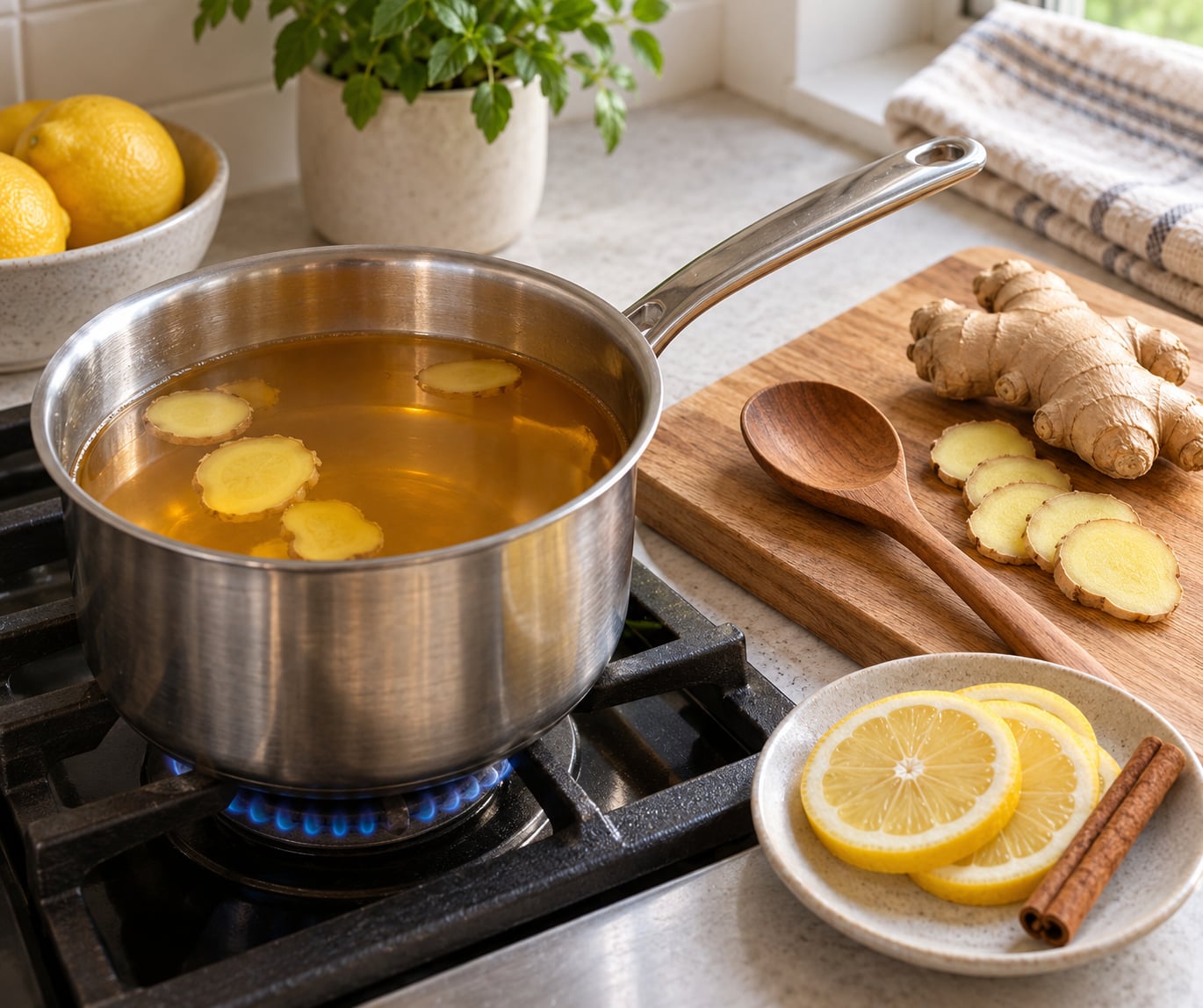
To make ginger tea from fresh ginger, slice about 1 inch of ginger root into thin coins, simmer them in 1 cup of water for 5 to 10 minutes, then strain into a mug. The whole thing takes under 15 minutes, and it is the difference between a warm, spicy drink and a cup of faintly flavored warm water.
Most weak ginger tea isn’t a technique problem, it’s a prep problem. Thick chunks, a hard boil, and a three-minute steep will give you almost nothing. Thin slices, a gentle simmer, and enough time are what actually pull the flavor out.
Here’s everything I’ve learned making it at home, including the peel question almost every recipe waves at without answering, the simmer times that map to actual strength, and what to do when your cup comes out too fiery.
Table of Contents
- What You Need
- Step-by-Step: How to Make Ginger Tea from Fresh Ginger
- How to Adjust Ginger Tea for Different Preferences
- Frequently Asked Questions
- Do I need to peel fresh ginger before making tea?
- How much fresh ginger should I put in one cup of tea?
- How long should I simmer ginger tea, and can I steep it instead?
- Can I use ground ginger or ginger paste instead of fresh root?
- How long does homemade ginger tea last in the fridge?
- Can I make ginger tea without honey or sugar?
- Conclusion
What You Need
For a single mug:
- 1 inch of fresh ginger root, about 15 grams, roughly the length of your thumb from the knuckle
- 1 cup of water, filtered if you like
- Optional: honey or maple syrup, a squeeze of lemon, a cinnamon stick, a few mint leaves
For a small pot that makes four mugs, use about 4 inches of ginger in 4 cups of water. The ratio scales almost linearly, which is the nice thing about this recipe. You are not dealing with a chemistry experiment, you are dealing with a pile of sliced root in a pot of water.
Tools are minimal. A small saucepan, a sharp knife or a mandoline for even slices, a peeler if you want to peel, and a fine mesh sieve for straining. A small jar in the fridge holds a few days’ worth if you brew a batch.
Choosing the root. Look for ginger that feels heavy for its size, with skin that is smooth and taut rather than wrinkly. Wrinkled skin means moisture has left and the flavor has faded with it. Avoid pieces with soft spots, dark moldy patches, or a hollow, feather-light feel. Color varies from pale yellow to deep tan and none of it matters much.
The peel question, settled. You do not need to peel it. Rinse the root under cool water, scrape or scrub off any dirt or rough bits with the back of a spoon or your thumbnail, and slice. The skin holds plenty of flavor and none of it tastes soapy once it’s simmered.
If you’d rather peel, a spoon is genuinely better than a peeler. Run the edge of a teaspoon along the surface and the skin comes off in thin strips that follow the knobs, without wasting the flesh underneath. The only reason to peel is appearance, or if your ginger is old and the skin has gone tough.
Once you’ve cut into a root you’ll rarely get to finish it before it dries out. How to store fresh ginger so it lasts covers the wrapping and freezing methods, and freezing pre-sliced coins on a tray is the easiest way to keep portion-sized ginger on hand.
Step-by-Step: How to Make Ginger Tea from Fresh Ginger
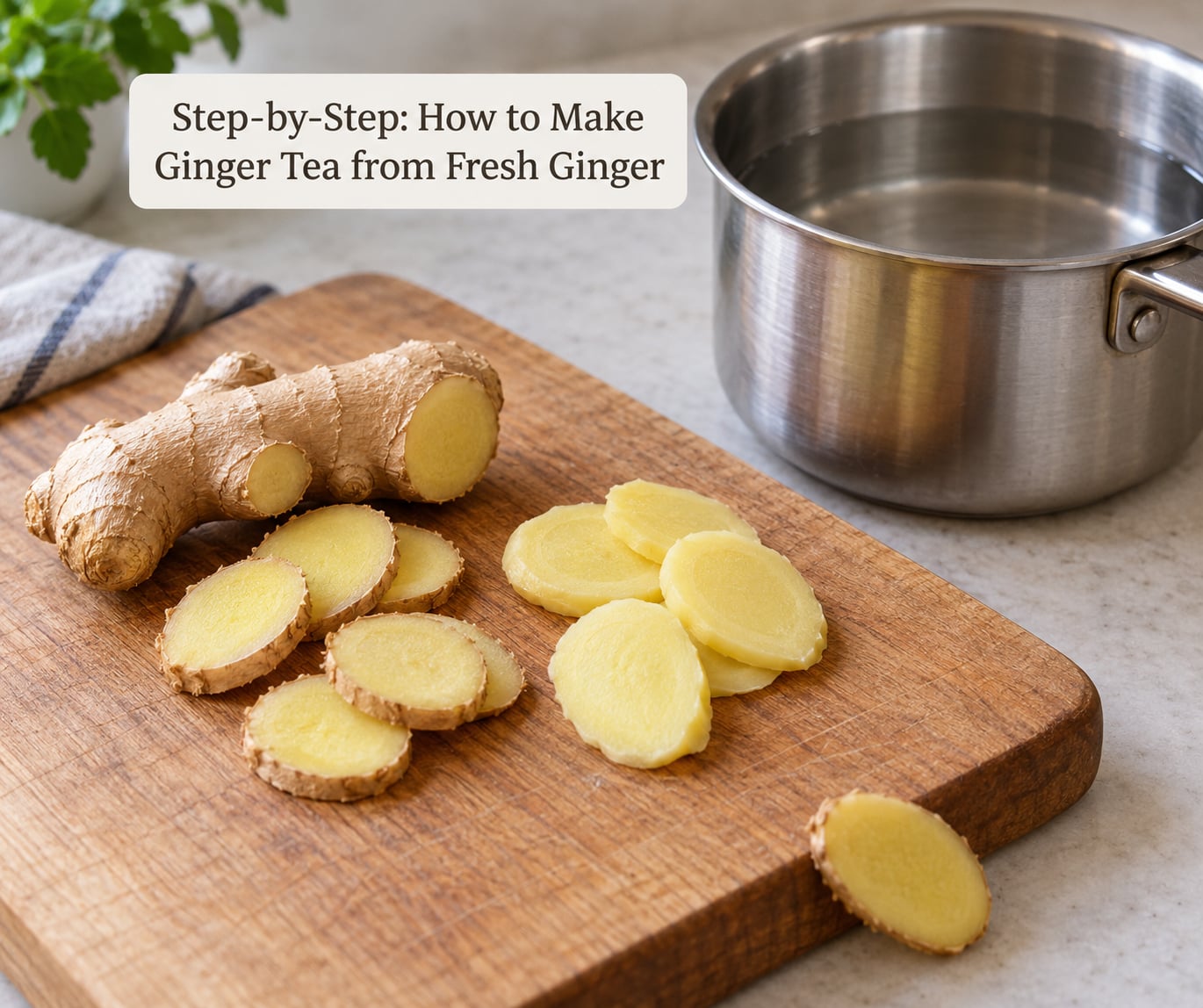
Choose and Prepare the Fresh Ginger
Wash the root, decide on peeled or unpeeled, and slice it as thin as you can manage. Quarter-inch coins are the target. Thinner extracts faster; much thinner than an eighth of an inch and the pieces turn to mush in the pot, which is fine, they strain out anyway.
Grating works too and extracts faster still, often in half the time, but it turns the finished tea cloudy and leaves pulp behind. Coins keep the cup clear.
A good test: hold a slice up to the light and you should be able to see light through it. Anything thicker is going to need longer than the timings below to give up its flavor.
Simmer the Ginger in Water
Put the ginger and the water in the saucepan. Bring it to a boil, then drop the heat until you see small bubbles breaking the surface steadily rather than a rolling churn. That’s a gentle simmer.
Hold it there for 5 to 10 minutes. Your cues are smell first: the kitchen should smell like ginger, warm and slightly sweet, within a couple of minutes. Then watch the water. It goes from clear to faintly yellow to a deeper straw color, and small flecks of ginger oil start drifting on the surface.
What not to do is keep it at a full boil. A hard boil drives off the lighter aromatic notes and leaves you with a sharper, thinner-tasting brew that tastes more raw than cooked. It’s not dangerous, it’s just a worse cup.
| Strength | Simmer time for 1 inch ginger in 1 cup water | What it tastes like |
|---|---|---|
| Mild | 3 to 5 minutes | Soft, barely sweet, good if ginger usually bothers your stomach |
| Standard | 5 to 10 minutes | Clear warmth and a slow build of heat, the everyday cup |
| Strong | 10 to 15 minutes | Firm, sharp, properly gingery, will clear your sinuses |
| Concentrate | 20 to 25 minutes | Very intense, meant to be diluted with hot water or used over ice |
Steep, Strain, and Flavor
Turn off the heat and leave the pot sitting for 3 to 5 minutes before you strain. That off-heat rest is where the deeper, rounder ginger notes finish developing, and it’s the step people skip when they’re in a hurry. The liquid keeps working at a lower temperature without the aggressive escape of steam.
Strain through a fine mesh sieve into your mug. Press the spent coins with the back of a spoon to get what’s left, then set the pulp aside. It carries a surprising amount of usable flavor, so I keep it in a small container in the fridge and throw it into stir-fries, soups, or a batch of vegetable broth from kitchen scraps later in the week.
Add sweetener and citrus last, while the tea is hot but not scorching. Honey dissolves easily and a squeeze of lemon cuts the heat in a way sugar alone won’t. Add both too early and they sit in the pot through the simmer, which flattens the lemon and leaves the honey behind on the bottom.
Common Mistakes
Old ginger. If the skin wrinkles and the flesh feels spongy, the root has lost the compounds you came for. There’s no technique that fixes it. Buy a fresh piece and move on.
Cutting too thick. A half-inch chunk can sit in simmering water for 15 minutes and give you almost nothing. Thin coins solve this more effectively than extra time does.
Boiling instead of simmering. You get a harsher cup and lose the aromatic top notes. Turn the heat down until the surface barely moves.
Steeping too long. Past about 20 minutes the tea turns bitter and slightly medicinal, especially with mature or large roots. If you want more, add more ginger rather than more minutes.
Too much ginger per cup. Two inches of root in one cup of water is a concentrate, not a cup. Start at one inch, taste, and adjust. It’s much easier to strengthen a weak cup than to rescue a fiery one.
Sweetening too early. Add honey, maple syrup, and citrus at the end. A minute in a mug makes more difference than ten minutes in the pot.
How to Adjust Ginger Tea for Different Preferences
All the variations below start from the same base. You’re changing the timing, the additions, or the temperature, not rebuilding the method.
A milder cup. Cut to a 3-minute simmer and slice thinner. If ginger genuinely upsets your stomach, cold or barely warm ginger tea is often tolerated better than a hot strong one.
A stronger cup without more heat. Simmer 10 to 15 minutes, but hold back on the ginger quantity. Longer extraction pulls aromatic oils and mellow warmth; more root mostly just adds raw heat.
Smoother spice. Toast cardamom pods and fennel seeds in a dry pan for 30 seconds before adding water and ginger. Warm spices round out the raw edge of fresh ginger in a way that works especially well in cold weather.
Citrus-forward. Add a cinnamon stick and the peel of half a lemon to the pot during the simmer, then squeeze in fresh juice at the end. If you want the turmeric pairing, add a small pinch of turmeric and a crack of black pepper during the simmer; pepper helps with absorption of turmeric’s compounds. Skip turmeric in light-colored pots, it stains permanently.
Chai-style. Simmer the ginger with a cinnamon stick, two star anise, four whole cloves, and a teaspoon of black tea for the last 3 minutes. Strain, then add milk and a sweetener. This is the version people describe as ginger tea with milk, and it’s the one regular tea drinkers tend to like most.
Iced. Brew a concentrate at double strength, pour it over ice, and top with cold water. Cold brew also works: sliced ginger in cold water in the fridge for 6 to 8 hours gives a bright, sharp, low-bitterness result that hot water never gives you.
No sugar at all. Skip the honey and maple syrup. A squeeze of lemon and a few fresh mint leaves are enough, and the tea is genuinely pleasant unsweetened if the ginger is good.
A large batch for the workday. Roughly 12 inches of sliced ginger in 10 cups of water, brought to a boil then simmered 15 minutes, strained, and refrigerated. It keeps 3 to 4 days covered in the fridge. If you make a concentrate, pour it over ice and add sparkling water for a quick ginger ale.
| Ginger form | Amount per 1 cup water | Notes |
|---|---|---|
| Fresh root, thinly sliced | 1 inch, about 15 g | Brightest, cleanest flavor, the standard here |
| Dried slices | About 1/2 teaspoon | Deeper, woodier, slightly earthier than fresh |
| Ground ginger | 1/4 teaspoon | Convenient, disperses fast, can turn muddy if simmered too long |
| Ginger paste | 1/2 teaspoon | Strong and slightly sweet, easy to stir in after brewing |
For anyone using this tea specifically for an upset stomach, how to use ginger for nausea after meals covers timing and amounts. Ginger tea is a food, not a treatment, so if nausea is persistent or comes with other symptoms, talk to a doctor. It’s also worth asking a pharmacist if you take blood thinners or any other regular medication before you make it a daily habit.
Frequently Asked Questions
Do I need to peel fresh ginger before making tea?
No. Rinse the root under cool water, scrape off dirt with a spoon or your thumbnail, and slice it with the skin on. The skin holds plenty of flavor and does not turn soapy or bitter after simmering. Peel only if you want a smoother-looking piece, if the skin has gone tough on an older root, or if the peel has darkened from sitting in air.
How much fresh ginger should I put in one cup of tea?
About 1 inch of fresh root, roughly 15 grams, for a standard cup. That is the length from your thumb knuckle to your tip, which is a much easier measure than a scale. Use half that for a mild cup, double it if you are making a concentrate to dilute later, and taste before adding more.
How long should I simmer ginger tea, and can I steep it instead?
Simmer 5 to 10 minutes for a standard cup, 3 to 5 for mild, and 10 to 15 for strong. Boil first, then lower the heat until the surface barely moves. You can also skip the heat entirely: cold water steeped in the fridge for 6 to 8 hours gives a brighter, sharper result with less bitterness than boiling ever produces.
Can I use ground ginger or ginger paste instead of fresh root?
Yes. Use about 1/4 teaspoon of ground ginger or 1/2 teaspoon of ginger paste per cup of water. Both work, and both are faster than fresh root. Ground ginger disperses quickly and can turn muddy if you simmer it long, so add it for the last 3 to 4 minutes. Fresh sliced root still gives you the cleanest, brightest flavor.
How long does homemade ginger tea last in the fridge?
Three to four days when strained into a covered container and refrigerated. Skip the honey if you’re storing it, since it can ferment over that window. You can also freeze the strained liquid in ice cube trays for a couple of months, which is handy for smoothies or sparkling ginger ale. Fresh ginger itself freezes well sliced on a tray, separate from the tea.
Can I make ginger tea without honey or sugar?
Absolutely, and many people prefer it. Unsweetened ginger tea is caffeine-free, nearly calorie-free, and nothing but water and root. A squeeze of fresh lemon and a few mint leaves add brightness without sweetness. If the plain version seems too fiery, add more water and a few more minutes of simmer rather than reaching for sugar.
Conclusion
Start with one inch of fresh ginger sliced thin, one cup of water, and a 5-minute gentle simmer. Strain it, taste it, and add lemon or a teaspoon of honey only if you want them. That single cup is the whole recipe, and once you’ve made it once you’ll know immediately whether your taste runs toward 5 minutes or 15.