
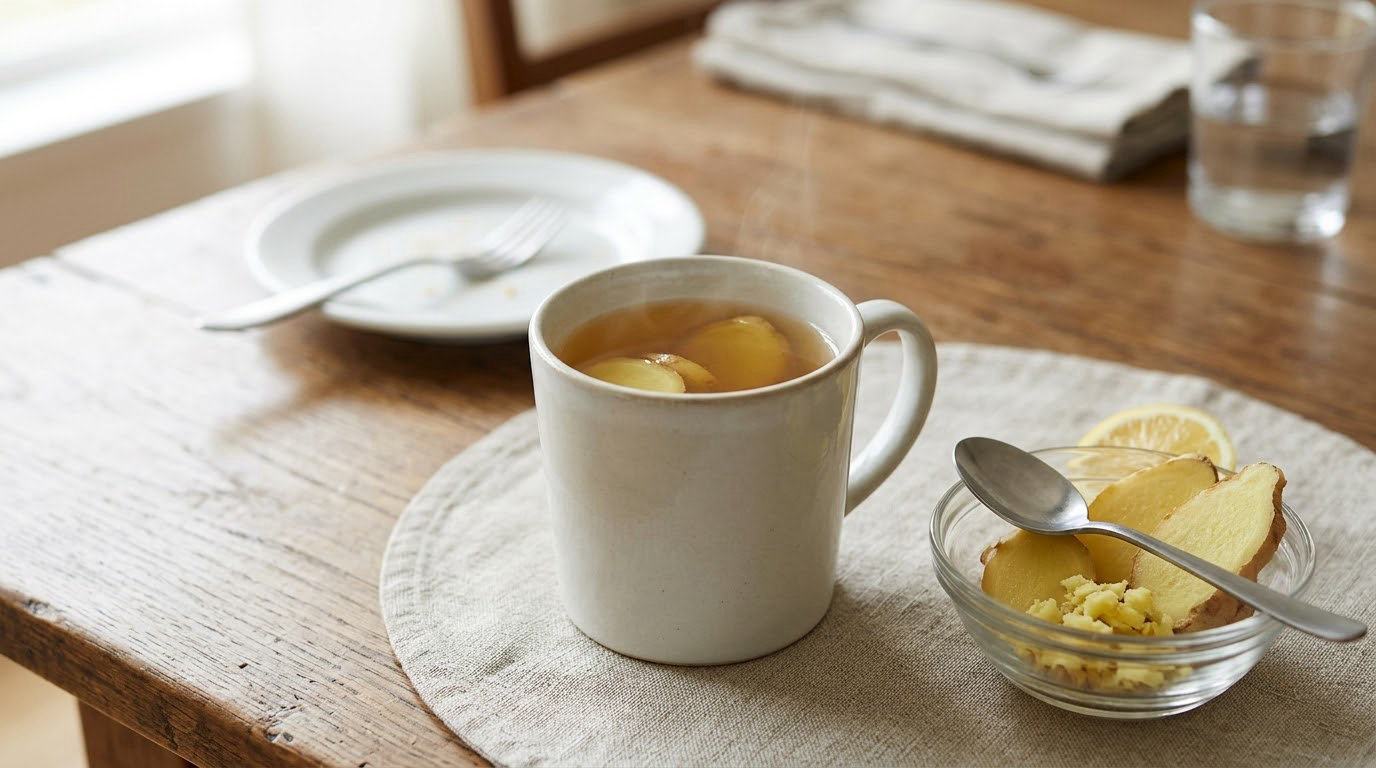
Most people who feel queasy right after eating reach for ginger ale. A better move is a small serving of real ginger: grated fresh root stirred into warm water, a few slices of crystallized ginger, or ginger chewed plain, started while you are still finishing the meal. If you want to know how to use ginger for nausea after meals without making yourself worse, the format and the amount matter more than most people expect.
Ginger is the most-studied everyday food for settling a stomach. It cannot fix every cause of post-meal nausea, and it is not a treatment for a disease. It is a kitchen habit that many people find helps with the queasy, overfull feeling that follows a heavy or rich meal, and this guide is about using it safely at home.
Everything here is general information. If your nausea repeats after most meals, comes with vomiting, or comes with symptoms that worry you, talk to your doctor or a registered dietitian before experimenting.
Table of Contents
- What You Need Before Using Ginger for Nausea After Meals
- Step-by-Step: Using Ginger After a Meal
- Common Mistakes When Using Ginger After Meals
- Frequently Asked Questions
- Is fresh ginger better than ground ginger for nausea after meals?
- Can I take ginger with food or after eating?
- How much ginger can I safely use at home?
- Can ginger cause or worsen stomach problems?
- Can I use ginger if I am pregnant, taking medication, or managing reflux?
- When should nausea after a meal see a healthcare professional?
- Conclusion
What You Need Before Using Ginger for Nausea After Meals
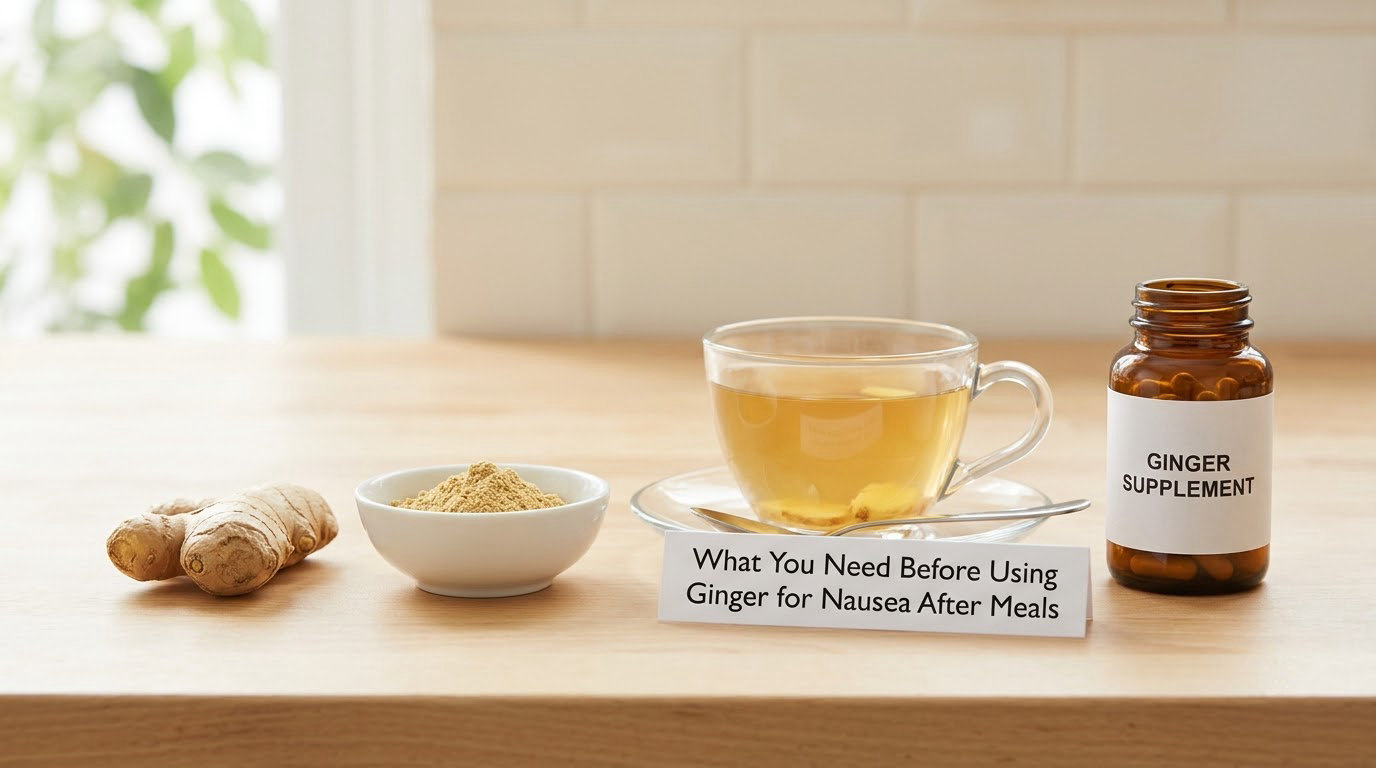
You need very little. The realistic list is a piece of fresh ginger root, a small grater, a mug you can hold comfortably, and ten minutes of attention.
Fresh ginger versus ground ginger
Fresh root is mostly what is called gingerol, and it is milder and juicier. Grated and dried ginger converts much of that into shogaol, a more pungent compound, so a spoonful of ground ginger hits noticeably harder than the same spoonful of fresh.
That difference is the whole reason ground ginger can backfire on someone whose stomach is already uncomfortable. Start with fresh if you are new to this, and treat ground as the stronger option rather than the interchangeable one.
What you can pick up without planning ahead
Crystallized ginger, ginger tea bags, ginger chews, and jarred ginger capsules are all reasonable kitchen or pantry options. Teas give you a measured, gentle serving. Chews and crystallized slices are fast and portable, which matters if the queasy feeling turns up while you are out.
On a supplement bottle, the two numbers that matter are the milligrams of ginger per serving and how many servings the label allows per day. Skip anything that lists only a proprietary blend with no amount, and skip concentrated extracts and essential oils unless a clinician has told you to use them.
When to check with a healthcare professional first
Check with your doctor or pharmacist before making ginger a routine if you take any prescription medicine, since ginger can affect how some drugs are handled. People on blood thinners such as warfarin, and anyone pregnant, should ask first rather than guessing.
Also get advice first if you have a diagnosed digestive condition such as gastroparesis or irritable bowel syndrome, if you are prone to heartburn, or if you are managing reflux. Ginger is not a problem for most adults, but it is not a decision to make blind for everyone.
Step-by-Step: Using Ginger After a Meal
Take this slowly rather than as a five-step ritual. The whole routine should take under ten minutes, and the point is a small, repeatable habit you can repeat after the meals that usually bother you.
1. Check that the queasiness fits the situation
Start by noticing what the feeling actually is. A bloated, overfull, slightly queasy feeling an hour or two after a large or rich meal is the kind of everyday discomfort people most often try to settle with ginger.
Notice the pattern too. The same predictable feeling after one type of meal, like a heavy dinner or a fatty takeaway, is a good reason to build a routine around. Nausea that comes with almost everything, or that is getting worse week by week, is a reason to call a doctor instead.
2. Pick the form: fresh ginger, ground ginger, tea, or a supplement
Each form suits a different situation, and choosing well is most of how to use ginger for nausea after meals comfortably.
- Fresh slices or grated fresh root: the mildest option and the one to start with. Peel, slice thinly or grate a small knob, and eat or steep it.
- Ginger tea: a good middle ground because the amount is easy to control. A bag in a mug of hot water is the fastest version; steeping fresh slices for a few minutes gives a stronger cup.
- Crystallized ginger or chews: fast, no preparation, and easy to carry. Many people find crystallized ginger palatable enough to keep taking, which matters for a habit.
- Ground ginger: strong and convenient in cooking, but easy to overshoot. A small pinch in a savoury dish is plenty to start.
- Capsules: useful when you want ginger without any taste at all, and the only form where a dose is written down for you. Follow the label.
Fresh, tea, and crystallized cover most home situations. Capsules fill in the days when the smell of ginger is enough to turn your stomach, which is more common than people admit.
3. Add a small serving to food or a drink
Start smaller than feels useful. For tea, one cup made from a single bag or a few thin slices of fresh root in hot water is plenty for a first try. For grated fresh ginger, start at the tip of a teaspoon and see how your stomach responds before adding more.
With food, a small pinch of ground ginger in rice, soup, eggs, or a stir-fry adds flavour without being a dose. If ginger’s heat or acidity bothers you, a small amount stirred into a bland dish such as plain rice or a cup of warm water is gentler than a strong tea.
Timing is the part almost nobody gets right. The most useful window is during the last few bites of the meal and the half hour after, since that is when the fullness is building. People asking forum boards about whether to take ginger before or after eating get a consistent answer: a small serving during the meal or shortly after works better for post-meal queasiness than waiting until you feel badly sick.
4. Wait, reassess, and stop if symptoms get worse
Give it some time. A mild response to a small serving of ginger is often noticeable within a short while, though there is no fixed window and everyone reacts differently. What matters more than the clock is the direction: settling, unchanged, or worse.
If the queasy feeling eases and stays easier, the routine is worth repeating after the same meal. If nothing changes, try a different form rather than a bigger amount, since more ginger is not reliably better.
If the feeling sharpens into heartburn, burning, cramping, or more nausea after taking ginger, stop. That reaction is common enough with larger amounts, especially in people who already reflux, and it means the amount was too much or the timing was wrong, not that ginger needs another try tomorrow.
Common Mistakes When Using Ginger After Meals
Most disappointing experiences with ginger come down to one of these five.
Treating a heavy meal with a heavy dose of ginger
Doubling up on a large serving when you already feel full is the most common route to feeling worse. Ginger is a seasoning before it is anything else. Start with a tea or a pinch, wait, and only then consider more.
Choosing ginger ale and expecting ginger
Most commercial ginger ale is sugar water, carbonation, and a small amount of flavouring. The bubbles and the sugar can add to the discomfort you already have. If you want the real thing, make it with grated fresh root, or drink a slice of fresh ginger in plain water, which is the swap people on pregnancy forums recommend over the soda.
Using concentrated oils and strong extracts at home
Ginger essential oil and highly concentrated extracts are not the same category as a cup of tea. They are easy to overdo and not intended for casual use. Food forms and standard capsules are the sensible home options.
Ignoring medicines and health conditions
Ginger is usually fine alongside ordinary medicines, and it is not fine for everyone. Blood thinners, diabetes medicines, and some others deserve a conversation with a pharmacist first. The same goes for anyone with a diagnosed stomach condition, or who is pregnant. A two-minute question beats guessing.
Expecting ginger to fix a pattern
Ginger is best described as something that may take the edge off a familiar post-meal feeling. It is not a fix for food poisoning, an infection, an ulcer, a medication side effect, or a diagnosed stomach disorder. People whose nausea hits every time they eat are describing a symptom that deserves a diagnosis, not a kitchen remedy.
It also has a genuine blind spot. Ginger has not consistently been shown to help motion sickness, so if the nausea is travel-related, it is a poor bet.
Frequently Asked Questions
Is fresh ginger better than ground ginger for nausea after meals?
Fresh and ground ginger are not ranked by strength so much as by how they feel. Fresh root is milder and juicier, which makes it the better starting point for an unsettled stomach. Ground ginger is more concentrated and more pungent, so it works in cooking and tea but is easier to overdo. If you only want one form on hand, choose fresh.
Can I take ginger with food or after eating?
Both work, and most people who get post-meal queasiness use it during the last few bites or in the half hour afterwards, while the fullness is building. Waiting until you feel badly sick tends to mean starting too late. If a full meal makes ginger tea feel too heavy, take a smaller cup with a few bites instead of after finishing.
How much ginger can I safely use at home?
There is no single right amount, which is why starting small matters. One cup of ginger tea made from a single bag or a few fresh slices, or a small pinch of ground ginger in food, is a reasonable first serving. Standard capsules come with a labelled amount and a labelled daily limit, so follow that label rather than guessing. If larger amounts cause heartburn or cramping, back off.
Can ginger cause or worsen stomach problems?
Yes, and this surprises people. Ginger can cause heartburn, burning, abdominal discomfort, gas, or more nausea, especially in larger amounts or in people who already have reflux. That is a real reason to start small and reassess rather than keep increasing. If you have a diagnosed digestive condition, or you notice symptoms after taking ginger, stop and speak to your doctor or pharmacist.
Can I use ginger if I am pregnant, taking medication, or managing reflux?
Ask first in all three cases. Ginger is widely used for pregnancy-related nausea, but your midwife or doctor should confirm the form and the amount that suits you. If you take any prescription medicine, a pharmacist can check for interactions, particularly with blood thinners such as warfarin. If you manage reflux or heartburn, ginger may make it worse rather than better.
When should nausea after a meal see a healthcare professional?
Book an appointment if nausea follows most meals, if it is getting worse over weeks, or if it is limiting what you can eat. Seek prompt care if you cannot keep fluids down, if there is chest pain, severe abdominal pain, a fever, or signs of dehydration, or if you have unexplained weight loss. Nausea that repeats after eating is a symptom to investigate, not something to manage with tea indefinitely.
Conclusion
Start with one small serving of real ginger during or just after the meal: a cup of tea, a slice of crystallized ginger, or a pinch of ground ginger in something bland. Repeat it for the meals that usually leave you queasy and change one thing at a time.
Use it as a habit, not a treatment. If you take medication, are pregnant, or have a diagnosed stomach condition, ask your doctor or pharmacist first, and bring nausea that keeps repeating to a doctor or registered dietitian rather than treating it with tea for another month.