
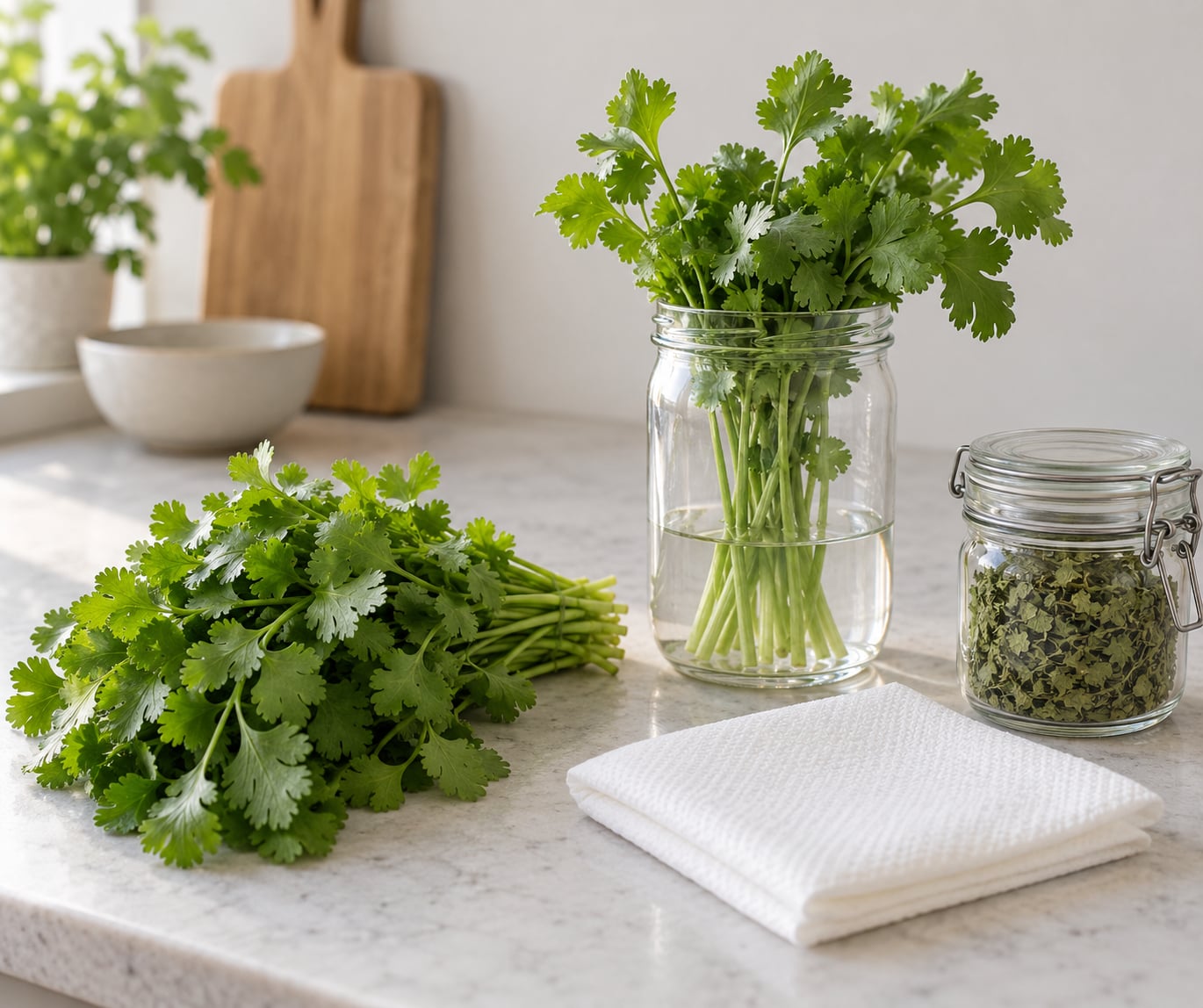
Cilantro keeps longest when you dry it completely and stand the stems in a shallow layer of water in the refrigerator, loosely covered — most bunches stay crisp that way for two to four weeks. When you know a bunch will not get used in that time, freeze it or dry it instead. Getting it to last longer comes down to one thing: balance the moisture so the leaves do not dry out, but do not sit in water and rot.
Cilantro has thin, delicate leaves with a lot of surface area and no protective coating, so it loses water faster than parsley, basil, or mint. Cut stems, a tight rubber band, and a damp bag in the bottom of the fridge make it worse. How to keep cilantro fresh longer is mostly about fixing each of those things in turn, starting with the drying step everything else depends on.
One debate first, because it trips people up: rinsing before storing works, but only if the leaves end up truly dry. Water sitting in the folds of a leaf is what turns it slimy. If you are not confident you can get them bone dry, store the cilantro unwashed and rinse it right before you use it.
Table of Contents
What You Need
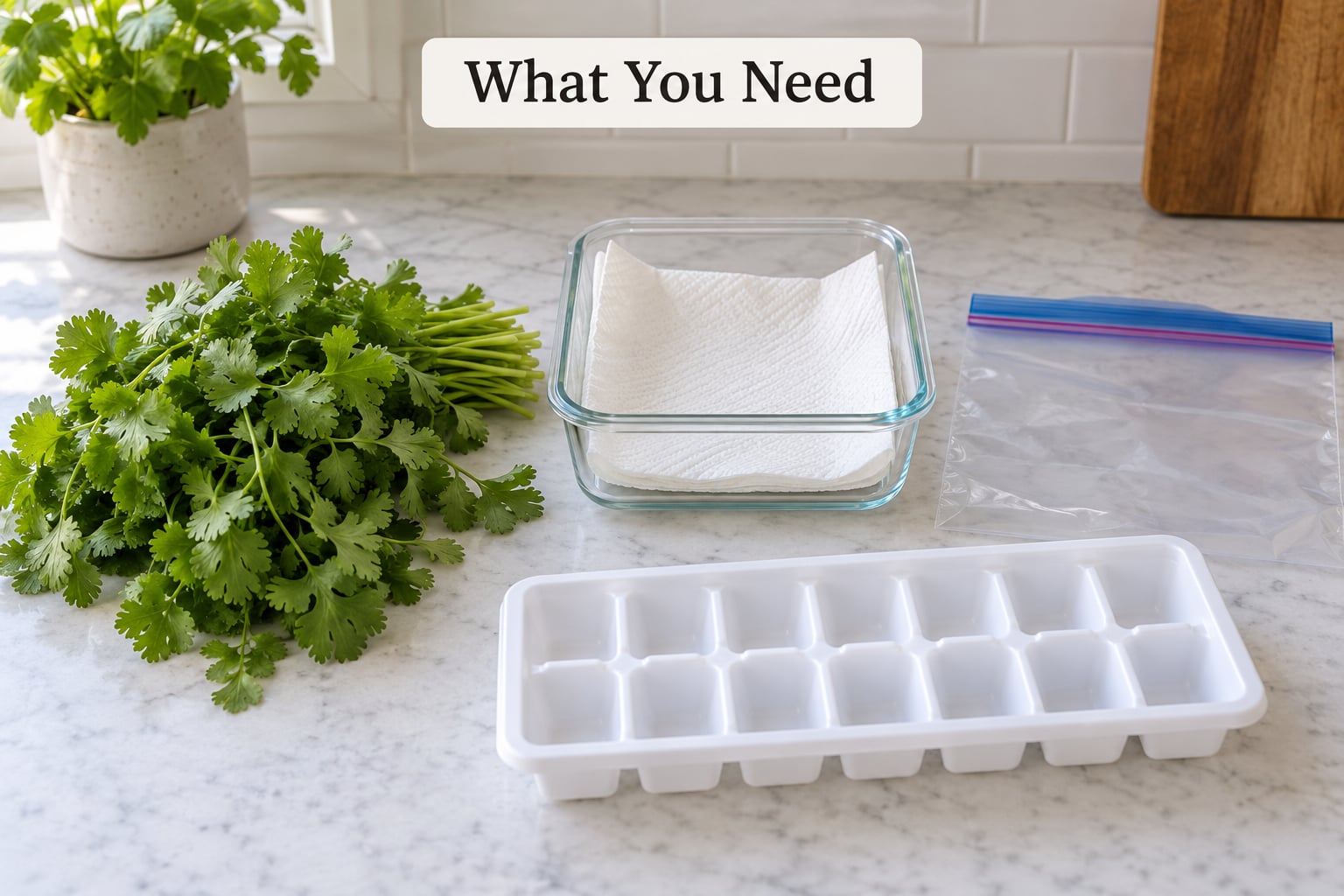
You need very little. A clean container, a paper towel or a clean kitchen towel, and a jar or resealable bag cover most of it.
- A glass jar or tall container with an inch or two of water for the refrigerator method.
- Paper towels or one clean kitchen towel to line the container and absorb surface moisture.
- A resealable freezer bag for freezing chopped cilantro flat.
- An ice cube tray and a little olive oil if you want single portions.
A colander, kitchen scissors, and a dry work surface are useful but not required. Scissors make trimming stems fast, and a salad spinner dries leaves faster than a towel if you have one.
Step-by-Step: How to Keep Cilantro Fresh Longer
1. Wash and Dry the Cilantro Thoroughly
Start by looking at the bunch. Pull off any leaves that are already yellowing, bruised, or slimy at the base, and cut off thick woody stems at the bottom. Leftover damage turns into rot faster than you would expect.
Rinse the cilantro briefly in cool water — a quick swish, not a soak. Shake off the excess, then dry it as thoroughly as you can with a salad spinner or a towel. Spread it out on the towel rather than wringing it, and pat the leaves until they no longer feel slick. Trapped moisture is the single biggest reason stored cilantro wilts or goes bad early.
2. Store the Stems in a Jar
Trim the stems to about an inch and place them in a clean glass jar with an inch or two of water, like a bouquet. The water should reach just below where the leaves start. Cover the top loosely with a dry paper towel, a plastic bag, or the jar lid set slightly ajar, so air moves but moisture does not pool on the leaves.
Put it in the refrigerator, not the door, where the temperature swings every time the door opens. Change the water every two to three days, and replace the paper towel when it goes damp. Keep the leaves above the jar rim where the bunch is short enough, since leaves resting in water break down fastest.
Home cooks on r/AskCulinary report two to four weeks this way, and a Lifehacker test by Kenji Lopez-Alt kept a bunch going 51 days in water in the refrigerator. Those outliers need near-daily water changes, but two to four weeks is a realistic expectation for a normal kitchen.
If your bunch is too tall for any jar, the tall-bunch problem that comes up constantly on cooking forums, use the paper towel method instead: line a shallow container or a large bowl with a dry paper towel, lay the cilantro flat on it, and refrigerate.
3. Use the Freezer for Long-Term Storage
Freezing keeps cilantro for four to six months. It does not keep the texture — thawed leaves go limp and soft — so frozen cilantro belongs in cooked dishes, sauces, and smoothies, not on top of a taco.
Flat freeze in a bag: Chop the dried cilantro, spread it in a thin single layer on a baking sheet, freeze it for an hour until firm, then tip it into a resealable freezer bag. Flatten out the air, seal it, and label it with the date. Once frozen, you can break off only what you need instead of thawing the whole bag.
Ice cube portions: Chop the cilantro, pack it into an ice cube tray, and add a thin layer of olive oil or water over each cube. Freeze, then pop the cubes into a bag and move them to the freezer. One or two cubes season a soup, stew, curry, or batch of guacamole. This is the same idea behind our guide to how to freeze fresh herbs in oil for easy storage, and it works the same way for any soft leafy herb.
No blanching is needed. Cilantro does not need to be boiled first the way some vegetables do, and blanching only costs you the fresh flavor people are trying to keep.
4. Dry Cilantro for Pantry Storage
Air-drying works well for small amounts and needs no equipment beyond a paper towel and a shelf. Check the leaves first — they must already be completely dry. Tie small bunches by the stems or spread the leaves in a single layer on a paper towel, then leave them in a warm, dark, well-ventilated spot for several days until they are crisp and brittle. A dehydrator does the same thing faster if you have one.
Strip the dried leaves off the stems, store them in an airtight jar in the pantry, and label the jar with the date. Expect a window of a few months, and know that dried cilantro is a cooked-dish herb. It has a softer, rounder flavor and no fresh crunch, so keep it out of the salsa bowl.
5. Choose the Right Storage Method for When You Need It
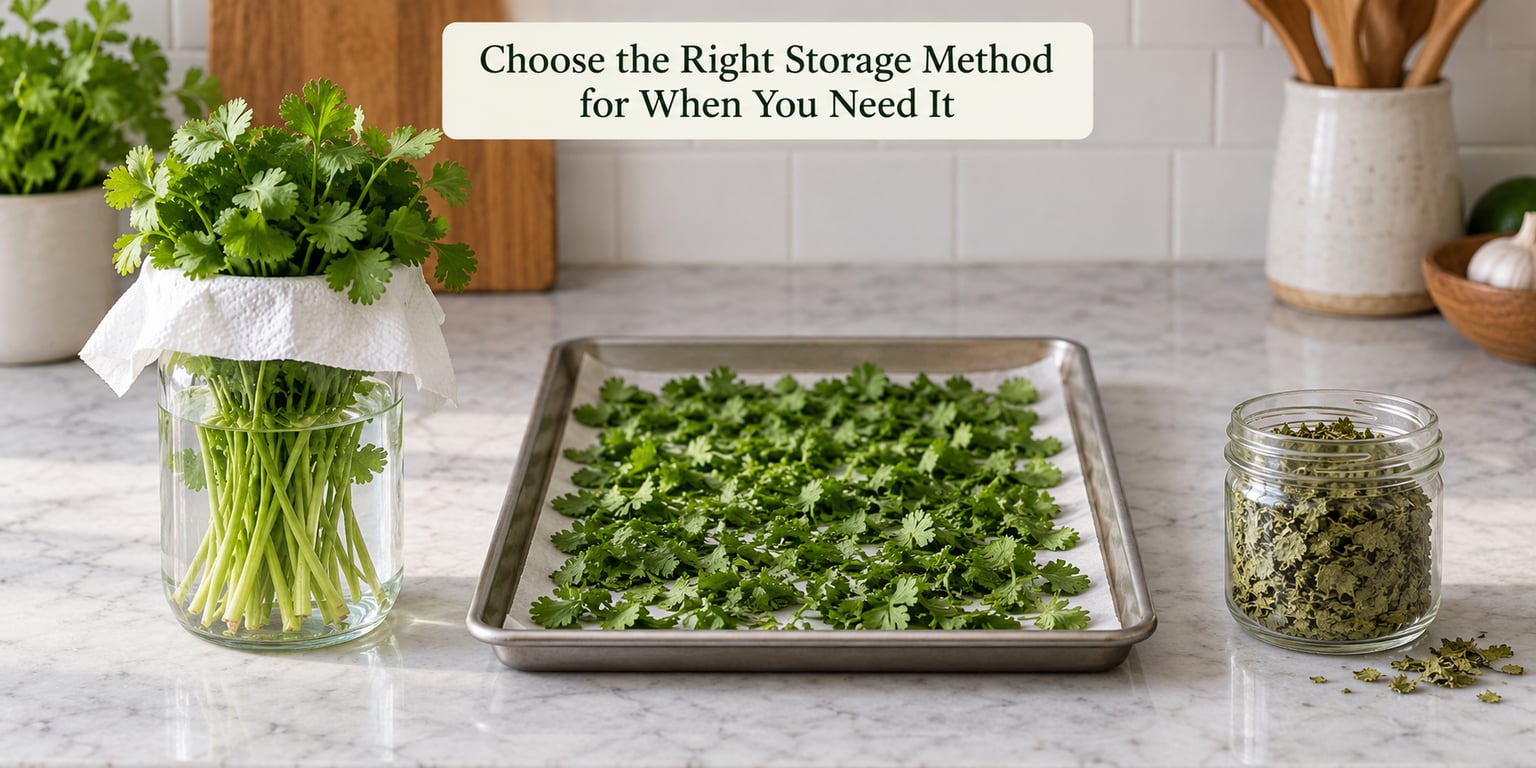
The method depends on how long the cilantro has to last and how you plan to use it. Whichever way you slice it, how to keep cilantro fresh longer comes down to matching the method to the week you are actually cooking in.
- Refrigerator in water: two to four weeks, leaves stay crisp and bright, good for garnishing salsas, tacos, and rice dishes. Needs water changes every two to three days.
- Refrigerator in a paper towel: one to two weeks, no water to remember, best for tall bunches and for chopped cilantro in meal prep.
- Freezer: four to six months, soft texture after thawing, best for soups, stews, curries, sauces, chimichurri, and smoothies.
- Dried: a few months in an airtight jar, mild cooked flavor, best for finishing cooked dishes and for keeping on a pantry shelf.
Fresh cilantro keeps best in the refrigerator, whole and unwashed, until the day you need it. Everything after that is about buying the herb once and stretching it out.
Common Mistakes
- Storing wet cilantro. Water trapped in the leaves turns them slimy in days. Fix: dry them fully, and skip washing entirely if you cannot get them truly dry.
- Sealing wet herbs in an airtight bag. A sealed bag holds the moisture in. Fix: use a paper towel liner or leave the cover loose so air circulates.
- Leaving the rubber band on. It crushes the stem ends and can snap the bunch off itself. Fix: take it off as soon as you get home.
- Crushing or chopping too early. Cut stems mean more open surface area, and the leaves brown at the cut edges. Fix: store whole until you need it, then chop.
- Storing it next to ethylene-producing produce. Apples, bananas, pears, and ripe avocados release ethylene gas that speeds up wilting. Fix: keep cilantro on a different shelf or in the crisper drawer away from the fruit.
- Freezing cilantro in one solid block. A frozen brick has to thaw entirely before you can use any of it. Fix: freeze it flat first, then bag it in loose pieces or in oil cubes.
- Expecting dried herbs to be a fresh garnish. Drying is for cooked dishes. Fix: reserve your best-looking leaves for fresh use and dry the rest.
If a bunch has gone a little limp but is still bright and clean, cut the stems an inch longer, stand them back in fresh water, cover loosely, and leave them in the refrigerator for a few hours. They usually firm back up enough for tacos. If they come back slimy or dark, the water will not fix that.
Frequently Asked Questions
Can you put cilantro in water to make it last longer?
Yes, and it is the best refrigerator method for a whole bunch. Trim an inch off the stems, stand them in a jar with an inch or two of water, and cover the top loosely with a paper towel or a bag. Change the water every two to three days. Most bunches stay crisp for two to four weeks this way.
What is the best way to store cilantro so it lasts longer?
For a bunch you will use within a few weeks, stand it in water in the refrigerator with a loose cover. For longer storage, freeze it flat in a bag or in olive oil ice cubes, or air-dry it for the pantry. Whichever method you choose, the leaves have to be completely dry before they go in.
How do I know if cilantro has gone bad?
Look at it before you smell it. Slimy or dark leaves, blackened stem ends, a wet smell, or a sour smell at the jar are all signs to throw it out. Yellowing on a few outer leaves is fine to trim; yellowing across the bunch with wilting is not.
Is it better to store cilantro whole or chopped?
Store it whole. Chopping opens up the leaves and stems to air, so they dry out and brown faster in the refrigerator. Whole bunches in water or on a paper towel last two to four weeks, while chopped cilantro is usually good for about a week. Chop right before serving instead.
Can you freeze cilantro without blanching?
You can, and you should skip the blanching. Cilantro keeps its flavor better frozen raw. Chop it, freeze it in a thin layer on a sheet, then bag it in loose pieces, or pack it into ice cube trays with a little olive oil. Frozen cilantro is best in cooked dishes rather than as a fresh garnish.
What should I do with an abundance of cilantro?
Cut it and freeze it before it softens. Blend chopped cilantro with olive oil or water and freeze it in ice cube trays for sauces and smoothies, or freeze flat pieces in a bag for soups, curries, and stews. Save the stems for stock, or stand them in water and see if they regrow new leaves.
Conclusion
That is how to keep cilantro fresh longer for the next few weeks: take the rubber band off, trim the stems, dry the cilantro completely, then stand it in a shallow layer of water in the refrigerator with a loose cover, and change the water every two to three days.
It covers a few weeks easily. If you know you will not use it in that window, chop and freeze it for cooked dishes or air-dry it for the pantry rather than letting it sit in the crisper until it turns to slime.
The same basic rules apply to other fresh roots and rhizomes you keep on hand, like how to store fresh ginger so it lasts or how to store fresh turmeric root.