
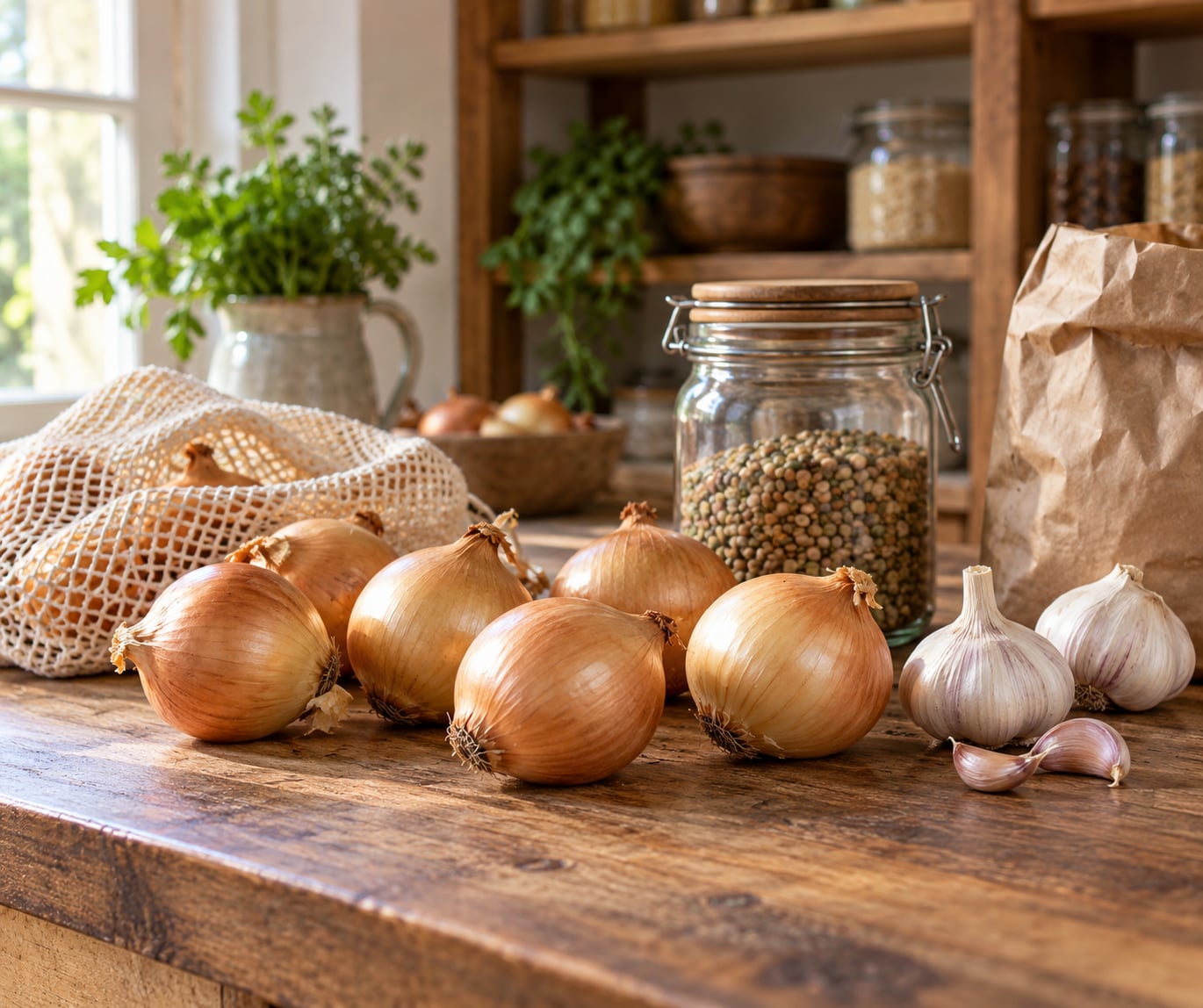
Store whole onions and garlic in a cool, dark, dry, well-ventilated spot such as a pantry, closet or cellar, in something breathable like a mesh bag or a paper bag with holes punched in it. Cut onion and peeled garlic go in the fridge in an airtight container instead, and anything you will not use before it softens goes in the freezer.
That split is the whole trick. Whole bulbs want air and darkness, cut produce wants cold and a seal. Get it backwards and you get soft bulbs, mould, and a bag of waste within a few weeks.
Table of Contents
What You Need
You do not need anything special, and you do not need to buy a storage bin. You need somewhere breathable and somewhere airtight.
- A cool, dark, dry, well-ventilated pantry, cellar, closet or unheated cupboard. A cupboard above the oven or next to the fridge is the worst spot in most kitchens.
- Breathable storage for whole bulbs: mesh produce bags, paper bags with a few holes punched in them, cardboard boxes, open baskets, a wire crate, or a ceramic garlic keeper.
- Airtight containers for cut produce: rigid glass or plastic containers with tight lids. A rigid box beats a soft zip bag because it will not crush the onion.
- Freezer bags, flat freezer trays or an ice cube tray for chopped onion, minced garlic and garlic in oil.
- Masking tape and a pen for dating containers. This is the step most people skip.
Step-by-Step: How to Store Onions and Garlic at Home
Step 1: Cure Whole Onions Before Long-Term Storage
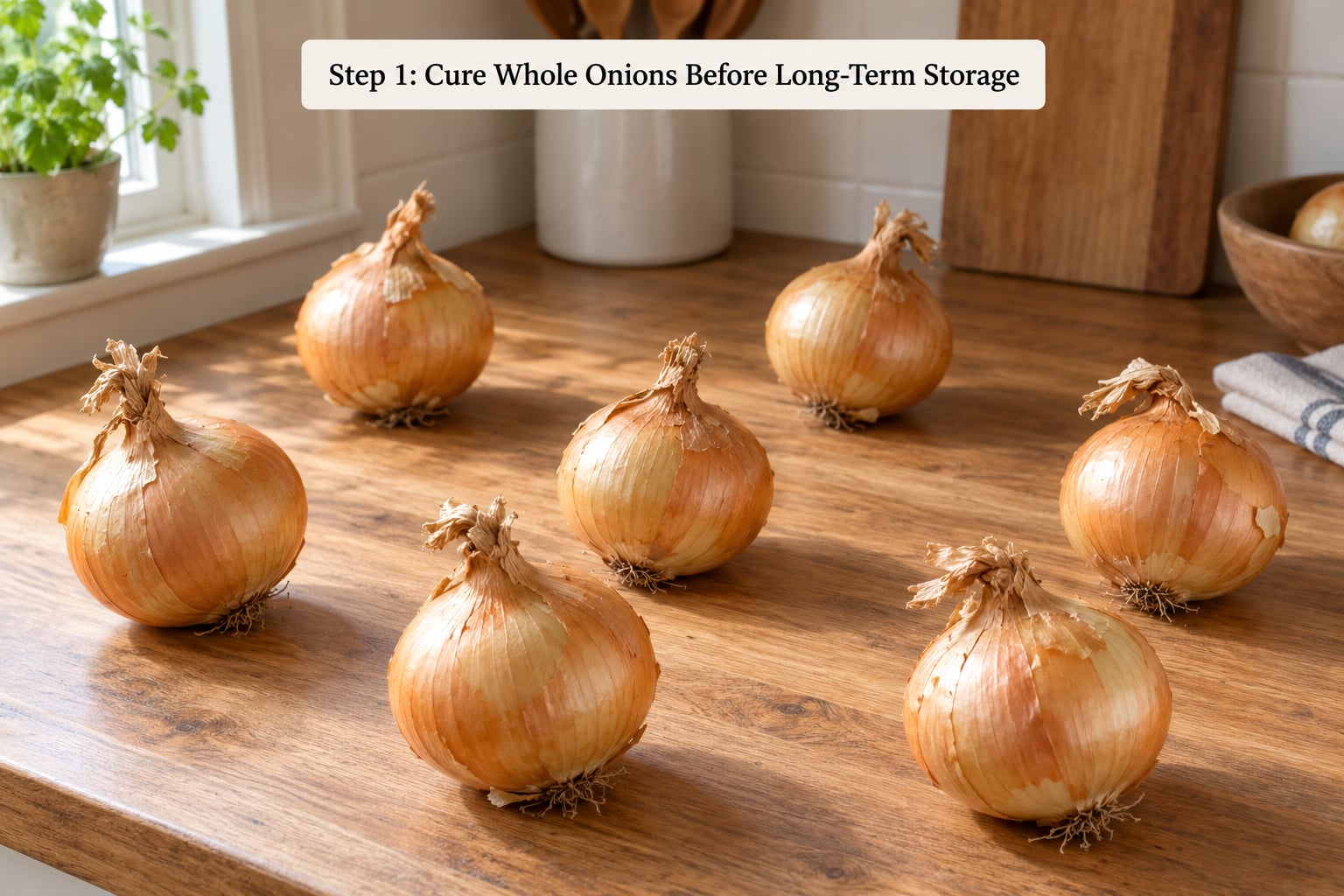
Curing is simply drying. Onion bulbs still hold moisture after harvest or after the grocery store, and that moisture is what turns to mould later.
Spread your onions in a single layer on a wooden counter, a screen, or a rack with plenty of space around each one. Good spacing is what makes curing work, since bulbs touching each other dry unevenly and trap damp.
Leave them in a warm, dry, shaded, airy room for several days up to about two weeks. Turn them occasionally so the undersides dry too.
They are ready when the outer skin feels papery, the neck at the top is dry and tight rather than damp, and there is no green shoot pushing out. Brush off loose soil with your hands or a soft brush. Do not wash them. Water left on an onion is the fastest route to rot.
Step 2: Keep Whole Onions Cool, Dark, and Airy
Once cured, move onions into breathable storage. A mesh bag, an open basket, a cardboard box with the flaps folded down, or a paper bag with holes all work. Whatever you choose, air has to move through it.
Store the container in a cool, dark, dry place. Around 1°C with relative humidity at or below about 65% is the ideal range, which is why a cellar works far better than a kitchen cupboard.
Three things to avoid. Never seal whole onions in plastic, because trapped moisture rots them. Never refrigerate whole onions, because the fridge runs near 80% humidity and encourages mould and fast sprouting. And never store them beside potatoes, since gases from one set spoil the other faster.
Check the basket once a week and pull anything soft, wet or mouldy out straight away. One bad bulb in a closed container takes the rest of the batch with it.
Step 3: Store Garlic Bulbs and Peeled Cloves Separately
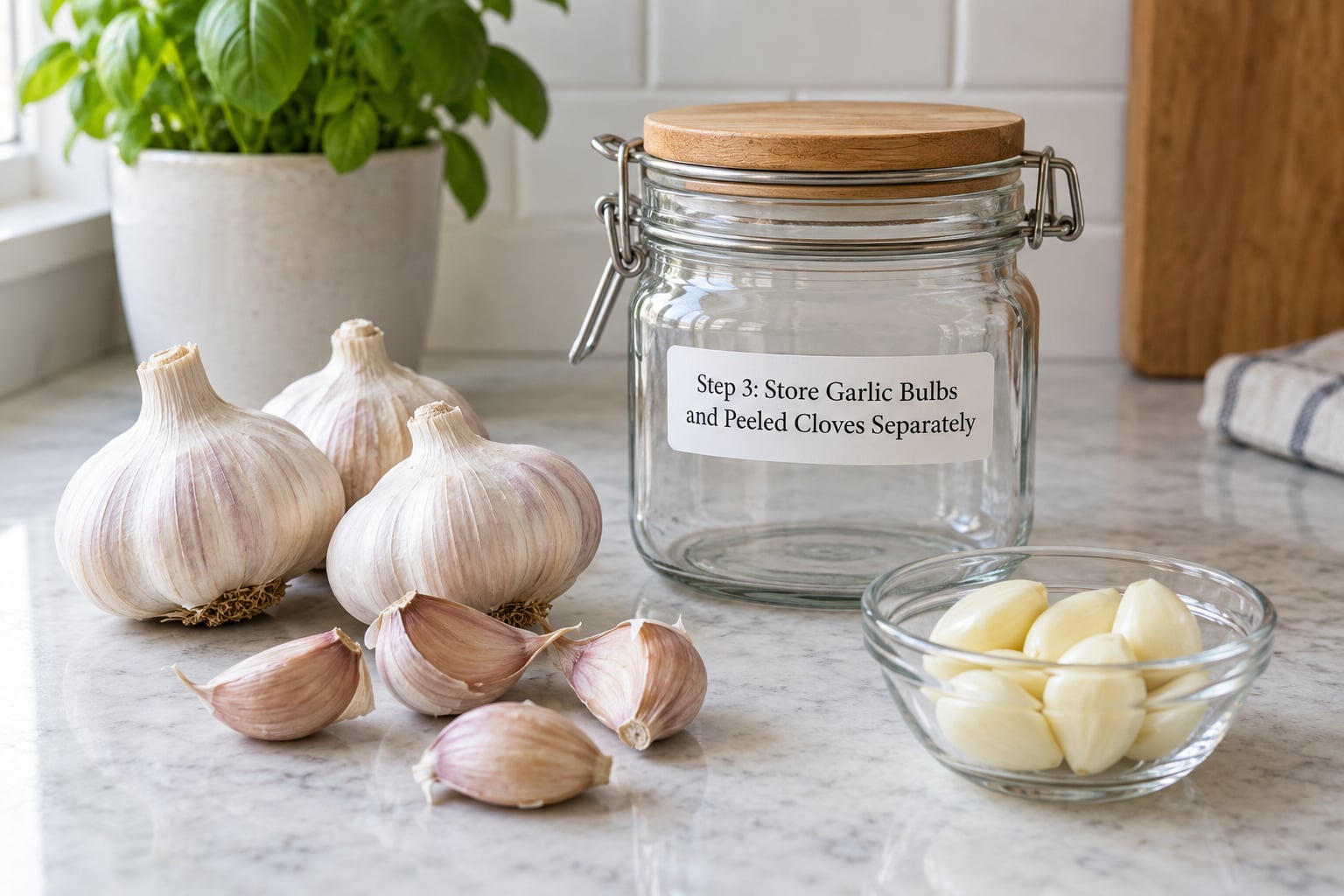
Whole garlic bulbs want the same treatment as whole onions: cool, dry and ventilated, kept in the papery wrapper, out of direct sunlight. Garlic likes drier air than onions do, around 40% relative humidity, so a cellar or an unheated closet beats a pantry shelf.
Keep bulbs in a breathable mesh bag, a shallow box, or on a wire rack. If you have home-grown garlic with stalks still attached, bunch groups of 15 to 20 stalks together and hang them, or stand them in a jar with the stems pointing upward.
Peeled or chopped garlic is a different food. Once the papery skin and the cloves are broken open, put them in an airtight container in the fridge and use them within about a week. Oil is no exception. Garlic stored in oil supports the growth of Clostridium botulinum, so refrigerate garlic-in-oil and eat it within 4 days, or freeze it in an ice cube tray and keep it there for months.
Wash your hands and the board before peeling, and keep raw garlic and onion away from cooked food and ready-to-eat salads.
Step 4: Use the Right Method for Cut Onion and Garlic
Cut onion needs cold and a seal. Put it in a rigid airtight container in the fridge and use it within 7 to 10 days. Wrapping it in foil, covering it with cling film, or leaving it in a loose bag on a plate is not enough, because the exposed surfaces dry out and pick up moisture from the fridge air.
A soft zip bag works in a pinch, but a rigid container that does not crush the onion is better. If you only sliced half an onion, cut face down in a small container with a tight lid is the neatest option.
For portions you will not use in a week, freeze them. Chop onion or garlic, spread it in a thin layer on a baking tray, freeze until solid, then tip it into freezer bags or an ice cube tray. No blanching is needed. Frozen onion and garlic hold for 8 to 12 months, and they are best in cooked dishes rather than raw, since freezing softens the texture.
Label every container with what it is and the month. Most freezer bags get reused and repopulated, and an unlabelled bag of anonymous onion is how freezer waste happens.
Common Mistakes
Most spoilage I see in home kitchens comes down to the same handful of errors.
- Washing onions or garlic before storage. Fix: brush off dry soil instead. Washing is fine for produce you will cook this week, and wrong for anything going into the pantry.
- Sealing whole bulbs in plastic. Fix: move them to mesh, paper or a basket so air circulates.
- Refrigerating whole onions. Fix: pull them out to a cool pantry. Cut onion stays in the fridge; whole onion does not.
- Storing onions near potatoes. Fix: keep them on separate shelves or in separate containers. If space is tight, a few feet of separation helps.
- Mixing cut and whole produce in one container. Fix: one container for the fridge, one breathable one for the pantry, labelled with a marker pen.
- Failing to label containers. Fix: write the contents and the month on masking tape. It takes eight seconds and saves a weekly scavenger hunt.
- Keeping bulbs that are already mouldy or soft. Fix: compost them. Strong sour smells, leaking fluid, blackened skin or fuzzy mould all mean the batch needs sorting now, not in a month.
If your kitchen is warm or damp and you have no cool pantry, work around it. A closet off a carport, an unheated hallway cupboard, or the lowest shelf in a garage usually beats a kitchen cabinet. If none of that exists, buy smaller quantities more often and keep a month at a time in the freezer rather than a year in a bad cupboard. Our guide to storing fresh ginger so it lasts covers the same warm-kitchen problem for a different root.
Frequently Asked Questions
Should onions and garlic be stored in the fridge or the pantry?
Whole onions and garlic belong in a cool, dark, dry, well-ventilated pantry or cellar, never the fridge. Refrigerator air runs near 80% relative humidity, which keeps the papery skins damp and encourages mould and sprouting. The fridge is right for cut onion and peeled or chopped garlic, which need cold and an airtight container.
Can you store onions and garlic together?
Yes. Whole onions, whole garlic and shallots can share the same cool, dark, breathable space because they want the same conditions. Keep them in mesh bags, paper bags or shallow baskets rather than one sealed container, so you can see early spoilage. Just keep all three away from potatoes.
How long do whole onions and garlic last?
A properly cured onion stored cool and airy usually keeps 1 to 2 months, and garlic keeps 3 to 5 months under the same conditions. Sweet onions such as Vidalia and Walla Walla are thinner-skinned and generally shorter-lived. Buy smaller quantities more often rather than trying to make a single batch last six months in a kitchen cupboard.
How do you know if an onion or garlic bulb has gone bad?
Softness across the whole bulb, blackened or sunken patches, fuzzy mould, leaking fluid or a sour, ammonia-like smell all mean discard it. Sprouting on its own is fine, since sprouted onions and garlic stay safe and good for cooking, just remove the green shoot if it has turned bitter. Firmness and a clean papery skin are your best green light.
Does freezing onions and garlic change how they cook?
Freezing softens the texture, so frozen onion and garlic suit soups, curries, sauces and slow-cooked dishes rather than anything served raw or crisp. There is no need to blanch them first. Chop, spread on a tray to freeze solid, then move to bags or an ice cube tray. They keep for 8 to 12 months.
Conclusion
Start with the bulbs you already have. If they have stem and roots attached, cure them in a single layer until the skin turns papery, then move them into a mesh bag in the coolest dark spot you have, away from potatoes.
When you cut into an onion or peel a garlic clove, that piece goes straight into a rigid airtight container in the fridge. Anything beyond a week gets chopped and frozen.
The core rule is short: cure and ventilate whole bulbs, refrigerate cut produce airtight, and freeze the excess before it spoils. The same logic applies to other roots and greens, so our guides to storing fresh turmeric root and keeping leafy greens crisp are worth a read if you are doing a full pantry tidy.