
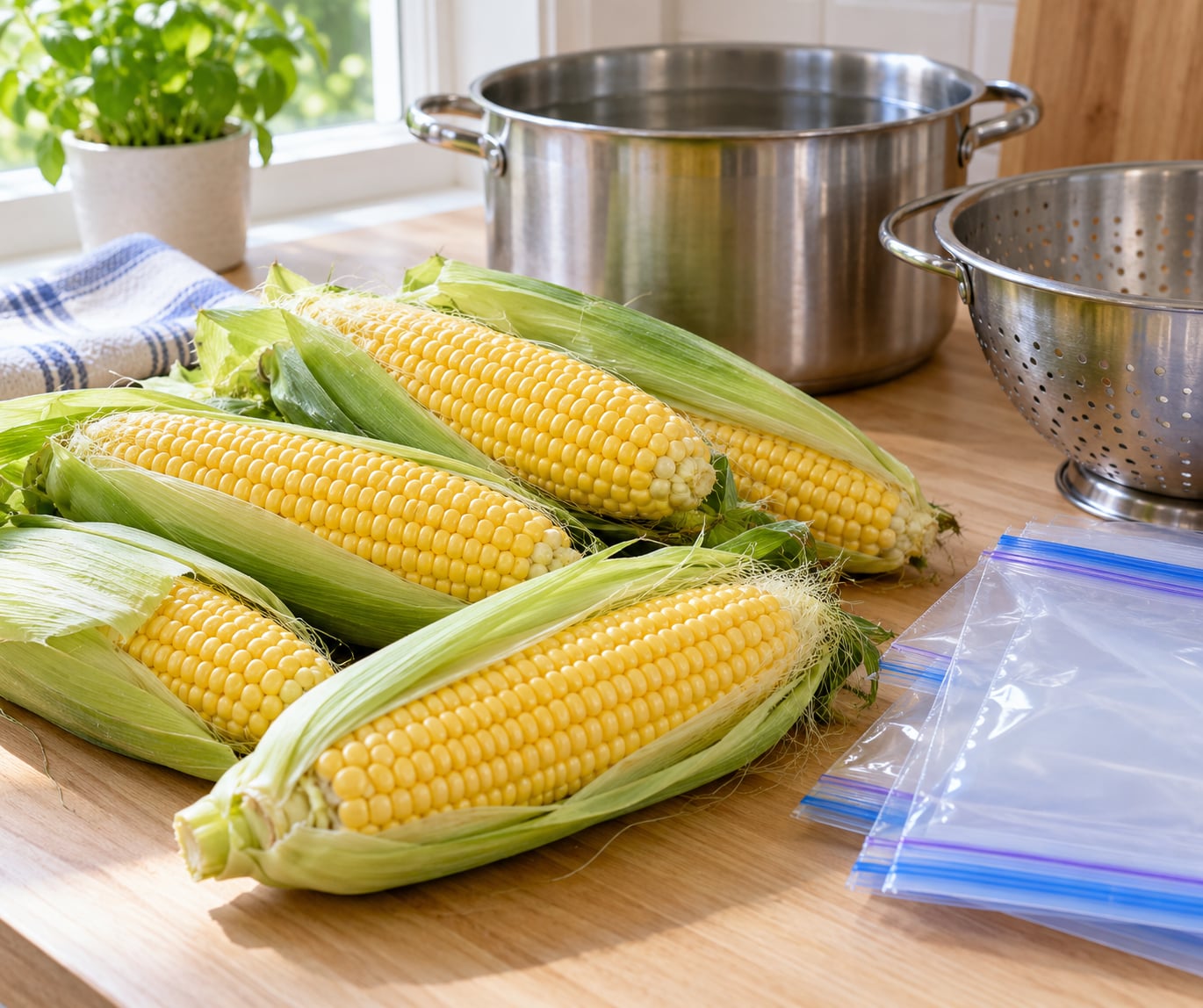
To freeze fresh corn on the cob, shuck the ears, blanch them in boiling water for 7 to 11 minutes depending on ear diameter, chill them in ice water, dry them completely, and seal them airtight in the freezer. The whole job takes about 30 minutes of your attention and gives you corn that still snaps and tastes sweet for up to a year.
Corn is one of the few vegetables that starts losing sweetness the moment it is picked, because its sugars turn to starch within hours. Freezing preserves that peak-season flavor, but only if you catch the corn fresh and stop the enzyme activity with blanching.
Begin in season. The National Center for Home Food Preservation at the University of Georgia, the source most home-canning guides cite, puts the blanch times used below at 7 minutes for small ears, 9 for medium, and 11 for large. Whole kernels get a much shorter dip of about 4 minutes.
Table of Contents
- What You Need
- Step-by-Step
- Tips for the Best Results
- Frequently Asked Questions
- Do you have to blanch fresh corn before freezing it?
- Can you freeze corn on the cob without blanching it?
- How long should corn stay in ice water after blanching?
- Should I cut the kernels off the cob before or after blanching?
- Can you freeze corn still in the husk?
- How long does frozen corn on the cob keep?
- Conclusion
What You Need
None of this is specialized equipment, which is the nice part. Most kitchens already have everything on the list.
- Fresh ears of sweet corn, as close to picking as you can get
- A large pot with a lid, filled halfway with water
- A colander and a bowl or the sink filled with ice water
- Tongs, and a clean towel or a stack of paper towels
- Zip-top freezer bags or moisture-vapor resistant freezer containers
- A marker for labeling and dating each package
- Optional: a sharp knife, a cutting board, and a parchment-lined baking sheet
- Optional: a vacuum sealer if you put up corn often
Two decisions are worth making before you start: whether you want to freeze whole cobs or cut kernels, and whether you own a vacuum sealer. Whole cobs keep their shape and are fun on the grill, but they eat a lot of freezer space. Cut kernels stack flat, thaw in seconds, and are what most people actually want for chowder, salsa, and skillet corn.
Step-by-Step
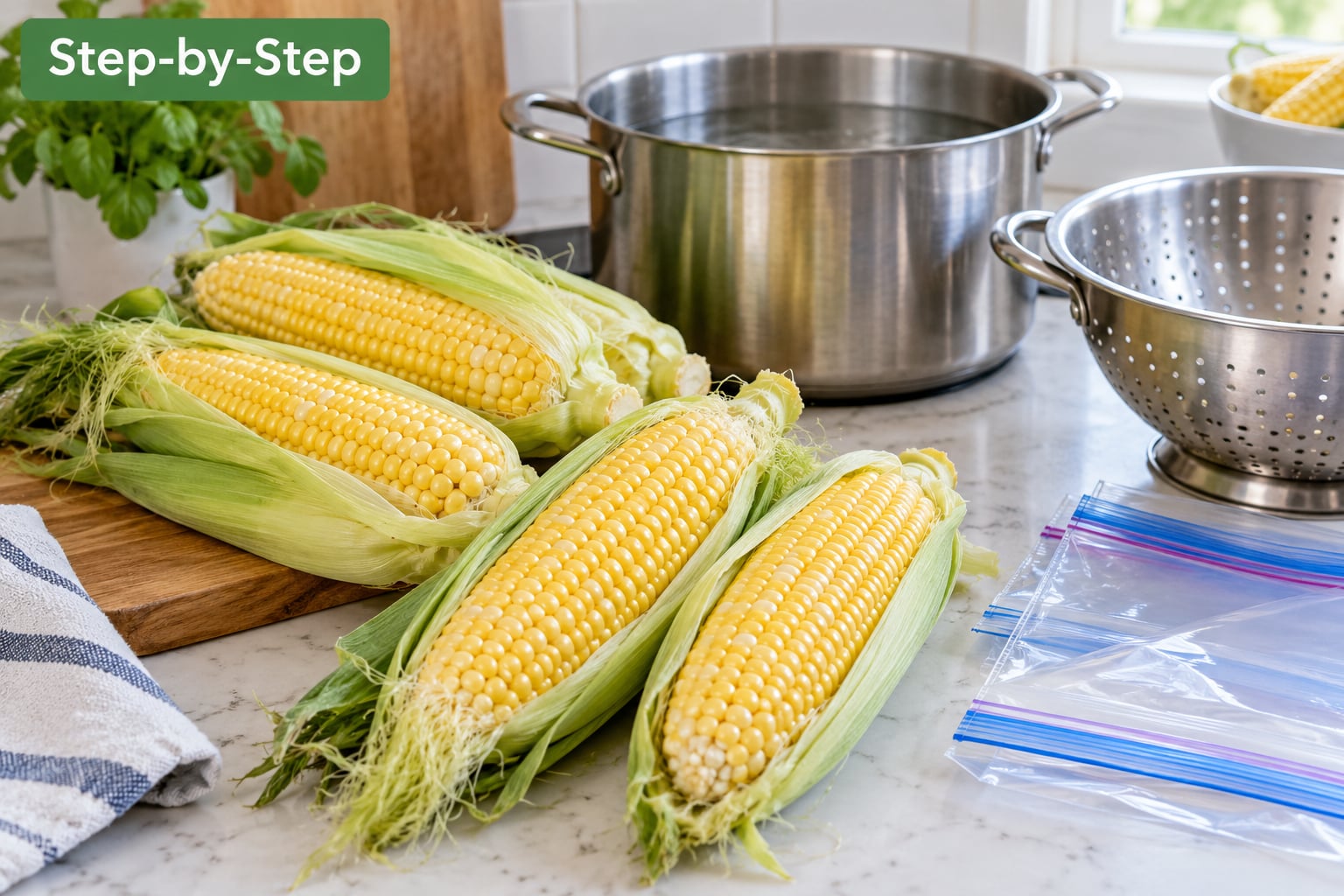
How to Prepare Fresh Corn
Pick ears with kernels that are plump and tightly packed, with silks that still feel damp. If the silks are brown and brittle, or the kernels are dented, the corn is already past its best and freezing will not bring it back.
Shuck by pulling the husks and silks down the ear, or by twisting the top of the ear against the cob until the silk bunches and comes free in one piece. Twist method is quicker, pull method is gentler on the kernels. Leave the silks on for the blanch if you have them; they season the cooking water.
Do not cut the kernels off yet. Blanching whole and cutting after is cleaner, because the kernels are plumped and tender and slice off without dragging bits of grey cob tissue into the cut. Cutting first means handling raw kernels with your fingers and dealing with slippery, milky juice.
How Long to Blanch Corn on the Cob
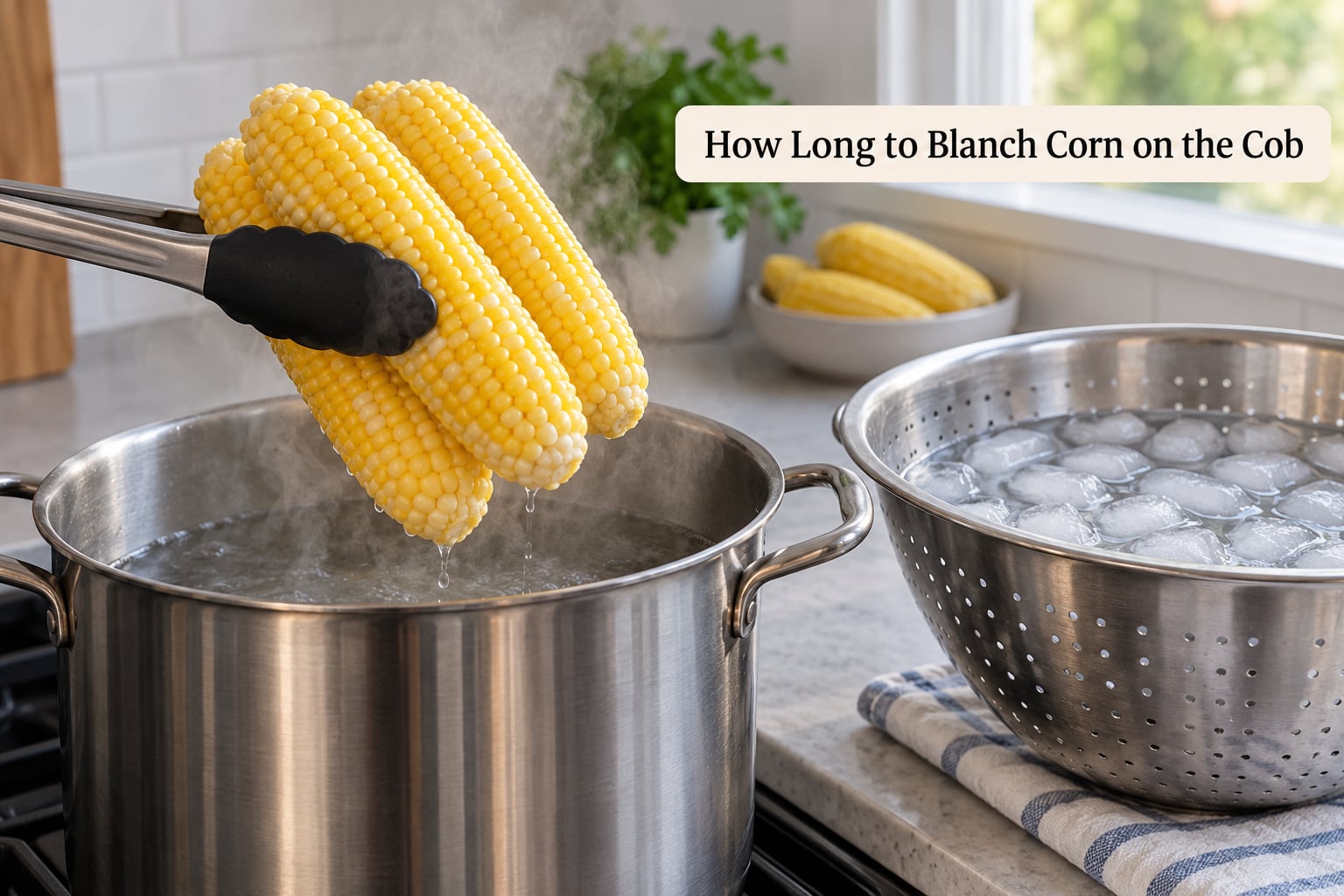
Blanch whole ears in boiling water for 7 to 11 minutes based on diameter, then chill them for the same amount of time. Start the timer only once the water comes back to a full rolling boil after you add the corn, and keep every ear under the surface with long tongs or a small weighted plate.
- Small ears, 1-1/4 inch or under: 7 minutes
- Medium ears, 1-1/4 to 1-1/2 inch: 9 minutes
- Large ears, over 1-1/2 inch: 11 minutes
- Loose kernels, cut from the cob: 4 minutes
You will know the corn is ready by color and texture more than by the clock. The raw green-yellow turns to a brighter, deeper yellow, the kernels swell visibly, and the cob flexes slightly when you press it. Push one kernel with a fingernail: if it pops with barely any resistance, the blanch did its job.
A lot of home cooks under-blanch out of caution, ending up with kernels that are still starchy and dull after thawing. If you only have four minutes, blanching kernels instead of whole ears is a better use of the time than short-changing whole cobs.
How to Cool and Package Frozen Corn
Move the corn straight into the ice water and keep it there for as long as you blanched it. This shock stops the cooking instantly and locks in the snap. Skipping it is the reason many frozen cobs come out mushy and sour: the residual heat keeps cooking the kernels on the cob while the bag chills around them.
Drain well, then dry the surface with a towel or paper towels. Water left on the kernels freezes into ice crystals and dulls the flavor, and wet cobs freeze into a solid block that will not separate. This step is where most freezer burn complaints start.
For whole cobs, slide each ear into its own zip-top freezer bag. For kernels, spread them in a single layer on a parchment-lined baking sheet, freeze until firm, then scoop them into bags. Single-cob bags let you pull out exactly what you need later.
Squeeze the air out of every bag before sealing. A straw works well: zip the bag almost shut, insert a straw through the gap, and suck the air out, then pinch the seal flat as you pull the straw out. Leave about half an inch of headspace in containers so the corn can expand. Label with the contents and the date, then lay the bags flat on a tray in the freezer until solid, and stack them upright after that.
How Long Does Frozen Corn on the Cob Keep?
Frozen corn keeps its best flavor and texture for 6 to 12 months at 0 F. That range holds for blanched cobs and blanched kernels alike when the packages are airtight and the freezer stays cold and steady. A chest or garage freezer that rarely opens is usually better for long storage than a kitchen freezer that gets opened all day.
Corn that has been stored past a year is not unsafe, only dull. Kernels turn watery and lose their snap, and whole cobs pick up a cobby taste. Use older corn in soups, chowders, and cooked dishes where texture matters least, and move on to the next batch rather than serving it straight from the cob.
Common Mistakes
- Skipping the blanch. Enzymes keep working in the freezer, turning sugars to starch and off-flavor. Blanching stops them.
- Sealing wet corn. Surface water becomes ice crystals and freezer burn. Dry the cobs or kernels thoroughly before packaging.
- Leaving air in the bag. Air causes freezer burn and clumping. Squeeze the bag flat or use the straw method.
- Overcooking. An extra two or three minutes past the blanch time makes kernels mushy and gives the cob a woody taste.
- Freezing old corn. Sweetness fades within a day or two of picking. Put corn up within 24 to 48 hours, or buy it frozen at peak season.
- Thawing the whole bag at once. Open the bag, take out what you need, and reseal immediately. Corn that sits thawed in an open bag dries out fast.
Tips for the Best Results
Freeze a first ear as a test if you are unsure about timing. Cut it in half, blanch one half and freeze the other raw, then compare them side by side after a month in a glass of ice water. That is the experiment several home canners recommend, and it settles the blanching argument in about a minute.
If you like the idea of skipping the blanch, you can freeze raw kernels. Spread them in a single layer, freeze until solid, then bag them. The texture is softer after thawing, which makes them poor for salads and fresh salsas, but they cook in about five minutes and are perfectly good in anything cooked.
Label the variety as well as the date, especially if you freeze more than one type. Sweet corn, supersweet varieties, and field corn all freeze well, but supersweet corn is the sweetest and is the one most worth hunting down at a u-pick or farmers market. Starchy field corn is excellent in chowder and cornmeal, less so eaten straight from the cob.
Cook from frozen whenever you can. Thawed corn goes soft, and whole cobs thaw most easily in their packaging. For the cob, put it straight into boiling water and simmer 5 to 7 minutes; for kernels, drop them in during the last three minutes of a soup or into a hot skillet with a little butter and salt.
Do not throw the cobs away after you cut the kernels off. Simmer them with onion and a bay leaf for 30 minutes and you have a light corn stock for chowders, which is exactly the zero-waste move several home cooks use after a big freezing day.
If you are putting up other garden produce the same week, the same principles apply across the board: stop enzymes, remove air, label it. Our guides to freezing fresh herbs in oil, freezing fresh berries without clumping, and freezing spinach and kale for smoothies cover the same workflow for other crops.
For a large harvest, work as an assembly line. One person shucks, one runs the blancher, one drains and packages, and one labels and dates. Blanch in small batches so the water stays at a rolling boil, and swap the pot water every few rounds, or later batches will cook unevenly.
Frequently Asked Questions
Do you have to blanch fresh corn before freezing it?
Yes, blanching is the step that makes frozen corn worth eating. Brief boiling stops the enzymes that convert sugar to starch, and the enzymes keep working inside a freezer bag where nothing can stop them. Blanch for 7, 9, or 11 minutes depending on ear diameter, then chill for the same time. Skipping it produces corn that tastes starchy and dull within a couple of months.
Can you freeze corn on the cob without blanching it?
You can, and plenty of people do, but the texture pays for it. Raw frozen kernels come out soft and watery and lose their crunch, which makes them a poor fit for salads and fresh salsa. They are fine in soups, skillet corn, and anything that gets cooked. Whole raw cobs are the worst option: they come out of the freezer pale, dry, and strongly cobby.
How long should corn stay in ice water after blanching?
As long as you blanched it, so 7 minutes after a small ear and 11 minutes after a large one. The ice bath is not optional. It drops the temperature fast enough to halt cooking, and that is what keeps the kernels firm rather than rubbery. If you have no ice, running cold tap water in the sink works, but drain the sink first so the ears have room to cool evenly.
Should I cut the kernels off the cob before or after blanching?
After, for most people. Blanched kernels are plumped and tender, so they slice off cleanly in a sharp knife without dragging pieces of the tough grey cob into the cut. Cutting raw kernels means squeezing slippery, milky juice out of every row by hand. The exception is cream-style corn, which is cut raw from the cob and simmered in a double boiler.
Can you freeze corn still in the husk?
Yes, and this is a useful regional method for whole ears you want for roasting or boiling. Do not blanch them. Let the picked ears cool in the shade, do not wash them, then bag or wrap each ear and freeze. Husk traps some moisture but not enough to stop enzymes, so expect to eat these within a few months rather than a year, and expect softer texture than blanched corn.
How long does frozen corn on the cob keep?
Frozen corn keeps its best quality for 6 to 12 months when stored at 0 F in airtight packaging. Whole blanched cobs and blanched kernels hold up about equally well, and raw or in-husk ears keep for a shorter window. If your freezer cycles warm often, plan on the shorter end of the range and label everything with the date so you can rotate the oldest bags first.
Conclusion
Start with ears picked or bought at peak freshness, blanch them for the time that matches their diameter, chill them for the same span, and dry them before anything goes into a bag. Squeeze the air out, label with the date, and freeze flat. Do those five things and you will pull sweet, crisp corn out of the freezer in the middle of winter and still taste the summer it came from.