
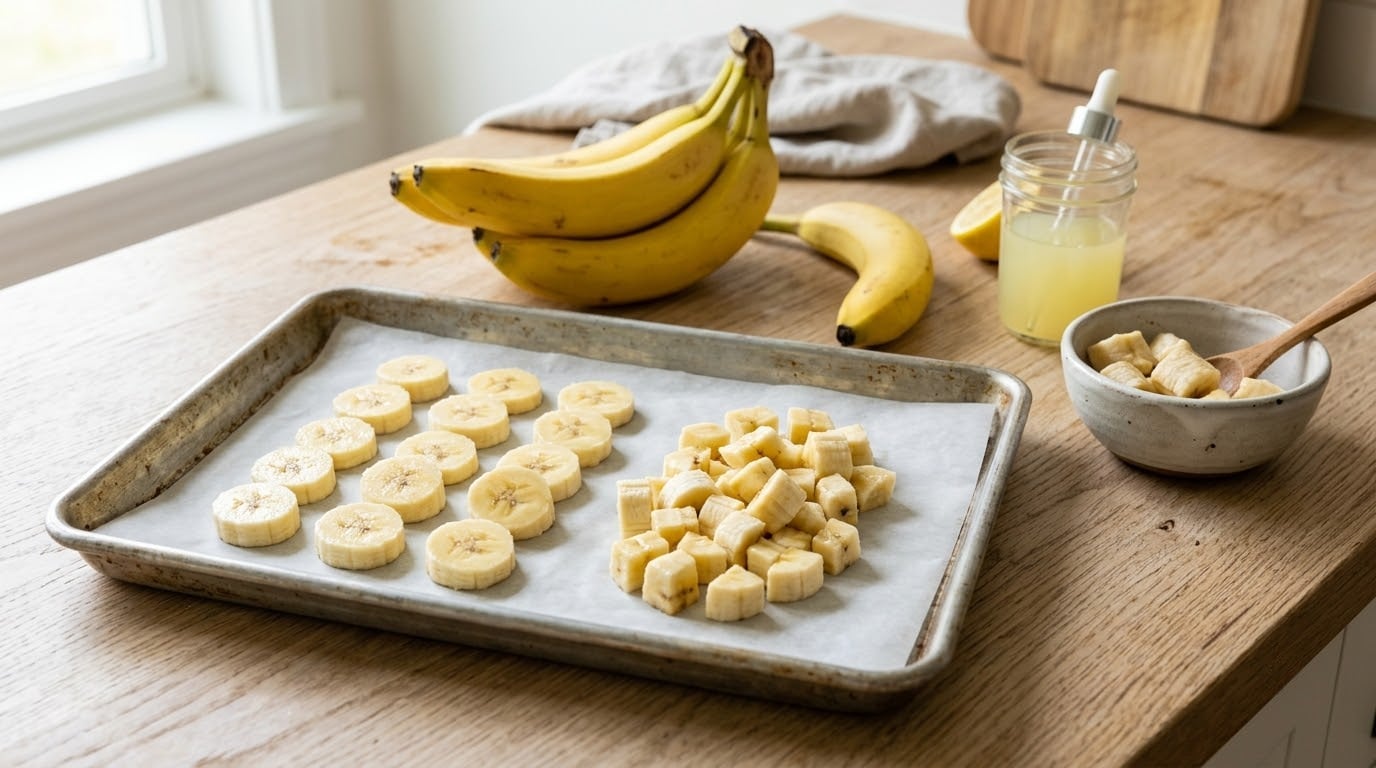
Knowing how to freeze bananas for smoothies and baking takes about fifteen minutes of prep and one to two hours of freezing time, and it is about as easy as a kitchen task gets. The short version: peel and cut bananas for smoothies, freeze them whole and unpeeled for baking, and keep every piece in a single layer until it is solid. Bananas freeze better when they are ripe but not leaking or blackened.
I keep a bag of frozen banana chunks in the freezer at all times. It is the fastest smoothie base there is, since frozen fruit blends thick without needing much ice, which also means the drink does not get watered down. The same chunks turn into banana bread batter, and thaw into mush for pancakes and quick breads with no extra effort.
Table of Contents
What You Need for Freezing Bananas
You need very little. A rimmed baking sheet, a cutting board, and something airtight to store the fruit in. Everything else is optional, and I will tell you when.
- A rimmed baking sheet — a metal pan that fits flat in your freezer.
- Parchment paper or a silicone mat — stops the pieces welding to the tray. Skip it if you have none; the same tray method still works, it just takes a scrape to get the frozen banana off later.
- A sharp knife — a dull one crushes banana into paste before you freeze it.
- Freezer bags or airtight containers — heavy-duty bags squeeze out more air than thin ones.
- A permanent marker or masking tape — for dating each bag.
- Ice cube trays — optional, but useful for mashed banana portions.
The form you freeze decides what you can make later, so choose before you cut anything:
- Whole, unpeeled — best for banana bread, muffins, pancakes, and nice cream later. About 30 seconds of prep each.
- Whole, peeled — for baking where you want to squeeze the fruit straight into mush. About a minute each.
- Sliced rounds — best for smoothies and nice cream, roughly 2 minutes of prep.
- Chunks — best for smoothies, baking, and portion control, roughly 2 minutes.
- Mashed in ice cube trays — best for one-banana recipes, oatmeal, and baby food, about 5 minutes per batch.
Frozen greens work the same way for flavor reasons, by the way. My guide to freezing spinach and kale for smoothies covers the same flash-freeze method in more detail.
How to Freeze Bananas for Smoothies and Baking: Step by Step
1. Choose the Right Bananas
Freeze bananas at peak ripeness, which means yellow with a few brown freckles. The starch converts to sugar at that stage, so the fruit blends sweet and bakes with the flavor people expect from banana bread. Rock-hard green bananas freeze fine but taste starchy once thawed, and fruit with split skin, leaking juice, or fuzzy patches should go in the trash instead of the freezer.
If a bunch is already sitting at the brown-speckled stage, freezing it is exactly what to do rather than throwing it out. Waiting a few more days for perfect color is how good bananas become unusable ones.
2. Peel and Cut Before Freezing
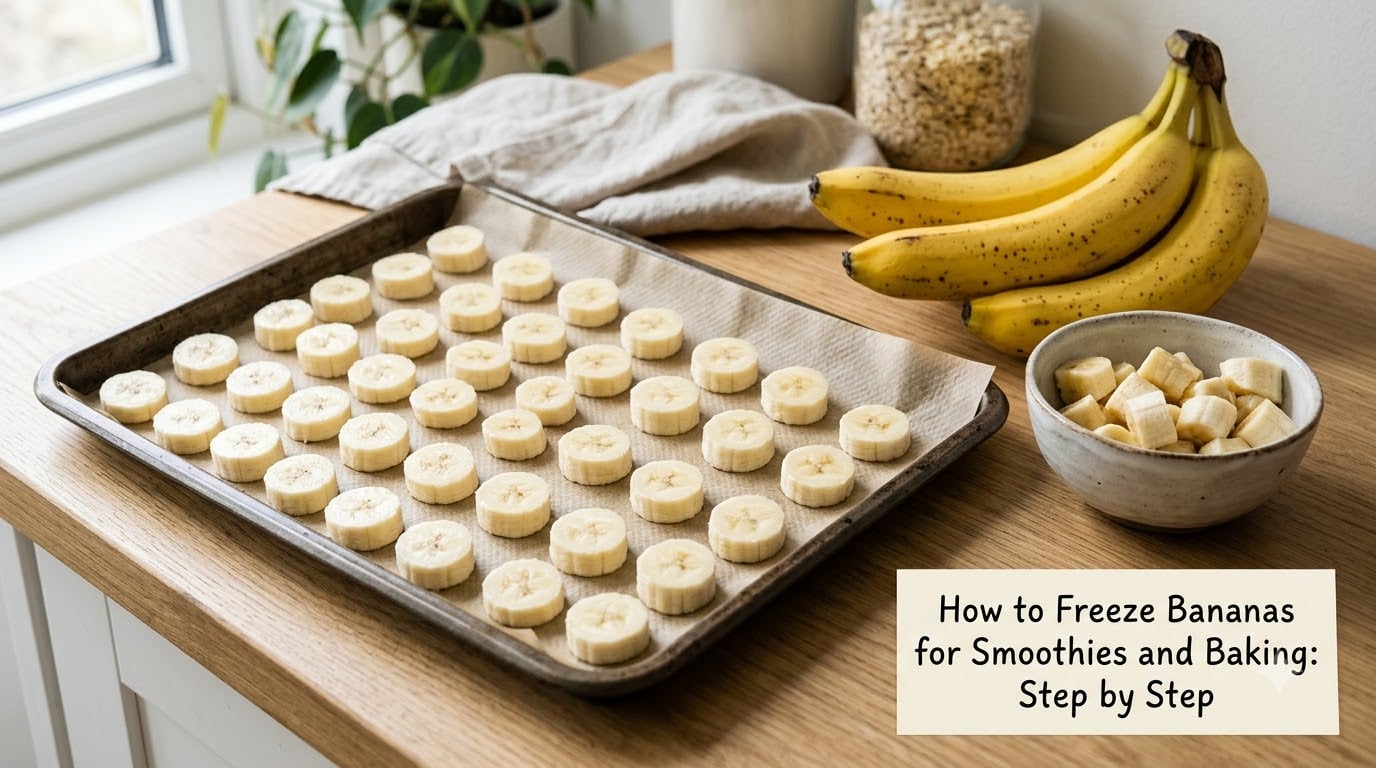
Peel the banana from the bottom up and lay it on the board. For smoothies, cut into coins about half an inch thick or chunks roughly one to two inches across. Smaller pieces blend faster and give a smoother texture, which matters most if your blender struggles with frozen fruit.
For baking, you have two good options. Freeze peeled bananas whole on a small tray, or leave the peel on and skip the work entirely. The skin holds moisture in, so unpeeled bananas stay usable the longest.
A medium banana gives about six coins or five or six chunks, and that is the portion to plan around. Three slices is roughly a third of a banana, which is what most smoothies call for.
3. Prevent the Pieces from Clumping
Clumping is the one problem that ruins a batch, and it happens when warm banana pieces go into a bag or container touching each other. They freeze into one solid brick, and then you are chiseling at it with a butter knife in January.
Spread the pieces across the baking sheet in one loose layer. Leave a small gap between them so nothing fuses. Set the tray in the freezer for one to two hours until the pieces are hard, then move on. Food safety guidance generally calls for freezing food at 0°F or below, and a standard home freezer reaches that within a couple of hours.
No baking sheet? Spread the chunks on a plate with a little space between them, or freeze small batches in a muffin tin. For more on the general technique, I wrote about how to freeze fresh berries without clumping, and the principle is identical.
4. Transfer and Label the Bananas
Once the pieces are solid, scrape them into a freezer bag or airtight container. Press out as much air as you can, seal it, and write the date and the recipe you bought them for. A label that says “banana bread, 3 needed” turns a mystery bag into something you will actually use.
Keep separate bags for separate jobs: one for smoothies, one for baking, one for a single banana’s worth stirred into oatmeal. Organizing by use is faster than digging for a thaw at 7am.
5. Use Frozen Bananas for Smoothies and Baking Without Thawing
For smoothies, drop three or four frozen chunks straight into the blender with your liquid. Frozen fruit gives a thick, creamy result with no ice needed, which keeps the flavor concentrated. Blend from frozen with the lid on, and stop to scrape down the sides a couple of times if you have a heavier blender.
For baking, you do not need to thaw at all in most cases. Add frozen chunks to the mixer bowl and mix on low until they break apart, or put them through a food processor first. The batter will end up moister than fresh-banana batter, and in quick breads and muffins that is a bonus rather than a problem. If your recipe is cookie-based or you want precise texture, thaw first instead.
Thawed bananas release a surprising amount of liquid. Use all of it. That liquid is mashed banana, it carries the flavor, and pouring it off is the most common reason frozen banana bread comes out dry. This is the question almost every reader asks, and the answer is simple: never drain it.
To thaw, move the fruit to the fridge for four to five hours for a slow, texture-preserving thaw, or sit it in cool water for 20 minutes if you need it faster. A microwave works in short bursts, though the pieces soften unevenly. For faster pureeing, run frozen chunks under hot tap water until the outside turns slippery, then peel them if the skin is on.
Nice cream is the one case where unpeeled whole bananas work surprisingly well, since the peel adds body to the blend. For everyday smoothies that will be served to kids, my smoothie ideas that kids actually drink lean on frozen banana for sweetness rather than sugar.
Common Mistakes to Avoid
Filling a bag with warm pieces. This is the single most common failure, and the reason for the tray step. Warm banana touching warm banana freezes as one lump.
Freezing fruit that is already broken down. Mold, leaking juice, or fermented smell means the banana is past saving. Freezing does not reverse spoilage, it preserves it.
Skipping the label. A bag of brown frozen chunks with no date will be ignored until it is freezer-burned and discarded. Two seconds of writing saves the bunch.
Thawing what does not need thawing. Frozen chunks blend faster than thawed ones, and thawed fruit goes soft and brown while it waits.
Pouring off the thawed liquid. Every drop of that liquid is flavor and moisture. Measure it with the fruit.
Expecting round-trip texture. Thawed bananas are soft and slightly brown. Fine for muffins and quick breads, wrong for anything that needs slices holding their shape.
How Long Do Frozen Bananas Last?
Frozen whole unpeeled bananas keep their quality for three to six months in a home freezer, and two to three months is where you will notice a real difference in texture. Peeled bananas and cut pieces fade faster, usually within two to three months for best flavor, even though they remain safe well beyond that.
From a safety standpoint, properly frozen fruit does not spoil the way fresh fruit does, but ice crystals damage the cells and the texture never comes back. Watch for freezer burn, which shows up as pale, dry, papery patches on the surface. Small patches are harmless for smoothies and baking. Deeply frosted, dehydrated chunks are best used in baking where moisture is welcome.
Keep bananas away from raw meat and seafood in the freezer, and thaw in the fridge rather than on the counter when you need them for baking.
Frequently Asked Questions
Should I peel bananas before freezing them?
It depends on what you plan to make. Peel and cut for smoothies, since the blender needs access to the fruit and skin adds bitterness. Leave the peel on when the banana is heading for banana bread, muffins, or pancakes, because the skin protects the texture and moisture for months. For nice cream, frozen unpeeled bananas blend into a thicker, creamier base.
Can I freeze whole bananas with the peel still on?
Yes, and it is the best option for storage. Unpeeled whole bananas take almost no prep time and keep their quality longer than peeled fruit because the skin limits moisture loss. The tradeoff is peeling them later, which is much easier after a short run under hot tap water. Plan on five minutes at the sink instead of one minute at the cutting board.
How should frozen bananas be stored so they do not stick together?
Flash freeze the pieces on a baking sheet first. Spread them in a single layer with small gaps, leave the tray in the freezer for one to two hours until hard, then transfer them to a bag or airtight container. Skipping the tray step is why most banana bags turn into one solid block. Squeeze out the air before sealing and date the container.
Can I use frozen bananas in muffins, quick breads, and pancakes?
Yes, and thawed or frozen both work. You can mix frozen chunks directly into the batter on low speed until they crumble, or thaw them first and mash. Never pour off the liquid that collects during thawing, because that liquid is part of the banana and adds moisture to the batter. Expect a slightly wetter crumb than fresh-banana recipes produce.
How do I thaw frozen bananas, and when should I thaw them first?
Thaw in the fridge for four to five hours when texture matters, or in cool water for about 20 minutes when you need it quickly. Skip the microwave unless you are in a hurry, since short bursts turn the fruit unevenly mushy. Most recipes do not need thawing at all, so thaw first only for baking that needs smooth, evenly mixed fruit rather than broken chunks.
Conclusion
Freeze ripe bananas in a single layer on a tray whenever you can spare fifteen minutes, and you get pre-portioned chunks that never freeze into one block. Keep whole unpeeled bananas when freezer space is the thing you are short on, since the skin buys you extra months. Then label every bag with the recipe it belongs to, because that is the difference between a freezer full of useful fruit and a mystery block nobody opens.