
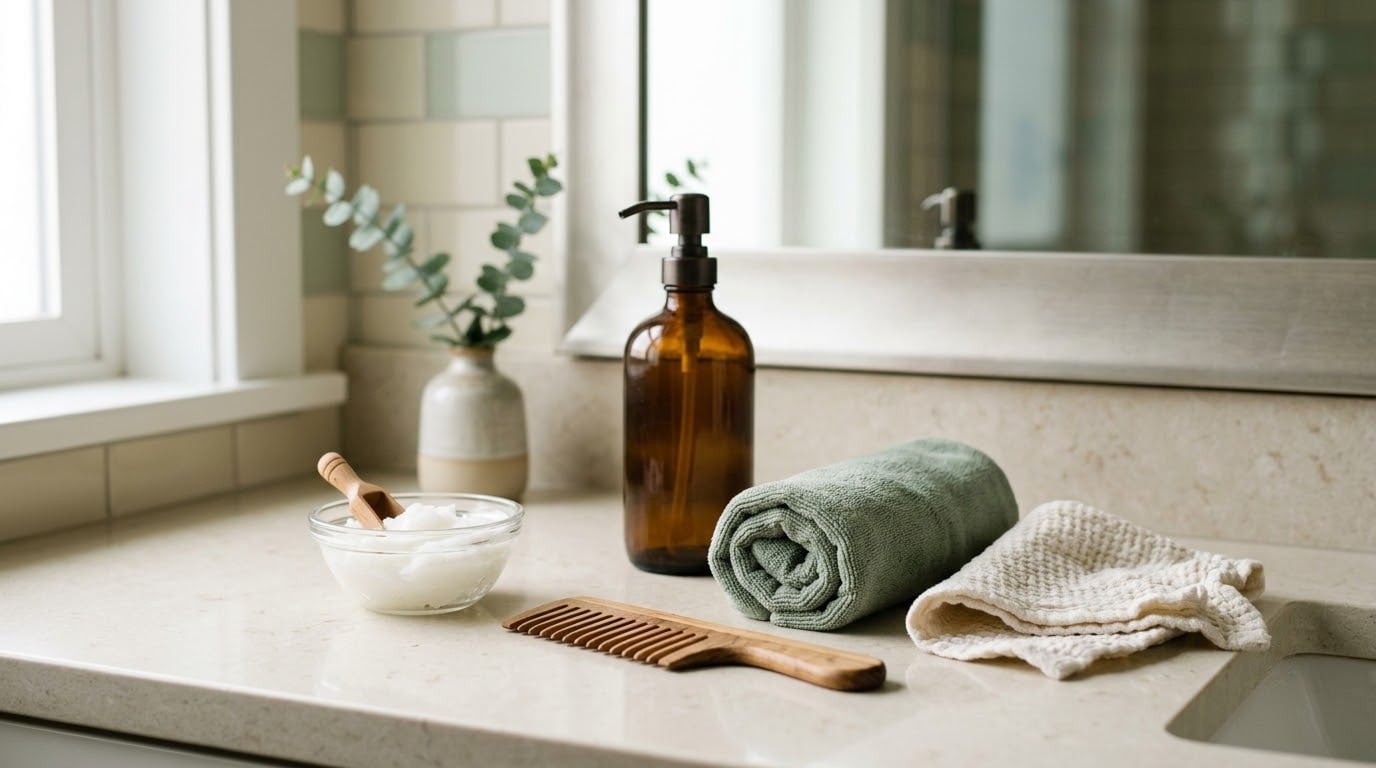
To get rid of dandruff naturally at home, you need to calm the scalp rather than pile more product onto it. Gentle washing, a patch-tested oil or acidifying rinse used on a schedule, and clean combs and towels usually control mild flaking within two to four weeks. Nothing here cures anything overnight, and the scalp replaces its skin slowly.
Here is the honest version: most flakes come from scalp irritation plus oil, and the yeast-like fungus Malassezia feeds on that oil. Natural remedies work through four routes, namely antifungal action, balancing acidic scalp pH, moisturising dry skin, and clearing waxy buildup. Pick one approach, give it two weeks, then judge it.
This guide is general information, not medical advice. If your scalp is painful, weeping, spreading, or losing hair, a dermatologist can identify what is actually going on. That matters because dandruff, seborrheic dermatitis, eczema, and scalp psoriasis look similar but need different care.
Updated for October 2026
Table of Contents
- What You Need
- Step-by-Step: How to Get Rid of Dandruff Naturally at Home
- Common Mistakes
- Tips for a Soothing, Consistent Routine
- When Home Care Is Not Enough
- Frequently Asked Questions
- How long does it take to get rid of dandruff with home care?
- What is the best natural home remedy for dandruff?
- Can coconut oil make dandruff worse?
- Should you use baking soda or apple cider vinegar on a flaky scalp?
- Is dandruff caused by not washing your hair often enough?
- When should persistent dandruff be checked by a doctor?
- Conclusion
What You Need
You do not need a shelf full of jars. A working setup costs almost nothing and mostly uses things you already own.
- A mild, fragrance-free shampoo or a properly formulated anti-dandruff shampoo containing an active ingredient such as zinc pyrithione or salicylic acid.
- A wide-tooth comb for parting and gentle flake removal, kept clean between uses.
- A clean applicator or small cup so you can measure oils and rinses instead of guessing by pouring.
- A microfiber towel, which dries the scalp faster and leaves less friction than a rough bath towel.
- Optional, and only if you patch test first: coconut oil, olive oil, diluted tea tree oil, plain aloe vera gel, or diluted apple cider vinegar.
- A notebook or phone note for logging flakes, itch, and dates. This is the step most people skip and it is the one that tells you whether anything is working.
Skip anything labelled a treatment cure, and skip oils with added fragrance. Fragrance is one of the most common triggers of the irritated scalp you are trying to fix.
Step-by-Step: How to Get Rid of Dandruff Naturally at Home
Run this as a seven to 14 day cycle rather than a one-off treatment. The scalp turns over skin roughly once a month, so a single session tells you very little.
Start With a Gentle, Dandruff-Focused Wash
Focus on the scalp, not the lengths of your hair. That is where oil, buildup, and flakes live, and most people spend their wash time on the ends instead.
Use lukewarm water. Hot water strips the scalp’s natural oils and leaves it compensating with more, which is why an itchy scalp often gets worse after a very hot shower. Work a small amount of shampoo into the roots with your fingertips for 30 seconds, then rinse until the water runs clear.
Expect very little change on day one. By day 10, most people notice less itch in the days between washes rather than fewer flakes in the sink. That between-wash itch is the honest signal.
Use a Simple Oil Treatment With Caution
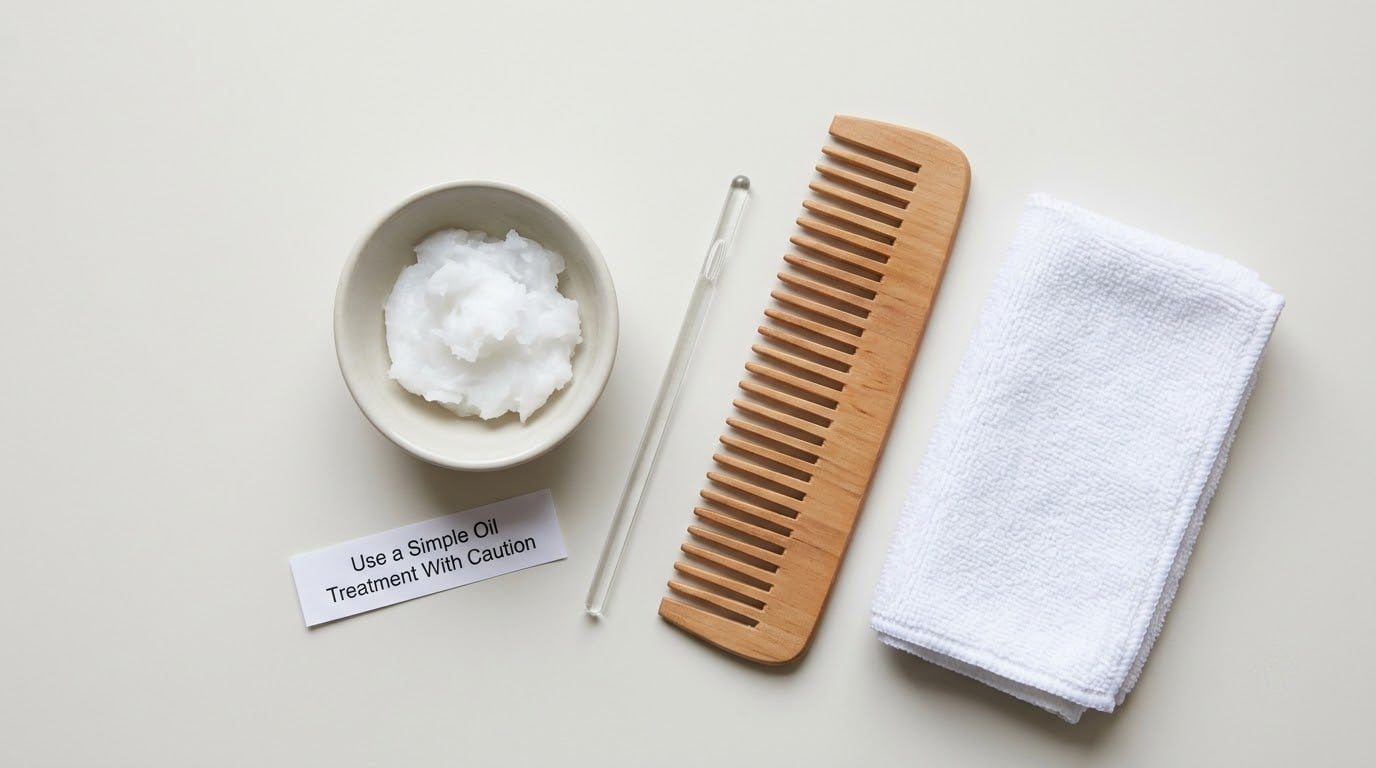
A pre-shampoo oil treatment can soften buildup and make a wash feel less stripping. That is its real, modest benefit. Oils do not kill Malassezia, and anyone who promises otherwise is overselling.
Warm two to three teaspoons of coconut oil in your hands, part your hair in sections, and apply it along the scalp with your fingertips. Leave it for 30 to 60 minutes, or overnight if your hair tolerates it, then wash out with your usual shampoo. Repeat once a week, not daily.
Olive oil is an alternative, but it is heavier. On an oily scalp it can feel like an extra layer of the problem you are trying to solve, and it typically takes two washes to fully rinse.
Stop immediately if you feel burning, notice redness, or start itching more. Wash it out and do not try again.
Rinse Thoroughly and Remove Loose Flakes
Thorough rinsing is the least glamorous and most effective part. Run lukewarm water through the roots longer than feels necessary, massage once more at the end of the rinse, and let the water carry the loosened flakes away.
For anything still sitting on the skin, take your wide-tooth comb, part a small section near the part line, and gently lift flakes away. Hold the hair taut and pull the comb along the scalp in short strokes. Never scratch with fingernails and never drag a comb hard enough to graze the skin.
Flakes that lift out without resistance are ready to come off. Flakes that need pressure are not. Do not chase them.
Make Small Changes to Hair and Scalp Habits
Change one habit at a time, or you will not know which change did the work.
- Wash on a schedule that suits your scalp. Two to three times a week suits most people. Going a week without washing lets oil and dead skin build, while washing several times a day on strong shampoo strips the scalp and can create more flakes.
- Clear styling buildup. Gels, waxes, dry shampoo, and heavy oils are often mistaken for dandruff. A clarifying shampoo once every two weeks does more here than most remedies.
- Dry your scalp properly. Wet hair lying against your scalp keeps it damp and warm. Blot with a microfiber towel instead of scrubbing.
- Do not share combs, hats, or towels. This is less about infection, which dandruff is not, and more because shared grit gets worked into a sensitised scalp.
- Cut back on fragrance near your scalp. Perfumed mousses, dry shampoo, and heavily fragranced styling products are a frequent hidden trigger.
- Watch stress and weather. Cold dry air and indoor heating make flaking worse for many people, and a stressed scalp produces more oil.
Keep Towels, Combs, and Pillowcases Clean
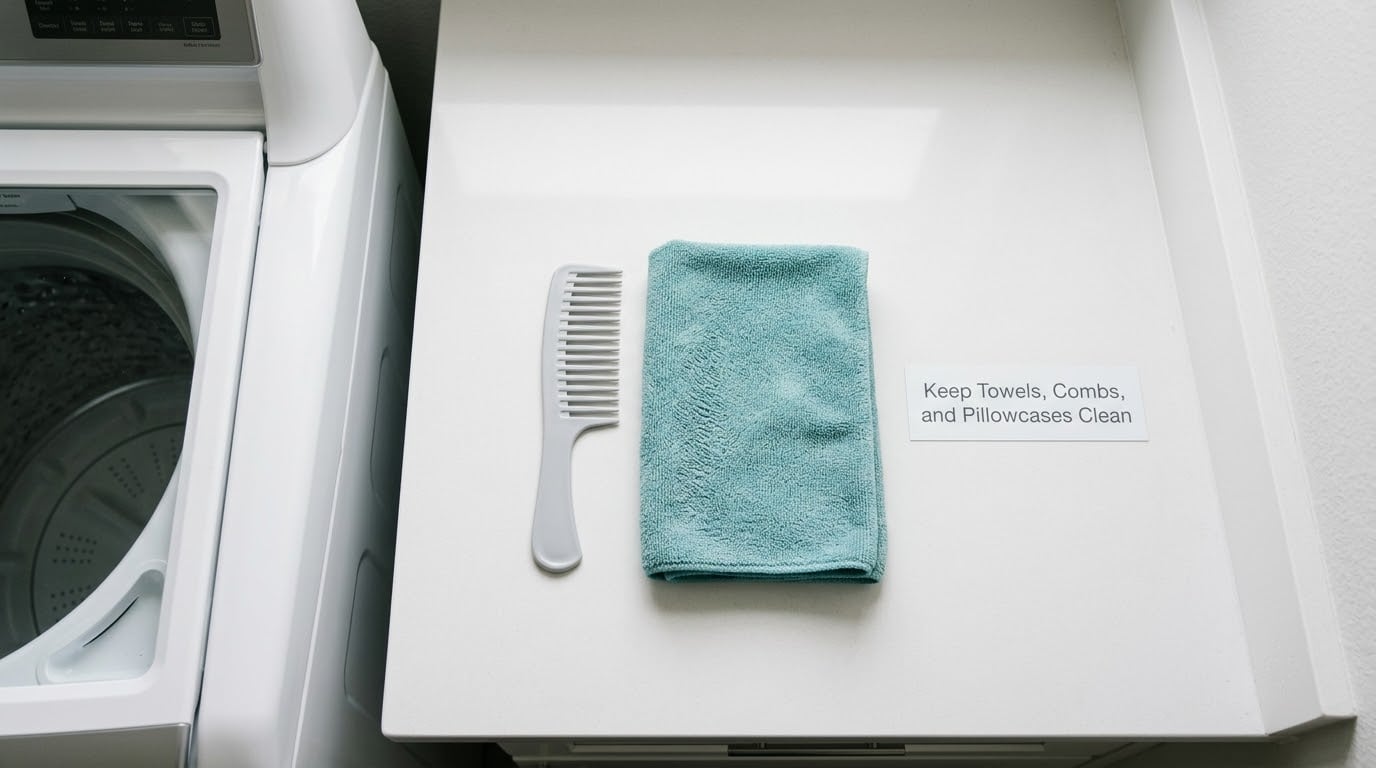
A simple hygiene routine is enough. Rinse combs and brushes in warm soapy water after each use and dry them face down. Wash your pillowcase and bathroom towels on a normal cycle, which you are almost certainly already doing.
That is where it stops. You do not need to replace bedding weekly or buy special pillowcases. Replacing ordinary household items faster than the wash schedule does nothing for your scalp.
Track Symptoms and Reintroduce Products Slowly
Write four things after each session: how much flaking you saw, how the scalp felt 24 hours later, whether you used oil or a rinse, and whether the last wash used a medicated shampoo. That log is what turns a guess into a conclusion.
Aim for one new thing per week. Stacking oil, vinegar, lemon, and tea tree in a single session is the fastest way to make your scalp irritated and completely unable to tell you what helped.
If you have worked through two full cycles with nothing changing, stop layering home remedies and use an evidence-supported anti-dandruff shampoo with a labelled active ingredient. That is not failure. It is the sensible next step.
Common Mistakes
Scratching the flakes off. It feels satisfying and it damages the scalp barrier, which worsens both itching and shedding. Use the comb instead, and only where the flake lifts freely.
Applying irritating oils to a broken or itchy scalp. Lemon juice, undiluted vinegar, and undiluted essential oils sting on skin that is already compromised, and the burn reads as damage rather than healing. Stop at the first sign of heat or redness.
Using very hot water. Scalp skin is thin and reactive. Lukewarm water cleans just as well and leaves the scalp calmer.
Over-washing. Scrubbing the scalp daily with strong shampoo to chase flakes is a common response and it keeps the flaking cycle going. Twice or three times a week is plenty.
Changing five products in one week. Then nothing improves and you have no idea why. Change one thing, hold it for two weeks, keep going or drop it.
Assuming flakes prove an infection. Dandruff is not contagious and it is not a hygiene failure. Flakes on the eyebrows, beard, or sides of the nose point toward seborrheic dermatitis, which is a different conversation with a clinician.
Tips for a Soothing, Consistent Routine
Patch test every new product. Apply a small amount behind the ear or on the inner arm, leave it for 24 hours, and only then use it on your scalp. This one habit prevents most irritation I hear about from home treatments.
Keep essential oils properly diluted. Tea tree oil should never go on skin undiluted. A common dilution is a few drops mixed into a tablespoon of carrier oil such as coconut or jojoba. Undiluted use is a chemical burn waiting to happen.
Handle your hair gently. A scalp under inflammation breaks hairs at the root when you tug. Use a wide-tooth comb, start at the ends, and work upward.
Choose washable scalp tools. Combs and brushes that you can rinse and dry fully stay free of the oil and dead skin that feed the problem.
Treat diet and supplements as support, not treatment. Eating more omega-3 rich foods, zinc, B vitamins, or probiotics may help general scalp and hair health, and none of them replace a routine that addresses oil, buildup, and irritation. Avoid drastic elimination diets to chase dandruff. Nothing about dandruff requires giving up food groups, and stress about the diet usually shows up on the scalp anyway.
When Home Care Is Not Enough
See a doctor or dermatologist if any of the following applies, and do not keep cycling through remedies while you wait.
- Flakes that keep coming back within a day or two of washing, weeks after you have cleaned up your routine.
- Scalp that is thickly crusted, oozing, swollen, or genuinely painful.
- Red, scaly patches that spread beyond the scalp line or into the beard and eyebrows.
- Visible thinning, bald patches, or shedding that worries you.
- Flaking that started after a new medication, and does not settle when you change your hair products.
A clinician may identify seborrheic dermatitis, scalp psoriasis, eczema, a yeast or bacterial infection, or something else entirely. Each of those needs its own approach, and it is where prescription-strength antifungals or corticosteroids can help in a way kitchen ingredients cannot.
Your pharmacist is a reasonable first stop for an over-the-counter recommendation before you commit to an appointment.
Frequently Asked Questions
How long does it take to get rid of dandruff with home care?
Most people see less itching between washes in 10 to 14 days, with flaking noticeably reduced around the four-week mark. The scalp replaces its skin gradually, so one session cannot reset it. Judge progress at two weeks, not two days. If nothing has shifted after a full two-week cycle of consistent care, that is a good point to stop layering remedies and start a labelled anti-dandruff shampoo instead.
What is the best natural home remedy for dandruff?
There is no single winner, because the cause differs by scalp type. Coconut oil or olive oil suits dry, tight scalps that feel stripped after washing. Diluted apple cider vinegar suits oily scalps with buildup and flaking. Diluted tea tree oil suits itching driven by yeast overgrowth. Aloe vera gel suits sensitive, irritated skin. Patch test first, use one at a time, and give it two full weeks before judging it.
Can coconut oil make dandruff worse?
Yes, in a few situations. On an oily scalp it adds more oil for yeast to feed on, and it can make flakes feel heavier rather than looser. It can also leave a waxy cast on textured hair that takes two washes to remove. If your scalp feels tight and flaky after an oil treatment, that is your signal to drop it. Warm water, a gentle wash, and a clarifying shampoo will clear it in a wash or two.
Should you use baking soda or apple cider vinegar on a flaky scalp?
Apple cider vinegar has the better case for a flaky scalp. A rinse of one part vinegar to four parts water, applied after shampooing and left for about five minutes, can help lift buildup and nudge scalp pH away from what yeast prefers. Baking soda is alkaline and can strip and dry a scalp that is already irritated. Use either one at a time, never both, and stop if your scalp stings.
Is dandruff caused by not washing your hair often enough?
Rarely on its own. Dandruff usually comes from scalp oil, an overgrowth of yeast-like Malassezia feeding on that oil, sensitivity to a product, and sometimes genuine dry skin. Letting oil sit for a week does make flakes worse, so regular washing helps. But washing several times a day with strong shampoo strips the scalp and can produce more flaking. Twice or three times a week suits most people. Persistent flakes are not a cleanliness problem.
When should persistent dandruff be checked by a doctor?
Arrange a medical review if flaking continues after four to six weeks of consistent, careful care, or sooner if the scalp is painful, swollen, oozing, or crusted. Other reasons to go sooner include scaly patches spreading into your beard or eyebrows, bald patches, visible thinning, or flaking that began after a new medication. A clinician can tell seborrheic dermatitis, scalp psoriasis, eczema, and infection apart, and each needs different treatment. Please seek individual advice rather than treating this article as a diagnosis.
Conclusion
Start simple. Wash your scalp rather than your hair, twice or three times a week with lukewarm water and a gentle shampoo. Change one thing at a time, patch test anything new, and give any routine two full weeks before you judge it.
Add oil or an acidifying rinse only if your scalp type calls for it, and drop it the moment you feel burning or increased itching. If flaking is still there after four to six weeks, or if the scalp is painful, weeping, or losing hair, book a medical review. That step is the one people skip, and it is usually the one that ends the guessing.