
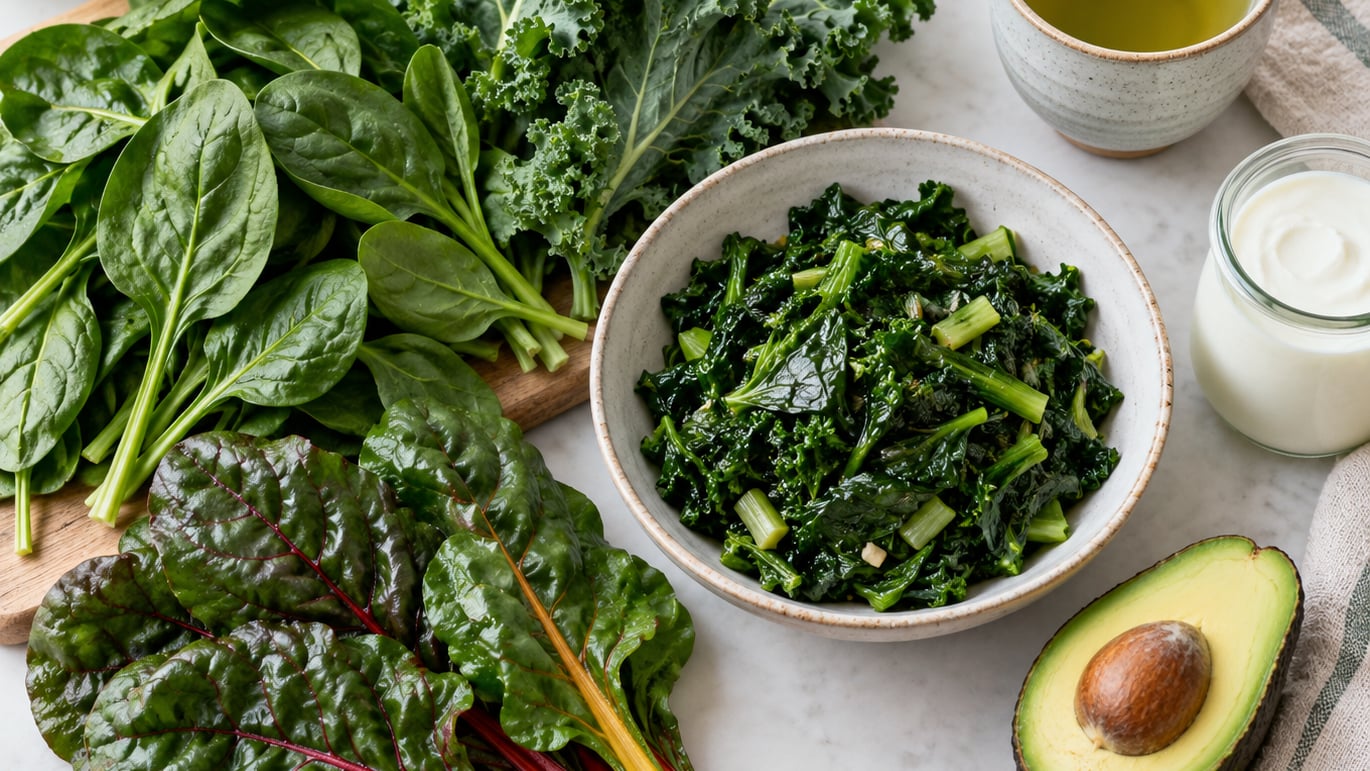
The foods that are good for your liver are whole, minimally processed foods that supply three things in volume: fiber, antioxidants, and healthy unsaturated fats. Fatty fish, cruciferous vegetables, leafy greens, berries, nuts, legumes, and unsweetened green tea all belong in that group. No single food repairs a damaged liver, and none of them undo years of heavy drinking on its own.
This list is for anyone who wants a practical eating pattern, not a detox. It is especially relevant if you drink alcohol regularly, eat a lot of added sugar or ultra-processed food, carry extra weight, have insulin resistance or type 2 diabetes, or take regular medication. The goal is a plate you can actually keep eating for years.
A note on names first, because you will see both in doctor visits and online. Fatty liver disease is now generally called MASLD, metabolic dysfunction-associated steatotic liver disease, and its progressive form is called MASH. Older sources, including a lot of blog content, still say NAFLD or NAFLD-NASH.
Table of Contents
- Foods That Are Good for Your Liver at a Glance
- 1. Leafy Greens
- 2. Colorful Bell Peppers
- 3. Cruciferous Vegetables
- 4. Oats and Other Whole Grains
- 5. Legumes
- 6. Fatty Fish
- 7. Eggs
- 8. Avocado
- 9. Blueberries and Other Berries
- 10. Walnuts and Other Nuts
- 11. Green Tea
- 12. Fermented Foods
- Frequently Asked Questions
- What are the best foods that are good for your liver?
- Do liver detox foods or cleanses really work?
- Is fruit good for you if you are concerned about your liver?
- How does alcohol affect the liver?
- Are liver-support supplements safer than eating whole foods?
- When should someone see a doctor about liver health?
- What to Do First
Foods That Are Good for Your Liver at a Glance
| Food | Main nutritional contribution | Practical serving idea | Eating pattern it fits |
|---|---|---|---|
| Leafy greens | Folate, lutein, chlorophyll, fiber | Wilted spinach with eggs; raw kale in salad | Mediterranean, plant-forward |
| Bell peppers | Vitamin C, carotenoids | Roasted strips over a bean bowl | Mediterranean, low-carb |
| Cruciferous vegetables | Glucosinolates, sulforaphane, fiber | Steamed broccoli with lemon; shredded cabbage slaw | Plant-forward, vegetarian |
| Oats and whole grains | Beta-glucan, magnesium, B vitamins | Overnight oats with berries and walnuts | Mediterranean, vegetarian |
| Legumes | Plant protein, fiber, folate, magnesium | Lentil soup; chickpea curry with brown rice | Plant-based, budget-conscious |
| Fatty fish | EPA and DHA omega-3 fats, protein | Salmon baked at 400F; sardines on toast | Mediterranean, DASH |
| Eggs | Complete protein, choline, B12, selenium | Boiled eggs with greens; vegetable omelet | Omnivore, Mediterranean |
| Avocado | Oleic acid, fiber, potassium | Half an avocado on wholegrain toast | Mediterranean, plant-forward |
| Berries | Anthocyanins, vitamin C, fiber | Frozen blueberries stirred into oats | Plant-forward, vegetarian |
| Nuts | Unsaturated fat, magnesium, vitamin E | One ounce of walnuts as an afternoon snack | Mediterranean, vegan |
| Green tea | Catechins, modest caffeine | Two to four cups daily, unsweetened | Any pattern |
| Fermented foods | Live cultures, savory flavor | Plain yogurt with fruit; miso in soup | Mediterranean, plant-forward |
One more framing that helps. Several foods on this list mainly reduce the load the liver has to carry. Others supply compounds that support the enzymes the liver already uses. Both matter, and neither replaces the basics: steady movement, manageable alcohol intake, and a body weight that suits you.
1. Leafy Greens
Why leafy greens are the easiest place to start
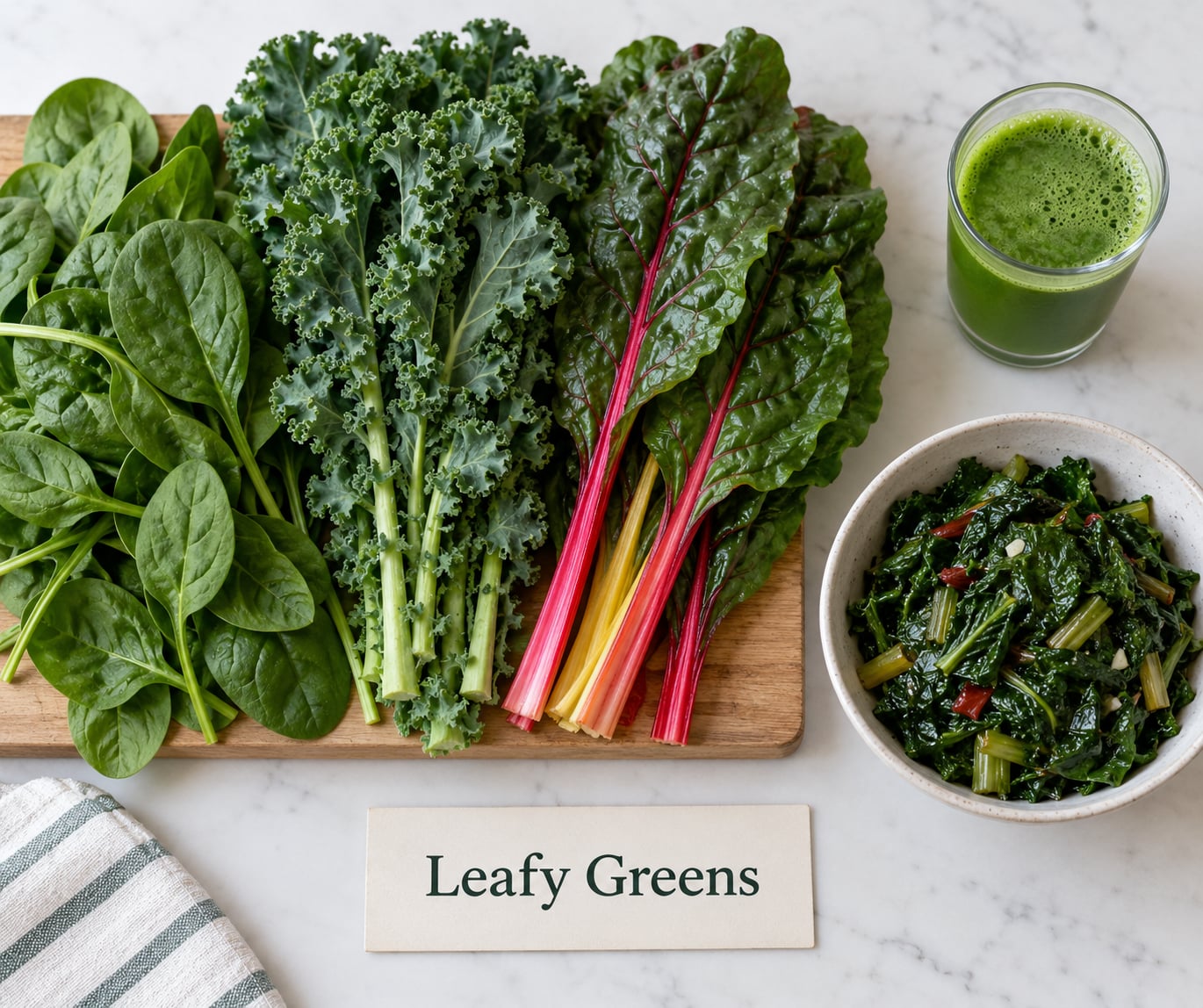
Leafy greens are the easiest place to start. Spinach, kale, Swiss chard, and collard greens bring folate, vitamin K, lutein, and plant compounds alongside fiber that feeds your gut bacteria.
The practical case is less glamorous than that. Greens are low in calories and high in volume, so they crowd out the calorie-dense foods that drive liver fat when you eat too much of them.
There are four easy routes in. Raw in a salad, wilted in a pan with olive oil and garlic, blended into a smoothie with fruit and protein, or simmered into soups and stews. Frozen chopped spinach works well in curries and soups when fresh is not on hand.
When people ask which foods that are good for your liver to add first, greens come up more than anything else, and it is not close. They are cheap, they keep, and they slot into meals that were already on the menu.
Worth knowing: kale, collards, and green chard are very high in vitamin K, which matters if you take warfarin. Check with your prescriber or pharmacist before making a big change to your intake.
2. Colorful Bell Peppers
Red, yellow, and orange bell peppers are among the highest everyday sources of vitamin C, and they carry carotenoids that give them their color. Vitamin C is an antioxidant, which means it helps limit the oxidative damage that accumulated in liver cells over time.
They are also unusually useful for meal prep because they hold up well. Roast strips of pepper with olive oil at 425F until they char at the edges, then keep them in the fridge for salads, grain bowls, and sheet-pan dinners through the week.
Raw strips with a little salt make a decent snack in place of chips. Stuffed peppers filled with brown rice and black beans turn one vegetable into a whole meal. A food processor makes short work of the chopping if you are doing a big batch.
3. Cruciferous Vegetables
Broccoli, cabbage, Brussels sprouts, cauliflower, kale, and bok choy all belong to the same plant family, and they share a class of compounds called glucosinolates. When you chop and chew them, the plant releases sulforaphane and indole-3-carbinol, which are subjects of ongoing nutrition research on liver enzyme pathways.
Preparation changes what you get. Light steaming, stir-frying, and roasting leave more of these compounds intact than boiling the vegetables until soft, and prolonged boiling sends much of them into the water. Chopping and letting the cut pieces sit for a few minutes before cooking gives the enzymes time to do their work.
Cross-cultural cooking is the easiest way to get variety here. Shredded cabbage in a slaw, Brussels sprouts roasted until crisp, cauliflower roasted as a stand-in for meat, bok choy in stir-fries. If you have never enjoyed these, roast them instead of steaming. That one change fixed it for me.
4. Oats and Other Whole Grains
Oats contain a soluble fiber called beta-glucan, which is unusual among foods because it is well studied for how it interacts with cholesterol and blood sugar. Both of those matter to liver health, because insulin resistance is one of the main drivers of liver fat.
Brown rice, quinoa, barley, and whole-grain breads and tortillas bring the same general package: more fiber, more minerals, and steadier energy than their refined versions.
Breakfast is where most people get it done. Overnight oats with milk, chia, and berries works on the first try because you assemble it in a jar. A bowl of cooked oatmeal with a spoon of peanut butter and a banana is faster still. For lunch, swap white rice for quinoa or brown rice in whatever you already make, and swap white bread for whole grain.
If fiber is a goal, work up to it slowly and drink water. If you want to go further on the gut side of things, our guide to foods high in prebiotic fiber covers the specific types that feed bacteria rather than just adding bulk.
5. Legumes
Beans, lentils, chickpeas, and split peas are the most underrated entry on this list. They combine plant protein, fiber, folate, magnesium, and potassium in a package that costs very little and keeps for a long time in the pantry.
That combination matters because protein is what makes a meal satisfying. A bowl of lentil soup or chickpea curry leaves you full for hours, which is what makes the rest of the pattern sticky rather than a three-day experiment.
Start with a few concrete meals rather than an intention. Lentil soup with carrots, cumin, and a splash of lemon. Chickpea curry with brown rice. Black beans folded into a breakfast hash with peppers and onion, scrambled with eggs or served alongside them.
Canned beans are fine. Rinse them to cut the sodium, and add them straight to salads and soups so they do not become a sad side dish. Starting from scratch is not required for any of the benefits.
6. Fatty Fish
Salmon, sardines, and trout supply EPA and DHA, the long-chain omega-3 fats that the body cannot make on its own. Mainstream dietary guidance generally points to two servings of fish a week, and fatty fish is the type most often recommended for its omega-3 content.
These fats show up in research on lowering liver fat and easing inflammation, which is why fatty fish appears near the top of most liver health lists, including this one.
Preparation matters more than people expect. Baked or grilled at 400F until the flesh flakes, with a 145F internal temperature, keeps the fats and leaves nothing to worry about. Pan-frying in olive oil works. Deep-frying in a neutral oil is the version to do least often, because you add back a large dose of the fat you were trying to get in the first place.
Sardines are the budget answer here. Tinned in olive oil, one or two fill a slice of wholegrain toast with a squeeze of lemon. For people who eat fish regularly, keep an eye on the advice about mercury in high-frequency fish, and check with a clinician if you are pregnant or have specific concerns.
7. Eggs
Eggs are a practical source of complete protein, choline, vitamin B12, and selenium, and choline in particular is involved in how the liver handles fat. Several nutrients a day, in a food most people already buy, is a good trade.
Keep the meals simple. Hard-boiled eggs with a handful of greens and whole-grain toast. A vegetable omelet with peppers, onions, and whatever greens need using. Eggs stirred into leftover rice or quinoa so they are not the only thing on the plate. An egg dropped into overnight oats the morning before is a reasonable protein boost.
Two points people want clarified. Eggs do not cleanse or repair the liver, despite what some internet lists claim. And the cholesterol question is a fair one to raise with your own clinician, especially if you have a personal or family history of heart disease. For most people, a few eggs a week fits a balanced pattern.
8. Avocado
Avocado is unusual among fruits because it carries a large amount of fat, and that fat is mostly oleic acid, a monounsaturated fat. It also brings roughly a quarter of your daily fiber needs in a single fruit, plus potassium, which many people fall short on.
Monounsaturated fat is the fat profile most associated with Mediterranean-style eating patterns, and those patterns are the ones with the strongest general research behind them for liver health. One food is not a diet, but avocado makes that pattern easier to follow.
It is easier to use than most people think. Half on wholegrain toast with a squeeze of lime and a little chili. Cubed into a salad with chickpeas and cucumber. Blended into a smoothie with milk, spinach, and a banana, where you will not taste it. Or sliced alongside beans and brown rice, which makes it the whole meal rather than a side.
9. Blueberries and Other Berries
Blueberries, raspberries, blackberries, and strawberries are rich in anthocyanins, the pigments that give them their color, along with vitamin C and fiber. That combination is why berries come up so consistently in lists like this one.
Frozen berries are the practical choice. They keep for months, cost less, and hold their nutrition well, so there is no reason to skip them in January. Use them straight from frozen on oatmeal, in yogurt, or tossed into a pan with a little lemon at the end of a roast.
Two honest caveats. Ordinary portions are appropriate; there is no special high-dose rule, and a large intake of sweetened juice is not the same as whole fruit. And no single food substitutes for medical care. If you have a liver condition or abnormal liver enzymes, food choices support your care rather than replacing it.
10. Walnuts and Other Nuts
Walnuts are the only common nut with a meaningful amount of plant-based omega-3, called ALA, plus unsaturated fat, magnesium, protein, and vitamin E. Almonds, cashews, pistachios, and peanuts bring a similar package without the ALA, and any of them in an unsalted form works.
Portion is the whole skill here, and the portion is small. About one ounce, which is roughly a small handful, is a typical serving. A quarter cup of walnuts is about four servings, which is fine occasionally and easy to overdo daily without noticing.
The easiest habits: trail mix with a handful of nuts and some dried fruit, a spoonful of nut butter on apple slices, walnuts chopped over oatmeal with berries, or a small bowl on the counter instead of a cookie in the cupboard. Raw or dry-roasted and unsalted is the version to keep in the cupboard.
11. Green Tea
Unsweetened green tea contains catechins, a type of plant compound, plus a modest amount of caffeine. Observational research links drinking several cups a day with better liver outcomes, which is a modest signal and not a promise.
Two to four cups a day is a reasonable range for most adults, and most of the research looks at the beverage rather than a supplement. That distinction matters: concentrated green tea extracts have been linked to liver injury in case reports, so drink the tea and leave the extract alone.
Watch the caffeine if you are sensitive to it, and note the general guidance to keep caffeine intake low during pregnancy. Herbal tea counts toward your total fluid but not toward green tea’s catechins.
12. Fermented Foods
Yogurt with live cultures, sauerkraut, kimchi, miso, and kombucha bring live microbes into the diet, which is a reasonable way to support the gut side of digestion. Their biggest practical benefit is flavor, which makes a vegetable-heavy plate much easier to enjoy.
Read the label. You want milk that lists live or active cultures, and it needs to stay cold from the shelf to your kitchen. Sauerkraut and kimchi in the refrigerated section usually contain live cultures; the shelf-stable jarred versions often do not, because heat killed them.
Salt is the thing to watch. Fermented foods can be salty, and sodium matters for blood pressure, which matters for the liver. Miso, one tablespoon, is a lot of sodium in a small serving, so measure it rather than pouring.
Not sure where to start? Our step-by-step on how to add fermented foods to your diet goes through the one-food-at-a-time approach, which works better than trying to overhaul everything at once. Fermented foods are not a treatment for any liver condition, and anyone with a diagnosed condition should talk to their clinician first.
Frequently Asked Questions
What are the best foods that are good for your liver?
Whole, minimally processed foods rich in fiber, antioxidants, and unsaturated fats fit best. That means fatty fish like salmon and sardines, cruciferous vegetables such as broccoli and cabbage, leafy greens, berries, beans and lentils, nuts, whole grains, avocado, and unsweetened green tea. Think of it as an overall pattern of meals over weeks, not one food or one week. Ask a doctor or registered dietitian for advice tailored to you.
Do liver detox foods or cleanses really work?
There is no good evidence that juice cleanses, detox teas, or liver detox supplements change liver function. The liver already filters substances and makes bile on a continuous basis, and it does not need a reset. Some restrictive cleanses also carry real downsides, like low calorie intake and lost muscle. If you have liver disease or abnormal liver enzymes, a clinician should guide your treatment rather than a cleanse plan.
Is fruit good for you if you are concerned about your liver?
Whole fruit in normal portions is generally fine and fits a liver-supportive pattern, because it brings fiber, vitamin C, and plant compounds. Small amounts of added sugar, juice, and sweetened dried fruit are a different question, since those deliver sugar without much fiber. If you already have a diagnosis, your clinician or a registered dietitian can tell you what suits your situation, particularly if you have diabetes or high triglycerides.
How does alcohol affect the liver?
Alcohol is processed almost entirely by the liver, which is why heavy or long-term drinking is a leading cause of liver disease. The risk rises with the amount and the length of time, and it compounds with other factors such as weight, diabetes, and genetics. Cutting back matters more than the specific food you eat. If you drink heavily every day, talk to your doctor, since withdrawal can be serious and worth managing with medical support.
Are liver-support supplements safer than eating whole foods?
Not necessarily. Supplements are not held to the same evidence standards as food, doses vary wildly, and some liver supplements have caused harm. Concentrated green tea extracts, excess vitamin A, and unregulated herbal products are known examples. Milk thistle studies are mixed and it has not been shown to prevent liver disease. Bring any supplement to your doctor or pharmacist so they can check it against your medications and conditions.
When should someone see a doctor about liver health?
Get medical advice rather than a food list if you have jaundice, dark urine, pale stools, persistent abdominal swelling, vomiting blood, or confusion. Those are warning signs that need prompt attention. The same goes for liver enzymes that stay abnormal, a known diagnosis of fatty liver disease, or heavy alcohol use. Liver problems are often silent in early stages, so routine blood tests matter most if you have risk factors such as weight, diabetes, or family history.
What to Do First
Pick two changes and run them for a month. Add a fatty fish meal twice a week and one vegetable to dinner every night, or replace refined grains with whole ones at breakfast. Of all the foods that are good for your liver, the ones already in your kitchen are usually the easiest to keep.
Small changes that survive the month beat a strict plan that ends on day nine. What to cut matters as much as what to add, particularly added sugar and sugary drinks, heavily processed foods, and alcohol. If a claim about food sounds like a cure, it is worth testing against our guide to telling good nutrition advice from hype before you spend money on it.
None of this is a treatment. If you have a liver condition, abnormal liver enzymes, or heavy alcohol use, book an appointment and let a healthcare professional set your plan before changing what you eat.