
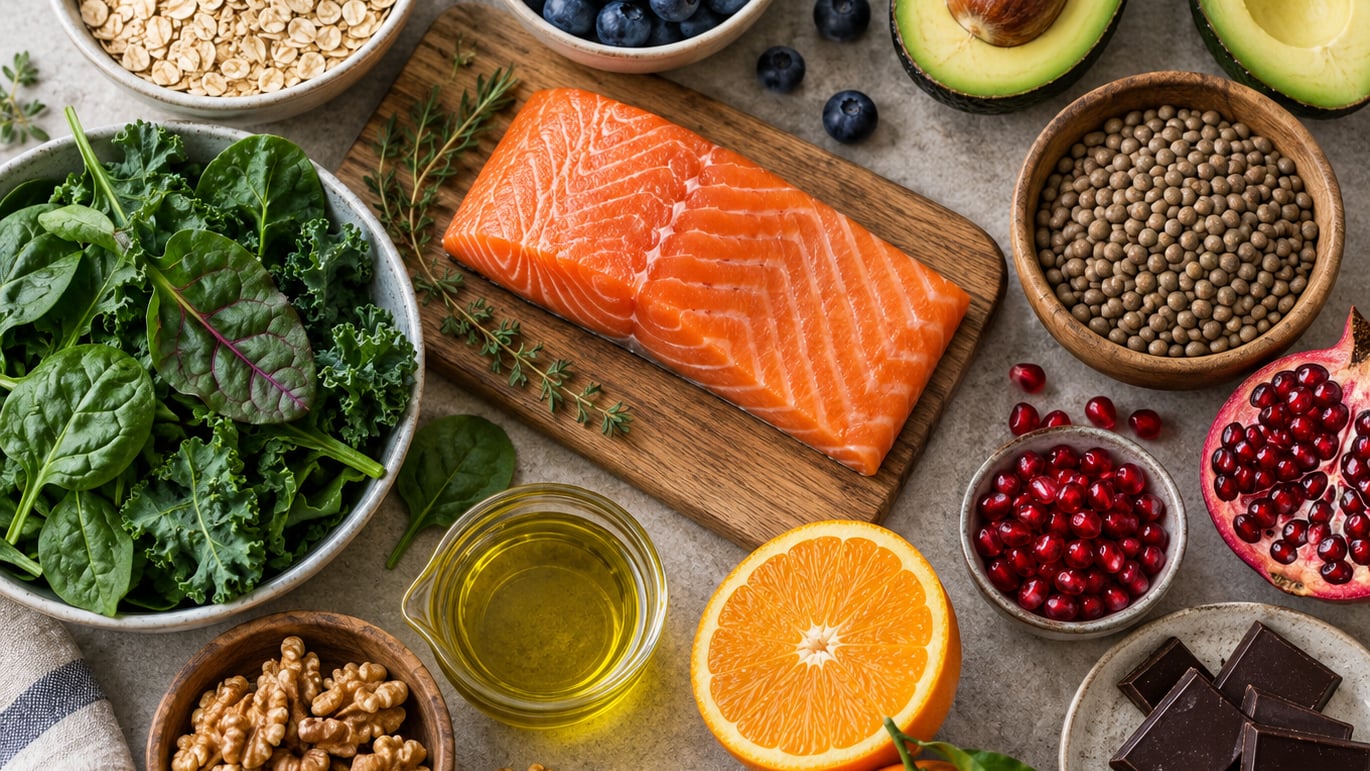
Foods that are good for heart health are mostly whole, minimally processed things: vegetables and fruit, whole grains, beans and lentils, fatty fish, nuts, and unsaturated plant oils. What makes them protective is not one magic ingredient but a bundle of fiber, unsaturated fats and minerals that together steady blood pressure, keep cholesterol in check and dial down inflammation.
No single food repairs a damaged heart, and “superfood” is a marketing word rather than a medical category. The research picture is about patterns, which is why the Mediterranean and DASH eating patterns keep coming up in cardiology guidance. This list is updated for 2026 and built for everyday kitchens, not special occasions.
Table of Contents
Foods That Are Good for Heart Health at a Glance
The table below pairs each food with the nutrient that does the work, the role it plays most usefully, and one realistic serving idea. None of these portions require cooking skills most people lack.
| Food | Key nutrient | Most useful role | Simple serving idea |
|---|---|---|---|
| Oats | Beta-glucan soluble fiber | Lowers LDL cholesterol | Half a cup of dry oats, cooked, with berries |
| Fatty fish | Omega-3 fats (EPA and DHA) | Triglycerides and inflammation | One 4 oz cooked fillet, twice a week |
| Blueberries | Anthocyanins, fiber, vitamin C | Polyphenols and blood-vessel function | A handful over plain yogurt |
| Avocado | Monounsaturated fat, fiber, potassium | Replaces saturated fat | Half a fruit on whole-grain toast |
| Beans and lentils | Soluble fiber, plant protein, magnesium | Cholesterol and fullness | A quarter cup cooked in soup or chili |
| Leafy greens | Folate, potassium, magnesium, vitamin K | Blood-pressure regulation | Two cups raw or one cup cooked, most days |
| Nuts | Unsaturated fats, magnesium, fiber | Snacking without saturated fat | One ounce, about a quarter cup |
| Olive oil | Monounsaturated fat, polyphenols | Swaps for butter and lard | One to two tablespoons in a dressing |
| Whole grains | Fiber, B vitamins, magnesium | Replaces refined grains | Half your plate at lunch and dinner |
| Citrus fruit | Vitamin C, potassium, pectin fiber | Blood pressure and immune support | A whole orange or grapefruit, not juice |
| Berries and pomegranate | Polyphenols, anthocyanins, fiber | Color and plant compounds | Arils or frozen berries in a grain bowl |
| Dark chocolate | Flavanols | A moderate, mindful treat | An ounce of 70% cocoa or higher |
How to fit these foods into meals you already eat
Pick two or three from this list and build them into breakfast, lunch and dinner before adding anything new. Most people get there fastest by swapping rather than adding: brown rice for white, olive oil for butter, a can of beans for ground meat.
If fiber is where your diet falls short, our guide to 14 foods high in prebiotic fiber is a good second pass, because fiber is the single nutrient most Americans under-consume.
1. Oats
Oats contain beta-glucan, a soluble fiber that binds cholesterol in the gut so it leaves the body rather than entering the bloodstream. The effect is modest and consistent, and it is why oat products carry one of the few heart-health claims allowed on food labels in the US.
In practice: cook half a cup of dry rolled oats on weekday mornings, or build overnight oats the night before. Oat flour works for pancakes and quick breads if you want the fiber without the texture. Granola and instant flavored oatmeal are usually the least useful options, because added sugar and sodium often outweigh what the oats contribute.
2. Fatty Fish
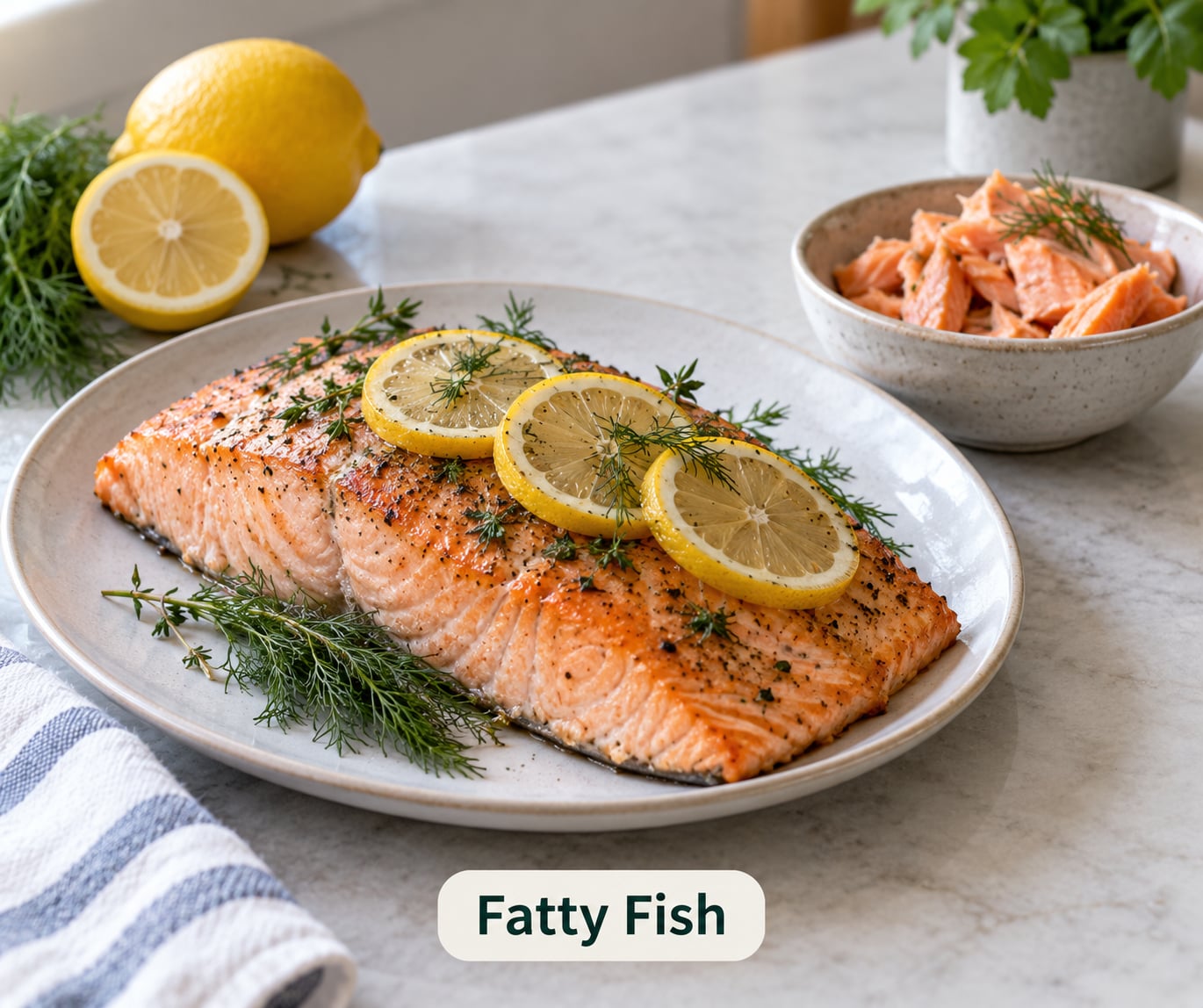
Salmon, sardines, trout, mackerel and herring supply omega-3 fatty acids, specifically EPA and DHA, plus high-quality protein. Those fats are associated with lower triglyceride levels and lower markers of chronic inflammation, both of which are tied to cardiovascular risk.
Dietary Guidelines for Americans suggest about two servings of seafood per week, roughly 4 ounces each. That size is close to a deck of cards. Canned sardines and mackerel are an inexpensive, protein-rich version of the same idea, though canned varieties can be high in sodium, so rinsing under cold water helps.
If you are pregnant or breastfeeding, follow the FDA advice of eating 8 to 12 ounces of low-mercury fish per week and avoiding shark, swordfish, king mackerel, marlin, tilefish, orange roughy and bigeye tuna. Your doctor can confirm what fits your situation.
3. Blueberries
Blueberries are one of the most accessible sources of anthocyanins, the pigments that give them their color, along with fiber and vitamin C. Those plant compounds appear to support blood-vessel function and reduce oxidative stress, though the honest framing is that blueberries fit a heart-healthy pattern rather than acting as a treatment.
They freeze well and are just as useful frozen as fresh. The easiest servings are a spoonful over plain yogurt, folded into oatmeal, tossed into a salad with feta and walnuts, or added in the last minute to a pan of pancakes.
4. Avocado
Avocado brings together monounsaturated fat, soluble and insoluble fiber, and potassium in a single portable package. Its real value shows up in what it replaces: sliced onto toast instead of butter, or mashed into guacamole in place of a sour-cream-based dip.
It is calorie-dense, so a half a fruit is a sensible portion for most people and a whole one is a lot on its own. If you buy them often, ripen on the counter and refrigerate once soft, which buys you a few extra days.
5. Beans and Lentils
Beans, lentils, chickpeas and peas supply soluble fiber, plant protein, folate, magnesium and iron with very little saturated fat. Because the fiber comes packaged with protein and minerals, beans are one of the few foods that fill several nutritional gaps in a single bowl.
A quarter cup of cooked beans counts as a serving, and prepared products like hummus and lentil soup are just as valid as the dried version. Canned beans that you rinse and drain are usually a fine choice; dried or no-salt-added cans cost more and take more time. Canned beans and lentils are worth pairing with our prebiotic fiber food guide for the full gut-side picture.
6. Leafy Greens
Spinach, kale, collards, Swiss chard and arugula bring folate, potassium, magnesium, vitamin K, fiber and a small amount of nitrates to the plate. That combination is part of why the DASH diet, which is built on vegetables, fruit and low-fat dairy, consistently ranks among the strongest patterns for blood-pressure outcomes.
Aim for two cups raw or one cup cooked on most days, and rotate rather than repeat: kale in soups, spinach in eggs, arugula under beans. If you take warfarin, keep your leafy-vegetable intake consistent and tell your prescriber, because vitamin K interacts with the drug.
Magnesium is the mineral that quietly shows up in greens, beans and nuts alike; our guide to magnesium-rich foods breaks down what it actually does.
7. Nuts
Walnuts, almonds, pistachios, cashews and hazelnuts are built around unsaturated fats, with fiber, magnesium and vitamin E layered in. Walnuts in particular stand out for their high alpha-linolenic acid content, a plant omega-3.
One ounce, about 28 grams or a quarter cup, is the portion most guidance uses, and it is roughly a small handful. That works as a topping on yogurt or oatmeal, a base for a trail mix with dried fruit, or two spoonfuls of natural nut butter on an apple slice. Candy-coated and heavily salted versions add sugar and sodium back in, so plain wins.
8. Olive Oil
Extra-virgin olive oil is the practical lever for cutting saturated fat without changing the way food tastes. Its monounsaturated fat and polyphenols have been studied in the context of the Mediterranean pattern, which is one of the best-supported dietary approaches for cardiovascular outcomes.
Use it in dressings, drizzled over vegetables and beans, or as the fat for roasting at moderate temperatures. Keep a bottle by the stove, because olive oil you own gets used and olive oil in the back of the fridge does not. In swaps, it beats butter, lard, coconut oil and shortening for everyday cooking.
9. Whole Grains
A meta-analysis of 12 studies published in the American Journal of Clinical Nutrition found that people eating whole grains daily had roughly 26% lower risk of coronary heart disease than those eating little or none. Oats, barley, brown rice, quinoa, farro and whole-wheat bread all qualify.
The test is simple: whole grain, or something close to it, should be the first ingredient on the label. Look for the words whole, bran and germ, and skip anything that lists refined flour first while touting fiber on the front of the box. A meta-analysis also links higher folate intake to about 20% lower stroke risk, which is another reason greens and legumes show up here.
For more on telling real nutrition science from marketing, read how to tell good nutrition advice from hype.
10. Citrus Fruit
Oranges, grapefruit, lemons, limes and tangerines supply vitamin C, potassium, folate and soluble fiber called pectin, which works on cholesterol much the way oat beta-glucan does. A medium orange covers a good chunk of a day’s vitamin C needs before breakfast is finished.
Whole fruit beats juice here, because juicing removes most of the fiber and concentrates the sugars. Use citrus segments over yogurt, zest into salad dressings, squeeze over roasted vegetables, or make a simple vinaigrette with olive oil. Grapefruit interacts with several common medications, including certain statins and blood-pressure drugs, so check with your pharmacist if you eat it regularly.
11. Berries and Pomegranate
Beyond blueberries, strawberries, raspberries, blackberries and pomegranate all add fiber and plant compounds, and they make an ordinary bowl of oatmeal or salad look like someone thought about it. Pomegranate arils bring polyphenols plus a fair amount of tartness, so a spoonful balances savory grain bowls nicely.
Frozen berries are picked and frozen at peak and are the better choice when fresh ones are expensive or soft. If you want the fiber and the color, avoid sweetened dried fruit, which concentrates sugar into a small serving.
12. Dark Chocolate
Dark chocolate is the one indulgence on this list with actual cardiovascular data behind it, because cocoa flavanols improve endothelial function in controlled trials. Look for 70% cocoa or higher on the label; milk chocolate and most candy bars sit lower on cocoa and higher on sugar and saturated fat.
Portion still matters. An ounce, roughly 20 to 30 grams, is a normal serving and enough to pair with walnuts or a piece of fruit. Treat it as food rather than a supplement, and if it feels easier to judge claims by the company behind them, that skepticism is well placed.
Frequently Asked Questions
What is the absolute best food for your heart?
No single food tops the list, because the evidence is strongest for whole eating patterns rather than one ingredient. If you want the closest thing to an answer, fatty fish such as salmon and sardines combines omega-3 fats with high-quality protein, and it is one of the few foods most heart-healthy diets explicitly ask you to eat twice a week. Build the rest of the plate around vegetables, fruit, whole grains, beans, nuts and unsaturated oils.
What are the 7 superfoods for your heart?
If you want a short version, take leafy greens, oats, berries, fatty fish, nuts, beans and lentils, and olive oil or avocado. That covers the nutrient categories that matter most: soluble fiber, unsaturated fats, omega-3 fats, potassium, magnesium and polyphenols. Superfood is a marketing term with no official definition, so treat the label as marketing and the nutrient content as the reason to eat the food.
What three foods do cardiologists say to avoid?
The three that come up most often are processed meat such as bacon, deli slices and hot dogs; foods with trans fat like partially hydrogenated oils in some baked and fried items; and foods high in added sugar and sodium, including sugary drinks and heavily packaged snacks. Alcohol is worth discussing too, since red-wine claims are contested and current guidance does not recommend starting to drink for heart benefits.
What foods can I eat to heal my heart?
No food heals a diagnosed heart condition, and anyone with heart disease should follow the treatment plan from their cardiologist rather than a diet. What food can do is support recovery alongside medication, by helping blood pressure, cholesterol and weight stay in better ranges. Your doctor or a registered dietitian can turn this list into a plan that fits your diagnosis, your medications and your budget.
What drink calms the heart?
Water is the default answer, and it is a good one. Unsweetened tea and coffee are also fine in moderation, and both bring polyphenols along. Green tea in particular has been studied for endothelial effects, though results are modest. What is not recommended is starting alcohol for heart health; research on red wine is inconsistent, and alcohol raises blood pressure and adds calories for many people.
Please treat this as general information, not medical advice. If you have chest pain, shortness of breath or any other warning sign, contact a healthcare professional or emergency services right away.
Conclusion
Start with two or three foods from this list and put them where you already eat, not in a separate “healthy” meal you will abandon by week two. Oats at breakfast, beans in the soup, salmon twice in the week’s dinners, olive oil where the butter used to be. Foods that are good for heart health work as a pattern of many small choices, and the pattern is what the research actually supports.