
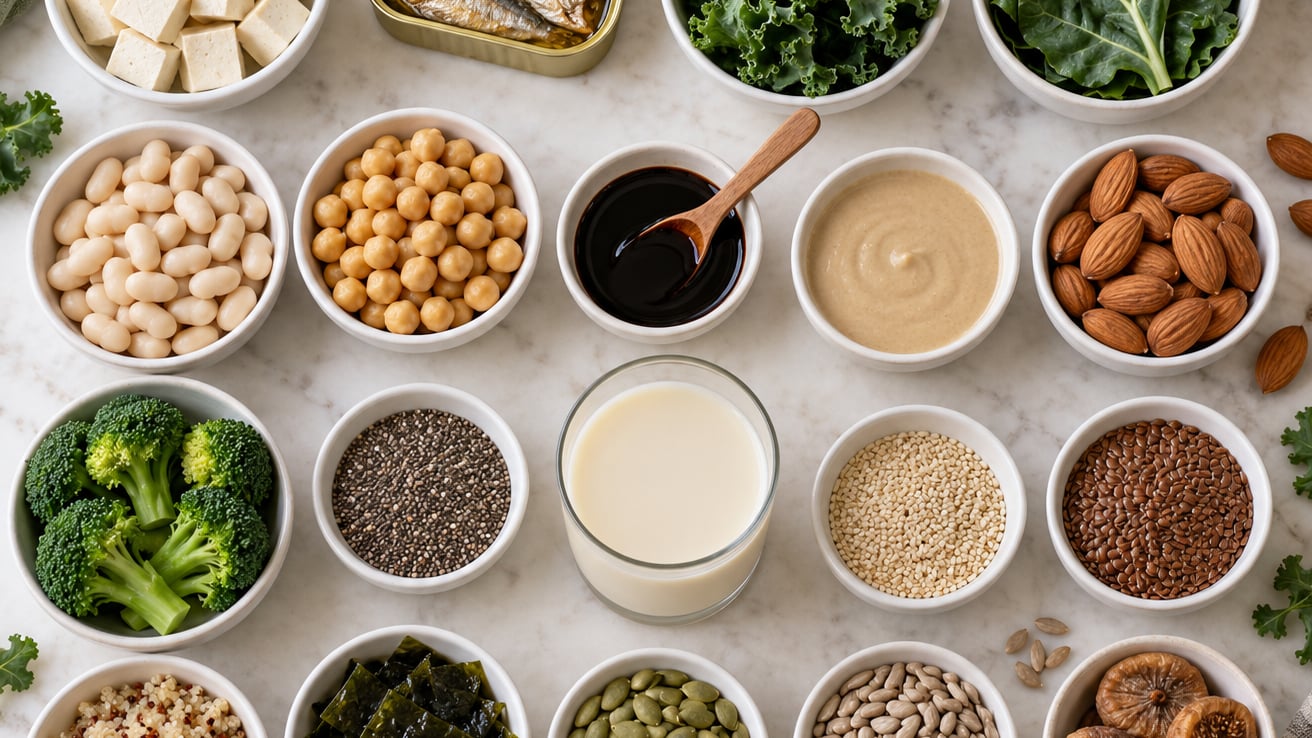
If you skip dairy, calcium does not have to go with it. Calcium-set tofu, fortified soy milk, canned sardines eaten with their soft bones, and dark leafy greens can each deliver a meaningful share of a day’s calcium, and pairing several of them gets you to the 1,000 mg most adults under 51 need. The catch is that serving sizes and product labels decide the real number, so here is where the milligrams actually come from.
Estimates below come from USDA FoodData Central values, and figures for fortified products vary by brand and by how much sediment is in the bottom of the carton. Treat them as a planning guide, then check the label on what you actually buy. Updated for 2026.
Table of Contents
- Foods High in Calcium Without Dairy at a Glance
- 1. Calcium-Set Tofu
- 2. Canned Sardines with Bones
- 3. Canned Salmon with Bones
- 4. Bok Choy
- 5. Kale
- 6. Collard Greens
- 7. Turnip Greens
- 8. Mustard Greens
- 9. Broccoli
- 10. Blackstrap Molasses
- 11. White Beans
- 12. Chickpeas
- 13. Tahini
- 14. Almonds
- 15. Calcium-Fortified Soy Milk
- Frequently Asked Questions
- Conclusion
Foods High in Calcium Without Dairy at a Glance
The table uses realistic portions, the ones people genuinely eat, rather than the inflated serving sizes that make nutrition panels look generous. Fortified items are marked as brand dependent because that is exactly how they behave.
| Food | Realistic serving | Approx. calcium | Dietary note |
|---|---|---|---|
| Calcium-set tofu | 1/2 cup (126 g) | 275-553 mg | Check the coagulant on the label |
| Fortified soy milk | 1 cup | 200-480 mg | Brand dependent, shake the carton |
| Canned sardines with bones | 1/2 cup drained | 325-382 mg | Bones are soft and edible |
| Canned salmon with bones | 1/2 cup drained | about 300 mg | Only the canned version counts |
| Collard greens, cooked | 1 cup | about 268 mg | Low oxalate, well absorbed |
| Kale, cooked | 1 cup | about 180 mg | Around half the calcium is absorbable |
| Bok choy, cooked | 1 cup | about 160 mg | Low calorie, low oxalate |
| White beans, cooked | 1 cup | 160-161 mg | Calcium plus protein and fiber |
| Chickpeas, cooked | 1 cup | about 150 mg | Oxalate lowers absorption somewhat |
| Broccoli, cooked | 1 cup | about 60 mg | Modest, but high absorption |
| Turnip greens, cooked | 1 cup | about 100 mg | Underrated, cheap, freezes well |
| Mustard greens, cooked | 1 cup | about 105 mg | Peppery, braises down in volume |
| Blackstrap molasses | 1 tablespoon | about 180 mg | Unsulfured, strong flavour |
| Tahini | 1 tablespoon | about 100 mg | Easy to overshoot, measure it |
| Almonds | 1 ounce (23 nuts) | about 76 mg | Modest per calorie, high oxalate |
1. Calcium-Set Tofu
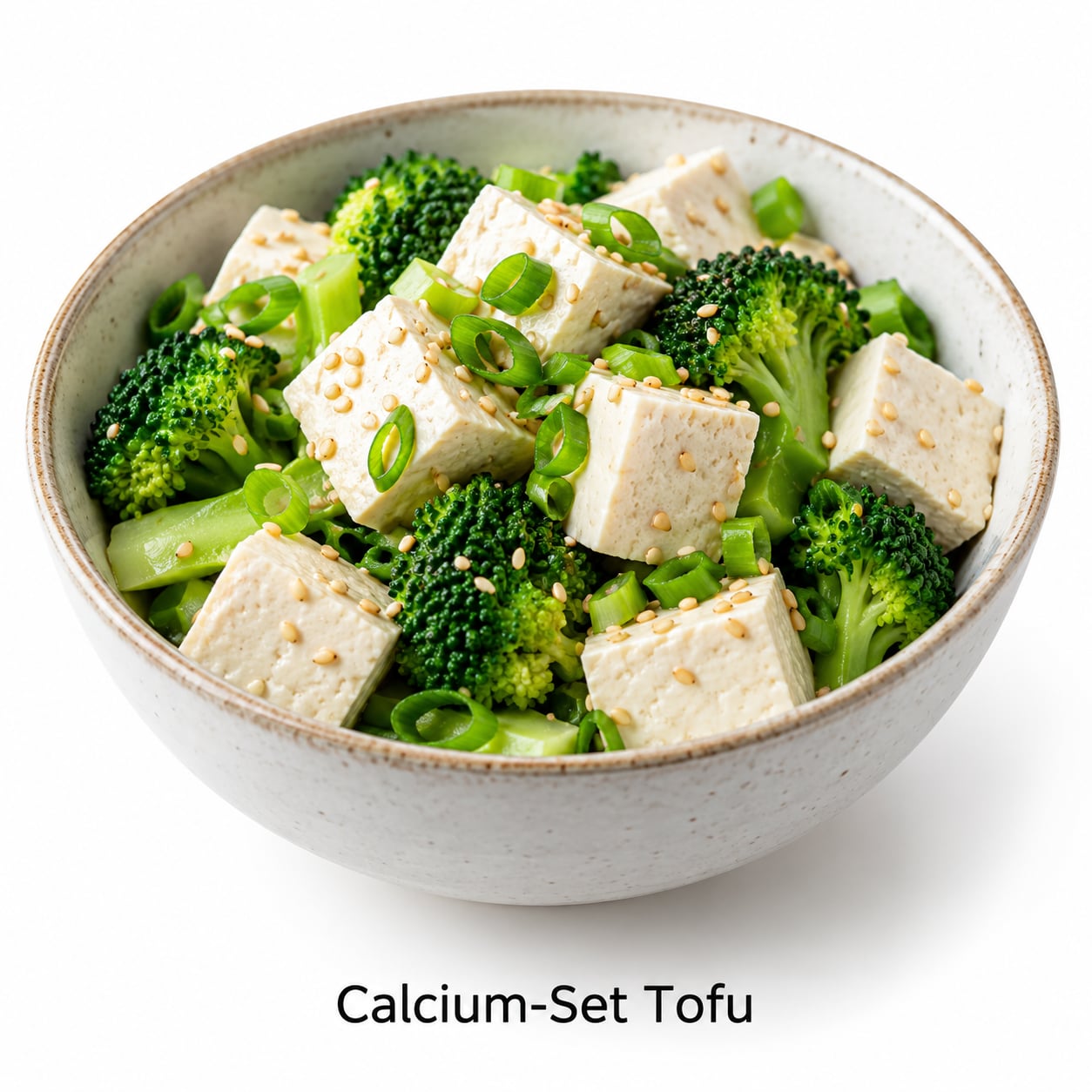
Calcium-set tofu is the most reliable dairy-free calcium source most people will find in a normal grocery store, and the spread between products is enormous. Research puts it anywhere from 275 mg to 553 mg for a half cup. That gap is not marketing noise, it is the coagulant.
How to tell if a block of tofu is calcium-set
Look for calcium sulfate in the ingredient list, sometimes called calcium sulphate depending on the label. Tofu set with magnesium chloride or nigari delivers very little calcium. Both look, smell, and taste identical, which is exactly why people end up disappointed.
Extra-firm tofu is usually pressed, which concentrates the calcium per weight, so a 3-ounce block often beats a soft block in a stir-fry. Serve it cubed over rice with broccoli, a spoon of tahini dressing, and scallions, or add it to a soup at the end so the edges stay intact. One habit does most of the work here: buying the same calcium-set brand every time instead of grabbing whatever is on sale.
2. Canned Sardines with Bones
Sardines pack roughly 325 to 382 mg of calcium into a drained half cup, and a large share of it sits in the small soft bones that dissolve as you chew. Fresh sardines eaten whole will do the same, but canned ones are more convenient and far more available.
Build a bowl with a drained half cup of sardines, cooked grains, lemon, olive oil, and thinly sliced red onion. People who have never bought sardines are usually surprised by how little they dislike once lemon and grain are involved. Watch the sodium, since canned fish carries a good amount, and pick varieties without added salt when you can.
3. Canned Salmon with Bones
Canned salmon is the quieter version of the sardines trick. Eat the small bones and a half cup of drained canned salmon lands around 300 mg, where boneless fresh salmon fillet gives you a tiny fraction of that by comparison. The difference surprises people who assume the two are nutritionally interchangeable.
The easiest use is flaking canned salmon over white beans and wilted greens, which turns three of the foods on this list into one dish. Fresh salmon is still an excellent source of omega-3 fat and vitamin D, so keep eating it. Just do not count on it for calcium. If you eat fish often, vary the types, and check current guidance on mercury advisories for the species you buy.
4. Bok Choy
A cooked cup of bok choy gives roughly 160 mg of calcium for about 20 calories, which makes it one of the best calcium-to-calorie ratios on this list. Regular bok choy has thick white stalks, while baby bok choy is harvested small, sweeter, and quicker to cook.
Halve the stalks lengthways, slice the greens, and stir-fry over high heat for two or three minutes with garlic and a splash of water. Add them to soup in the last few minutes so the leaves stay bright rather than turning to mush. Because bok choy is low in oxalate, a good share of that calcium is actually available to you.
5. Kale
Cooked kale delivers about 180 mg of calcium per cup, and one analysis puts nearly half of it as absorbable, which is a much better rate than spinach manages. Curly kale holds its texture and suits soups and chips, while Tuscan or lacinato is flatter, more tender, and better in a raw salad.
For the salad, strip the leaves from the stems, slice them thin, add a pinch of salt, and massage with your fingers for a minute. The leaves soften and shrink by about half. Dress with lemon, olive oil, and a spoonful of tahini, and add white beans to turn it into a full meal. Frozen chopped kale works fine here and skips the prep entirely.
6. Collard Greens
Collards are the strongest of the common dark greens here, about 268 mg of calcium per cooked cup, and raw leaves run a little higher still per 100 g because cooking draws water into the plant. Raw leaves shred easily into slaw, while cooked ones collapse into a silky texture that works with beans and garlic.
Sauté a chopped bunch of collards with four cloves of sliced garlic and half a can of rinsed white beans, finishing with lemon and black pepper. The beans cover the bitterness that turns people off collards. If cooking is not happening most nights, our guide to eating more vegetables without cooking every night covers low-effort prep methods for greens like this.
7. Turnip Greens
Most people eat the turnip and throw away the greens, which is backwards from a calcium standpoint. A cooked cup of turnip greens holds roughly 100 mg, and they are inexpensive and freeze well in bags.
Trim the stems, chop the leaves, and sauté with a teaspoon of toasted sesame oil until they soften, then add cubed calcium-set tofu for a plate that clears 250 mg. The flavour is mild with a faint bitterness that disappears with sesame, garlic, or a splash of vinegar.
8. Mustard Greens
A cooked cup of mustard greens gives about 105 mg of calcium. Curly or common mustard greens have a sharp peppery bite that softens considerably when braised, while milder varieties like tendergreen or baby mustard are gentler and better suited to salads.
Braise a chopped bunch with a sliced onion and a splash of liquid until it collapses, roughly 15 minutes, then squeeze over lemon. Serve it alongside white beans and a whole grain and you have a plate that covers greens, legumes, and calcium in one go. The volume drop is dramatic, so start with more than you think you need.
9. Broccoli
Broccoli contributes about 60 mg of calcium per cooked cup, which is modest next to the greens above. What makes it worth eating anyway is absorption: analyses put broccoli’s usable calcium at roughly half the amount listed, and steamed florets also bring vitamin C and vitamin K.
Roast at high heat with olive oil and salt until the edges brown, or steam just until tender with a bite left in the florets. It pairs naturally with calcium-set tofu in a stir-fry. Broccoli is one source among several rather than a strategy on its own, so treat it as the vegetable that happens to do two jobs instead of the vegetable carrying your calcium target.
10. Blackstrap Molasses
Blackstrap molasses is the one significant plant-based calcium source most lists leave out. A tablespoon runs about 180 mg, and it comes as a thick, dark syrup rather than anything resembling a food group. Regular molasses is processed differently and contains considerably less calcium.
Choose an unsulfured product, then use it in places where the bitterness works: stirred into black bean stew, oatmeal, or a smoothie with calcium-set tofu and frozen banana. Measure the tablespoon rather than pouring. The flavour is intense and the sugar content is real, so this is an addition to a diet, not a drink to have daily by accident.
11. White Beans
A cooked cup of white beans supplies 160 to 161 mg of calcium along with protein and fiber, which makes them one of the few foods that cover several nutritional bases in a single scoop. Some of that calcium binds to oxalate in the beans, so less is absorbed than the label states, but the total intake still counts.
Canned beans rinsed under running water cut the sodium noticeably. Cooked from dry, you control the salt entirely and get a better texture for salads. Purée them with roasted garlic and lemon for a dip, fold them into a soup with kale and tomatoes, or mash them with tahini and serve with a whole grain. If you also need iron, how iron-rich plant foods work and how to absorb more of it covers pairing beans with vitamin C sources.
12. Chickpeas
A cup of cooked chickpeas holds about 150 mg of calcium. Like beans, chickpeas contain oxalate that binds a portion of it, so the figure on the label overstates what reaches your bloodstream, but the serving size makes up for a lot of that gap.
Hummus is the popular route, and the calcium in it depends entirely on the recipe, since tahini, chickpeas, and lemon each contribute differently and commercial jars vary widely. Roast a pan of chickpeas with paprika for a snack that travels well, or build a bowl with chickpeas, quinoa, cucumber, and a tahini-lemon dressing for a full meal.
13. Tahini
Tahini is sesame paste thinned with water, and a tablespoon gives roughly 100 mg of calcium. It is a dense source in a small volume, which also means it is easy to underestimate in a recipe.
Measure it with the tablespoon rather than the drizzle you think is a serving. Thin two tablespoons with lemon juice, water, and a little garlic for a dressing that pours over roasted cauliflower or grain bowls. Tahini is also worth pairing with a fortified soy drink if you like milk in your coffee, since it adds a few more milligrams without changing the flavour.
14. Almonds
Almonds carry about 76 mg of calcium per ounce, which is a fair amount for a snack but modest compared with the foods higher on this list. They also bring vitamin E, magnesium, and protein, and they travel without refrigeration.
An ounce is 23 almonds, which is a small closed handful, and almonds are oxalate-heavy, so some of that calcium is less available. Portion them out rather than eating from the bag, and pair them with something from the top of this list, such as a few cubes of calcium-set tofu or a bowl of yogurt-style fortified soy. If you dislike powdered supplement blends, eating nutrient-dense food without imported powders keeps the whole-food approach intact.
15. Calcium-Fortified Soy Milk
Fortified plant milks are the easiest swap for anyone who wants a drinkable calcium source. Soy milk generally leads on protein, and fortified varieties run from about 200 mg to 480 mg of calcium per cup depending on the brand. That spread makes the nutrition panel, not the front of the carton, the only thing worth reading.
Check three things. Look for calcium listed on the label with a percentage daily value, and remember that 20 percent daily value equals roughly 260 mg. Notice whether the milk is fortified with vitamin D as well, which improves how well the calcium is absorbed. Finally, note that calcium carbonate and tricalcium phosphate are both used, and settled sediment means the bottom of the carton is more concentrated than the top. Shake the carton hard for thirty seconds before every pour.
A daily bowl of fortified cereal, one cup poured over it, and a spoon of tahini yogurt on top moves past 300 mg without much effort. Watch added sugars on the flavoured versions, and note that a shake blend and a carton are not the same product. One is often not fortified at all.
Frequently Asked Questions
Are leafy greens enough to meet my calcium needs on their own?
No, not on their own. Kale, bok choy, collards, and mustard greens together could get you close across a full day, but they absorb differently, and spinach is a poor source because its oxalates block most of the calcium. Treat greens as one solid part of a varied plan rather than the entire strategy. Pair them with calcium-set tofu, fortified soy milk, or canned fish with bones.
Do I need a calcium supplement if I avoid dairy?
Most people do not, if they eat a varied diet with two or three reliable sources across the day. A supplement becomes worth discussing when intake stays low for months, during pregnancy or breastfeeding, after a bone density test, or when a clinician identifies a specific reason. Ask a doctor or registered dietitian rather than adding pills on your own, since excess calcium causes its own problems.
How do I tell if a fortified product really has enough calcium?
Read the nutrition label and look for calcium with a percentage daily value, then multiply by the amount to get milligrams. Twenty percent daily value is about 260 mg. Check whether vitamin D is added too, since that affects absorption, and expect brand-to-brand differences of more than a hundred milligrams. Shake the carton before pouring, because settled sediment concentrates at the bottom.
Why does vitamin D matter so much for plant-based calcium?
Your body absorbs calcium far better when vitamin D is available, so a calcium-rich diet can fall short if vitamin D status is low. Getting some sun helps, and many plant milks and cereals are fortified with vitamin D for this reason. A blood test is the only reliable way to know your status, which is worth asking a doctor about if you live somewhere with limited sunlight or cover most of your skin.
Where do I start if I want more foods high in calcium without dairy?
Start with one swap you already eat. Replace your usual milk with a fortified soy drink, add tofu to the stir-fry you make on Wednesdays, or keep a can of sardines in the cupboard for a twice-weekly bowl. Add a second source a few weeks later. Building two or three habits you repeat beats attempting fifteen foods at once, and the numbers here make it easy to track.
Conclusion
Pick the change that costs you the least effort. A cup of fortified soy milk at breakfast, tofu in the stir-fry, collards with white beans on a weeknight, or sardines on toast twice a week will each add a real number, and three of them together put most adults inside the 1,000 mg target without thinking about it daily.
Individual calcium needs vary with age, life stage, medication, and bone health, and a doctor or registered dietitian can tell you what your own target should be. If you are pregnant, breastfeeding, or caring for a toddler who refuses milk, that conversation is worth having before guessing.