
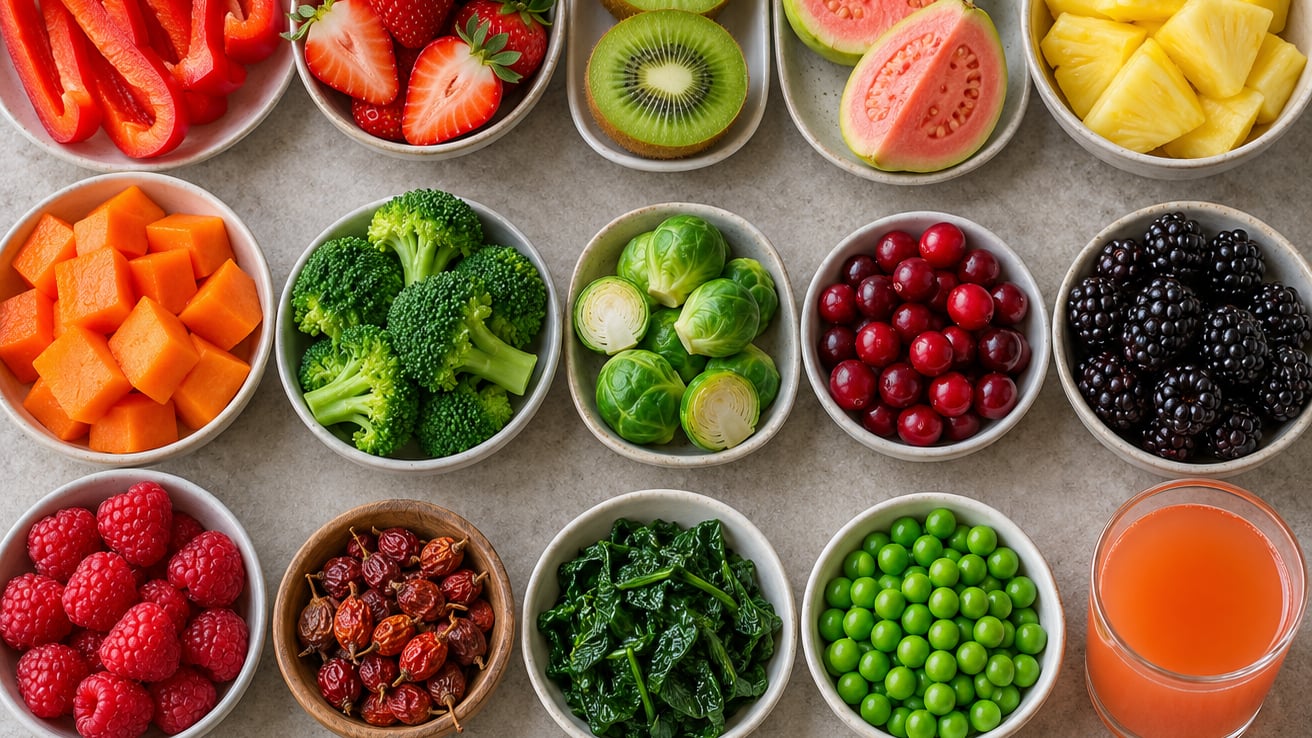
Oranges get all the attention, but they lose the vitamin C comparison to a dozen other everyday foods. If you are hunting for foods high in vitamin C besides oranges, a single medium orange gives you roughly 70 mg, while one red bell pepper, a cup of strawberries, or a cup of guava delivers considerably more. Vitamin C, also called ascorbic acid, is a water-soluble antioxidant that supports collagen and connective tissue, helps your gut absorb iron from plants, and keeps immune function running normally.
The U.S. recommended daily allowance is 75 mg for women and 90 mg for men, and smokers get an extra 35 mg. Most people who eat a varied diet clear that bar without thinking about it. Below, fifteen sources that beat the orange on a per-serving basis, with the serving size that makes the number meaningful.
Table of Contents
- Foods High in Vitamin C Besides Oranges at a Glance
- 1. Red Bell Pepper
- 2. Strawberries
- 3. Kiwi
- 4. Guava
- 5. Pineapple
- 6. Papaya
- 7. Broccoli
- 8. Brussels Sprouts
- 9. Cranberries
- 10. Blackberries
- 11. Raspberries
- 12. Rose Hip
- 13. Cooked Kale, Collard Greens, or Mustard Greens
- 14. Fresh or Unsweetened Canned Green Peas
- 15. Acerola Cherry
- Frequently Asked Questions
- Conclusion: Start With One Food You Already Enjoy
Foods High in Vitamin C Besides Oranges at a Glance
Every figure below is an estimate for the serving shown, drawn from USDA reference data and rounded. Fresh, frozen, canned and cooked forms of the same food can differ by a lot, so treat the numbers as a guide rather than a promise.
| Food | Typical serving | Vitamin C (approx.) | Flavor profile | Best used as |
|---|---|---|---|---|
| Red bell pepper | 1 cup raw, chopped | 120 mg | Sweet, juicy, mild | Snacks, salads, stir-fries |
| Strawberries | 1 cup halved | 90 mg | Sweet with a light tart edge | Breakfast bowls, smoothies |
| Kiwi | 1 medium fruit | 45 mg | Tangy, soft center | Snacking, yogurt, salads |
| Guava | 1 medium fruit | 90 mg | Floral, very fragrant when ripe | Salsas, smoothies, salads |
| Pineapple | 1 cup chunks | 50 mg | Sweet-tart, tropical | Grilling, fruit salads |
| Papaya | 1 cup cubed | 90 mg | Mild, soft, mellow | Salads, smoothies, wraps |
| Broccoli | 1 cup cooked | 65 mg | Green, savory, mild when steamed | Steaming, roasting, pasta |
| Brussels sprouts | 1 cup shredded raw | 60 mg | Nutty, sturdy | Slaws, roasting, sauteing |
| Cranberries (fresh) | 1 cup whole | 30 mg | Sharply tart | Sauces, oatmeal, grain dishes |
| Blackberries | 1 cup | 20 mg | Sweet-tart, deep colored | Snacking, baking, freezing |
| Raspberries | 1 cup | 25 mg | Delicate, sweet-tart | Cereal, yogurt, no-cook desserts |
| Rose hip | 1 tbsp dried, or a cup of tea | Often near 100 mg, varies widely | Tart, floral | Tea, syrup, supplements |
| Kale, collards or mustard greens | 1 cup cooked | 20 mg to 30 mg | Earthy, peppery, leafy | Soups, sautes, sauces, grains |
| Green peas | 1 cup cooked | 10 mg | Green, mildly sweet | Rice dishes, pasta, grain bowls |
| Acerola cherry | 1 oz juice or concentrate | 40 mg to 50 mg | Intensely tart | Juice, syrup, frozen additions |
How We Compared Foods High in Vitamin C Besides Oranges
I ranked these by vitamin C per portion you would realistically eat, not per 100 grams in a lab flask. A food that scores 400 mg per 100 g but takes an hour to prepare loses to one that gives you 90 mg in a handful of seconds, and that is the comparison that matters on a Tuesday afternoon.
Availability, cost and how well the food keeps also played a role. This is not a medical ranking, and it is not a claim that anyone needs a supplement. If you have a specific health condition or follow a prescribed diet, a registered dietitian can point you to what fits your situation.
1. Red Bell Pepper
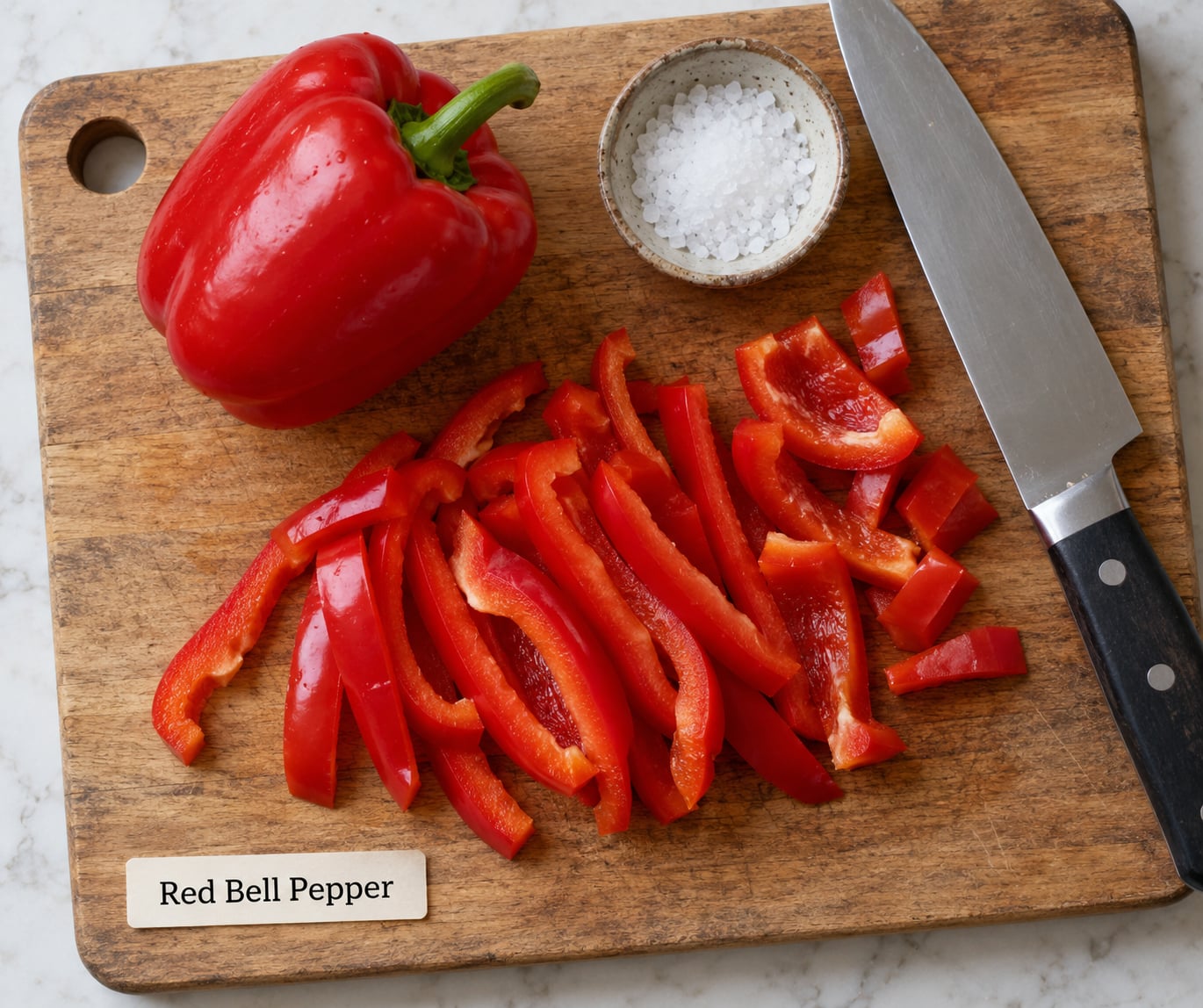
Raw red bell pepper is the single most practical upgrade over the orange. One cup of chopped raw pepper holds roughly 120 mg, about 130 percent of the 90 mg daily value, and the flavor is sweet enough that picky eaters rarely object.
Slice it thin for sandwiches, toss strips into a salad, or eat cold with a little salt as a snack that travels well to work. Roasting softens the edges and brings out a deeper sweetness, though it does trim some of the vitamin C.
Long storage is the other leak. Cut pepper kept a few days loses a meaningful share of its vitamin C, so slice it the night before rather than on Sunday for a Thursday lunch. Reading about 12 foods that help skin look less dull is worth a look if you like the collagen angle, since vitamin C is a necessary building block for collagen and it is not something your body makes on its own.
2. Strawberries
A cup of halved strawberries gives you about 90 mg of vitamin C, which is more than a whole medium orange and about the same as a cup of the fruit in any form you would actually eat.
They are the easiest of this list to work into a day. Halve a handful over oatmeal or yogurt, blend them into a smoothie, or fold them into a spinach salad with a balsamic dressing so the red berries show against the leaves.
Storage is where strawberry quality usually fails. Keep them unwashed in the refrigerator and rinse right before eating, since water sitting on the skin encourages mold and softens the flesh. If the surface already shows a bloom or a soft patch, work with what is left and skip the rest.
3. Kiwi
One medium kiwifruit holds around 45 mg, or roughly half the daily value, and it is the rare fruit that is sweet, portable and non-negotiable on the counter for a week at a time.
The flavor is more tangy than most people expect, especially on the first bite. Spoon it out with a spoon, slice it into halves, or fan it through a bowl of yogurt with a spoonful of oats to offset the sharpness.
Sliced kiwi also holds up well in a fruit salad with melon and berries. If you have never tried it in a green salad, a few thin slices with mint and a lime dressing balance the sourness in a way that surprises most first-time cooks.
4. Guava
Guava is where the comparison stops being close. A single medium guava can carry around 90 mg, and a full cup of sliced pieces reaches well past 150 mg, making it one of the highest everyday vitamin C fruits anywhere.
The trick is ripeness. A good guava is soft to the touch, fragrant at the neck, and yellow-green with a blush; a hard pale one tastes like nothing much and holds far less of what you are after.
Cut it in half and scoop the pink flesh with a spoon, or dice the whole fruit for a salad with onion and cilantro. Guava also makes a lively salsa when combined with tomato, onion, lime and a little heat, and it blends smoothly into smoothies where a banana would usually go.
5. Pineapple
One cup of fresh pineapple chunks gives roughly 50 mg, a bit over half the daily value, and it comes with fiber and manganese that most people forget to credit it with.
Chunks eaten cold are the simplest use. Grilled pineapple takes on a deeper caramel flavor in a few minutes and pairs well with black beans, grilled corn or fresh mint.
Fresh pineapple cuts down on the added sugar in juice, and the fiber keeps you fuller than the juice does. Vitamin C falls a little as fruit sits after cutting, so buy it the day you plan to eat it rather than early in the week.
6. Papaya
Papaya delivers close to 90 mg per cup of cubes. The texture is soft and forgiving, and the flavor is mild enough that it slips into dishes other fruit would overpower.
A ripe papaya gives slightly when pressed and smells sweet at the stem end. Under-ripe versions are firm, bland and low on flavor, so leave them on the counter for a day or two unless the recipe calls for the firmer flesh.
Serve cubes with lime and a pinch of salt. Papaya also pairs naturally with mango in a fruit salad, blends into smoothies without needing much sweetness, and works in savory salads or wraps alongside cucumber, greens and a light vinaigrette.
7. Broccoli
One cup of cooked broccoli holds around 65 mg, about 70 percent of the daily value, which makes it the most useful vegetable on this list for people who already eat vegetables most days.
Preparation decides how much of that survives. Light steaming and quick roasting preserve considerably more than boiling into mush, and the vegetable keeps a firmer bite and a brighter color. It is also good raw, shredded into slaw with a yogurt or oil dressing.
Broccoli is easy to fold into food people already eat. Chop it into soups, pasta, grain bowls and stir-fries in the last few minutes so it stays crisp. For more ideas on foods that carry their weight during the winter months, we covered 12 foods that support immune health through winter.
8. Brussels Sprouts
A cup of shredded raw Brussels sprouts gives about 60 mg, and roasting them until the outer leaves brown does not strip that advantage in any way that matters for a normal plate of food.
The reputation problem is real. Small amounts hit the palate hard, but slicing them thin, roasting at high heat, or sauteing them quickly with garlic and lemon turns the same vegetable into something most people will eat twice a week.
Shredded raw sprouts make a convincing stand-in for slaw with apple and a mustard dressing. They also take well to a pan with grains and mushrooms. Anyone building out their fiber intake alongside vitamin C can see how the two overlap in 14 foods high in prebiotic fiber for gut health.
9. Cranberries
Fresh cranberries are one of the few entries on this list where the obvious form is the wrong one. A cup of whole fresh berries carries roughly 30 mg, while sweetened dried cranberries contain very little vitamin C at all because the vitamin is lost in drying and the sugar is added back in.
The tartness of fresh cranberries is intense, and most people use them in cooking rather than straight from the bag. A sugar-free sauce over roasted meat, a handful folded into oatmeal, or a few in a wild rice dish all work.
Neither dried sweetened cranberries nor cranberry juice cocktail is a substitute for vitamin C food. If the label lists a long ingredient line that starts with sugar, skip it and pick a different berry.
10. Blackberries
One cup of blackberries provides about 20 mg of vitamin C, which is modest next to guava but still a meaningful quarter of the daily value, and they are among the most approachable fruits on the list for adults and kids.
The flavor runs sweet with a tart edge, and the color runs deep purple, which makes them the most useful berry for freezing. Spread them on a baking sheet in a single layer, freeze, then bag them so you get distinct berries instead of one solid block months later.
Eat them cold over cereal, blend half of them into a smoothie and fold the rest in for texture, or add them to a salad with soft greens, herbs and a light vinaigrette. Fresh blackberries are worth rinsing just before serving, and any moldy berry in the container goes for the whole bunch.
11. Raspberries
A cup of raspberries lands near 25 mg of vitamin C, close to a quarter of what most adults need in a day. The berries are soft, small and sweet-tart, and they take on other flavors without disappearing.
They are the default topping for breakfast bowls: cereal, yogurt, oatmeal, pancakes, and overnight oats all accept them. Fold them into oat bars before baking, or use them in no-cook desserts where you want color and structure without heat.
Raspberries spoil quickly once washed, so buy them dry, keep them in the refrigerator in their container, and rinse right before they go on the plate. Waiting too long after washing turns them soft and leaky, and the shelf life drops sharply in a warm kitchen.
12. Rose Hip
Rose hip is the small, tomato-shaped fruit that grows on rose bushes after the flowers fade, and it is the single most vitamin C-dense ingredient on this list by weight. You will rarely meet it fresh in a U.S. grocery store, though.
In practice it turns up dried, as whole hips, tea, syrup or a powdered extract. A small serving of dried hip or a strong cup of rose hip tea often lands somewhere near 100 mg of vitamin C, but the spread between products is wide enough that the label is the only honest source for a number.
Check for added sugar, since sweetened rose hip drinks can be mostly sugar, and skip anything that leads with a long sweetener list. Traditional teas and syrups have a tart flavor that works well with ginger and lemon, and vitamin C content varies with ripeness, processing and storage time.
13. Cooked Kale, Collard Greens, or Mustard Greens
These three leafy greens are not as dense per gram as guava, but cooked they are dependable. One cup of cooked kale sits near 20 mg, collard greens land in the same neighborhood, and cooked mustard greens run closer to 30 mg with a peppery bite.
Kale and collards go quiet when cooked and take on other seasoning. Mustard greens bring a sharper, more assertive flavor that stands up to garlic, chili and vinegar.
Sauting with garlic and lemon, folding raw shredded leaves into pasta and grain bowls, blending a handful of kale into a tomato sauce, and adding any of them to soups all keep the vitamin C intact compared with long boiling. Serve them with grains and legumes for a complete plate, since vitamin C improves absorption of plant iron.
14. Fresh or Unsweetened Canned Green Peas
Green peas are not a top vitamin C food, and including them sets an honest floor. One cup of cooked peas holds around 10 mg, with fresh peas in the same range.
They earn their place by being cheap, familiar and genuinely useful to the person who needs one more vegetable in a meal. Most people will eat peas more often than they will eat Brussels sprouts, and frequency compounds over a week.
Canned peas work if you pick the no-salt-added, no-added-sugar variety and rinse them. Canned sugar peas and the sweet glazes in mixed vegetables add a surprising amount of sugar for what should be a vegetable side, so read the label.
15. Acerola Cherry
Acerola (Malpighia emarginata) is a small cherry-red fruit from the tropical Americas with an extraordinary vitamin C concentration, which is why it shows up on ingredient lists more often than in produce sections.
Fresh acerola is hard to find outside specialty importers and farmers markets, so most people meet it as juice, frozen puree, powder or a supplement. The flavor is sharply tart, closer to a cranberry than to a cherry, which is why it blends well with sweeter fruit.
When you buy acerola juice or concentrate, check three things on the label: the actual vitamin C amount per serving, the serving size, and the added sugar. Many products deliver 40 mg or more per small pour, but a sweetened version can carry more sugar than vitamin C by a wide margin.
Frequently Asked Questions
How much vitamin C do adults need each day?
U.S. guidelines set the recommended daily intake at 75 mg for adult women and 90 mg for adult men, and smokers get an extra 35 mg on top. That is a daily amount, not a per-meal target, so it is easier to hit than it sounds. One red bell pepper, a cup of strawberries or a medium guava covers it in a single sitting.
Are foods high in vitamin c better than supplements?
For most people who eat a varied diet, whole foods are the better choice. They come packaged with fiber, folate and other nutrients, and vitamin C from foods is generally absorbed easily. Supplements earn their place when a clinician finds a reason, such as a documented deficiency or a restricted diet. Talk to your doctor before taking high doses on your own.
Does cooking destroy the vitamin C in vegetables?
Heat reduces vitamin C, but the amount depends on time and water. Steaming for a few minutes keeps far more than boiling for an hour, because vitamin C dissolves into cooking water and heat breaks it down. Cutting vegetables smaller and cooking them longer both increase losses, so use the shortest cooking time that gives you the texture you want.
What is the easiest way to eat more vitamin C-rich foods?
Pick foods that need no cooking and go into meals you already eat. Raw red pepper strips in salads, berries on breakfast bowls, and frozen fruit straight into smoothies all raise your intake without adding a step. Keeping cut produce in the refrigerator at 40 F or below and washing whole fruit just before eating helps you keep what the food started with.
Can pregnant people, children, or people with medical conditions safely use these foods?
These foods are ordinary parts of a balanced diet, but needs change during pregnancy, in childhood, and with conditions such as kidney disease, hemochromatosis or a history of calcium oxalate stones. If you fall into any of those groups, or you are on a prescribed diet, ask your doctor or a registered dietitian before adjusting how much you eat.
Conclusion: Start With One Food You Already Enjoy
The practical move is not rebuilding your diet. Pick one food from this list that you already buy and eat, then add a second in a form you have never tried. Red pepper strips on weekday lunches and frozen berries in the morning smoothie will do more than any complicated plan.
Rotate sources across the week so you get vitamin C from raw produce, cooked vegetables and fruit, since the cooking method changes how much survives. Fresh, frozen and low-sugar canned options all count, and frozen fruit is often picked ripe and frozen soon after.
Food gives you vitamin C without prescribing an intake or replacing medical advice. If you have a health condition, take high doses of supplements, or want numbers tuned to your own body, a registered dietitian or your doctor is the right person to ask.