
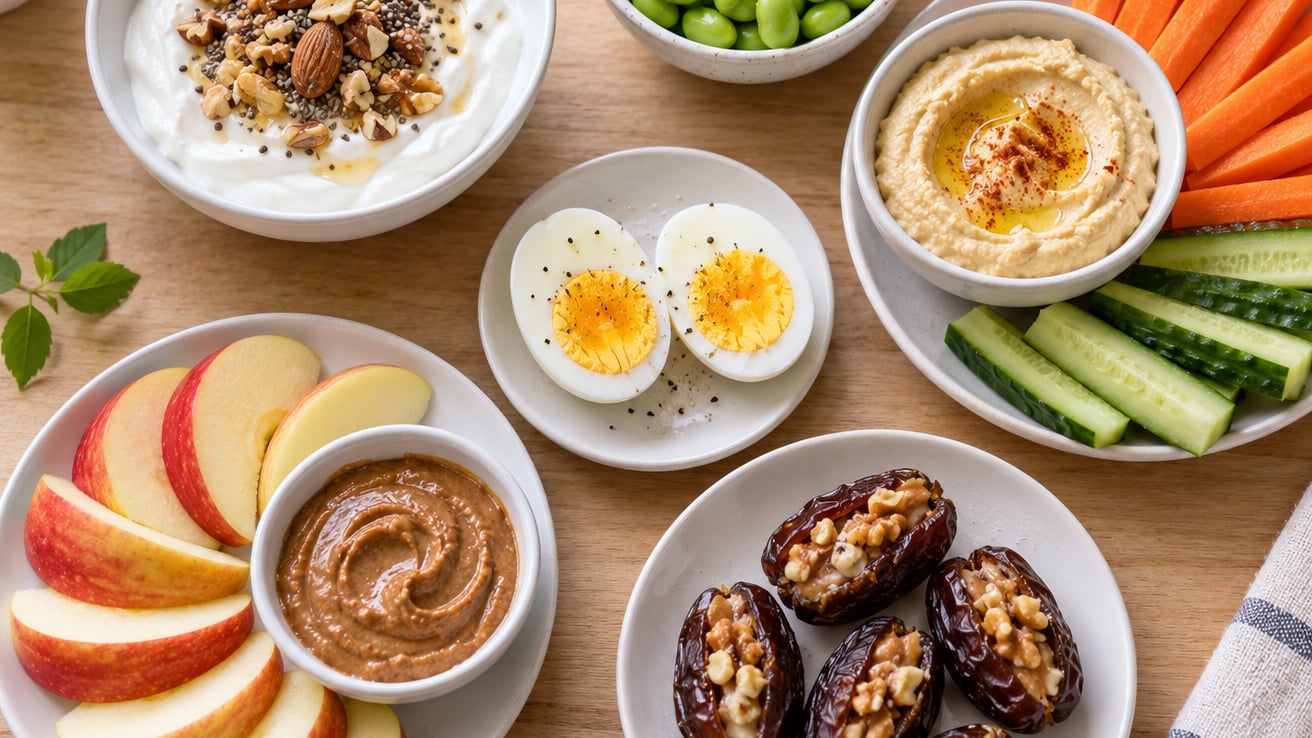
Healthy high protein snacks without meat are foods that deliver roughly 10 to 20 grams of protein per serving and contain no meat or poultry. That covers a wide group of eaters: vegetarians, vegans, pescatarians and people simply cutting back on red meat. Dairy, eggs and canned fish count, because none of them are meat.
The reason this matters is boring and practical. Most default snacks are crackers, fruit and something sweet, all of which are carb-heavy and leave you hungry again in half an hour. A snack with protein plus fiber plus a little fat actually holds. If you are still working out whether you can hit your protein target on a meat-free pattern, start with how to eat enough protein on a vegetarian diet without powder and then use the list below for the daily gaps between meals.
Two things I want to clear up before we get into it. First, per-item protein figures below are typical values for standard portions, not lab measurements, so treat them as a guide and check the label on whatever you actually buy. Second, the list is deliberately savoury-heavy, because the snack aisle is almost entirely sweet bars and people get tired of them. If you want a full day’s eating plan rather than snacks, what to eat after a workout without a shake covers the other end of the day.
Table of Contents
- Healthy High Protein Snacks Without Meat at a Glance
- 1. Greek Yogurt with Nuts and Seeds
- 2. Cottage Cheese with Fruit
- 3. Hard-Boiled Eggs with Vegetables
- 4. Edamame with Sea Salt
- 5. Hummus with Carrots, Cucumber or Whole-Grain Crackers
- 6. Protein-Packed Black Bean Dip
- 7. Tofu and Vegetable Rice Rolls
- 8. Nut and Seed Energy Bites
- 9. Peanut Butter Apple Slices
- 10. Chia Pudding with Milk
- 11. Tuna and White Bean Snack Salad
- 12. Lentil or Chickpea Flour Crackers with Toppings
- 13. Whey or Plant Protein Smoothie Bites
- 14. Soy Milk with Edamame or Roasted Soybeans
- 15. Nut-Butter Stuffed Dates
- Frequently Asked Questions
- Conclusion
Healthy High Protein Snacks Without Meat at a Glance
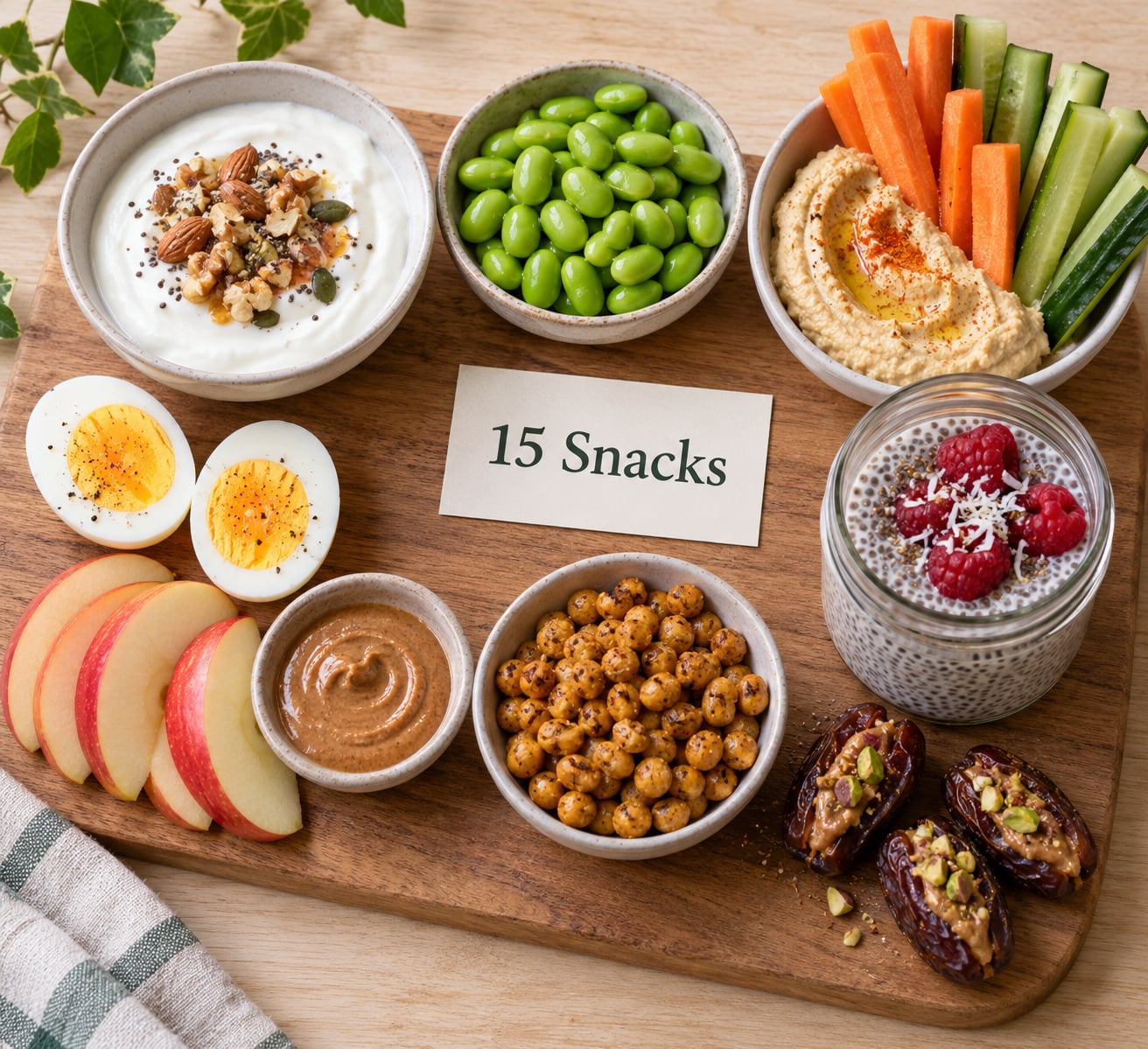
Every snack below is sorted by protein per serving, prep time and how well it travels. Use the table to narrow the list first, then read the section for the ones that fit your day.
| Snack | Protein per serving | Prep time | Portable | Best for |
|---|---|---|---|---|
| Whey or plant protein smoothie bites | 12-18g | 10 min, then freezes | High | Hitting 20g+ fast |
| Greek yogurt with nuts and seeds | 15-22g | 2 min | Medium | Sweet, no cooking |
| Cottage cheese with fruit | 14-25g | 3 min | Medium | Very high protein, filling |
| Chia pudding with milk | 8-14g | 5 min plus chilling | High | Make-ahead breakfast |
| Hard-boiled eggs with vegetables | 6g per egg | 12 min to boil | High | Cheapest real protein |
| Edamame with sea salt | 11-18g | 5 min or microwave | Medium | Plant-based, low fat |
| Hummus with vegetables or crackers | 6-9g | 2 min | High | Dip, sharing, parties |
| Soy milk with edamame or roasted soybeans | 10-16g | 3 min | High | Drink plus a handful |
| Protein-packed black bean dip | 8-10g | 10 min or 1 hour | High | Inexpensive, fiber-heavy |
| Nut and seed energy bites | 5-7g | 15 min, then chill | High | Batch cooking, freezer |
| Tuna and white bean snack salad | 20-25g | 8 min | Medium | Pescatarian big protein |
| Tofu and vegetable rice rolls | 8-11g | 20 min | High | Lunchbox, travel |
| Lentil or chickpea flour crackers with topping | 6-9g | 3 min to assemble | High | Crunchy, shelf-stable |
| Peanut butter apple slices | 7-8g | 4 min | High | Kids, lunchboxes, sweet |
| Nut-butter stuffed dates | 5-7g | 6 min | High | Energy without a crash |
1. Greek Yogurt with Nuts and Seeds
Plain Greek yogurt is the fastest route to a serious protein number with zero cooking. A 3/4 cup serving of a full-fat variety typically lands between 15 and 20 grams of protein, and there is no sugar hiding in plain yogurt, which is why the flavored tubs disappoint so many people.
How you build it matters more than which yogurt you buy. Stir in a tablespoon of hemp seeds or pumpkin seeds for plant protein, a spoonful of nut butter for fat, and a few berries if you want it to feel like a treat. The seeds add a few grams and a lot of texture, so it eats like something you made rather than something you scooped.
Choose plain, full-fat, unsweetened when you can. Greek yogurt is naturally low in sugar to begin with, and the flavored versions often add as much sugar as a dessert while delivering less protein than the plain tub sitting next to them on the shelf.
2. Cottage Cheese with Fruit
Cottage cheese delivers more protein per calorie than almost anything else in the dairy case, and a 1/2 cup serving regularly reaches 14 grams or more. It has a mild flavor and a loose texture, so what you add on top does all the work.
Fresh berries, sliced peaches or a spoonful of thawed frozen fruit work well, since the fruit adds fiber and sweetness without turning the bowl into a sugar source. A drizzle of cinnamon with a little nut butter is the version I make most often, and it holds you full far longer than the fruit alone does.
Whipped cottage cheese is worth trying if texture bothers you. Blend it smooth and it turns into something closer to a thick mousse, which is a nicer way to eat it straight from the container at a desk.
3. Hard-Boiled Eggs with Vegetables
Eggs are the cheapest meaningful protein in most kitchens, at roughly 6 grams of protein each. Boil a dozen on Sunday and you have a week of snacks that need no assembly and nothing to spill in a bag.
Cook them until the whites are firm, which means the center of the egg reaching 160 degrees Fahrenheit, then move them straight to cold running water so the whites stop cooking and peel off cleanly. Leave them in their shells in the refrigerator and use them within about a week, per USDA guidance. Peeled eggs keep a little less well, so peel them only when you are about to eat them.
Pair one or two eggs with raw vegetable sticks, a small handful of cherry tomatoes or a few olives so the snack has some fiber and fat alongside the protein. Two eggs with cucumber and a little sea salt is an entire snack, and it travels without a fork if you pack the vegetables separately.
4. Edamame with Sea Salt
Edamame is the most protein-dense soybean snack you can eat without cooking, and a full cup of shelled pods delivers about 17 to 18 grams of protein plus a solid amount of fiber. It is also one of the least calorie-dense high protein options on this list, which matters if you are watching calories.
Preparation is close to zero. Microwave a cup of shelled edamame for a minute or two with a splash of water, or boil frozen pods for three to five minutes and salt them well. Both ways land you at the same place: a warm, salty handful that fills the bowl before you finish eating it.
For flavor, do what you would with nuts. Sea salt and lime, flaky salt with a little chili powder, or a drizzle of soy sauce and sesame oil after steaming. Those are the three I rotate. Roasted edamame is also the snack that most often settles the complaint that plant-based snacks are mostly carbohydrate with a protein label attached.
5. Hummus with Carrots, Cucumber or Whole-Grain Crackers
A 4-ounce serving of hummus is protein and fiber you can eat with your hands, and a two-tablespoon scoop pairs with vegetables for about 6 grams. It is also one of the cheapest snacks on this list to build from pantry staples.
Buy hummus with as few ingredients as you can find, and check the label for olive oil and chickpea content rather than the front-of-pack claims. A spread that is mostly water and stabilizer leaves you hungry in twenty minutes, while a chickpea-forward one actually holds.
Pack it in a small container with cut vegetables and a handful of whole-grain crackers. For a party, serve it with a drizzle of olive oil, paprika and a few whole olives on top, which turns a basic dip into something people ask about. Hummus with crudities is also the simplest answer to the recurring complaint that savory protein snacks are too often sweet instead.
6. Protein-Packed Black Bean Dip
A can of black beans, mashed with salsa, lime and a little cumin makes a dip that behaves like hummus but costs a fraction of the price. Half a cup of the finished mixture sits around 8 to 10 grams of protein, and the fiber content is high enough that a small portion goes a long way.
Drain the beans but keep a couple of tablespoons of the liquid, mash roughly half of them with a fork, and leave the rest whole for texture. That gives you a dip that is thick enough to scoop but not gluey. Add salsa, a squeeze of lime, cumin, garlic powder and a hit of hot sauce, then taste before adding more salt.
Portion it into small containers if you are prepping for the week. It holds well refrigerated for about four days, and it thickens overnight, so loosen it with a splash of water or lime juice in the morning. This is the snack I buy for road trips when I would rather not think about food safety rules at a gas station.
7. Tofu and Vegetable Rice Rolls
These are the most substantial item on the list and the one that most resembles a meal, which makes them worth the twenty minutes. Pressed tofu brings roughly 10 to 12 grams of protein per half block, and cooked rice and shredded vegetables fill out the rest.
Press the tofu by wrapping a block in a clean towel under a heavy pan for about fifteen minutes, then cube it and pan-fry or air-fry until the edges brown. That step is what separates a good roll from a soggy one, because the tofu needs to dry out before it goes in. Sauté shredded carrot, cucumber or cabbage with a splash of soy sauce, then assemble with cooked short-grain rice and a little lime or sesame dressing.
Roll tightly in a damp tortilla or spring roll wrapper. If you are packing them, wrap individually in wax or parchment so they do not stick together, and serve them chilled or at room temperature rather than straight from the fridge, so the rice tastes like something other than a refrigerator brick. A tamari or low-sodium soy dip is the simplest finish.
8. Nut and Seed Energy Bites
Energy bites are the batch-cooking workhorse: a two-tablespoon ball of nut butter, oats and a sweetener gives you somewhere around 5 to 7 grams of protein, and the fat and fiber slow the sugar. A dozen of them covers most of an afternoon and costs about fifteen minutes of work.
The basic method is simple. Blend a cup of rolled oats, half a cup of peanut or almond butter, a third cup of a nut or seed butter, two tablespoons of honey or maple syrup, a tablespoon of chia or hemp seeds and a small splash of vanilla. Pulse until it holds together when you press it, then roll into balls. Adding a quarter cup of protein powder is optional and pushes each bite closer to 8 grams, and most people do not notice the difference either way.
Store them in the refrigerator for a week or freeze them on a tray first, then transfer to a bag so they do not clump. If you are buying rather than making, how to tell if a granola bar is actually healthy is worth a read first, since the same traps apply to most packaged bites.
9. Peanut Butter Apple Slices
Apple slices with peanut butter combine a crunchy, sweet-tart base with a thin layer of protein and fat, and the pair lands around 7 to 8 grams per apple. Kids eat it without coaching, which is a genuine advantage over most protein-forward snacks aimed at adults.
Slice a medium apple thin, spread each slice with a tablespoon or two of peanut butter, and finish with a pinch of cinnamon or a few chia seeds if you want to raise the protein a little. To keep it from browning during a commute, toss the slices with a small amount of lemon juice before packing, or use a slightly underripe apple, which holds its texture better.
Thin almond butter works the same way and adds vitamin E, though the flavor is noticeably different. For nut-free versions, sunflower seed butter has a similar texture and keeps the protein in the same range, though it is worth checking labels for added sugar and salt, which creep into most of them.
10. Chia Pudding with Milk
Chia seeds turn any liquid into a pudding with about 5 grams of protein and a lot of fiber per quarter cup of seeds. Make it with dairy milk, soy milk or fortified oat milk, and a serving comes out between 8 and 14 grams depending on how much you use.
Stir three tablespoons of chia into a cup of liquid with a sweetener of your choice, refrigerate for at least four hours, and it sets into something close to a thick pudding. Stir again before eating, because chia settles hard at the bottom. The overnight version is the practical one: prepare four jars on Sunday and they are ready to grab all week.
Flavor combinations that work well include cocoa with a little vanilla, a pumpkin pie mix in the fall, or a lemon version with a spoonful of yogurt stirred in at the end for extra protein. If you want something lower in fat that is not nuts or seeds, chia is usually the first thing I suggest.
11. Tuna and White Bean Snack Salad
Canned tuna and white beans are a pescatarian answer, and one of the few snacks that clears 20 grams of protein in a single serving without feeling like a full meal. It is also worth remembering that fish is not meat, which is exactly why this combination belongs in a meat-free list.
Drain a can of tuna packed in water and half a can of white beans or chickpeas, then add chopped celery, a little red onion, a spoonful of olive oil, lemon juice, salt and black pepper. Toss it and eat it with crackers or small whole-grain toast. If you prefer, mash the beans slightly with a fork so the mixture holds together better on a cracker.
Keep it cold from the start. Refrigerate the leftovers within two hours and use them within three to four days, and eat them straight from a cooler with an ice pack when they travel. If a can of fish is going to sit in a hot car, that is a skip, not a snack.
12. Lentil or Chickpea Flour Crackers with Toppings
Lentil and chickpea crackers are made from legume flour, so a small serving carries real protein, around 6 grams, along with more fiber than a standard wheat cracker. They are sturdy enough to hold a heavy topping, which is what makes them worth the slight premium over plain crackers.
Top them with hummus, mashed white bean spread, a hard-boiled egg sliced thin, or a spoonful of cottage cheese with pepper. For something simpler and fast, a thin layer of tahini with flaky salt takes about ten seconds and turns the cracker into a decent protein snack on its own.
Read the ingredient list when you buy. A legume cracker with a short list is genuinely protein-forward, while one built around rice flour, sugar and soybean oil is mostly a salty cracker with a lentil marketing line. The front of the package tells you the category, not the content.
13. Whey or Plant Protein Smoothie Bites
When you need 20 grams of protein in one sitting and you have ten minutes, blended bites are the fastest route. Blend half a scoop of protein powder with a quarter cup of milk or yogurt, a few spoonfuls of oats and a small amount of honey, then roll or press the mix into bite-size pieces and freeze them for an hour.
With whey you get a denser, cleaner chew and a higher protein number per bite, typically 12 to 18 grams. With pea or soy protein the result is slightly softer, and soy is the more complete of the two plant options on an amino acid basis. Both work, and the difference matters less than the label.
The one thing to watch is sweetness, because the powder already brings it and the mix is easy to oversweeten. Start with half a scoop, taste, then add. This is the most processed item here, so for readers who would rather not eat powder at all, the same protein target can be reached with cottage cheese, tuna salad or a yogurt bowl. It is also worth knowing what to eat after a workout without a shake if that is the reason you are here, because a real meal usually beats a blend for recovery.
14. Soy Milk with Edamame or Roasted Soybeans
A glass of unsweetened soy milk and a small bowl of soy nuts is about as low-effort as protein gets, and together they run 10 to 16 grams depending on the volume. It is the snack that requires a glass rather than a fork, which some people find is exactly what they want at 3pm.
Choose unsweetened soy milk and check the protein per cup on the label, because varieties differ widely. Anything at 7 grams of protein per cup is in solid territory, and the fortified versions also bring you vitamin D and B12. Roasted soybeans come in salty and unsalted versions, and the unsalted ones make more sense if you are already eating plenty of sodium.
Portion by handful, not by bowl. A quarter cup of roasted soy nuts is a reasonable serving, and it is easy to eat three times that amount while watching something. Pair them with fruit if the salt leaves you thirsty, which it usually does.
15. Nut-Butter Stuffed Dates
Medjool dates are a small, portable way to get quick energy, and filling one with a nut butter brings the total to somewhere around 5 to 7 grams of protein. The fiber in the fruit plus the fat in the nut butter is a genuinely steadying combination, and it travels without refrigeration.
Pit a date, fill the cavity with peanut, almond or cashew butter, and press it closed. If the date is sticky and hard to handle, warm the tray of dates for five minutes in a low oven first, which softens the skins considerably. To move the protein up, add hemp or pumpkin seeds to the filling, or dust the outside with a little hemp hearts and shredded coconut.
The sugar content is real, so this is a snack for a genuine craving rather than something to eat by habit. One or two is the serving. They do not need a plate, a container or a napkin, which makes them my pick for long flights and for keeping in a jacket pocket through a cold morning.
Frequently Asked Questions
How much protein should a snack have?
Most people do well with somewhere between 10 and 20 grams of protein per snack. General daily guidance for adults sits around 0.8 grams per kilogram of body weight, while active adults are often advised to aim higher. A snack under 5 grams is usually a small top-up rather than a real protein event, and anything over 20 grams is more than most people need between meals.
How can I get 20g of protein in a snack?
Combine two sources instead of chasing one perfect food. Cottage cheese with a tablespoon of nut butter, or tuna with white beans on crackers, both clear 20 grams. A large cup of Greek yogurt with hemp seeds comes close, and two hard-boiled eggs with a glass of soy milk land in the same range without any prep beyond boiling eggs.
How do you get 30g of protein in a snack?
At 30 grams you are looking at a small meal rather than a snack. A protein smoothie with a scoop of powder, a cup of milk and oats usually hits it, as does a large cottage cheese bowl with seeds. A tuna and white bean salad with crackers also clears 30 grams, and so does tofu with rice if you want something savoury.
What can I eat that has protein but not meat?
Dairy, eggs and fish count as meat-free protein, so Greek yogurt, cottage cheese, boiled eggs and canned tuna all belong in the category. On the plant side, edamame, tofu, tempeh, hummus, lentils, black beans, nuts, seeds and peanut butter cover the range. Mixing a legume with a grain or seed, such as hummus with whole-grain crackers, rounds out the amino acid profile.
Are protein bars a healthy snack?
It depends entirely on the label. A bar that lists 15 to 20 grams of protein, more than 5 grams of fiber and under 8 grams of added sugar per serving is doing what you want it to do. One built mostly on sugar, syrup and a short list of ingredients is a candy bar with a protein claim, and it will not keep you full for long.
What high protein snacks fit a Mediterranean diet?
The Mediterranean pattern is built around produce, legumes, nuts, olive oil, whole grains and fish, so the overlap with this list is large. Hummus with raw vegetables, roasted chickpeas, a small bowl of Greek yogurt with walnuts, edamame, tuna with white beans, and a date with almond butter are all straightforward fits. Whole-grain crackers and a small piece of fish also work well with this approach.
Conclusion
Pick three from this list before you pick fifteen. If you want the least effort, start with boiled eggs, roasted soybeans and a tub of plain Greek yogurt. If you want the most protein per serving, go with cottage cheese, edamame and the tuna and white bean salad. If you want sweet, Greek yogurt with seeds, chia pudding and apple slices with peanut butter will carry you.
Then pick one you will realistically make twice a week and make it twice a week. Repeating a small number of snacks beats trying fifteen once each, and it is the habit that actually closes the gap between your protein target and your daily intake. Most people find that two reliable options and one packaged backup covers nearly every afternoon.
Protein figures vary by brand and portion size, so check the label before you build a plan around a number. And if you are managing a specific condition, training for something, or working through an allergy, talk to a doctor or a registered dietitian about your own needs rather than copying a list from the internet, including this one.