
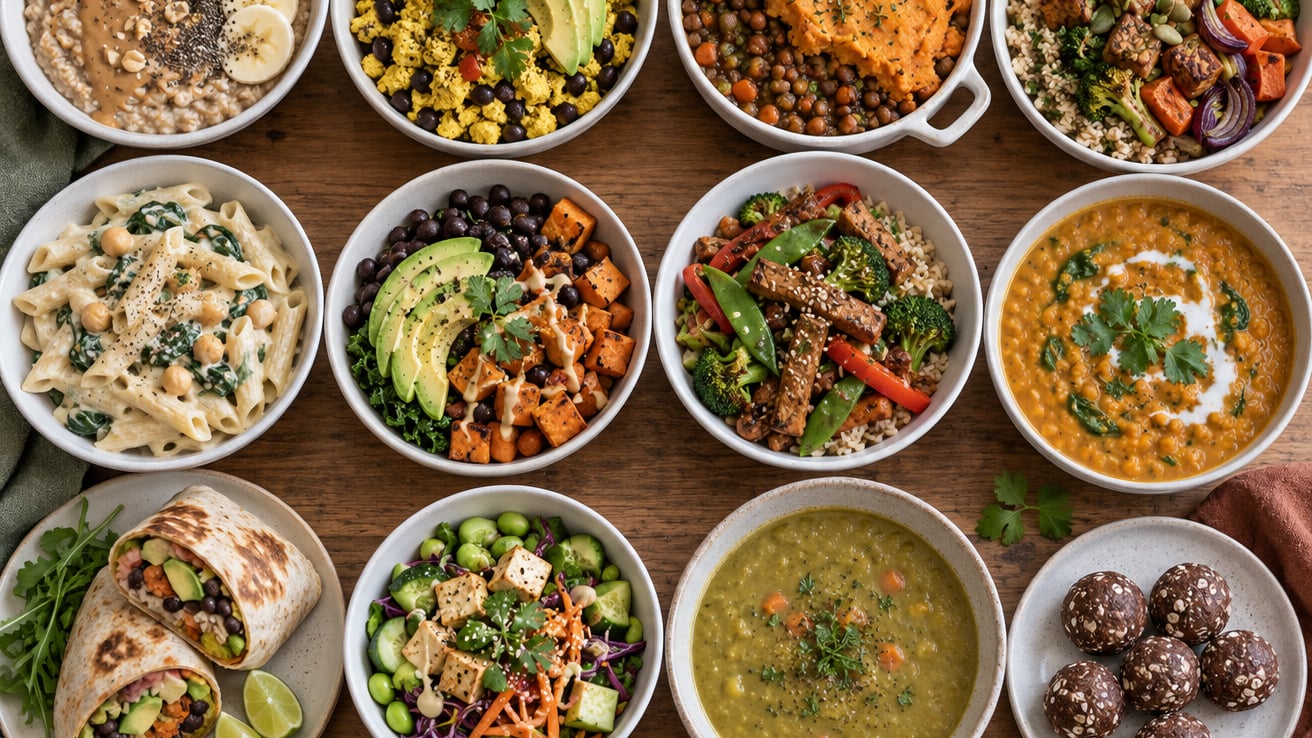
These 12 high protein vegan meals for the week cover breakfast, lunch, dinner and snacks, and together they add up to roughly 90 to 110 g of protein a day without a single animal product. Each meal is built around tofu, tempeh, seitan, lentils, chickpeas, edamame, quinoa or seeds, and every serving carries a protein number so you can add up your day without a food scale.
The format is deliberately plain: what goes in, how long it takes, whether it batches, and how many grams of protein you get. Pick four or five of them, cook them on a Sunday, and you have most of the week handled.
If you are still working out the target, our guide on how much protein you actually need per day covers the RDA math in detail. Short version: 0.8 g per kilogram of body weight is the baseline, and lifting or losing fat pushes it higher.
Table of Contents
- 12 High Protein Vegan Meals for the Week at a Glance
- 1. Peanut Butter Protein Oatmeal
- 2. Tofu Scramble with Black Beans
- 3. Lentil Shepherd’s Pie
- 4. Tempeh Power Bowl with Brown Rice
- 5. Chickpea Pasta with Spinach and White Bean Sauce
- 6. Black Bean and Sweet Potato Burrito Bowl
- 7. Seitan Stir-Fry with Rice and Vegetables
- 8. Red Lentil Coconut Curry
- 9. Vegan Bean and Cheese Burrito
- 10. Edamame Crunch Salad with Tofu
- 11. Split Pea and White Bean Soup
- 12. Chocolate Peanut Butter Protein Bites
- Vegan Protein Staples Ranked by Protein Per Serving
- Your Sunday Prep Workflow
- Storage and Food Safety for Vegan Meal Prep
- Frequently Asked Questions
- How much protein do I need per day on a vegan diet?
- How do I get 100 g of protein in a day on a vegan diet?
- Are these high protein vegan meals for the week affordable?
- Do I need to combine plant proteins to get complete protein?
- How long does vegan meal prep last in the fridge and freezer?
- How much protein should I eat per meal?
- Conclusion
12 High Protein Vegan Meals for the Week at a Glance
| # | Meal | Slot | Protein per serving | Active time | Batches? |
|---|---|---|---|---|---|
| 1 | Peanut Butter Protein Oatmeal | Breakfast | 24 g | 10 min | 2 servings, eats twice |
| 2 | Tofu Scramble with Black Beans | Breakfast | 32 g | 20 min | Cook once, eat 3 times |
| 3 | Lentil Shepherd’s Pie | Dinner | 34 g | 45 min | Cook once, eat 3 times |
| 4 | Tempeh Power Bowl | Lunch or dinner | 36 g | 30 min | Cook once, eat 2-3 times |
| 5 | Chickpea Pasta, White Bean Sauce | Lunch | 28 g | 25 min | Cook once, eat 3 times |
| 6 | Black Bean Sweet Potato Bowl | Lunch | 31 g | 35 min | Cook once, eat 3 times |
| 7 | Seitan Stir-Fry | Dinner | 44 g | 25 min | Cook once, eat 2-3 times |
| 8 | Red Lentil Coconut Curry | Dinner | 29 g | 30 min | Cook once, eat 3-4 times |
| 9 | Vegan Bean and Cheese Burrito | Lunch or dinner | 27 g | 20 min | Cook once, eat 2 times |
| 10 | Edamame Crunch Salad with Tofu | Lunch | 30 g | 25 min | Cook once, eat 3 times |
| 11 | Split Pea and White Bean Soup | Dinner | 26 g | 40 min | Cook once, eat 4 times |
| 12 | Chocolate Peanut Butter Bites | Snack or light meal | 9 g per 2 bites | 15 min | Makes the whole week |
Work three meals into your week and the rest stays as backup. That is roughly how people use plans like this, and it beats cooking all twelve on a Sunday.
1. Peanut Butter Protein Oatmeal
A creamy breakfast bowl of rolled oats, peanut butter, soy milk, chia seeds and banana that comes together in about ten minutes. One serving lands around 24 g of protein, which is roughly what most omnivores get from two eggs and toast.
Stir 60 g of rolled oats into 300 ml of soy milk with a tablespoon of chia seeds and let it sit overnight, or warm it on the stove for five minutes if you prefer it hot. Top with a tablespoon of peanut butter and a sliced banana.
To push the protein higher, add a scoop of vanilla protein powder to the mixing stage. It blends in cold without foaming. For storage, keep the dry oats and chia in a jar and assemble the wet portion each morning, because the mixture turns gluey after about three days in the fridge.
2. Tofu Scramble with Black Beans
Stove-top tofu scrambled with spinach, black beans and salsa, served with avocado. This is the version of tofu that survives a week of prep, and at about 32 g of protein per plate it does the job of a heavy breakfast.
Crumble 250 g of extra-firm tofu into a hot oiled pan with a spoonful of nutritional yeast, turmeric and smoked paprika. Add a cup of black beans and a handful of spinach, and cook until the spinach collapses and the tofu browns at the edges. Finish with salsa and sliced avocado.
Seasoning is what separates decent tofu from the bland version most people give up on. Cook it in enough oil to crisp the edges, then salt it at the end rather than the start. Serve it warm, or eat it cold straight from the container on the way to work.
Make a triple batch and it covers three breakfasts. It keeps four days in the fridge, and it travels fine cold.
3. Lentil Shepherd’s Pie
A plant-based version built on brown lentils, peas, carrots, tomato and herbs under a mashed sweet potato topping. One serving is about 34 g of protein, and it is the meal people in vegan meal prep forums make when they want something that tastes like comfort food on a Wednesday.
Simmer 2 cups of cooked lentils with a diced onion, two carrots, a cup of peas, a cup of tomato and a spoonful of each of thyme, rosemary and smoked paprika for 20 minutes. Top with mashed sweet potato mixed with a little olive oil and salt, and bake at 200 C / 400 F for 20 minutes.
Assemble in individual ramekins if you want single portions, and leave the topping off until reheating so it does not go soggy. It freezes well for up to three months, and the flavors improve after a month in the freezer.
4. Tempeh Power Bowl with Brown Rice
Tempeh cubes seared until crisp, brown rice, roasted vegetables and a lemon-tahini drizzle. This bowl runs about 36 g of protein per serving and it is the most flexible meal here, since every component can be swapped without breaking the formula.
Tear 200 g of tempeh into craggy pieces rather than cubing it, then sear in a hot pan with soy sauce, garlic and a little maple syrup until the edges caramelize. Serve over brown rice with roasted broccoli, sweet potato and cabbage, and finish with tahini thinned with lemon and water.
To increase protein further, add a quarter cup of edamame or a tablespoon of hemp seeds. Both add 5 to 6 g and neither changes the character of the bowl.
Keep the dressing in a separate jar. It thickens and splits in the fridge, and it is the single thing that ruins a grain bowl by day three.
5. Chickpea Pasta with Spinach and White Bean Sauce
Silky without any dairy, thanks to white beans blended with vegetable stock, spinach and herbs. Chickpea pasta brings about 10 g of protein per serving and the sauce adds more, for a total near 28 g in a bowl that takes 25 minutes.
Drain a can of cannellini beans and blend them with 300 ml of vegetable stock, a handful of garlic, lemon juice and olive oil until smooth. Boil the pasta, drain it and return it to the pot with the sauce and a fistful of spinach, stirring until the spinach wilts and the sauce clings.
Make it ahead and keep it for three days. Cook the pasta one minute less than the box says and let it finish in the sauce, otherwise it turns mushy by Tuesday. Reheat with a splash of water and a wooden spoon.
6. Black Bean and Sweet Potato Burrito Bowl
A sheet-pan bowl of black beans, roasted sweet potato, brown rice and corn, with a lime yogurt-style sauce made from cashews, plant yogurt and lime. One serving is about 31 g of protein and the whole thing roasts on one tray.
Cube sweet potato, toss with oil and salt, and roast at 220 C / 425 F for 25 minutes. Add black beans to the tray for the last 8 minutes so they warm through without drying out. Spoon over brown rice and corn, then the blended cashew sauce.
The sauce is the piece worth doubling, because it works on the burrito bowl, the tofu scramble and the edamame salad. It keeps five days in a sealed jar and thickens as it sits, so loosen it with water before pouring.
7. Seitan Stir-Fry with Rice and Vegetables
The highest protein number on this list. Seitan seared hard in a savory sauce with broccoli, peppers and mushrooms, served over brown rice, gives about 44 g per serving and a 25-minute cook time on a weeknight.
Slice 200 g of seitan thin so the sauce reaches the middle. Sear it in a very hot pan, then add garlic, ginger and a splash of soy and rice vinegar. Toss in 2 cups of vegetables, cover for three minutes, and serve over brown rice.
Seared or boiled makes a bigger difference here than any sauce. If it is bland, it is almost always under-seasoned or under-browned rather than badly sauced.
Cook double the seitan and freeze it flat on a tray before bagging the pieces. It reheats in a hot pan in four minutes and skips the second cooking step entirely.
8. Red Lentil Coconut Curry
A one-pot curry of red lentils, coconut milk, spinach and tomato with cumin, coriander and chili. One bowl is about 29 g of protein, and it is the meal that rewards you for cooking a big pot on a Sunday.
Rinse a cup of red lentils, then simmer them in a can of coconut milk with a diced onion, a cup of tomato, a teaspoon each of cumin and ground coriander, and a splash of water for 20 minutes until the lentils collapse. Stir through spinach at the end.
Red lentils cook in 20 minutes and dissolve into the sauce, so nothing else needs chopping. Make a quadruple batch and it covers four dinners.
Cool it before refrigerating, and use it within four days or freeze it. Reheat with a splash of water and a pinch of salt; curry that has sat in the fridge tastes flat until it does.
9. Vegan Bean and Cheese Burrito
A properly filled burrito with black or pinto beans, vegan cheese, brown rice, roasted peppers and avocado, at about 27 g of protein. It is the meal that makes people think they do not like tofu, tempeh or seitan at all, because it is a burrito.
Warm a large flour tortilla first, layer on the beans, brown rice, sliced avocado and a couple of slices of vegan cheese, then roll it tightly in foil and bake at 200 C / 400 F for 15 minutes. Cut it on the diagonal, which makes it look deliberate and, more importantly, stops it unrolling in a lunch bag.
Soggy wraps come from wet fillings and loose rolling. Drain the beans well, pat the avocado dry, and roll the sides in before the top. Serve it within three days and let the foil do its job.
10. Edamame Crunch Salad with Tofu
A salad built on crisply baked tofu, shelled edamame, shredded cabbage, cucumber and carrots with a sesame dressing, running about 30 g of protein per serving. It is the meal that keeps its texture for three days, provided nothing is dressed until the morning you eat it.
Bake 200 g of pressed tofu cubes at 220 C / 425 F for 20 minutes, turning once, until the edges are firm. Toss with 1 cup of edamame, shredded cabbage, cucumber and carrot, and dress everything with sesame oil, rice vinegar and a little maple syrup.
Shelled edamame is the quiet hero here. It adds 11 g of protein and holds up where frozen peas turn watery by day two.
For substitutions, roasted chickpeas work if you want to skip tofu, and pumpkin seeds add 6 g if you are working toward a higher target.
11. Split Pea and White Bean Soup
A blended, hearty soup of split peas, white beans, carrot, celery, kale and herbs, about 26 g of protein per large bowl. It thickens as it simmers, so a small pot goes further than the ingredients suggest.
Simmer 1 cup of split peas with a diced carrot, celery and onion in 1.2 L of vegetable stock for 30 minutes. Add a can of white beans, a handful of kale and thyme, cook for five more minutes, then blend half the soup to thicken it and return it to the pot.
Blending half rather than all keeps some texture and makes the bowl feel substantial. Freeze portions in flat bags once cool, and it will keep for three months in the freezer.
Make it a meal on its own for a lighter day, or serve it with a slice of dense rye bread for more protein and a better reason to sit down.
12. Chocolate Peanut Butter Protein Bites
A no-bake snack that works as a light meal when you need it, made with oats, peanut butter, cocoa, protein powder, dates and hemp seeds. Two bites come to about 9 g of protein, and a batch lasts the whole week.
Chop 8 dates and mix them with 120 g of peanut butter and 60 ml of hot water until pasty. Stir in 60 g of oats, one scoop of chocolate protein powder, two tablespoons of cocoa and a tablespoon of hemp seeds, then chill the mixture for 20 minutes and roll it into 20 balls.
Keep them in the fridge for up to ten days or freeze them on a tray before transferring to a container. They travel well, which makes them the easiest item in this plan to keep in a bag for the office.
If peanut butter is not an option, sunflower seed butter works and the hemp seeds stay where they are.
Vegan Protein Staples Ranked by Protein Per Serving
These are the building blocks behind every meal above. Figures are typical values per listed serving, and they are the numbers to memorize so you can improvise beyond the plan. If you prefer to skip powders entirely, our piece on eating enough protein on a vegetarian diet without powder covers the whole-food route.
| Food | Serving | Protein | Where it fits |
|---|---|---|---|
| Seitan | 100 g | 25 g | Stir-fries, sandwiches |
| Tempeh | 100 g | 20 g | Bowls, scrambles |
| Firm tofu | 150 g | 18 g | Everything |
| Shelled edamame | 1 cup | 17 g | Salads, bowls |
| Lentils, cooked | 1 cup | 18 g | Soup, curry, pie filling |
| White beans, cooked | 1 cup | 15 g | Sauces, soup, chili |
| Chickpeas, cooked | 1 cup | 15 g | Pasta, curries |
| Black beans, cooked | 1 cup | 15 g | Breakfast, bowls, burritos |
| Quinoa, cooked | 1 cup | 8 g | Grain base |
| Soy milk, unsweetened | 1 cup | 7 g | Oatmeal, sauces |
| Peanut butter | 2 tbsp | 7 g | Oats, bites, toast |
| Hemp seeds | 3 tbsp | 10 g | Top anything |
| Tahini | 2 tbsp | 5 g | Salad dressing |
| Nutritional yeast | 2 tbsp | 4 g | Tofu, pasta, sauces |
One myth is worth clearing up here, since it stops people eating more than they need. You do not have to combine plant proteins at every single meal to get a complete amino acid profile. Eating a variety of sources across the day is enough, which is exactly what a plan like this does.
Your Sunday Prep Workflow
Pick three meals, not twelve. The most useful version of this plan is a repeatable routine, and our guide on batch cooking for the week without getting bored covers the rotation side.
- Oven on, sheet pan started. Roast sweet potato, broccoli and cauliflower at 220 C / 425 F.
- On the stove, a pot of red lentil coconut curry going, since it takes 20 minutes and mostly waits.
- While that simmers, cook a pot of brown rice and a tray of pressed tofu cubes.
- Blend the white bean sauce for the chickpea pasta and the cashew lime sauce for the bowls.
- Assemble one large shepherd’s pie in a dish, and pack the salad components undressed.
- Portion into containers, labelling each with a day, before everything goes in the fridge.
Two of the twelve meals need almost no cooking at all: the peanut butter oatmeal and the protein bites. Keep those for the weeks when Sunday does not happen.
Storage and Food Safety for Vegan Meal Prep
Cooked vegan meals keep three to four days in the fridge, and most of these freeze one to three months. The rule that matters most: cool food quickly, get it into the fridge within two hours, and reheat only the portion you are eating.
| Meal group | Fridge | Freezer | Texture after freezing |
|---|---|---|---|
| Curries, soups, stews | 3-4 days | 1-3 months | Holds well |
| Shepherd’s pie, burrito bowl | 3-4 days | 1-3 months | Holds well, keep topping separate |
| Stir-fry, seitan | 3-4 days | 2-3 months | Holds, reheats better in a pan |
| Grain bowls with dressing | 3 days | Freeze components only | Rice dries out, sauce splits |
| Salads, slaws | 2-3 days, undressed | Not recommended | Wilted |
| Pasta, oatmeal, bites | 3-4 days | Bites freeze well | Pasta goes soft |
Avoid freezing cauliflower, broccoli and cucumber-based salads, which come back watery. If your week runs longer than four days, freeze the soup or curry rather than relying on the fridge.
Frequently Asked Questions
How much protein do I need per day on a vegan diet?
For most adults the baseline is 0.8 g of protein per kilogram of body weight, so a 70 kg person needs roughly 56 g a day. Active people and anyone lifting weights usually aim higher, around 1.2 to 1.7 g per kilogram. This plan sits at about 90 to 110 g a day, which covers the higher end for most readers without going overboard.
How do I get 100 g of protein in a day on a vegan diet?
Spread it across four or five eating occasions instead of two. This week’s plan does it with about 30 g at breakfast, 30 g at lunch, 35 to 45 g at dinner and two protein bites or a soy yogurt in between. The biggest single wins come from adding tofu, tempeh, seitan or edamame to a meal that was mostly grains and vegetables.
Are these high protein vegan meals for the week affordable?
Mostly. The cheapest tier is beans, rice and lentils: the lentil shepherd’s pie, the black bean bowl and the split pea and white bean soup run on pantry staples. Dried lentils and split peas cost very little per serving compared with packaged protein products. Seitan and tempeh are the pricier items here, and buying them in bulk or on a store-brand shelf makes the difference small over a week.
Do I need to combine plant proteins to get complete protein?
No, not at every meal. The advice to combine grains and legumes in the same sitting is outdated advice for most people, because a varied diet across the day covers amino acid needs easily. This plan pairs legumes with grains and seeds in most meals anyway, which helps with overall protein quality, but you do not have to plan each meal around it.
How long does vegan meal prep last in the fridge and freezer?
Cooked meals keep three to four days in the fridge when cooled quickly and covered. Soups, curries, stews and traybakes freeze one to three months and reheat well, while dressed salads, pasta and grain bowls do not freeze well. Freeze flat in individual portions and thaw in the fridge overnight rather than on the counter.
How much protein should I eat per meal?
Roughly 20 to 40 g per meal is the range most people aim for, which supports satiety and muscle protein spread across the day. The meals here mostly sit between 26 g and 36 g, with the seitan stir-fry higher at 44 g. If you need to scale up, add tofu, edamame, hemp seeds or a scoop of protein powder rather than doubling the grains.
Conclusion
Start with three meals before you shop. The tofu scramble, the red lentil coconut curry and the black bean bowl cover breakfast, dinner and lunch, use overlapping ingredients, and give you about 90 g of protein a day between them. Add one or two of the no-cook options, cook the batch on Sunday, and write the remaining meals in only when the week gets away from you.