
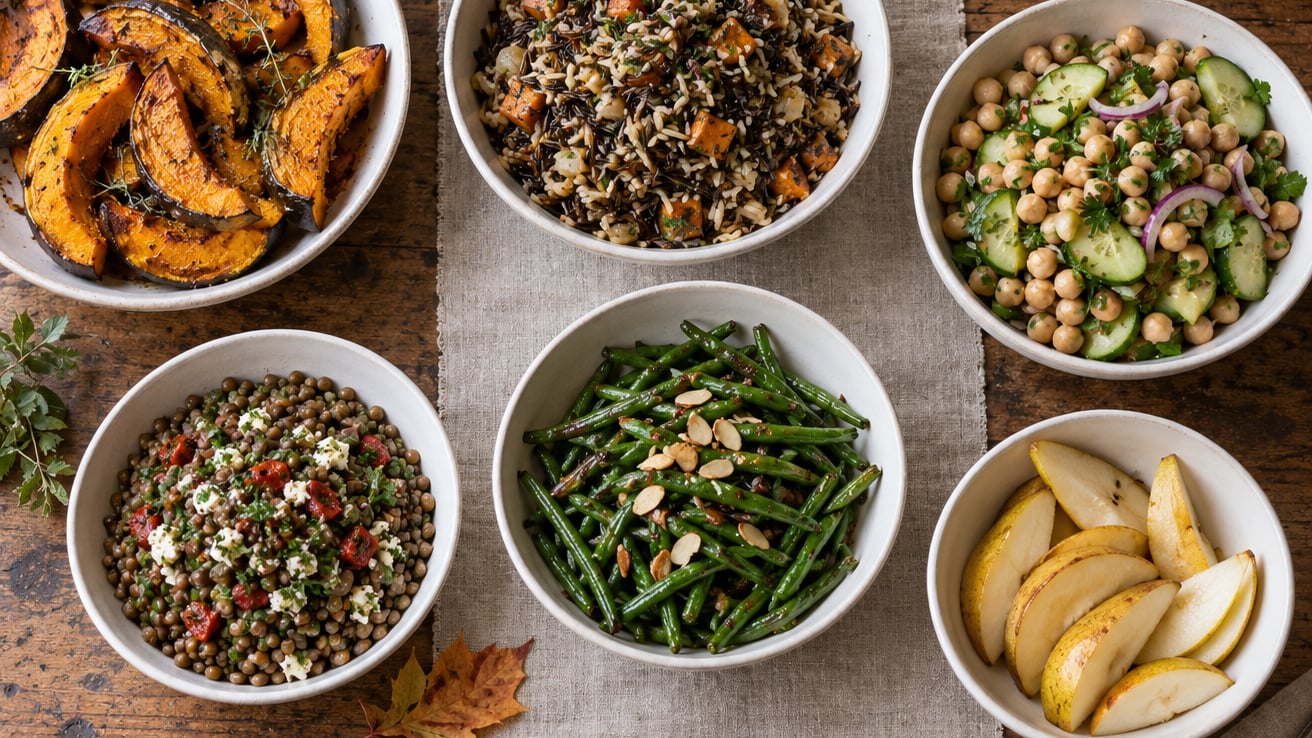
Healthy holiday side dishes for Thanksgiving do not have to mean sad trays of plain vegetables next to the turkey. The best ones are colorful, mostly hands-off, and built on olive oil, beans, whole grains, and winter produce, so the plate still looks like a holiday meal. These ten sides each take 30 minutes or less of active work, and nine of them can be made ahead.
I cook this menu every November for a crowd of eleven, and the thing I keep relearning is that people eat what looks inviting. A sheet pan of caramelized citrus and fennel disappears faster than any casserole, and nobody misses the third creamy dish. So the criteria here are simple: seasonal produce, a short ingredient list, and a method that does not tie up the oven all afternoon.
Every dish below carries a note on how far ahead you can make it, what it does to your dietary list, and what to do with the leftovers. Where a temperature or time comes up, treat it as a starting point for your own oven, which runs hotter or cooler than most.
One thing worth having on hand before you start: how to pick a healthy yogurt at the store. Several of these recipes lean on a yogurt-based dressing, and the label language on those tubs is worth understanding before you buy.
Table of Contents
- Healthy Holiday Side Dishes for Thanksgiving at a Glance
- 1. Roasted Citrus, Fennel, and Winter Vegetables
- 2. Herbed Green Bean Salad
- 3. Honey-Roasted Brussels Sprouts
- 4. Warm Lentil and Squash Salad
- 5. Garlic and Herb Cauliflower Mash
- 6. Wild Rice and Dried Fruit Pilaf
- 7. Roasted Acorn Squash with Cinnamon and Walnuts
- 8. Mediterranean Chickpea and Cucumber Salad
- 9. Baked Sweet Potato Wedges
- 10. Pear and Apple Slaw with Maple Vinaigrette
- Frequently Asked Questions
- What are the healthiest side dishes for Thanksgiving?
- Can I prepare healthy Thanksgiving side dishes the day before?
- What is a good make-ahead vegetable side for Thanksgiving?
- How do I keep roasted vegetables from becoming soggy?
- Are fresh salads better than casseroles for a Thanksgiving menu?
- How long should Thanksgiving side dishes be stored in the refrigerator?
- Conclusion
Healthy Holiday Side Dishes for Thanksgiving at a Glance
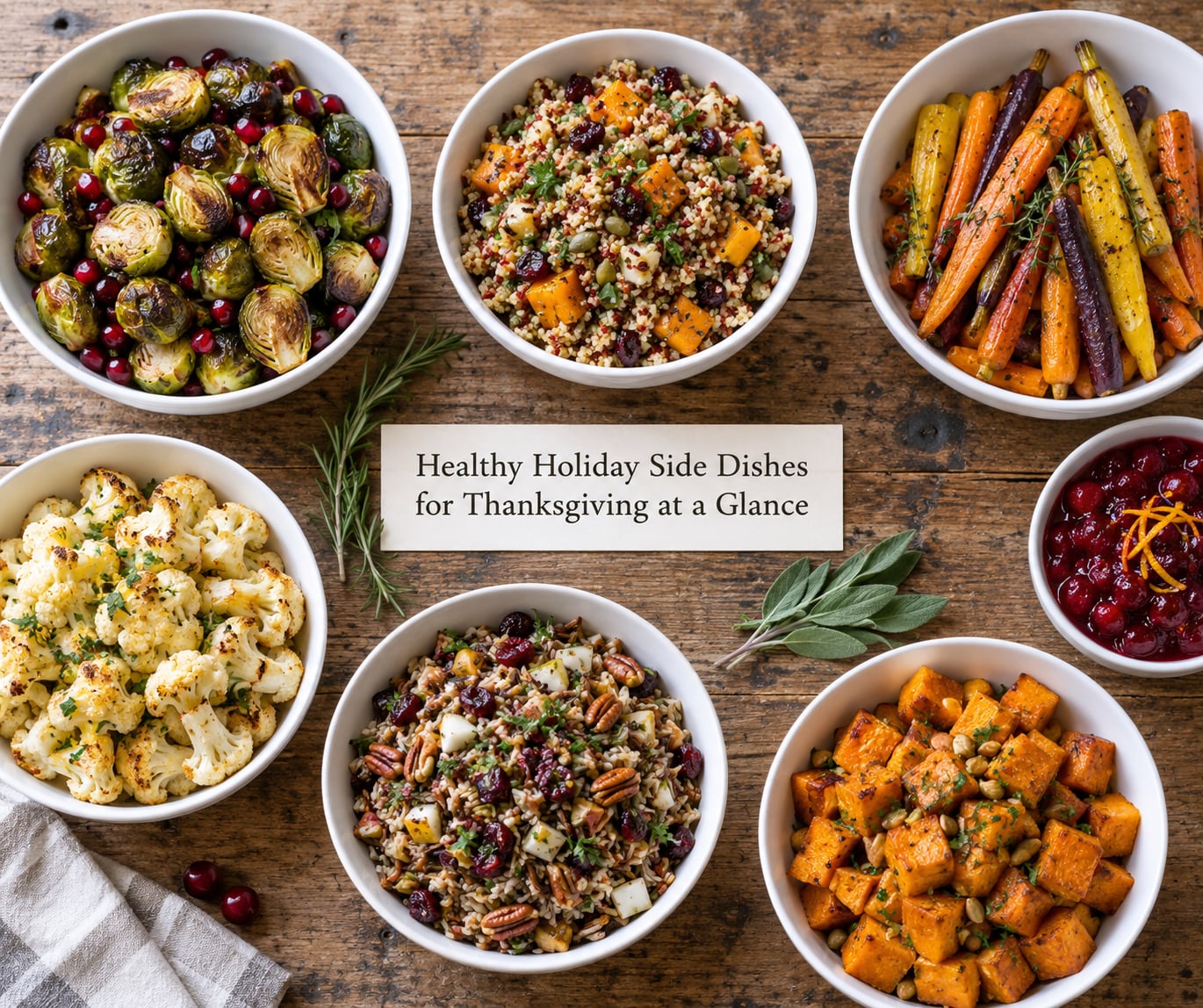
Here is the whole roundup on one page. Prep time is active time, not total time, and the role column tells you where the dish earns its oven space or fridge space.
| Dish | Flavor | Active prep | Dietary strengths | Best role |
|---|---|---|---|---|
| Roasted citrus, fennel and winter vegetables | Sweet, sharp, herbal | 15 min | Vegan, gluten-free, nut-free | The big colorful tray |
| Herbed green bean salad | Fresh, citrusy, crunchy | 15 min | Vegetarian, gluten-free | Cold starter or buffet |
| Honey-roasted Brussels sprouts | Caramelized, savory-sweet | 10 min | Vegetarian, gluten-free | Crowd-pleaser with crunch |
| Warm lentil and squash salad | Earthy, tangy, nutty | 20 min | Vegan, gluten-free, nut-free | Vegetarian main-adjacent |
| Garlic and herb cauliflower mash | Savory, creamy, garlicky | 20 min | Vegetarian, gluten-free | Potato swap |
| Wild rice and dried fruit pilaf | Nutty, sweet-savory | 15 min | Vegan, gluten-free, nut-free | Fills the grain gap |
| Roasted acorn squash | Sweet, spiced, rich | 10 min | Vegan, gluten-free | Centerpiece side |
| Mediterranean chickpea salad | Bright, briny, lemony | 15 min | Vegan, gluten-free, dairy-free | Make-ahead lunchbox |
| Baked sweet potato wedges | Smoky, crisp, savory | 10 min | Vegan, gluten-free, dairy-free | Kid-friendly side |
| Pear and apple slaw | Sweet-tart, crisp | 15 min | Vegan, dairy-free | No-cook, no-heat option |
Two things this table makes obvious. First, only four dishes need the oven, which matters when you are cooking a turkey and a pie at the same time. Second, most of them are gluten-free or adaptable to it without a specialty aisle run, which is the single most common dietary request at the table.
1. Roasted Citrus, Fennel, and Winter Vegetables
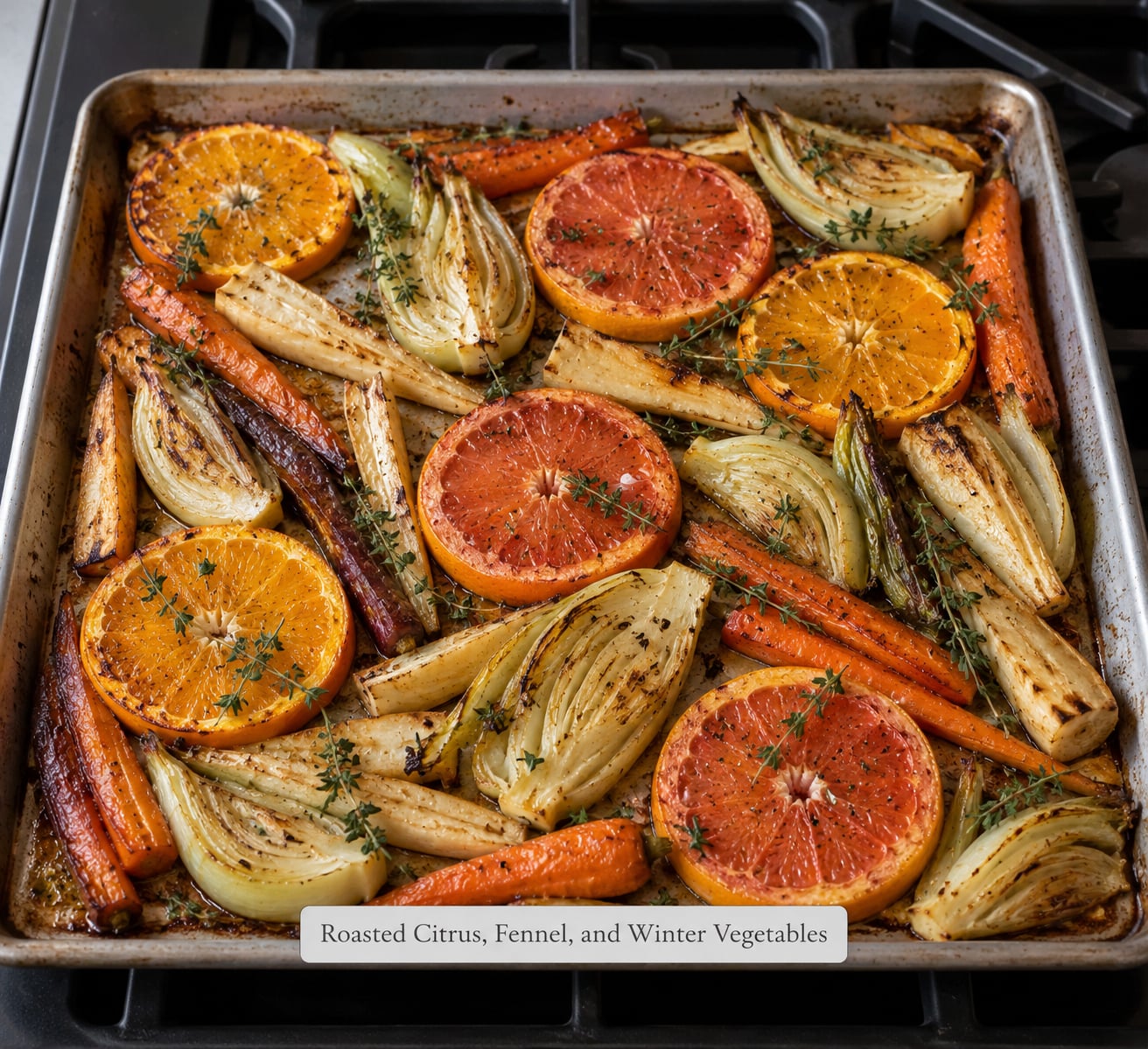
This is the dish that makes the table look like you tried. Thick rounds of grapefruit and orange roast alongside fennel wedges, carrots, and parsnips until the cut edges go dark and the citrus collapses into something almost marmalade-like.
Toss everything with a couple of tablespoons of olive oil, a generous pinch of salt, and thyme or rosemary. Roast at 425°F until the fennel is fork-tender and the citrus edges are caramelized, roughly 30 to 35 minutes. A drizzle of honey in the last eight minutes takes the edge off the bitterness, but the dish is genuinely good without it.
Make-ahead option: cut and season the vegetables a day ahead and keep them chilled, then pour them onto the hot pan right before it goes in. That skips the chopping crunch on the morning of. The roasted pan also holds well at room temperature for about two hours, so it can go out early while the turkey rests.
Leftovers: chop the roasted citrus and fold it into a mixed green salad with arugula for a dressing all by itself.
Healthy Holiday Side Dishes for Thanksgiving: Ingredient Swap
The formula is roasted vegetable plus roasted citrus plus sharp seasoning, and any part of it can move. Swap grapefruit for blood orange or Meyer lemon in the same months. Trade parsnips for rutabaga or celeriac, and fennel for radicchio if you want something more bitter.
What you cannot drop is the acid. The citrus exists to cut the sweetness of the carrots and squash, so if you leave it out, season harder with vinegar or lemon juice at the table instead.
2. Herbed Green Bean Salad
This replaces the cream-of-mushroom green bean casserole, and most guests never notice a swap because the beans still arrive hot, still snap, and now they do not sit in a puddle of sauce.
Blanch trimmed green beans in salted boiling water for three minutes, then plunge them into ice water. That stops the cooking and locks in the crunch. Dry them well, because water on the beans is what turns a salad into a soggy one.
Dress them while they are still slightly warm with a vinaigrette of lemon juice, olive oil, Dijon mustard, minced shallot, and a big handful of flat-leaf parsley and chives. Add toasted almonds or pumpkin seeds just before serving so they stay crisp.
Make-ahead option: blanch and chill up to two days ahead, and store the dressing separately. The beans will dull slightly in the fridge, so toss them together in the last 20 minutes before the meal starts.
Leftovers: pile the cold beans over a bowl of leftover roast chicken or turkey and call it a salad.
3. Honey-Roasted Brussels Sprouts
Brussels sprouts have an unfair reputation that comes almost entirely from boiling them to gray. Roasted hard with a small amount of honey and balsamic, the outside goes lacquered and crisp while the middle turns sweet and nutty.
Halve the sprouts, toss with olive oil and salt, and roast cut-side down at 425°F for about 20 minutes. Add a tablespoon each of honey and balsamic vinegar, then give the pan a shake and roast another 10 to 12 minutes until the edges are properly brown.
Watch that last stage closely. Honey goes from caramelized to burnt in about three minutes at that temperature, and bitter Brussels are worse than no Brussels at all. If your oven runs hot, move the pan to the bottom rack for the final stretch.
For texture without nuts, scatter toasted pumpkin seeds or a few dried cranberries over the top just before serving. For a nut-free version entirely, skip both and add a second tablespoon of balsamic.
Make-ahead option: roast the sprouts up to a day ahead, refrigerate, and return them to a hot oven for eight minutes before serving so the edges re-crisp.
4. Warm Lentil and Squash Salad
This is the dish that makes vegetarians feel like they got the main course, and it is built on fiber and protein rather than butter. Cooked lentils, roasted squash, and a sharp cider vinaigrette hold up well across a long buffet line.
Use a firm green or black lentil, since they hold their shape and do not turn to paste. Simmer them in salted water with a bay leaf until tender, about 20 to 25 minutes depending on the variety, then drain and dress while warm so they soak up flavor.
Toss with cubed roasted squash or sweet potato, chopped greens, and a vinaigrette of apple cider vinegar, olive oil, mustard, and a little maple syrup. Add toasted pumpkin seeds or walnuts for crunch right before serving.
Serve this warm or at room temperature. Straight from the fridge it tastes flat, which is why the vinaigrette gets more acid than feels right in the bowl. Chilled it works, but it belongs at the front of the line while it is still cool, not cold.
Make-ahead option: cook the lentils and roast the squash up to three days ahead. Dress and add the greens the day of, or the greens will wilt.
Leftovers: fold them into a wrap with leftover turkey and a dollop of mustard.
5. Garlic and Herb Cauliflower Mash
A pure cauliflower mash can turn watery and grainy, which is why this one keeps a couple of real potatoes in the pot. The starch from roughly a quarter of the weight in potato is what gives it body the blended cauliflower cannot make on its own.
Simmer three medium potatoes until soft, then steam a whole cauliflower in a separate pot until completely tender. Warm three tablespoons of olive oil in a pan with six smashed garlic cloves and cook them gently until the cloves are pale gold, about three minutes. Add the drained cauliflower and mash with a potato masher, then fold in the potatoes gradually.
The watery-finish problem usually comes from undrained cauliflower or from mashing too aggressively. Squeeze the florets in a clean towel first if they were boiled, and mash with a masher rather than a blender. A blender is what turns cauliflower into glue.
Finish with olive oil, salt, chopped parsley or chives, and a squeeze of lemon. It holds its texture in the pot for the better part of an hour, which is more forgiving than mashed potatoes.
Make-ahead option: make it two days ahead, refrigerate, and reheat covered over low heat with a splash of olive oil. Reheat it in the microwave only in short bursts, or it dries out.
Leftovers: spread it thin on a sheet pan and bake it to re-crisp the top. It turns into a different dish entirely.
6. Wild Rice and Dried Fruit Pilaf
Wild rice is not rice, it is a grass seed, and it brings a chew and a nutty flavor that plain brown rice cannot. Combined with dried cranberries, toasted seeds, and onion, it is the most substantial thing on this list, and it is excellent next to a small portion of turkey.
Simmer the wild rice in well-salted water until the kernels split and curl, 35 to 45 minutes depending on the brand, then drain any extra liquid. Toast a diced onion in olive oil until soft and sweet, and fold it through with a handful of dried cranberries or raisins, chopped celery, and a splash of cider vinegar.
Season in layers rather than all at once. Salt and pepper first, taste, then decide whether it needs more acid or more sweetness. Toasted pumpkin seeds or sunflower seeds add the crunch that dried fruit alone will not.
Storage is simple: covered in the refrigerator, it holds three to four days, and the texture improves on day two. Keep it below 40°F and reheat with a splash of water in a covered pan, or in the microwave in short bursts.
Make-ahead option: cook it two days ahead and store it in the dressing or stock rather than dry, which keeps the grains from drying out.
Leftovers: run it through a food processor briefly and use it as a stuffing for baked apples.
7. Roasted Acorn Squash with Cinnamon and Walnuts
Acorn squash brings a natural sweetness that needs almost nothing done to it, which makes it the lowest-effort centerpiece on the table. Two ingredients carry the whole dish: a hot oven and a little fat.
Cut the squash into wedges, remove the seeds with a spoon, and toss with olive oil, salt, cinnamon, and a small drizzle of maple syrup or honey. Roast at 400°F for 30 to 40 minutes, until a knife slides through the flesh without resistance and the cut faces brown.
Add chopped walnuts in the last five minutes so they toast but do not scorch. For a nut-free version, use toasted pumpkin seeds and lean on the cinnamon for warmth. Leaving the seeds in the squash while it roasts is worth the mess; they crisp up and taste like a treat.
On serving temperature, room temperature is best here. Squash that has sat in a hot dish for two hours dries out slightly and the glaze turns tacky, so pull it earlier than you think and let it cool on the pan.
Make-ahead option: roast a day ahead, refrigerate, and rewarm on a sheet pan in a hot oven rather than in a covered casserole, which steams the edges.
Leftovers: cube it and mix it into a stuffing or a pancake batter for a quick breakfast.
8. Mediterranean Chickpea and Cucumber Salad
This is the salad that gets eaten first, and it is also the one most likely to be gone from the fridge within an hour. Chickpeas hold structure better than most beans, so it survives a buffet table without collapsing into mush.
Drain and rinse chickpeas, then toss with diced cucumber, halved cherry tomatoes, thinly sliced red onion, a handful of kalamata olives, and parsley. Dress with lemon juice, olive oil, oregano, salt, and enough crumbled feta to suit your table, or leave it out for a vegan version.
Two things decide whether this salad still tastes good after four hours in the fridge. First, salt the cucumber lightly and let it sit in a colander for 10 minutes; it sheds water and stops the salad from swimming. Second, add the tomatoes just before serving, since they release liquid as they sit.
For more punch, a spoonful of pomegranate molasses or a spoon of olive brine from the jar works better than extra vinegar, because it adds sweetness and salt at once.
Make-ahead option: everything except the tomatoes and parsley can be combined two days ahead. Add those before serving.
Leftovers: pile it onto toast with a fried egg for a fast dinner.
9. Baked Sweet Potato Wedges
Sweet potatoes go soggy for two reasons: cutting them too thin, and crowding the pan. Cut them into wedges about a half-inch thick, spread them in a single layer with space between each piece, and they will crisp at the edges while staying creamy inside.
Toss with olive oil, salt, and smoked paprika. Roast at 425°F for 25 to 30 minutes, turning once halfway through. If your pan looks crowded, use two pans rather than letting the wedges steam in their own moisture. That single habit is the difference between roasted and boiled.
For dry wedges, add the oil generously and salt the cut faces before they go in. If they still look thirsty at the end, they were probably too thin to begin with.
Picky eaters rarely object to this one because the edges are crisp and lightly sweet, and a small cup of plain yogurt with garlic and lemon makes a good dip for the younger ones at the table.
Make-ahead option: cut and parboil the wedges two days ahead, refrigerate, then roast at a higher temperature for 20 minutes on the day.
Leftovers: re-crisp on a sheet pan, or blend them into a soup with stock and a splash of milk.
10. Pear and Apple Slaw with Maple Vinaigrette
A no-cook slaw is the answer when the oven is completely booked and you still need something on the table that looks deliberate. Cabbage is the base because it does not wilt, and pears and apples bring the flavor that plain slaw is missing.
Shred red and green cabbage as finely as you can, then salt it and let it sit for 10 to 15 minutes. That pulls out water and softens the crunch into something closer to restaurant slaw. Rinse briefly and dry very thoroughly.
Add thinly sliced apple and pear, a handful of seeds, and a light vinaigrette of maple syrup, cider vinegar, olive oil, and mustard. Toss right before serving so the fruit stays crisp.
The browning problem is all about acid. Tossing the cut fruit with a little lemon juice keeps it pale for several hours, and the maple vinaigrette does the same job once it is mixed in. If you are dressing more than two hours ahead, do it anyway; the cabbage underneath will absorb the excess and stay crisp instead of turning to mush.
Make-ahead option: shred and salt the cabbage a day ahead and store it dry. Cut the fruit and dress it the day of, or you will get brown pear on your counter by breakfast.
Leftovers: add a cup of cooked chickpeas or shredded chicken and it becomes lunch.
Frequently Asked Questions
What are the healthiest side dishes for Thanksgiving?
The healthiest Thanksgiving sides are vegetable-forward dishes built on olive oil, legumes, whole grains, and fruit rather than butter and cream. Roasted squash, wild rice pilaf, lentil salad, and honey-roasted Brussels sprouts all deliver fiber and nutrients without a heavy sauce. Pick two or three of these to anchor the table and keep casseroles to one.
Can I prepare healthy Thanksgiving side dishes the day before?
Most of them, yes. Roasted squash, lentils, wild rice pilaf, and chickpea salad are all better after resting overnight because the flavors have time to settle. Salads with fresh herbs or tomatoes should be assembled closer to the day so nothing wilts. Raw vegetables and vinaigrettes hold well, but dress them later to protect the crunch.
What is a good make-ahead vegetable side for Thanksgiving?
Roasted citrus, fennel, and winter vegetables is the strongest make-ahead vegetable option. Cut and season the vegetables a day ahead, keep them chilled, and pour them onto the preheated pan right before baking. A make-ahead lentil and roasted squash salad is the other strong option, since both components reheat without losing texture.
How do I keep roasted vegetables from becoming soggy?
Give them space. Crowding a pan traps steam and vegetables simmer in their own moisture instead of roasting, which is the usual reason they turn soft and pale. Use two pans rather than one, cut pieces thick enough to survive the heat, salt the cut faces, and preheat the oven fully before the pan goes in. High heat and space are the whole technique.
Are fresh salads better than casseroles for a Thanksgiving menu?
For a lighter plate, yes. Salads bring acidity, crunch, and raw nutrients that a heavy casserole cannot, and several of them serve at room temperature so they never compete with the oven. A good balance is one casserole for tradition plus two raw or roasted vegetable sides. That keeps the table feeling festive without putting everyone to sleep after dinner.
How long should Thanksgiving side dishes be stored in the refrigerator?
Cooked side dishes keep three to four days in the refrigerator at 40°F or below, which covers the day after Thanksgiving and the Friday lunch box. Cool them in shallow containers rather than deep ones so heat leaves quickly. Once refrigerated, reheat only the portion you plan to eat, and discard anything left out longer than two hours.
While you are planning the shopping trip, it is worth also checking how to tell if a granola bar is actually healthy, since those end up on the holiday counter next to the mashed potatoes more often than anyone plans for.
Conclusion
Start by choosing two or three dishes, not ten. One roasted vegetable, one grain or legume side, and one fresh salad covers the table with color and keeps your oven schedule manageable. From there, pick the ones you can make two days ahead so the morning of is about reheating, not cooking.
Turkey reaches a safe internal temperature of 165°F, checked in the thickest part of the breast and the thigh, and leftover dishes cool fast in shallow containers and stay in the fridge three to four days. If you want personal guidance on how these fit your own dietary needs, a registered dietitian is the right person to ask.