
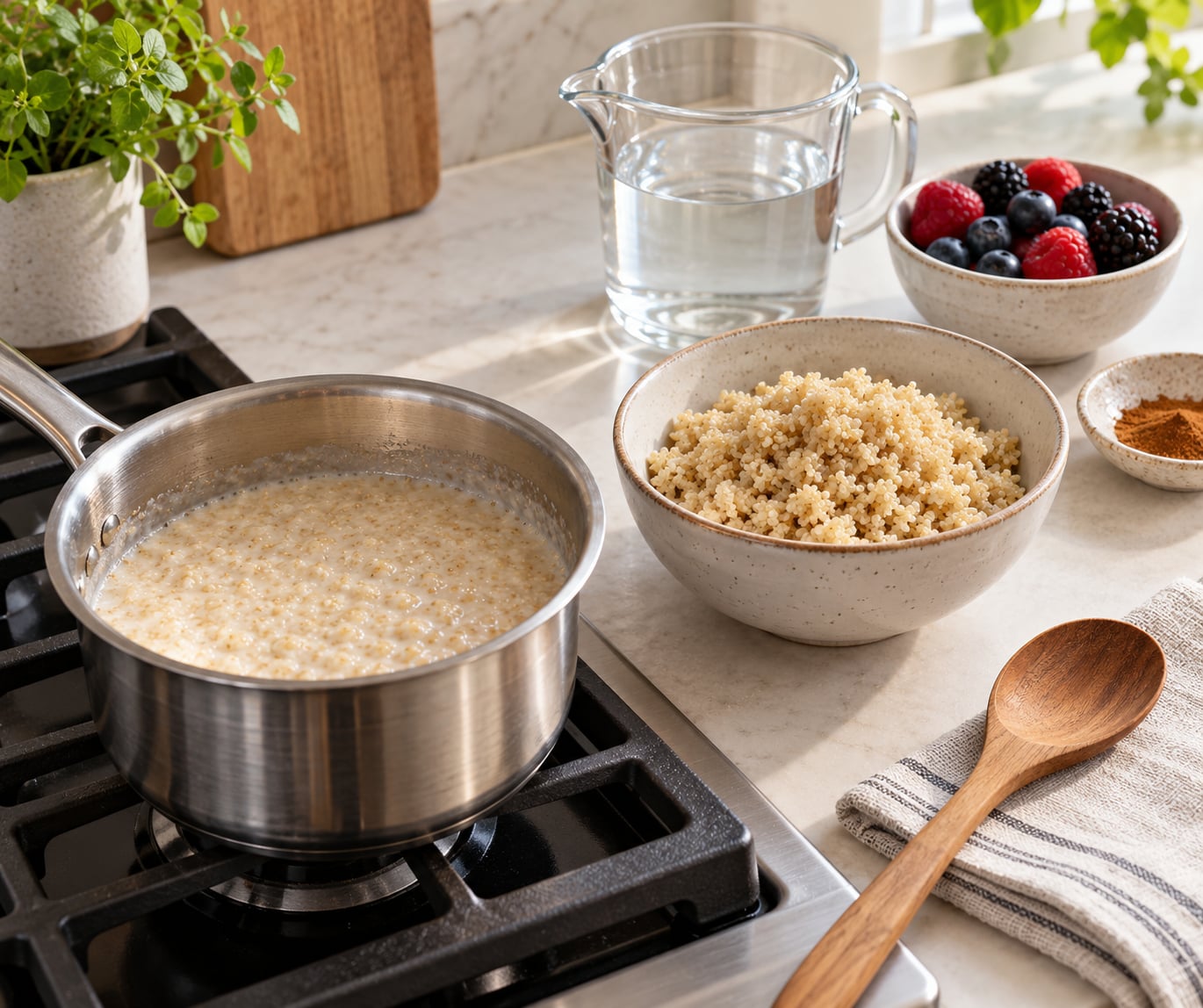
Cooking amaranth for breakfast takes one pot and about 25 minutes. Simmer half a cup of the seeds in 1 to 1.5 cups of water or plant milk, then let the covered pot sit off the heat for 10 minutes so the grains steam into a thick porridge. It is a gluten-free swap for oatmeal that most people find chewy rather than mushy, once you know when to stop.
The part that trips people up is not the cooking. It is the stirring. Push too hard at the wrong moment and a good batch turns into one gluey mound. Here is how I cook it, with the ratios, timings and texture cues that keep it loose.
What You Need
For the basic method you need three things: amaranth, liquid, and salt. Everything else is a topping you can add after the grain is cooked.
- Amaranth: 1/2 cup (about 90 g) whole or milled amaranth for two servings.
- Liquid: 1 to 1.5 cups water, or an unsweetened plant milk such as almond or coconut for a creamier result.
- Salt: 1/4 teaspoon fine sea salt, plus more to taste at the end.
- Optional fat: 1 teaspoon oil or butter if you are toasting the seeds first.
- Optional flavor: vanilla, cinnamon, cardamom, ground ginger, or a spoonful of nut butter stirred in off the heat.
For equipment, you want a small saucepan with a lid, a fine-mesh strainer, and a wooden spoon or silicone spatula. A colander is not enough. The seeds are smaller than quinoa, so half of them end up in the sink unless you strain them over a bowl.
Different appliances want different amounts of liquid. These are the ratios and times I actually use, measured from the same 1/2 cup of dry grain:
| Method | Liquid ratio | Cook time | Notes |
|---|---|---|---|
| Stovetop, covered | 1:2 | 20 to 25 minutes | Most reliable starting point |
| Rice cooker | 1:1.5 | 25 to 30 minutes | Uses less liquid, firmer grains |
| Slow cooker | 1:2 | 3 to 4 hours on low | Best done the night before |
| Instant Pot | 1:1.5 | 6 to 8 minutes, then 10 minutes natural release | Fastest hands-off option |
| Overnight, no cook | 1:1 | 8 hours cold | Soft but not creamy |
Step-by-Step
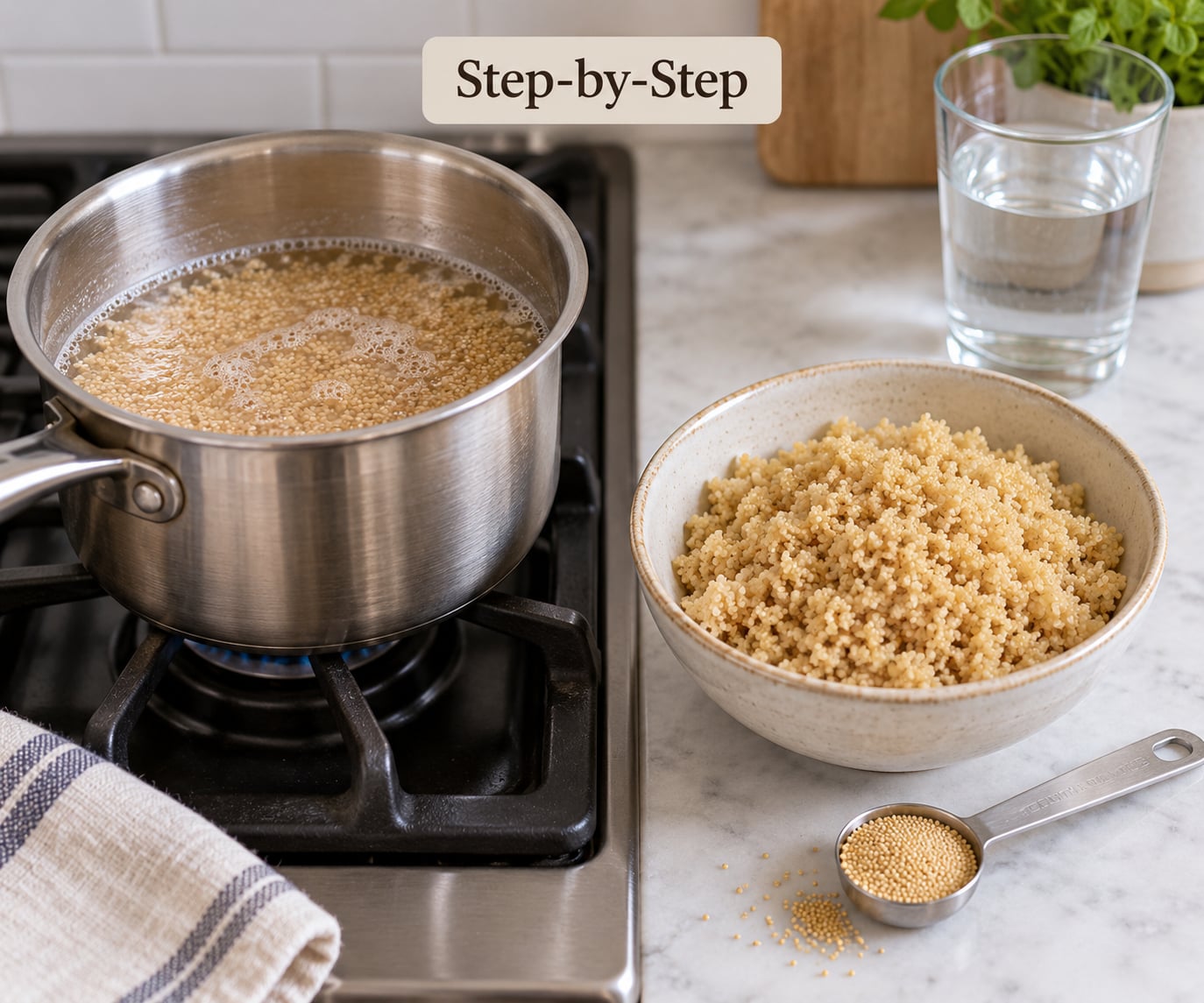
Rinse and Measure the Amaranth
Rinse until the water runs clear, using a fine-mesh strainer rather than a colander. Half a cup of dry seeds is about 90 grams, and that amount makes roughly one and a half cups cooked.
Amaranth carries a dusty surface starch, and that is what turns to paste when you overcook it or stir too hard. Rinsing takes about a minute and takes most of it off, so the finished grain tastes less dense and cooks more evenly. If you plan to toast the seeds first, rinse after toasting instead, so the malty flavor does not wash away.
Cook Amaranth on the Stovetop
Use one part amaranth to two parts liquid, bring it to a boil, then cover and simmer on low for 15 to 25 minutes.
- Rinse 1/2 cup amaranth and drain it well.
- Add 1 to 1.5 cups liquid and 1/4 teaspoon salt to the pot.
- Bring to a full boil over medium-high heat, stirring once so nothing catches.
- Reduce to the lowest simmer, cover, and cook 15 to 25 minutes, stirring in the first five minutes and once or twice after.
- Turn off the heat, keep the lid on, and rest the pot for 10 minutes.
- Fluff with a fork and season before serving.
The doneness test is simple: the liquid should be gone, the seeds should give with a fingernail but keep a slight chew, and a spoon dragged across the bottom should leave a path that closes slowly. The volume roughly triples. Anything wetter than that and you have too much liquid; anything drier and you have gone too far.
Make Creamy Amaranth Porridge
For a looser, breakfast-style porridge, use one part grain to three parts liquid and stir often. You can start from dry amaranth or loosen leftover cooked grain, which is the faster route on a weekday morning.
Bring the extra liquid to a low simmer, add the cooked grain, and stir for 4 to 5 minutes until it thickens to the consistency of thick oatmeal. Add a splash more liquid if it tightens too much, since porridge keeps thickening as it cools. Nut or seed butter stirred in at the end does more for creaminess than any amount of extra milk, and if you want more protein in the bowl, that is where how to get more protein in a plant-based breakfast is worth a read.
Toppings work best added after cooking, on the plate. Berries and maple syrup, banana and peanut butter, or apple and cinnamon all hold up without turning the grain to mush.
Prepare Instant-Pot Amaranth
Pressure cooking cuts the simmer to 6 to 8 minutes, and the texture comes out rounder and creamier. Use 1 part grain to 1.5 parts liquid, add salt, and cook on high pressure for 7 minutes.
Let the pot sit closed for a 10-minute natural release before you open it. The steam left inside finishes the grains and is what keeps the result creamy. A quick release gives you wetter, more separated seeds, so if you take the quick route, expect to drain a little liquid or simmer the grains dry for three minutes with the lid ajar.
The watery result people report almost always comes from overfilling the pot or raising the liquid above 1.5 parts. Too dry is the opposite failure, and it usually means the pot was full of grain, not mostly liquid.
Turn Cooked Amaranth Into a Breakfast Bowl
Season cooked amaranth while it is still warm, because the grains drink in salt and fat. Taste it plain first, then decide which direction you are going.
For a savory bowl, warm the grains in olive oil with a pinch of salt, lemon and black pepper, then add fried or poached eggs, sautéed spinach and mushrooms, avocado, or crumbled feta. For a neutral base, do the same seasoning without the lemon and let the toppings speak.
For a sweet bowl, spoon the grains over yogurt or coconut milk and add berries, toasted walnuts or pistachios, a drizzle of maple or honey, and a pinch of cinnamon. A spoonful of tahini thins the yogurt and adds a nutty edge that works with the amaranth.
Adjust the texture just before serving. If the grains have firmed up in the fridge, warm them with a splash of hot water or milk and stir until loose. If they are looser than you like, let them sit off the heat for a minute, or chill them, and they set into a scoopable bowl.
Common Mistakes
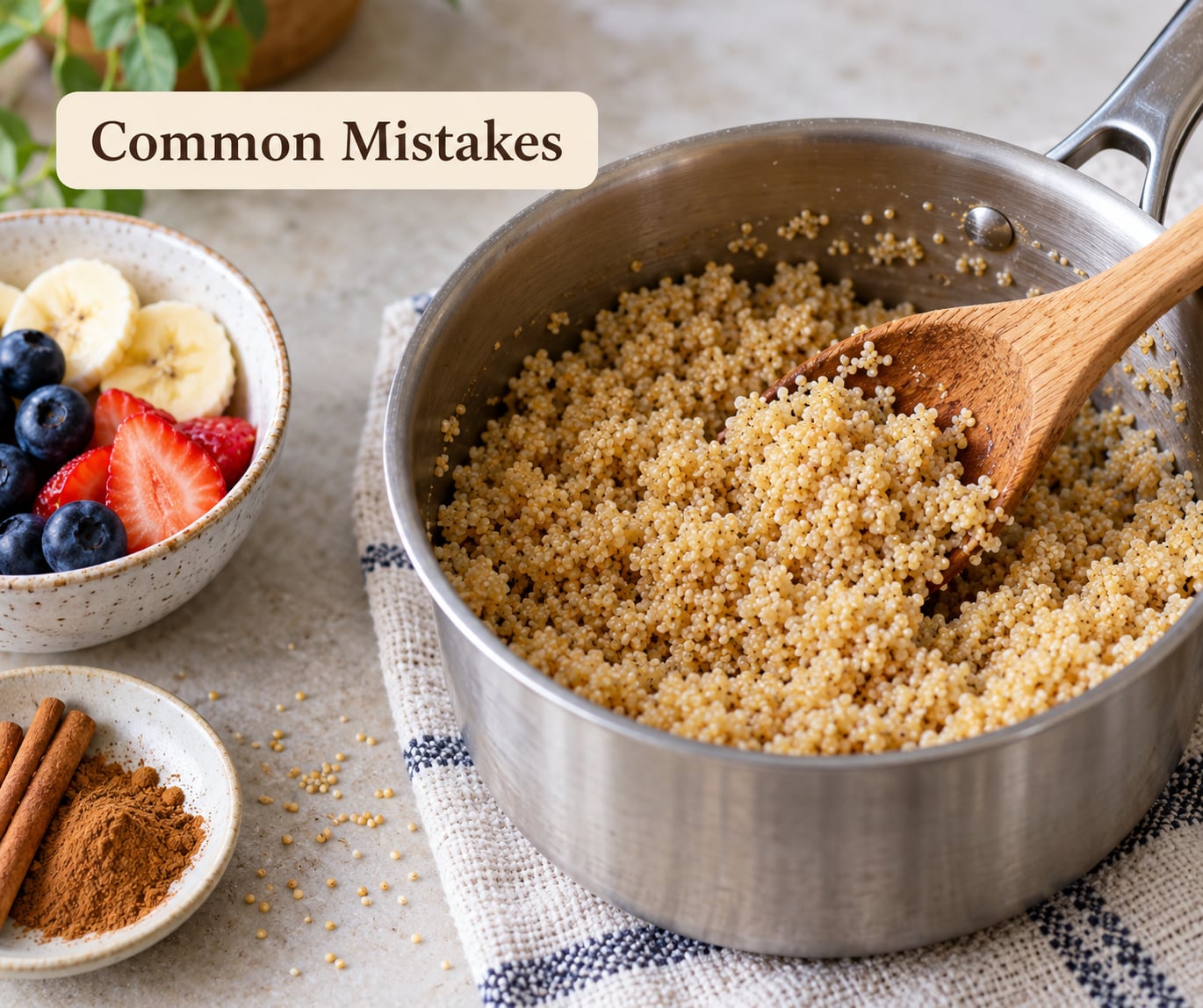
Most disappointing bowls of amaranth trace back to one of six things.
Too little liquid. The standard ratio is 1:2. If you have already lost the 1:2 mark, add hot water a quarter cup at a time and simmer for two minutes between additions.
Cooking past absorbed. Once the liquid is gone, the grains start toasting in the residual heat and turn past chewy into gritty. Pull the pot the moment the surface goes matte and the seeds look slightly swollen.
Skipping the rinse. That surface starch is the glue. A minute under cold water removes most of it and is the cheapest fix for a pasty bowl.
Stirring too hard, too late. Stir often during the first five minutes, when seeds can scorch against the base, then leave it alone. Vigorously mashing cooked amaranth is what produces the paste texture people complain about in comment sections.
Cooking on high. A rolling boil keeps the seeds bouncing and breaks them down. Once it boils, drop to the lowest simmer your stove has.
No seasoning. Plain amaranth tastes grassy. A pinch of salt, a spoon of nut butter, or a splash of plant milk fixes it in seconds, and the grain is bland enough that it needs the seasoning more than oatmeal does.
One more thing worth knowing: cooked amaranth thickens fast as it cools, sometimes overnight into a solid block. Cool it flat rather than in a deep bowl, refrigerate it covered for up to 3 to 4 days, and add a splash of liquid on reheating. Frozen, it holds for a couple of months if you press it into muffin-tin pucks and bag each one, which is also the easy way to batch cook for the week without getting bored. Amaranth keeps well next to other grains too, and it behaves better in a mixed batch than on its own, the same way it does next to quinoa. If lentils are in the batch, how to cook lentils so they hold their shape covers keeping them separate in the same pot.
Frequently Asked Questions
What is the best way to cook amaranth for breakfast?
Rinse half a cup of amaranth, simmer it in 1 to 1.5 cups of water or plant milk for 15 to 25 minutes, then rest the covered pot off the heat for 10 minutes. That rest is the step people skip, and it is the difference between loose grains and porridge. Season and top after cooking, not during.
What is the right grain-to-liquid ratio for amaranth porridge?
One part amaranth to two parts liquid is the standard for cooked grains, and one part to three parts for a creamy breakfast porridge. If you are loosening leftovers, add liquid a quarter cup at a time until the mixture moves freely. Too little water gives you a dry, gritty grain, and too much gives you soup.
Should you soak amaranth before cooking?
You do not need to. A rinse takes care of the surface starch that causes stickiness, and soaking mainly helps if you want a slightly softer, more uniform texture. A few hours in cold water works, and you should drain and rinse well before cooking. Skip soaking if you are toasting the seeds first, or you will wash off the flavor.
How long does amaranth take to cook?
On the stovetop it takes 20 to 25 minutes of covered simmering, plus 10 minutes resting off the heat. An Instant Pot needs 6 to 8 minutes at high pressure and a 10-minute natural release. A rice cooker takes 25 to 30 minutes with less liquid, and a slow cooker takes 3 to 4 hours on low.
Is amaranth better than oatmeal for breakfast?
It depends on what you need. Amaranth is naturally gluten-free, has more complete protein and more iron and magnesium per cup than oatmeal, and keeps a pleasant chew. Oatmeal is faster, cheaper, and blander, so it blends into baked things. If fiber, iron, or a gluten-free breakfast is the goal, amaranth wins on paper and in the bowl.
How should I store and reheat cooked amaranth?
Cool it flat, cover it, and refrigerate for up to 3 to 4 days. It firms up noticeably as it cools, so add a splash of hot water or plant milk while stirring over low heat and let it come back to the texture you like. For longer storage, freeze it in single-serve pucks and reheat from frozen with a little extra liquid.
Conclusion
Start with half a cup of rinsed amaranth and one cup of liquid. Boil, cover, simmer on low for 20 minutes, then leave the pot alone for 10 minutes with the heat off.
You will know it is right when the liquid is gone and a spoon leaves a path that closes slowly. From there, the same pot of grains becomes a creamy porridge, a savory egg bowl, or a chilled make-ahead cup for the week, depending on what you add and how much liquid you put back.